I still remember the presentation of an ambitious European brand at Milan Fashion Week in 2019. They proudly demonstrated an automated booth: a customer scans a QR code, and 30 seconds later, a robotic arm delivers a box containing their online order. Journalists applauded, investors were delighted. And I, as a practicing stylist, stood there and thought, "This is a disaster."
And I was right. Six months later, the project was shut down. Why? Because buying clothes isn't like buying a smartphone charger. Launching click and collect in retail Many fashion brands make a fatal mistake by trying to copy the processes of supermarkets or electronics stores. They prioritize speed, forgetting about the most important things: tactility, emotion, and fit.
We discussed the omnichannel sales architecture in more detail in our The Complete Guide to Omnichannel Retail: How to Combine Online and Offline In this article, I want to examine the pickup format through the lens of fashion psychology and show how to transform a boring pickup area into your main tool for increasing your average order value.
Format Evolution: Why Standard Click and Collect in Retail Isn't Working for Fashion
For Amazon or a major hypermarket, the ideal customer is someone who picks up their order in a minute and leaves, making room for the next one. In the fashion industry, it's exactly the opposite. If a customer simply picks up the box and goes home, you've missed a huge opportunity.
The difference lies in the nature of the product. When a woman orders a €250 cashmere sweater online, she's buying a pretty picture and the promise of status. But the magic only happens the moment the fabric touches the skin. If that moment is transferred to a cramped, dimly lit, crowded hallway, the magic often fades.
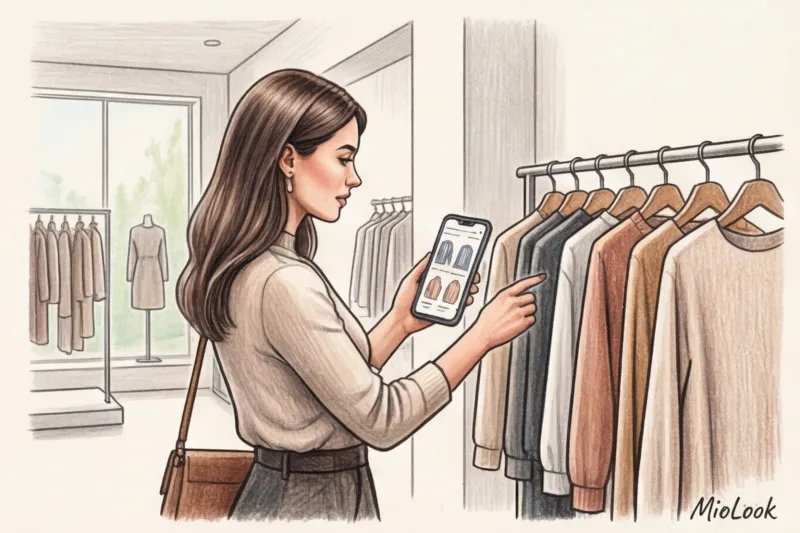
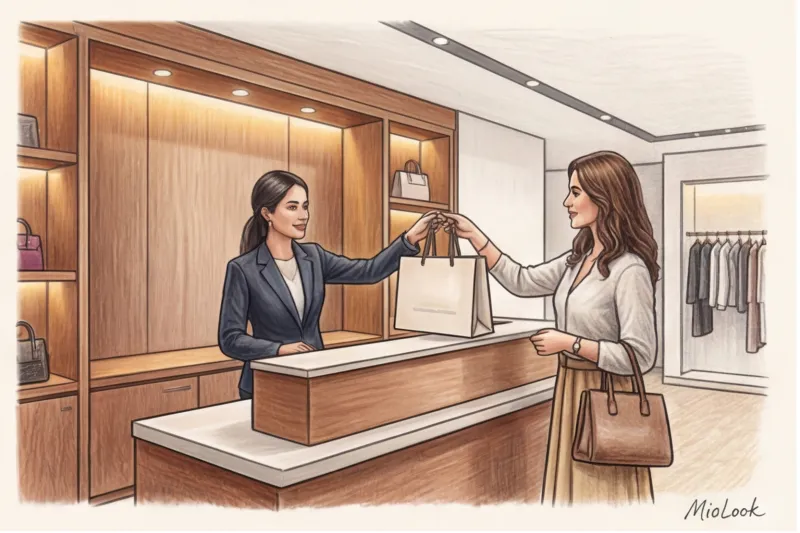
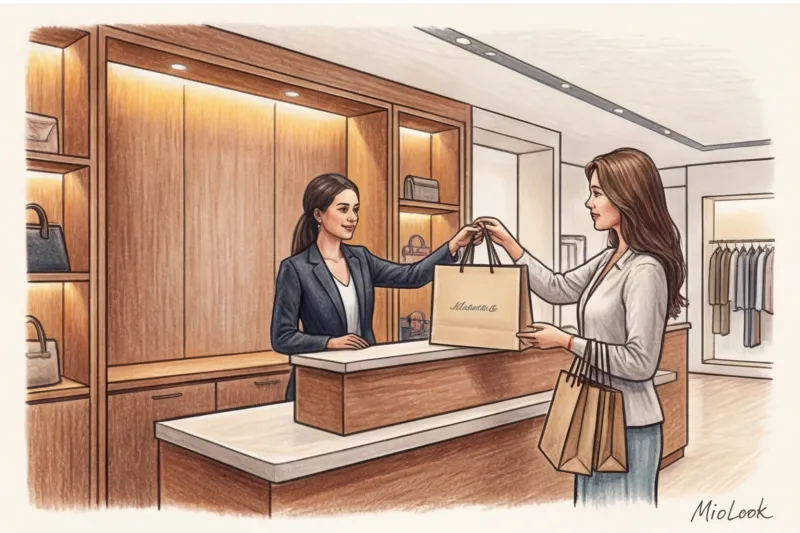
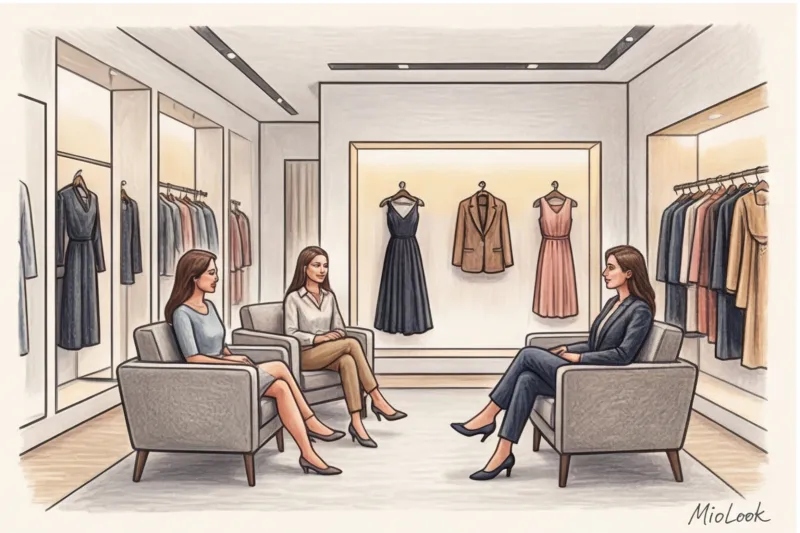
Over my 12 years in the industry, I've observed how flagship boutiques in Paris and London have transformed their transaction areas. Compare this: in mass-market stores (like the early Zara concepts), you stood in a separate, often untidy line at the stock window. Today, brands like Burberry or COS integrate the pickup area into the center of the store, turning it into a lounge. They don't just fulfill orders—they serve. conduct styling sessions.
The Hidden Cost of Returns: Logistics vs. Emotions
To understand the scale of the problem, just look at the numbers. According to a McKinsey report State of Fashion (2024) The return rate in fashion e-commerce reaches a staggering 30–40%, and in the premium dress and suit segment, it's up to 70%. And the main reason isn't defective items, but rather incorrect sizing or disappointment with the fit.
Every courier return costs €15–20 in logistics, packaging, and cleaning. A well-organized in-store pickup and try-on service saves the business's margins. Customers immediately understand whether the item fits, can change their size on the spot, and the brand reduces not only its financial costs but also its carbon footprint. But to achieve this, customers need to be encouraged to stay in the store.
Fitting Room Psychology: The Main Mistake of Omnichannel Strategies
This brings us to a counterintuitive rule I always share when consulting with retailers: The speed of order fulfillment in the fashion segment is detrimental to sales. Your goal isn't to get the client out in 60 seconds, but to gracefully slow them down.
The transition from "online anticipation" to "offline disappointment" is the most fragile moment of the transaction. On the smartphone screen, the dress was perfectly ironed and backlit by professional softboxes. In the box, it may lie wrinkled. The moment of truth comes in the first 10 seconds in front of the mirror.
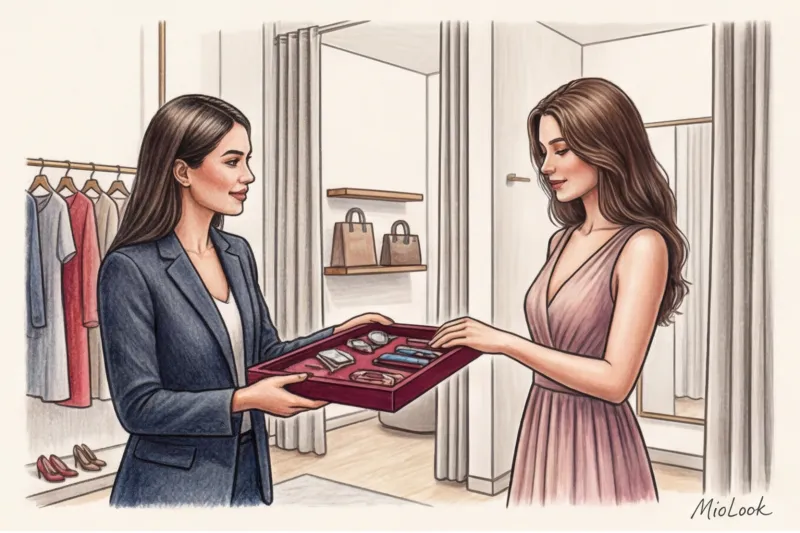
A customer's body language in a fitting room says everything. Ever notice how a woman looks at her face in the mirror first, and only then at the clothes she's wearing? If she looks tired because of the harsh light, she'll subconsciously transfer that negative attitude to her clothes. "This dress makes me look older," she'll say, even though it's not the dress that's to blame, but the poorly designed environment.
Ready to rethink your wardrobe?
Try our smart AI stylist, who will help you create perfect looks from your clothes and suggest what to buy.
Get access — €0.99 onceClick & Collect Zone Architecture: Increasing Conversion
Where is the order pickup counter located in your store? If it's right at the entrance, you're voluntarily discouraging impulse purchases. Market leaders' experience dictates a new rule: the Click & Collect zone should be located at the back of the store, preferably near spacious fitting rooms.
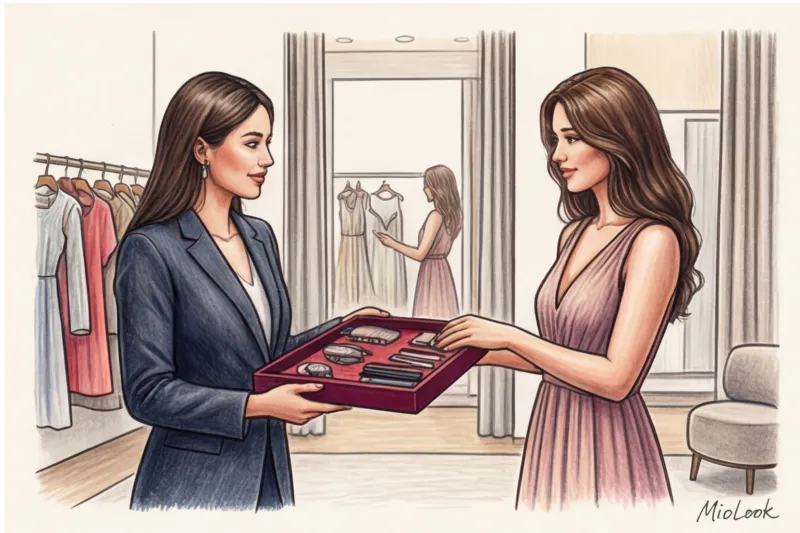
By making customers walk through the new collection, you create a visual trigger. But the pickup counter itself shouldn't resemble a warehouse. No cardboard boxes in plain sight, no tape, no fuss. It should be an aesthetically pleasing island where unpacking feels like a ritual.
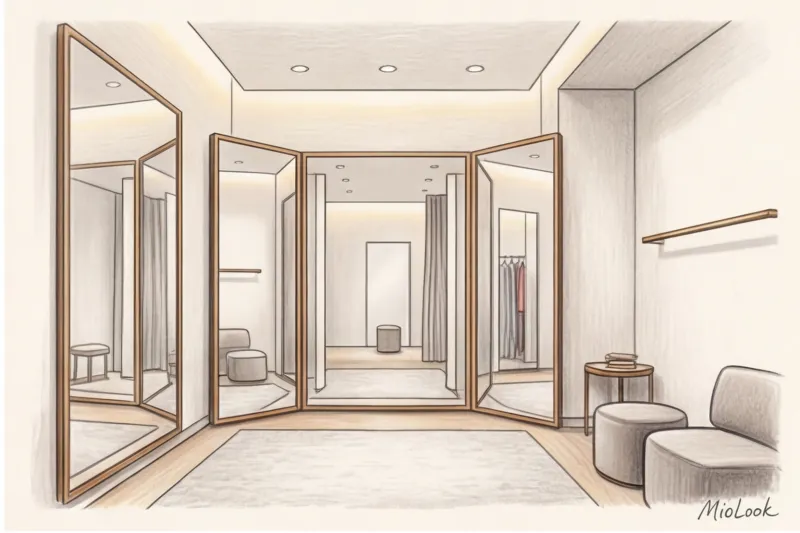
And the most important thing is the fitting room size for such clients. When someone comes in with an online order, they often have a bag, outerwear, and now a bulky package. If they have no place to put their items and unpack them carefully, their stress levels skyrocket.
Lighting and mirrors as sales tools
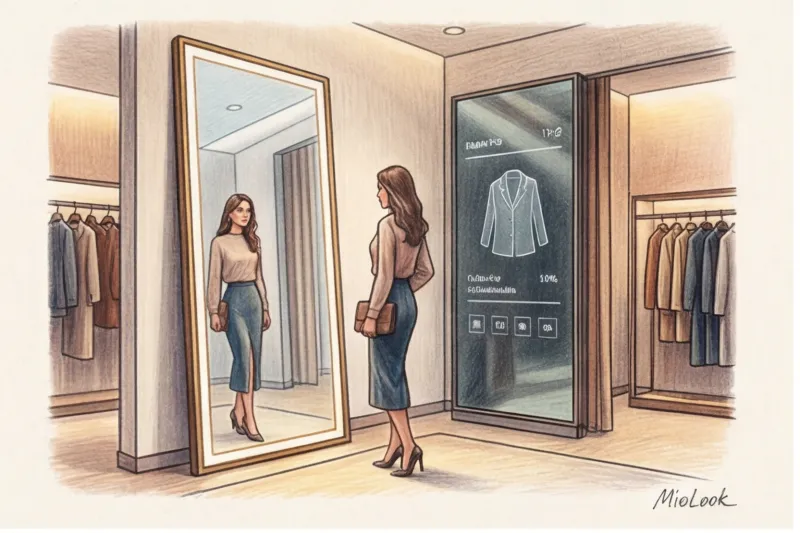
In my experience, cold fluorescent lighting in the VIP fitting room has ruined purchases worth €2,000 or more. Overhead lighting (especially below 4000 Kelvin) highlights every wrinkle, creates dark circles under the eyes, and visually adds volume to the figure.
- Front light: The lamps should be positioned on either side of the mirror, creating a soft, enveloping glow with a temperature of around 3000-3500 Kelvin.
- 360 Review: To assess the fit of trousers or the back of a complex design, a mirror alone is not enough. Side mirrors or mobile dressing tables are essential.
- Temperature: The fitting room shouldn't be stuffy. The ideal temperature is 20-21°C. A sweaty customer won't buy a silk blouse, no matter how well it fits.
Fair Limit: Of course, these rules are difficult to implement if your pickup location is a rented 15-square-meter corner. In that case, focus on at least one perfect mirror with a warm ring light.
From Cashier to Stylist: Rethinking the Role of Staff
Order fulfillment isn't a technical transaction. It's the beginning of the consultation. One of my clients, the owner of a mid-market chain, increased her average order value (AOV) for online orders by 28% in just one month by implementing one simple protocol.
The algorithm works like this: while the client goes to the fitting room with a pre-ordered dress, the consultant (who has seen the order in advance) prepares two or three complementary items. These aren't random items, but targeted cross-selling.
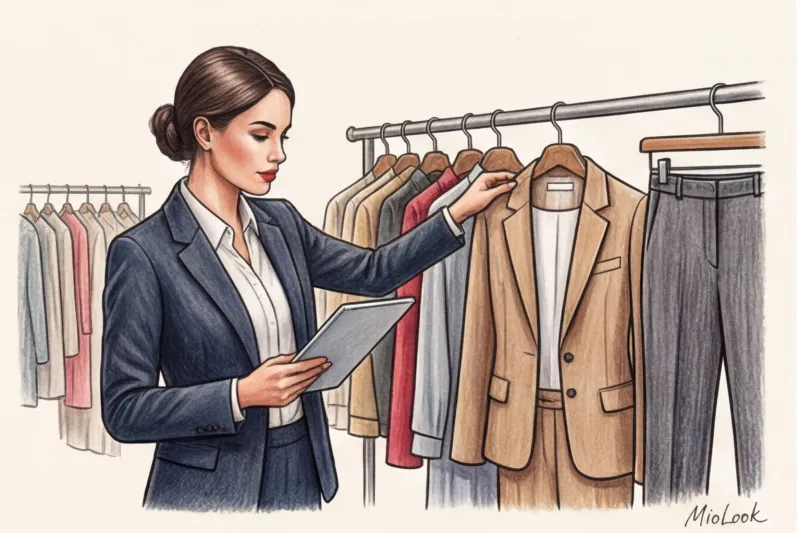
"If a girl has ordered a basic jacket, don't offer her another jacket. Bring her a statement silk scarf, a belt, or trendy wide-leg trousers. Say, 'I see you've chosen a lovely blazer. While you're changing, I've brought trousers that will pair with this jacket to create the perfect three-piece suit, just like you saw on the runway.'"
This approach requires training. Staff must understand the principles of styling and proportions (for example, the secrets of planting women's pantsuit for tall women ). The salesperson is no longer just a cashier – they become a trusted fashion advisor.
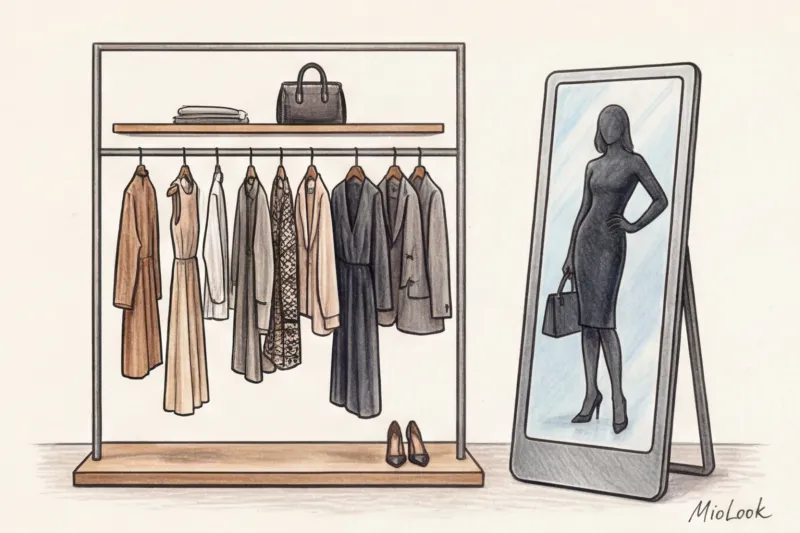
Technology and Seamless Experience: Connecting Online and Offline
Nothing destroys brand loyalty more than the phrase, "Sorry, but the online store and our retail store are separate entities. We can't process returns here." A 2022 Harvard Business Review study confirms that modern shoppers perceive a brand as a single entity and don't want to delve into a company's internal bureaucracy.
The partial order redemption process should be completely seamless. Money for unsatisfactory items should be refunded to the card in one click, and loyalty points should be awarded instantly for any additional purchases.
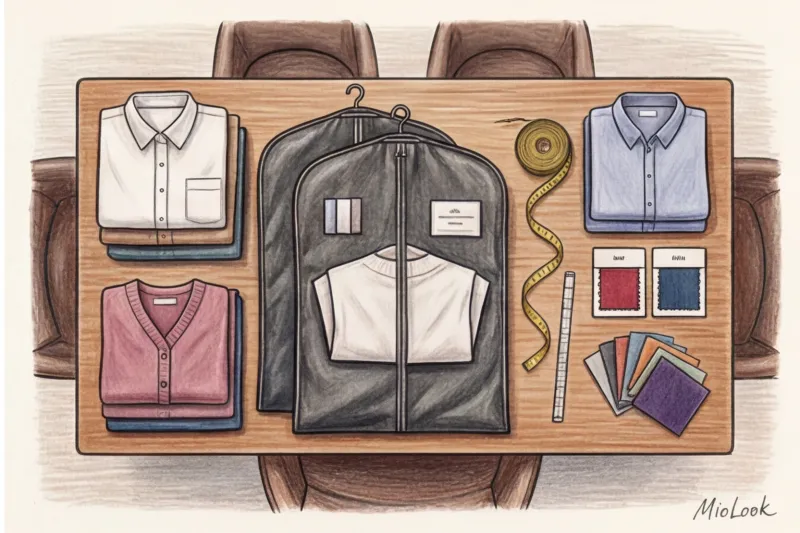
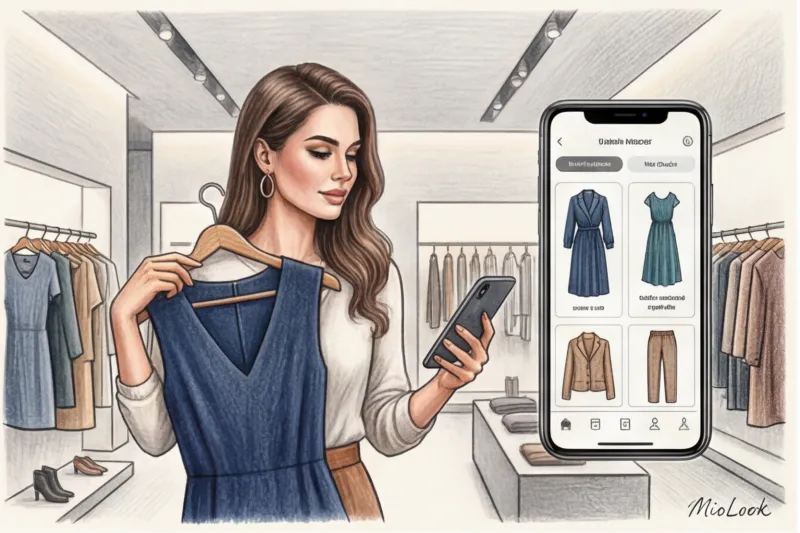
This is where technology comes to the rescue. For example, integration with the user profile in the app. MioLook allows the in-store stylist to see the client's measurements, color type, and even their current wardrobe in advance. This translates analytics for the fashion business to a whole new level: you don’t just give away an item, you know what the client will wear it with.
Digitize your wardrobe
Your perfect look starts here: Join thousands of users who look flawless every day with MioLook.
Get access — €0.99 onceBusiness Checklist: 5 Steps to Perfect Pickup
If you want to transform your Click & Collect zone from a cost center into a profit generator, start with this strict checklist:
- Customer Journey Management (CJM): Walk the entire journey from the store door to picking up your box yourself. Is the navigation sufficient? Doesn't the customer have to stand in line with people just checking out socks?
- Fitting room modernization: Expand the area of at least two booths specifically for online orders. Add a pouf, a bag table, and check the lighting temperature.
- Staff training: Ban silent delivery. Implement styling session scripts and train salespeople to prepare "sets" for pre-ordered items.
- IT synchronization: Provide salespeople with real-time access to customer purchase history on their tablet.
- Motivation system (KPI): Offer your offline retailers a generous bonus for upselling online orders. If they perceive in-store pickup as free, there will be no conversion.
Summary: The Future of Omnichannel in the Fashion Industry
The days when a store was simply a place to store clothes are gone forever. Today, successful fashion retail is a hybrid of a gallery, a club, and a personal fitting room. And the in-store pickup format plays a key role in this transformation.
Simply handing a client a bag is a missed opportunity. Holding them, immersing them in the right light, genuine service, and precise styling recommendations—that's what builds brand loyalty.
Remember: a woman doesn't return to the place where she was quickly handed a cardboard box. She returns to the place where she looked in the mirror and felt beautiful.