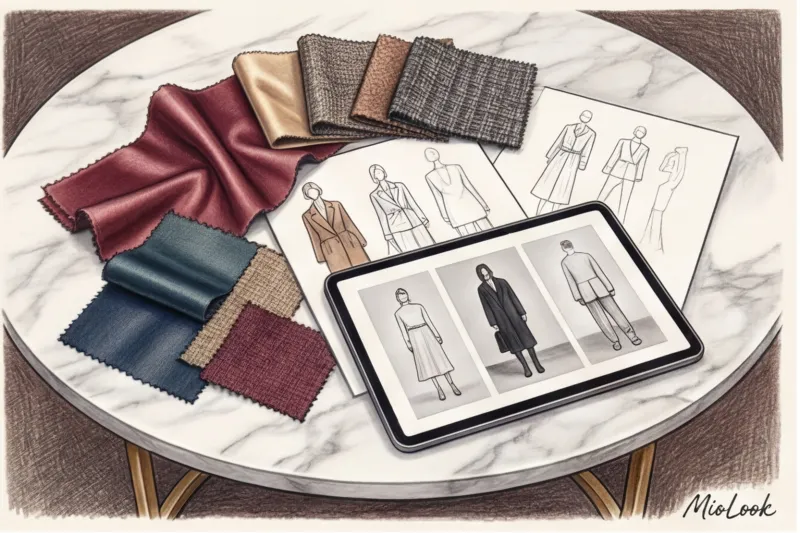
Have you ever wondered why a perfectly good sales funnel often ends with a return of an item that seemed like a dream on the website? One day, a client came to me in utter despair: she'd bought a stunning Max Mara coat for €2,500 after seeing it on a famous influencer. One-click checkout, fast delivery, a luxurious matte box. The brand's marketers celebrated—the conversion was flawless. But three days later, the coat was back in the boutique. Why? Because the client simply didn't know how to incorporate this complex camel shade into her cool, mostly gray wardrobe.
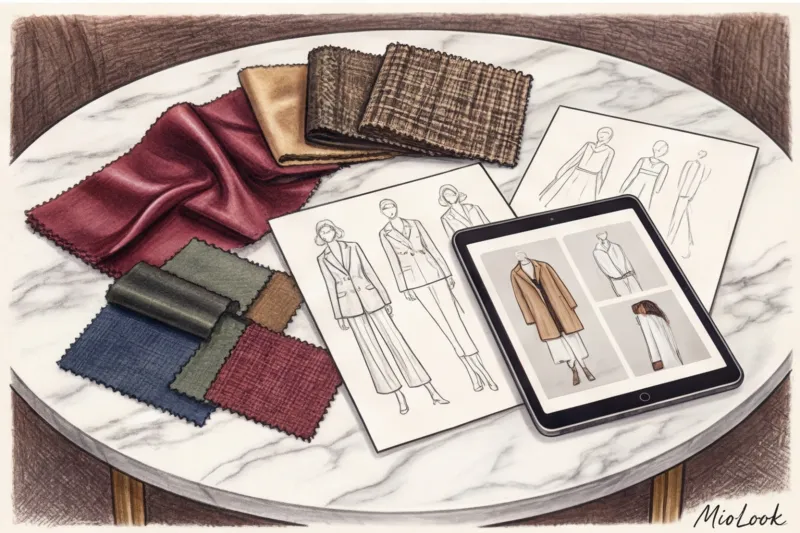
This is a prime example of how classic CJM in fashion retail fails if the real life of the thing is not taken into account. We have already discussed the technical mechanics of such processes in more detail in our The Complete Guide to Omnichannel Retail: How to Combine Online and Offline But today I want to look at this journey differently—through the eyes of a luxury stylist. For me, the key metric for a brand's success isn't the checkout conversion rate, but rather the cost-per-wear. Let's explore how to build a seamless customer journey that ends not at the checkout, but in a long-lasting love for the item.
What is CJM in fashion retail: the anatomy of customer desire
Classic marketing teaches us to think in stages: attention, interest, desire, action. In the fashion industry, especially in the premium segment, this path is never linear. A client might spend six months cherishing looks from The Row collections, pop into a boutique for a quick glass of champagne with a consultant, leave without making a purchase, and then order a bag online that night.
Unlike purchasing household appliances, fashion-based consumer experience (CJM) is built on three pillars: aesthetics, emotion, and tactility. According to a 2023 study by Bain & Company on luxury consumer behavior, 73% of shoppers base their final decisions on micro-sensations: the sound of a zipper closing, the weight of hardware, or the way fabric glides over the skin.
"In my practice, I create 'style maps' for my clients—visual guides where each item has its place and usage scenario. Brands absolutely need to implement a similar approach if they want to manage the customer experience and not just sell pieces of fabric."
For a truly seamless journey, the brand's voice must be consistent across the board, from the font on Instagram to the fragrance in a physical boutique. If you project "relaxed Parisian chic" on social media while your in-store sales associates sound like stern enforcers, the magic will fade instantly.
Stage 1: From Aesthetic Promise to First Touch (Awareness and Search)
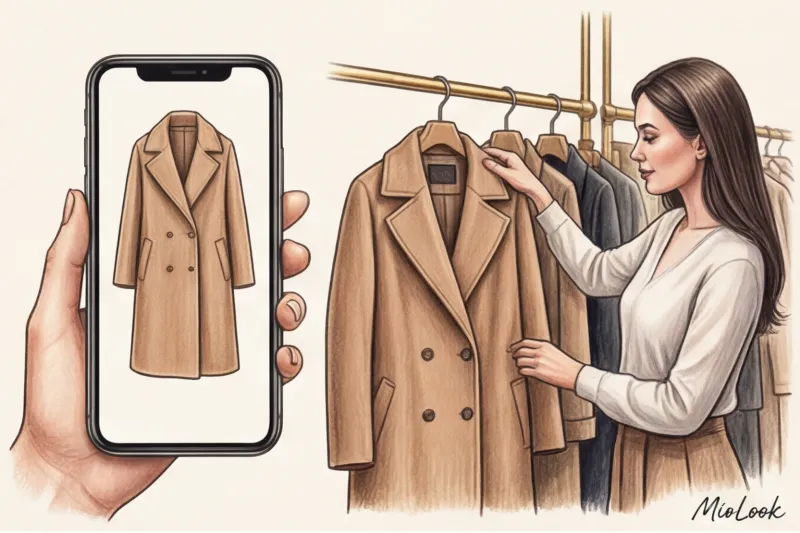
The first touchpoint these days almost always happens digitally. But there's a huge pitfall here, which I call the "fashion catfishing" effect. Brands have learned to create stunning shoots with complex studio lighting, retouching, and pins pinned to the model's back for a perfect fit.
Clients regularly come to me with mood boards from Pinterest. Recently, a woman brought me a reference image of a flowing silk dress from the account of a popular mid-market brand. When we ordered it for a fitting, the reality was harsh: instead of the expected flowing silk, it was stiff polyester that staticked with every movement and visually added volume. The client's disappointment was colossal, and it projected onto the entire brand. Fabric in the €100-€150 range must live up to the visual promise.
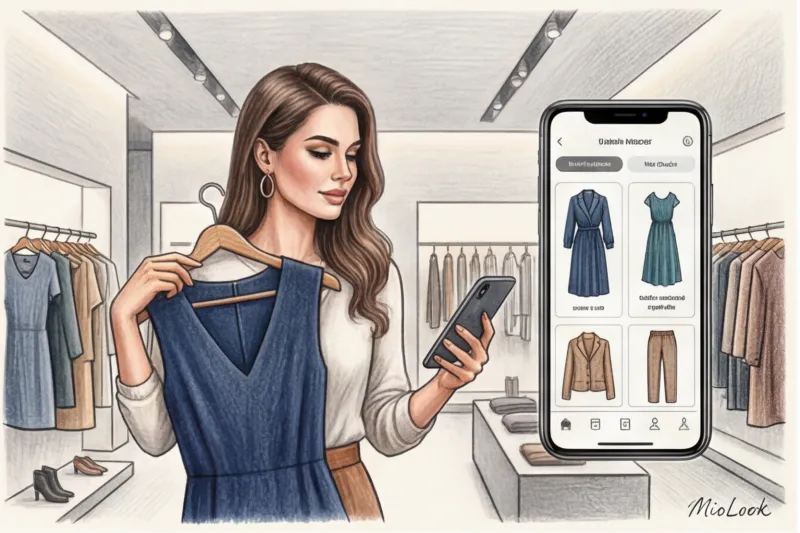
How to lower the barrier to first purchase? Integrate technology. Virtual fitting rooms and AI analytics for fashion businesses help clients more accurately understand the fit for their body type. But I'll be honest with you: there is a limitation. Virtual fitting doesn't work For items with complex cuts and fabrics with a pronounced texture (tweed, bouclé, heavy velvet), you need to feel them physically.
Access to MioLook for €0.99 — one-time payment
A smart AI stylist will select the perfect looks, helping you visualize clothes before purchasing.
Get access — €0.99 onceStage 2: The Moment of Truth – The Fitting Room as the Main Point of Contact
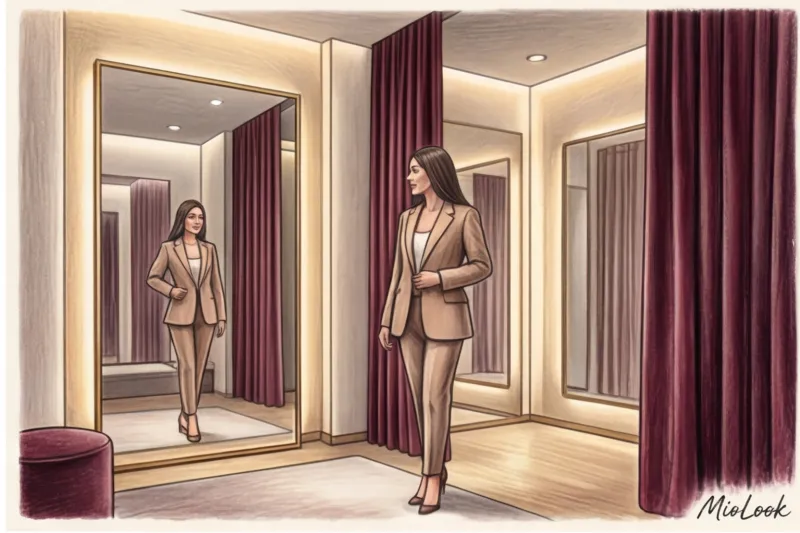
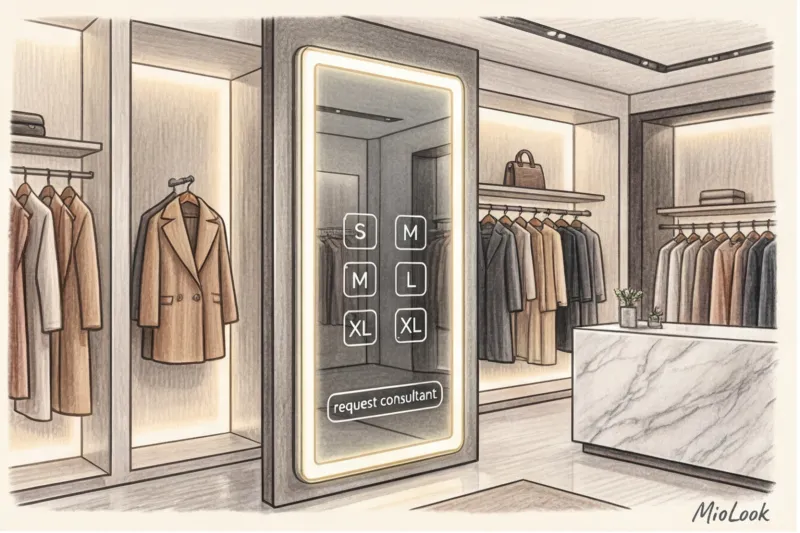
If a website is a storefront, then a fitting room is the altar of sales. It's here that a brand either wins a customer for years to come or loses them forever. And we're not just talking about a locker at a shopping mall, but also in your own bedroom when the courier delivers your online order.
In my 12 years as a stylist, I've seen hundreds of fitting rooms. And I can say with certainty: bad lighting kills sales faster than high prices. In my memory, the perfect trouser women's suit The €1,200 suit was left hanging in the store only because the harsh overhead lighting in the booth created deep shadows under the customer's eyes and highlighted every blemish on her skin. She looked in the mirror and said, "I look old and tired in this." The suit was flawless. The lighting was to blame.
What shapes the tactile experience at this moment?
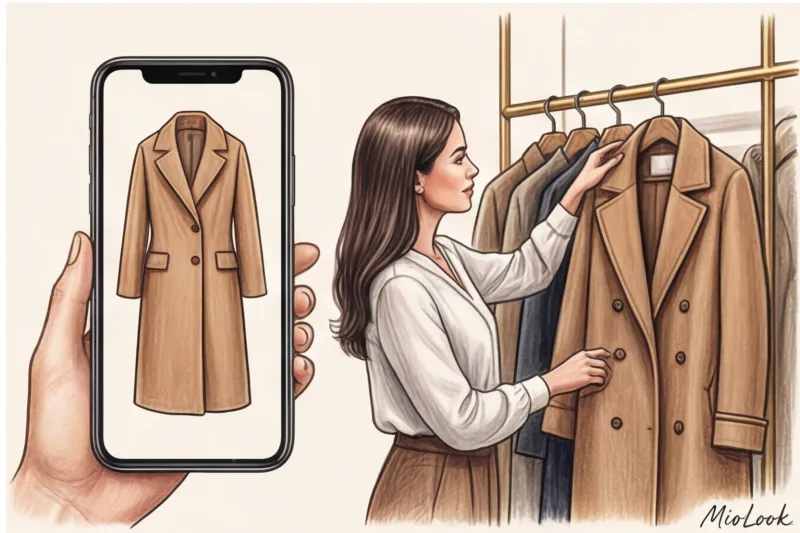
- Temperature and weight: Real silk with a density of 19 momme always feels slightly cool on the skin, and the right cashmere feels like a weightless cloud, not a heavy shell.
- Mirrors: They should be installed at the correct angle (strictly vertical) and have a light tint to smooth out contrasts.
- Fittings: Plastic buttons on a high-quality wool jacket for €300 are a crime against the customer experience. Replace them with horn or metal ones, and the perceived value of the item will double.
The biggest mistake brands make: Selling a thing instead of a solution
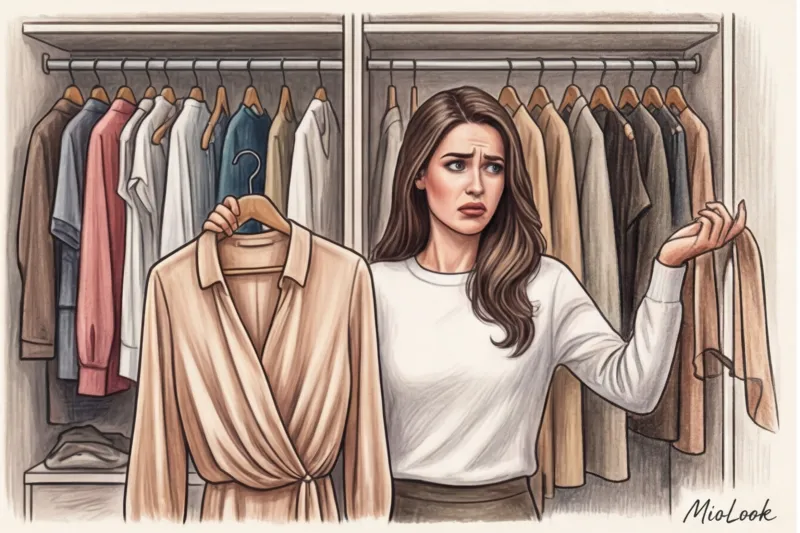
Most retailers live under the illusion that their sales funnel ends the moment the check is run. It's counterintuitive, but true loyalty is formed at the "lonely item in the closet" stage. If you sold a customer a complex asymmetrical skirt but didn't explain what shoes and top to pair it with, you've created an "orphan item."
Myth: A woman is just looking for a black jacket. Reality: A woman is looking for a jacket that will solve the problem of "nothing to wear to an important presentation on Wednesday." You should be selling ready-made scripts.
That's why we use the Cost-Per-Wear metric in styling. If you buy a trench coat for €400 and wear it 100 times per season, its CPW is €4. That's a brilliant investment. If you buy an impulsive evening dress for €100, wear it once to a corporate event, and then forget about it, its CPW is €100. A brand that helps reduce CPW through styling cues (in newsletters, product cards, and consultant advice) wins the loyalty race.
Your perfect look starts here
Join thousands of users who look flawless every day with MioLook by integrating new items into capsules.
Get access — €0.99 onceStage 3: Frictionless Transaction and Hybrid Shopping
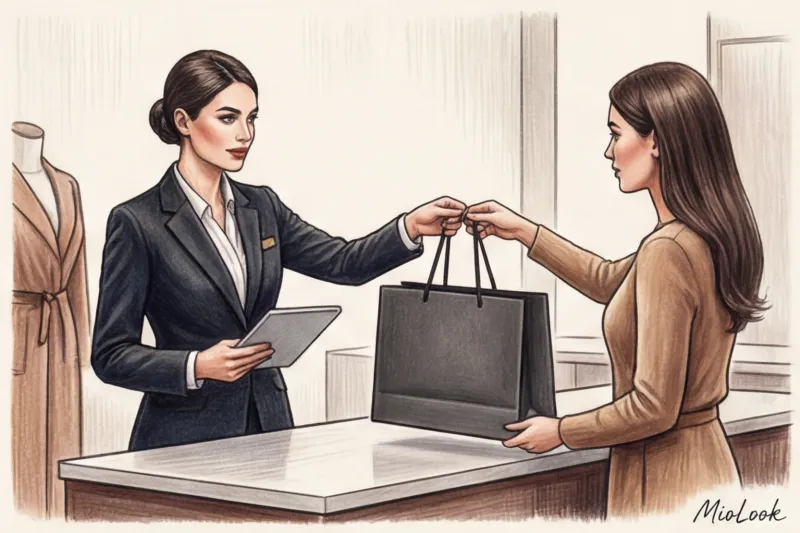
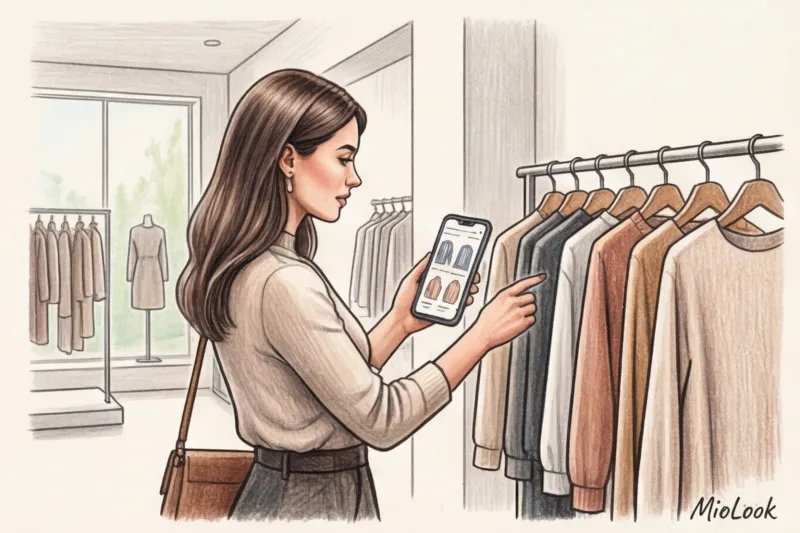
According to McKinsey's State of Fashion (2024), over 60% of luxury shoppers practice hybrid shopping. They check their size on their phone while standing right in front of the boutique display. At this point, any misalignment is catastrophic. If an item is available online but can't be found in stock in-store, the magic is ruined.
The connection between the online shopping cart and the in-store visit should be seamless. When a customer comes to pick up their order (Click & Collect), the consultant should already know their profile. "Anna, your jacket is ready for you to try on. By the way, those silk trousers you bought from us last season would go perfectly with it."
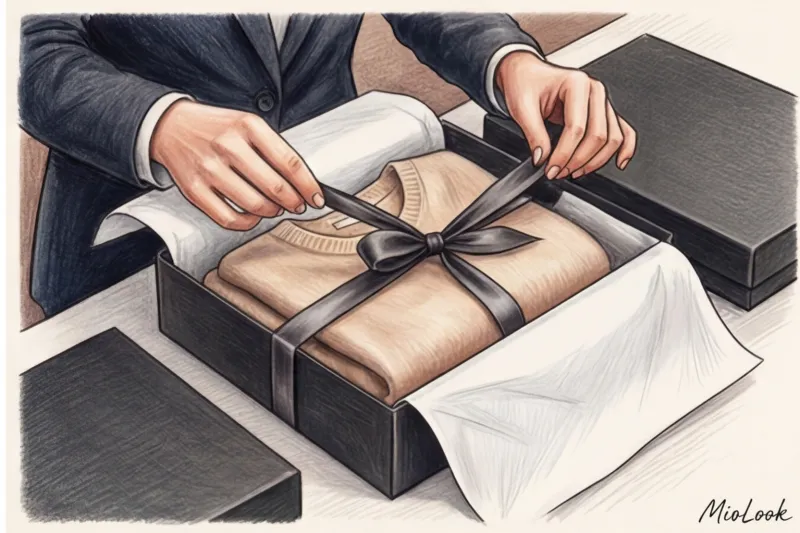
And don't forget about the checkout process. Packaging is a physical extension of the aesthetic experience. Thick matte cardboard, rustling tissue paper, high-quality ribbon. Unpacking at home should recapture the same emotion customers experienced when they first saw the item on Instagram.
Stage 4: The life of an item in the wardrobe and the loyalty loop
After-sales service in fashion isn't just sending emails asking for feedback. It's caring about the garment's long-term health. Brands like Brunello Cucinelli or Loro Piana always include cashmere care instructions and offer repair or dry cleaning services.
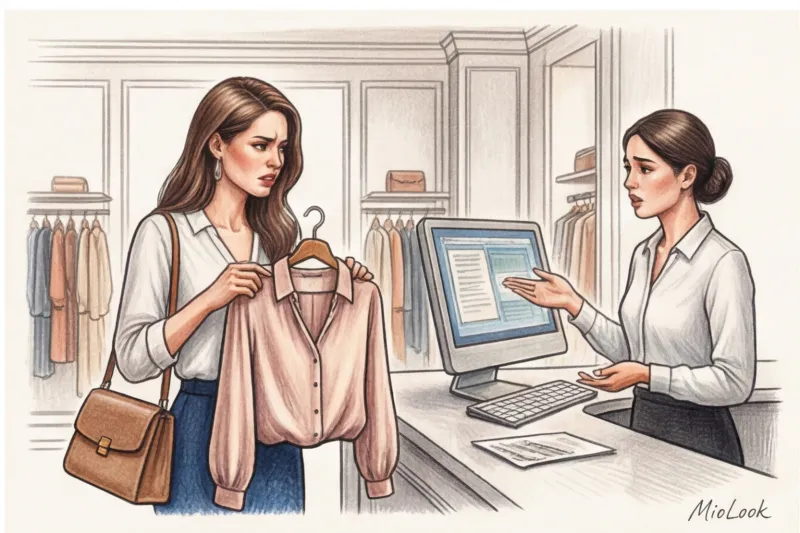
I learned one of the most powerful tricks while working with luxury boutiques on Via Montenapoleone in Milan. Do you know how they process returns? They don't just cancel the receipt with a sour face. The consultant offers an espresso and genuinely asks, "Why didn't that item fit? What were you planning to wear it with? Let me show you how to style these trousers with that jumper you bought from us six months ago." In 30% of cases, this smart approach turns a return into a personal styling session and... a new upsell worth €500-€800.
Italian boutiques also practice follow-up calls. A week after a major purchase, they'll call you not to sell you anything else, but with one question: "Have you managed to integrate the new skirt into your wardrobe? Are you comfortable in it?" This is the pinnacle of customer experience.
Checklist: Auditing Your CJM Through the Eyes of a Stylist
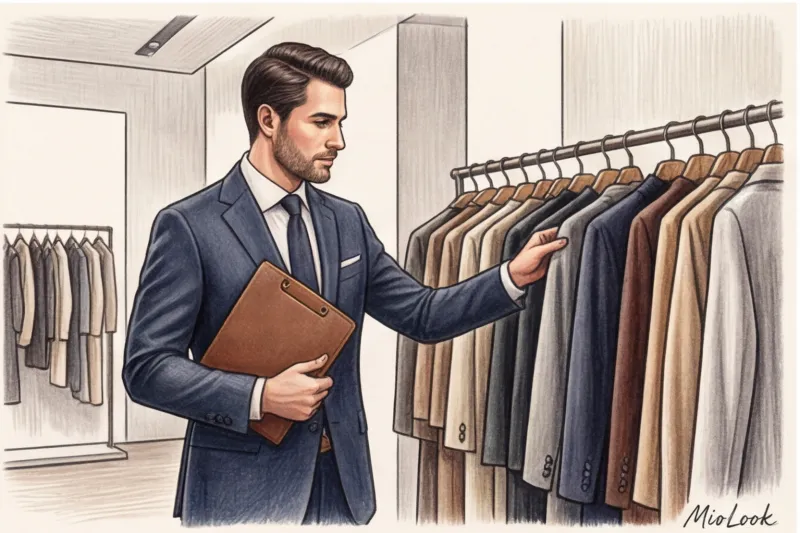
If you're a fashion business owner or manager, audit your customer journey today. Here are four concrete steps that will give you a clearer picture:
- Content fairness rating: Take a top-selling item from a website and place it next to your smartphone screen. Does the texture of the fabric match the photo? If the viscose looks like heavy silk in the photo, but wrinkles in real life, change the presentation.
- Fitting room test: Go into your store's booth, put on a complex item (like a fitted jacket), and take a selfie. If you don't like yourself because of the light, immediately switch to warm bulbs (around 3000-3500K) with frontal lighting.
- Omnichannel Assessment: Try adding an item to your cart from your phone, going to the store, and asking a sales associate to look up your profile number. How quickly will they see your size and preferences?
- Post-sale rating: Is there a "What to Wear With" section on the product page? Do you send customers emails with pre-made looks within two days of purchase?
The customer's journey in fashion is a delicate balance between art and commerce. Clothing isn't an isolated object, but a piece of a vast puzzle called "a woman's life." A brand that understands this and accompanies its client from the first admiring thought to the daily pleasure in front of the mirror is no longer just a store. It becomes her personal stylist, someone she can trust with her investment.