Five years ago, I was consulting at a boutique on Via Montenapoleone in Milan. That morning, manager Carla, without even checking the system, gave the order: “By 2:00 PM, prepare the VIP fitting room for Signora Moretti. Put aside the cashmere cardigan in camel, Italian size 42. And remove all items made of coarse wool—she hates them.” That day, the client bought the cardigan and three other basic items worth over €4,500, spending just 15 minutes in the store. It’s not magic. It’s impeccable. clienteling in fashion retail.
Today, when 70% of premium purchases are influenced by prior online research (the so-called ROPO effect—Research Online, Purchase Offline), Carla's intuition is no longer enough. Brands must know everything about their customers before they even step foot in a physical store. We covered this in more detail in our The Complete Guide to Omnichannel Retail.
Let's explore how to transform dry online data into a premium, emotional boutique service that dramatically increases customer lifetime value (LTV) and eliminates the need to ask the annoying question, "Can I help you with anything?"
The Evolution of the "Little Black Book": What is Clientele in Fashion Retail Today?
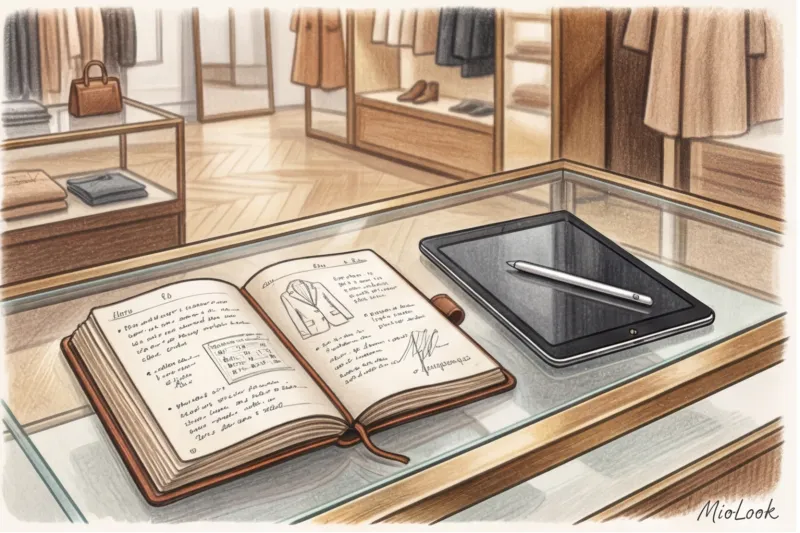
During the Haute Couture era, legendary salespeople kept thick leather notebooks. They recorded everything: measurements, birthdays, favorite shades, children's names, and even the names of clients' dogs. This was the ultimate form of personalization. But human memory is limited, and a notebook can't be scaled up to accommodate a thousand customers.
Modern customer service is the translation of the philosophy of bespoke tailoring into the realm of ready-to-wear clothing. It's a shift from mass customer service to personalized customer care. In a world where a basic trench coat can be purchased at COS for €150 or at Burberry for €2,000, product is no longer the only selling point. Service and saving the customer's time are becoming the primary retention tool.
"Luxury today isn't just a logo on a bag. It's when a brand remembers things about you that you've forgotten and doesn't make you repeat your preferences twice." I always emphasize this principle in my training sessions for fashion brands.
Digital Footprint in the Fitting Room: What Online Data is Changing the Rules of the Game
A 2023 Bain & Company study on the impact of omnichannel on the luxury segment paints a clear picture: omnichannel customers spend 2-3 times more than single-channel customers. Why? Because they are served using a unified customer profile—Customer 360.
Forget disparate databases where an online store doesn't know what a customer bought offline, and vice versa. Here are the specific digital traces from online (and apps like MioLook) that we, stylists, use to create the perfect boutique experience.
Browsing history and abandoned carts
The most valuable information is not what the customer bought, but what he paid for it. I looked at it but didn't decide to buy it. Let's say a customer opened the website page for a silk lingerie-style dress three times, added it to her cart, and then left. The reason? Most likely, concerns about the fit or length.
What does a competent offline consultant do when this client comes into the boutique for a basic T-shirt? They use a subtle approach. They don't say, "Buy a dress." They simply hang the dress in the fitting room next to the T-shirt and say, "I've found a few pieces to pair with your T-shirt for inspiration, including this gorgeous silk dress from the new collection—it has the phenomenal bias cut you love so much."
Fabric, pattern, and fit preferences
Analyzing online returns is a hidden gem in customer service. I once worked with a loyal customer who regularly ordered palazzo pants online and always returned them, keeping only the tapered styles.
When she came to the boutique, our stylist didn't even show her wide silhouettes, focusing on flared silhouettes and skinnies. Knowing a client's investment preferences (for example, an allergy to synthetics, a love of pure cashmere, or a passion for a certain midi length) saves us hours of time—both hers and ours.
A smart wardrobe on your smartphone
Tired of remembering what goes with what? MioLook combines your purchases and helps you create ready-made looks in seconds.
Get access — €0.99 onceFrom "Need a hint?" to "I've put your size aside": The magic of a predictive service
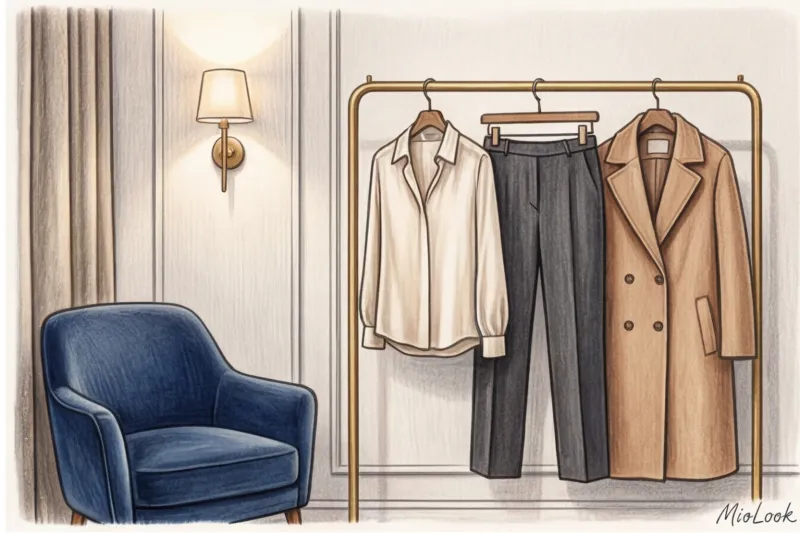
Let's be honest. The phrase "Can I suggest anything?" is dead. It evokes the instinctive response, "No, I'm just browsing." True clientelism in fashion retail begins with eliminating this phrase.
According to a McKinsey report “Personalizing the customer experience: Driving differentiation in retail” By 2024, personalized recommendations in a physical store could increase the average purchase by 20–30%. What does the ideal shopping experience look like?
- The client logs into the brand's app or books a visit (for example, through the stylist functionality).
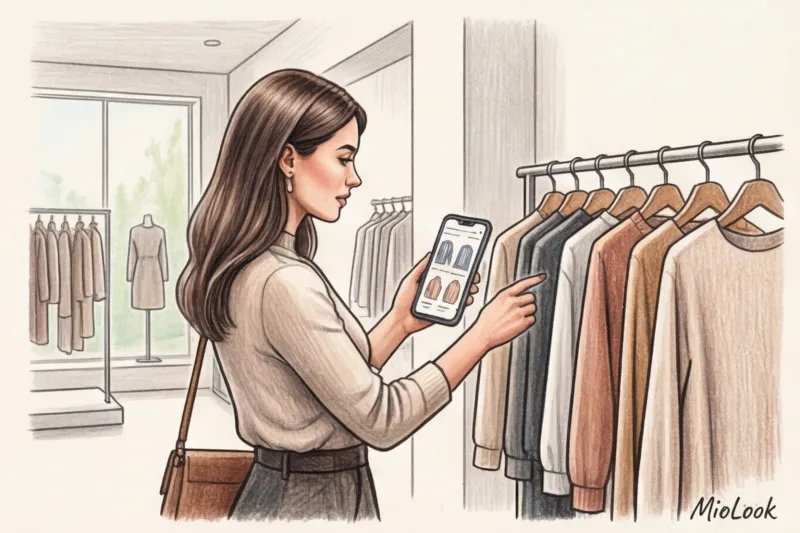
- The consultant receives a notification on her tablet: “Anna is coming, size M, warm autumn color type, average bill €600, likes brand X, was looking for a wool coat a week ago.”
- By the time Anna walks in, the fitting room (Client Room) is ready for her. There's a coat hanging there in her size, the perfect scarf and ankle boots to match, and her favorite unsweetened espresso on the table.
From personal experience: when we implemented this fitting room preparation system in one of our concept stores, the conversion rate from visit to purchase skyrocketed from 20% to 70%.
The Hyper-Personalization Fallacy: When Data Becomes "Spooky"
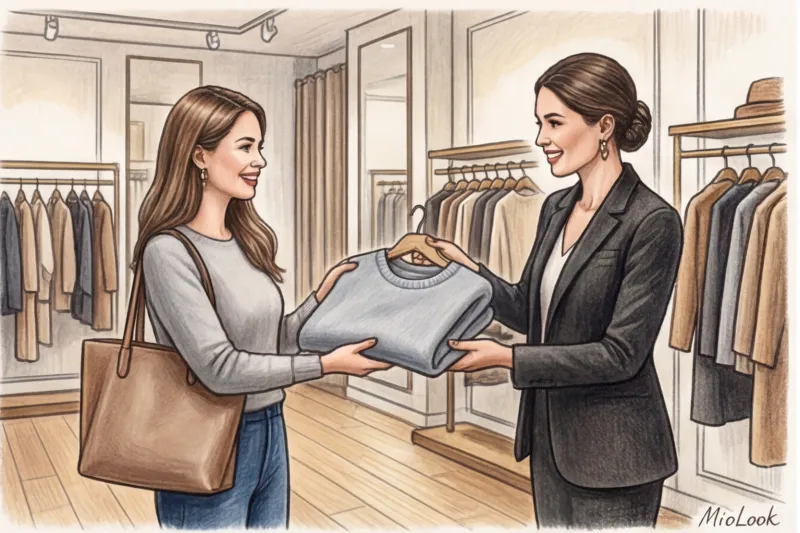
Here I want to make an important digression. There is a myth: The more customer data a seller uses, the better. This is a dangerous misconception.
If a consultant approaches you and says, "Hello! I saw in our CRM that you zoomed in on this skirt on our website three times yesterday at 2 a.m.," you'd be horrified. It's a classic example of the uncanny valley effect (creepiness in retail). Violating personal boundaries instantly destroys trust in a brand.
The art of clienteling lies in elegantly "wrapping" algorithms in human empathy. As a stylist, I teach consultants to translate data into the language of care. Instead of dreadful facts, we say: "Anna, we just unpacked this skirt from a new shipment. Knowing your love of flowing fabrics and asymmetrical cuts, I immediately thought of you and saved your size." Was the data insight used? Yes. Is the client scared? No, they're flattered.
Omnichannel Wardrobe: Integrating Past Purchases with New Collections
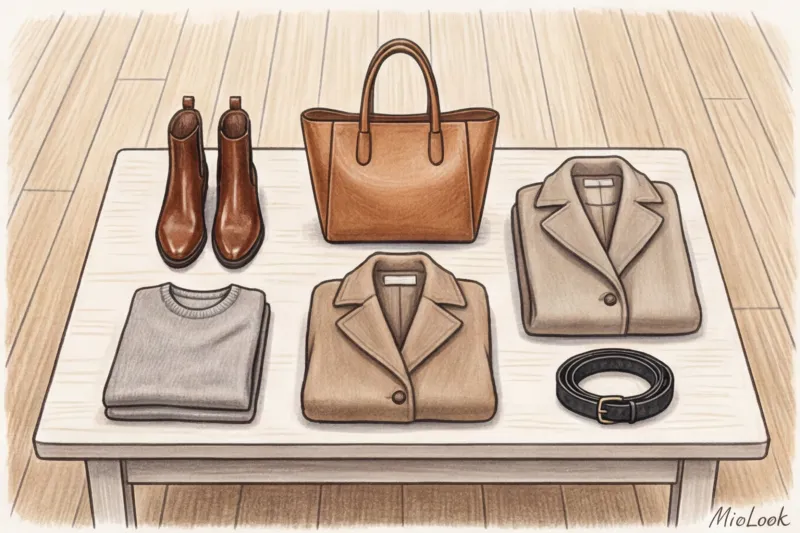
The most advanced technique in fashion sales is cross-selling based on historical data. A customer rarely buys an item on its own; they buy a solution for their wardrobe. And if you help them integrate a new item into what they've already purchased from you, you'll reduce their cost. cost-per-wear. This means you will justify any price, even a premium one.
Here's how it sounds in practice: "This graphite cashmere jumper for €350 will perfectly complement those milky wool trousers you ordered from our website last spring. You'll get a luxurious monochrome look." For more information on how to assemble such kits, read our article about business capsule clothing.
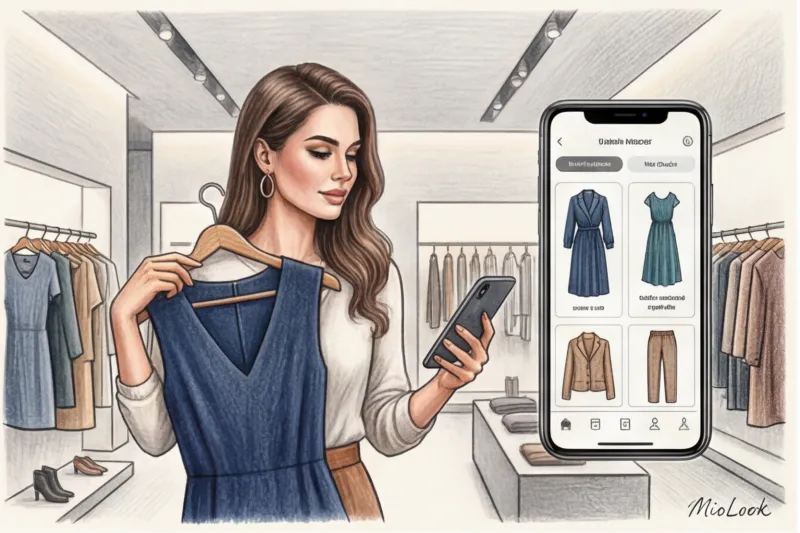
This is where tools like this come in handy. Smart Stylist feature in MioLook , which allows the client to visualize how a new purchase from the store will fit into their existing virtual wardrobe.
Visualize your style with AI
Your perfect look starts here: Join thousands of users who look flawless every day with MioLook.
Get access — €0.99 onceImplementing Clientele Management: A Checklist for Fashion Businesses
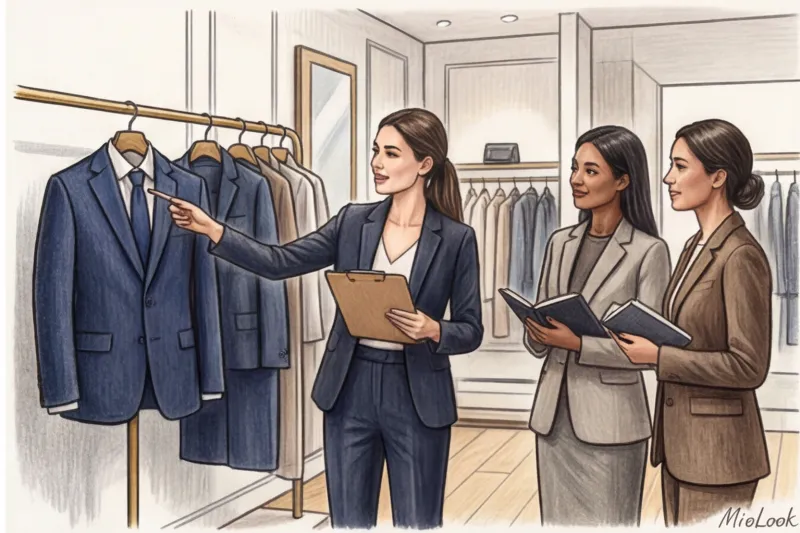
If you own a boutique or fashion brand, switching to clienteling isn't just about buying an expensive program. It's a change in your company's philosophy. But there's an important limitation I should warn you about: Customer service doesn't work if you have a bad product or 80% employee turnover per year. No CRM system can save crooked patterns or one-day consultants who don't care about fashion.
For those who are doing well with the product, I've prepared a practical checklist:
- Unified ecosystem (Omnichannel). The online store, the physical cash register, and the merchant's app must exchange data in real time. If a customer redeems points in the app, the cash register should see it within a millisecond.
- Staff training (From cashier to stylist). Your employees must understand color types, proportions, and color theory. They're no longer just punching out checks—they're creating style.
- Changing the KPI system. The most common mistake: offline salespeople hate online stores because they "steal" their sales. Set up incentives so that salespeople receive a bonus for helping a customer choose a size in the fitting room, and the customer completes the purchase later through the app from home.
- Visualization tools. Use platforms like MioLook for online storefronts so employees can quickly show customers how items go together, right on the tablet.
Data is just numbers in the cloud. It only becomes real gold when it falls into the hands of a professional stylist, capable of converting kilobytes of information into a genuine smile on the face of a client leaving the boutique with the perfect cashmere coat.