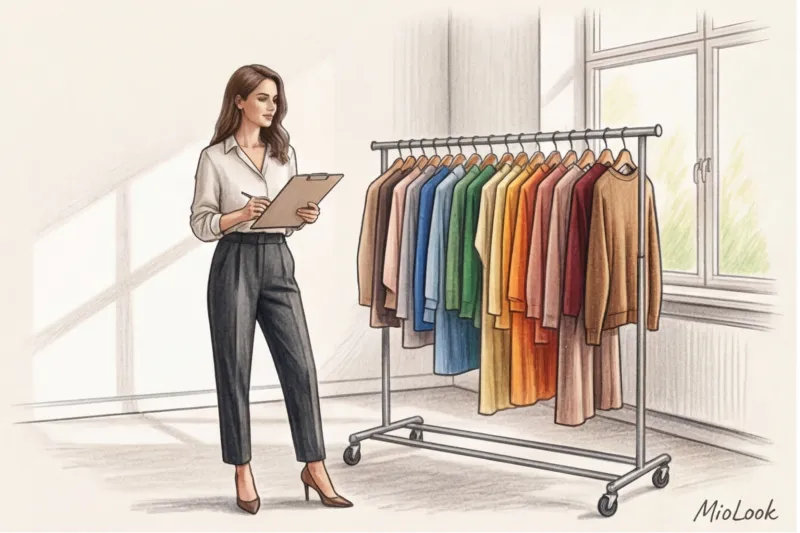
Last year, the owner of a local eco-clothing brand approached me. The situation was typical: beautiful collections, eco-friendly fabrics, luxurious lookbook shoots, but the return rate for online orders was hovering at an alarming 35%. Customers were returning items with the same reasoning: "It doesn't fit my wardrobe." We solved the problem not by changing patterns, but by using data. Within six months, we managed to reduce the return rate to 8%, and the key to this was the right approach. digitalization of the store's product range.
Most retailers still believe that digitalization means simply taking a photo of an item against a white background and uploading it to an e-commerce platform. But for modern neural networks and virtual styling algorithms, a photo without deep metadata is just a bunch of pixels. We discussed why the traditional approach no longer works in more detail in our The Complete Guide to Omnichannel Retail Today, we'll explore the "inside" of the process: how to translate the physical properties of fabric (density, wrinkling, drape) into data so that artificial intelligence can create the perfect capsule collection of items that already hanging in your client's closet.
Why businesses need to digitize their store inventory (and why simply uploading photos to the website isn't enough)
Buying clothes is a process often accompanied by micro-anxiety. When a customer looks at a jacket in your online store, a complex calculation process begins in her head: "What will I wear this with? Will it go with my wide-legged gray trousers? Will it fit under my coat?" If there are no answers, the item is either not purchased or bought impulsively and then returned.
According to McKinsey's "The State of Fashion 2024" report, consumer demand for hyper-personalization has reached an all-time high. Buyers no longer want to see a garment in the vacuum of a studio cyclorama. They want to see it on themselves, in the context of their lives.
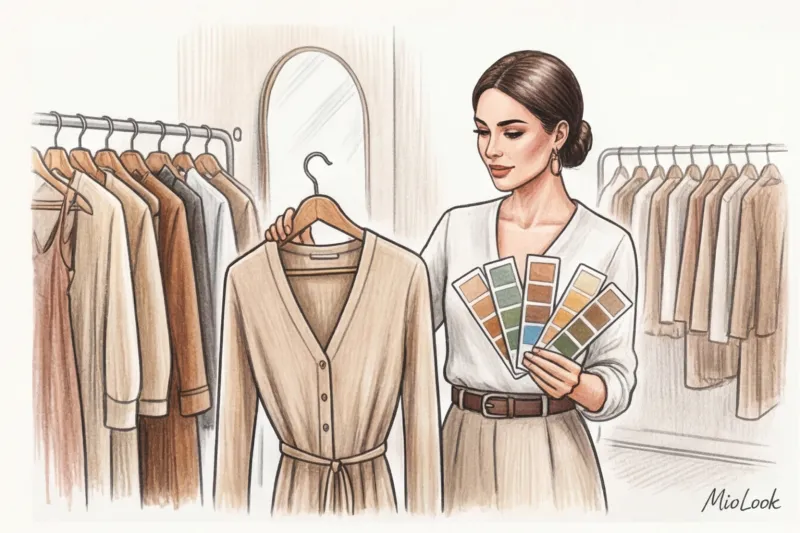
The difference between a classic storefront and smart wardrobe integration is dramatic. A storefront showcases products. Integration demonstrates a use case. When you transfer your collection data to wardrobe management apps, you effectively break the screen barrier, placing your product directly on the customer's shelf.
Access to MioLook for €0.99 — one-time payment
A smart AI stylist will select the perfect look based on your preferences.
Get access — €0.99 onceThe Anatomy of a Digital Thing: What Data Does an AI Stylist Really Need?
Why isn't it enough for an algorithm to know just the size and color (e.g., "M / Red")? Imagine a red chunky knit sweater and a thin red silk blouse. For a primitive accounting system, these are two red shoulder garments. For a stylist (and for AI), these are items from different universes, requiring completely different stylistic environments.
Over 12 years of working as a stylist, I've learned the most important rule: a thing only works within a coordinate system. When I manually tag items for clients, I create a semantic core for each one. A business should do the same when automating.
- Thing archetype: Base, accent, statement.
- Temperature conditions: Not just “winter/summer”, but a comfortable range in degrees.
- Dress code: Smart casual, business traditional, creative. And here we need to be specific—for example, modern business capsule requires markers other than a strict corporate style.
Textile Matrix: Composition, Density and Drapery
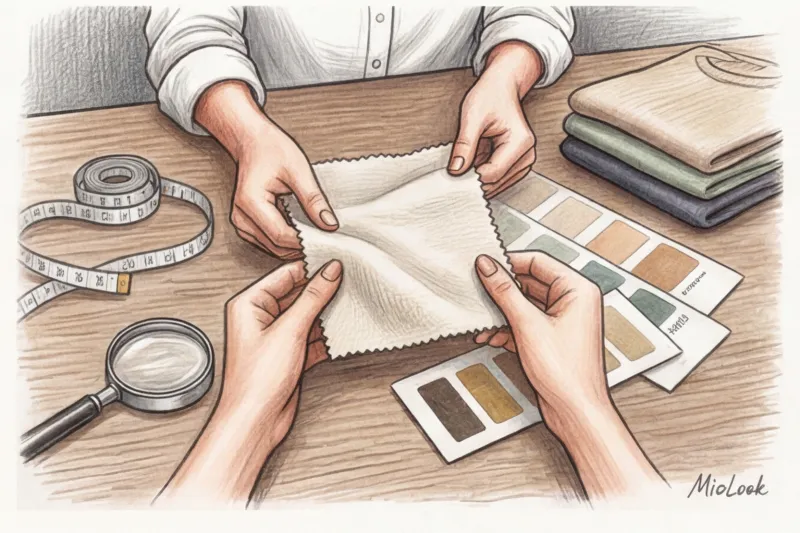
My favorite stage is the digitalization of tactility. Artificial intelligence can't touch things. If you don't tell the algorithm that this tweed is 350 g/m² and stiff, and this knit is loose and flowy, the AI will happily suggest the client wear a stiff jacket under a thin cardigan. The result? An inability to wear the look in real life.
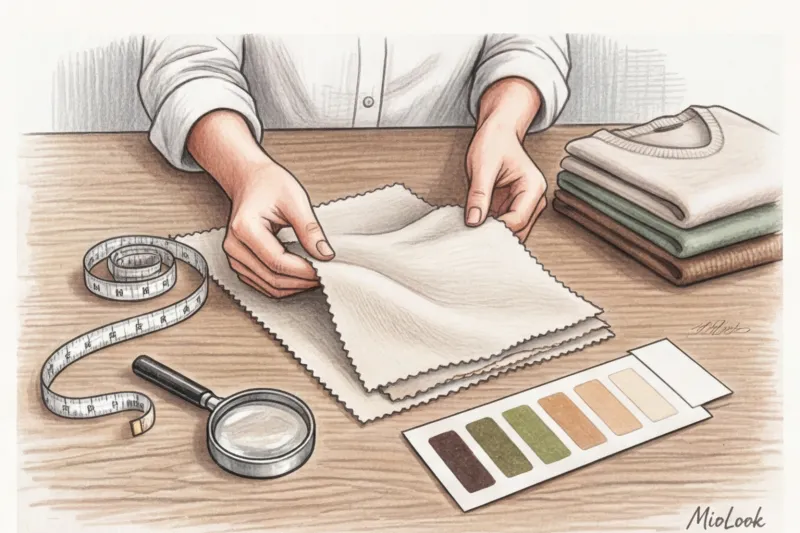
"Include parameters like 'stretch coefficient' (low/medium/high), 'weave density,' and even 'stain resistance.' This is especially critical for brands working with eco-friendly materials. Recycled cotton drapes differently than traditional percale—and this difference must be documented."
Visual Characteristics (Shooting Guidelines for Integration)
Let's be honest: photos of models in dynamic poses are great for Instagram. A flowing dress while jumping garners likes. But for a virtual fitting room, such photos are useless. No neural network (even the most advanced) can accurately crop out an item of clothing obscured by the model's hands, a bag, or folds from a strong wind.
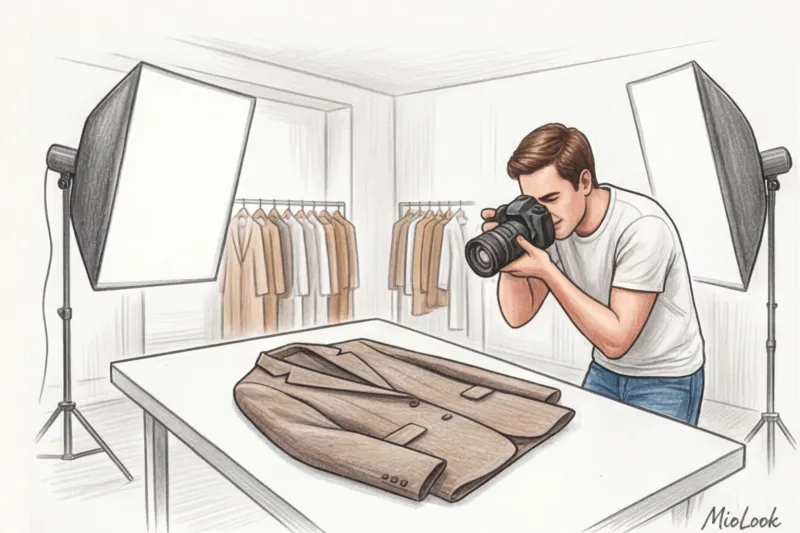
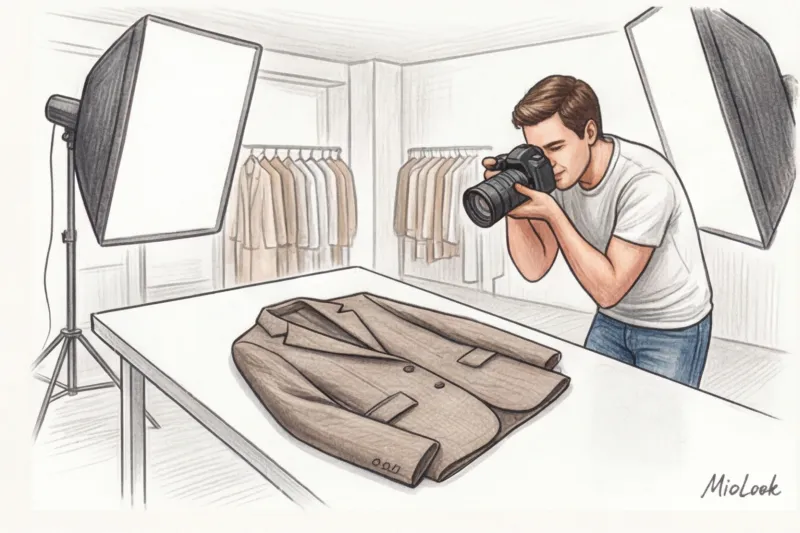
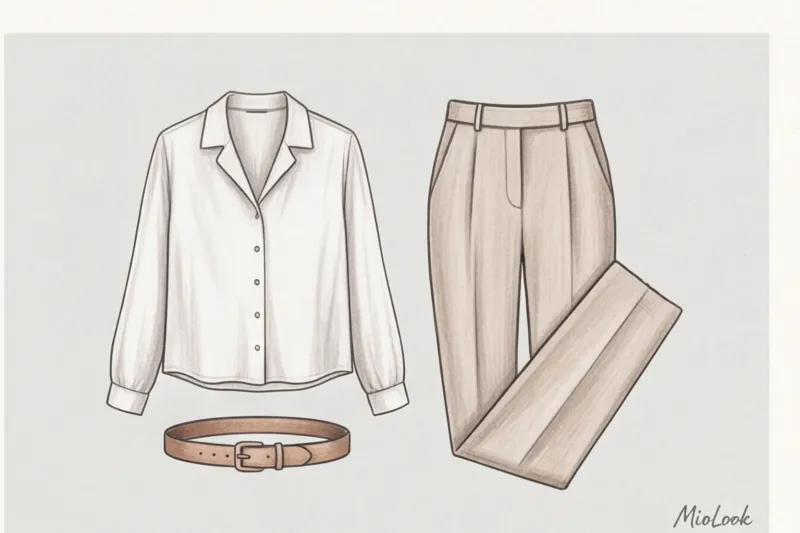
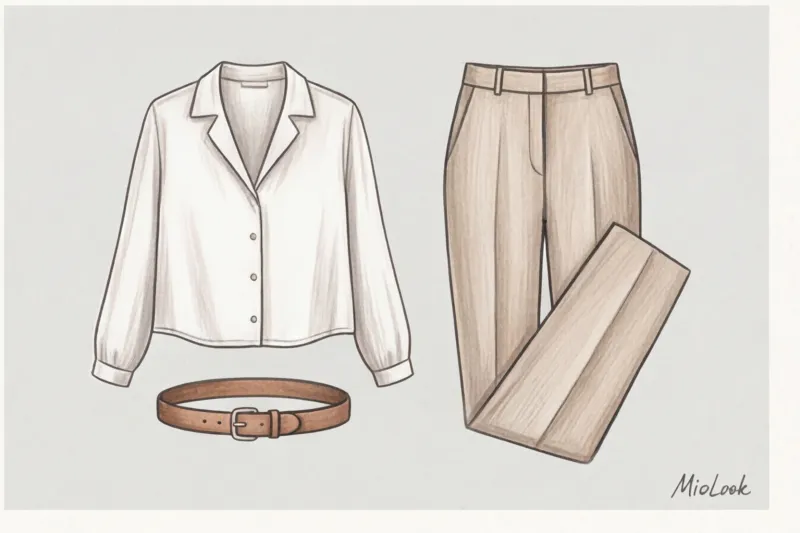
The ideal format for AI is flat-lay (layout) on a contrasting background, strictly frontal view without perspective distortion. Yes, it looks technical and boring. But it's precisely these types of sources that allow applications like MioLook seamlessly integrate your skirt into a collage with the client's favorite boots.
Your perfect look starts here
Join thousands of users who look flawless every day with MioLook.
Get access — €0.99 onceThe 3D Maximalism Mistake: Why Small Boutiques Don't Need Expensive Scanners
There's a common myth: full integration into tech fashion requires expensive 3D scanners, lasers, and full 3D modeling of every button. I constantly meet concept store owners who reject the idea of a digital wardrobe because "it's too expensive."
This is one of the biggest misconceptions in the industry. The truth is that high-quality 2D photographs in a layout format with deep textual property markup (meta tags) are 10 times more useful and effective for AI algorithms than "empty" 3D models without fabric friction coefficient information.
Let's look at the numbers. Creating a realistic 3D model of a single item can cost between €150 and €300. If you have 200 items in your seasonal collection, the budget goes through the roof. Meanwhile, technical flat-lay photography plus filling out an Excel property matrix will cost around €15–20 per item. Smart wardrobe algorithms don't need volume; they need logical pairings. Don't waste your budget on complex renders; spend it on high-quality descriptions.
Sustainable Fashion and Growing Margins: How Smart Digitization Reduces Returns
Up to 70% of returns in fashion e-commerce are due to unmet fabric expectations and poor fit (in the context of the rest of the wardrobe). The environmental cost of these returns is monstrous.
Research by the Ellen MacArthur Foundation shows that returns logistics, repackaging (which is often impossible), and subsequent disposal of unsold items generate millions of tons of carbon footprint annually. Sustainable fashion isn't just about organic cotton. It's about ensuring that an item reaches the customer once and stays with them forever.
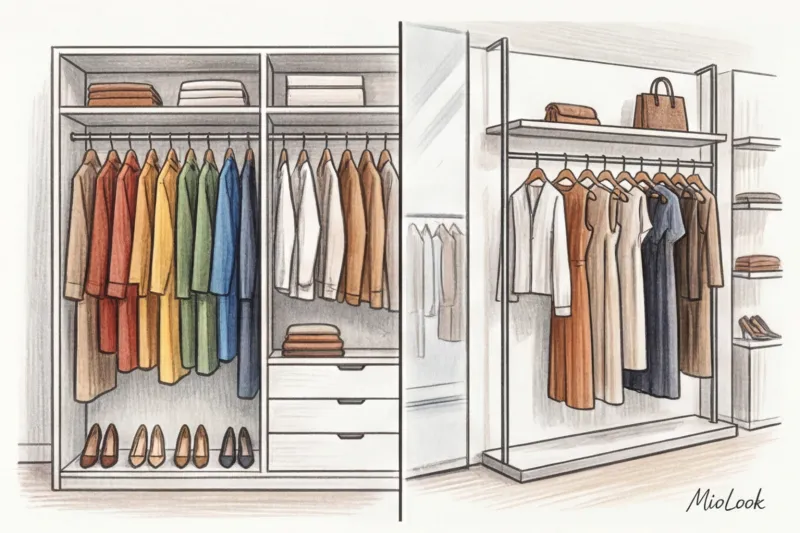
When your catalog is integrated with a customer's virtual wardrobe, conversion becomes "conscious." The customer sees, "Aha, this €120 cardigan goes perfectly with three of my skirts and two pairs of jeans." The risk of returns drops from the standard e-commerce 30-40% to a comfortable 5-10%. Margins increase simply due to savings on reverse logistics.
From Display to Closet: Selling Scenarios Through Wardrobe Apps
Imagine being able to send push notifications on a whole new level. Not just a simple "We're having a 20% discount," but a personalized message: "We've just added a wool-blend jacket to our boutique that'll perfectly complement those navy wide-leg trousers you added to your virtual closet last week.".
It's the "Buy the look" scenario turned on its head. You're selling a look based on the clothes you own. already exists at the client's home.
One of my clients, a business owner with an extremely busy schedule, recently bought three items online (for a total of about €450) without even trying them on. Why? Because the boutique's stylist, using smart digital technology, sent her a ready-made collage in which the new items were combined with her favorite loafers and office decorations , whose details were already in the app. This is the pinnacle of customer service, which retains the VIP segment better than any discount card.
Ready to get started?
Try MioLook's free plan to organize your looks—no strings attached.
Get access — €0.99 onceChecklist: 5 Steps to Integrating Your Boutique with a Virtual Wardrobe
The transition from a classic catalog to a smart one can be accomplished in a single season if you take a systematic approach. Here's a practical algorithm I implement with my corporate clients:
- Audit of the current photo catalog. Check if you have technical shots of each item (straight-up display against a neutral background, no shadows, no complex styling). If not, plan additional shoots, at least for the best-selling items.
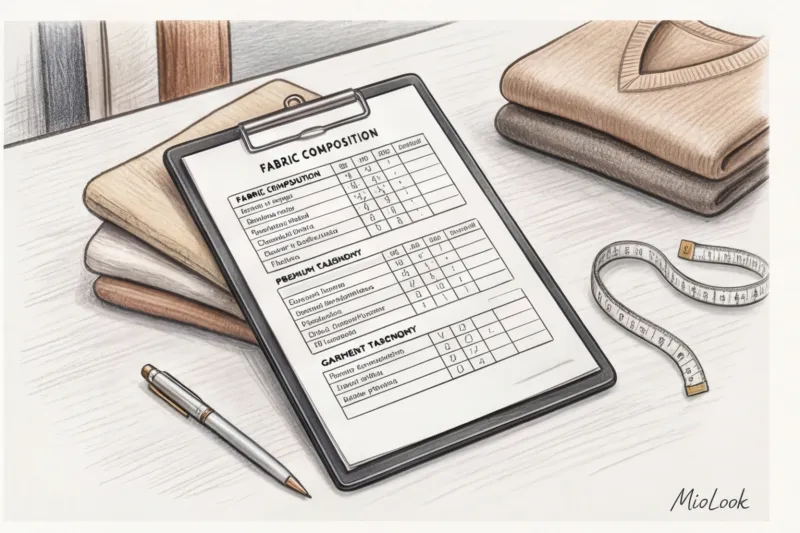
- Creating an extended table of characteristics. Create an Excel or CSV file that, in addition to the article number and price, includes the following columns: fabric density (g/m²), elasticity (0-3), seasonality, style (tags), and cut features (e.g., "low waist").
- Selecting a partner platform. Find an app with an open API or the ability to download a catalog (look for platforms with AI styling, such as smart wardrobe functionality in MioLook ).
- Test launch on the key capsule. Don't try to digitize 500 items at once. Take 15–20 items from the new collection that go perfectly together, label them according to all the rules, and track the analytics.
- Training of consultants. This is the most important, yet often overlooked, step. Offline staff should be able to offer customers a service like, "Let me send you digital versions of the items you bought today so your app can build images with them."
The future of fashion retail belongs to those who stop selling items as isolated objects. Digitizing your store's inventory isn't about technology for technology's sake. It's about creating a bridge between your warehouse and the customer's real life. Your catalog should become more than just a beautiful gallery, but a structured database. And once algorithms learn to "understand" your items as well as a human stylist, the issue of returns and abandoned carts will resolve itself.