Elegant, Modest Summer Fashion: Why Cover-Ups Are the New Luxury
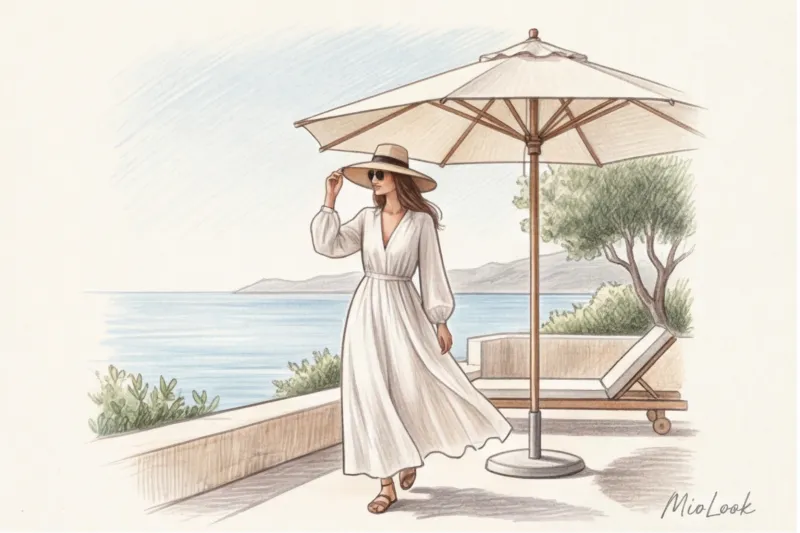
On the terrace of the Hotel Splendido in Portofino in summer, it's easy to spot day-trippers and those who have been practicing the culture of a beautiful European holiday for years. The former expose as much skin as possible to the scorching sun in micro-shorts and crop tops. The latter wrap themselves in flowing silk caftans, loose long-sleeved linen shirts, and wide, light-colored palazzos. modest fashion for summer has long since transcended the bounds of purely religious or conservative demands. It's a conscious choice in favor of aesthetics, uncompromising comfort, and basic health concerns.

In my practice, a major paradigm shift has occurred over the past few years. Over 12 years of working as a personal stylist, I've noticed a radical shift in the demands of VIP clients: whereas before the holiday season, they used to ask for the most seductive dresses with plunging necklines, now nine out of ten are looking for the "quiet luxury" of completely covered silhouettes.
"Luxury today is the privilege of not having to show everything off. Covering up in summer clothing shows that your health and comfort are more important to you than trying to impress others."
Why do aristocrats historically choose to wear revealing clothing while on vacation? The aesthetics of the Italian Riviera are based on an understanding of physiology: a bronze tan ceased to be a sign of status back in the 1990s. Dermatologists are adamant, and wealthy women understand that the best anti-aging preventative is shade. No serum will protect skin from photoaging as reliably as the proper cut and tight weave of premium fabrics.
Moreover, modest summer fashion flawlessly conveys high status and independence from fleeting micro-trends. While mass-market fashion churns out thousands of variations of revealing polyester tops for a single season, an elegant three-piece linen suit or a closed maxi dress made of thick cotton, priced between €300 and €800, remains fashionable for decades. By choosing covered pieces, you demonstrate an intelligent approach to your wardrobe.
Of course, finding a balance between tradition, personal comfort, and current style can be challenging. Many women feel that wearing clothes that cover up their figure will visually add age or make them look "boring." But this is simply a matter of careful styling. For example, when we discuss with clients, What to wear on a first date On a hot July evening, I always recommend a long-sleeved silk maxi dress with a high collar, but cut on the bias. It flows delicately as you walk, leaving little to the imagination, and it's a hundred times more appealing than an extreme mini.
To build a wardrobe that works, where pieces are truly cool and easy to layer without weighing down the look, I recommend digitizing your summer capsules. Upload your loose trousers, kimonos, and long tunics to MioLook app Its "smart wardrobe" algorithms will help you create dozens of unconventional, stylish outfits from your basic, closed-off items, saving you time and nerves in front of the mirror in 90-degree heat.
Fabric Science and the Bedouin Principle: Why Long Sleeves Cool Better
Have you ever noticed this paradox: the indigenous peoples of the hottest regions of the planet—from the Sahara to the Arabian Peninsula—never wear shorts or revealing T-shirts? Instead, they wrap themselves in long, flowing robes. This phenomenon, often referred to by textile engineers as the "Bedouin principle," shatters the fundamental stereotype: the less you wear, the easier it is to bear the heat.
From a thermoregulatory perspective, exposed skin in the scorching sun is a surefire way to overheat and dehydration. When direct infrared rays unimpededly heat the epidermis, the blood temperature in the superficial capillaries rises sharply. The body begins to urgently lose moisture through sweat, which evaporates instantly in the open air, failing to cool the skin but rapidly dehydrating the body. This is why modest summer fashion is not just a matter of etiquette, but scientifically proven protection.
Closed but loose clothing acts as a portable air conditioner, creating a soothing "microclimate." The fabric absorbs the initial heat shock, keeping your skin in the shade. A layer of air forms between your body and the material. As you move, this air circulates, creating natural convection. Moisture evaporates more slowly, maintaining a comfortable body temperature.
"For the air gap to work for cooling, the gap between the fabric and the skin should be at least two to three centimeters. Tight-fitting styles, even made from the thinnest materials, will deprive you of this benefit."
However, here we encounter a critically important detail that is often overlooked: UV protection. According to research by the American Academy of Dermatology (2023), a typical white cotton T-shirt from the mass market has a UPF (Ultraviolet Protection Factor) rating of only 5–7. This means it transmits up to 20% of harmful radiation. By comparison, luxury summer fabrics undergo special enzyme treatment or have such a dense yet breathable microweave that their UPF rating reaches 30–50+. Dermatologists and textile experts unanimously agree: color and thread density are crucial. Unbleached linen or dense matte silk will protect your skin from photoaging many times more effectively than translucent viscose.
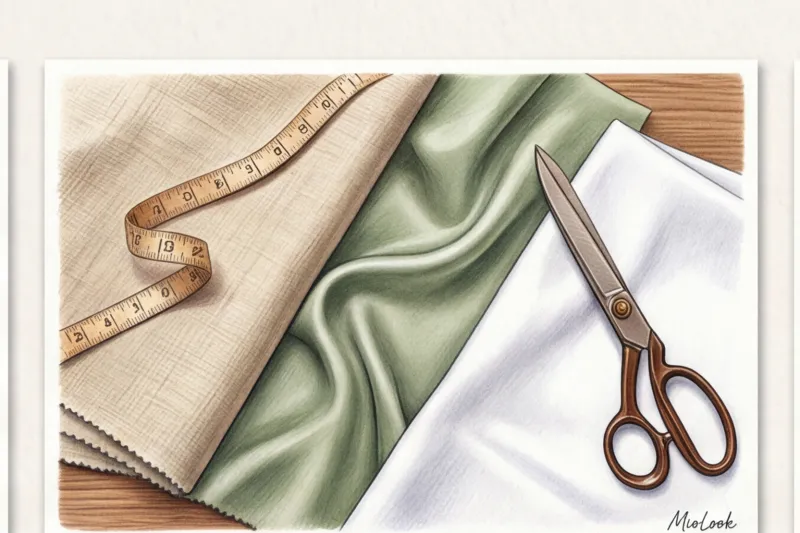
Summer investment materials
In my practice, I regularly encounter situations where clients bring in stacks of summer items for wardrobe review that they refuse to wear because they're "stuffy." And almost always, the problem isn't the sleeve length, but the quality of the fabric. A tight summer wardrobe doesn't forgive skimping on materials. This is a case where it's better to have three flawless blouses than ten mediocre ones.
Premium processed flax. The main complaint about linen is that it's prickly, wrinkles, and "stiffens." This is only true for coarse, mass-market linen woven from short fibers (tow). Italian investment linen (like Loro Piana or Brunello Cucinelli) is made from long-fiber raw materials and undergoes a process stone-washed (enzyme or stone wash). It lays in soft folds, flows, and has a noble silky sheen. A high-quality shirt made from this linen will cost between €120 and €300, but its cost-per-wear (the cost of one wash) will quickly approach zero, as this item will serve you for decades, only becoming softer after each wash.
Tussah silk and habotai. Smooth satin silk is a bad idea for humid weather; it will cling to your skin instantly. For understated summer looks, I always look for matte, slightly textured silks. Tussah (wild silk) has a slight roughness and holds the cut architecture well without clinging to wet skin. Khabotai — a weightless, breathable option that is used to create flowing maxi skirts and wide palazzo trousers.
If silk seems too difficult to care for, consider cupro and tencel (lyocell) These are premium artificial (but not synthetic!) fibers. Cupro is made from cotton fluff and feels like washed silk with a distinctive "cooling effect." When you wear a cupro maxi dress in 30-degree heat, the fabric literally cools your skin. Tencel, made from eucalyptus, is highly hygroscopic—it wicks away moisture 50% better than cotton.
To avoid confusion and to organize your capsule collection wisely, I recommend digitizing your summer purchases. You can add items to MioLook , where smart functionality will help filter your wardrobe by season and material, eliminating stuffy synthetic mistakes from your daily rotation.
Speaking of errors, there are absolute ones. taboos for modest summer fashion These are polyester, acrylic, and dense elastane (if it contains more than 5%). A polyester maxi dress is literally a miniature sauna. Synthetics block air convection, trap sweat on the skin's surface, and instantly heat up. Even the most beautiful dress will lose all its luster if, after half an hour of walking, you feel like you're wrapped in plastic wrap.
Access to MioLook for €0.99 — one-time payment
A smart AI stylist will select the perfect look for a hot summer from your clothes, taking into account the properties of fabrics.
Get access — €0.99 onceImage Architecture: How to Wear Layers in Hot Weather
Layering at 30°C? For many, it sounds like a fashion statement, but therein lies the secret to a chic summer wardrobe. The mistake most women make is instinctively trying to remove as much clothing as possible when the temperature rises. However, smart, modest summer fashion uses layers not for warmth, but to create protective shade and manage air flow.
Here the unquestionable comes into force air gap rule To avoid sweltering in the heat, clothing shouldn't touch your skin 100%. In the ideal summer modest look, the fabric touches your skin only at the shoulders and perhaps at the waist, leaving some space everywhere else. This space acts as a natural air conditioner, allowing air to circulate and instantly evaporate micro-moisture.
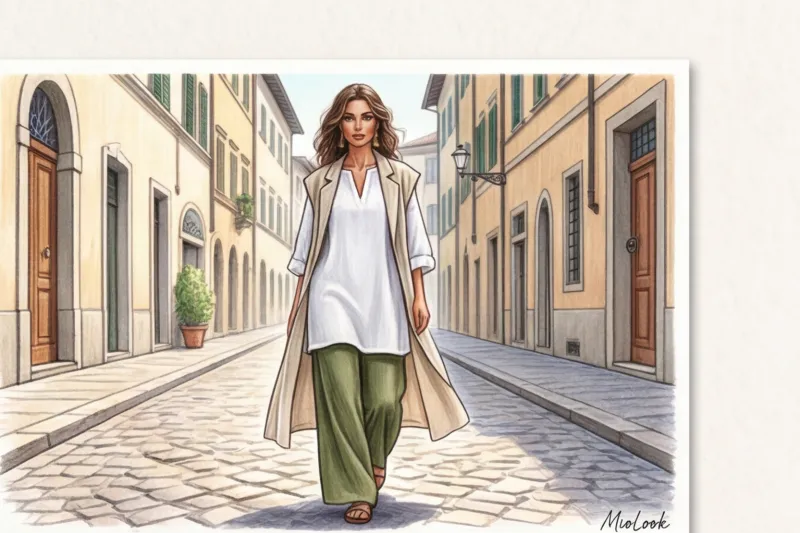
But how do you achieve this complex silhouette without looking like you've worn everything in your closet? First, we pack away thick, structured jackets. Summer dusters, kimonos and long vests — this is what you should choose instead of a jacket in the hot months. A luxurious calf-length cupro vest or a weightless wild silk kimono create that vertical line that elongates your height, yet they flow and "breathe" with every step.
A professional styling lifehack from my practice that saves my clients during summer business trips: wear one very thin base layer (for example, a smooth silk top with wide straps) under a completely unbuttoned, loose maxi shirt. Investing in a quality silk top (usually in the €150–€250 range) pays for itself instantly: the base layer absorbs moisture, and the unbuttoned top acts like a sail, providing constant ventilation for the back and arms while still adhering to the modest dress code.
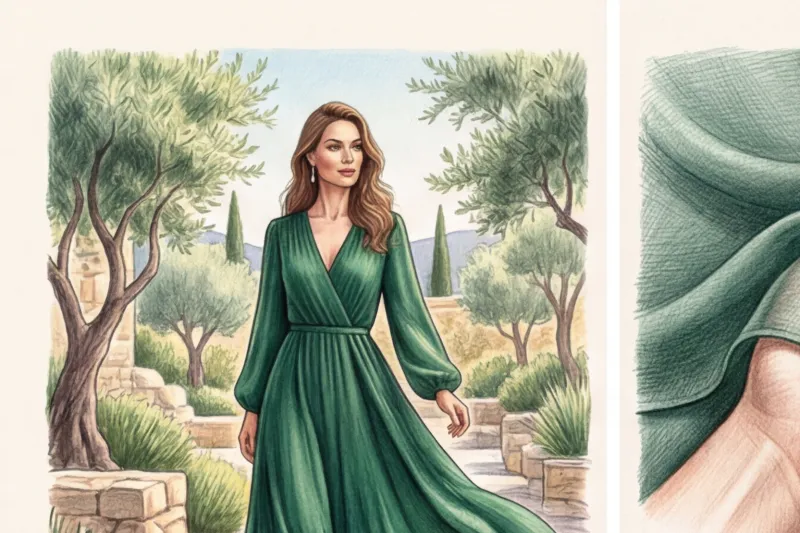
The visual temperature of an outfit is of paramount importance. A color palette that physically "reflects" the sun requires an uncompromising rejection of black. Dark shades absorb up to 86% of light energy, turning clothing into a greenhouse. A sophisticated alternative is refined, slightly dusty tones: sage, ecru, sand and dusty blue Take a look at the summer collections of Brunello Cucinelli or Loro Piana: they build layering on the subtlest nuances of ecru, which visually refreshes and adds a touch of luxury to the look.
The biggest fear when wearing loose, layered outfits is turning into a shapeless cloud. The styling secrets that will help you maintain proper figure proportions when everything is loose lie in the details:
- Demonstration of fine lines: Even in the most covered look, leave your wrists and ankles exposed. Simply casually roll your shirt sleeves up to your forearms to create a graceful silhouette.
- Asymmetrical tuck (French tuck): If you're wearing a voluminous tunic over wide palazzo pants, tuck just a small portion of the front hem into the waistband. This will define your waist without depriving your look of the necessary freedom.
- Length control: The bottom layer should either be significantly shorter than the top layer (a top under a duster coat) or create a single, smooth line (a maxi dress under a cardigan of the same length). Avoid layers that cut the figure in half at the same level.
Assembling such complex images in your mind can be quite difficult, especially when you're rushing in the morning. To visualize how a dusty blue kimono will look with sand-colored pants, I recommend using smart wardrobe feature in the MioLook app This allows you to create and save the perfect summer outfits in advance, without wasting time on endless dressing changes in front of the mirror.
5 Wardrobe Essentials: Modest Summer Fashion Without Compromise
Analyzing the 2024-2025 cruise collections from The Row to Loro Piana , it's easy to see a clear trend: premium brands are placing an uncompromising emphasis on elongated, flowing silhouettes. According to the WGSN analytical report (2024), global demand for elegant, covered clothing for the hot season has grown by 38%. A basic wardrobe for scorching metropolises or southern resorts no longer revolves around short shorts.
I recently put together a capsule collection for three clients heading to the Amalfi Coast, and we completely eliminated classic denim. Instead, the looks were built around five functional elements that work like a perfect construction kit.
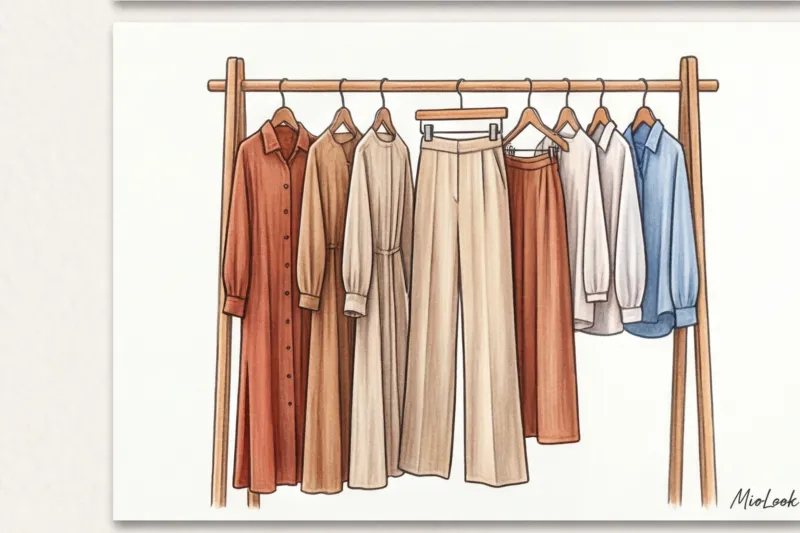
1. Palazzo in silk or summer wool: an alternative to stuffy jeans
Wearing jeans in 30°C is voluntary torture. A stylish and, more importantly, cooling alternative is wide-leg palazzo pants. My absolute favorite is the "cold wool" pants ( cool wool ) with a weaving density of Super 120s. This is the finest worsted yarn traditionally used to sew summer suits of the Neapolitan school. Unlike linen, it flows freely and doesn't form hard creases in the groin area, and thanks to its natural thermoregulation properties, it's cooler than cotton. Investing in the right wool palazzo pants will cost between €250 and €450, but their price is also low. cost-per-wear (cost per exit) is minimal, since the item does not lose its shape for years.
2. A maxi shirt dress with the right collar: a versatile staple
This wardrobe staple fulfills several functions at once: it can be worn on its own for a daytime stroll and as an unbuttoned top layer (that summer duster over trousers). The main selection criterion here is the collar's structure. One of the professional tests I always conduct during shopping trips: lift the collar. If it's soft, shapeless, and falls right off, the garment will resemble a dressing gown. Choose styles with a rigid collar stand, as seen in the latest collections. Jil Sander - It beautifully frames the face and reliably protects the back of the neck from sunburn.
3. Long A-line tunic: how to avoid looking like a beach cover-up
A tunic is a tricky item. Get the texture wrong, and it looks like you simply forgot to take off your pareo after the beach. To ensure modest summer fashion remains urban and sophisticated, a tunic should have a well-defined cut. Look for styles with high side slits, articulated shoulders, and a wide, tight hem (at least 3-4 centimeters). Avoid translucent gauze in favor of thick tussah silk. Try wearing an ecru tunic over sage-colored palazzo pants—the elongated vertical silhouette will instantly add a touch of grace to your figure.
4. Bias-cut maxi skirt: dynamism and freedom of movement
Bias cut ( bias cut ) is a brilliant invention by Madeleine Vionnet, which has been perfected today by brands like Vince The secret of this skirt lies in the physics of the fabric: it gently hugs the hips under its own weight, but doesn't cling tightly. It's an absolute must-have for a modest summer wardrobe. The skirt completely covers the legs, yet still allows for freedom of movement and creates a luxurious dynamic when walking. Choose matte textures—the excessive sheen of satin during the day often softens the look and highlights the slightest imperfections in the silhouette.
5. A thin, chunky knit cardigan made of silk or cotton
Even in the hottest weather, you'll need a top layer—to protect your shoulders from the scorching sun or to escape harsh restaurant air conditioning. Instead of heavy linen jackets, I recommend embracing aesthetics. Brunello Cucinelli: Cardigans made of loose, open-knit cotton-silk yarn. The large stitches allow for excellent breathability while creating a sophisticated textural contrast. If it gets hot, you can always drape it elegantly over your shoulders, tying the sleeves in a knot at the front.
Access to MioLook for €0.99 — one-time payment
Start creating perfect looks with the help of artificial intelligence and assemble your flawless summer capsule without breaking the bank.
Get access — €0.99 onceWith these five items in your arsenal, you have dozens of ready-made combinations. To avoid having to keep them all in your head, I recommend uploading photos of your items to MioLook smart wardrobe In just a few seconds, the algorithm will show you how to style a shirt dress with a cardigan or palazzo pants in a new way, saving you time in the morning before heading out.
The Transparency Problem: How to Wear Light Colors and Stay Within the Limits
Bright midday light is the harshest and most merciless critic of a summer wardrobe. The main pain point women face when trying to put together a light capsule wardrobe for July is the treacherously translucent white linen and thin cotton. You buy a loose, closed maxi dress, confident in its elegance, but the moment you step out of the shade into the sun, the silhouette of your legs and the contours of your underwear become public knowledge. At this point, the concept on which modest fashion for summer , is destroyed in a second.
Two years ago, one of my clients attended a daytime outdoor charity reception. She wore a stunning, snow-white, tiered poplin dress worth approximately €1,800. In the dressing room mirror, under artificial lighting, it appeared completely opaque. The mistake lay in her base layer—she'd worn expensive white lace lingerie. In the sun-drenched photos from the event, the contrast between the white fabric of the dress, the lingerie, and her light tan was like an X-ray. The textured lace was clearly visible through the cotton, completely negating the stated status and aristocratic nature of the look.
This situation leads to an immutable rule for an investment wardrobe: We never wear white under white and light-colored summer clothes The white pigment creates a sharp contrast with your skin tone and immediately shows through the fabric. The only true choice is smooth, nude-toned lingerie that blends perfectly with your skin. The texture should be completely seamless, preferably laser-cut microfiber. No lace inserts, bows, or bulky seams.

However, the right underwear is often not enough. Consider how luxury fashion houses address the issue of transparency. Brands like Jil Sander or Loro Piana never leave a light-colored garment without technological support. They either use a double-face weave, which allows the fabric to be dense enough without sacrificing breathability, or they construct the right lining. In the premium segment, linings are always made of breathable materials such as silk cambric or the finest cotton muslin. The less expensive segment often resorts to polyester linings, which instantly transform a closed garment into a portable sauna.
If you've purchased a luxurious, fine linen skirt without built-in sun protection, slip dresses and petticoats come to the rescue. These are the invisible helpers that create a flawless silhouette.
"The underdress doesn't just conceal the body's contours from the sun. It acts as a frame, allowing the delicate outer fabric to glide gracefully as you walk, without getting caught between your legs or clinging to your skin due to static electricity."
I highly recommend having at least two thin-strap combinations in your arsenal (in ecru and caramel nude). Choose 100% viscose—a great breathable option in the €50–€80 range—or natural silk, which adds a subtle coolness.
Clear instructions for choosing and styling the base layer:
- Length: The hem of the underdress should be exactly 2-3 centimeters shorter than the main dress. If it's 15 centimeters shorter, an unsightly horizontal line will form in the sun, visually cutting off the legs.
- Volume: The slip shouldn't be too tight, otherwise it will create unnecessary folds under your clothes. Look for a semi-fitted bias-cut.
- Accounting for cutouts: Make sure that the neckline of the underdress does not show through the unbuttoned top buttons of the linen shirt.
Mentally matching the lengths and necklines of base layers with your main outfits can be quite tedious. To create flawless outfits once and avoid wasting your mornings on them, I recommend digitizing your underdresses and summer essentials by uploading them to MioLook app By checking the combinations virtually, you'll always be confident that your chosen light-colored sundress will already be paired with the perfect, invisible companion for the dazzling July sun.
Beach and Resort: An Elegant Alternative to Revealing Swimsuits
According to WGSN, a 2023 research agency, demand for one-piece beachwear increased by 45% among women who are not bound by religious observances. The era when modest summer fashion by the water was associated with shapeless and heavy robes is finally over. Today, resort wear is a high-tech elegance where architectural cuts, monochrome, and luxurious textures reign supreme.
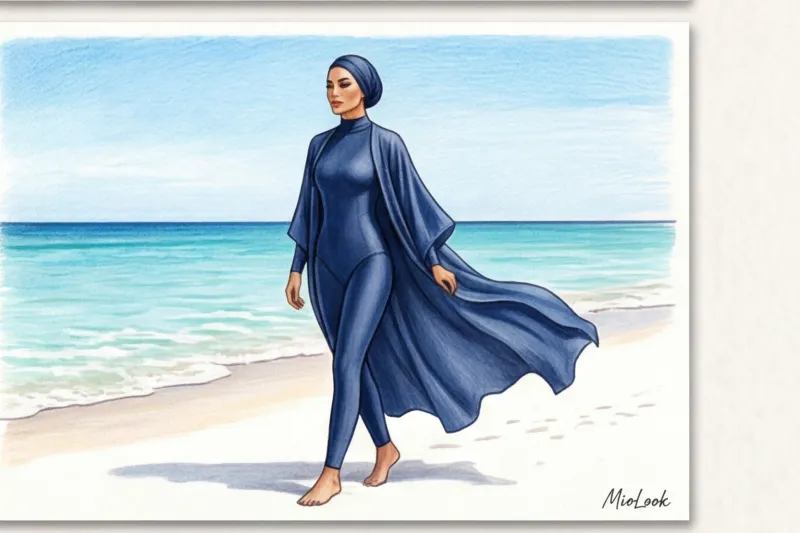
The evolution of the burkini has taken an incredible leap, forever banishing loud prints and unnecessary frills from the agenda. Niche modest fashion brands like Lyra Swim And Lanuuk , create minimalist one-piece swimsuits inspired by the ballet aesthetics and sporty minimalism of the 90s. For my clients, I most often create beachwear sets: luxury rashguards with a stand-up collar (check out the premium lines) Marysia or surf couture from Cynthia Rowley ) paired with swim leggings or asymmetrical skirts. It looks as classy as a professional diving suit, but with a sophisticated French flair. The average price for the basic elements of this investment set ranges from €150 to €400, and it remains timeless for years.
However, it's worth acknowledging: the perfect one-piece swimsuit rarely fits the first time you try it on. Consider your torso length and hip width—in my experience, 8 out of 10 times it's better to buy a rashguard and leggings in different sizes, and sometimes even from different brands, than to buy a ready-made but ill-fitting one-piece suit.
The main fear when choosing a one-piece swimsuit is the "wet film" effect, when the fabric clings to every inch of your body when you exit the water. The secret lies in the proper physics of the materials. Look for it on the labels. Econyl (innovative regenerated nylon) and high-density thread Lycra Xtra Life These fabrics have a low water absorption rate: they don't absorb moisture into the fibers, but rather allow it to pass through their micropores, drying in 10-15 minutes in the sun. I strongly advise avoiding mass-market, thin polyamide—it instantly loses its shape under the weight of water and clings to the skin. The density of high-quality swimwear, which maintains its shape even when wet, should be at least 190 g/m².
For a promenade along the coast or lunch on a beach club terrace, a revealing swimsuit hastily wrapped in a pareo has long been considered a stylistic faux pas. Luxurious caftans and flowing resort abayas made of crushed silk or the finest cotton muslin are the true uniform of modern aristocracy on vacation. Pippa Holt or flowing silhouettes from Oscar de la Renta (with prices starting at €600) set the bar high. The key lies in the geometry: deep side slits allow air to circulate, and a precise shoulder fit creates a chiseled silhouette. Choose deep shades of terracotta, sage, or classic ecru—they look incredibly elegant against a seascape backdrop.
When auditing vacation luggage, I always insist on the rule of cross-combinability: your beach kaftan should be a perfect match for both swim leggings and evening palazzos. To assemble such a smart vacation capsule without unnecessary purchases, it's convenient to digitize your items in advance. MioLook app You'll be able to visually test whether your chosen rashguard works with your favorite cape before you even start packing.
Your ideal image
it begins Here
Join thousands of users who look flawless every day with MioLook.
Get access — €0.99 onceStatement Accessories: The Finishing Touch to a Modest Summer Look
The golden rule of an investment wardrobe, followed by aristocrats and industry insiders: we can save on a basic cotton or linen set, buying it for €80–€120, but the accessories must be impeccable. In modest fashion, where silhouettes are often deliberately loose and devoid of deep necklines, it is the details that carry the entire stylistic weight and elevate a simple fabric into the realm of heavy luxury.
Let's start with head coverings. Silk scarves and elegant turbans aren't just a nod to the old Hollywood aesthetic; they're also a smart way to protect your hair from UV fading. The absolute gold standard here is the Hermès 90x90 cm bob. Their signature dense silk twill has a unique property: it holds its knot perfectly and doesn't slip at all. The art of draping requires only a little practice. I recommend folding the scarf diagonally, covering your head, and creating a voluminous turban by twisting the ends at the nape of your neck. This technique visually elongates the neck and adds an aristocratic, sculpted look to the face.
If silk seems too sophisticated for a relaxed daytime stroll, consider wide-brimmed hats made of natural raffia straw. A crisp, geometric brim is crucial here. Cheap, shapeless Panama hats will instantly overshadow a closed-off look. A high-quality boater hat or classic fedora made of tightly woven Madagascar raffia (investment-quality examples start at €150) creates crisp, architectural lines and creates a rich, protective shade for the face and shoulders.
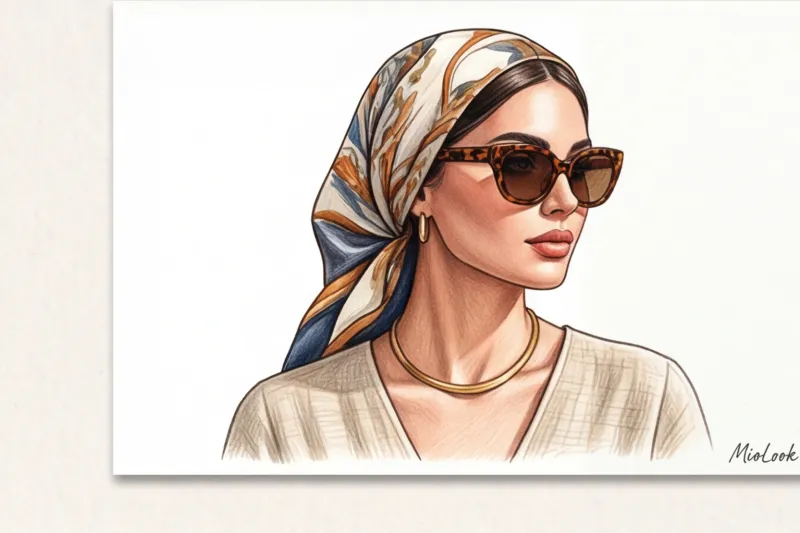
When the body is maximally concealed by flowing fabrics, the face automatically becomes the main focus and "center of attraction." Therefore, chunky, geometric sunglasses are an absolute must. Forget thin metal—opt for frames made of thick cellulose acetate. Tortoiseshell texture or deep burnt caramel shades look incomparably more expensive than plain black plastic and perfectly complement the summer palette of natural shades.
Finally, the foundation of the look is footwear. The most devastating mistake often seen on the streets of European resorts is pairing voluminous, flowing maxi dresses with chunky sneakers. A bulky last weighs down the bottom and turns an elegant layered look into a shapeless cocoon. A modest, closed silhouette desperately needs a subtle contrast. Your look calls for delicate kitten-heel mules, soft loafers made of the finest suede, or minimalist sandals made of thin, interwoven leather straps. They leave the ankle, heel, or instep exposed—that precious dose of bare skin that makes the entire outfit light and breathable. To visually appreciate how elegant shoes change the proportions of your favorite summer maxi suits, I recommend creating collages of outfits in smart wardrobe MioLook - this will save you from stylistic mistakes before you even leave the house.
Checklist: A Summer Wardrobe Overhaul from a Stylist
Every year, in anticipation of the hot season, I conduct a ruthless yet incredibly effective experiment with my clients. We open their closets and physically remove everything that doesn't pass a rigorous technical selection. Elegant, modest summer fashion tolerates no compromises: a single incorrect item can turn a luxurious, layered look into an unbearable greenhouse. So you can prepare your base right now, I've put together a step-by-step algorithm.
Step 1. Fabric audit: getting rid of "plastic" items
The main enemy of a closed summer wardrobe is synthetics. Even if the tag says "eco-friendly," polyester and acrylic feel like a plastic bag on the skin in 90-degree heat. They block heat exchange and instantly cause overheating.
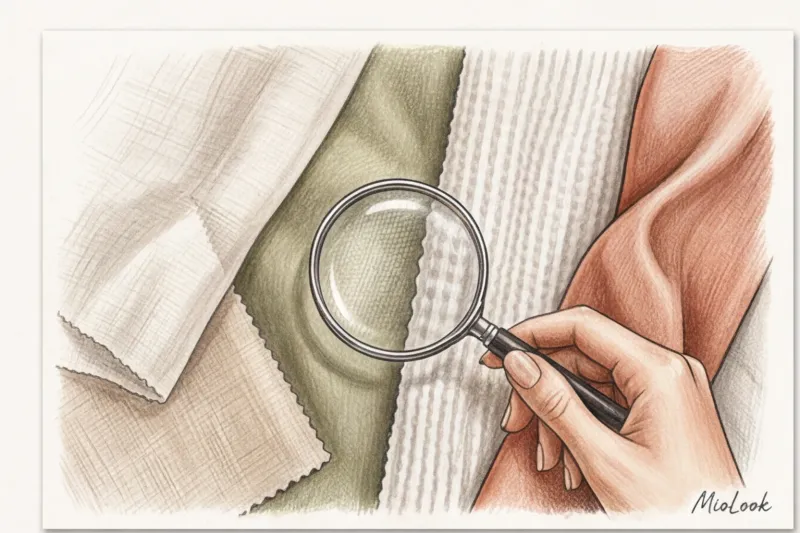
Conduct a tactile test: squeeze the fabric in your fist for 10 seconds. If it squeaks, becomes staticky, instantly heats up, or leaves a slightly damp feeling in your palm, it's "plastic." We discard such items without regret. We keep only premium linen, cupro, tencel, high-purity viscose, and matte silk. Remember: even if a designer dress cost you €300, if the composition is listed as 40% polyester, it's absolutely not suitable for a high-necked summer look.
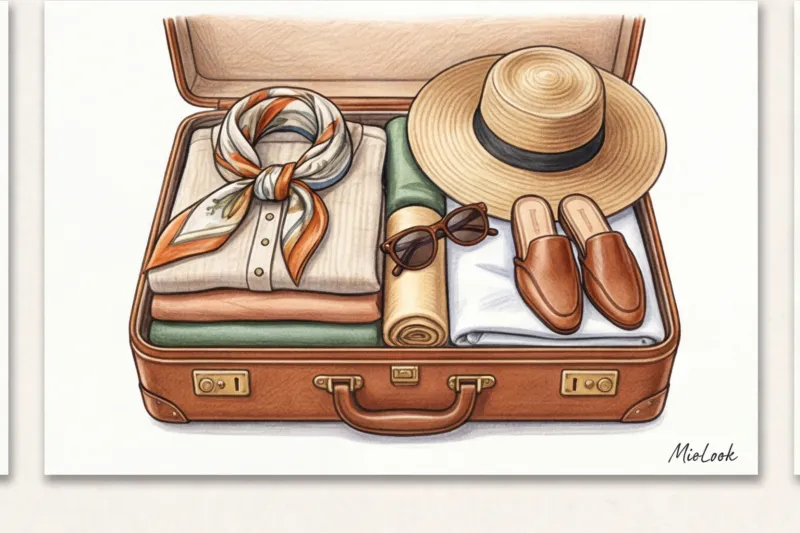
Step 2. Light Test: How to Reveal Hidden Transparency
Fitting rooms at luxury boutiques often feature subdued, diffused lighting that flatters the figure but effectively disguises the true density of the fabric. You buy a seemingly high-necked maxi dress, only to find it suddenly revealing the contours of your underwear on a sunny street.
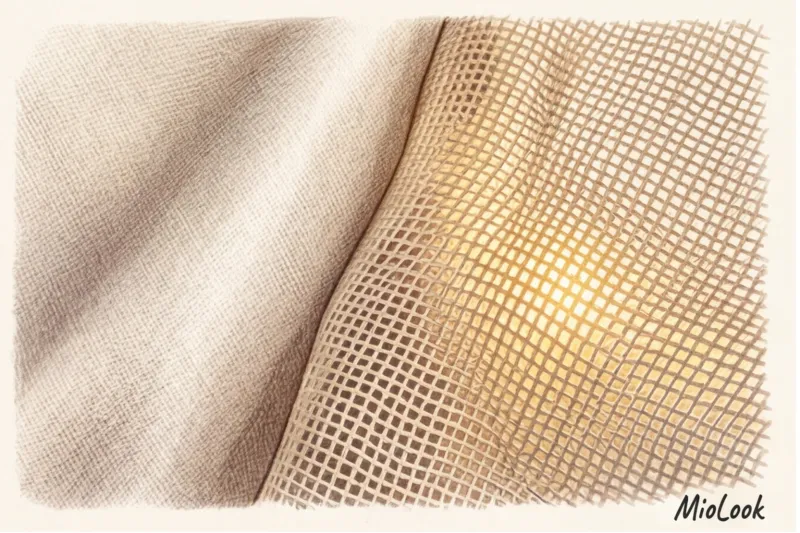
How do you properly check items for transparency before purchasing? Hold the fabric up to a store window or shine your smartphone's flashlight on it from a distance of 10-15 centimeters, placing your palm on the back. If you clearly see not just a blurry shadow, but the color of your skin and the lines of your fingers, the item is not a stand-alone garment and will require an underdress (slip).
Step 3. Checking for multi-layeredness: the mathematics of lengths
A modest summer wardrobe is almost always built on layering textures. But if the lengths don't match, the figure is visually cut into disproportionate blocks, adding unnecessary volume.
Put on your basic base layer (like flowing palazzos) and try on all your summer capes, dusters, and long shirts. The geometry here is strict: the top layer should either end a hand's breadth below the widest part of your hips or extend to a radical maxi, leaving only your ankles visible. Boxy, mid-thigh-length tunics paired with wide-leg trousers will transform your silhouette into a monumental column. To avoid wasting hours on grueling fittings in front of the mirror, I recommend digitizing your clothes. After uploading them to MioLook , you can create outfits in a virtual wardrobe in just a few clicks and clearly see if the lengths of your top and bottom layers match.
Step 4: The Basic "3 Things" Rule for a Modest Summer Look
My signature formula, which never fails when creating closed looks in the heat, is extremely simple: base + air + accent.
- Base: a flowing, loose-fitting base layer (cool wool trousers or a silk skirt).
- Air: a top layer with a mandatory “air layer” (for example, a voluminous habotai shirt or a linen kimono).
- Accent: a structural detail that pulls together a relaxed silhouette (a stiff raffia bag, a mid-width leather belt, or statement sunglasses).
If your outfit only has two loose-fitting pieces, it looks sloppy and unfinished, like you forgot to change your pajamas. If you have four, you risk overloading your silhouette and overheating.
Building a well-balanced, modest summer wardrobe requires thoughtfulness and a certain budget—high-quality, breathable, high-tech fabrics rarely cost less than €100–€150 per item. However, by investing in the right matte textures and thoughtful cuts, you gain the most important things: absolute freedom of movement, self-confidence, and an impeccably elegant status that's unaffected by the temperature.
Guide Chapters
What colors to wear in hot weather: stylist's advice
Everyone's used to wearing light colors in the summer, but is it really that effective? Find out why stylists recommend choosing dark, rich shades to protect against the scorching sun.
Modest sportswear for girls for the summer
Why do desert marathon runners wear protective clothing? We explore how the right gear can protect you from the summer heat and keep your skin protected during training.
Breathable Hijab Fabrics for Summer: How to Choose
Thin chiffon may actually be 100% polyester and cause heatstroke. We'll explore the physics of fabrics and learn how to choose a truly breathable hijab.
Evening Dresses for Summer: Looks for Special Occasions
It's a paradox, but in hot weather, covered clothing offers better protection than revealing clothing. Let's explore how to choose a stylish and modest evening dress for a summer celebration.
Women's Summer Long Sleeve Shirts: A Review of Styles
Wearing revealing clothing in hot weather is a myth. Find out how properly chosen lightweight long-sleeved shirts can help combat the heat and enhance your look.
One-piece swimsuits for the beach: modest fashion trends
Modest beach fashion goes beyond the ordinary. Discover how premium one-piece swimsuits help protect your skin from the sun and look luxurious.
What to wear with a long skirt in summer: stylish outfit ideas
A closed silhouette in hot weather not only provides reliable sun protection but also a sign of elegance. Learn how to style a maxi skirt for the city.
What to wear with wide-leg pants in summer: modest outfit ideas
We'll explore how to style palazzo pants and culottes in the heat without crop tops. Stylists' tips for creating covered, cool, and classy summer looks.
Summer Office Style: Cover-Ups Without Overheating
Debunking summer dress code myths. Find out why, at 35°C, flowing, closed-toe clothing works like a thermos and keeps you cooler than revealing tops.
Summer Layering: How to Avoid Sweating in the Heat
How to wear layers at 38°C and feel comfortable? We explore fabric mechanics and stylist secrets for creating cool summer looks.
Summer Maxi Dresses: How to Choose a Maxi for Hot Weather
Why is it better to cover up in hot weather than to undress? Learn how to choose the perfect long dress that works as a portable climate control unit.
Summer fabrics that keep you cool even when wearing closed clothing
Why do covered clothing cool you better than shorts and tank tops in hot weather? We explore the best materials and the "personal shadow" effect with a personal stylist.