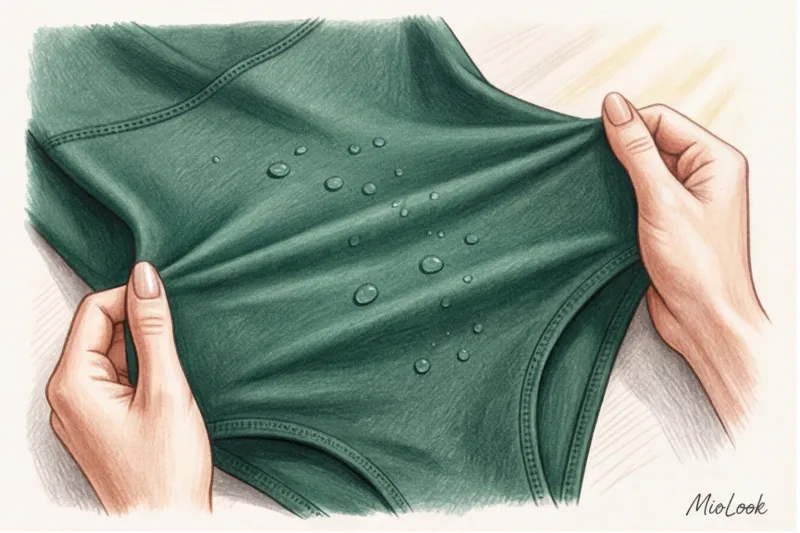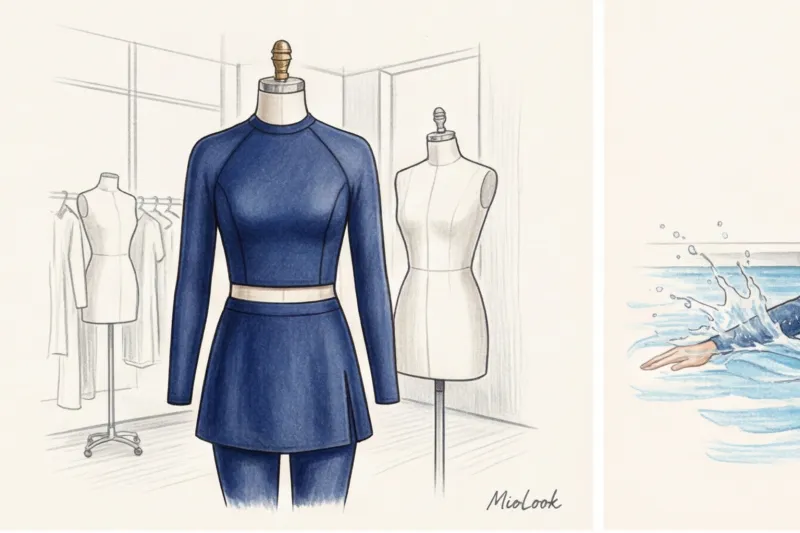
Last year, a VIP client approached me with an unusual request: to assemble a luxury beach capsule for a vacation in the Maldives. There was one major "but"—she had a severe sun allergy. Traditional open bikinis had to be completely eliminated. We replaced them with premium ones. one-piece swimsuits for the beach and rashguards. The result surprised us both: the client not only protected her skin but also became the center of attention at the resort, where everyone else was wearing the usual revealing styles. It turned out that fully covering the body in the right high-tech fabric isn't a necessary measure, but a statement of exceptional taste.

We talked in more detail about the concept of a summer wardrobe with an emphasis on sun protection in our The complete guide to modest fashion for summer Today, I want to take a detailed look at the beach segment and prove that covered skin cools better than bare skin, and modest beach fashion has long since transcended religious precepts.
Paradigm Shift: Why One-Piece Beachwear Has Become a Status Symbol
Over my 12 years as a stylist, I've noticed a radical shift. While in the 2000s and 2010s, the micro-bikini, designed to maximally showcase the figure, was considered the ideal, today the focus has shifted. Modern women, especially after 30, are embracing conscious minimalism.
One-piece beach swimsuits have become a marker of "quiet luxury." This is the aesthetic of old European resorts like Forte dei Marmi or Cap Ferrat, where an aristocratic vacation implies incognito and self-care, not flaunting the body. According to the State of the Global Islamic Economy, the global modest fashion market is already valued at over $300 billion, with a significant share of that market being... secular consumption That is, burkinis and rashguards are being bought en masse by socialite women from Europe and the USA.
Why does this happen? The answer is simple: a successful woman no longer needs to prove anything to anyone on the beach. She values personal comfort, protection from photoaging, and the ability to spend time actively (paddleboarding, playing with children in the sand, snorkeling) without worrying about a swimsuit strap slipping off.
Access to MioLook for €0.99 — one-time payment
A smart AI stylist will select the perfect look for your body type and lifestyle.
Get access — €0.99 onceBurkini, rashguard, or surfsuit: understanding the terminology of modest fashion
When I ask a client to try on a one-piece swimsuit, there's often confusion about the terms. Let's break down the design features of each style so you can choose the one that's right for you.

- Burkini: A traditional Muslim swimsuit, now adapted by global brands. It consists of a tunic (often mid-thigh or lower), leggings or loose pants, and a hair hood. Modern burkinis feature hidden fasteners—loops that connect the tunic to the pants to prevent the top from riding up in the water.
- Rashguard and surfsuit: Originally surfer gear, a rashguard is a thick, long-sleeved shirt (often with a stand-up collar) worn with swim trunks or shorts. A surfsuit is a one-piece, long-sleeved swimsuit, reminiscent of a wetsuit but made of thin Lycra. It fits perfectly, providing a compression effect.
- Long Sleeve Monokini: A compromise option for those new to this aesthetic. From the front, it looks like a formal surf suit, but can feature a contoured back or delicate cutouts at the waist.
Fabric anatomy: why a one-piece swimsuit feels cooler than one without one
One of the most persistent myths I encounter on a daily basis is: "You can get boiled in the heat in a long-sleeved one-piece swimsuit!" This is absolutely wrong if we are talking about modern materials.
When I first tested a high-tech burkini made from Econyl fabric in Dubai at 35°C, the difference in thermal comfort compared to a regular one-piece swimsuit was phenomenal. Why? The secret lies in physics and textile science.
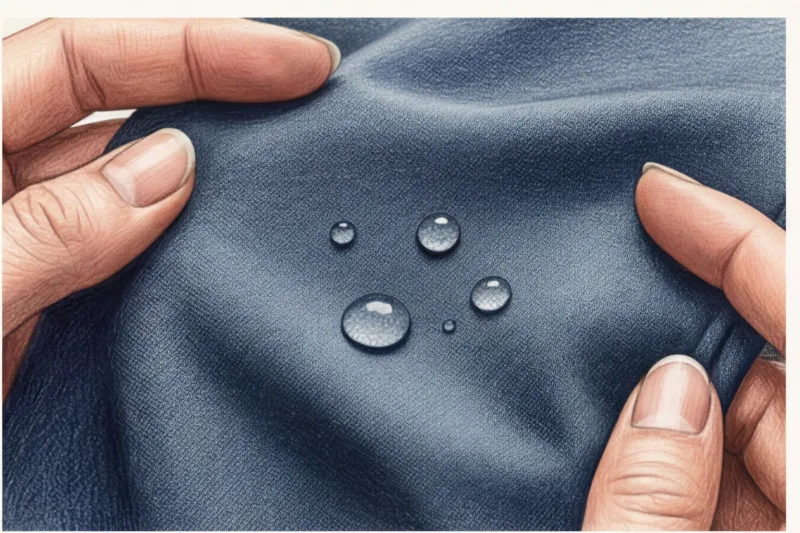
The fact is that direct sunlight heats exposed skin much faster and more aggressively than fabric. High-quality sports synthetics (premium nylon blended with extra-fine Lycra) work on the principle capillary moisture removal The fabric instantly absorbs sweat from the body and distributes it over a large surface area. This allows water to evaporate much faster, creating a micro-conditioning effect. Your body stays dry and cool.
Moreover, the matte texture of such fabrics reflects some of the infrared radiation (which carries heat), acting as a shield. Just one condition is important: the garment shouldn't hang loosely. The cooling effect only works when the fabric fits snugly, but without constricting, against the body.
Dermatology First: Skin protection as the main anti-aging investment
No expensive sunscreen will protect against photoaging as effectively as a physical barrier made of fabric. According to the Skin Cancer Foundation, high-quality clothing with a UPF 50+ rating blocks 98% of harmful ultraviolet rays (both UVA and UVB).

Have you ever wondered how much your sunscreen arsenal costs for a two-week vacation? On average, it's around €100-€150 for quality body lotions. And the cream needs to be reapplied every two hours, rinsed off with salt water, and wiped off with a towel. We often miss hard-to-reach areas (like the shoulders and between the shoulder blades—these are the areas most prone to sunburn).
A covered beach wardrobe is a basic anti-aging routine. The skin on a woman's shoulders, décolleté, and arms reveals her age much faster than her face. Investing €150–€250 in a premium rashguard or burkini gives you uncompromising protection that won't wash off in the ocean.
Your perfect look starts here
Join thousands of users who look flawless every day with MioLook. Organize your capsule wardrobe in one click.
Get access — €0.99 onceEco-Footprint: Choosing Brands That Save the Ocean
As a proponent of sustainable fashion, I can't ignore the environmental issue. Cheap, mass-market swimsuits costing €20–30 are the main source of microplastics in the ocean. Due to their loose weave, cheap polyester sheds thousands of microfibers with every contact with water and wash.

Modern modest fashion is closely linked to sustainable development (slow fashion). The best one-piece swimsuits today are made from Econyl® — regenerated nylon. According to Textile Exchange, producing this material from recovered fishing nets and ocean debris reduces nylon's impact on global warming by 90% compared to virgin nylon made from petroleum.
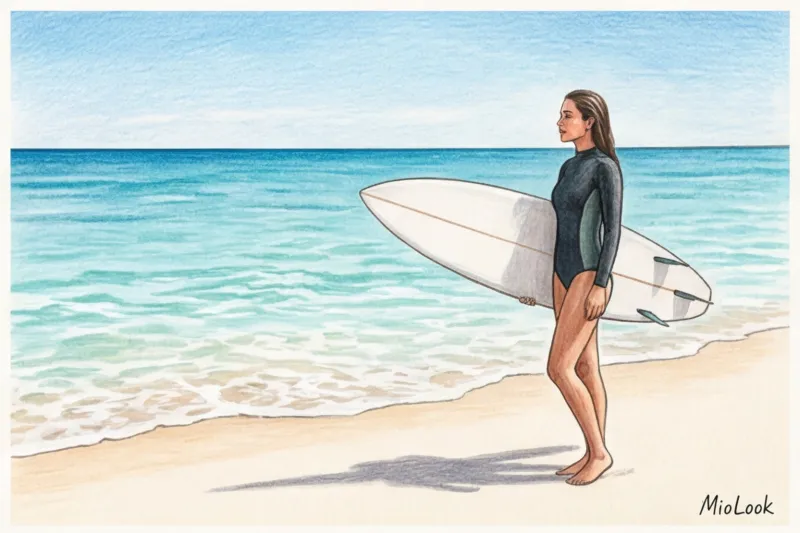
How can you tell premium recycled nylon from cheap synthetics by feel?
In the fitting room, I always teach my clients one trick: rub the fabric between your fingers. Cheap polyester squeaks and has a glassy, cheap sheen. High-quality Econyl or premium polyamide feels like thick, cool silk. It's completely matte, heavy, flowing, and when stretched, it instantly returns to its shape without leaving micro-creases.
Styling Secrets: How to Wear One-Piece Swimsuits Beyond the Lounge
The main beauty of a one-piece swimsuit is that it blurs the line between beachwear and casual resort wear. No longer do you have to frantically search for a pareo to get from your sun lounger to the hotel restaurant.
A one-piece surfsuit or rashguard top works perfectly as a bodysuit. Pair it with wide-leg linen palazzo pants. elegant maxi skirt made of flowing silk or loose Bermuda shorts with pleats.

If you find it difficult to combine things yourself, upload a photo of your rashguard to MioLook — Artificial intelligence will analyze your digital wardrobe and suggest dozens of unconventional combinations with skirts, shorts, and accessories.
Be sure to accessorize with statement accessories. The modest, minimalist silhouette of the swimsuit calls for architectural additions: a wide-brimmed straw hat (for additional face protection), chunky tortoiseshell sunglasses, and minimalist jewelry made of waterproof alloy or pearls. This instantly elevates the look from "sporty" to "resort chic."
Color palette: shades that look expensive
An important rule that is often forgotten: A one-piece swimsuit should not look like a diver's uniform. Avoid neon accents, acid stripes, and aggressive color blocking in the style of sports brands of the 2000s.
For a classy look, choose deep, monochromatic shades. Navy blue, rich olive, rich terracotta, dark chocolate, and buttery shades look impeccable. These tones pair beautifully with tanned and fair skin, complement the beachy atmosphere, and create a striking effect. premium color block with other resort clothing.
Stylist's checklist: how to check the quality of a one-piece swimsuit when buying
When choosing a garment that will cover most of your body in hot and humid conditions, quality tailoring becomes critical. When turning the garment inside out before purchasing (and I do this with every garment I sell), I check for three quality indicators:
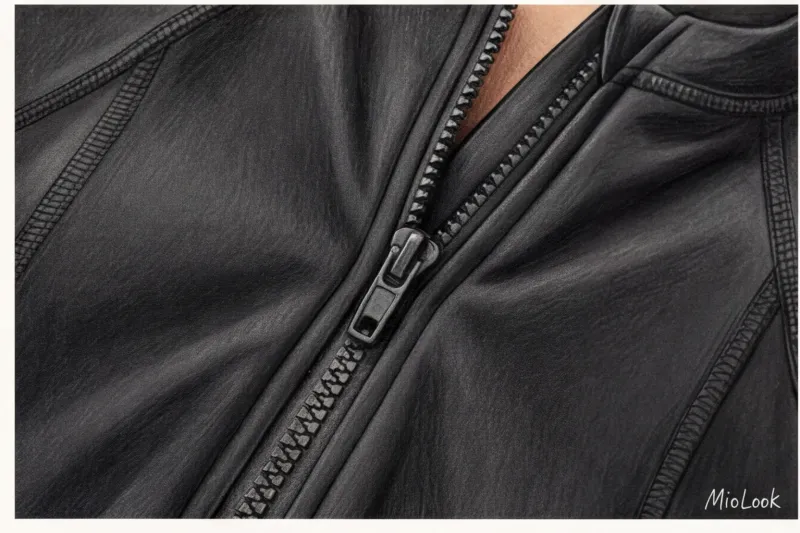
- Flatlock seams. Regular overlock seams are unacceptable in a one-piece swimsuit—when wet, they will form hard scars and rub the skin until it bleeds. Seams should be flat, soft, and stretch with the fabric.
- Protection of fittings (Zipper guards). If a model has a front or back zipper, it must have a fabric flap underneath. Without one, you risk pinching your skin when zipping it up, and a metal or plastic zipper will get uncomfortably hot in the sun.
- Internal structure. Burkinis or one-piece suits must have a gusset (a diamond-shaped groin area) to allow for freedom of movement. The top should have built-in breast support (a built-in bra top or cup pockets), as wearing a regular bra under a rash guard is unflattering and extremely uncomfortable.
Of course, it's worth mentioning when this trend DOESN'T work. If your main vacation goal is to achieve an even, bronze tan all over your body for low-cut evening dresses, a rash guard will create clear tan lines on your wrists and neck. In this case, it should only be used during peak sun exposure hours (12:00 PM to 3:00 PM).
Cover-up beachwear is more than just clothing. It's a sign of respect for your body, an investment in healthy skin, and a choice of aesthetics that doesn't shout, but speaks in a quiet, yet confident whisper. Choose quality, pay attention to the technical properties of the fabric, and you'll never want to go back to uncomfortable bikinis again.