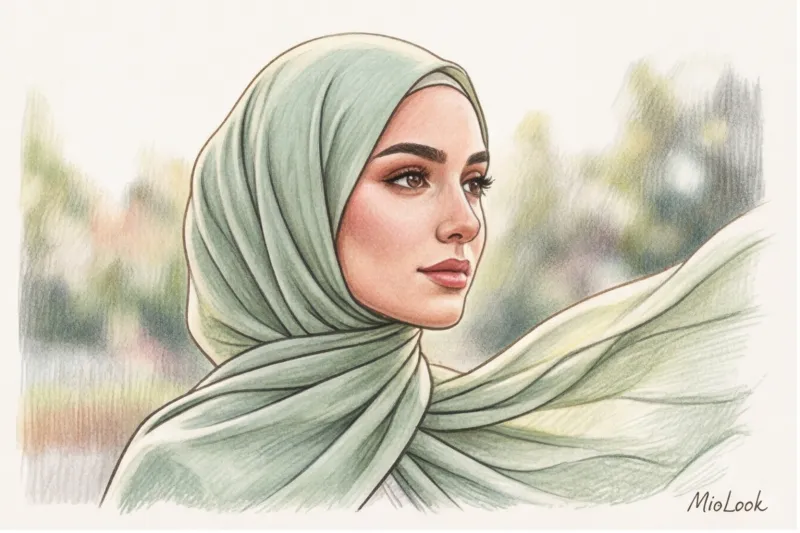
July, Rome, 34 degrees Celsius in the shade. My client Amira faints right by the Trevi Fountain. When we revived her and walked into an air-conditioned café, the first thing she said was, "But my scarf is so thin, it needs to breathe!" This thin, translucent chiffon, beautifully fluttering in the wind, turned out to be 100% polyester. And underneath it was a thick synthetic cap.
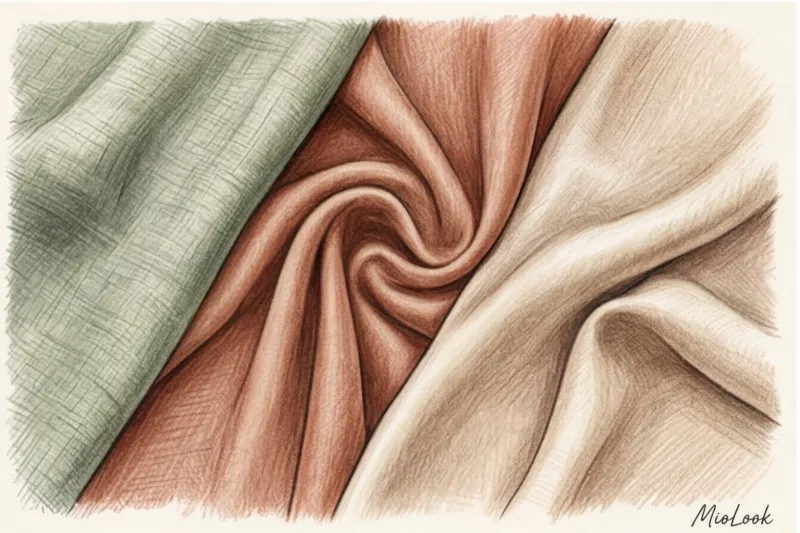
Over 12 years of working as a personal stylist in Europe, I've realized one frightening thing: most women choose hijab fabrics for the summer solely by looking at them. We think that if the material is see-through, it means it won't be hot. This is the most dangerous fashion misconception. We've already discussed the basic principles of a summer wardrobe in more detail in our The Complete Guide: Modest Summer Fashion: How to Dress Stylishly in the Heat , but today I want to break down the physics of fabrics down to the fiber.
Summer Hijab Fabrics: Why "Visually Light" Doesn't Mean "Breathable"
Let's be honest. That cheap, flowy chiffon that looks so pretty on Instagram reels actually works like a portable greenhouse. Polyester is plastic. You're literally wrapping your head in a plastic bag, trapping the heated air and preventing moisture from evaporating.
According to the Institute of Color and Textiles and the Textile Exchange's 2023 reports, 100% polyester, in the form of the finest chiffon, is 80% less breathable than dense-looking linen. The difference in skin temperature between a synthetic and a natural hijab in direct sunlight can reach 4-5 degrees Celsius. This is a colossal difference for the brain's thermoregulation.
In summer, it's not the thickness of the fabric that's critical, but its hygroscopicity—its ability to absorb moisture and wick it away from the body. If the fabric doesn't absorb sweat, it remains on the skin, disrupting the natural cooling process.
Top 3 Best Materials for Extreme Heat
If you want to survive the summer without heatstroke, look for the following ingredients on labels:
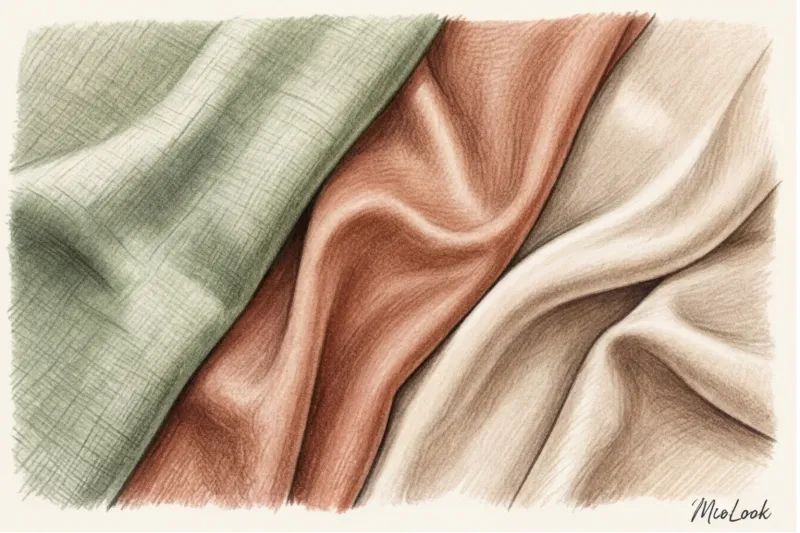
- Modal and micromodal. This is an improved viscose. Modal absorbs 50% more moisture than regular cotton. It has a silky texture, pleasantly cools the skin, and, unlike natural silk, does not slip through the hair.
- Bamboo. An ideal choice for women with sensitive skin or acne on the neck area. Bamboo fiber has natural antibacterial properties and is incredibly soft to the touch.
- Linen-viscose blend. Pure linen is too stiff for a hijab—it's stiff and doesn't drape well. But by adding viscose (usually in a 55/45 ratio), the fabric becomes flowy while still maintaining the porous structure of linen, which allows for excellent breathability.
Your perfect look starts here
Join thousands of users who look flawless every day with MioLook. Digitize your scarf collection in just a few clicks.
Get access — €0.99 onceThe Anatomy of a Summer Covering: Why a Bonnet is More Important Than the Scarf Itself
One of my clients bought a luxurious Mulberry silk scarf for €150, but she kept complaining of itchy, irritated scalp. The reason? She was wearing a bonnet underneath, bought at the market for €2 and made of acrylic. The bottom layer is crucial. It's the one that comes into contact with the skin, absorbing sebum and sweat.
Dermatologists often warn about the risk of traction alopecia and fungal infections due to the greenhouse effect. Therefore, rule number one: the bonet should be made of 100% cotton. Elastane may be added to help the cap maintain its shape, but strictly no more than 5%.
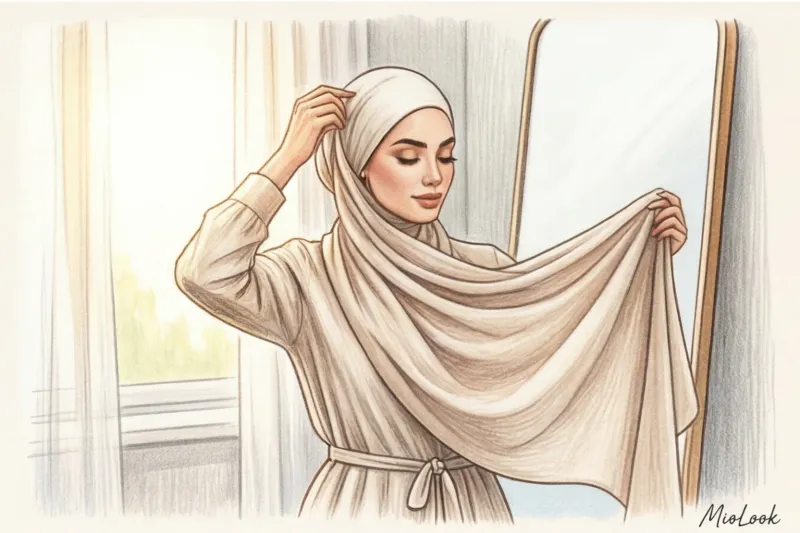
As for style, I strongly recommend avoiding closed "ninja" hats (tubes that cover the neck) in the summer if you wear closed-neck clothing. Leave your neck free under a scarf. Wear a classic cap with ties at the back of your head to ensure natural ventilation.
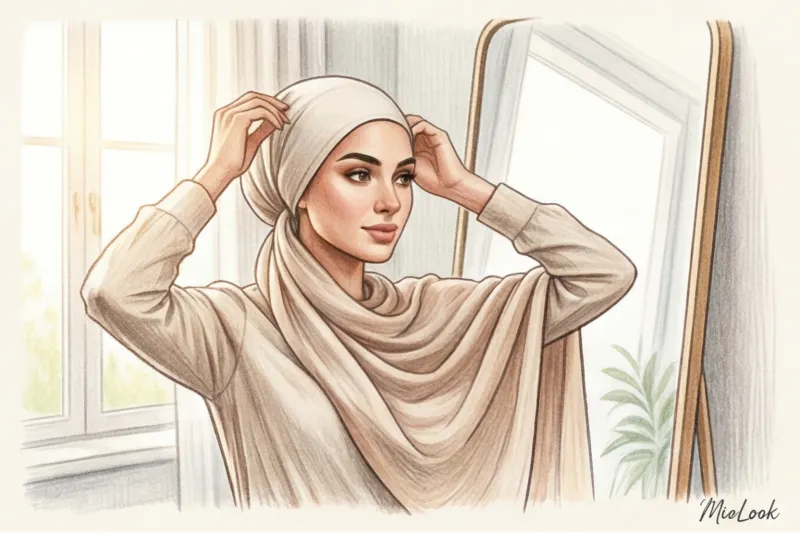
Tying techniques that create a "conditioning effect"
Even the most expensive modal won't save you if you wrap it around your neck three times tightly. We need to create an air gap—air flow.
Loose wrap technique:
- Place a cotton cap over your hair so that it covers your hairline.
- Drape the stole over your head, leaving one end shorter than the other.
- Critical moment: Don't pull the scarf tight under your chin. Leave a gap of 2-3 fingers.
- Instead of traditional safety pins, which can tear delicate fabric, use strong magnetic pins. Secure the scarf under your chin.
- Drape the long end loosely over the opposite shoulder, without wrapping it tightly around your neck. The fabric should drape in folds, creating a shadow.
If your level of modesty and the dress code allow, try this smart-casual hack: tie a scarf like a turban (leaving your neck exposed), but wear a voluminous linen shirt with a high, loosely buttoned collar. For more information on how to incorporate this into the workplace, read the article about business casual for women.

Access to MioLook for €0.99 — one-time payment
A smart AI stylist will select the perfect summer look, taking into account the texture of your scarves and your modesty requirements.
Get access — €0.99 onceWhere to look for summer hijabs: a review of European mass-market stores
Many women think that the right fabrics can only be found in specialized halal boutiques. This is not true. I constantly send my clients to the basic accessories departments of European mass-market stores to buy scarves.
You can find gorgeous scarves at H&M Premium, COS, & Other Stories, and Massimo Dutti. Why do I choose them? Because they undergo strict dye quality control. Cheap synthetics from no-name stores can stain your neck and the collar of your white shirt when in contact with sweat.
Healthy Wardrobe Price List (Average):

- A basic viscose or modal scarf at H&M or Zara will cost €20–30.
- A luxurious stole made from a linen and silk blend at Massimo Dutti – around €45–€60.
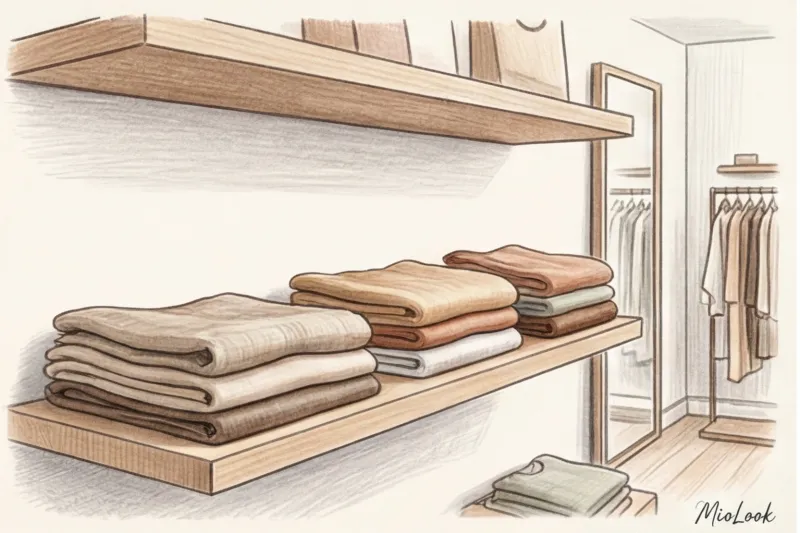
Yes, it's more expensive than polyester for €5, but one such scarf will last three seasons of daily wear, won't pill, and will protect you from heatstroke. The only rule when buying in regular stores: pay attention to the size. To create a beautiful drape, look for stoles in the size not less than 180x70 cm It is extremely difficult to tie square scarves (90x90 cm) for the summer without revealing the neck.
How to Avoid Sweat Stains on Your Hijab: Secrets to a Perfect Look
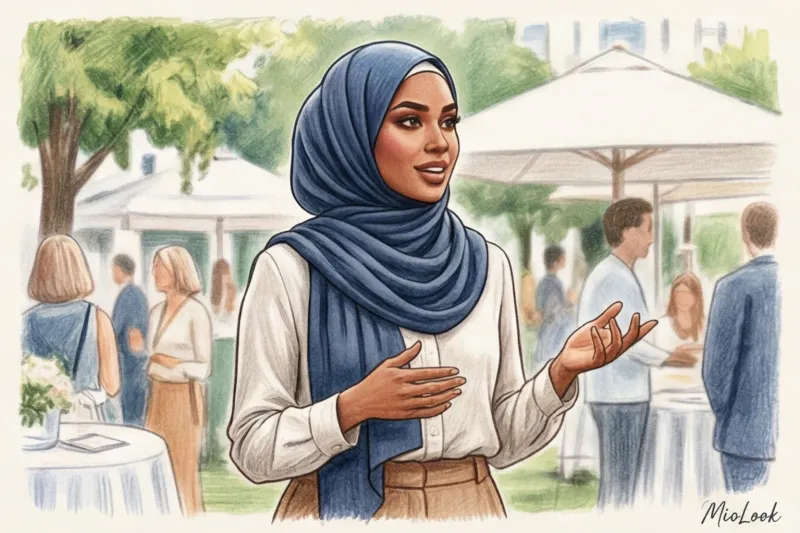
Even if you've chosen the perfect fabric, we all sweat at 35 degrees Celsius. It's just physiology. But if you're planning a public speaking engagement or an important business meeting outdoors, sweat stains on your neck can ruin the whole experience.
This is where the right choice of color and print comes into play. Never wear plain scarves in light grey, dusty pink, olive or light blue in hot weather. On these shades, the slightest drop of moisture appears as a dark, contrasting spot.
Your saviors:
- Pure white color (moisture is simply not visible on it).
- Deep navy or black.
- Melange textures and small prints. Geometry or abstraction works as an optical illusion, completely hiding color unevenness and wet marks.
Life hack: matte fabrics (linen, bamboo) hide moisture better than fabrics with a slight satin sheen (pure viscose), which begin to shine when wet.
Checklist: Putting together a modest summer capsule
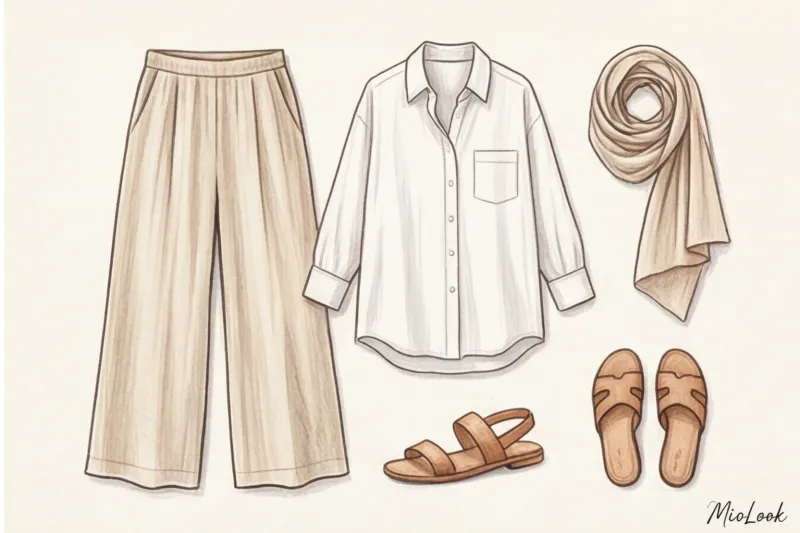
To avoid standing in front of the mirror every morning pondering your options, I suggest putting together a functional summer essential. The secret to an elegant look lies in the contrast of textures. If you're wearing a matte, coarse linen suit, add a silky modal scarf. If you're wearing a sleek Tencel dress, balance it out with a crinkled linen stole.
You don't need 20 scarves. Just upload them to MioLook wardrobe Find the right base, and the app will help you create dozens of combinations. Here's the bare minimum for the season:
- 2 bonnet hats: 100% cotton (white and nude to match your skin tone).
- 1 basic light scarf: made of modal (milky, ivory or beige) - for everyday running around the city.
- 1 accent scarf with print: made of linen with viscose - for meeting with friends and simple plain dresses.
- 1 strict dark scarf: made of bamboo (dark blue or emerald) - for evening outings and work meetings under air conditioning.
Beauty shouldn't require sacrifices like fainting and dermatitis. Put away the synthetic chiffon until the cool autumn. Invest in absorbent fibers, loosen up your pins, and you'll be surprised how comfortable a closed-toe style can be even on the hottest European July.