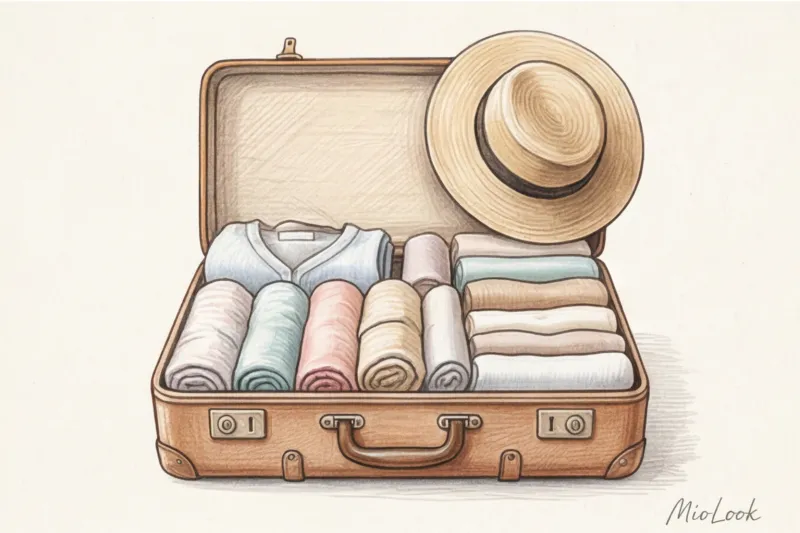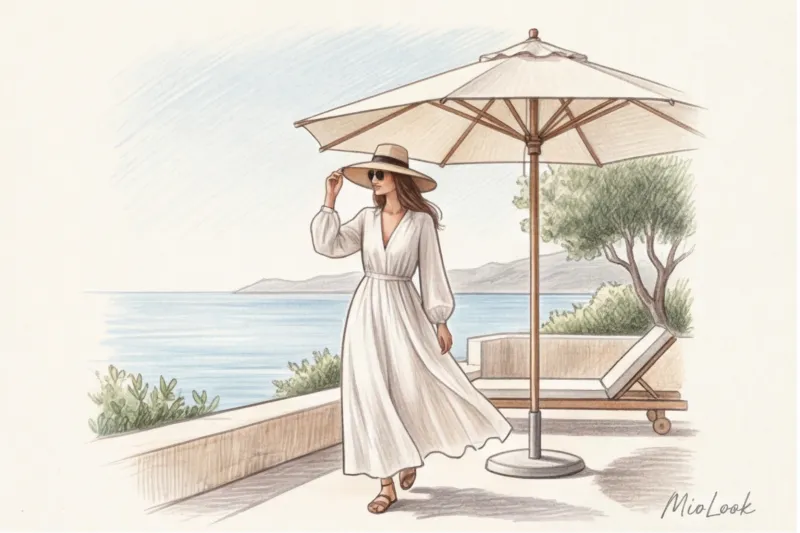
The Riviera Secret: Why Covered Clothing Works Better Than Open-Ended Clothing in Hot Weather
When temperatures on the Amalfi Coast or the streets of Dubai soar above 35°C in July, tourists instinctively strip down to the bare minimum: shorts, tank tops, and revealing sundresses. But take a look at local influencers and aristocrats—they wrap themselves in long, flowing fabrics, covering their arms and legs. Have you noticed this paradox?
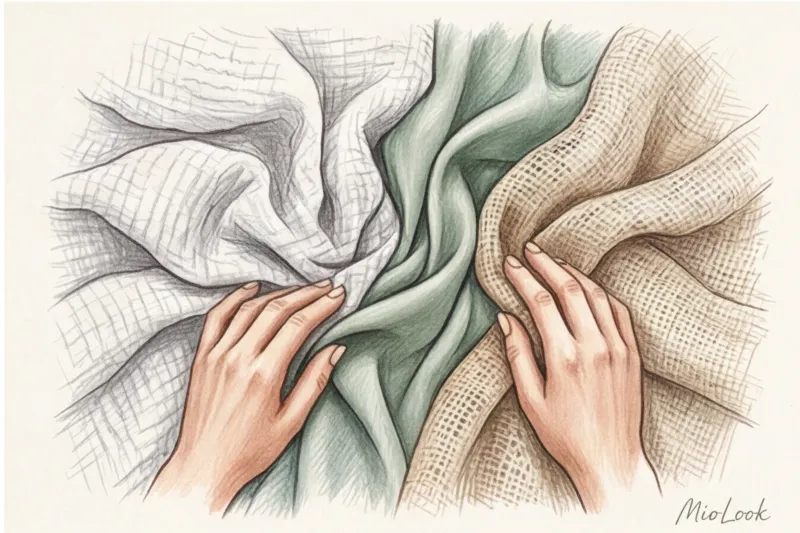
Over 12 years of working as a personal stylist, I've learned the most important rule of summer wardrobe: bare skin in the scorching sun heats up much faster than skin covered with the right material. Dermatologists confirm that intense UV radiation not only causes photoaging but also provokes overheating of the deep layers of the epidermis, causing us to feel debilitating fatigue. Covering clothing creates a "personal shadow" and triggers the "chimney effect"—when air heated by the body rises, creating a natural draft and cooling you down. I discussed the philosophy of this approach in more detail in our The complete guide to modest fashion for summer.
But for this magic to work, you need to know exactly summer fabrics that won't make you feel hot Get the texture wrong, and a high-neck maxi dress will turn into a portable sauna. And no, your usual 100% cotton won't save you.
Natural fabrics that keep you cool during summer
"Isabella, I bought an expensive cotton dress, but it's impossible to breathe in!" every other new client complains. This is the biggest summer myth: we're used to thinking that any natural material is a prerequisite for warmth. The reality is that dense cotton poplin (often used for office shirts) or oxford fabrics are excellent at trapping moisture, creating a greenhouse effect.
The secret of tailors at Italian fashion houses like Loro Piana lies not only in the composition but also in the GSM (grams per square meter) value. Summer fabrics should be in the range of 80–130 g/m². Save anything heavier for fall.
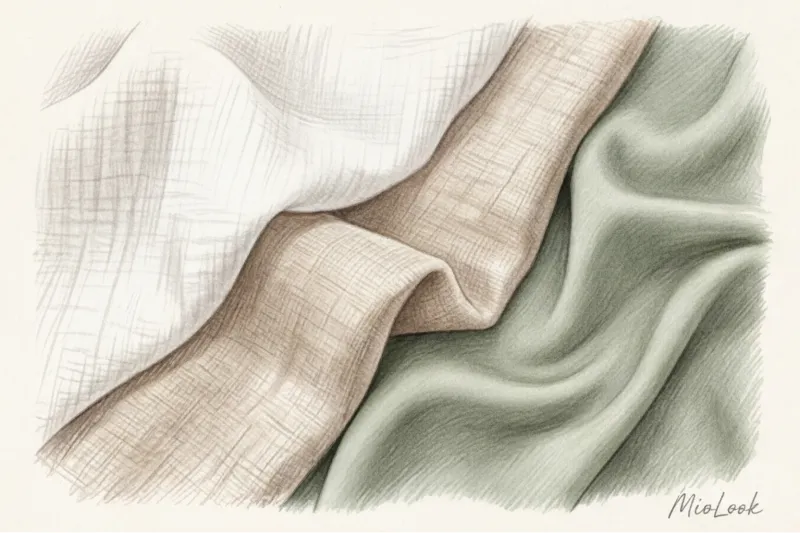
- Flax (but not any): Look for stone-washed linen. It absorbs up to 20% of its weight in moisture while remaining completely dry to the touch. Stiff, non-enzyme-washed linen will chafe your steamed skin.
- Silk: The twist type of the thread is important here. Smooth, shiny satin will instantly cling to your skin with the slightest sweat. Opt for matte crepe de chine or silk chiffon. Their grainy texture physically cools the skin by 1–2 degrees.
- Cotton: Only cambric, voile, and muslin are allowed. These are loose, translucent materials that do not block perspiration.
Your perfect look starts here
Join thousands of users who look flawless every day with MioLook. Our smart AI stylist will help you choose the perfect capsule wardrobe for any weather.
Get access — €0.99 onceMuslin and ramie: new favorites for the summer wardrobe
If you're tired of linen wrinkling within five minutes of leaving the house, consider ramie—a fabric made from Chinese nettles. According to textile institutes, ramie fibers are stronger than linen, hold their shape better (perfect for voluminous sleeves), and are also incredibly absorbent.
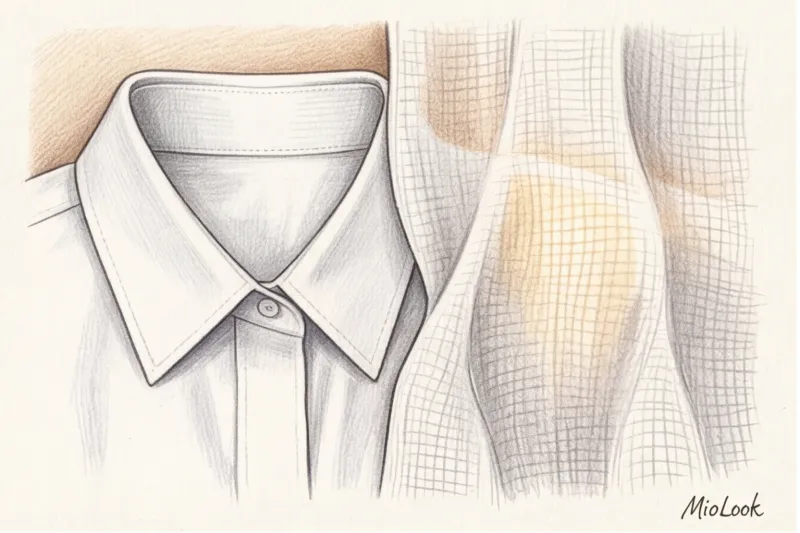
Muslin, on the other hand, saves the day thanks to its two-layer, crinkled texture. It only touches the skin in a very limited way. My favorite formula for a resort promenade: A loose ramie shirt that holds the collar in place + flowing muslin trousers.
An unexpected hero: Why summer wool (fresco) keeps you cooler than cotton
When I suggest wool trousers to my clients for the summer, they look at me with horror. But let me break your mold. The finest "tropical" wool (fresco or cool wool) is a brilliant invention that Italian men have been using in their suits for decades.
"In July 2022, in Rome, at 35°C, my friend and I took the test drive. She was wearing wide-leg cotton jeans, and I was wearing a tropical wool palazzo. After two hours, her jeans were wrung dry, and I felt like I had nothing on."
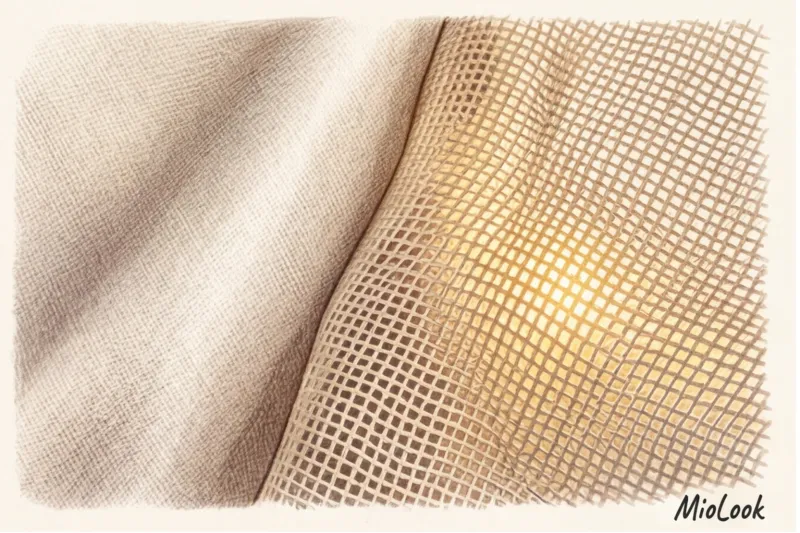
How does it work? Fresco yarns are twisted very tightly and woven as loosely as possible. The result is a porous mesh fabric. Body heat escapes freely, while the slightest breeze penetrates. At the same time, wool holds its shape perfectly and doesn't wrinkle, making it indispensable for office wear or business dinners. Trousers made from good tropical wool will cost between €150 and €300, but they're an investment that will last for years to come.
Formula of elegance: Loose trousers with fresco pleats + silk jersey top = "quiet luxury" without a drop of sweat.

Technological luxury: viscose, tencel, cupro and modal
Don't confuse cheap synthetics (made from petroleum products) with artificial fibers made from natural cellulose. Modern technology has given us materials that surpass cotton in properties.
My absolute favorite for flowy, halter dresses is cupro Often called "vegan silk," Cupro is made from the finest cotton fluff. It feels like cool water: heavy, flowing, with a delicate matte sheen. It doesn't static and drapes beautifully over the figure.
Tencel (lyocell), made from eucalyptus wood, is another must-have. Research shows that Tencel wicks moisture 50% more effectively than cotton and has natural antibacterial properties. Incidentally, Tencel is the least likely to develop those telltale dark circles in the heat (you can read about other such materials in the article). Fabrics that don't show sweat stains: A guide for speakers ).
Ready to get started?
Try MioLook's free plan—no commitments required. Upload your summer items and let AI create the perfect outfits.
Get access — €0.99 onceBlacklist: Fabrics that will turn your clothes into a sauna
But there are some materials that are absolutely not suitable for long-sleeve summer clothing. One of my clients was packing a capsule for a trip to the Emirates. She brought a stunningly beautiful shirt dress from a mass-market store, convinced it was linen. The label, in small print, stated: 60% polyester, 40% linen. Wearing such a maxi dress in the heat would give you heatstroke.
What should be ruthlessly excluded from your summer wardrobe:
- Polyester and acrylic: It's literally plastic. Even if the dress is very loose, polyester doesn't absorb moisture at all. Your sweat will simply remain on your skin.
- Excess elastane: This is a subtle trap. Many brands add elastane/spandex for comfort. But if it exceeds 3–5%, the fabric structure becomes too dense, blocking air circulation.
- Thick denim: Classic jeans weighing 12 ounces or more are a pain in the ass in the summer. Replace them with chambray (visually similar to denim, but lightweight like batiste) or lyocell pants.
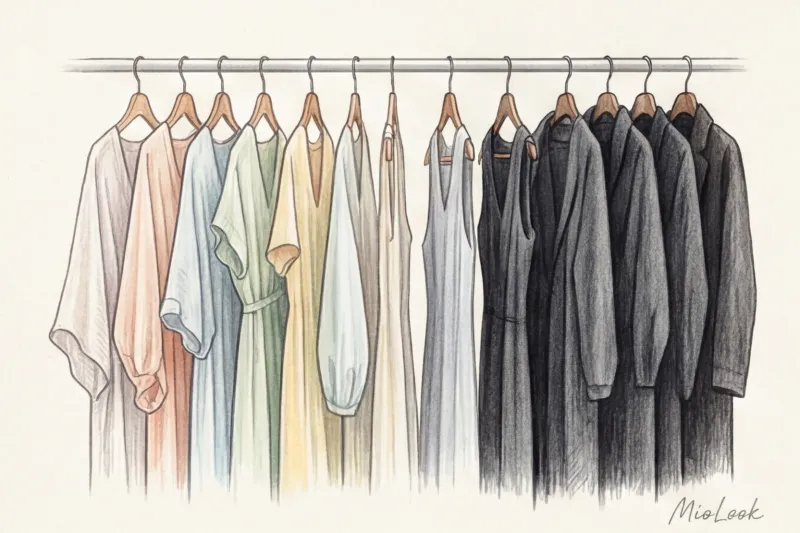
Silhouette Rule: How Cut Enhances Fabric Properties
Even the most expensive fabric made from the right fibers won't save you if it digs into your skin. The main rule of Mediterranean style is to allow air to pass between your skin and the fabric. This air gap is your main air conditioner.
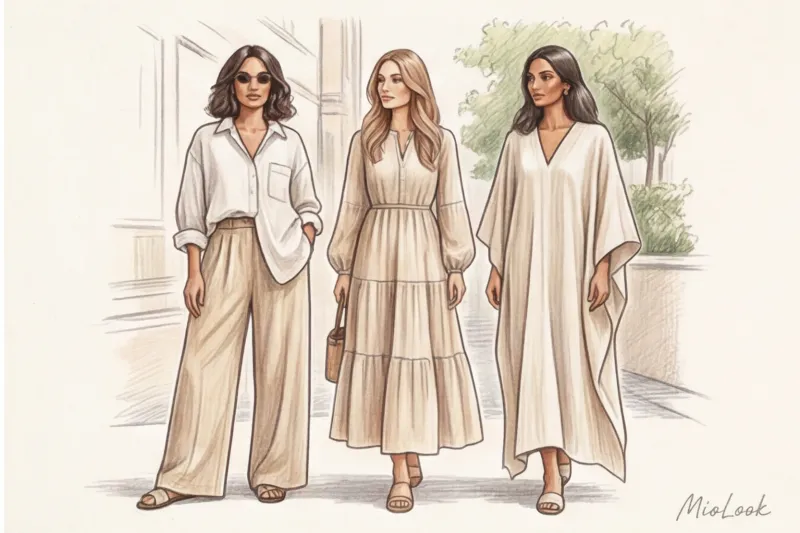
Avoid fitted silhouettes and tight sleeves. If you need to cover your arms, choose bishop sleeves, kimono sleeves, or deep armholes. Voluminous clothing made of flowing fabrics (like cupro) won't make you look bigger! On the contrary, it minimizes volume by creating vertical draping lines that visually elongate your height.
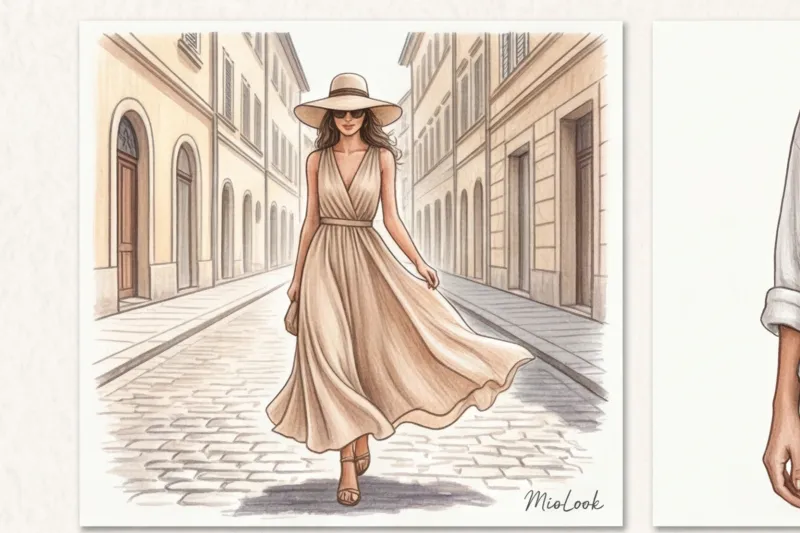
The perfect balance for the evening: A maxi kaftan dress with a V-neckline, flat leather sandals, and statement earrings make you look classy, understated, yet completely relaxed.
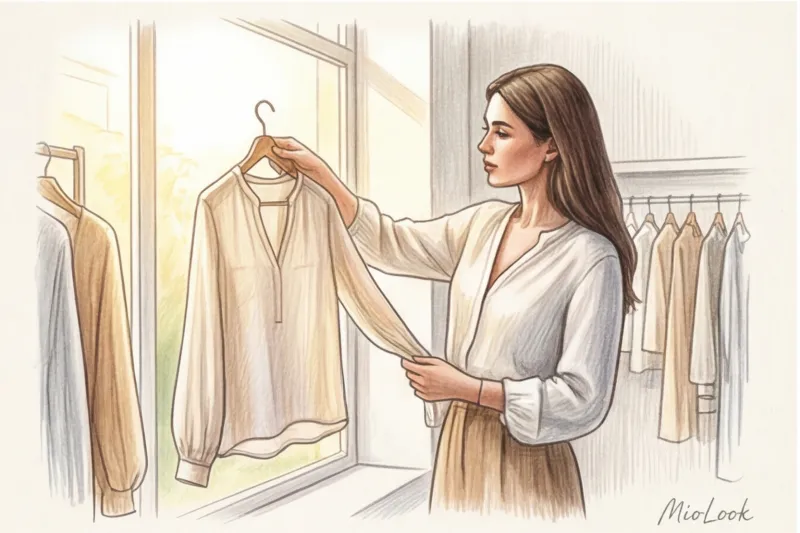
Shopping Checklist: 3 Ways to Test Fabric Right in the Store
How to avoid making a mistake when buying? I always teach my clients three simple tests that can be done right in the store, without blindly trusting the consultants.
- Light Test: Lift the item and look through one layer of fabric under a lamp in a boutique. You should clearly see the interweaving of the threads and the microscopic gaps between them. No gaps mean no ventilation.
- "Crumple test": Squeeze the edge of the item tightly in your fist for 10 seconds. If it straightens out smoothly or has soft, beautiful creases (like fine linen), buy it. If the crease forms a sharp, hard angle, the fabric will stiffen in the heat.
- Reading blends: Ideal blends are 70% linen and 30% silk (silk provides softness and cooling properties), or 50% cotton and 50% viscose. If you see more than 10% nylon or polyester in the blend, return the item to the hanger.
To avoid getting confused while shopping, you can always use the functionality MioLook to analyze your purchases and plan a breathable summer capsule.
Stylist's Summary: Your No-Compromise Summer Wardrobe
Wearing clothing that covers up in summer isn't about sacrificing comfort for the sake of a dress code or modesty. It's, above all, a sign of status, an understanding of the laws of physics, and caring for one's skin. Cheap synthetics force us to undress, but the right materials allow us to look elegant in any temperature.
Remember the triad of success: natural or high-tech artificial composition (viscose/Tencel) + loose porous weave + loose silhouette with an air layer.
Take stock of your closets this weekend. Put away the heavy denim and tight poplin. Invest in a pair of luxurious summer fresco wool trousers and a couple of flowing ramie shirts—and you'll never again be afraid of long sleeves in the middle of July.