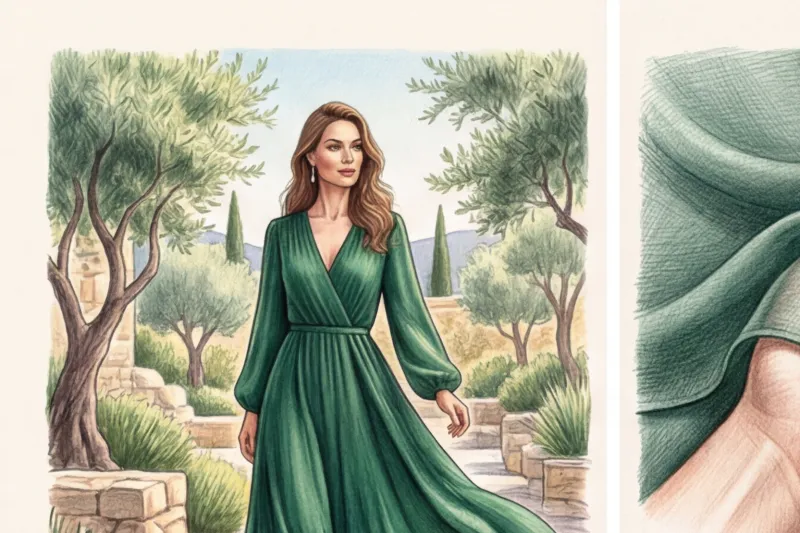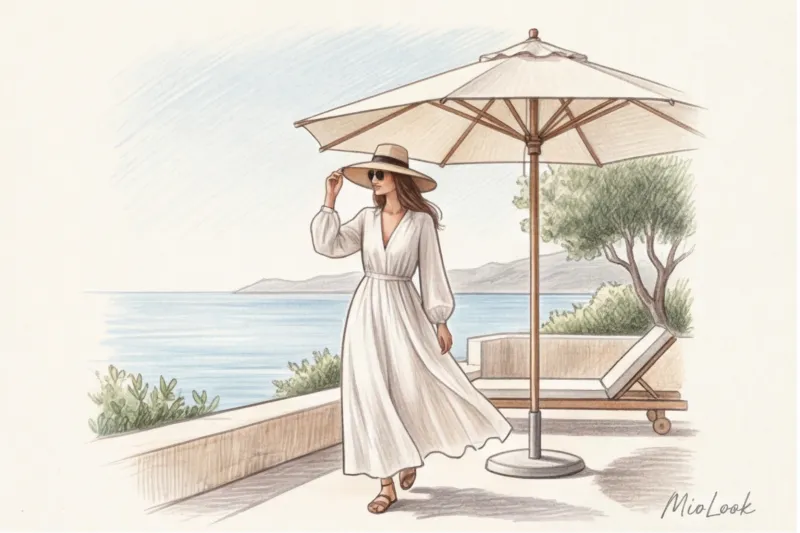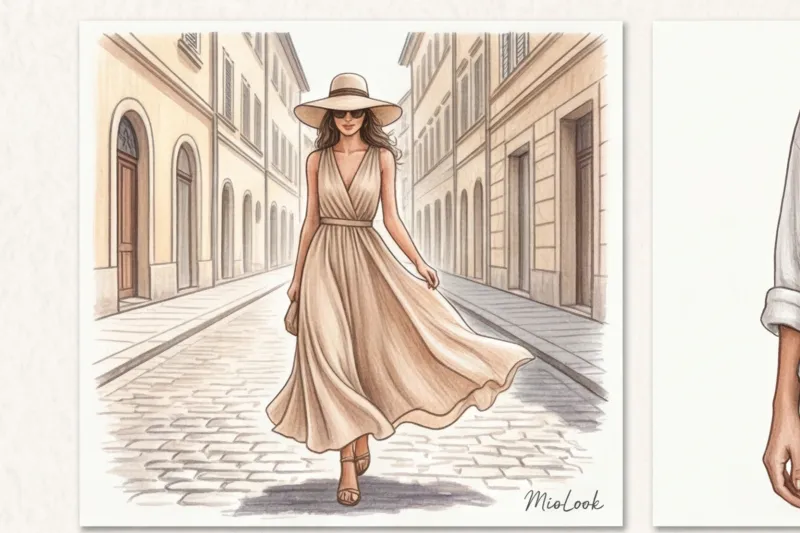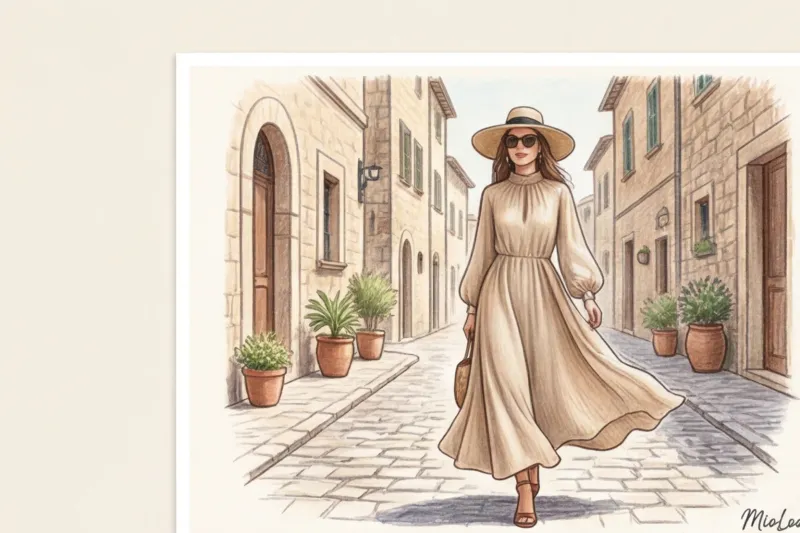
Have you ever noticed this curious paradox? Tourists on the streets of Rome or Capri, at 35°C (95°F), are usually dressed in micro-shorts and revealing crop tops, constantly fanning themselves, seeking shade, and looking exhausted. Meanwhile, local Italian women leisurely sip espresso on open terraces in flowing long-sleeved maxis—looking as if the heat doesn't even bother them.
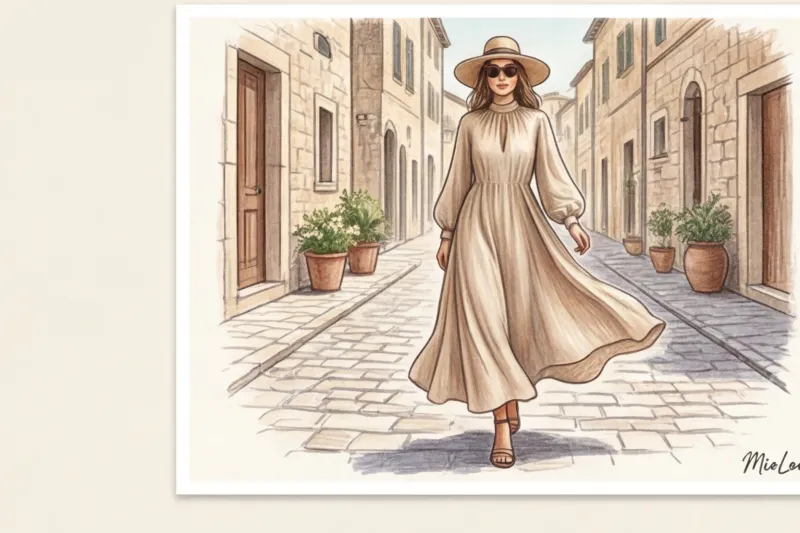
There's no magic to it, just basic physics and centuries of Mediterranean tailoring evolution. As a personal stylist, I constantly encounter the belief that the less you wear in the summer, the easier it is to cope with the heat. This is a huge mistake. Properly chosen closed summer dresses They work as a portable climate control system. We explored the philosophy of this lifesaving wardrobe in more detail in our guide. Modest Summer Fashion: How to Dress Stylishly in the Heat Today, I want to give you precise, proven instructions: how to choose that maxi dress that will make you feel luxurious and fresh, even in a concrete jungle or on a scorching embankment.
The Architecture of Cool: Why Full-Length Summer Dresses Are Better Than Mini Dresses in the Heat
Let's look at heat through the eyes of a dermatologist and a physicist. When direct sunlight hits bare skin, it heats up instantly. The body begins to rapidly lose moisture, trying to cool the surface of the body through sweat. If, however, there's a barrier between the sun and your skin in the form of proper tissue, a completely different mechanism is triggered.
A loose, closed dress creates a so-called "chimney effect." Heated air from your body rises and escapes through the collar, while cooler air is drawn in from below, under the maxi's hem. This creates continuous microcirculation. Your dress literally breathes with you.
"The quiet luxury of a summer wardrobe isn't about logos on a bag. It's about your ability to look impeccably fresh when the asphalt is melting around you. Aristocratic summer style has always meant protecting your skin from the sun, not showing it off."
I had a telling case. Three years ago, a client (a top IT executive) approached me about packing a capsule for the Amalfi Coast. Initially, she asked for "more lightweight sundresses with straps and miniskirts." I persuaded her to pack two full-length matte silk caftans and a thin linen shirtdress. Upon her return, she admitted that the sundresses had been hanging in her closet. For the first time in years of vacationing, she didn't get sunburned or suffer from stickiness, and, in her words, "felt like a heroine from a Fellini film, not a sunburned tourist."
The Anatomy of the Perfect Maxi: 4 Rules for Choosing Fabric for a Maxi Dress

Here lies the main pitfall of modest fashion: In a closed dress, the composition of the fabric is a hundred times more important than in an open one If you wear a polyester miniskirt, you'll be hot, but tolerable. If you wear a full-length polyester maxi, you'll experience a greenhouse effect and risk heatstroke.
Look for fabrics with a natural UPF (Ultraviolet Protection Factor). For example, tightly woven unbleached linen has a UPF rating of around 15-20, meaning it blocks up to 93% of UV rays, acting as a lightweight sunscreen without chemical filters on the skin.
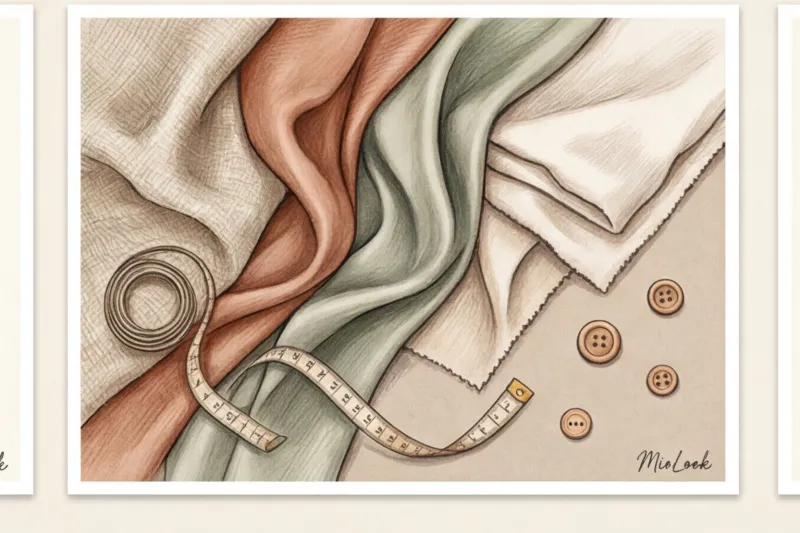
Linen, Silk, and Ramie: How to Read Labels Like a Stylist
- Flax: The absolute champion in hygroscopicity (the ability to absorb and release moisture) and heat transfer. It has been proven that the temperature between the body and the fabric in 100% linen is 3-4 degrees lower than in cotton.
- Natural silk: Choose crepe-de-chine or matte habotai. Unlike satin, they don't cling to the skin. Silk has a unique ability to cool the skin to the touch.
- Rami (Chinese nettle): My personal favorite of recent seasons. In the €120–€250 price range, brands like COS or Massimo Dutti often use ramie. This fabric looks like linen, but is more durable, has a delicate, elegant sheen, and is even more breathable.
Weave Index: Why Density Is More Important Than Thickness
Many people confuse the thickness of a fabric with the density of its weave. The fabric can be very thin (like gauze), but have a loose weave—then it will transmit ultraviolet light directly to the skin. We need something thin, but dense weaving of threads.
Practical advice: Right in the store, hold the dress fabric up to a window or a bright lamp. If you can clearly see the outlines of objects through it, the fabric is too loose. If the fabric blocks light but is still easily blown through (try gently blowing through it onto your palm), buy it without hesitation.
Your perfect look starts here
Join thousands of users who look flawless every day with MioLook's AI stylist. Upload your items, and the algorithm will create the perfect combinations.
Get access — €0.99 onceSummer Dress Styles: Mediterranean Elegance
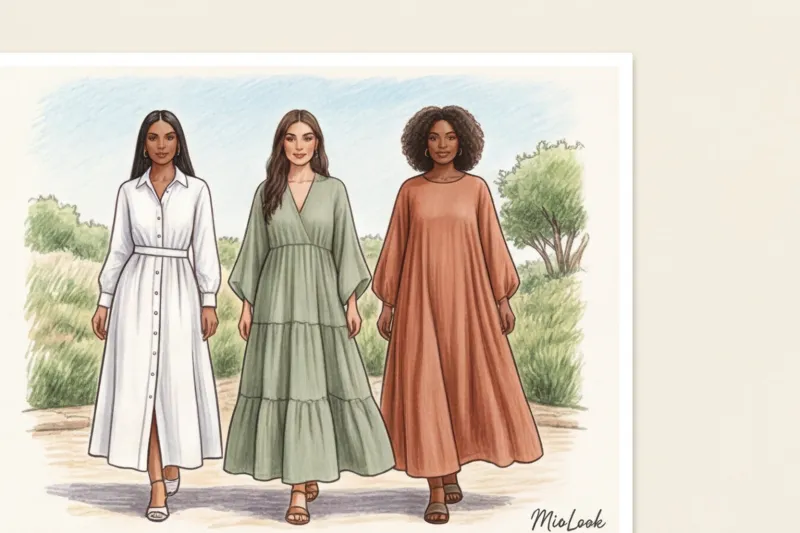
The main rule of summer closed-toe fashion is to categorically avoid tight-fitting clothing. Air should flow between the body and the fabric. However, a loose fit shouldn't turn you into a shapeless cloud. Different body types require different shapes.
Maxi shirt dress
It's the perfect compromise between relaxed and put-together. The crisp lines of the collar and vertical button placket elongate the silhouette, while the maxi length offers a relaxed feel.
My favorite formula: A shirtdress (unbutton the buttons from the bottom to the knee for a step) + a statement leather belt that matches the shoes, tied in a loose knot rather than fastened with a buckle + suede mules = instant status. This is ideal for those with a rectangle or inverted triangle body shape, as the stiff cotton holds its shape well.
Tiered dresses and elegant caftans
Middle Eastern and Moroccan aesthetics gave us the kaftan—an item that has now become synonymous with luxury relaxation. The main challenge is not to look like you forgot to change out of your pajamas.
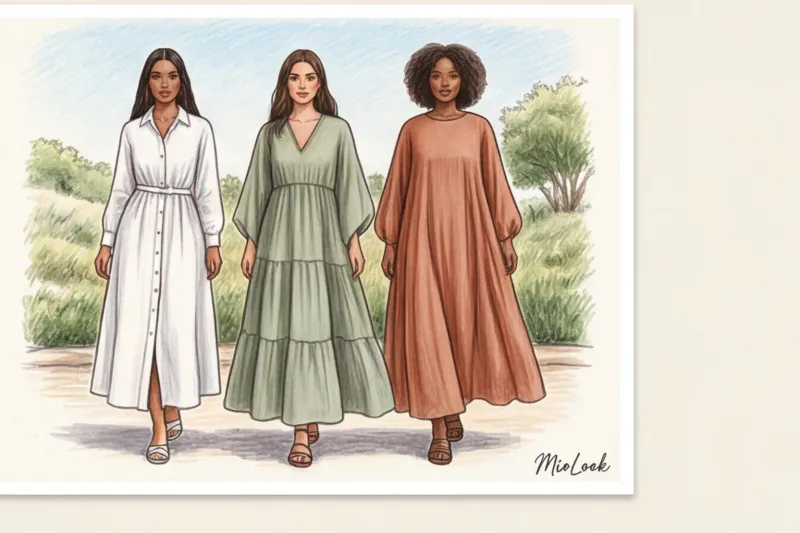
The secret lies in the texture and trim. Choose styles with a V-neck (it reveals the collarbone, the most graceful part of the body, lightening the heavy hem) and stiff cuffs. A kaftan looks luxurious on apple- and pear-shaped figures, concealing bulk and accentuating the flowing fabric.
Busting the myths: can a black dress be considered summer wear?
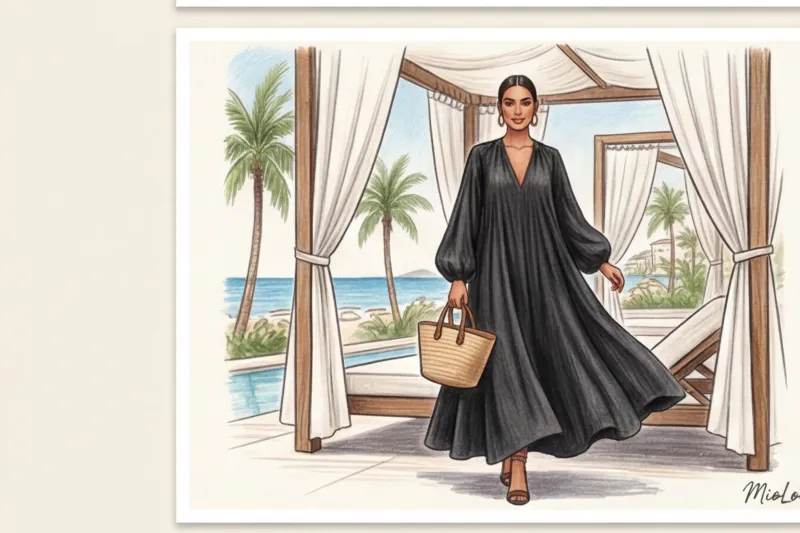
If you tell them you're going to wear a black maxi dress in 32°C (90°F), most people will shake their heads. We've been taught since childhood that white reflects the sun, while black attracts it. But science says otherwise when it comes to appropriate clothing.
In 1980, the prestigious scientific journal Nature published a famous study on why Bedouins wear black robes in the desert. Scientists proved something phenomenal: yes, black fabric heats up in the sun more than white. But! This heat stays within the fabric itself and doesn't reach the skin. Moreover, the heated black fabric creates a greater temperature difference between the air inside the dress and outside. This greatly enhances the convection ("chimney") effect. Hot air rises rapidly upward, while cooler air is drawn in from below, cooling the body.
When it does NOT work (important limitation):
A black dress will only cool you down if total oversize If your black dress clings to your body anywhere (especially on the back or shoulders), the heat from the heated fabric will transfer to your skin, literally making you boil. Choose flowing, voluminous silhouettes without a trace of elastane.
City vs. Resort: How to Style a Maxi Dress for Different Scenarios
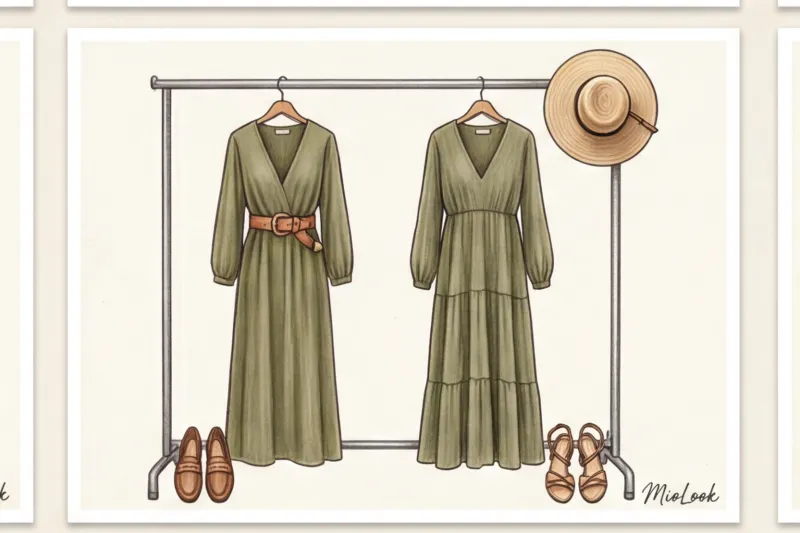
The beauty of a basic, closed dress is its phenomenal versatility. In the appendix MioLook I often show my clients how to add the same item to capsules with completely different moods.
- Urban chic (office with a relaxed dress code, meetings):
A high-neck summer dress + a structured leather tote bag + kitten-heel mules + a large metal watch. The crisp, geometric accessories instantly bring the relaxed fabric of the dress together, giving the look a professional feel. - Holiday Riviera (waterfront, brunch on the terrace):
Same dress + oversized soft raffia bag (like Loewe) + flat leather sandals + oversized horn-rimmed sunglasses + silk scarf tied in a low ponytail.
Access to MioLook for €0.99 — one-time payment
A smart AI stylist will select the perfect look for the city or vacation, based on your measurements and current wardrobe.
Get access — €0.99 onceMioLook Checklist: 5 Fatal Mistakes When Choosing a High-Length Summer Dress
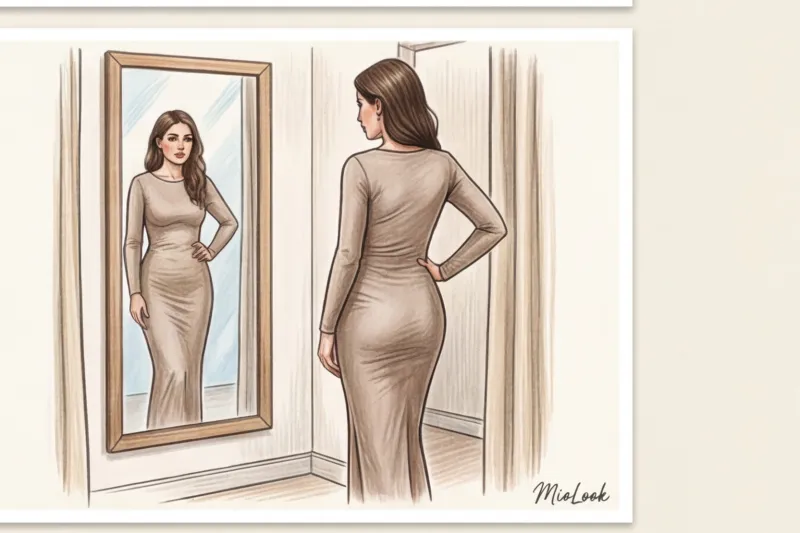
Over the years working in fitting rooms, I've seen hundreds of stunning dresses on the rack that turned out to be torture devices in real life. Here are 5 mistakes that cause a purchased item to end up in your closet forever:
- Synthetic lining under natural upper.
Budget brands (€30–€80) often cut corners. They make the outer layer of 100% beautiful cotton, but add a polyester lining underneath to prevent the dress from being see-through. The result? It's like wearing a plastic bag wrapped in cotton. Always check the lining tag—it should be viscose or thin cotton batiste. - Narrow armhole.
Even if the dress itself is loose, the armholes cut into the body, blocking air circulation. The sleeves should be loose, ideally a bishop sleeve or simply a straight, wide sleeve. - A closed collar with no balance at the bottom.
If your dress has a turtleneck, it should definitely have deep side slits at the hem. Without them, you'll look bulky rather than elegant. - Wrong choice of underwear.
Many people still wear white underwear with white or light-colored summer dresses. This is a fatal style mistake—white underwear glows like a neon sign under the thin fabric. The only true choice for a full-length summer maxi dress is smooth, seamless, nude underwear that matches your skin tone exactly. - Cheap plastic fittings.
Bright plastic buttons can ruin even luxurious linen. If a dress fits perfectly but the buttons look cheap, buy it, take it to a tailor, and have them replaced with wooden, mother-of-pearl (shell), or fabric-covered ones. This €10-€15 procedure will visually triple the dress's price.
A high-neck summer dress is an investment in your comfort, healthy skin, and impeccable style. It frees you from constantly adjusting straps, worrying about an uneven tan, or sucking in your stomach after a hearty Italian dinner. Choose a dense yet breathable natural fabric, ensuring there's always air between you and the fabric, and you'll forever change your attitude toward the summer heat.