What is clothing upcycling: from handicraft to high fashion and status
Did you know that every second, an entire truckload of textiles is sent to landfills or incinerators around the world? When I first studied this Ellen MacArthur Foundation report on textile waste in detail, I felt physically uneasy. In 12 years as a personal stylist, I've sorted through hundreds of wardrobes, and in each—absolutely each—there were high-quality items that were simply outdated. A blazer with wide shoulders from the '90s, my husband's impeccable but boring shirt, jeans made of too-thick denim. Throwing them away is a crime against quality, and wearing them "as is" is against style. That's why clothing upcycling has become my main stylistic tool of recent years. We are moving toward a conscious concept of a "circular wardrobe," where an old piece is not trash, but a valuable resource.
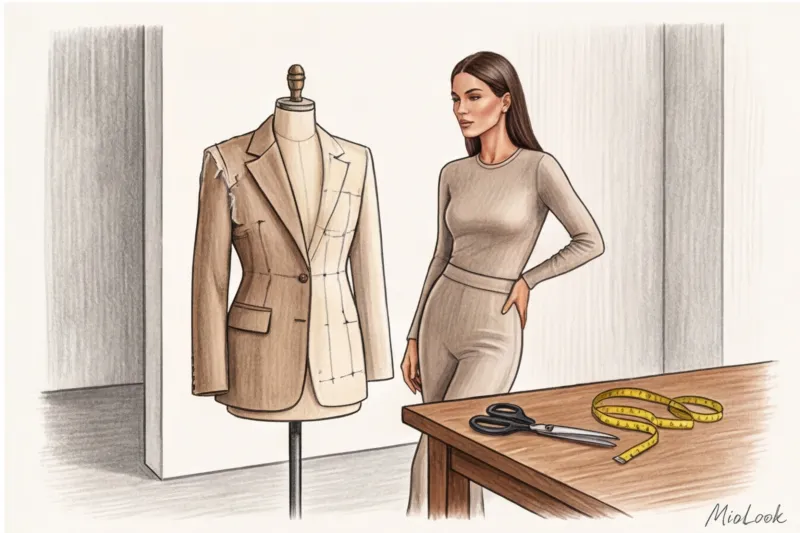
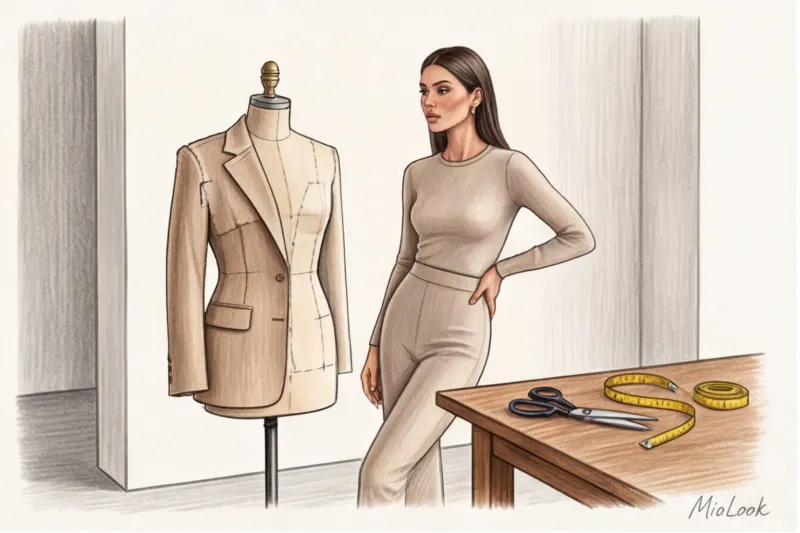
Let's get this straight. Many people confuse the terms, but the difference between them is enormous. Recycling — is industrial recycling: your old cotton pants are shredded into fibre to be woven into new, often less durable fabric. Downcycling — this is the sad end of a favorite T-shirt that has lost its shape and turned into a window rag. And here upcycling (from English upcycling) is a creative transformation and increase The value of the item. You take a well-made but outdated jacket and, with the help of architectural tailoring, transform it into an avant-garde jacket. The item isn't just saved; it's elevated to a higher class.
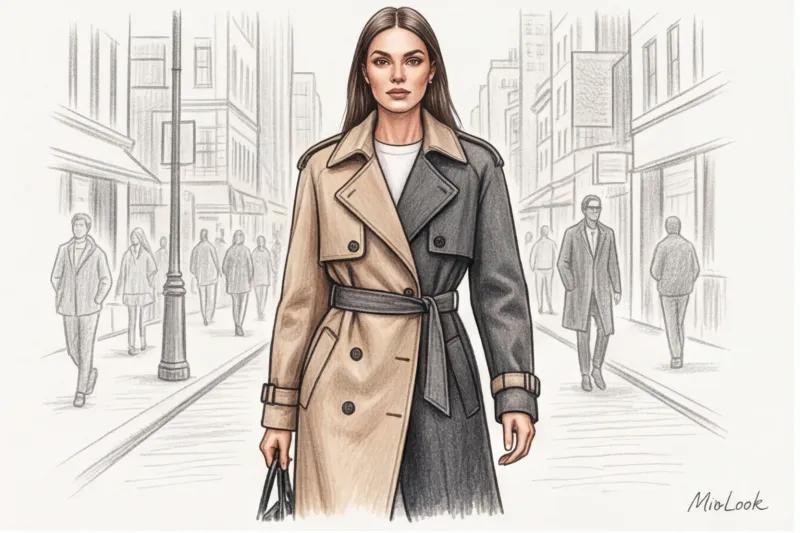
If you still think that reworking clothes is exclusively a DIY project with awkward patches, take a look at the catwalks. Deconstruction has become a fundamental part of modern haute couture. Think of Maison Margiela: Martin Margiela made a name for himself back in the '90s creating couture collections from vintage finds and reworking old theater costumes. Today, Demna Gvasalia at Balenciaga has taken this technique to its commercial extreme. Their exaggerated trench coats, literally stitched together from several different coats, confidently sell for between €2,500 and €4,000. Luxury fashion hasn't embraced deconstruction out of cost-cutting. In the age of mass marketing, where perfect machine-made seams are churned out by the millions, they no longer impress anyone. What's striking is the complex thought, the handcrafted craftsmanship, and the second life of texture.
In my practice, clients often ask how to look expensive without turning into a walking showcase of logos. The answer: intelligent exclusivity. Smart upcycling is a powerful tool for creating an exclusive personal brand. A unique asymmetrical skirt, re-cut from classic men's trousers, will say much more about your taste, status, and self-confidence than a recognizable luxury brand belt. Such a piece is a one-of-a-kind and perfectly tailored to your shape. It's that one. casual style , which does not look everyday and boring, but truly luxurious and thoughtful.
"To figure out which items in your closet are ripe for a makeover, I always recommend doing a full inventory first. Take photos of your forgotten jackets, shirts, and jeans, and add them to MioLook app When your entire "inactive collection" is visualized in a digital wardrobe, finding unobvious solutions for repurposing becomes incredibly easy. You begin to see not just old items, but the potential for a new masterpiece."
The biggest mistake in remodeling: why rhinestones and patches cheapen your look
Let's be honest. For many of us, the first thing we associate with the word "clothing remodeling" is a denim jacket haphazardly splattered with acrylic paint, or a sweater with naive appliqués hiding moth holes. I call it the "do-it-yourself circle syndrome." My personal style manifesto is harsh, but true: fabric prints and scattered glitter almost never look classy in everyday life.
Why does the "handmade" aesthetic so often fail? Because of visual noise. Remember design theory: excessive embellishment has historically been used to disguise cheap material or poor tailoring. When you try to freshen up an item by liberally applying iron-on patches or rhinestones from a hobby store for €5, you only emphasize the fact that you tried to save it. Yes, fashion houses like Dolce & Gabbana masterfully work with maximalism, but behind their embellishment lie weeks of hand embroidery and factory techniques, not a homemade glue gun.
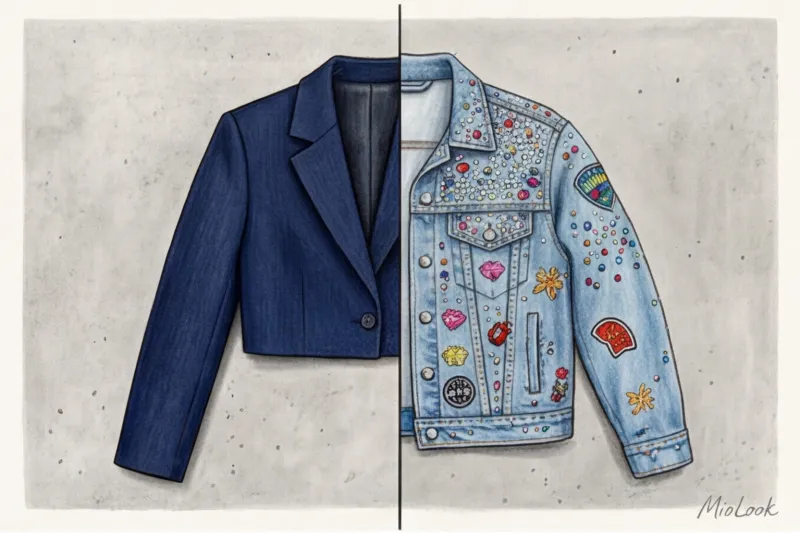
The secret to a truly luxurious alteration lies elsewhere. Want your upcycled garment to look luxurious? Cut it up, adjust its proportions, but don't embellish it. The focus should be solely on the silhouette, the geometric cut, and the impeccable quality of the seams. A smooth, professionally finished edge or, conversely, a deliberately unraveled edge secured with hidden stitching—these are true markers of quality. If you're investing in upcycling an item, it's better to spend €30–€50 on a visit to a reputable atelier to create the perfect architectural dart than to waste the same amount on questionable hardware.
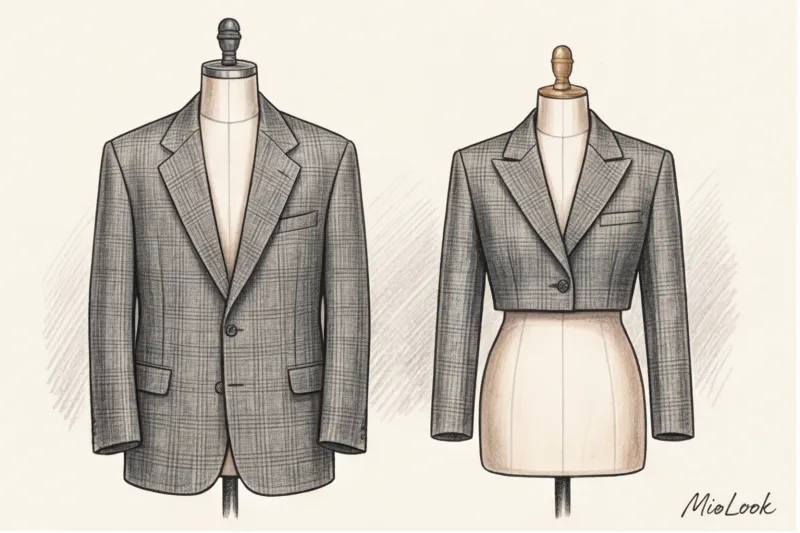
Recently, a client came to me with a ruined vintage jacket. The previous owner had tried to "modernize" it by adding guipure lace to the lapels. We ruthlessly ripped out all the embellishment, shortened the jacket to the waist, creating a clean cropped silhouette with an emphasis on the shoulders. The garment instantly regained its status and became a runway exclusive.
If you think that clothes look boring without decoration, use the main weapon of intelligent fashion - contrast of textures This is precisely what distinguishes Maison Margiela-style couture deconstruction from home-made creations. The combination of rough, masculine cloth and delicate, flowing silk creates that wow effect without a single unnecessary detail.
Imagine a tailored wool jacket with a vintage silk scarf panel sewn into the back instead of a standard back. The dull, matte drape clashes with the glossy sheen of the silk—and this clash looks ten times more expensive and complex than any acrylic painting.
Before sewing on an accent button or adding embroidery, stop and ask yourself: wouldn't it be better to simply adjust the shoulder line, create an asymmetrical cut, or add a contrasting lining? Architecture always trumps embellishment.
Access to MioLook for €0.99 — one-time payment
A smart AI stylist will select the perfect look and help you seamlessly integrate your stylish repurposed pieces into your everyday wardrobe.
Get access — €0.99 onceTransforming the Oversized Jacket: From a Man's Closet to a Feminine Essential
I remember the day I found my father's old tweed jacket in the far corner of our country house closet. It was massive, dark gray, with wide lapels—the epitome of men's tailoring from the late 1990s. My first thought was to throw it in a charity box, but then I remembered the immutable law of classical tailoring. It goes like this: never touch the armhole or the shoulder structure. Interfering with this complex architectural area requires a complete redesign, which in a good European tailor will cost you at least €150–200, and the results rarely justify the expense. But you can play with the length and volume with absolute impunity. That jacket of my father's became my most successful stylistic experiment and has permanently settled in my autumn capsule wardrobe.
Before you even pick up the scissors, you need to find the right basics. If you're hunting for a men's jacket in vintage shops or thrift stores (where luxurious pieces with a history can be found for a measly €20-40), pay attention to two critical markers.
The first is the fabric composition. Look for 100% wool, dense English tweed, or high-quality worsted blends. Cheap, shiny synthetics will create unsightly ripples no matter how they're altered, making the garment look homemade. The second marker is the shoulder line. Oversized garments should be just right: the shoulder pads should fall softly and smoothly, creating a relaxed, slightly sloping silhouette. If your shoulders stick out at hard, right angles, they'll make you look like a massive American football player, and you won't be able to fix that without an expensive tailor.
So, the ideal base has been found. Formula 1: Crop jacket with raw edge. This is my favorite styling trick, which instantly elevates the style and harks back to Martin Margiela's brilliant deconstruction. The technique is incredibly simple, but requires precision. Put on the jacket, mark a line with tailor's chalk 3-5 centimeters below the natural waist (or right along the rib cage if you're wearing it with very high-waisted trousers). Remove it, pin the fabric to prevent the lining from slipping, and confidently trim the hem with heavy-duty tailor's scissors.
The secret to a prestigious, expensive look lies in the finished hem—it absolutely does not need to be hemmed or hidden. Lightly fray the threads along the edge with your fingers, creating a short, neat fringe (approximately 0.5 cm). On a dense suiting fabric, such a raw edge looks less like a sloppy mistake and more like a deliberate design statement. This contrast between strict, sartorial classics and a touch of rebellious grunge adds visual complexity to the look.
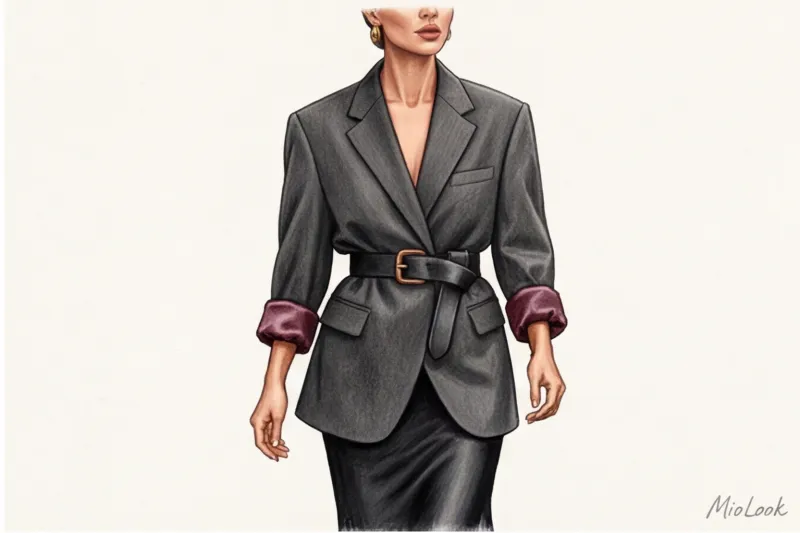
Formula 2: Jacket with an emphasis on the waist. If you're still hesitant to cut good, high-quality fabric, we'll create a feminine hourglass silhouette using styling techniques alone. Put on a voluminous men's jacket, fasten it with one button, and cinch it tightly at the waist with a stiff leather belt. The ideal belt width for this task is 4 to 6 centimeters. Soft sashes or thin chains are completely useless here—we need the strict geometry of thick leather, which will tame and gather the men's fur, creating beautiful, sculpted folds.
The next, absolutely essential step is to casually roll up the sleeves to the elbow or just below. Why do this? First, you reveal the most delicate part of a woman's hands—the wrists. This instantly lightens a heavy, bulky top and emphasizes your fragility. Second, you show off the garment's interior trim. A contrasting silk or viscose sleeve lining (often elegantly striped or in a deep wine shade) acts as a standalone accessory, adding that Mediterranean relaxedness to the look.
How to Wear a Repurposed Jacket to the Office
How do you incorporate such an avant-garde piece into a formal business environment without violating the office dress code? The key here is to master proportions. Any reworked oversized jacket (whether cropped or belted) automatically becomes the architectural, dominant focal point of your outfit. Therefore, the bottom half should be as simple and straightforward as possible to avoid excessive theatricality.
The perfect pairing for a cropped jacket is classic high-waisted palazzo trousers with pleats or a tailored straight midi skirt. In a business setting, there should be no exposed skin between the jacket hem and the waistband. Under the jacket, wear a basic silk tank, a thin cashmere top, or a smooth, fitted turtleneck in a neutral shade.
If you've chosen the option with a stiff belt, pair the chunky top with slim-fitting cigarette pants or a flowing slip skirt in thick matte silk. The smooth, delicate texture of the silk skirt creates a stunning tactile and visual contrast with the rough, masculine wool of the top. Complete the formal look with polished leather loafers or elegant kitten heels.
To save precious minutes in the morning before work, I always recommend planning these complex layered looks in advance. Take a photo of your updated jacket and upload it to MioLook smart wardrobe The app allows you to quickly visualize different combinations with your standard office items right on your smartphone screen. You'll be surprised how many fresh, fun business capsule wardrobes you can create around a single, cleverly repurposed item, forever forgetting the "closet full, nothing to wear" problem.
The Magic of a Basic Shirt: 4 Ways to Stylishly Transform a Classic Cut
While shooting our spring 2022 lookbook on the Amalfi Coast, we encountered a professional nightmare: the courier service lost a trunk full of designer silk blouses. We were left with only a rack of basic men's shirts in heavy cotton, intended for the men's portion of the campaign. It was then that I had to employ every architectural styling trick on the models to transform the strict cut into a sensual, feminine silhouette.
The key insight I learned from that Mediterranean shoot: for the fabric to drape properly, conceal unwanted waist volume, and gracefully accentuate the collarbones, the shirt needs to be oversized—at least three sizes larger than your usual. Today, brands like Jacquemus sell deconstructed blouses for €300–€500, but we can create a similar geometry in a couple of minutes without a single cut.
1. Mediterranean Trick: An Elegant Wrap Top
This is an absolute favorite for shirts made of soft, smooth poplin. We don't fasten the buttons at all. Instead, we take the left front and wrap it tightly around the torso, tucking the bottom edge deep into the pants or skirt. Then we do the same with the right front, creating a deep V-neck. The fabric at the stomach creates beautiful diagonal folds that visually elongate the silhouette. The stiff collar should be pulled back slightly toward the back—this will expose the collarbones and lengthen the neck. To be on the safe side, I always secure the intersection of the shelves with a hidden safety pin.
2. Parisian casualness: a shirt worn backwards
If you follow the street style news from Fashion Week, you've probably noticed this bohemian trick. Wear your shirt with the button placket facing down the back.
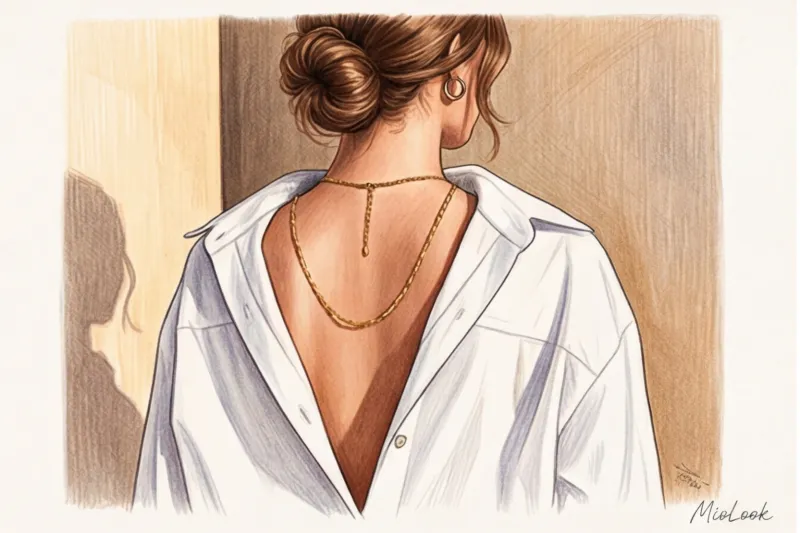
The front is completely blank and minimalist, reminiscent of a boat neck or a stand-up collar, while the back features a striking neckline. You can fasten only the top button at the neck, allowing the fabric to flow as you walk, or fasten a couple of buttons at the waist, revealing your shoulder blades. Hair should be pulled back for this look to reveal the curves of your back.
3. Asymmetry: one-shoulder top
This stylistic trick requires a shirt made of a thick, well-shaped oxford cotton (basic men's models of this quality typically cost between €40 and €80). We thread one arm through the sleeve, leaving the other free, tucking the shirt under the arm. We begin buttoning diagonally, from the exposed armpit to the closed shoulder. To prevent the sleeve from hanging loose, we wrap it tightly around the waist and tie it in a knot, creating the appearance of a wide belt. The asymmetry breaks the usual proportions and adds incredible dynamism to the look.
4. Resort Knot: A crop top without scissors
A vacation wardrobe classic that works just as well in the city. Button your shirt to the middle of your chest. Tie the remaining loose ends into a tight double knot just below your ribs. An important tip from my experience: to prevent the knot from looking like a bulky lump of fabric, twist the ends into tight ropes first. This technique works great with wide, flowing, high-waisted trousers.
Access to MioLook for €0.99 — one-time payment
Start creating perfect images with the help of artificial intelligence
Get access — €0.99 onceThe golden rule for such tailored transformations is that the fabric must be impeccably ironed. A wrinkled, knotted men's shirt looks like a sloppy accident, while a perfectly ironed, dense fabric transforms the same design into a thoughtful design statement.
Denim Architecture: How to Give Old Jeans a Second Life
Every spring, I see the same scene in my clients' closets: girls pick up scissors to transform boring jeans into short shorts with a familiar movement. My professional advice: put down the tools. Artfully cut-off shorts with protruding pockets are the most predictable and, frankly, boring upcycling scenario, rarely looking appropriate outside the beach. Instead, we'll create a piece with serious runway potential: a denim maxi skirt with a front slit. Today, it's an absolute staple of any modern wardrobe, priced in the €200-€600 range in premium boutiques.
Before enthusiastically ripping open the inseam, carefully examine the fabric label. Experience shows that out of ten pairs of jeans, a maximum of three are suitable for architectural alterations. This is where the most important tailoring rule lies: to create a perfect maxi skirt, you need only 100% cotton. No elastane, stretch, or lycra. Stretchy denim will inevitably distort along the bias cut, will create unsightly ripples at the seams, and instead of a graceful A-line silhouette, you'll end up with a shapeless garment that will bunch up as you walk. Only a dense, stiff fabric can maintain its shape.
If the leg width isn't wide enough for a comfortable walk (which is almost always the case when reworking straight-leg or skinny jeans), it's time for color blocking and "grown-up" patchwork. Forget about tiny boho-style patches. Modern status patchwork is all about large, clean, architectural lines. I always recommend using a second, contrasting pair of old jeans to create wedges. Insert triangular denim panels of a different shade into the front and back slits: a combination of classic indigo and bleached blue or solid black and distressed gray looks incredibly expensive. The vertical contrast of textures visually elongates the silhouette better than any diet.
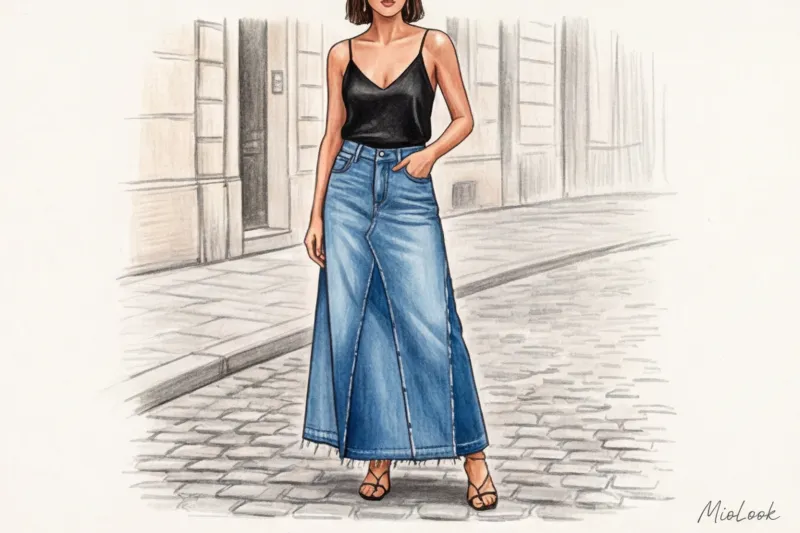
The final touch of a masterful deconstruction is the hem. A perfectly straight, rolled-up factory seam on a repurposed skirt often looks heavy and out of place, so we opt for a trendy frayed edge. But there's a technical nuance: how to unravel the threads so that after the first machine wash, your elegant maxi doesn't turn into untidy, knee-length fringe?
The secret is creating an invisible barrier. First, cut the skirt to the desired length. Then, using a thick needle, pull the horizontal weft threads 1–2 centimeters, leaving the vertical warp threads hanging freely. And most importantly, sew a straight machine stitch with thread that matches the denim exactly 3–5 millimeters above the start of the fringe. This stitch will secure the fabric and prevent it from fraying beyond the specified limit.
Once your architectural masterpiece is ready, take a photo of the result and add the item to MioLook The smart wardrobe feature will help you instantly create dozens of looks with your new skirt: from relaxed combinations with a voluminous cashmere sweater to tailored ensembles with that same re-tailored men's jacket, creating the perfect balance of textures.
Color Rescue: The Overdyeing Technique for Renewing Faded Fabrics
You're probably familiar with that feeling of mild disappointment when, after the tenth wash, a noble charcoal shade turns into a dull mouse-gray. Fabric physics is unforgiving: cotton fibers fray microscopically, refracting light differently, and the color inevitably loses depth. But before you toss your favorite basics, let's apply a technique. overdying - professional hair repainting at home.
Last month, we performed a "favorite black dress rescue" for one of my regular clients. Her luxurious, minimalist, thick cotton sundress from COS had faded at the seams, creating unsightly, off-white creases. I categorically advised her against adding patches or embroidery, as they would have instantly ruined the architectural cut. Instead, we used Dylon Intensive Black, a professional machine-washable dye. The entire process took two cycles in a regular washing machine at 40°C: the first for the dyeing process, and the second for fixing the pigment with laundry detergent. The dress returned to its original obsidian hue without a single stain, saving her at least €150 on a new dress.
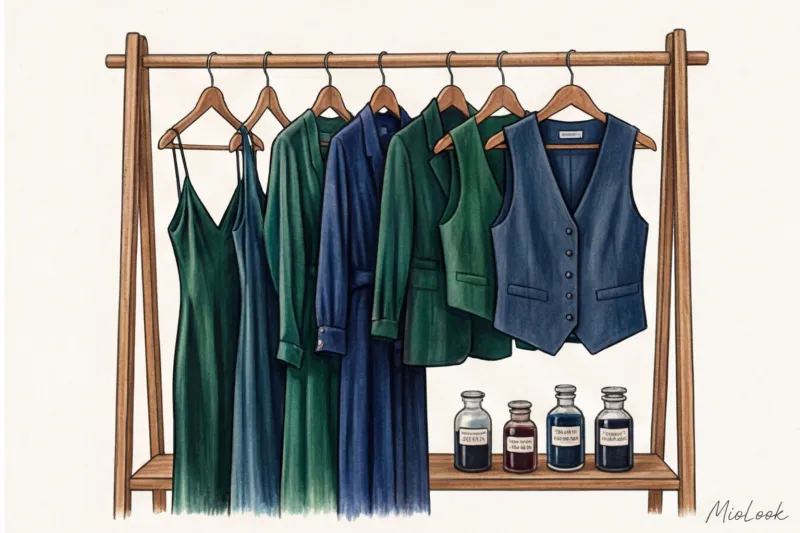
However, the true stylistic potential of this technique is revealed with a radical change of color. Washed-out, faded pastels—pale pink, faded mint, or dirty peach—mercilessly cheapen the look. Transform them into jewel tones (Precious stone colors). Deep emerald, rich sapphire, or noble burgundy always look prestigious and expensive.
It's important to remember the basic principles of color: dye doesn't cover up the existing color like paint on a wall; it blends with it. If you dip a pale yellow shirt in blue pigment, the result will be a deep green. And if you dye a light blue blouse with red dye, expect a luxurious amethyst result.
A crucial technical detail that DIY bloggers often gloss over: the magic of recoloring doesn't work with every fabric. Natural fibers such as cotton, linen, viscose, and denim are ideal for dyeing. Silk and wool also absorb color perfectly, but require special, delicate dyes and temperatures strictly below 30–40°C, otherwise the garment will shrink irreversibly.
But it's best to avoid synthetics like polyester, acrylic, and nylon altogether. Standard dyes will simply run off the smooth plastic fibers along with the water. If you absolutely need to change the color of 100% polyester, you'll have to use specialized dye lines (like Rit DyeMore) and literally "boil" the item on the stove at around 95°C, which is detrimental to many modern fabrics.
And another insider secret: factory seams in mass-market and even mid-range clothing are almost always sewn with durable polyester thread. If you dye a white cotton shirt a rich burgundy, be prepared for the stitching to remain pristine white. However, this often creates a striking contrasting piping that looks like a deliberate design feature.
Once you've updated the color, it's time to integrate the "new" item into your everyday capsule wardrobe. Upload a photo of the recolored item to MioLook , and the app's algorithms will instantly suggest fresh color combinations with the items already hanging in your closet.
Your ideal image begins Here
Join thousands of users who look flawless every day with MioLook. Revive your wardrobe and create stylish combinations in just a few clicks.
Get access — €0.99 onceIntegrating repurposed pieces into your status wardrobe
The main difficulty in hand-transforming clothes isn't in even seams or cutting techniques. The real fun begins in the morning in front of the mirror. The paradox is that the more creative and complex your remade garment is, the more tranquil and precious its surroundings should be.
At the Istituto Marangoni we were taught the golden rule of contrasts, which I always apply in my work. Balance rule: 1 upcycled item + 2 strict basic items For every accent deconstructed piece, there should be at least two impeccably tailored, classic pieces. For example, if you're wearing an asymmetrical shirt, pair it with straight-leg, pleated trousers made of thick wool and a simple trench coat. If a crop top made from a men's jacket is the star of the look, tone it down with a sleek turtleneck. This technique works flawlessly: it prevents you from drifting into a "city girl" aesthetic and maintains the high status of your outfit.
To make this formula work for you every day, I recommend collecting and digitizing your database through MioLook With your tailored skirts and trousers clearly displayed in the app, finding the perfect neutral backdrop for a complex designer makeover becomes a matter of minutes.
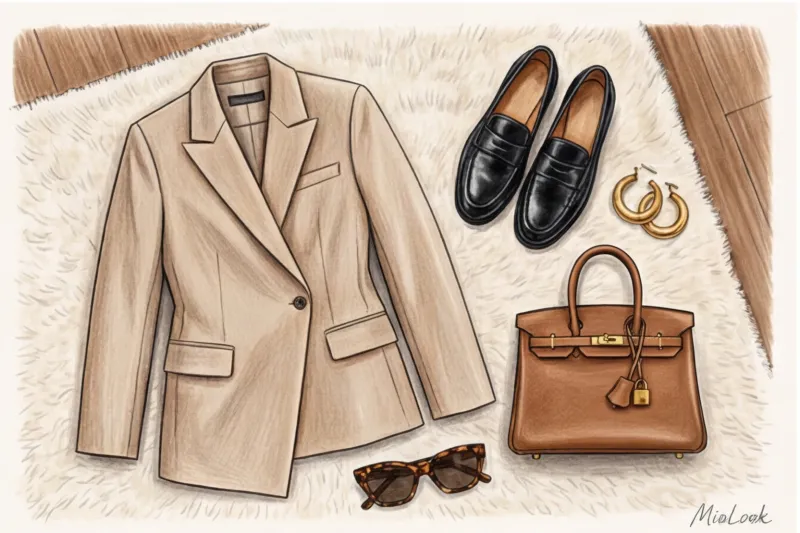
Deconstructed clothing always visually exudes a slightly rebellious spirit. How do you choose the right accessories to complement deconstructed clothing so that grunge looks like thoughtful luxury rather than forced frugality? We need strong visual anchors. The main no-nos here are soft, shapeless hobos and worn-out sneakers. Choose only rigid, architecturally shaped bags made of smooth leather and expensive shoes. If your bag holds its shape well enough to sit on a table, it will withstand any makeover. An investment in high-quality leather derbies or ankle boots in the €250–€400 range will pay off immediately: shoes set the tone for the entire outfit.
My personal styling formula that I love to use at Fashion Week: Deconstructed blazer + silk skirt + loafers = instant polish with character The difference in textures creates that elusive Mediterranean vibe that's impossible to tear your eyes away from.
Last season, while putting together a capsule collection for a top manager of a large corporation, we faced a dilemma: how to incorporate upcycling into business style? The accepted boundaries of business casual are quite open to such experiments, but with strict restrictions. In an office environment, deliberately ripped edges and exposed skin are strictly prohibited. The maximum acceptable is an intelligent play with proportions. For example, a cropped waist jacket with a perfectly finished, rolled hem over a formal white shirt. Or an asymmetrical wrap shirt, but made of thick, opaque Oxford cotton. Your goal is to demonstrate unconventional thinking through geometric lines while maintaining absolute professionalism.
A Practical Checklist: 5 Rules Before Cutting Up Old Clothes
At Central Saint Martins, a fashion school, students on the design course are often told one sobering phrase: scissors are an instrument of irreversibility Before you decide to radically transform a beloved but outdated wardrobe item, you need to realistically assess your capabilities and the materials you're using. To ensure your first attempt doesn't end in disappointment and a trashed item, I've put together a professional step-by-step plan.
1. Conduct a ruthless fabric wear assessment.
Clothing upcycling is the art of architectural transformation, not the resuscitation of hopelessly damaged items. If the fibers have lost their elasticity, no amount of deconstruction can hide it. Upcycling won't save stretched elbows on knitwear, thinned fabric between the legs on denim, or irreversibly deformed armholes.
My personal test, which I always conduct when sorting through my wardrobe: hold an item up to a bright light source. If the fabric is translucent in areas of maximum tension, its structural integrity is compromised. If you try to make a stylish crop top out of such a sweater, the hem will become a sloppy wave instead of a graphic line. Save such items for downcycling, and for fashion experiments, choose denser, more textured fabrics.
2. The rule of fitting: "Pin seven times, cut once."
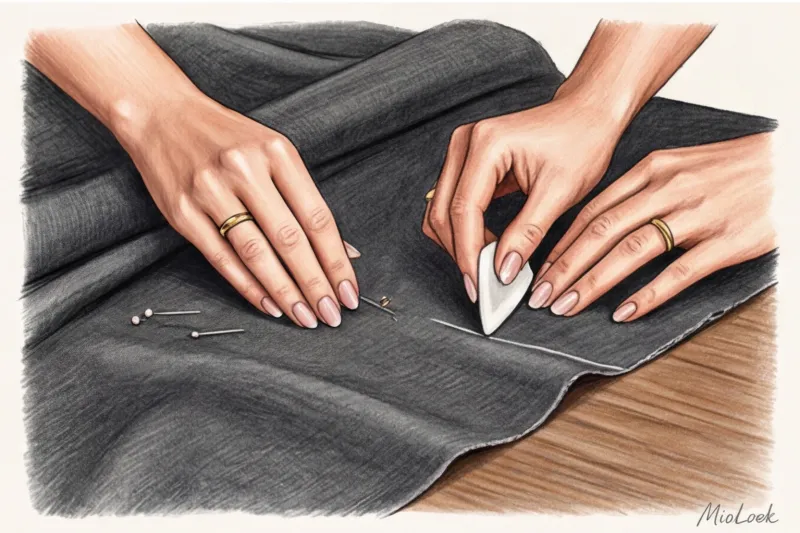
The biggest mistake beginners make is cutting the garment while it's flat on the table. The human body isn't flat; it has volume, curves, and asymmetries. Forget about paper pins—you'll need sharp dressmaker's pins (ideally, those with small glass heads, as they don't melt under the iron).
The secret to proper fixation: stick the pins in perpendicularly Align the pinned fabric with the future seam or cutting line, not parallel to it. This will prevent the fabric from becoming distorted when trying it on. After putting on the pinned item, be sure to test it dynamically: raise your arms, sit on a chair, bend over. What looks perfect when held still may restrict movement or bulge unattractively when walking.
3. Create a mock-up from cheap fabric before cutting up expensive vintage.
In couture ateliers this process is called creation toilet (mock-up). If you're planning a complex asymmetry on a high-quality cashmere coat or a vintage heavy wool jacket, don't mess with the original. Buy a couple of meters of the cheapest, most unblemished dummy calico (usually priced between €3 and €5 per meter). Cut out the desired pieces from the dummy calico, pin them to your garment, and evaluate the proportions. A 2023 study by the Fashion Institute of Technology (FIT) found that 68% of mistakes in DIY cutting are due to improperly assessing the drape beforehand. A mock-up eliminates these risks.
4. Clearly distinguish between when it’s worth doing it yourself and when it’s better to take your idea to a studio.
My professional rule for clients is this: we do everything ourselves when it comes to raw edges, superficial deconstruction (like ripping pockets), overdying (dying), and simple draping. But as soon as it comes to changing the shoulder structure, reshaping the armholes, working with linings, or complex, flowing fabrics like bouclé—take the garment to a tailor.
Having a jacket re-fitted by a good tailor will cost around €40–€80, but it's an investment that will transform an old, baggy blazer into a perfectly tailored piece that looks worth hundreds of euros.
5. Take a full-length photo test.
Our eyes tend to deceive us when we look in the mirror, inadvertently smoothing over any imperfections in our silhouette. Before you grab the scissors, put on the pinned garment and take a few photos on your phone from different angles (straight ahead, in profile, from behind). A flat shot acts as the most merciless and objective critic: you'll instantly see if an asymmetrical line visually shortens your height or a shorter hem makes your hips appear wider.
Upcycling isn't just an eco-friendly initiative. It's a tool for creating a truly prestigious, deep wardrobe, where every item has character and history. Before your next impulse shopping spree, take stock of your closets. Mark potential candidates for transformation—by the way, the app's tagging feature is very convenient for this. MioLook By creating a separate virtual capsule collection called "For Remaking." Give high-quality fabrics a second chance, and they'll respond with impeccable style that's impossible to copy.
Guide Chapters
Sewing and clothing repair tools: a home kit
Kitchen scissors can ruin an expensive coat forever. We'll show you how to assemble the right home kit for high-quality alterations.
Upcycling Brands: Why They've Become a Major Fashion Trend
Luxury is no longer measured by logos; true exclusivity today is a one-of-a-kind item. We explore how upcycling is changing the rules of the fashion industry.
Rhinestone Decor: Stylish, Glamorous Upcycling
Forget the cheap glitter of the 2000s. Discover the art of upcycling and transform basic pieces into avant-garde masterpieces with rhinestones and pearls.
What to Make from an Old Sweater: Trendy Upcycling
Don't rush to throw away your damaged cashmere. We'll tell you how to transform old knitwear into ultra-fashionable, high-status pieces.
How to repurpose an old dress: stylish ideas
Learn how to give a new life to a beloved but outdated dress. Practical alteration tips: from fabric evaluation to a complete style makeover.
DIY T-shirt Makeover: How to Create a Trendy Top
Forget the awkward handicrafts of yesteryear. Learn how to transform an ordinary T-shirt into a trendy designer top with scissors and style.
Tie-dye: How to dye clothes at home
A stain on your favorite item isn't a reason to throw it in the trash. We'll show you how to give your clothes a stylish second life using modern dyeing techniques.