Let's be honest: most of us associate glitter appliqués with the cheap glamour of the 2000s, peeling plastic stones, and T-shirts that didn't even survive three washes. For years, I avoided glitter in my everyday looks, considering it reserved for stage costumes. But one day, while backstage at the Schiaparelli couture show in Paris, I saw artisans creating architectural masterpieces from glass and metal. That moment changed my perception.
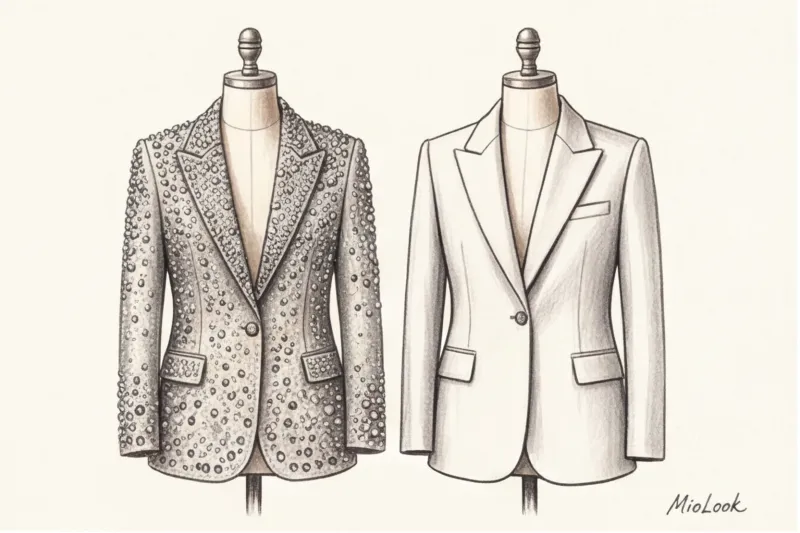
Today, couture clothing embellishment with rhinestones, pearls, and heavy beads isn't an attempt to "save" a worn-out T-shirt. It's a thoughtful technique. broderie d'art (artistic embroidery), which transforms basic, sometimes boring items into avant-garde statement pieces. We discussed the wardrobe recycling philosophy in more detail in our The Complete Guide: Upcycling Clothing: How to Stylishly Repurpose Old Items.
From Y2K to Schiaparelli: How Rhinestones Made a Comeback in High Fashion
We've long been wary of rhinestones due to the trauma of the fast fashion era of the 2000s, when glamour was synonymous with shoddy adhesives. But the modern crystal renaissance dictates entirely different rules. On the runways of Maison Margiela and Balmain, rhinestones are not merely embellishments, but a fully-fledged architectural element that transforms the texture of fabric.
I love watching the masters of the embroidery house Maison Lesage (they create magic for Chanel) at work. Their approach is radically different from mass-market DIY. They don't just patch up holes; they create a composition. And this fits perfectly with the current trend of conscious consumption.
"According to a 2023 report from the charity WRAP UK, extending the life of any item by just nine months reduces its carbon and water footprint by 20-30%."
And Lyst's analytics confirm: searches for "crystal embellishment" in the premium upcycling segment have grown by 47% over the past year. Rescuing an old men's jacket with hand embroidery has become a new, very subtle status symbol—it shows you have taste and, more importantly, time.
Access to MioLook for €0.99 — one-time payment
A smart AI stylist will select the perfect look based on your wardrobe.
Get access — €0.99 onceThe Rule of Contrast: Choosing the Perfect Base for Glamorous Upcycling
The biggest mistake I see beginners make is trying to embroider delicate knitwear or overly feminine, form-fitting pieces. A couple of years ago, one of my clients decided to update a basic viscose turtleneck with large glass stones. The result was disastrous: the weight of the glass caused the delicate fabric to sag, the silhouette to deform, and the garment ended up in the trash.
The strict "manly shoulder" rule applies here. The ideal base for gloss is austere, masculine, dense textures that create a dramatic contrast with the delicacy of pearls or icy crystals. Choose:
- Oversized jackets made of 100% wool (ideally found in men's sections of mass-market stores or vintage shops, budget segment 40–80 €).
- Thick cotton shirts (poplin with a density of at least 180 g/m²).
- Stiff, non-stretch denim (100% cotton without added elastane).
The fabric's structure directly impacts the durability of the embroidery. The denser the base, the better it holds the thread tension and the more valuable the final result looks. A great example of integrating such items into your wardrobe is Casual style for women over 40 , where the balance between comfort and a status detail is important.
Embroidery Architecture: Pearls, Beads, and Crystals as Sculptural Materials
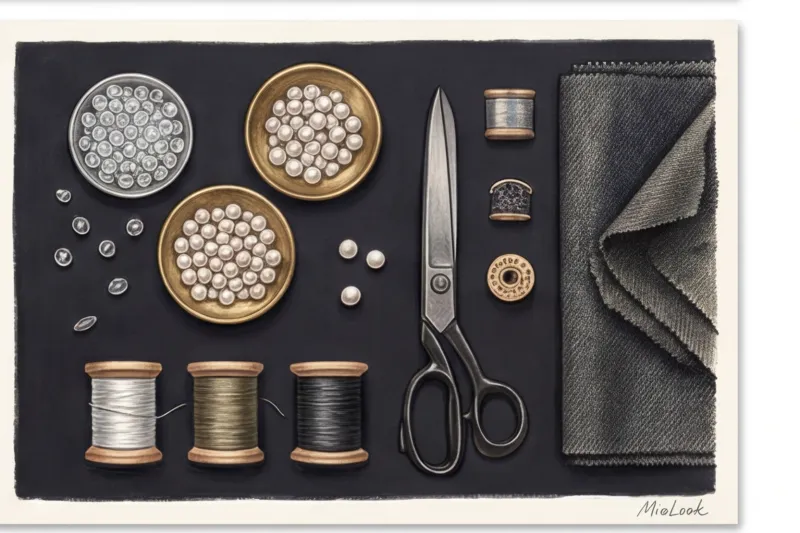
The secret to a luxurious feel lies in the materials. Forget acrylic. Yes, plastic rhinestones weigh less and cost next to nothing, but they wear out after the first dry cleaning, become cloudy, and cheapen the look of the piece. Glass (for example, vintage Swarovski or Czech Preciosa) provides the perfect refraction of light and a refined heaviness that makes the fabric fall in beautiful, luxurious folds.
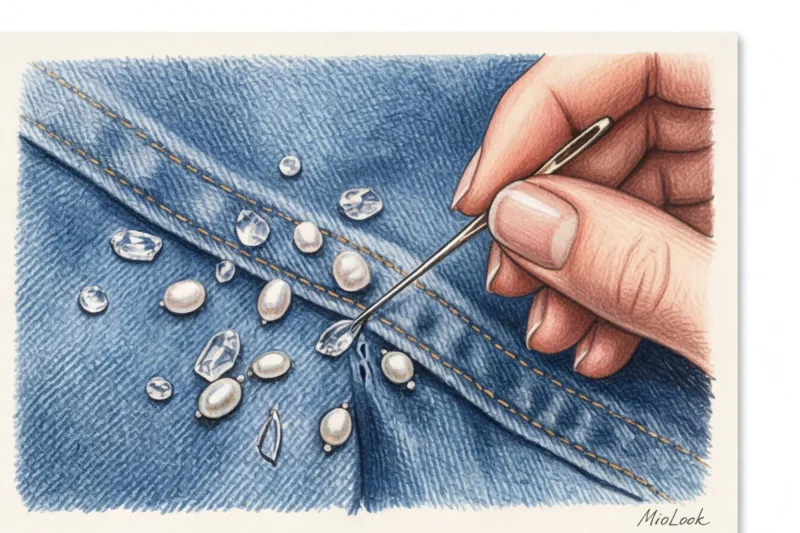
Why do hot-melt rhinestones always cheapen an image?
There's a myth that hot-melt rhinestones are a quick and ingenious way to update an item with an iron in 15 minutes. As a stylist who regularly goes through wardrobes, I can assure you: this doesn't work for creating a high-status look.
Firstly, the glue always extends slightly beyond the edges of the stone, collecting dust. Secondly, the heat causes the fabric in the glued area to become stiff and "wooden." True luxury requires the flexibility that only hand-stitching with fine silk or reinforced thread can provide. Yes, it takes longer. But we're creating something that will look like it cost €1,500, not something for a school disco.
Organic scattering vs. strict geometry
Symmetrical, precisely aligned rhinestone embellishments instantly betray the "homemade handicrafts" or the cheap mass-market styles of the 2010s. The couture approach is based on the principle of organic growth. Imagine moss covering a stone, frost forming on glass, or the appearance of a starry sky. The concentration of elements in a single point and a smooth, chaotic dispersion toward the edges is the secret to visual magic.
Your perfect look starts here
Join thousands of users who look flawless every day with MioLook.
Get access — €0.99 onceStylist's Workshop: 3 Schemes for Couture Clothing Decor with Rhinestones and Beads
In our studio, when creating capsule collections, we use the "air" rule: there should be space between large elements, either filled with smaller beads or left empty. This creates a dynamic effect. Be sure to use a hoop when working with cotton and special fine beading needles to avoid damaging the structure of the fabric threads.
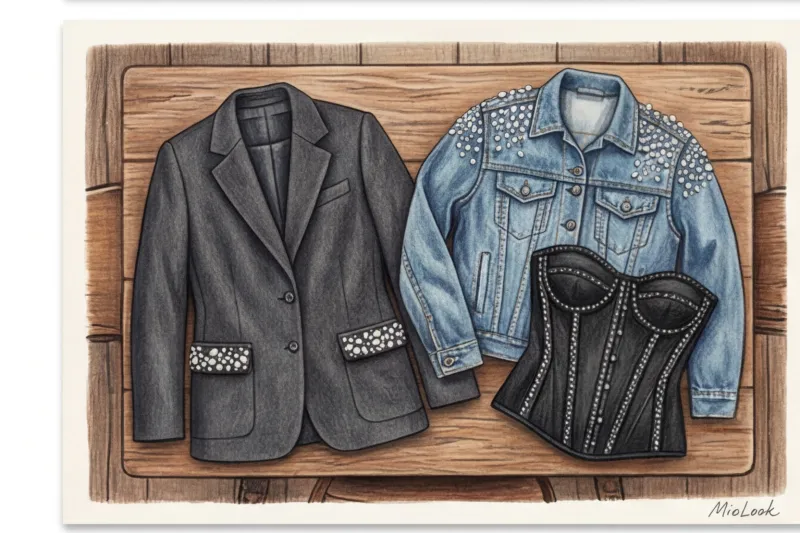
Diagram 1: "Tears" on the lapels of a men's jacket
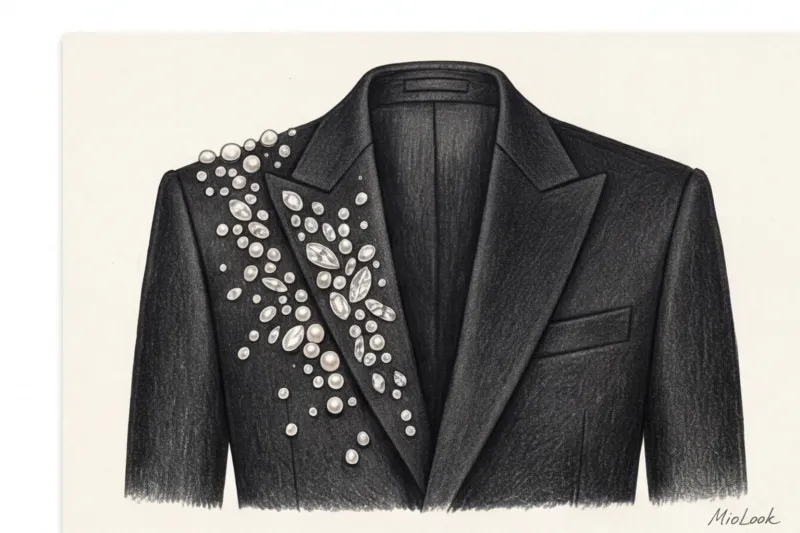
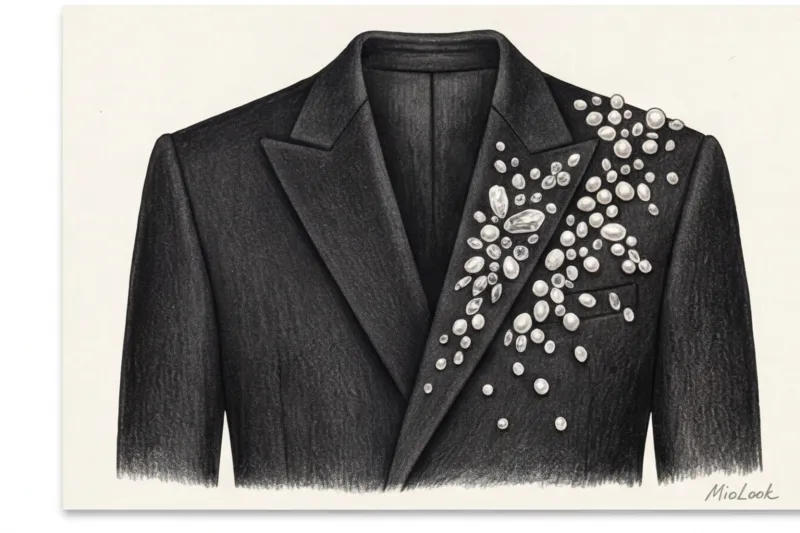
One of my favorite projects is transforming a client's husband's boring wool jacket (purchased for €100) into a luxurious evening tuxedo. We used natural, irregularly shaped freshwater pearls.
Pattern: The largest concentration of large pearls is at the base of the collar on one lapel. As they descend toward the chest, the pearls become smaller, and the distance between the beads increases until they become sparse, single drops. This is a stunning technique for those looking for... How to look stylish on Zoom calls — the emphasis remains in the portrait area.
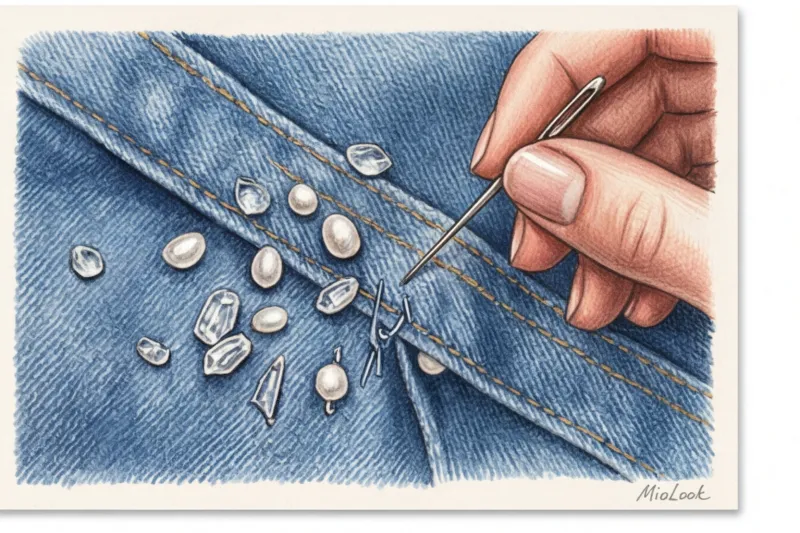
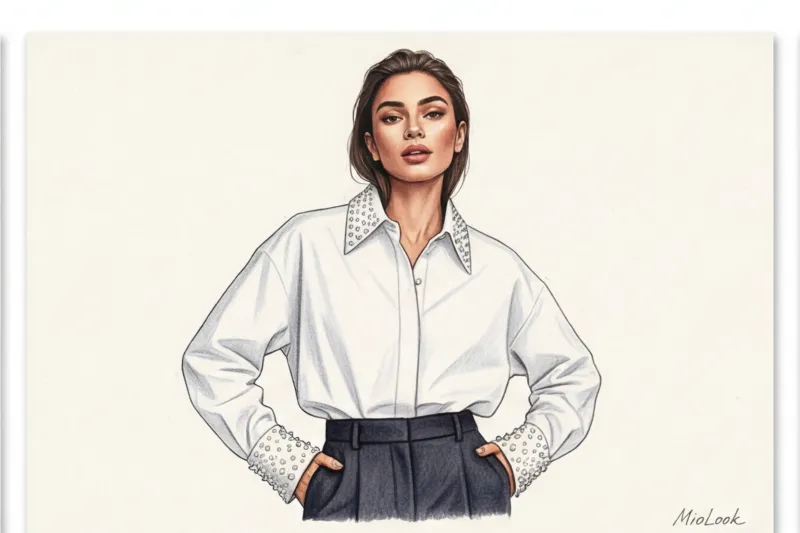
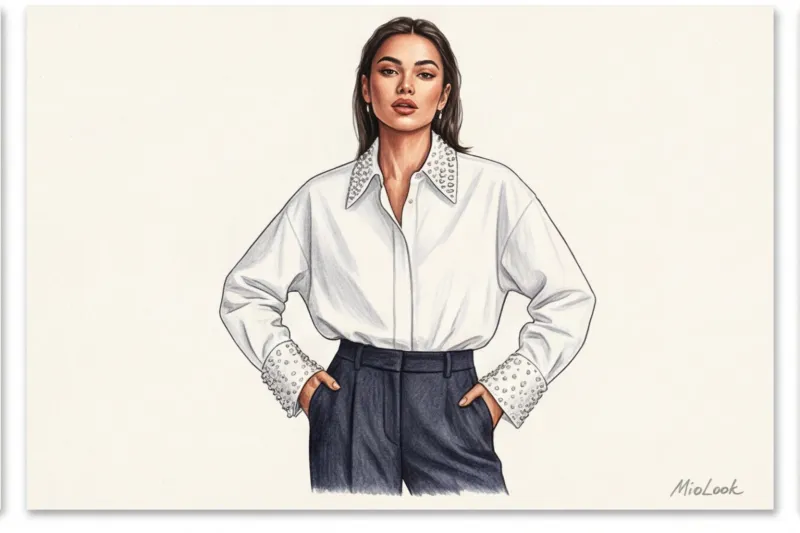
Pattern 2: Pearl gradient on shirt cuffs
Ideal for heavy poplin, we use only stiff, double-faced cuffs from white or light blue men's shirts. The decoration is placed in a tight row along the very edge of the cuff and gently flares up the sleeve. This is a hidden chic: the shine is only visible when your sleeve peeks out from under a voluminous sweater or a tailored jacket.
Pattern 3: Accent cuts on thick denim
The contrast between rough grunge and regal luxury works flawlessly. If you have a vintage denim jacket with frayed or torn pocket edges, embellish these "wounds" with chunky clear crystals. The crystals should seem to emerge from the rips. This jacket will become the star of your wardrobe.
How to Style and Wear Glitter Upcycling in Real Life
My clients' biggest fear is: "Where would I wear this except for New Year's?" The answer: anywhere, as long as you know how to tame the glitter. The main rule for integrating a statement piece is that it should be the only active element in the look.
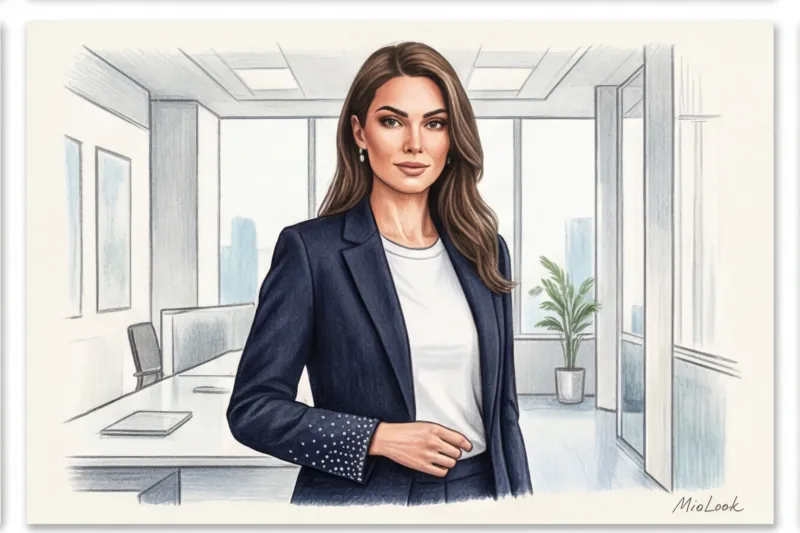
If you're wearing a crystal-embroidered jacket, tone it down with a very casual, even slightly casual, base. A straight-leg white T-shirt, straight-leg blue Levi's jeans (no fading), and smart leather loafers. This outfit is perfect for brunch or a meeting.
For the office (if you don't have a strict dress code), a shirt with pearl cuffs is perfect. We wrote in detail about how to balance such looks in the article about business casual for women The transformation from "day" to "evening" takes seconds: just swap your loafers for pumps, add some red lipstick, and you're ready to go.
Checklist: 5 Fatal Mistakes When Working with Pearls and Crystals
Even the most impeccable design can be ruined by poor technical execution. Save this checklist, based on premium brands' care instructions, before you pick up a needle:
- Ignoring washing rules. Items with heavy glass embellishments or natural pearls should never be machine washed. Professional dry cleaning only. Period.
- Tissue overload. If you sew 200 grams of glass onto thin silk, it will tear. Always balance the thickness of the base with the weight of the hardware.
- Long drawstrings on the reverse side. If the distance between rhinestones is more than 1.5 cm, the thread needs to be cut and secured. If you pull the thread too far from the back, you'll inevitably catch it with a ring or fingernail when putting it on, and the entire embroidery will unravel.
- Decor in areas of active friction. Never place large beads on your armpits, inner thighs, or back where you lean against the back of a chair. These are physically painful to wear, and the embellishments will wear off within a couple of weeks.
- Symmetry by ruler. I have already said this, but I will repeat: perfect symmetry kills the couture spirit of a thing.
Upcycling and hand-embellishing clothes with rhinestones isn't a way to save money. The materials will cost you €30–50, and the work will take several evenings. It's an investment of your time in creating a unique, statement piece that you can't buy in a store. Embroider with joy, play with contrasts, and don't be afraid to shine, even on an ordinary Tuesday.
Ready to get started?
Try the MioLook free plan—no commitment, create stylish looks in just a few clicks.
Get access — €0.99 once