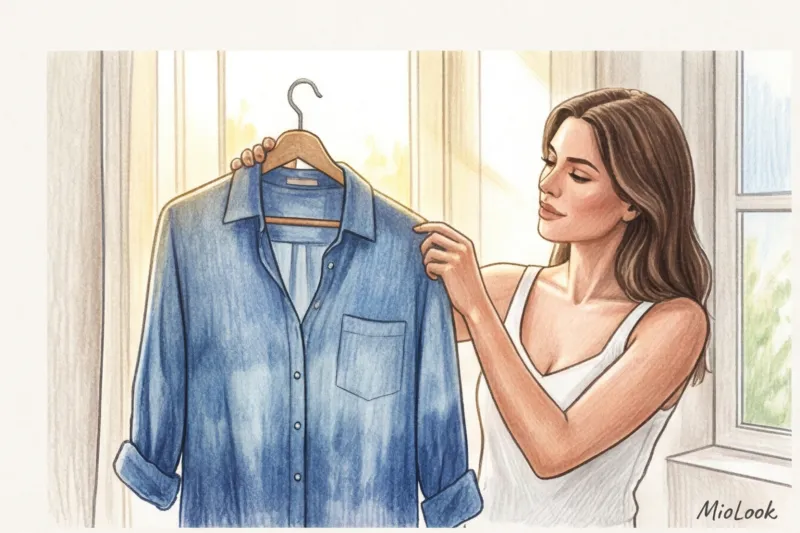
One day, a client came to me in utter despair. The night before, she'd spilled a glass of rich Pinot Noir on her favorite basic heavy cotton hoodie, which cost around €300. The dry cleaner had thrown up their hands, the stain removers had left whitish marks, and the item was already on its way to the trash. But we took a different approach: armed with bleach and rubber bands, we created an exclusive reverse tie-dye With a marble effect, this hoodie now gets more compliments than it did the first day I bought it.
We talked about the philosophy of conscious consumption in more detail in our complete guide about Clothing upcycling: how to stylishly repurpose old items If you're looking for a way to dye clothes at home, I urge you to forget the stereotypical "acid spirals" of the 70s. Today, home dyeing is a tool for creating a sophisticated, tonal wardrobe that looks like expensive, artisanal luxury.
The Art of Upcycling: Why At-Home Hair Coloring Is Back in Trend
Fashion is cyclical, but attitudes toward it have changed forever. Throwing away a quality item because of a faded collar or a stubborn stain isn't just wasteful; it's a missed style opportunity.
According to a 2023 report by the Ellen MacArthur Foundation, the textile industry remains one of the planet's leading polluters. On an industrial scale, dyeing just 1 kg of textiles requires up to 200 liters of fresh water. Upcycling, however, allows for a product's lifespan to be extended with a minimal environmental impact.
"Customization is the new couture. When you hand-dye a piece, you invest an energy into it that can't be bought in the mass market."
It's no surprise that global brands have made deconstruction and hand-dyeing a hallmark of high fashion. Just look at the latest collections from Maison Margiela or Acne Studios, where uneven, sun-bleached pigment sells for hundreds of euros. The emotional value of such clothing is off the charts: the garment is no longer a faceless, mass-produced product.
Access to MioLook for €0.99 — one-time payment
A smart AI stylist will find the perfect look for your updated items.
Get access — €0.99 onceChoosing a "canvas": which fabrics can be painted and which are a waste of time
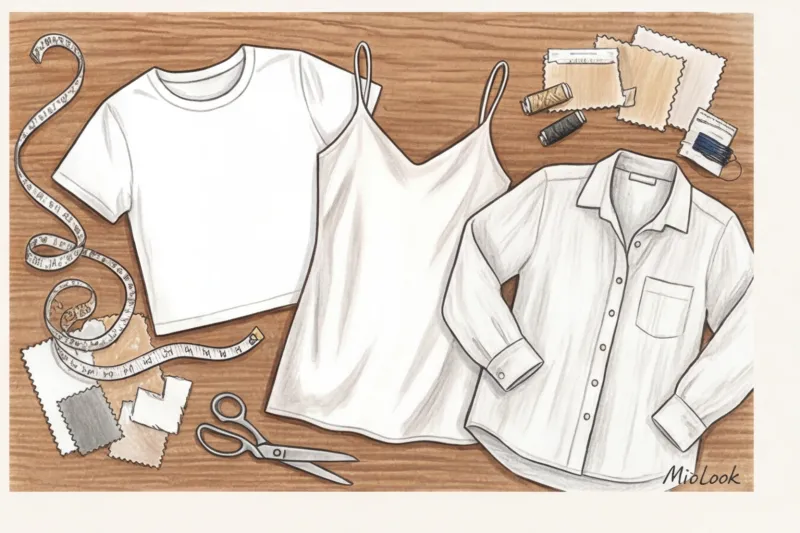
Before rushing out to buy dye, check the inside label. The success of a dye job depends 90% on the chemical composition of the fiber. There's a strict rule in color science: cellulose fibers (cotton, linen, viscose) require reactive dyes, while protein fibers (silk, wool) require acid dyes.
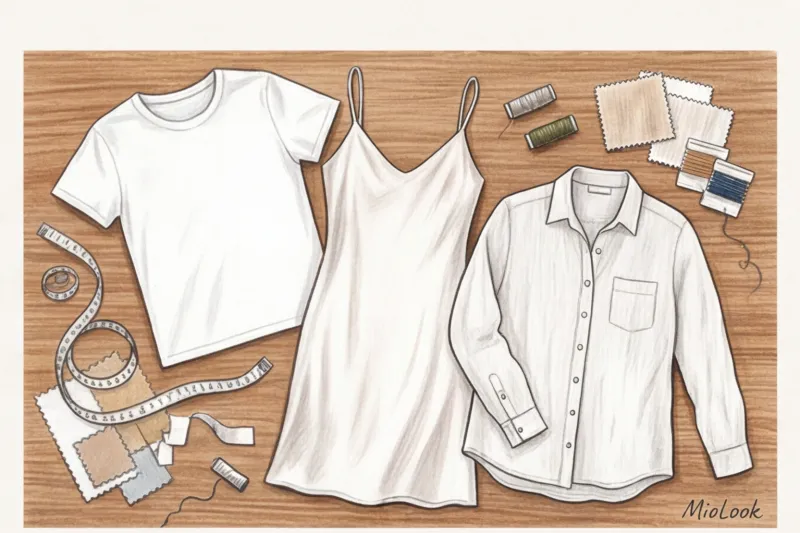
My personal styling tip that they don't write on paint bottles: Always check the threads used to sew the item Even if a T-shirt is 100% organic cotton, the seams are often made with reinforced polyester threads. Synthetics won't accept cotton dye. The end result, for example, will be a deep olive-green shirt with bright white stitching. Sometimes this looks like a cool design gimmick, but be prepared.
The Natural vs. Synthetic Fiber Rule
Never attempt to dye 100% polyester or acrylic with household dyes in the washing machine. At best, the water will simply run off the fibers; at worst, the item will take on a dirty, faded color.
But you can experiment with blended fabrics. Over 12 years of practice, I've developed the perfect formula for creating texture: if you take a fabric made of 50% cotton and 50% polyester and dip it in natural fabric dye, only the cotton threads will be dyed. You'll get a stunning mélange effect that will add a touch of class to even the simplest T-shirt.
How to Dye Clothes at Home: 3 Techniques for a Statement Wardrobe
You don't need to set up a chemistry lab at home to update your wardrobe. Modern cleaning products allow you to achieve factory-quality results right in your bathtub or washing machine. The key is choosing the right equipment for your needs.
Deep Monochrome: Restore Faded Colors
This technique is ideal if your favorite black jeans have turned gray or your basic T-shirt has yellow deodorant stains. Machine dyeing produces a perfectly even tone. I regularly restore my husband's faded hoodies this way: a packet of dye, a temperature of 40 degrees, and it looks like it came from a boutique.
Fair warning: This technique has its limitations. Hot dyeing shrinks cotton by approximately 3-5%. If your T-shirt was tight, it may become tight after the procedure.
Reverse Tie-Dye: Saving Dark Hoodies
What if the item is black or dark blue? Dye won't do the trick; chlorine bleach comes into play. The reverse tie-dye technique removes the pigment, revealing the fabric's warm base—usually a rusty orange or caramel shade.
This is the perfect way to disguise grease stains or wine stains on a dark background. It creates a sophisticated, grunge-inspired accent that works beautifully in contrasting looks.
From School Craft to Luxury: The Secrets of Stylish Tie-Dye
Perhaps the main insight I want to convey is that tie-dye is no longer a hippie aesthetic. Forget those rainbow circles that make your eyes water. The most relevant and fashionable approach today is monochrome and the Japanese technique of Shibori.
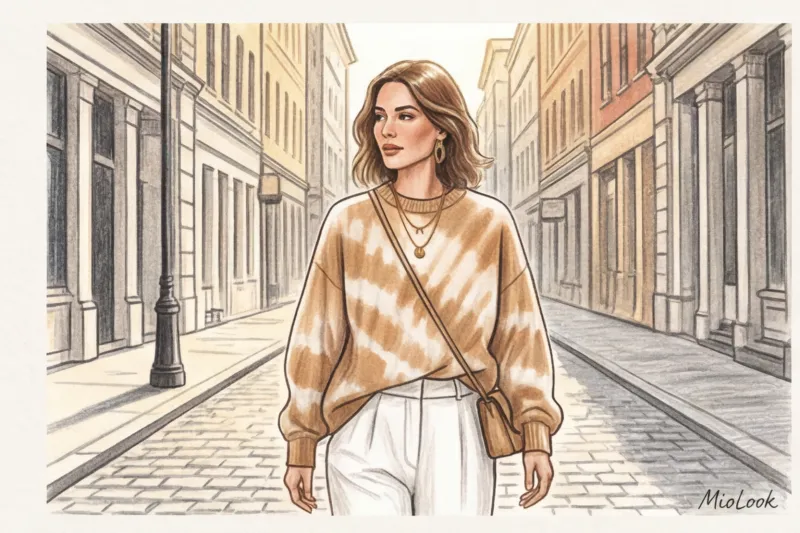
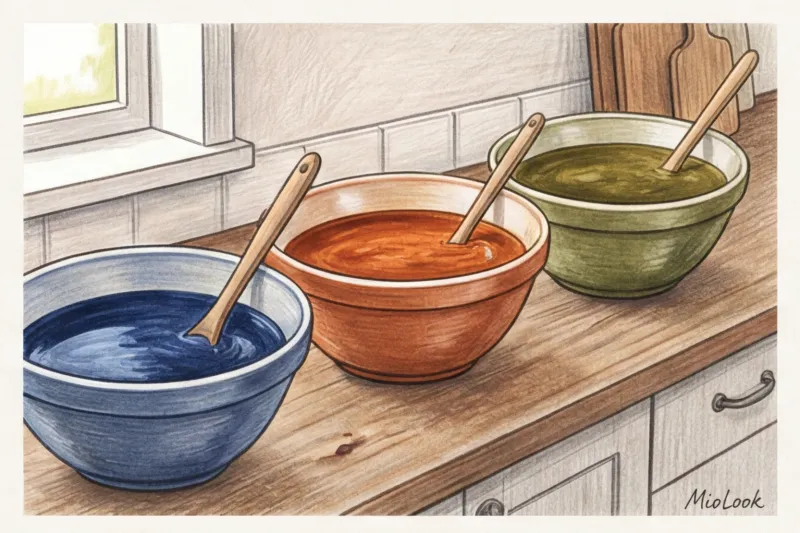
Instead of bold contrasts, use tonal coloring. Take a beige shirt and add a burnt caramel pattern. As a stylist with a love of Mediterranean aesthetics, I highly recommend a natural palette: terracotta, olive, deep indigo, sand, and ecru. These are the exact shades we see in The Row lookbooks and Jil Sander collections.
The shibori technique involves not random twisting, but rather geometric folding of the fabric (accordion-like, triangle-like) and securing it with wooden blocks or thick thread. The resulting lines are strict, rhythmic, and incredibly elegant.
Your perfect look starts here
Join thousands of users who look flawless every day with MioLook.
Get access — €0.99 onceStep-by-step instructions: dye your favorite hoodie without stains or streaks
Ready to get started? Here's my tried-and-true checklist to avoid any unpleasant surprises.
- Mandatory washing: Even if the hoodie appears clean, wash it. The fabric may contain invisible traces of sebum or fabric softener residue, which will act as a barrier to the dye (these areas will leave light stains).
- The secret of a damp cloth: Never apply tie-dye paint to a dry item. The fabric should be well wrung out but damp—this ensures the pigment flows smoothly, creating a watercolor gradient rather than harsh, sharp edges.
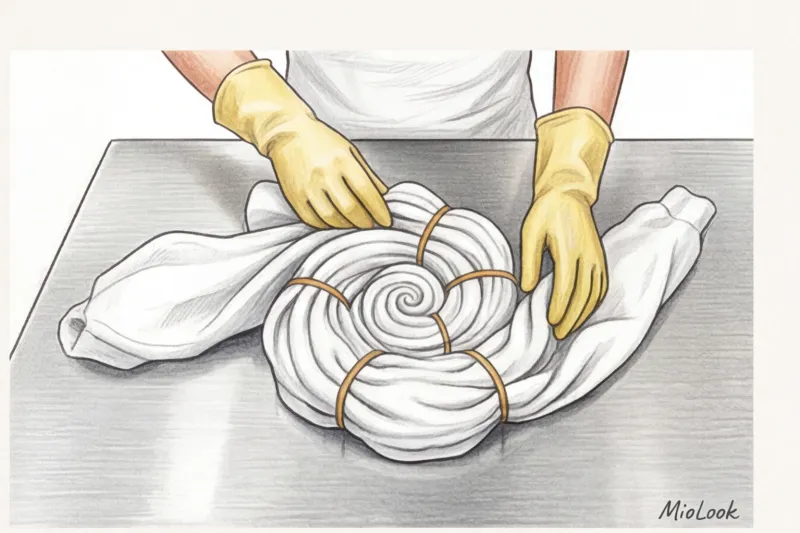
- Application and exposure: Roll up the hoodie, secure it with rubber bands, and apply the dye. The golden rule of coloring: leave the item in a plastic bag for at least 8 hours, preferably 24. The dye needs time to react with the cellulose.
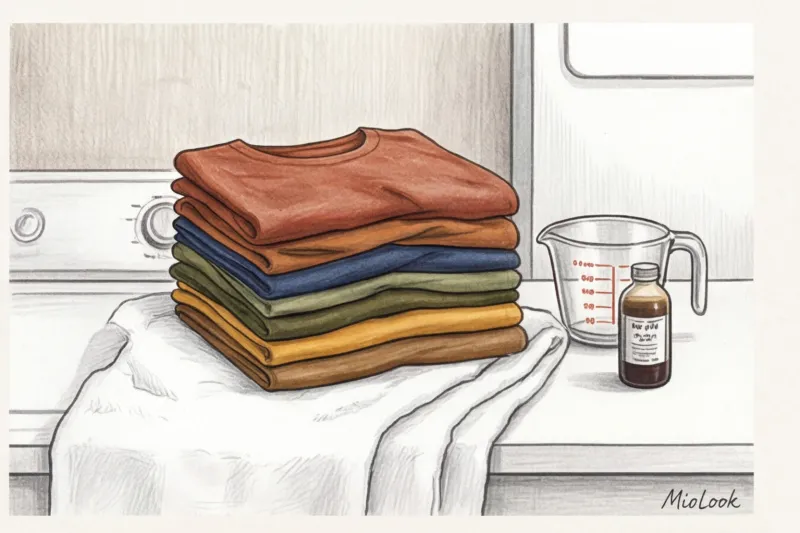
- Fastening: Rinse the item first in cold water (without removing the elastic bands!) until the water runs clear. Then remove the elastic bands and soak the hoodie for 15 minutes in a basin of cold water with a glass of vinegar. The acidic environment will seal the fiber cuticle.
Rookie Mistakes: How to Avoid Ruining Your Clothes and Washing Machine
Why do some people create masterpieces, while others end up with a ruined rag and a blue washing machine drum? It's all in the details.
The main mistake is greed. People often ignore proportions. If the packaging says "1 pack per 250g of dry fabric," and your hoodie weighs 600g, you need three packs! Save on dye and you'll get a faded, dull look.
The second no-no is items with a durable water-repellent (DWR) finish. Trench coats, windbreakers, or ski pants are useless for dyeing. The polymer coating will simply repel the pigment molecules.
And most importantly, the safety of your appliance. After using dark or blue dye in your washing machine, be sure to run an empty cycle at the highest temperature (90°C), throwing an old towel into the drum and adding a small amount of chlorine bleach. This will ensure that your next load of whites doesn't turn a baby blue.
How to wear updated items: look formulas from a stylist
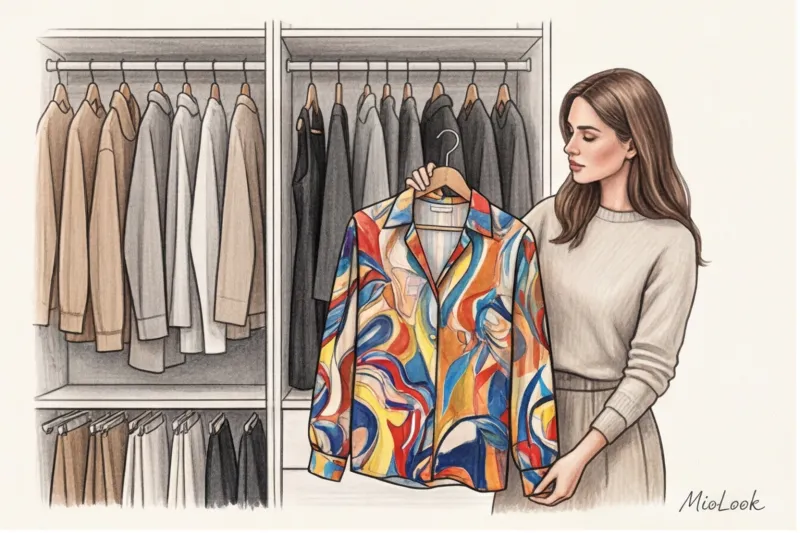
A hand-dyed piece is always a powerful statement. The key to integrating it into your wardrobe is to balance the relaxed feel with strict, architectural forms. If you're unsure about combinations, upload a photo of the updated piece to the "smart wardrobe" feature in MioLook , and the algorithm will suggest ideal pairs from what's already hanging in your closet.
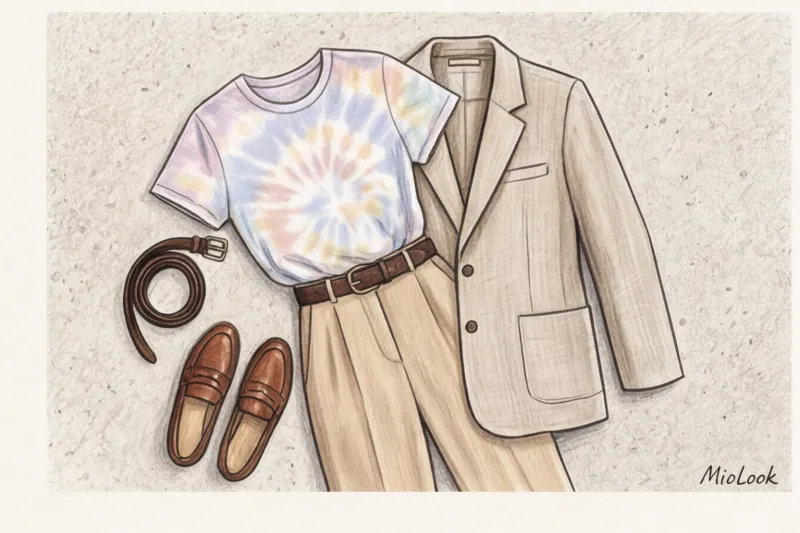
Here are three of my favorite formulas that work without fail:
- Formula 1 (Grunge and Femininity): A reverse tie-dye hoodie + a flowy milky silk midi skirt + chunky Chelsea boots. Perfect for weekend brunch.
- Formula 2 (Smart Casual): A monochrome olive-colored shirt + wide-leg beige palazzo pants + tailored leather loafers. A great option if you have a Friday dress code at the office, where you can relax but still maintain a certain class. Read more about similar combinations in our article about smart casual for the office.
- Formula 3 (Urban Chic): Tonal tie-dye tee (sand and terracotta) + classic beige trench coat + straight blue jeans + minimalist yellow metal jewelry.
Your wardrobe isn't a museum display of untouchable pieces, but rather a piece of clay. Don't be afraid to experiment, make mistakes, and give things a second chance. Sometimes the most beautiful dress or hoodie is born from a stray stain and the desire to salvage a favorite fabric.