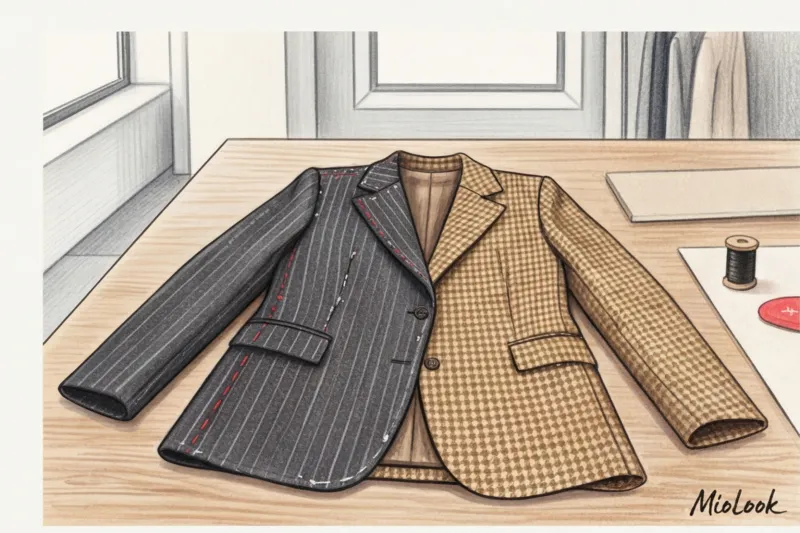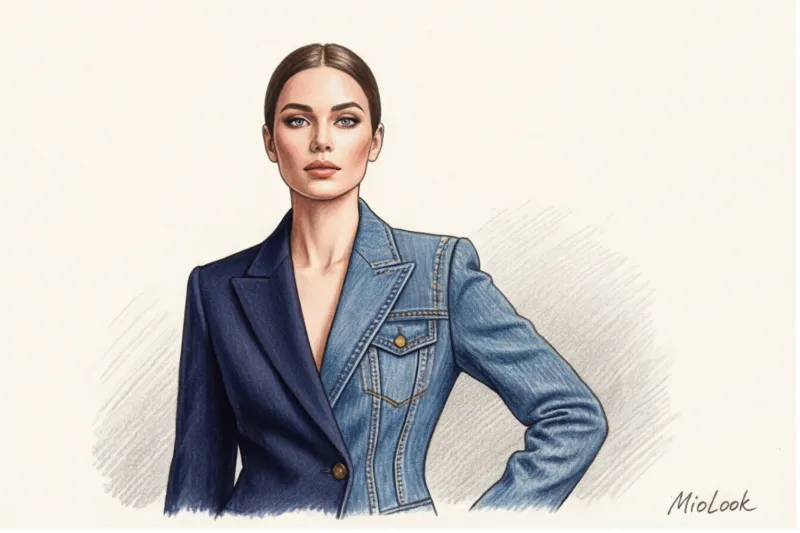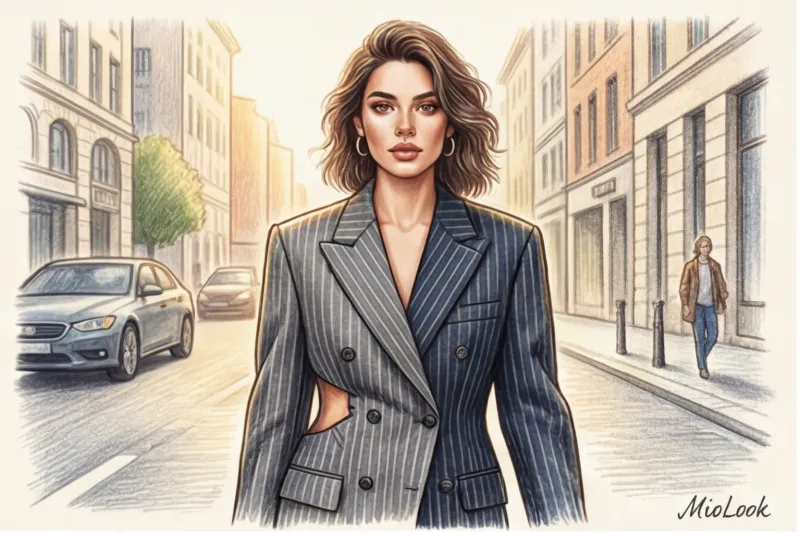
Last week, my client Anna spoke at a major IT conference. She wore a complex asymmetrical cropped jacket, masterfully crafted from two old men's jackets we found at a vintage store for €15. Guess what happened after her presentation? That jacket garnered more admiring glances and "Where did you buy that?" questions than her classic €6,000 Chanel tweed jacket.
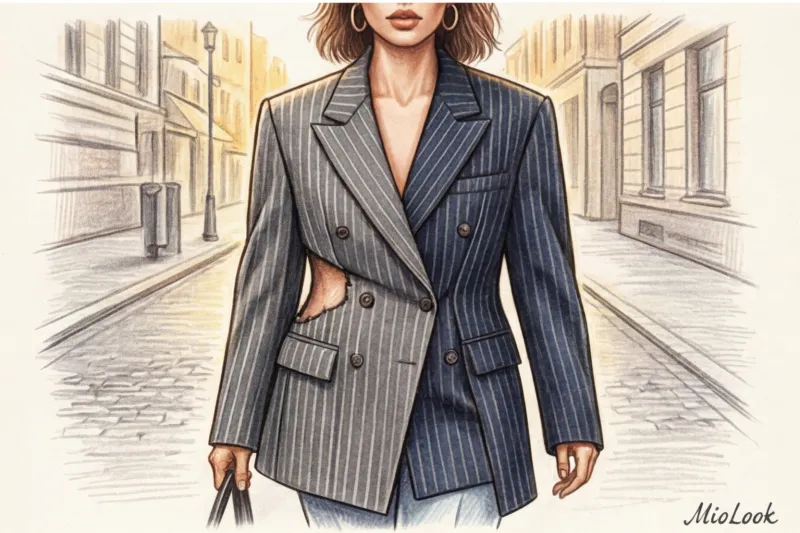
It's at this point that it becomes clear: luxury is no longer measured by a recognizable logo. Today, true exclusivity is a one-of-a-kind item. And that's precisely why global upcycling brands are currently experiencing a phenomenal boom. We discussed the fundamental principles of this transformation in more detail in our A complete guide to clothing upcycling and stylish repurposing of old items , and today we'll talk about how this method is changing the rules of the game in the high-end segment.
Evolution of a trend: why upcycling brands are displacing luxury and mass-market brands
For a long time, repurposing old clothes was associated with forced frugality or a domestic hobby. Forget it. Today's upcycling is the new equivalent of haute couture. It's complex deconstruction, architectural tailoring, and profound conceptual work, rooted in the archival collections of Maison Margiela from the 1990s.
Why has this shift occurred now? The numbers speak for themselves. According to a shocking 2023 report by the Ellen MacArthur Foundation, every second, an entire truckload of textiles is burned or sent to landfill worldwide. The industry is suffocating from the overproduction of identical, faceless items.
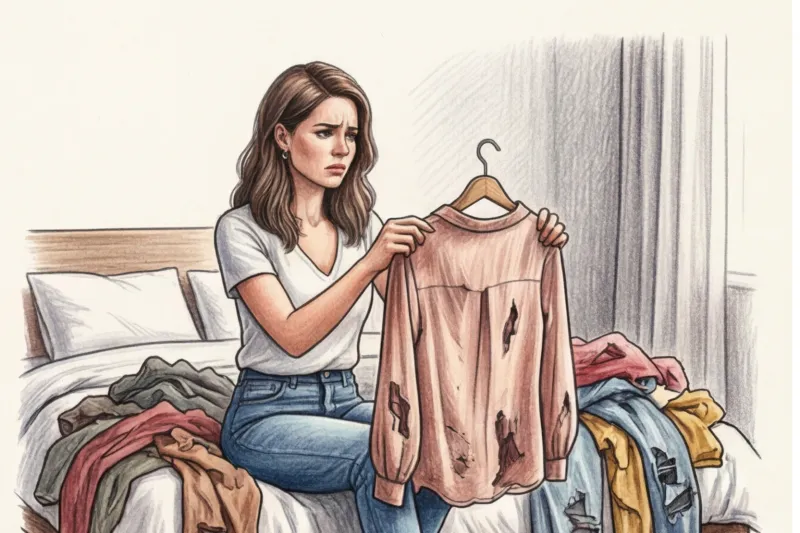
Over 12 years of working as a personal stylist and reviewing hundreds of wardrobes, I've noticed a consistent pattern. Nine out of 10 of my clients have beautifully crafted pieces in their closets—men's shirts made of thick cotton, fine wool trousers, suits made of heavy gabardine—that are outdated. Throwing them away seems like a crime, and wearing them in their current condition is impossible. In the paradigm of a circular economy, these are no longer "old clothes." They are the most valuable raw materials for a new masterpiece.
What's the Difference: Upcycling, Recycling, and Vintage (And Why It Matters to Your Style)
Confusion over terminology often prevents us from assessing the true value and status of an item. Let's set the record straight, because this distinction is crucial for building a well-designed wardrobe.
- Recycling: An industrial process. An old sweater is shredded into fibers to weave a new thread. The downside is that the mechanical stress causes the fibers to lose length and strength, resulting in a drop in quality.
- Downcycling: Depreciation. Your favorite, but stretched-out, T-shirt becomes a window rag.
- Vintage: Preserving an artifact of the past in its original form. You buy a Burberry trench coat from the 1980s and wear it the way the designer intended 40 years ago.
- Upcycling: Creative transformation that increases status and value of the source.
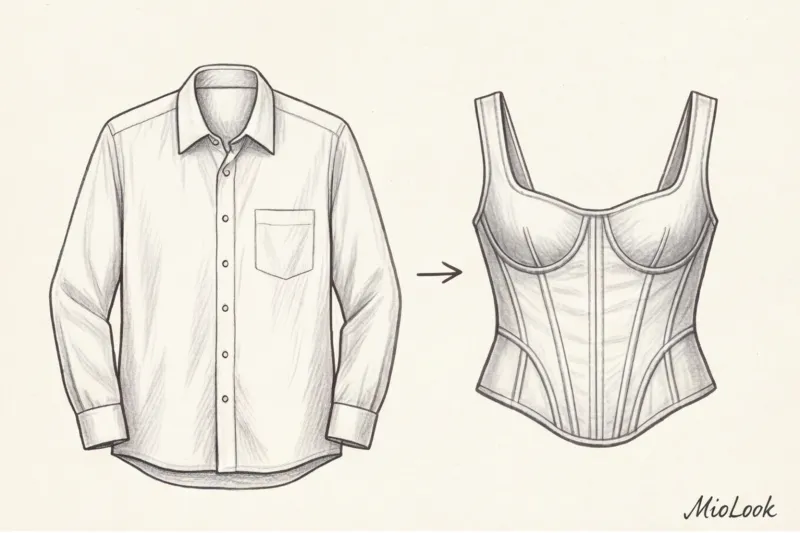
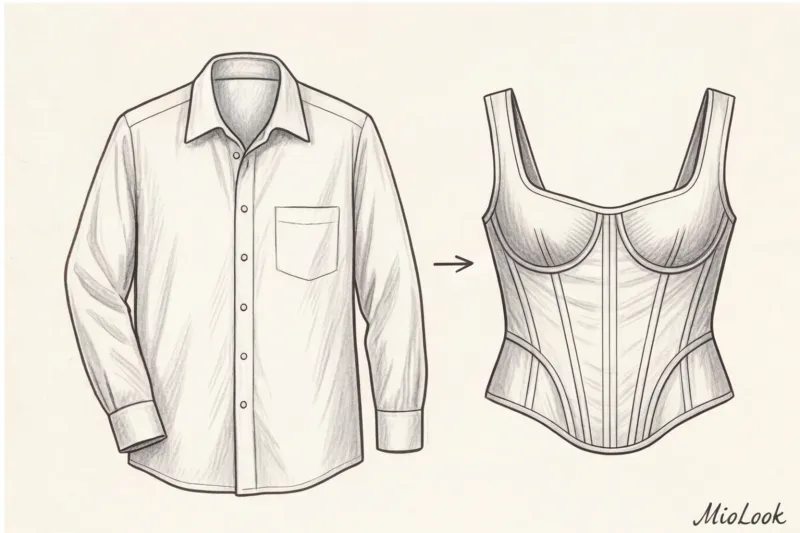
Upcycling takes a mundane men's clerk's shirt and, through complex tailoring, pleats, and corset inserts, transforms it into an avant-garde women's top. The garment moves from the category of "basic" to that of "statement piece."
Access to MioLook for €0.99 — one-time payment
Start creating perfect looks with the help of artificial intelligence and find new combinations for your items.
Get access — €0.99 onceInvesting in Uniqueness: Why True Upcycling Costs More Than New Clothes
Here we encounter the main paradox, which often angers unprepared buyers. "Why does this shirt, made from two old ones, cost €350? It's second-hand!" my client once exclaimed indignantly while shopping at a concept store.
This is a dangerous myth. Professional upcycling has never been a way to save money. On the contrary, it is one of the most expensive technologies in modern clothing production. Here's why.
When Zara makes a batch of jackets, the machine cuts the fabric in layers, 100 layers at a time. The entire process is conveyor-belt and takes minutes. Now let's look at the brand's upcycling math:
- Raw material sourcing: The designer needs to find specific vintage jackets of a certain size, composition and color.
- Deconstruction: Ripping out old seams by hand to avoid damaging the fabric is a hellish task that takes hours.
- Cleaning and preparation: Industrial dry cleaning, decatizing (steam treatment for shrinkage).
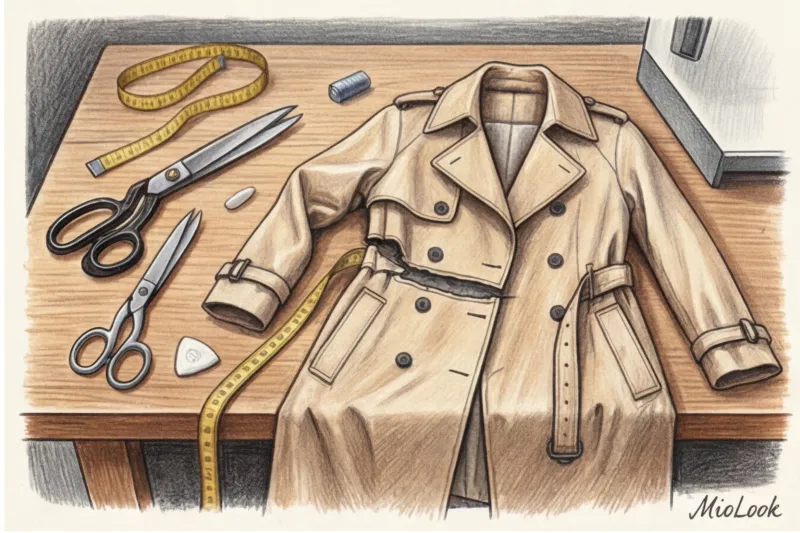
- Architectural re-layout: Every original item has its own imperfections and proportions. A tailor can't use standard patterns—they work using a mock-up method (using a pattern on a mannequin) for a specific piece of fabric.
"Creating a high-quality upcycled jacket takes 15 to 25 hours of handwork by a highly skilled tailor. The price of such an item cannot objectively be lower than €300–€500."
You're not paying for "old fabric." You're paying for exclusive engineering and dozens of hours of handcrafted work. The likelihood of meeting someone wearing exactly the same thing is zero.
Top List: Global and Local Upcycling Brands to Watch
According to a 2024 study by the Lyst Index platform, the number of search queries with the words reworked , repurposed And upcycled fashion grew by 117%. Fashion giants can no longer ignore this.
Balenciaga releases limited-edition coats made from stitched-together vintage jackets. Marni creates stunning capsule collections from its own deadstock fabrics from previous seasons. But the real revolution is coming from niche players. Marine Serre has built its entire DNA on transforming old silk scarves and towels, while New York label Bode creates menswear from antique quilts and Victorian lace (their shirts retail for well over €800).
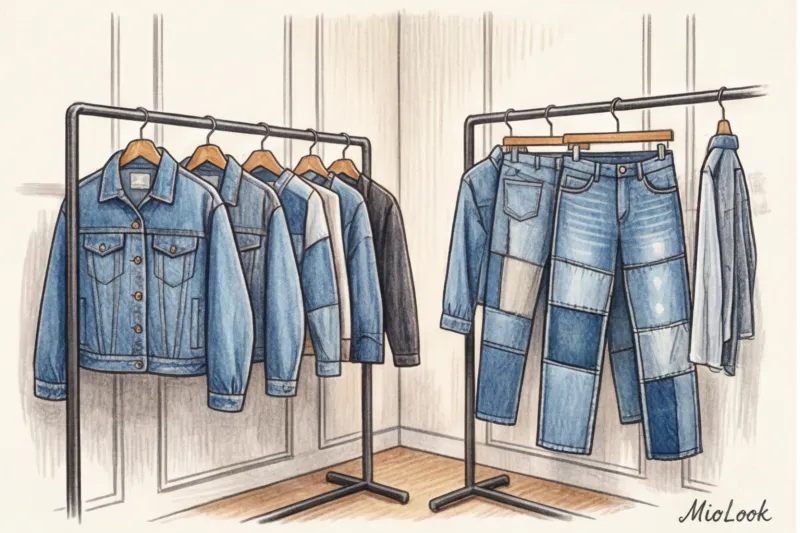
Denim: New Life for Old Jeans
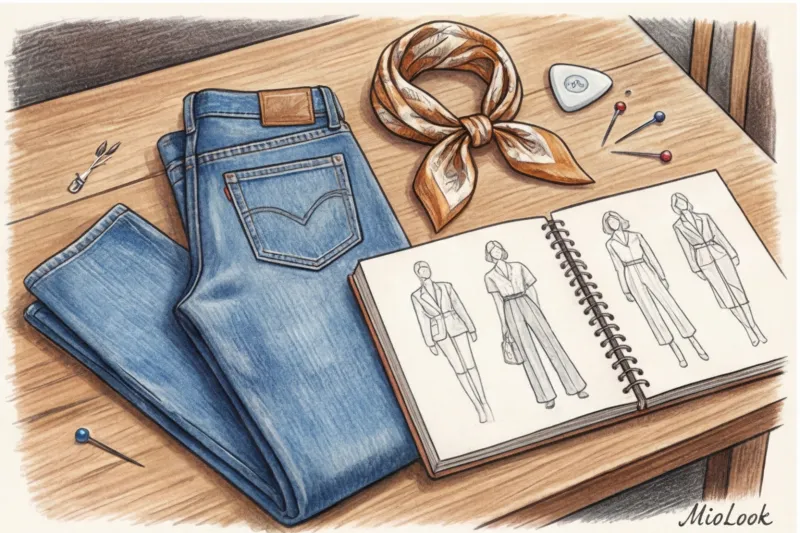
Why do designers love vintage denim so much (especially the iconic Levi's 501s from the '90s)? It's all about the density of the fabric—classic 14 ounces of pure cotton, with no elastane, will withstand decades of wear and tear, even when deconstructed. Frankenstein jeans are trending these days: the front is made of light blue denim, and the back is dark blue or black. Asymmetrical waistbands, inverted pockets, and intricate patchwork techniques transform ordinary jeans into works of art.
Tayloring: Architectural Jackets and Suits
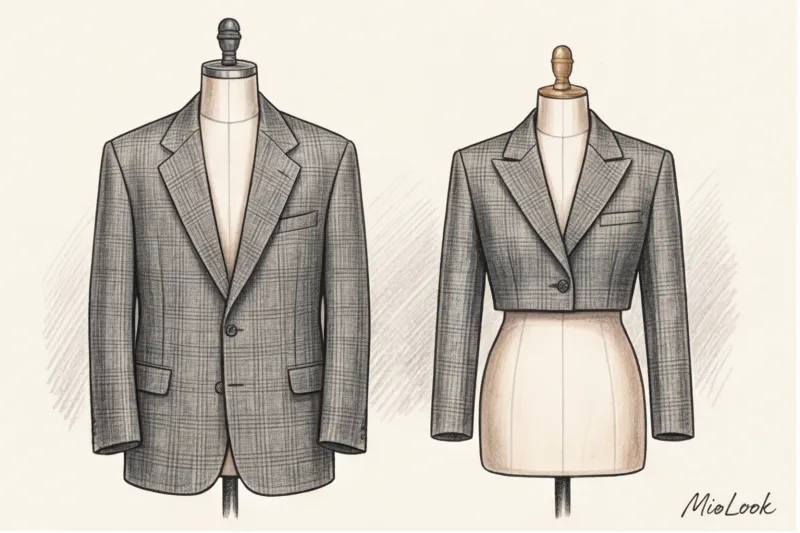
The second most popular trend is working with men's business wear. Those oversized '80s jackets with their wide shoulders, which gather dust in thrift stores, are ideal for creating feminine avant-garde pieces. Craftsmen trim the length, transforming them into extreme crop jackets, sewing in rigid corset-like boning at the waist, or creating open backs with crisscross lacing.
Your perfect look starts here
Join thousands of users who look their best every day with this wardrobe organization app.
Get access — €0.99 onceHow to integrate upcycling brands into your business and casual wardrobe
My clients' most common fear is: "This looks too complicated; I'll look like the town madwoman." To avoid this, you need to adhere to the one-accent rule.
An upcycled garment, by its very nature, possesses complex textures and intricate cuts. If you're wearing a deconstructed jacket with raw edges and an asymmetrical hem, everything else should be crystal clear and basic. The perfect pairing for such a jacket is sleek palazzo pants in a flowing fabric or a simple silk slip skirt. We play on contrast: chaos and complexity on top, absolute minimalism below.
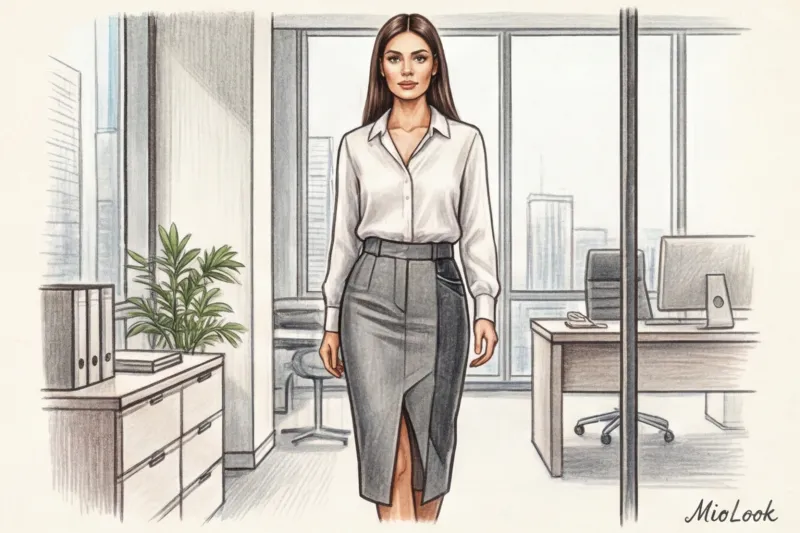
When it does NOT work (fair limitation): If you work in conservative banking, the public sector, or law with a strict dress code Business Best or Business Traditional Any uneven edges, asymmetry, or patchwork will be considered a violation of corporate protocol. Save these experiments for the weekend.
But for offices with a dress code Smart Casual (especially in IT, media, marketing, and creative agencies) is an incredibly powerful tool. You convey to others: "I care about the environment, I understand modern trends, and I have taste."
From Passive to Active: How AI and Wardrobe Digitization Aid Upcycling
Before rushing out to buy a ready-made upcycled item, take a look at your own closet. The famous Pareto rule (80/20) works flawlessly in your wardrobe: we wear 20% of our favorite and most comfortable items 80% of the time. The rest is dead weight.
Last year I conducted a personal experiment: for six months I kept honest statistics of my images through MioLook The intelligent system analyzed what I wear most often. The numbers were merciless. It turned out I had a whole stack of amazingly high-quality items that I hadn't worn even once in six months simply because I didn't like their length or collar shape.
Instead of impulsively decluttering and throwing items in the trash, wardrobe digitization apps help you create a personal "fabric bank." You filter items by "haven't worn in over a year" status, evaluate the quality of the fabric, and find ideal candidates for alterations. It's a rational, technological approach to your style.
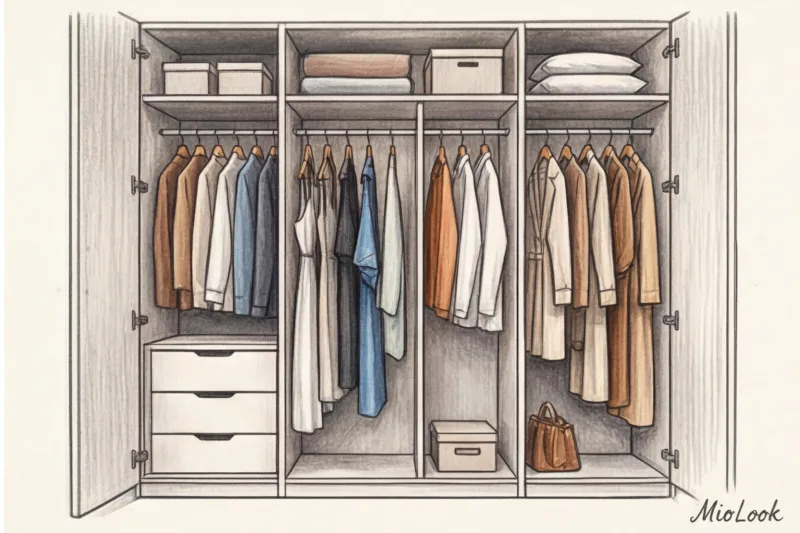
Checklist: How to Start Creating Your Circular Wardrobe
If you're ready to take the first step toward eco-friendly yet high-status fashion, don't try to remake your entire closet at once. Focus on specific pieces. Here's my tried-and-true algorithm for my clients:
- Conduct an audit and find raw materials. Find three high-quality items (heavyweight cotton, cashmere, or suit wool) that haven't been worn in over a year. No thin synthetics—they won't hold up to alteration.
- Determine the diagnosis. Why don't you wear this? Are your shoulders too broad? Are you tired of the color? Is the length out of style?
- Create a mood board (references). Save examples of work from your favorite upcycling brands. See how they work with similar textures.
- Choose the implementation path. You have three options: find a local upcycling project (there are plenty of them on Instagram right now), donate the item to a reputable studio with clear specifications, or vote with your ruble—or more accurately, euros—and support a conscious designer brand by purchasing a finished, unique piece.
Upcycling isn't just about saving the planet from excess textiles. It's smart fashion for those tired of seeing their outfits on every other girl in a cafe. By repurposing old clothes, we're not returning to the past—we're investing in our own uniqueness. And in the age of global mass marketing, it's precisely this uniqueness that's the most valuable currency.