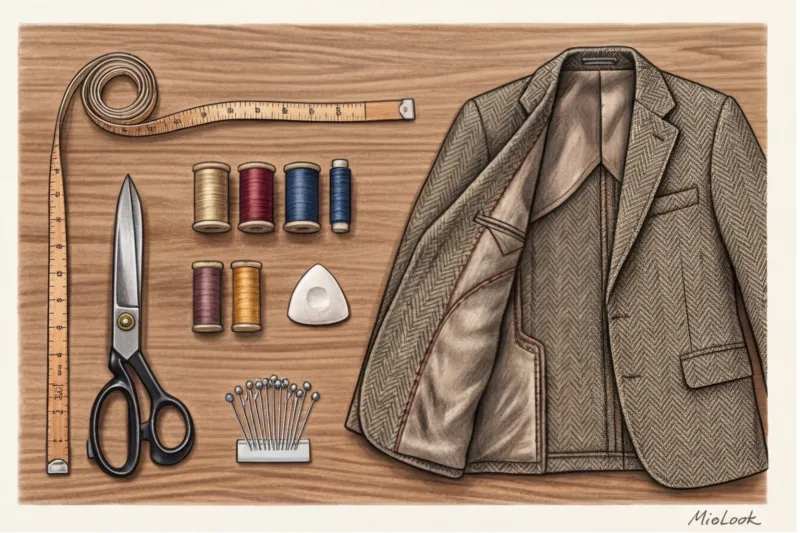
One day, a client came to my studio in tears. She brought a vintage Max Mara cashmere coat worth around €2,500, which she'd attempted to "slightly shorten" at home with kitchen scissors. The cut was so ragged that the precious fabric literally began to fall apart in her hands. We had to raise the hem an additional 15 centimeters, permanently altering the garment's original, carefully calibrated proportions.
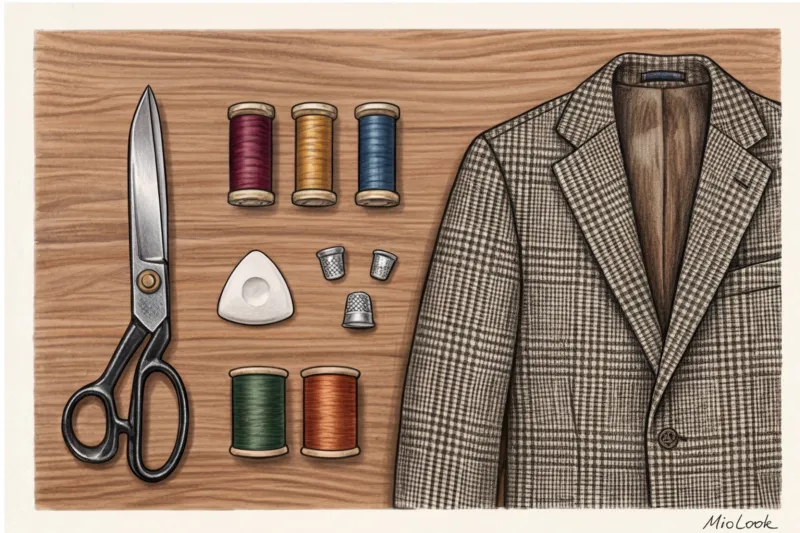
This case from my practice perfectly illustrates the main rule: correct tools for sewing and mending clothes — This isn't a question of snobbery. It's a question of the safety of your belongings.
We tend to think of home sewing kits as those €3 plastic boxes from the supermarket for darning holey socks. But if you want to transform outdated jackets into cutting-edge pieces (we covered this in more detail in our complete guide to clothing upcycling ), you'll need a completely different arsenal. This guide isn't about saving money on new items, but about transforming what's already hanging in your closet.
Sewing and Garment Repair Tools: Investing in Couture Upcycling
According to a 2023 report by the Ellen MacArthur Foundation, every second a truckload of textiles is sent to landfill worldwide. Yet, when I go through the wardrobes of my clients in Milan and Paris, I notice a consistent pattern: each closet is consistently filled with five to seven items made from luxurious fabrics—heavy silk, premium wool—that are simply out of fashion. They're waiting for their moment.
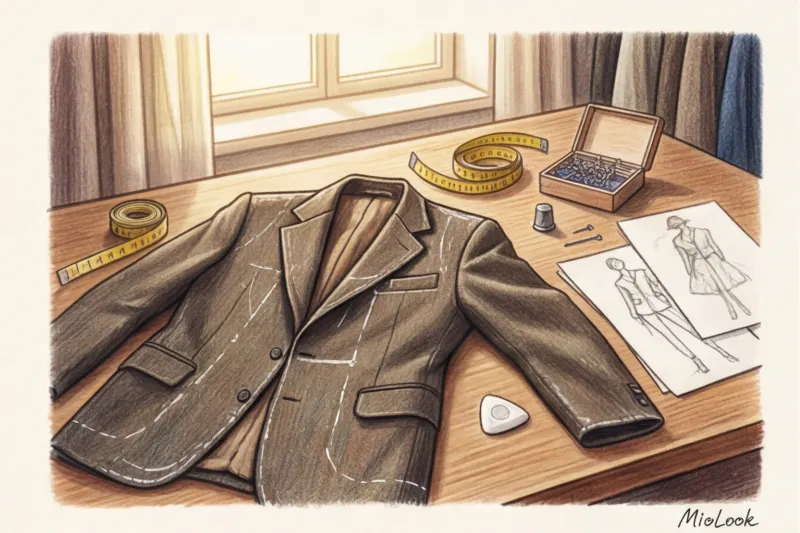
Customization is a way to create exclusive couture that fits you perfectly. But cheap tools instantly cheapen even the most expensive fabric. Dull blades leave snags, poor threads break and pull seams, turning Italian wool into a rag. With a one-time investment of €100 to €300 in the right equipment, you can have a portable atelier that matches London's Savile Row standards right in your home.
Basic arsenal: what you absolutely mustn't skimp on
Backstage at Fashion Week shows, I often observe experienced Italian tailors at work. Do you know what they have in common? They guard their tools with paranoid strictness. The foundation of high-quality alterations begins with the "single-use" rule: once a tool touches fabric, it should never touch anything else. Never use tailor's scissors, even on paper patterns.
Dressmaker's scissors vs. office scissors
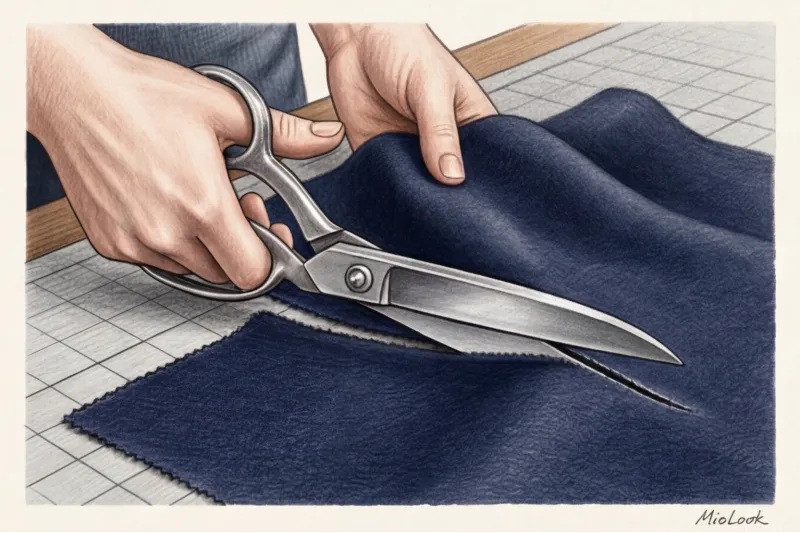
Office scissors cut paper, crimping the edges. If you try to cut thick denim or slippery silk with them, the fabric will "chew" and slip. Cheap steel will become dull after just 10 meters of cutting through thick fabric.
Professional tailor's scissors are made from high-carbon or Japanese forged steel. Their blades close with a distinctive sound, and the handles are designed asymmetrically. Why is this important? The ergonomic design allows the lower blade to glide precisely across the table without lifting the fabric, ensuring a perfectly straight cut without fraying. Brands like KAI or Solingen cost between €50 and €120, but they last for decades and are often passed down through families.
Important limitation: This advice doesn't work if you're customizing synthetics with metallic thread (Lurex) or sewing on stiff sequins. For such tasks, keep a separate, cheaper pair of scissors to avoid dulling your main investment.
Needles and threads for delicate and dense fabrics
The wrong needle will permanently perforate Italian leather or the finest chiffon. If you're working with silk, you need a Microtex needle (with a very sharp tip). For altering a knit dress, use a Jersey or Stretch needle (with a microscopically rounded tip that spreads the stitches rather than tearing the fibers).
Thread is a whole other science, where material compatibility is crucial. When reworking vintage cotton or wool items, always use cotton thread rather than polyester. Modern polyester thread is much stronger than old cotton: under high tension, it will simply cut through vintage fabric like a knife.
Product Architecture: Marking and Measuring Like a Pro
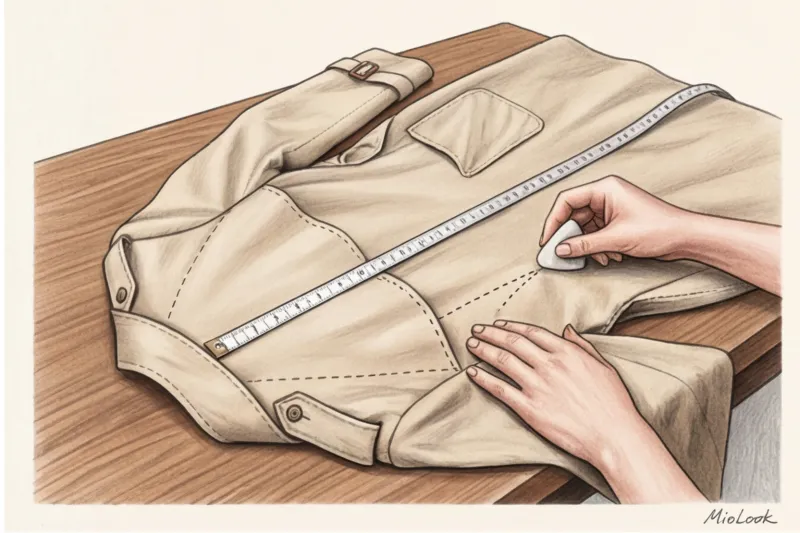
Soft tailor's tape has the unfortunate tendency to stretch from the heat of your hands and constant tension. Cheap mass-market tapes can have an error of up to 1.5 cm per meter after just six months of use. Make it a rule to replace your tape measure annually and periodically check it against a rigid metal ruler.
And now a story about how not to mark. A friend of mine decided to transfer darts on a pristine white cotton Jil Sander shirt. She used a cheap blue "disappearing" fabric marker bought on a marketplace. Spoiler alert: the pigment ingrained itself into the fibers and didn't come out even after professional dry cleaning. The €600 garment was ruined.
For expensive fabrics, use high-quality tailor's chalk (wax chalk is best for thick fabrics and powder chalk for fine fabrics) or classic, thin soap bars—this is the most eco-friendly and safest method. If you're altering the silhouette of an oversized jacket, you'll need special armhole and neckline templates (French curve). Achieving a perfect fit by eye when adjusting the shoulder line is almost impossible.
Deconstruction Tools: The Art of Taking Things Apart
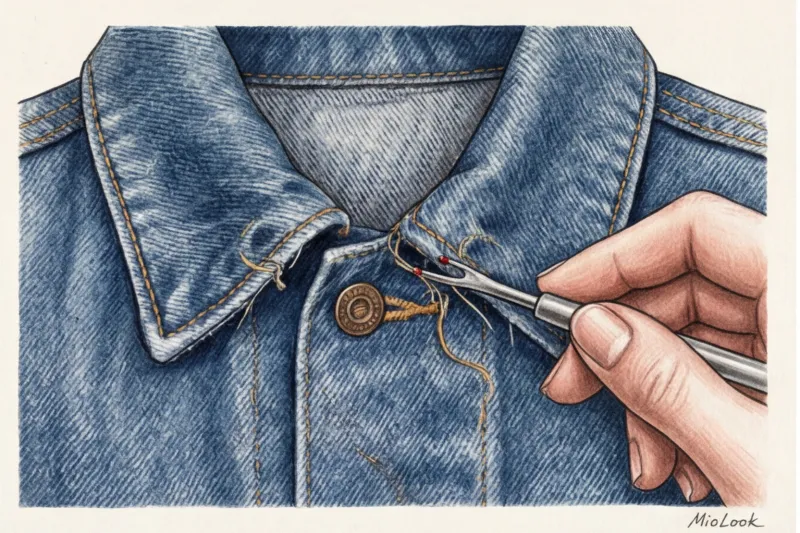
The philosophy of the Maison Margiela fashion house, whose shows I adore for their intellectual approach to clothing, is based on deconstruction. To create a new masterpiece from an old garment, it must be masterfully dismantled. The process of ripping apart is a true meditation, requiring patience.
Your main tool here is a seam ripper. Never try to cut seams with scissors or, worse, a razor blade. A quality seam ripper has a small red dot at the end of the longer blade—this ball protects the fabric from being accidentally punctured while you're picking up the thread.
For pinpoint precision trimming of loose threads, buy snippers (small spring-loaded nippers), and for removing small lint and stitch residue from old seams, buy a good pair of metal tweezers.
Your perfect look starts here
Join thousands of users who look flawless every day with MioLook. A smart AI stylist will help you digitalize your wardrobe.
Get access — €0.99 onceWTO (Wet Heat Treatment): The Secret to an Expensive Appearance
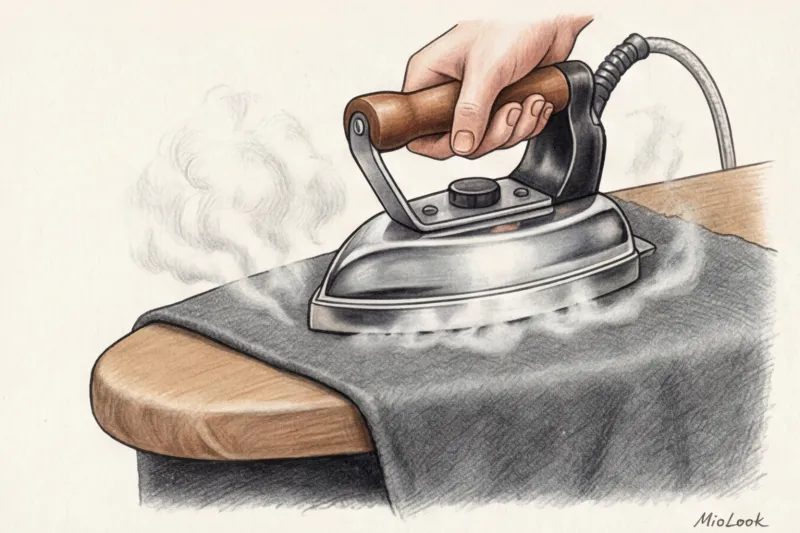
The secret to a luxurious look lies not in the stitching, but in a heavy iron with powerful steam. The Italian tailors from whom I learned tailoring often repeat: "A good iron can hide a bad seam, but a bad iron will ruin a perfect seam."
Wet heat treatment (WHT) shapes the garment. The human body is not flat, so ironing the shoulder or chest area on a completely flat board is a crime against the fit. You need a tailor's ham—a tightly stuffed pad with sawdust—for shaping darts and complex curves.
To avoid leaving shiny, baked-on marks on dark suit wool when altering office trousers, always use an iron. This is a piece of cotton or silk organza placed between the iron and the garment.
Hardware: A Quick Upgrade from Mass-Market to "Quiet Luxury"
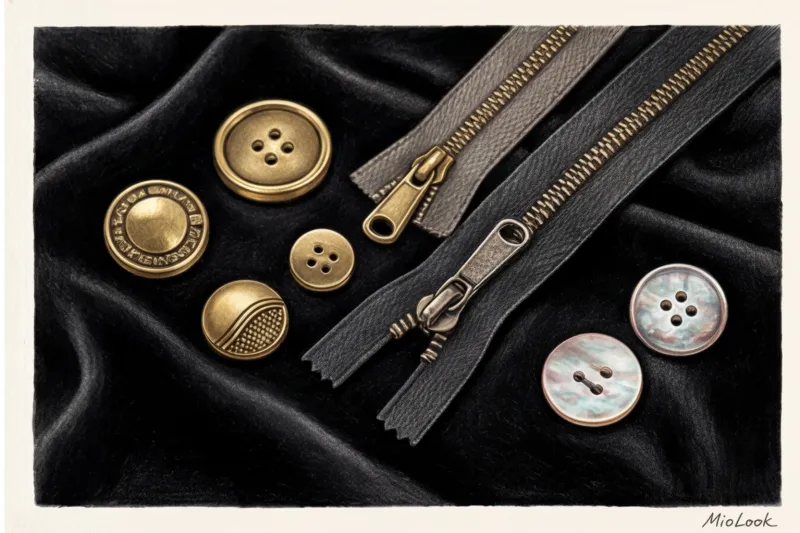
The simplest, quickest, and most effective type of customization is replacing buttons. I often conduct this experiment with my clients to demonstrate the ROI (return on investment) of style. We take a basic trench coat from a mass-market store for €80, cut off the flimsy, scratchy plastic buttons, and sew on massive elements of natural horn, mother-of-pearl, or matte metal (this will cost approximately €20-30). The visual value of the garment instantly soars to the level of premium brands.
In addition to luxurious buttons, keep a hand press for installing eyelets and snaps in your arsenal. It can completely update an old denim jacket. And don't forget about safety pins—these days, they're not just a technical tool for pinning together pieces during fittings, but also a powerful punk-chic decorative element, beloved by designers like Alexander McQueen.
The Sewing Machine Myth: Why Handcrafted Work Is More Valuable
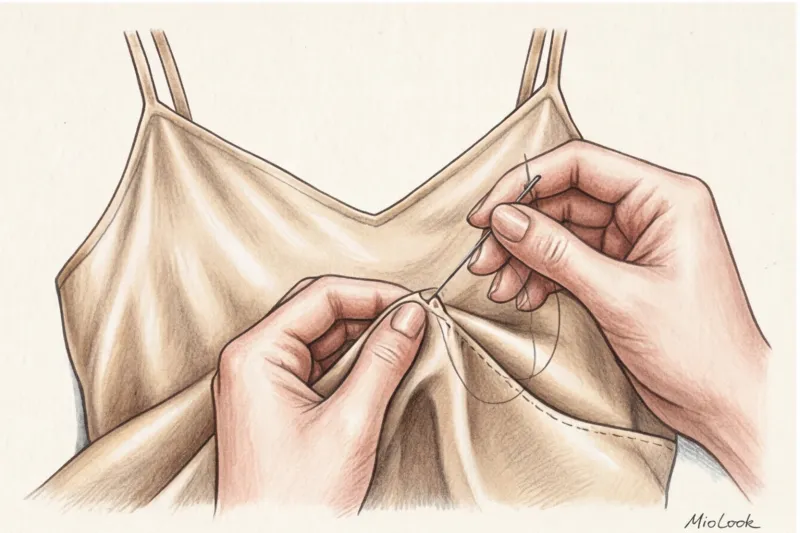
Herein lies the main counterintuitive discovery: you don't even need a sewing machine to start creating incredible things from old clothes. The belief that upcycling requires expensive equipment stops 90% of women.
Let me bust this myth. In haute couture, handcrafted work is prized above all else. The invisible blind stitch on the hem of a silk dress, the beaded stitch, or the decorative Japanese sashiko darning on vintage jeans—all of it is done by hand. Hand stitching provides a suppleness and softness that no machine, no matter how expensive, can replicate.
Before you pick up a needle, I always recommend digitizing the original item. Upload a photo of your old jacket to MioLook app A smart AI stylist will help you visualize what a given item will pair with after a makeover, and whether it's worth the effort at all.
You'll only need a machine in specific situations: if you're working with thick leather, heavy denim with multiple layers, or if you need to sew long straight seams (for example, taking in the side seams of a coat). If you decide to buy one, choose a basic mechanical model without hundreds of decorative stitches you'll never use.
Checklist: Assembling a Basic Premium Upcycling Kit
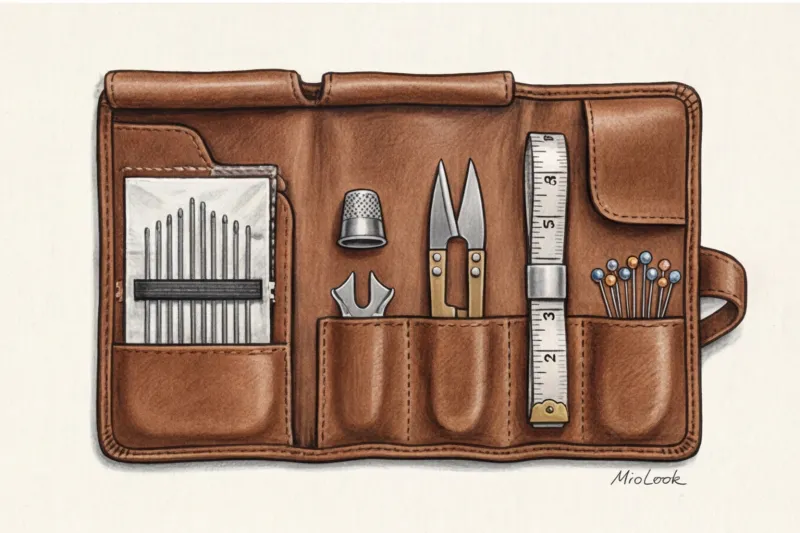
Properly organized tool storage is part of the ritual. Your kit should be aesthetically pleasing when you open it.
Minimum set (Budget 50–100 €):
- Professional tailor's scissors made of forged steel (blade length 20–25 cm).
- High quality seam ripper with protective ball.
- A set of Japanese or German hand needles of different thicknesses.
- Soft tailor's tape measure.
- Threads in basic colours from manufacturers such as Gütermann or Madeira.
- Wax crayon.
Advanced set (Additional 150–300 €):
- A tailor's block and a wooden clapper for cooling and fixing seams after ironing.
- Snippers for micro-cuts.
- Patterns for modeling armholes.
- Needles for specific materials (microtex, stretch).
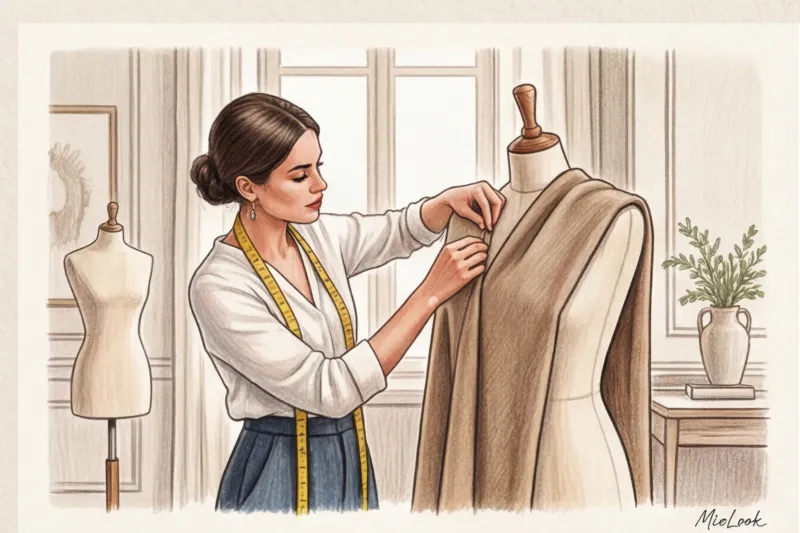
- Extendable tailor's mannequin.
High-quality tools change the very philosophy of your wardrobe. You stop "fixing old things" and start creating the architecture of your own unique style. Treat fabrics with respect, use the right steel, and even the most forgotten item from the depths of your closet can receive a luxurious second life.