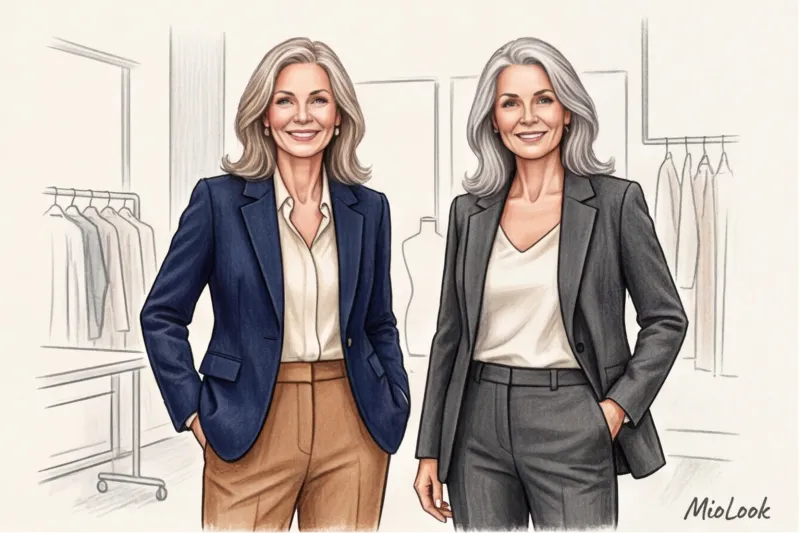
Age-Related Figure Changes: Why Our Silhouette Changes and Is It Normal?
"Olena, I don't understand what's going on. I've been wearing a size 44 and fitted dresses my whole life, and now I've suddenly found a lifeline, even though I'm eating normally." This is the phrase I hear from eight out of ten clients over forty during consultations. The request... How to hide your belly and sides with clothing , instantly becomes the top priority when reviewing your wardrobe. And the first thing I always say in such cases is: breathe a sigh of relief, you're absolutely fine.
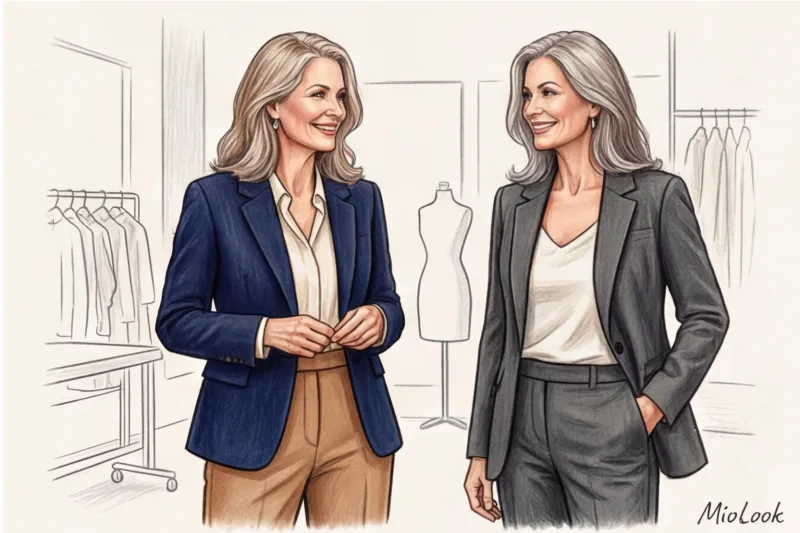
We often think that a slimmer waistline is the result of laziness or food indiscretions. But let's turn to science. According to research by the International Menopause Society (IMS, 2023), during perimenopause, 80–85% of women experience an inevitable redistribution of fat tissue. Due to declining estrogen levels and changes in insulin sensitivity, fat naturally shifts from the hips to the abdominal area. This is a genetically determined defense mechanism, not a sign of weakness. Let's free ourselves from the guilt right now.
It's precisely because of these hormonal fluctuations that what we call in styling "body type migration" occurs. Imagine this: you've been a pronounced pear-shaped figure your whole life—with narrow shoulders, a graceful waist, and substantial hips. For years, you've been accustomed to emphasizing your waist. But after 40–45, your wardrobe suddenly starts acting up, and your clothes fit as if you've become an apple.
Those beloved mid-rise jeans that used to hug you perfectly now create a roll above the waistband, and those familiar fitted shirts are bunching up at the stomach. Old style formulas are breaking down, and panic is setting in. By the way, if you're particularly concerned about your lost curves, I recommend checking out our guide on... How to make your waist look thinner with non-corseted clothing.
However, the psychological aspect during this period is much more important than buying new pants. Over 14 years of practice, I've seen hundreds of women put their stylish lives on hold. They buy bland oversized pants with the thought: "Once I lose those 5 kilos, then I'll start dressing up." The worst thing you can do with your style is to start an open war with your body by trying to squeeze into five-year-old jeans.
The magic of transformation begins the moment we choose to embrace our new forms instead of fighting them. Your body deserves high-quality, beautiful packaging right now, in its current dimensions. And to ensure the process of adapting to a new silhouette goes smoothly, without unnecessary stress or unfortunate purchases, I always advise my clients to use Smart wardrobe in the MioLook app It helps you plan looks in advance and test new proportions virtually, saving you time and stress in fitting rooms. There's no such thing as a perfect figure—only a poorly chosen cut, and that's what we'll be working with now.
The main myth: how to hide your belly and sides with clothes without turning into a "tent"
As soon as the scale starts to creep up and your waist starts to lose its former definition, you instinctively reach for clothes two sizes too big. The desire to hide in a cozy fabric cocoon is perfectly understandable, but this is where the main stylistic trap lies. Let's figure out how to conceal your belly and love handles with clothing without turning yourself into a monumental geometric figure.
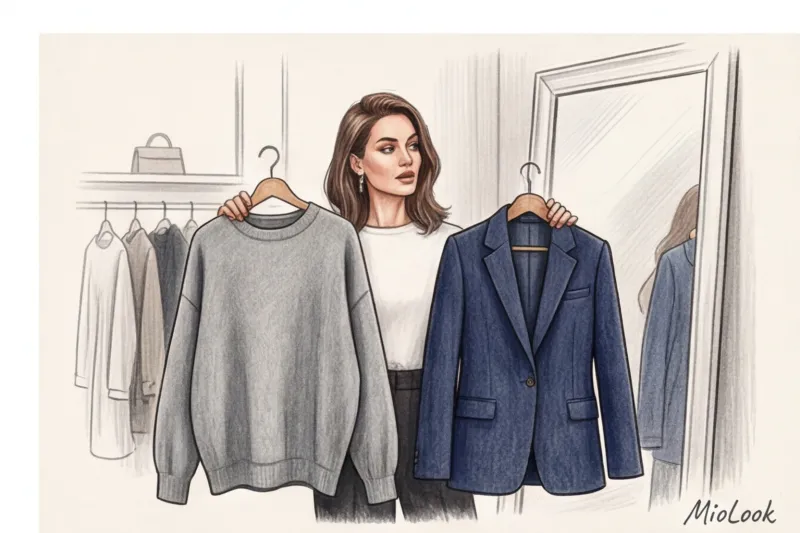
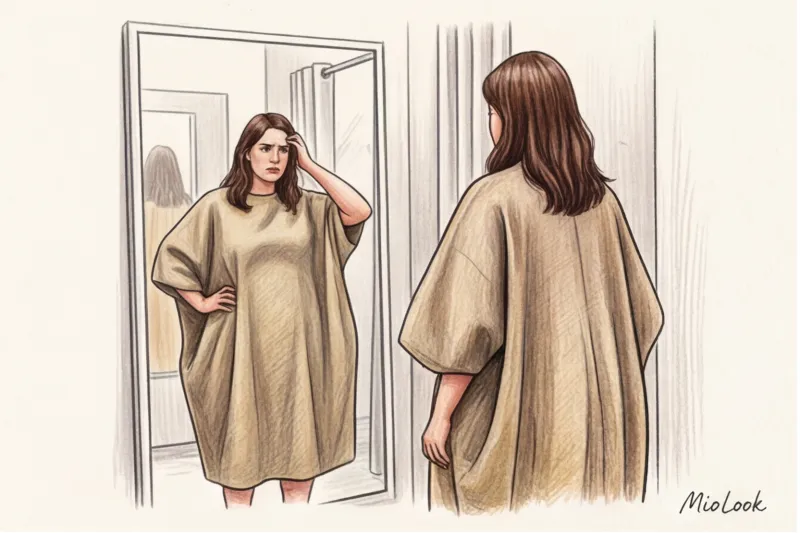
Mistake #1 explained: Why hoodies and oversized clothes visually add 10 kg. My experience shows that women often confuse a loose fit with a complete lack of shape. When you wear a loose, unstructured garment, the fabric falls from the most prominent point of your body (in this case, your stomach) straight down. The human eye is lazy: others read your size precisely by this widest vertical line. By hiding this problem area, you also hide your most graceful features—your shoulders, your bust, and your hips. As a result, your silhouette becomes a massive square.
Last year, a client named Anna (52) came to me. Her closet was filled exclusively with flowy dresses and oversized XXL tunics. She was convinced that this was the only way to disguise her growing belly. We ruthlessly removed all the shapeless pieces and found a structured jacket and trousers with the right cut. Guess what happened during the fitting? Anna fit perfectly into a size L. Her physical measurements didn't change a millimeter, but the added structure made her slimmer by at least two sizes.
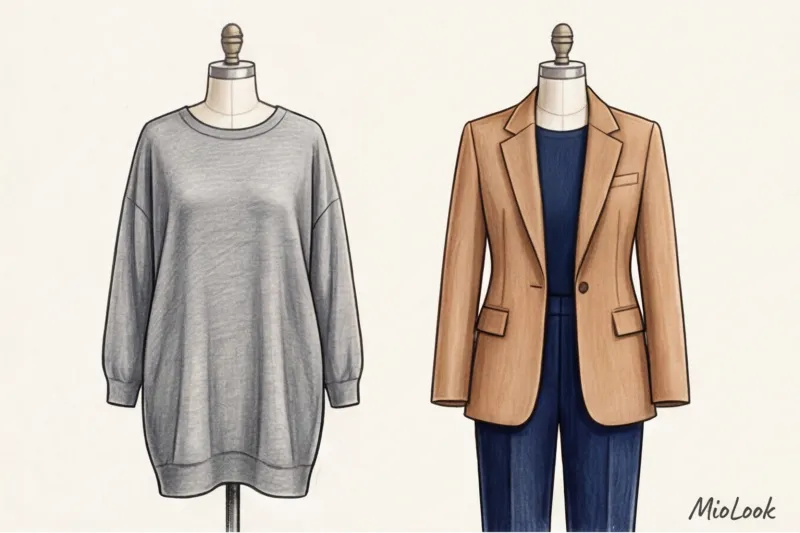
Mistake #2: Tight-fitting clothing and thin knitwear. This is another, no less dangerous extreme. Hoping to highlight the remnants of their former figure, or simply out of habit, some choose form-fitting garments made of thin, plain jersey. This material acts like a treacherous magnifying glass. Flimsy knitwear doesn't shape the figure—it obediently clings to every fold, accentuates the contours of underwear, and draws attention to precisely those areas we're trying to conceal. Such basic turtlenecks are best reserved for use only as a base layer under a thick cardigan.
What should you do if oversized clothes make you look fat and tight clothes reveal your secrets? The solution lies in semi-fitted concept This is the golden mean, the perfect balance between “hiding” and “emphasizing.”
The main rule for a semi-fitted silhouette: how many centimeters of air should there be between the body and the fabric? Remember this number— from 2 to 4 centimeters , depending on the density of the material. The garment should only delicately outline the contours of your figure, following its lines, but not dig into anything.
How can you check yourself in the fitting room? Put on the item and try to pinch the fabric with your fingers at the waist or hips. If you can pinch a small fold of fabric (those 2-3 cm), but the item doesn't hang loosely on you, you've chosen the right size. It's this air pocket that creates the powerful illusion of fragility: the brain perceives you as being much slimmer underneath the fabric, but the clothes are simply loose. By the way, when putting together a basic wardrobe of thick viscose or cotton T-shirts (decent options can be found at mid-range brands in the €30-€60 range), I always recommend going one size up from your usual size. This is the easiest way to achieve the right semi-fit.
Access to MioLook for €0.99 — one-time payment
A smart AI stylist will analyze your measurements and select the perfect look, taking into account your body shape and the semi-fitted concept.
Get access — €0.99 onceSilhouette Architecture: 5 Golden Rules of Correction for Elegant Women of Age
Over 14 years of practice, I've come to one ironclad conclusion: a stylish look after forty isn't built on fleeting trends, but on the strict laws of physics and geometry. The analysts at WGSN can dictate all the fashionable silhouettes of the season, but if a piece doesn't properly proportion your body, it's worthless. Imagine building a house. You wouldn't hang expensive designer wallpaper on crooked walls without a supporting structure, would you? The same principle applies to styling.
I introduced a special term for my clients - wardrobe architecture This is an approach to clothing as a clear, precise framework. Clothing shouldn't simply cover the body; it should create new, flattering lines. When we discuss how to conceal a belly and love handles with clothing, we're not talking about a blatant "hide and don't show" camouflage, but rather a clever engineering redistribution of visual volumes. Below, I'll detail the principles that underpin this architecture.
The rule of dense textures
The most common mistake I see in fitting rooms is trying to correct a large waist with flowing, thin fabrics. This is a completely disastrous strategy. Thin viscose, jersey, or silk instantly sink into every fold, treacherously outlining the contours of underwear and the very definition we want to conceal.
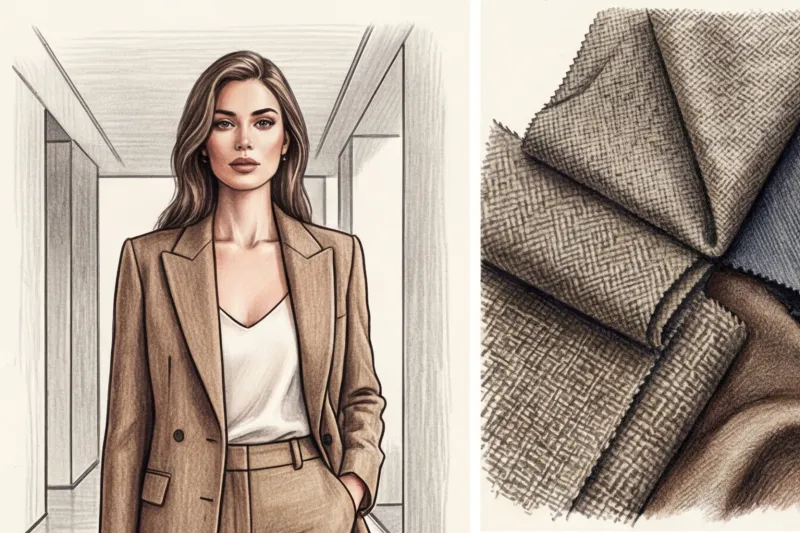
The fabric should have its own "character" and hold its shape independently, without weighing down on your body. Remember the golden rule: the softer your curves become (which is natural with age), the stiffer the texture of the clothing that touches them should be.
- Denim: Forget thin jeggings. Look for a weight of 12 oz (ounces) or higher on tags or website descriptions. This cotton acts as a soft corset. Excellent structured denim options can be found in the mid-price range (around €80–€130).
- Suit wool: Fabrics labeled Super 100s or 120s are ideal. They're flexible enough for comfort, yet perfectly maintain the tailored shoulder and hip shape.
- Heavy cotton and tweed: Shape-stable poplin for shirts and classic tweed for jackets create that very independent frame that I talked about above.
To avoid getting lost in the vast array of items, I often recommend that my clients digitize their database. Add your most flattering, heavyweight pieces to MioLook and tag them "frame." You'll be surprised how easy it will be to put together looks in the mornings, starting with the right textures.
Creating verticals and color columns
Our brains are lazy: our eyes always follow the most obvious lines. Horizontals broaden and ground us, verticals elongate us and narrow our silhouette. This is an optical illusion we must exploit every day.
The simplest and most elegant way to create a vertical line is to wear an unbuttoned second layer. By wearing a heavy jacket, a straight, textured-knit cardigan, or a classic trench coat and leaving it unbuttoned, you physically block off your sides. People will only notice the narrow central part of your silhouette that remains exposed between the outerwear's flaps. You're literally "cutting off" 5-7 centimeters of volume on the left and right sides.
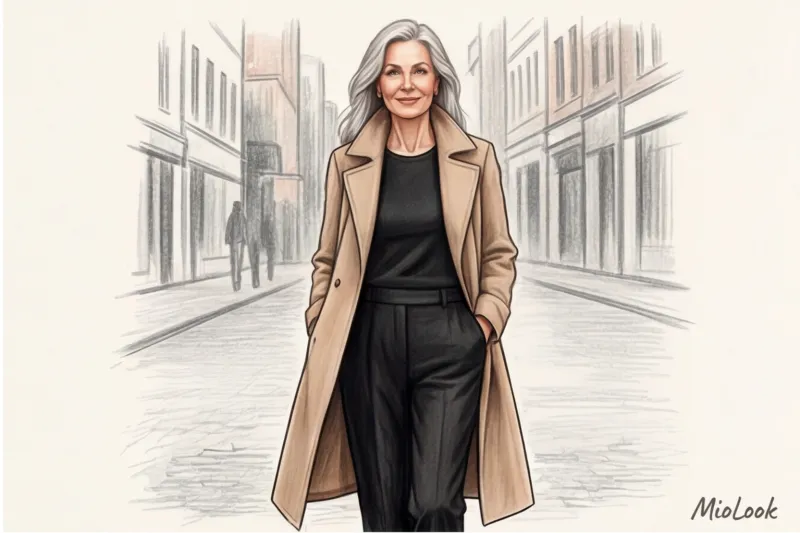
The maximum effect can be achieved with the help of technology "inner column" You wear a base layer in one deep shade (for example, graphite mid-rise trousers and a graphite top), and then throw on a contrasting light jacket (say, camel) over it. This dark, monochrome vertical stripe not only visually elongates your height but also completely blurs the line between your waist and hips, hiding any unevenness.
Shifting the focus of attention (distraction rule)
There's another fundamental rule in styling: if you don't want people looking at your waist, give them another, more striking and interesting point of attraction. Instead of painfully focusing on flaws, let's play up your strengths.
Elegant women of a certain age tend to have stunning features in their so-called "portrait zone" (face, neck, collarbones) and graceful articulation points—the wrists and ankles. Take advantage of this!
- Open thin areas: Roll up the sleeves of a jacket or heavy shirt twice, revealing delicate wrists and a beautiful watch. If the season allows, choose 7/8 length trousers, revealing the ankle. The eye is drawn to the most delicate parts of the silhouette, making the overall look more fragile.
- V-neck: It not only lengthens the neck, but also draws the gaze upwards towards the face.
- Facial accents: This is your trump card. A high-quality silk square scarf (decent options in thick silk can be found in the €60–€150 range), a statement architectural lapel brooch, or striking earrings in a complex geometric shape.
"Style is the art of directing someone's attention. You, like a director, decide where your interlocutor will look simply by placing the right color or texture accents"—I make every woman who comes to me for a consultation memorize this rule.
Don't try to drape your belly with meters of featureless fabric. Wear perfectly fitted trousers, add a structured jacket, and pin a luxurious vintage brooch to your lapel. I guarantee: no one will even notice your waist.
Top 7 items guaranteed to conceal your belly and love handles
When we discuss how to conceal a belly and love handles with clothing, proportion theory is great, but getting ready in the morning requires specific solutions in your closet. Last season, I analyzed the wardrobes of forty new clients, and the statistics were revealing: 85% of women tried to hide their bellies with soft, shapeless knits, which had the exact opposite effect.
So, I've compiled a practical list of must-have items. These aren't abstract runway trends, but well-defined patterns that work like optical illusions. Let's take a closer look at the styles I've personally tested in hundreds of fittings with clients ranging from sizes 46 to 54.
Long straight-cut jacket
If I had to keep only one item in my corrective wardrobe, it would be a structured blazer. The secret to the perfect jacket lies in the mathematics of two points: the shoulder line and the hem.
To elongate the silhouette, the length of the jacket should definitely cover the crotch and end just below the widest part of the hips. Have you ever noticed how cropped jackets distort proportions? As soon as the hem of the jacket stops exactly at the level of the stomach, a harsh horizontal line is created, visually "cutting" the figure and adding an extra 5-7 centimeters of volume to the waist.
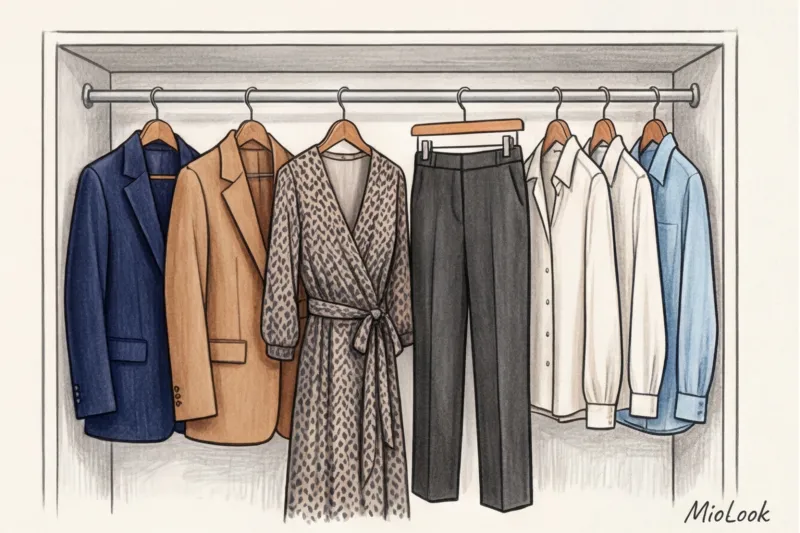
The second most important element is a firm shoulder girdle. British tailors call this the "balance point." A voluminous waist requires a visual counterweight from above. A defined shoulder line, reinforced by neat shoulder pads, restores a stately figure. Consider styles made of thick suiting wool, gabardine, or tweed (excellent basic straight-cut blazers can be found at Massimo Dutti or H&M Premium for €130–€250). They hold their shape independently, without deforming with movement, and create that all-important "air gap" between the body and the fabric.
Access to MioLook for €0.99 — one-time payment
Start building flawless capsules and testing combinations of items with the help of artificial intelligence before you go shopping.
Get access — €0.99 onceWrap dresses with asymmetrical draping
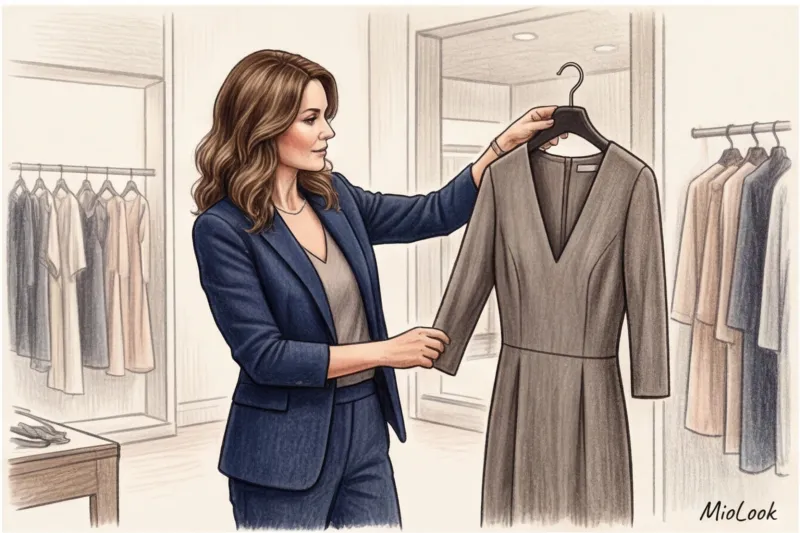
The invention of the wrap dress revolutionized women's fashion, but today we apply this cut with one crucial adjustment to the fabric texture. The magic of diagonal lines works flawlessly here: the wrap literally "draws" the waist where it had lost its definition. The deep diagonal across the chest breaks the monolithic volume of the torso into elongated triangles, making the eye perceive a slimmer silhouette.
However, this is where the main stylistic pitfall lies. Flimsy, thin viscose (a favorite material of many budget brands) will instantly ruin any corrective effect. This fabric will treacherously sink into every crease on the back and sides, highlighting even the slightest unevenness. The material should have a high "stiffness coefficient"—be dense, heavy, and flow downwards under its own weight, rather than clinging to the figure.
The ideal choice is dense crepe, heavy matte silk, or high-quality wool blend. Current mid-range collections (from €150) often feature dresses with asymmetrical side draping. This design gathers the fabric into radial folds at the waist, masterfully camouflaging any volume at the front.
Trousers and skirts with the right fit
Forget low-waisted pants and compromised drawstring trousers if your goal is to create a sculpted silhouette. The ideal hemline sits exactly at your belly button or at most 1–2 centimeters below it. Why is this so important? When a tight belt sits precisely at the fullest point of your belly, it divides the waist in half, gently smoothing it out and preventing any bulge (that "life preserver" above the belt).
My golden rule for fitting rooms: categorically avoid soft elastic waistbands in favor of a rigid, set-in belt. A well-tailored belt, bonded with interlining, works like a lightweight corset. It provides support and doesn't bunch up when you sit down at the table.
In terms of specific investments, your best allies will be palazzo pants with deep pleats from the waist down and straight midi skirts. Pleats on trousers are a brilliant invention of clothing designers: they create extra room in the groin and stomach area. Excellent basic palazzo pants made of thick viscose and wool are regularly featured in the permanent collections of COS and Arket, priced between €90 and €150. The key to a proper fit: the pleats shouldn't fan out when standing. If they're tight, simply go up a size, and your silhouette will instantly lighten.
To complete the picture (since we're collecting the "magnificent seven"), add three more fail-safe items to your arsenal:
- A thick, straight-cut shirt - wear it unbuttoned over a top as a second layer to create elongated verticals.
- Men's suit vest - buttoned up to the top, it forms a rigid frame and delicately “cuts off” the sides.
- Blouses with a V-neck and a thick peplum - It is important that the peplum flare begins just above your natural waistline, leaving the actual volume of your stomach under the loose fabric.
What to Avoid: Anti-Trends for a Changing Figure
We can create as many carefully crafted color verticals as we want, but one wrong texture will ruin all our work. The laws of optics are merciless: how light falls on fabric directly determines how others perceive your silhouette. When deciding how to conceal your belly and love handles with clothing, you'll need to thoroughly review your closet and eliminate four key "traitors."
Back in the 19th century, physicist Hermann von Helmholtz scientifically demonstrated the illusion of irradiation—a peculiarity of our vision that makes luminous or reflective objects appear significantly larger than their actual physical size. In styling, we rely on the same laws of physics.
Here's a clear stop list of materials and styles that no longer belong in your wardrobe.
1. Thin "flimsy" knitwear (smooth jersey)
In professional slang, this material is called "smooth jersey"—that same weightless, translucent knitwear used to make most inexpensive basic T-shirts and long sleeves (usually in the €15–20 range). The main problem with this fabric is its complete lack of structural integrity.
Instead of creating a smooth silhouette, flimsy knitwear acts like a vacuum seal. It obediently clings to every fold, mercilessly revealing the texture of the skin, and treacherously accentuating the contours of underwear or the elastic of tights. Replace such garments with items made of dense cotton (at least 200 grams per square meter) or interlock viscose—they hold their shape and leave that all-important "air" between the fabric and the body.
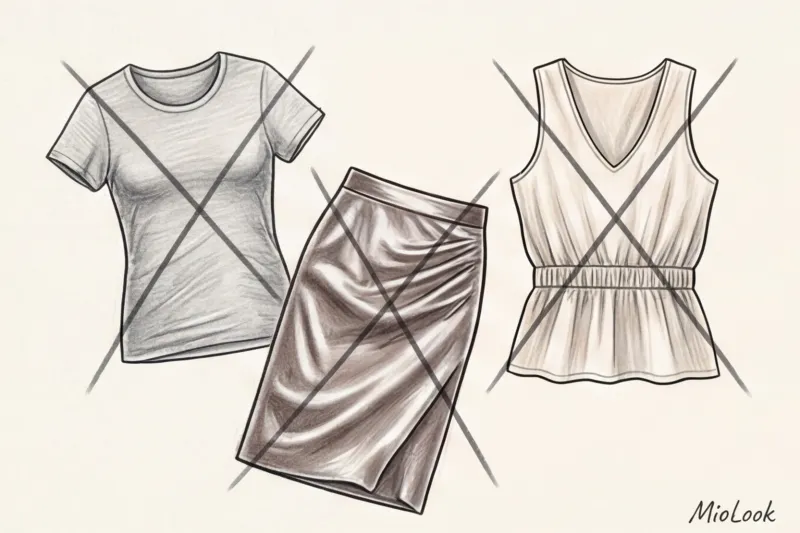
2. Shiny textures: satin, silk and lurex in the waist area
Here, the same laws of optics we discussed above come into play. Matte fabrics absorb light, creating depth and visually receding objects, making objects appear smaller. Shiny fabrics (satin, satin, sequins, and lurex-based materials) act like a convex mirror.
They reflect light, creating a bright highlight. The human eye instantly interprets this highlight as the maximum volume, making the abdominal area appear closer and larger than it actually is. By wearing a satin blouse or a straight-cut lingerie-style skirt, you literally "inflate" your waist with an optical illusion. Save the sparkle for accessories, shoes, or accent earrings.
3. The Treacherous Horizontal: Wrong Top Length
The hem of any garment forms a distinct horizontal line that "cuts" your figure. Our brains are lazy: they register the width of the silhouette precisely along this line.
If the hem of your jumper, T-shirt or jacket ends exactly at the most protruding point of the abdomen or at the widest part of the hips — You draw a line there yourself with a highlighter. This automatically makes you look a couple of sizes wider.
- How to fix: The correct length for a top (if you're wearing it untucked) should either end 3-4 fingers below your natural waist (before your hips start to flare out) or completely cover your groin area.
- My advice: To stop guessing in front of the mirror, digitize your images in MioLook The smart wardrobe feature allows you to create collages from your actual clothes—it clearly shows how changing the length of a jacket by just five centimeters can completely transform your body proportions.
4. Patch pockets, active print and large decor
Kangaroo pockets on sweatshirts, large patch pockets on cardigans at the waist, massive decorative buttons or giant floral patterns located right on the stomach – these are magnets for other people's eyes.
The basic rule of styling is to draw attention to your best features and distract from nuances. If you want to tone down volume in the middle third of your figure, this area should be as minimalist, matte, and smooth as possible. Shift all the decorative elements upward—use interesting collars, bright scarves, textured brooches, or a complex neckline. Let everyone's eyes focus on your face, not your waistline.
Shapewear: When it's necessary and when it's harmful
Let's be honest. For decades, the fashion industry has sold us the illusion that a tight, elastic shell is a magic pill for any figure imperfections. As a practicing stylist, I'll say something controversial: I'm categorically against wearing strong support systems every day.
According to medical research, systematic compression of the pelvic and abdominal areas impairs blood circulation, impairs lymph flow, and negatively impacts the functioning of internal organs. My honest advice to practitioners is this: if we're looking for long-term ways to conceal a belly and love handles with everyday clothing, the foundation should be built on dense fabrics and proper cuts. Rigid shapewear should be reserved for special occasions—anniversaries, weddings, or theater outings where you'll be spending several hours in a fitted evening gown.
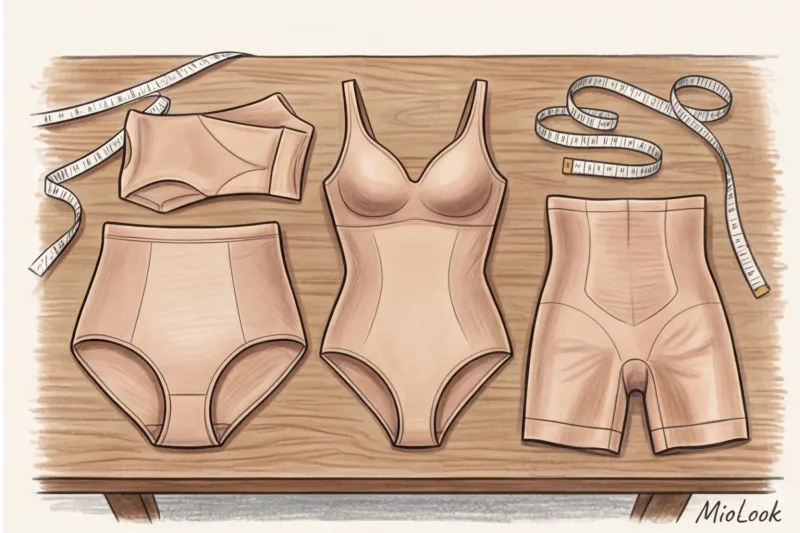
The most dangerous trap in a lingerie boutique is buying a shapewear one size too small in hopes of maximum effect. This is a disastrous mistake. Instead of a sculpted silhouette, you'll end up with a constricted look: the stiff edge will dig into your body, creating entirely new, unsettling folds above your waist or on your hips that you never really had. Lingerie should fit exactly to your current size, providing support, not suffocation.
So, if you have an important event coming up and really need a correction, how do you choose the right model? Forget about archaic lace-up corsets. The modern market offers technologically advanced and humane solutions:
- Ultra-high rise briefs. An ideal choice for semi-fitted dresses. The top hem should reach just below the bust to avoid creating a horizontal roll in the most problematic area—the middle of the stomach.
- Long shorts. A real lifesaver under light palazzo pants or midi skirts. They not only soften the breeches but also prevent painful chafing of the inner thighs in warm weather.
- Corrective bodysuit. The most reliable option for creating a precise, seamless silhouette line without a single seam at the waist.
The main criterion when buying is seamless technology (laser edge treatment). This underwear literally blends with the skin and remains invisible even under a fine wool suit. Investing in a high-quality seamless set made of breathable microfiber will cost between €50 and €90. Don't skimp on this item: cheap spandex will lose its elasticity after just three washes and will lose its shape.
Your ideal image
it begins Here
Join thousands of users who look flawless every day with MioLook.
Get access — €0.99 onceChecklist: Putting together a corrective capsule wardrobe
According to statistics from the research platform Wardrobe Crisis (2023), the average woman regularly wears only 20% of her closet's contents. The rest is emotional ballast: jeans "one size smaller when I lose weight" and shapeless tops bought in moments of desperation. But the philosophy of a smart wardrobe is that clothes should serve you here and now, building your confidence every minute, not serve as a reproach.
So, our first step is a step-by-step guide to a closet overhaul. Without it, any new purchases will simply drown in chaos. We'll follow a strict but effective algorithm:
- We remove “things-hopes” and “things-punishments”. Anything that's too tight, bunches up at the waist, or feels too small today is thrown into a box on the back shelf or up for resale. You shouldn't have to look at clothes you're not happy with every day.
- Filtering invoices. We ruthlessly remove thin viscose, shiny satin, and plain jersey. We leave only those items on hangers that can hold their shape on their own.
- We digitize the functional base. I highly recommend downloading the remaining basic stuff in MioLook This app helps transform your wardrobe from a "closet full, nothing to wear" mentality into a visual system. You can create outfits right on your phone, visualizing how items fit together proportionally.
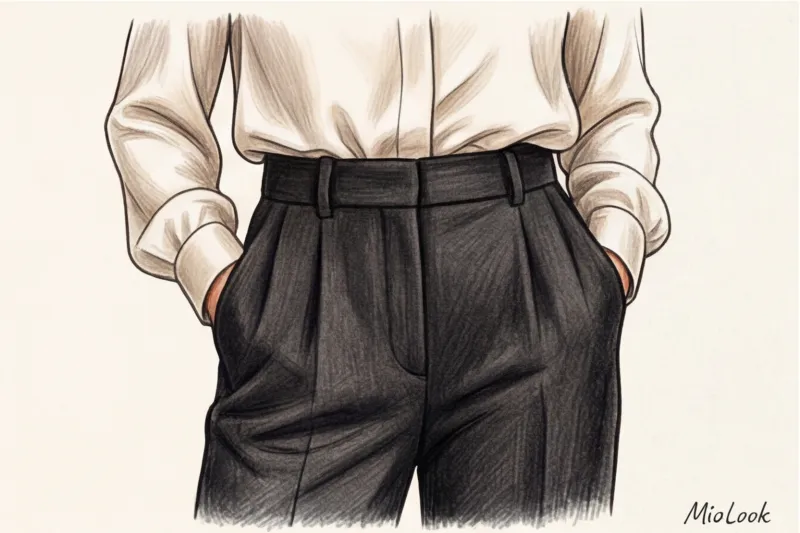
To solve the problem of getting ready in the morning, you don't need dozens of items. The perfect basic capsule wardrobe that conceals nuances is built on a proven formula: 2 bottoms, 3 tops, 2 second layers. If you carefully select these 7 elements (it's quite possible to fit a complete wardrobe into the €250-€450 range at high-quality mid-range brands), the problem of corrective styling will be solved.
- 2 bottoms: Straight or slightly flared from the hip palazzo trousers with a mid or high waist made of dense suiting fabric. The second bottom is an A-line midi skirt or straight jeans made of stiff denim (12 oz or more) with no fraying in the hip area.
- 3 tops: A wrap top or blouse (creating a diagonal line), a structured shirt made of heavy cotton, and a basic top made of heavy material with a V-neck that reveals the collarbone.
- 2 second layers: An elongated, straight-cut jacket with a rigid shoulder belt and a thick, elongated vest (or a structured cardigan without voluminous details at the waist).
How do you combine these pieces to create 15+ looks? The math is simple: by multiplying these elements together and adding or removing a second layer, you get a base for any occasion.
For example, for a business meeting, wear a V-neck top, straight trousers, and throw on a jacket, never buttoning it. You create that inner column of color—a classic, textbook example of How to hide your belly and sides with clothing by optically elongating the silhouette. For a relaxed Friday brunch, wear jeans, a cotton shirt (use the French trick: tuck in only one front flap, leaving the back open), and complete the look with a long vest.
Each of these seven items works according to the architectural principles we discussed earlier. Add three pairs of different shoes (loafers, ankle boots, and neat sneakers) and a couple of accent brooches in the portrait area, and your corrective kit for the season is ready.
Style Beyond Age and Size: Let's Take Stock
Do you know what the most common request I hear from women over forty during their first consultation? "Olena, make me feel smaller." We spend a colossal amount of energy fighting our own bodies, trying to squeeze them into a mold that's long since become too small for us—both physically and mentally.
I'll let you in on a big secret that's rarely mentioned in glossy magazines: the perfect figure doesn't exist. What we see on the runways and red carpets isn't a genetic lottery, but rather the result of expert styling, coupled with the virtuosity of tailors and the right lighting. According to a 2024 study by the Fashion Psychology Institute, 85% of women of elegant age are dissatisfied with their proportions solely due to the habit of comparing themselves to unrealistic standards. Our real goal isn't to try to return to the body of twenty years ago, but to learn how to beautifully and modernly shape the body we inhabit here and now.
It's time for a radical change of perspective. I urge you to shift your focus from obsessively "hiding flaws" to emphasizing your strengths. This isn't just popular psychological advice from social media; it's a completely effective and measurable styling tool. When you spend every morning frantically Googling how to hide your belly and love handles with clothes, your brain focuses on the negative. Ask yourself a different question: "What stunningly beautiful thing do I want to show the world today?"
Remember the concept of focal points. Do you have a luxurious neckline? Choose the right V-neck. Do you have graceful, slender wrists? Roll up your shirt sleeves to the elbow and add accent bracelets. Do you have beautiful ankles? Choose cropped, straight-leg trousers and elegant shoes. Everyone's attention (and your own in the mirror) will be drawn to these areas, and your waist will instantly fade into the background.
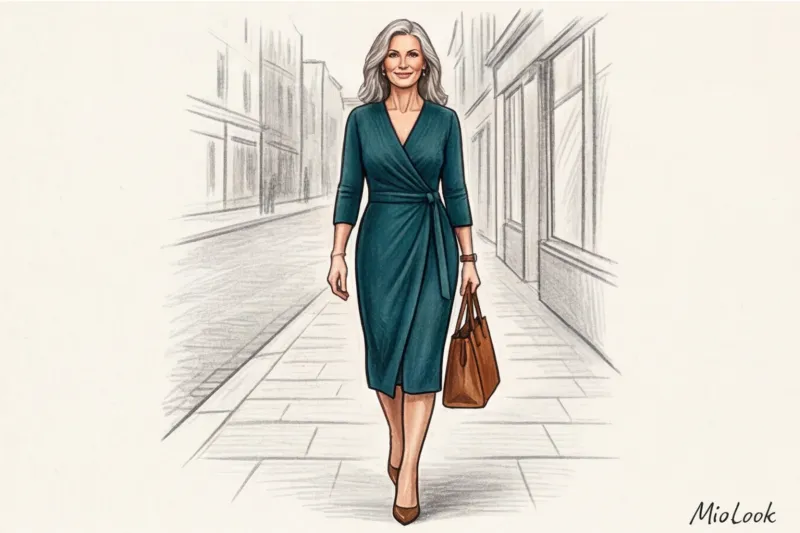
Your body has changed, and this logically requires updating your styling toolbox. My main and most ardent recommendation at this stage is to allow yourself to experiment and try on unusual styles. The silhouettes you categorically rejected in your 30s can become your calling card today.
Let me give you an example from my recent practice. A month ago, a client came to me who for years had exclusively worn skinny jeans with long tunics, sincerely believing that wide-leg pants would make her look voluminous. When I persuaded her to try on high-waisted palazzo pants made of thick wool suiting, she couldn't tear herself away from the mirror. It turned out that her legs were incredibly long, and her tummy simply disappeared behind the perfectly sculpted folds of the fabric. Never worn asymmetry? Try it. Intimidated by menswear? Give a structured jacket a try.
To reduce the stress of fitting rooms, I recommend testing new ideas virtually. The smart wardrobe feature in MioLook You can upload your basic items, add screenshots of new potential purchases (for example, those palazzo pants or wrap dresses), and see how they fit together. This protects you from impulsive spending—considering that a high-quality structured item from mid-market brands currently costs between €90 and €180, the cost of a stylistic error is high.
Age-related changes aren't a reason to retreat into the stylistic shadows and wrap yourself in shapeless robes. This is the long-awaited time when you can finally afford to dress for yourself, for your comfort and status. Clothes should serve you, provide you with strength, and convey confidence. You are beautiful today, in your current size. Dress yourself with love.
Guide Chapters
How to hide a slouched posture with clothing: secrets of cut and fabrics
Shapeless oversized clothes and thin knitwear are the main enemies of good posture. We'll tell you how to choose the right cut and texture to correct your back.
How to Hide Neck Wrinkles with Clothes: Stylist Tips
Forget about those drab black turtlenecks! A stylist explains how to elegantly camouflage the signs of aging on your neck with the right cut.
How to hide full calves: choosing the right clothing length and shoes
Forget baggy dresses. Discover architectural style secrets that will help you visually elongate your silhouette and shape your legs.
Belly-Hiding Swimsuits: How to Choose the Perfect Style
A standard black one-piece swimsuit isn't always slimming. We reveal the secrets to choosing beachwear that truly flatters your figure thanks to fabric engineering.
How to Hide Wide Hips: Styling Tips for the Pear-Shaped Body
Forget shapeless, dark clothes that only add bulk. We'll show you how to visually balance a pear-shaped figure with the right cut.
How to Choose Shapewear: Stylists' Tips
Shapewear isn't meant for rigid correction, but for the fabric to glide perfectly. Learn the secrets of choosing the right base from a professional stylist.
How to dress with large breasts without looking bulky
Forget the old rules about black and plunging necklines. Stylists' tips on how to flatter a curvy silhouette and avoid the "tent effect."
The Perfect Belly-Hiding Blouses: Stylist Tips
Shapeless clothing only adds bulk. Find out which styles and fabrics will truly help you stylishly conceal your tummy and highlight your figure.
Which skirts hide the belly: from pleated to A-line
Forget shapeless oversized dresses. We're discussing skirt styles with a fashion consultant that will visually conceal your tummy and create perfect proportions.
Apple Body Type: How to Dress After 40
After 40, your figure often changes due to hormonal changes, and your waist can disappear. We'll discuss the basic rules for choosing a wardrobe for the apple-shaped figure with a personal stylist.
Slimming Colors and Prints: A Stylist's Secrets
Black doesn't always make a figure look slimmer. A personal stylist debunks popular myths and reveals which patterns actually do visually reduce curvature.
Which jeans hide the belly: the right fit
Forget clichéd advice and tight-fitting elastane. Discover the secrets of the right fit and fabric composition that will truly shape your figure.
How to Hide Full Arms: Stylish Tips and Summer Hacks
Learn how to stylishly and comfortably conceal large shoulders and arms, even in extreme heat. Practical stylist tips for choosing the perfect cut.
Ideal dresses that conceal the belly and sides: tips
How to conceal curves with the right cut? We explore common mistakes and share stylist secrets for creating the perfect silhouette.