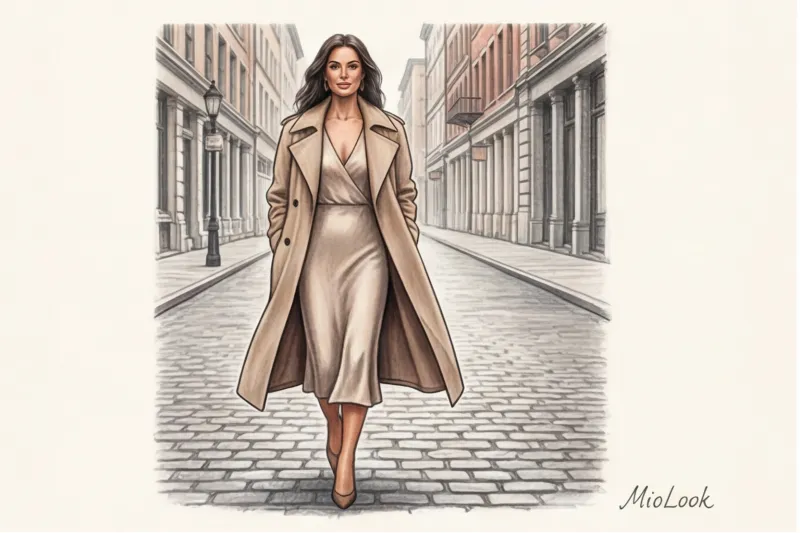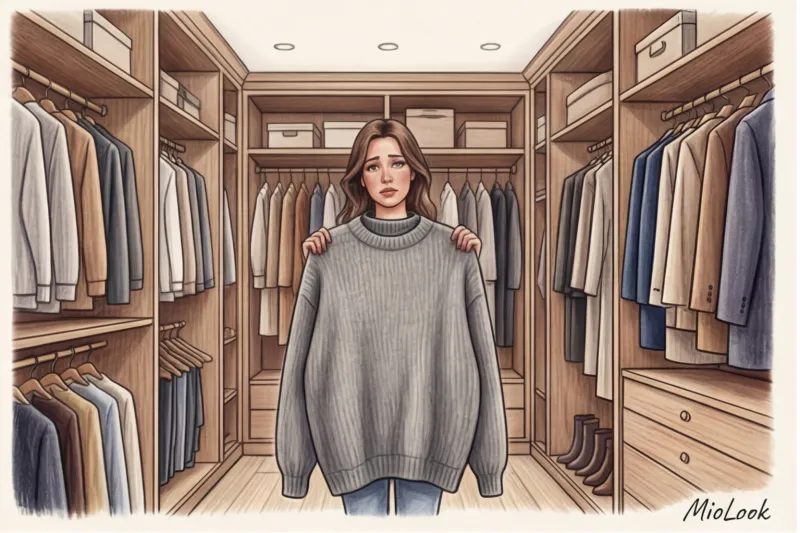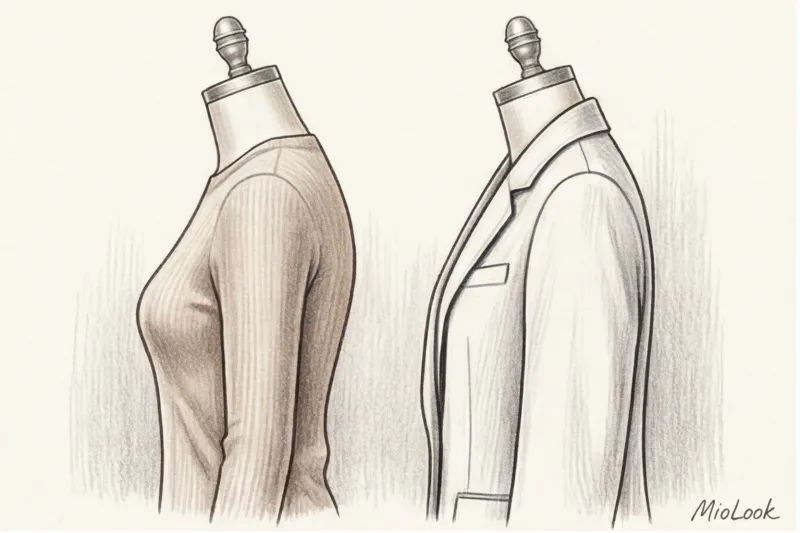
When I ask new clients to show me the items they feel most uncomfortable in, eight out of ten pull out tight, thin knitwear. And when I ask them how they hide their problem areas on their backs, they pull out shapeless, soft, oversized pieces. Both are stylistic traps.
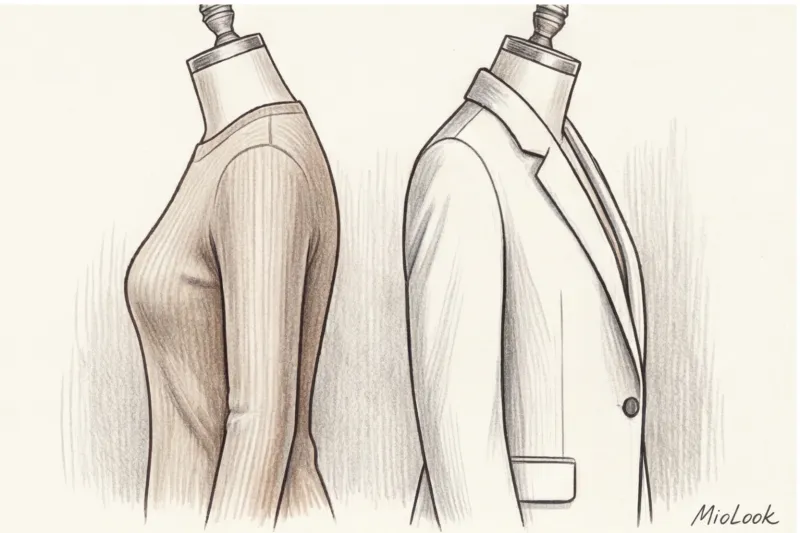
Age-related changes in the figure after 40 dictate their own rules. We discussed this in more detail in our A complete guide to how to hide your belly and love handles with clothing after 40 But while everything is more or less clear with the frontal area, most women make one fatal mistake with the back: trying to drape the slouched posture with soft fabrics. Today we'll talk about that. How to hide a slouched posture with clothing due to the engineering approach to cutting and correct textures.
Silhouette Anatomy: Why Soft Tissues Are Your Main Enemy
Last year, Anna, a 45-year-old IT manager, contacted me. She complained of a thicker shoulder and rounded withers due to endless Zoom conferences. Her solution was expensive but completely shapeless cashmere sweaters, costing €300–€400. The paradox was that the thin, flowing cashmere worked like a second skin: it softly hugged every curve of her hunched back, making her figure appear even heavier and rounder.
When we swapped out that expensive sweater for a structured, thick wool-blend jacket, our back instantly visually straightened. Why did this happen?
I conducted a personal test drive: I filmed how different fabrics behaved on my back during an eight-hour workday in front of a monitor. The results were predictable, yet alarming: 80% of the items that noticeably add bulk to the back and highlight the withers are viscose, thin cotton (sandwich), and fluffy mohair. The physics of fabric work against you here. Soft materials drape strictly along the body's contours. They don't create an independent framework, but rather treacherously outline anatomical changes.
How to Hide a Slouched Posture with Clothing: 5 Architectural Tricks
Forget the word "draping" when it comes to back correction. We need tailoring Tailoring is the art of clothing design. The main principle of wardrobe architecture is that clothing should hold its own shape, not the shape of your body. It's pure mathematics.
Shoulder line and correct armhole
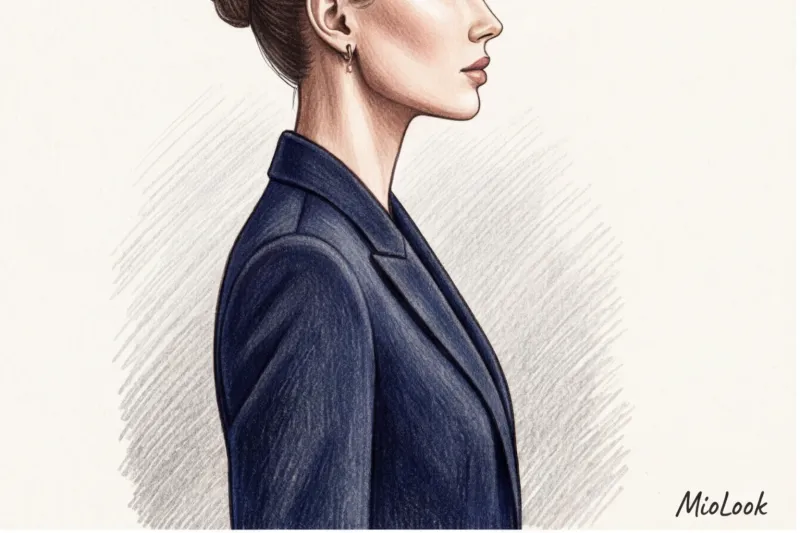
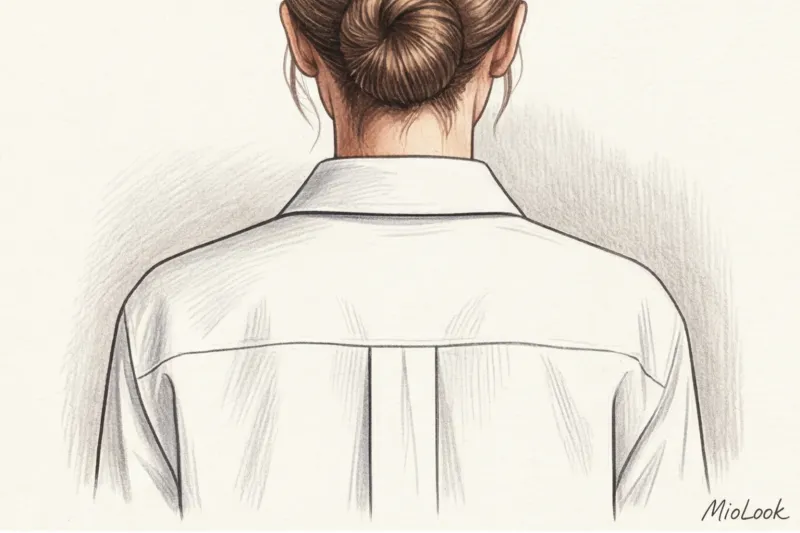
According to the laws of clothing design, shifting the shoulder seam just 2-3 centimeters back from the anatomical center of the shoulder visually reduces the volume of the upper back by 20%. If the seam creeps forward (which is often the case in cheap mass-market clothing), you appear even more hunched.
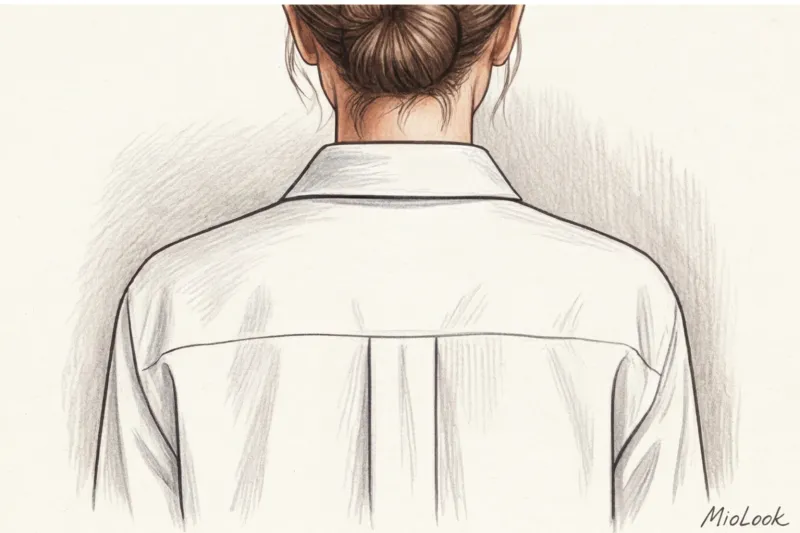
- Set-in sleeve against raglan: A crisp set-in sleeve creates boundaries across the silhouette. A raglan, on the other hand, slopes the shoulders and draws the silhouette downwards.
- Shoulder pads: Delicate, thin shoulder pads return the shoulder girdle to a straight horizontal line. But remember an important caveat: this does NOT work if you have naturally very broad, massive shoulders (an inverted triangle body type). - in that case, a hard shoulder pad will make a rugby player out of you.
- Dropped shoulder line: Only acceptable on shirts made from thick, crisp fabrics (dropped shoulder), where the stiffness of the material compensates for the dropped seam.
Back cutting tricks: yoke and inverted pleats
The horizontal yoke on shirts and trench coats acts as a visual divider. It literally breaks the monolithic plane of the back into two parts, preventing the eye from reading the seamless, rounded contour.
And the inverted (or box) pleat just under the yoke creates a saving grace of volume. The trick is that this volume comes from the shirt itself, not from your figure. The true contours of your shoulder blades and stooped posture remain a mystery to others.
Gate geometry: from shirt to stand
The quickest trick I regularly use during styling shoots is to slightly lift (or, as stylists say, "lift") the back of the shirt collar. This instantly covers the problematic area of the seventh cervical vertebra and creates a straight vertical line.
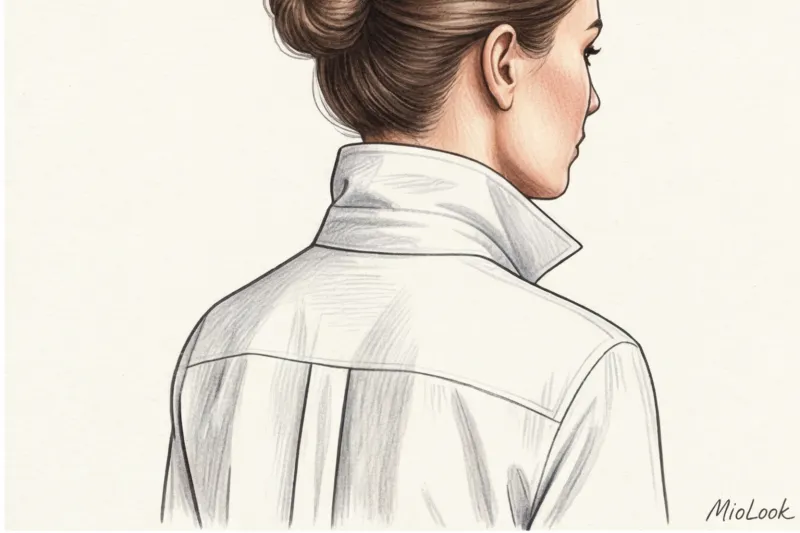
A stand-up collar and a classic English collar with peak lapels are your best tools for elongating your neck. Sharp angles always draw attention away from a rounded figure.
Widow's Hump: Stylistic Taboos and Best Solutions
Let's get the guilt out of the way right away. According to the International Menopause Society (IMS) 2023 data, up to 40% of women over 40 experience the development of a so-called "dowager's hump." This is a natural process of age-related fat redistribution due to hormonal changes, exacerbated by decades of sedentary work. It's not your fault. But you can certainly correct it without surgery.
"The main mistake when trying to hide the withers is the desire to wrap the neck in layers of fabric or pull a sweater up to the chin. This creates the effect of a missing neck and makes the shoulder girdle appear bulky."
Strict stylistic TABOO:
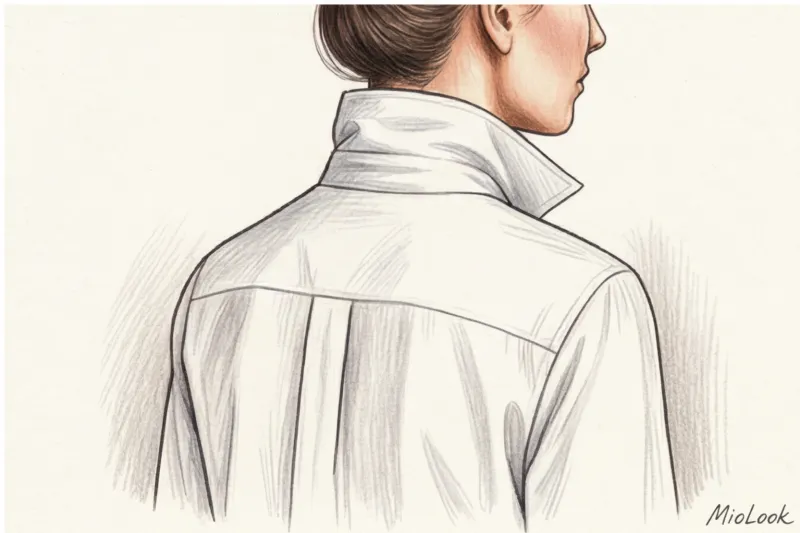
- Tight-fitting turtlenecks made of thin viscose or merino
- Boat necklines (widen the back horizontally)
- Thin short chains that fall just below the neck (create a transverse line, emphasizing volume)
- Deep round cutouts at the back
Best solutions:
- V-neckline at the front: Shifts the focus from the profile to the front, lengthening the neck by exposing the collarbones.
- Voluminous hoods: Made exclusively from dense fabrics (cotton fleece with a density of at least 320 g/m²). They create natural volume at the back, completely concealing the withers.
- Scarves: But not tied tightly around the flight attendant's neck! Slip the knot just below the collarbone, creating a V-shape.
Access to MioLook for €0.99 — one-time payment
A smart AI stylist will select the perfect look and help you create a capsule wardrobe that corrects your posture.
Get access — €0.99 onceSmart Capsule for Correct Posture: What to Add to the App
As a tech-savvy stylist, I can't imagine my work without digitalization. In the app MioLook I advise my clients to create a separate "structure" tag for items that literally save them on days when their backs just won't stay straight. This prevents impulse purchases of yet another "soft top."
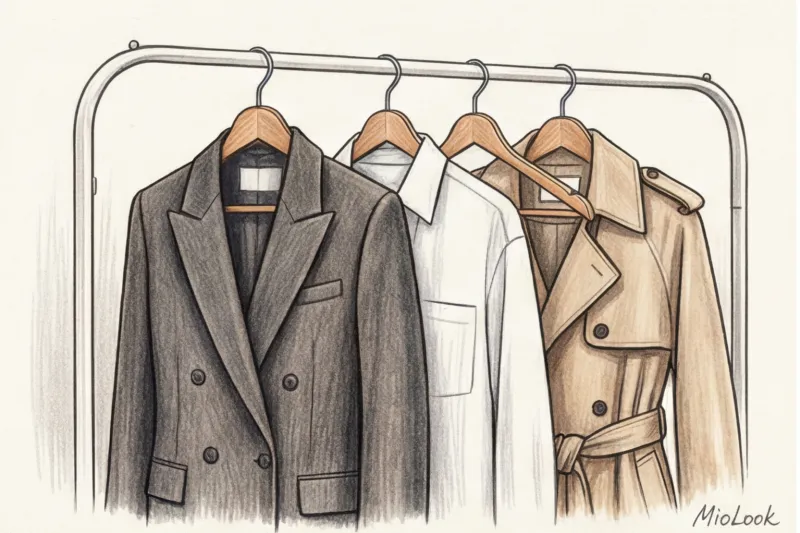
Here are the top 3 essentials in the €80–€200 range that will pay off every penny you spend on them:
- Thick oversized cotton shirt. Look for the words poplin or oxford on the tag and check the fabric's density. It should be crisp and stand up straight on a hanger.
- Double-breasted structured blazer. Always made of a wool blend or heavy gabardine, with stiff shoulder pads. A double-breasted cut adds the necessary density at the front, balancing the back.
- Classic trench coat with a storm flap. The fly yoke is a brilliant Burberry invention that works in your favor. It covers the upper back, creating a perfectly straight, independent line from the shoulder blades to the waist. Perfect architectural camouflage.
Layering as an Optical Illusion: Building Verticals
The WGSN Visual Trends Study (2024) confirms the old tailoring rule: two strong vertical lines can visually narrow a silhouette by two sizes and smooth out any back curves.
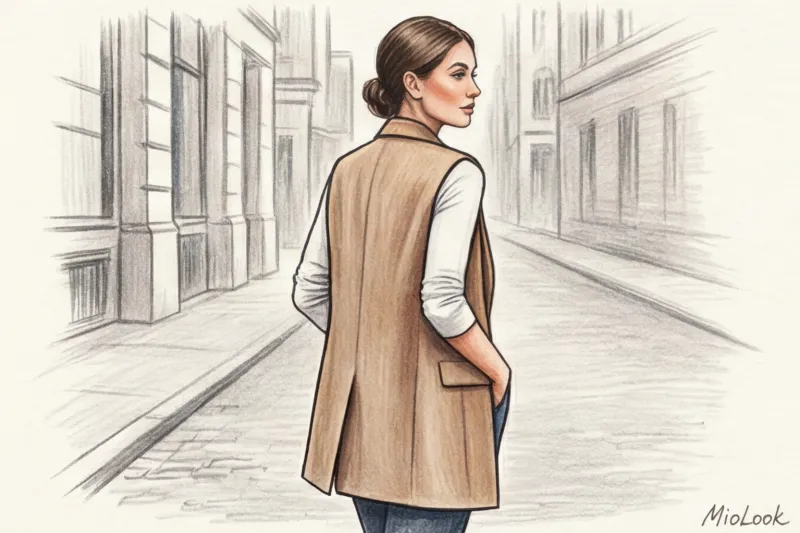
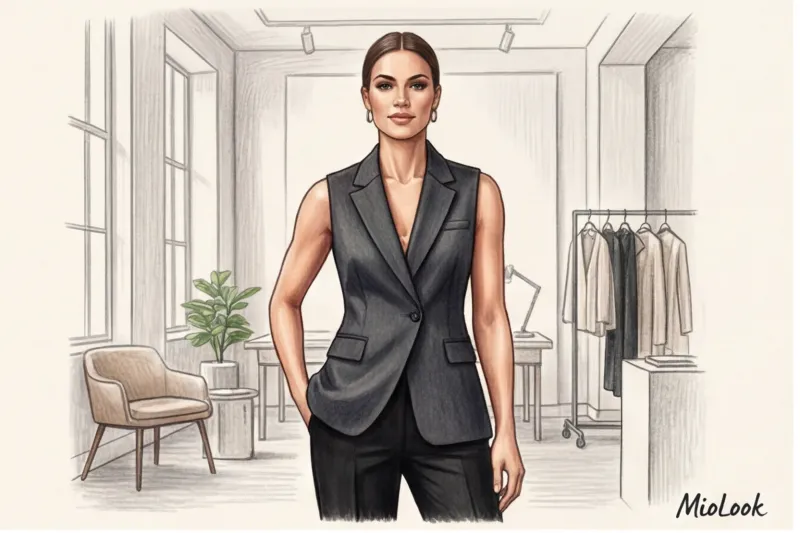
If you wear a thick top in a basic color and throw on a contrasting long vest or jacket over it (and be sure to leave it unbuttoned!), you literally “cut off” excess volume.
Let's take a specific scenario: it's a Friday night at the office where everyone wears jeans, but you want to look more put-together. Wear a black, heavy cotton T-shirt and a straight-cut beige jacket over it. The stiff vertical line of the light-colored, unbuttoned jacket will prevent others from appreciating the true curve of your back in profile, as the eye will be drawn to the contrasting lines of the lapels.
Your perfect look starts here
Join thousands of users who look flawless every day with the MioLook intelligent wardrobe.
Get access — €0.99 onceChecklist: Wardrobe Revision with a Focus on the Back
Spend 15 minutes this weekend on a ruthless closet audit. Get a second mirror or set your phone on a tripod with a timer so you can assess your items from the side—in profile and at three-quarter angles. You don't need a full-face view right now.
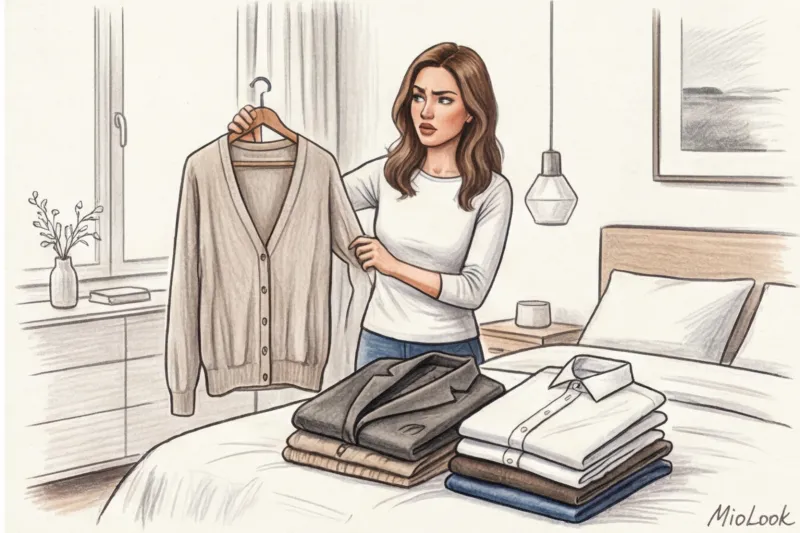
Step-by-step action plan:
- What to remove immediately: Buttonless polyester cardigans, skin-tight blouses, long sleeves made of thin viscose, and sweaters with raglan armholes that fall limply from the shoulders.
- What to bring to the studio: Blazers and jackets that lack shoulder support (a tailor can add shoulder pads for €10-€15). Sometimes, simply moving a button 1.5 cm gives the jacket the necessary looseness to prevent it from becoming taut and forming treacherous folds on the shoulder blades.
- Apply the 3 Second Rule: Take the item off and hang it on a regular, thin hanger. If it immediately sags, wrinkles, and loses its shape, it won't hold your figure.
Style after forty isn't about hiding behind meters of boring fabric or wrapping yourself in robes. It's about smart engineering. Use crisp textures, precise cuts, and the math of layering to make clothes work for you, creating the perfect silhouette. And remember: perfect posture isn't just about hard work in the gym, it's also about making the right choices in the fitting room.