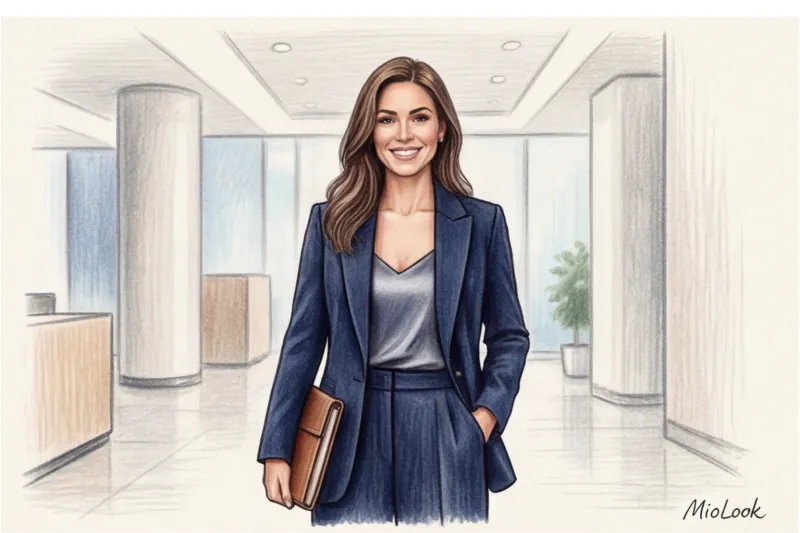
What will the image of an expert be in 2024? The end of the white-collar era
Remember the good old rule: "Dress for the job you want, not the one you have"? Fifteen years ago, that meant immediately heading to the store for a crisp gray three-piece suit, a crisp white shirt, and classic pumps. If you followed this rule literally today, say, heading to a meeting with investors in Silicon Valley or a pitch at a modern European fintech startup, you'd likely be mistaken for a bank clerk from the 2000s or a legal intern.
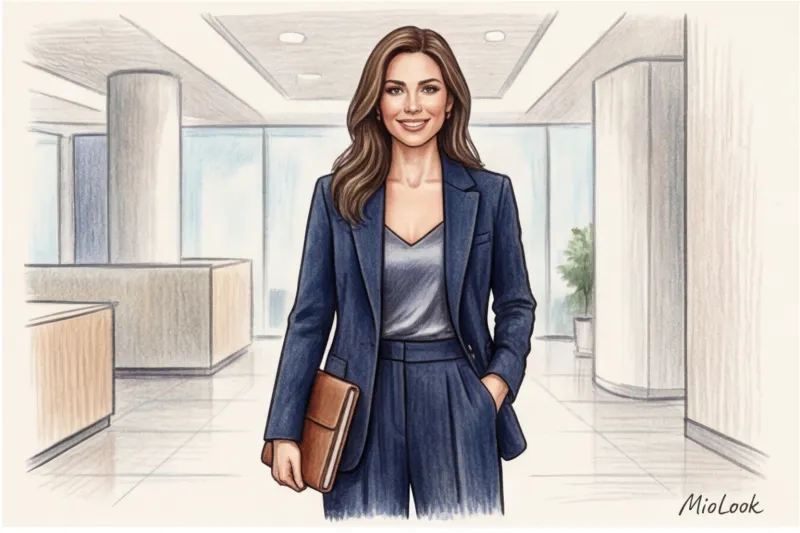
Literate expert image In 2024, it's no longer a boring uniform. It's a flexible, smart, and incredibly subtle visual tool. It builds your personal brand, sells your services, and increases your sales even before you utter a single word.
I often hear from new clients: "Katarzyna, what difference does it make what I'm wearing if I'm a brilliant professional with ten years of experience? My brain doesn't work any worse because of what I wear." But science disagrees with you here. In 2012, researchers from the Kellogg School of Management (Northwestern University), Hayo Enyan and Adam Galinsky, demonstrated the phenomenon Enclothed Cognition (embodied cognition). In the experiment, they discovered that clothing literally and physically alters our cognitive processes. People wearing a white lab coat (strongly associated with doctors and scientists) demonstrated a sharp increase in concentration and attention compared to those performing the same tasks in casual clothes. In other words, your jacket, a perfectly tailored dress, or even the right shoes physically force your brain to work more focused, sharper, and more confidently. You literally "put on" competence.
In my experience, this works flawlessly. Last year, Anna, a top manager at a logistics company, approached me. Her request was: "I'm not being heard at board meetings. I can't push through my terms in tough negotiations with contractors." When we sorted through her wardrobe, I saw nothing but soft textures: fluffy cardigans, fine knits, dresses with small floral prints, and sloping shoulders. We completely changed the silhouette. We added structured jackets from Massimo Dutti with a sharp, accentuated shoulder line, straight trousers made of thick wool, and graphic shoes. A month later, she wrote to me: "I feel different now. When I put on this jacket, my back straightens automatically, and my voice sounds a tone lower and firmer. Yesterday, we closed a deal on my terms in twenty minutes."
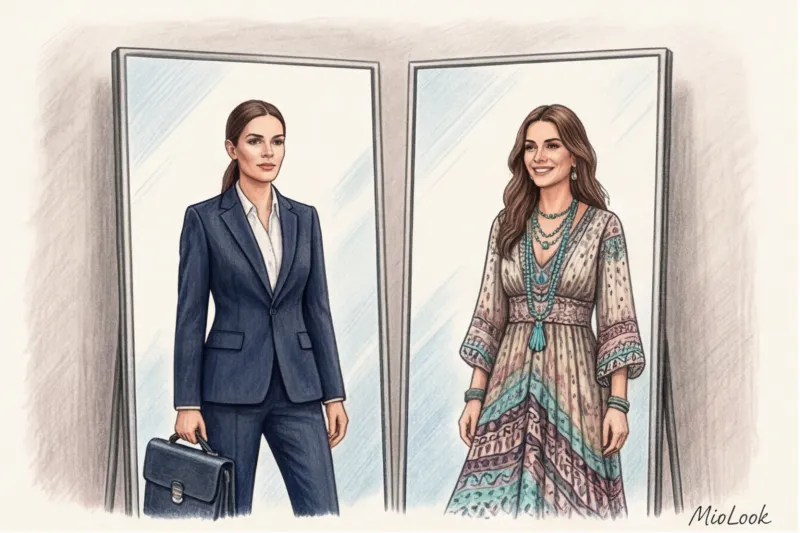
But does this mean everyone should immediately start buying up crisp suits? Absolutely not. An expert's image is deeply contextual. What conveys status in one field is comical in another. For a financial analyst, a corporate lawyer, or a banker in Zurich, the ideal marker of competence is structure and conservatism. An impeccably tailored dark blue suit, an expensive watch with a simple dial, a perfectly pressed shirt. This nonverbal code screams, "I'm reliable, I respect the rules, I understand the system, your assets are completely safe."
Now imagine a senior IT developer, product manager, or creative director in the same formal suit. In their world, it would immediately create dissonance. For IT and the creative class, expertise is conveyed through deliberate relaxation, high-quality minimalism, and comfort. Here, status is demonstrated by a perfect basic T-shirt made of thick organic cotton (for example, from the premium H&M or COS line), straight-leg jeans without any fraying, clean, minimalist sneakers, and expensive horn-rimmed glasses. In their world, someone who tries too hard to look respectable in a suit likely simply doesn't know how to write brilliant code or generate breakthrough ideas. I discussed in more detail how to navigate this fine line and define your visual identity in the article. How to Find Your Clothing Style: A Guide for Women.
The Biggest Myth: Why a "Sporty Suit" Can Ruin Your Personal Brand
Let's talk about the most common mistake I see new experts make when entering the public arena: trying to appear "too" professional.
There is a tricky concept in the psychology of style overdressing — when you're dressed too smartly, too sophisticatedly, or too formally for the given context. The paradox is that excessive formality today doesn't create authority, but rather a barrier of mistrust. When you show up to an informal meeting at a coworking space or a business breakfast in a tightly buttoned sheath suit with a perfectly coiffed hairstyle, while your interlocutor is wearing jeans and a smart-casual jacket, you make them feel uncomfortable. An invisible wall is erected. The ideal expert style today is effortless chic (casual chic). You should look like this flawless look took five minutes to achieve, not two hours of agonizing in front of the mirror.
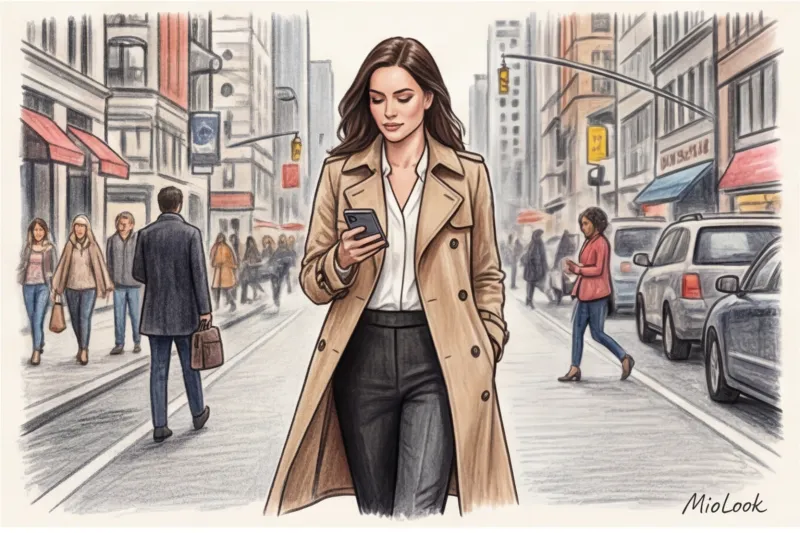
The second absolute killer of professional credibility is excessive branding. Enormous gold Gucci logos on a belt, garish Louis Vuitton patterns on a shopper bag, or T-shirts with giant Balenciaga lettering are all interpreted unambiguously in a business environment, and unfortunately, not in your favor. Psychologically, this is perceived as a lack of inner confidence in one's own worth and expertise, so one tries to "buy" status and respect through recognizable luxury labels.
In the world of real professionals with a high check, it is valued quiet luxury — quiet luxury. The quality of the fabric (Mongolian cashmere, dense silk, fine merino wool), the impeccable fit, and the elegant palette will speak volumes about your success far more than any gold lettering on the chest. No one should be able to tell how much your jacket costs at first glance, but everyone should see that they're dealing with a highly regarded specialist.
To avoid confusion about which items truly enhance your status and which ones are just creating visual noise, I always recommend digitizing your closet. In the app MioLook You can sort your items into capsules: simply create a separate category called "For important meetings" or "For conferences," and you'll clearly see whether your current wardrobe conveys the desired professional message.
4 Personal Brand Archetypes: Find Your Visual Vector
Have you ever noticed that we subconsciously expect completely different visual representations from a tax consultant and a creative director? After 12 years of working as a personal stylist and reviewing hundreds of wardrobes, I've become convinced: there's no such thing as a one-size-fits-all "expert outfit." Your clothing should be a precise visual representation of your services.
Many people mistakenly believe that buying an expensive, classic jacket is enough to look professional. But if you're, say, a family mediator, that formal jacket will only create a barrier between you and your clients. A Princeton University study (J. Willis and A. Todorov, 2006) demonstrated that our brains only need 100 milliseconds to assess a person's competence based solely on their appearance. And we evaluate this competence through the prism of expectations for a specific profession.
To simplify the task of creating a work wardrobe, I've developed a unique system of four professional archetypes. Find your passion, and you'll understand the rules by which your personal capsule wardrobe should be built.
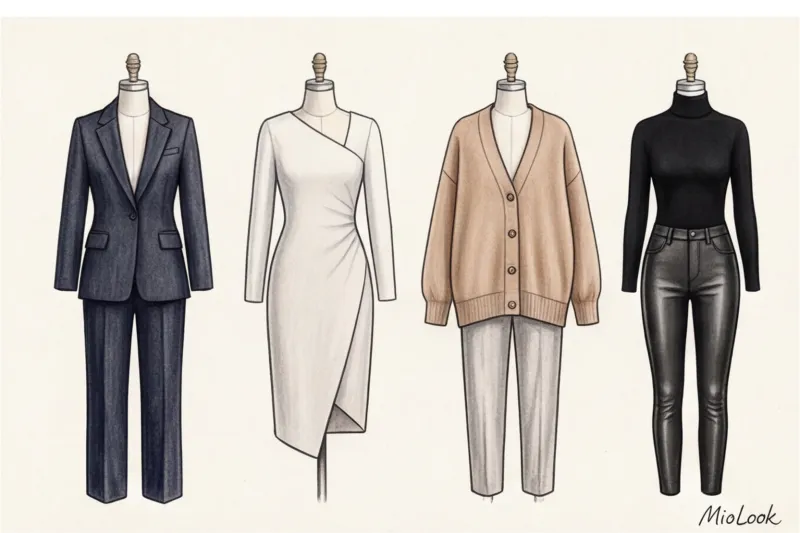
Corporate Strategist (Finance, Law, Management)
When a client entrusts you with their money, business, or legal security, the only thing they want to feel is absolute reliability. Your goal is to convey structure, predictability, and clear boundaries.
Key elements: Geometry reigns supreme here. You need rigid shapes and dense fabrics that don't wrinkle and hold the silhouette well (gabardine, heavy suit wool). A clear shoulder line is essential: accentuated shoulders are subconsciously interpreted as the ability to "bear" a heavy burden of responsibility. Monochromatic looks in deep blue, graphite, or emerald tones work flawlessly.
Reference brands: For the perfect fit, head to Massimo Dutti (especially their limited Studio collections) or classic Boss. A strict no-no for this archetype is thin, flimsy knitwear, which creates a shapeless silhouette and cheapens the look.
Creative Visionary (Marketing, Design, Media)
If you're selling ideas, a classic, formal suit can work against you. The client will subconsciously decide, "She looks too conservative; can she offer an unconventional solution?" Your goal is to demonstrate insight, relevance, and flexible thinking.
Key elements: Complex architectural cuts, subtle asymmetry, and, most importantly, a mix of textures. The combination of smooth, cool silk with voluminous, coarse wool demonstrates your ability to combine the seemingly incompatible. Accentuating footwear plays a huge role—ankle boots with an unusual heel or loafers with chunky hardware work like a professional marker: "I notice details and know how to work with them."
Reference brands: Swedish brands COS and &Other Stories are ideal donors for such a wardrobe. Their pieces look like art objects, yet remain perfectly wearable.
Empathic Mentor (Psychology, Coaching, HR)
In helping professions, distance and rigidity are your greatest enemies. If a coach shows up to a session wearing a jacket with peak lapels, it will be physically difficult for the client to relax. Your goal is to remove barriers, create a safe, inviting space, and make them feel welcome.
Key elements: We completely eliminate sharp angles. The silhouette should be built on rounded lines (raglan sleeves, soft collars, flowing skirts). Textures take center stage: you need tactilely pleasant, matte fabrics like cashmere, dense silk satin, and suede. The color palette shifts toward warm, complex hues: camel, sage, dusty rose, and butterscotch.
Reference brands: The aesthetic of 12 Storeez (their core collections) and premium knitwear from Uniqlo fit perfectly into this archetype.
Dynamic Innovator (IT, Startups, Tech)
The fourth vector is for those who are building the future. In the world of technology, overdressing is viewed with suspicion. The innovator's goal is to demonstrate a focus on progress, mobility, and freedom from outdated corporate conventions.
Key elements: Smart casual, technical, wrinkle-resistant fabrics, layering, and quality footwear (most often, minimalist premium leather sneakers). Clothing shouldn't restrict movement, but it must look neat.
Reference brands: Arket, NN07, functional lines of Uniqlo U.
Access to MioLook for €0.99 — one-time payment
Not sure which archetype your current wardrobe fits into? Digitize it, and the app will show you which pieces work for your personal brand and which ones are time to replace.
Get access — €0.99 onceStylist's advice: Don't try to mix all the archetypes in one cabinet. Choose one leading vector that brings you 80% of your professional income, and build the core capsule strictly around it.
Wardrobe Engineering: How to Assemble a Work Capsule Wardrobe Without Going Broke
According to a 2023 McKinsey report on consumer behavior, the average woman regularly wears only 20% of her closet's contents. The remaining 80% is what's known as "dead weight": impulse buys, discounted items, and clothes bought for one-off events. When clients come to me asking for an expert image, their biggest fear is, "I'll have to throw everything away and spend millions on designer brands." This is a fundamentally flawed approach. Creating a prestigious work wardrobe isn't about an unlimited budget, but about sound math and engineering.
Let's do the math. Your main financial tool in shopping is the formula. Cost Per Wear (CPW) , or the price per item. This represents the actual cost of the item, not the retail price.
Let's compare two purchases. You buy an ultra-trendy blouse with a bold leopard print and a complex collar for 400 €. It's so bright and eye-catching that you wear it to work a maximum of three times a season to avoid becoming "that girl in leopard." Its CPW is 133 €. Now, consider a structured leather tote bag with a rigid shape from a premium brand for 4000 €. You take it to every meeting, 200 workdays a year, for at least three years. Its CPW is only 6 €. The expensive bag turns out to be 20 times more affordable than the cheap blouse.
A professional image is built on proper budget management. I always teach my clients the 70/30 rule: we invest 70% of our budget in essentials (shoes, structured bags, outerwear, watches, and jackets), and reserve 30% for accessories (T-shirts, trendy tops, seasonal accessories).
Does this mean you should only go to high-end luxury for basics? Absolutely not. Over the years as a shopper in Europe, I've learned how to "hack" the mass market. You can find items in Zara, Mango, or H&M Premium that look like they cost hundreds of euros if you know the insider rules for choosing fabrics.
First, always read the labels. Avoid 100% polyester in blouses—it's shiny, staticky, and instantly cheapens the look. But for suits, blended fabrics are your best friends. The ideal formula for trousers or a jacket from a mass-market brand is 60-70% wool, 20-30% viscose, and 5-10% synthetics (elastane or polyester). The synthetic thread will prevent your trousers from stretching out at the knees after three hours of sitting at the computer.
Secondly, the biggest betrayal of a cheap item is the hardware. Mass-market fashion cuts corners on details. My favorite styling trick: I buy a client a perfectly tailored jacket at a mass-market store for 80 euros, then we go to a specialist hardware store and replace the plastic buttons with high-quality horn buttons, fabric-covered ones, or heavy metal ones. The item instantly elevates its visual appeal. Also, avoid mass-market bags and shoes with lots of shiny yellow hardware—it's too lightweight, oxidizes quickly, and betrays its price.
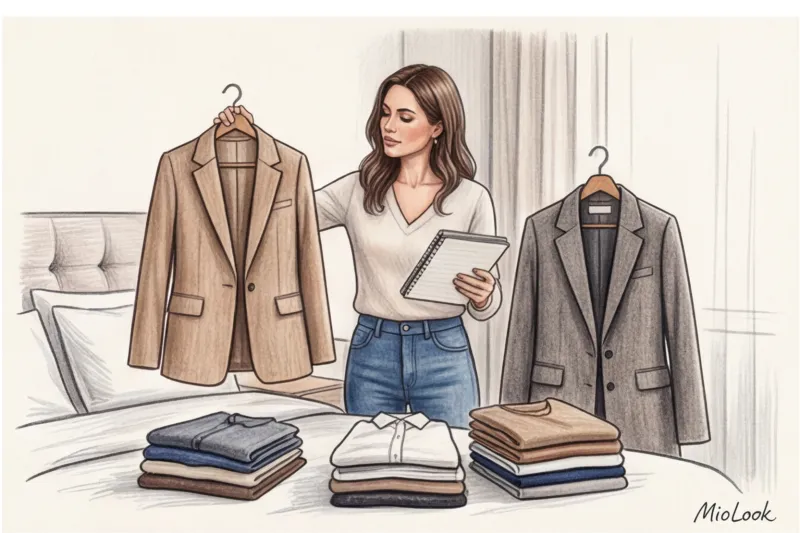
A matrix of essential elements for an expert image
For a capsule collection to work like a Swiss watch, it must have impeccable fundamentals. Here are three key elements where you shouldn't skimp on either time or money when trying it on.
1. Structured jacket (not to be confused with a soft cardigan).
In a business environment, the shoulder girdle is subconsciously interpreted as a marker of responsibility and the ability to "take a hit." A jacket with a defined shoulder line and a well-defined shape conveys composure. A soft knit cardigan with buttons, on the other hand, creates an aura of home comfort and relaxation. Save the cardigan for weekends out of town, and wear an architectural jacket for important negotiations.
2. Perfectly fitting trousers.
How to choose a fit that will add status to your look? Look for styles with a mid- or high-rise waist and pleats. The fabric should be thick enough to hold a pressed crease—this vertical line visually elongates the silhouette and makes legs appear endless. Pants shouldn't bunch up: the right length either reveals the ankle (if they're cropped) or covers half of the shoe.
3. High-quality knitwear.
Why is a heavy viscose turtleneck better than a thin cotton one? Cotton knitwear (especially budget-friendly ones) tends to quickly lose its shape, fade at the seams, and, worst of all, show through the contours of your underwear. For a sophisticated wardrobe, choose long sleeves and turtlenecks made of heavy viscose (at least 250 g/m²) with added silk or cashmere. This fabric flows gracefully, has a delicate matte finish, and is ideal for tucked into trousers.
To manage this matrix and avoid buying duplicates, you need to digitize your wardrobe. I always recommend transferring your basic items to MioLook The app will help you create new combinations from your existing jackets and trousers in just a few clicks, and will also clearly show you statistics on which items are truly delivering on their Cost Per Wear and which ones are time to retire.
Color and Texture: Nonverbal Triggers of Trust
Many aspiring experts instinctively hide behind black, believing it to be a foolproof classic. However, a 2022 study by the Pantone Color Institute confirms what corporate stylists have long known: in the business environment, all-black is often perceived as closed-off, distant, or even hidden aggression. If your goal is to inspire trust and demonstrate competence, dark blue is your best ally. Subconsciously, this color is associated with logic, stability, and high intelligence. That's why pilot uniforms and the logos of major consulting agencies are blue. A dark blue suit "sells" your expertise much more subtly, yet more convincingly, than black.
There's an important nuance here that 90% of style articles miss. There's no single, universal "dark blue." Remember the theory of color types: that deep, almost inky shade (classic navy) that makes a contrasting brunette look fresh and rested will turn a soft, light-haired woman into a tired shadow. It's important to find your own blue: some need a complex, dusty dove-blue, while others prefer a warm shade with a hint of sea green. By the way, to avoid choosing the wrong palette, I recommend using MioLook — the app's built-in algorithms help filter out "foreign" colors even at the shopping planning stage.
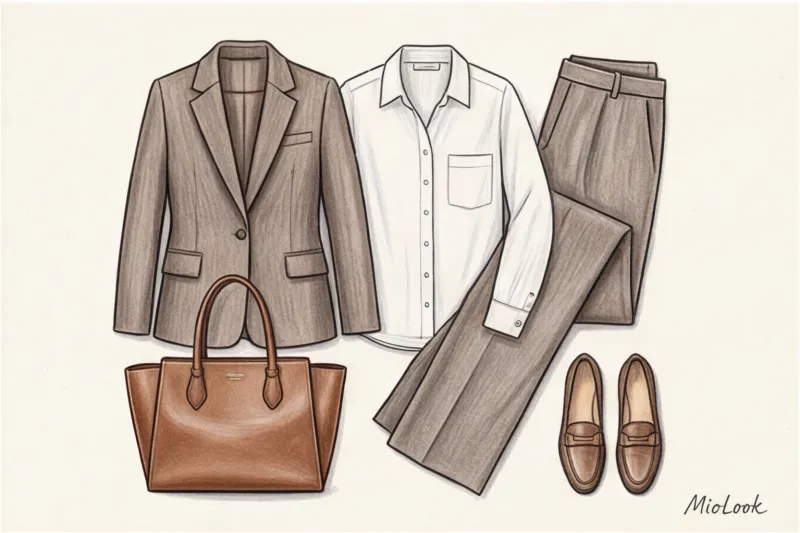
But what if you're speaking at a specialized conference or conducting a sales webinar? The von Restorff effect (psychological isolation effect) comes into play—the human brain remembers objects best when they stand out from the crowd. Bright colors, such as rich red or uncompromising fuchsia, are legitimate tools for capturing your audience's attention. To maintain your presence, use the principle of strict dosage. You don't need a red three-piece suit. A fuchsia silk blouse worn under a formal graphite jacket or a pair of eyeglasses with accent frames will suffice. You give your audience a visual anchor while remaining within the bounds of a professional dress code.
However, even the most refined shade can be ruined by the wrong fabric. Remember the cardinal rule of status items: smooth, dense, matte textures always look more expensive than shiny ones. The secret lies in the physics of light. Shiny materials (thin satin, cheap shimmery viscose, polyester) reflect light, mercilessly highlighting the slightest imperfections in the cut, the tension in the seams, and the features of the figure. In cool office lighting, they cheapen the look. Matte textures—wool crepe, heavy cotton, cashmere—absorb light. They add depth to the color and a crisp, composed silhouette. A simple matte wool-blend jacket purchased at Massimo Dutti or COS will always look far more prestigious than a shiny synthetic jacket of the same price.
Access to MioLook for €0.99 — one-time payment
Start creating your perfect looks with artificial intelligence. Digitize your wardrobe and find the best color combinations in just a few clicks.
Get access — €0.99 onceThe Devil is in the Details: What Gives You Away (or Sells You Out)
As a personal stylist, I professionally scan people. When a new client comes to me for a consultation or shopping tour, my brain does a complete visual audit in the first three seconds. And do you know where my gaze lands first? My personal assessment checklist doesn't start with the quality of the fabric or the cut of the jacket. An expert's image often crumbles where the clothes end and the accessories begin.
Shoes are your visual foundation. You can wear a perfectly fitting wool suit for 1,000 euros, but worn-out heels, worn-out toes, or dust ingrained in the leather will instantly ruin the effect. Our brain subconsciously interprets carelessness in detail as carelessness in workmanship. If someone can't keep track of their own shoes, can they be trusted with a complex project or a company's budget? Regular maintenance by a shoemaker, the use of wooden shoe trees, and timely heel replacement are not a luxury, but the basic hygiene of your personal brand.
Expert's bag: the geometry of trust. A shapeless, soft bag with keys jingling alongside a laptop and makeup bag conveys chaos. A professional's bag must have a rigid shape and a clear frame. This sends a strong nonverbal message: "My affairs are just as perfectly organized and structured." Consider simple totes or modern briefcases made of thick leather (Furla and Massimo Dutti make excellent basic mid-range options)—they should sit firmly on a desk, without sagging, even if you only have a single planner inside.
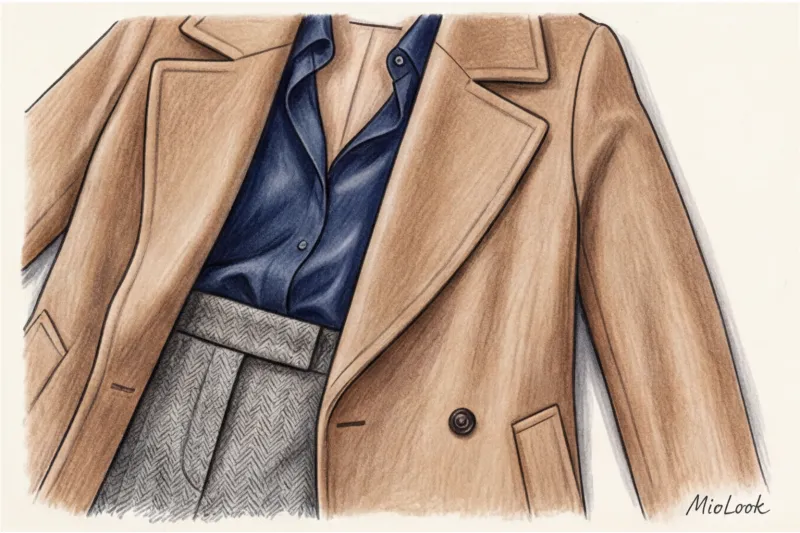
Grooming is more important than loud logos. In the Western corporate world, there's an unshakable rule: neatness always beats price. A 2019 study by sociologists at Harvard Business School demonstrated that a current haircut, clean hair, and well-groomed hands influence the perception of a specialist's competence twice as much as designer clothing. A perfectly ironed shirt from a basic mass-market line, paired with a fresh hairstyle, will sell your expertise far more effectively than a wrinkled, even expensive, blouse.
Jewelry: Focus on the face. In the business world, the strict rule "less is more" applies. Gypsy chic—an abundance of jingling bracelets with every movement, massive rings on every finger, and multi-layered necklaces—creates visual and auditory noise. It simply distracts the other person from the essence of your words. Opt for understated minimalism: a high-status watch, neat stud earrings, a thin chain, or a single geometric accent ring. Jewelry should subtly highlight your status, not drown you out during important negotiations.
To avoid having to remember all these small but crucial nuances every day, I strongly recommend digitizing your best combinations. In the app MioLook You can create perfect outfits once, simply by pairing a specific outfit with the right structured bag and minimalist earrings. In the morning, all you have to do is open your phone, and the expertly crafted look, perfectly curated down to the last detail, will be right before your eyes, saving you time and effort.
Checklist: Preparing Your Image for an Important Performance or Photo Shoot
In 2021, while preparing the speaker pool for the local TEDx conference, we encountered a classic problem. A brilliant financial analyst showed up for the dress rehearsal wearing his favorite blue striped shirt. On the cameramen's monitors, his torso instantly transformed into a pulsating optical blur.
This physical phenomenon is called moire — a ripple that occurs when the camera sensor fails to focus on a fine, contrasting pattern, whether it's houndstooth, narrow stripes, or a small checkered pattern. Another common lens pitfall is pure white. Under studio or stage lighting, pure white acts as a hard reflector: it "eats" the details of the design, turning into a flat, luminous spot and visually darkens the speaker's face. Replace it with ecru, ivory, or light beige—professional optics favor complex, slightly muted tones.
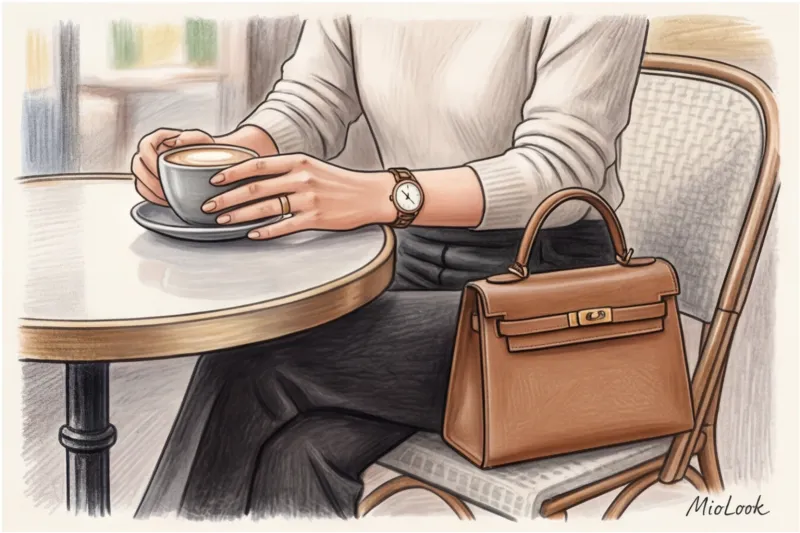
The camera and stage are merciless when it comes to details. A close-up will instantly reveal cheap furniture, slouching, or fidgety movements. This leads to the next essential stage of preparation: crash test for comfort I strictly forbid clients from wearing brand new, freshly purchased items to important shoots. The rule is simple: you must "live" in the outfit for at least an hour before going on stage.
Sit on a low chair, cross your legs—are your trousers bunching up in an unsightly way at the groin? Raise your arms, mimicking active gesticulation—is your jacket riding up, blocking your shoulder girdle? If your clothing even slightly restricts your diaphragm, your voice will sound strained. The audience will interpret this tension as a lack of confidence in the material, not a tight waistband.
Finally, to avoid getting lost in the spotlight, use the "+20% brightness" rule Stage lights and flashes mercilessly eat up contrast. Your perfect everyday expert minimalism will seem washed out on stage. How can you adapt your usual style? Take your work silhouette and scale it up: if you wear a muted navy blue in the office, choose a deep cobalt for the stage. Swap your matte cotton top for a silk one (it will create a beautiful catchlight on camera) or wear a slightly larger, architectural piece of jewelry.
To avoid panicking on the eve of the event, create a MioLook A separate "For Stage" capsule. This can be used to pre-digitize and store those tried-and-true kits that have passed the comfort test and are guaranteed not to strobe in the frame.
Your ideal image begins Here
Join thousands of users who look flawless every day with MioLook.
Get access — €0.99 onceConclusion: Your style is your business asset
Over 12 years of working with executives, freelancers, and entrepreneurs from a wide variety of industries, I've learned one ironclad rule. A well-structured expert image A professional look isn't a theatrical mask you wear from 9 a.m. to 5 p.m. to appear smarter, more successful, or older. It's a visual extension of your real-world expertise. If you're a brilliant analyst, your appearance should convey the same clarity and structure as your impeccable financial reports. If you're a creative director, your attire should reflect the same insight and fresh thinking that clients pay you for.
My final piece of advice as a practicing stylist is this: clothes should work for you, not you for them. You shouldn't waste mental energy during important negotiations worrying about whether your skirt is wrinkled or whether your blouse is too low-cut.
When your work wardrobe is put together correctly, it becomes both your armor and your invisible promoter. You simply put on your clothes and forget about them, fully concentrating on your professional tasks.
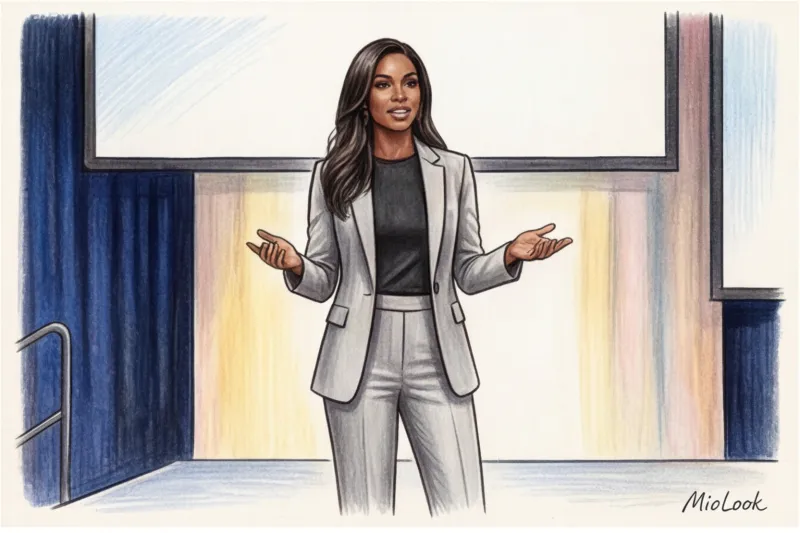
Enough theory, let's get practical. Your first step after reading this article isn't an impulsive shopping spree, but a ruthless audit of your current wardrobe. Open your closet this evening and honestly identify your leading professional archetype. To ensure the process is effective, I propose a simple three-step plan:
- Sorting by vector: Keep only those pieces visible that align with your professional goals. If you've chosen the path of the "Corporate Strategist," tuck away those frivolous, fine-knit cardigans—they detract from the focus and detract from the silhouette's rigidity.
- Fatigue test: Ruthlessly get rid of pilling knitwear, elongated elbows on jackets, and washed-out white shirts. Nothing cheapens a personal brand like untidiness.
- Gap Analysis: Make a shopping list of only those items that are critically missing to complete your work capsule.
To consolidate the results and avoid slipping back into the chaos of morning preparation, digitize your closet. One of the most common complaints from my clients is: "I have so many clothes, but I have nothing to wear, and I have no time to think." The solution to this problem is easily automated these days. I highly recommend using MioLook app Once you've filtered your database, take photos of the remaining items and upload them to the system.
MioLook will help you digitize your work wardrobe and create ready-made, stylistically curated outfits for you in just two minutes each morning. No more standing in front of open doors in a panic. Simply open your phone over a cup of coffee, choose a suggested outfit for your day's task—whether it's a board meeting, an informal Zoom call, or a podcast recording—and head out to conquer the world.
Remember: investing in yourself always pays off. Your appearance is the first asset your potential client notices, even before you say "hello." Make sure this asset works 100% for your personal brand.
Guide Chapters
The Psychology of Color in Clothing: How to Manage Impressions
Up to 90% of first impressions depend on color. Learn how to use colors correctly in your business wardrobe to convey status and trust.
Virtual Business Attire Try-On: AI for Experts
Afraid to invest in an expensive suit for fear of making a mistake? Find out how neural networks transform corporate wardrobe selection into a safe experiment.
Status Accessories: What Marks a Successful Expert
The devil is in the details: even the perfect outfit won't save your look if the little things let you down. Find out which pieces will highlight your true level of style.
Beauty Professional Image: How a Uniform Increases Your Paycheck
A first impression is formed in 7 seconds. Find out how the right uniform helps a beauty professional convey their expertise and increase their income.
Style for Creative Professions: Balancing Creativity and Trust
How should a designer or artist dress to avoid alienating VIP clients? We explore image mistakes and learn how to convey expertise through clothing.
Business style for a lawyer: a modern formal wardrobe
Forget the boring "white top, black bottom" rule. Learn how to use micro-details in cut and fabric texture to create an authoritative look.
A psychologist's image: how clothing influences client trust
An expert's appearance speaks volumes even before the session begins. We'll explore how to create a professional wardrobe that will inspire trust and retain clients.
Archetypes in Style: Creating a Strong Personal Brand
First impressions are formed in a split second. Learn how to use archetypes to ensure your appearance conveys confidence and expertise.
How to Look Expensive: Secrets of a Status Wardrobe
Money doesn't buy style, it only buys opportunities. Discover a stylist's insider formulas that will make the mass market work for your status.
Business Photo Shoot Attire: An Expert's Guide
Your favorite office suit can ruin a shot by visually adding extra bulk. Learn the principles of optics for choosing wardrobe for a professional shoot.
Business Capsule Wardrobe: 15 Items for 30+ Looks
Forget the "nothing to wear" problem in the morning. Learn how to create a modern work wardrobe with just 15 pieces that pair perfectly.