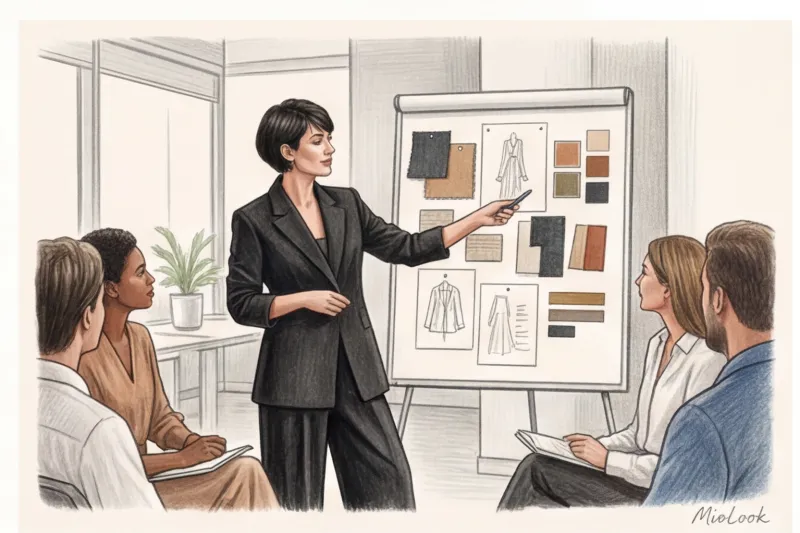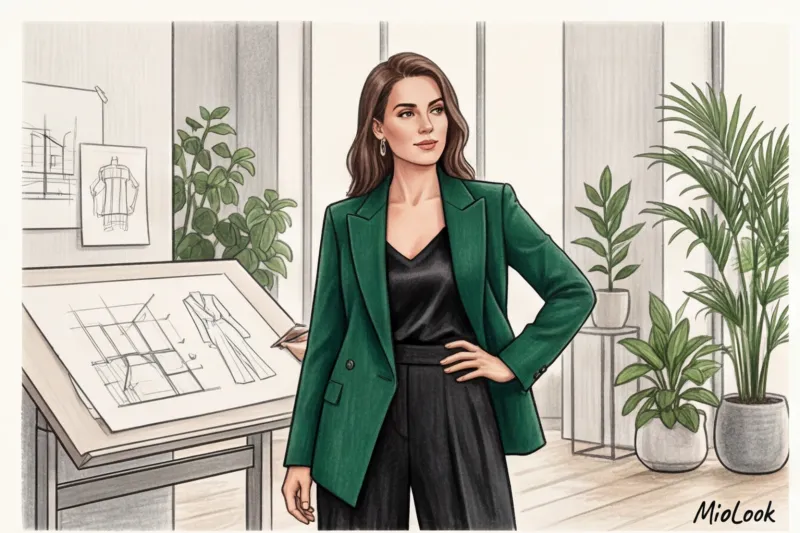
Alina, a talented interior designer with project fees starting at a million €, came to me for a consultation. She had a problem: corporate clients, upon their first meeting, admired her portfolio, but ultimately left for competitors with more boring but "understandable" presentations. When we analyzed her usual attire, everything fell into place. Alina wore linen robes, chunky wooden necklaces, and layered scarves. To her, this was a "free-spirited artist's style." To a top bank manager commissioning the design of his penthouse, this image conveyed: "I'll miss every deadline and go twice over budget."
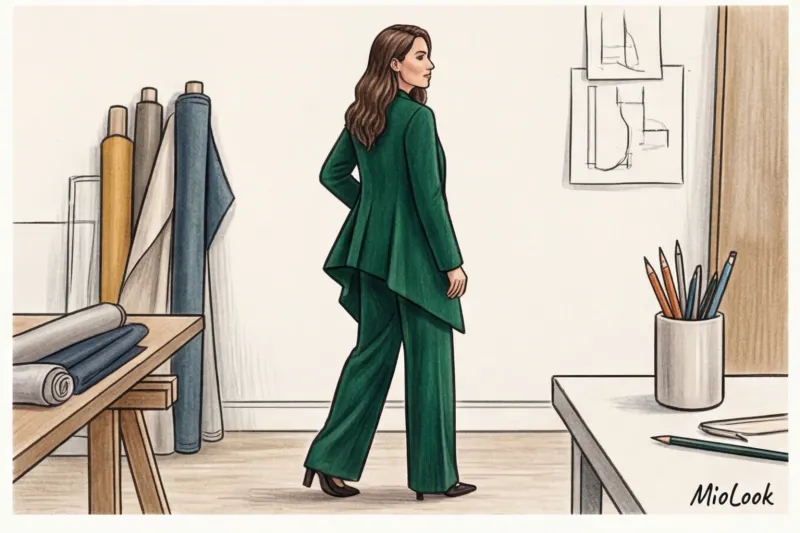
We've covered in more detail how clothing influences the perception of your competence in our The Expert's Complete Image Guide: A Wardrobe for Your Personal Brand But today I want to talk about a specific pain - how to build style for creative professions , so as not to look like a bank clerk, but at the same time to inspire absolute trust among clients with high budgets.
Stereotypes vs. Reality: What is Style for Creative Professions Today?
Let's be honest: the image of the "starving artist" in a stretched-out chunky knit sweater and beret is long dead. Just like the stereotype of the urban madman who combines the incompatible simply for the sake of shock value. Today, the most powerful visual statement in the creative industry is the concept. Smart Creative This is the image of a man of art who can be trusted with serious money.
In 2012, researchers Hajo Adam and Adam Galinsky of Northwestern University coined the term Enclothed Cognition (clothing cognition). Their experiments proved that clothing physically forces our brain to work differently. A composed, architectural cut not only signals your reliability to others but also forces you to generate more structured, viable ideas, rather than just daydreaming.
Balance between creativity and reliability
Over 12 years of working as a colorist and image consultant, I've developed an 80/20 formula for my creative clients. It works flawlessly:
- 80% of the image is a structured base. Dense fabrics that hold their shape, a defined shoulder line, and a perfect fit. This is your visual signal: "I meet deadlines and understand the brief."
- 20% of the image is pure creativity. A complex color, avant-garde shoes, an asymmetrical cut, or an unusual texture. This is a signal: "I think outside the box and will create a unique product for you."
If you distort this proportion in favor of creativity, you'll end up with visual chaos. If you distort it in favor of the base, you'll end up looking like a "man in a case."
Design Tools in Your Wardrobe: How to Dress If You're a Visual Person
As someone with an artistic background, I always tell my clients: apply the laws of composition and color to your body just as you would to a canvas, an interior, or a website layout. The image must have a focal point.
Many designers and architects go to extremes, opting for a total "architectural black." Yes, black is safe, it's graphic. But this deprives you of a most powerful tool of influence: color.
"Complex, mixed shades (ochre, cobalt, deep terracotta, sage) are subconsciously perceived by the human eye as more 'precious' and intellectual than pure spectral colors like neon yellow or open red."
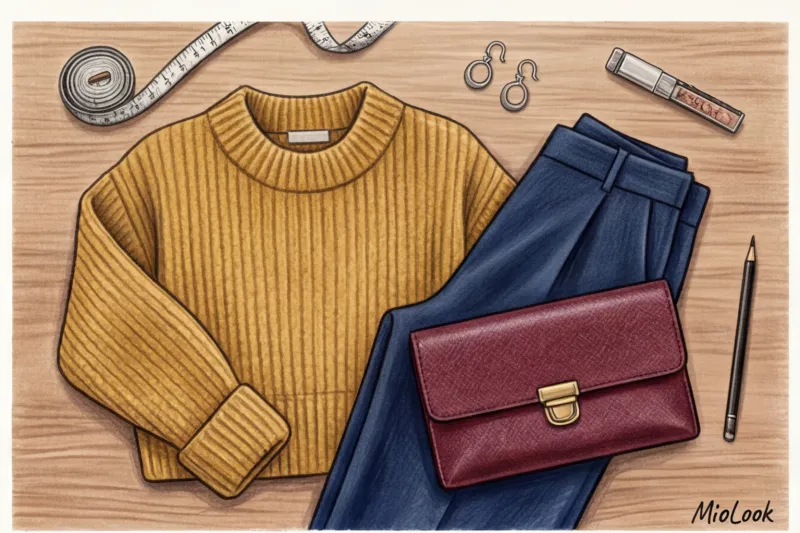
Instead of wearing a rainbow, use Johannes Itten's classic color theory. Replace contrasting combinations with split-complementary or analog Schemes. For example, instead of a boring black and white outfit, wear dark chocolate-colored pants, a dusty rose top, and add an accent with a deep wine-colored bag. It looks sophisticated, delicious, and incredibly professional.
Cut architecture and tactility
If you're not a fan of bright colors, shape becomes your main weapon. Oversized (not to be confused with simply oversized), deconstructed cuts, asymmetrical hems, and offset button lines are a great alternative to loud prints.
And don't forget about tactility. Smooth silk next to coarse wool knit, matte suede against glossy leather—these are combinations you'll want to explore. They speak volumes about your attention to detail better than any resume.
Access to MioLook for €0.99 — one-time payment
A smart AI stylist will select the perfect look based on your appearance and professional goals.
Get access — €0.99 onceDress Code Without a Dress Code: How to Dress for a Meeting with a Conservative Client
The most common request from creative directors: "I need to defend a project to the board of directors of a fintech corporation. Jeans are not allowed, and in a classic suit I feel like a traitor to my ideals. What should I do?"
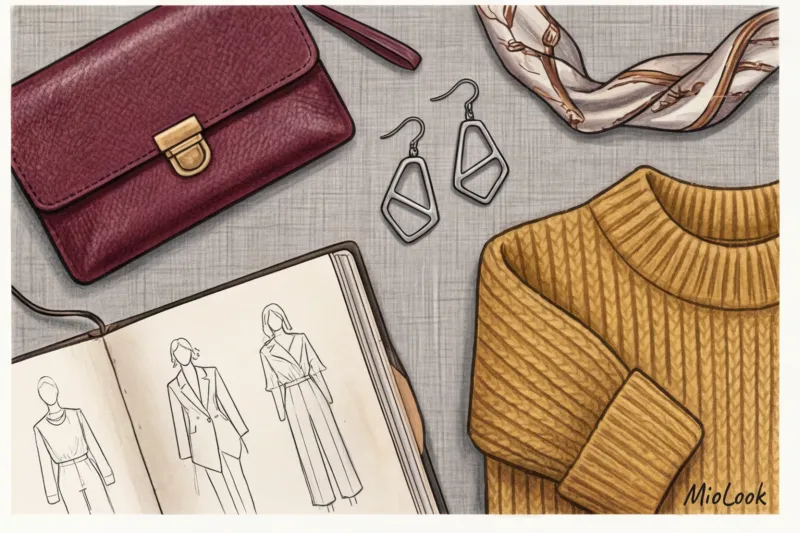
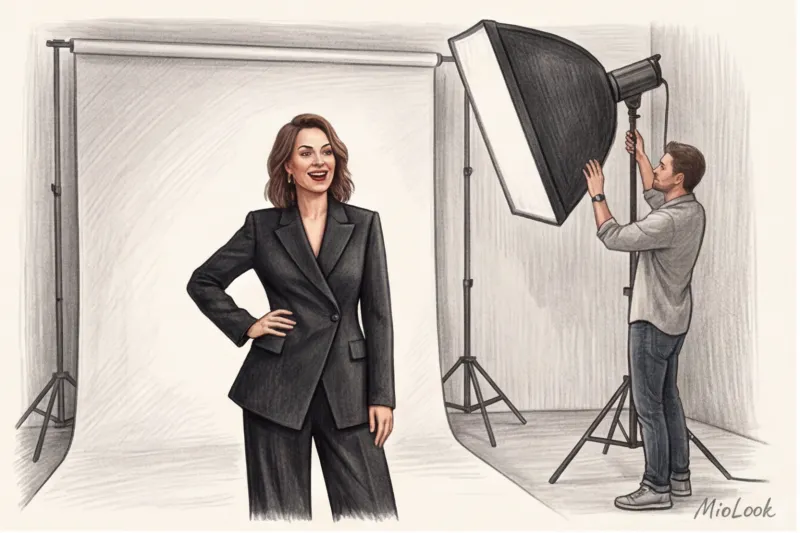
Last year, we solved this problem for the founder of a branding agency. Our answer was relaxed tailoring We chose a two-piece suit, not made of a stiff suiting fabric, but of a dense, flowing viscose blended with wool. The jacket was an unstructured blazer, and the trousers were wide palazzo pants with intricate pleats.
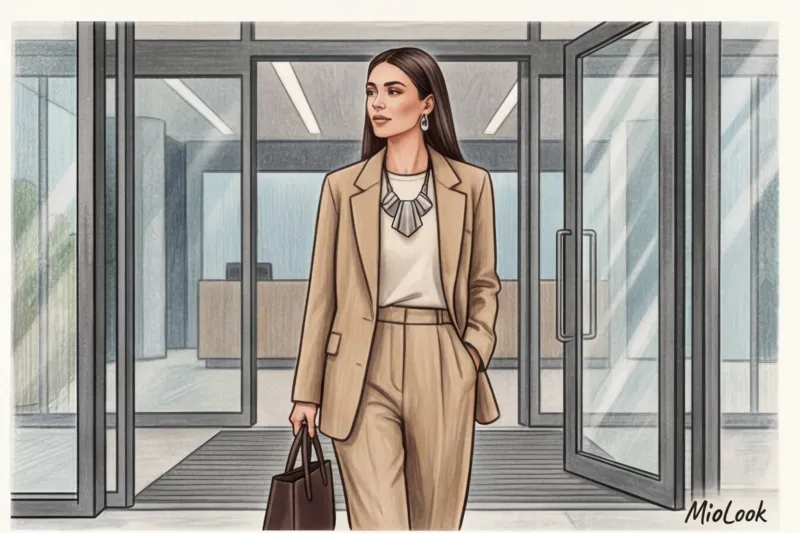
We used a "safe" form (a suit), but "dangerous" textures and volumes. We finished the look with a sculptural silver cuff and loafers with chunky geometric soles. The contract was signed.
Important limitation: This trick absolutely DOESN'T work if you choose cheap, thin fabrics (such as 100% fine viscose or pure linen). By the time you get to the client's office in a taxi, your suit will be so wrinkled that the relaxed chic will turn into a banal sloppiness. Choose fabrics with a weight of at least 200 g/m².
Style Archetypes: Find Your Creative Niche
Style for creative professions isn't monolithic. What's perfect for a fashion photographer might look odd on a UX designer. Your visual style should be a direct extension of your product.
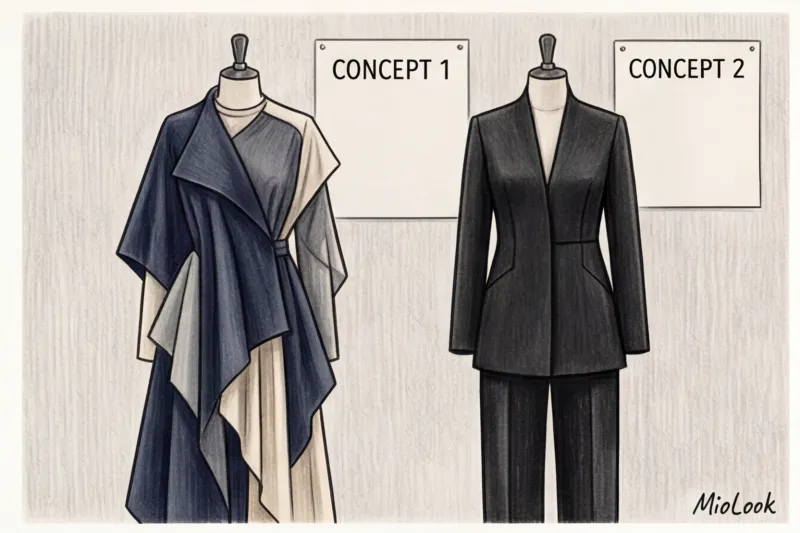
I distinguish two main poles in a creative wardrobe:
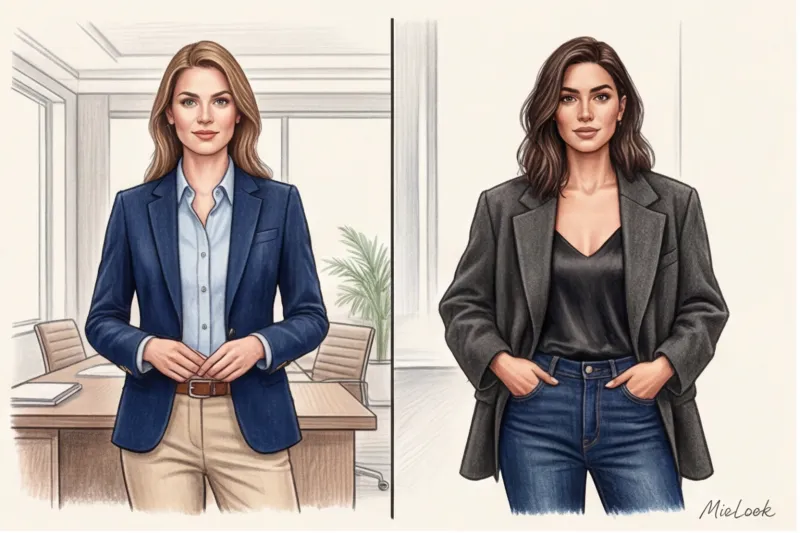
- Creator-Innovator Archetype. Ideal for art directors, stylists, and contemporary artists, this style is avant-garde: layering, transformable pieces, and unusual proportions (like a cropped jacket with extremely wide trousers). You sell innovation, and your look should break the mold.
- Archetype Esthete-Minimalist. The choice of web designers, architects, and copywriters. Clean lines, impeccable monochrome, and a play of volumes. You're selling structure, usability, and logic. Your image should convey: "I'll remove all unnecessary details and leave only the essence."
Your perfect look starts here
Join thousands of users who look flawless every day with MioLook. Digitize your wardrobe in just a few clicks.
Get access — €0.99 onceThe biggest mistake creators make is the "too many details" syndrome.
Here I want to debunk a popular myth. Creative people are terrified of looking "boring" or "like everyone else." This fear leads to the main stylistic mistake: visual overload. Friendship bracelets, lapel pins, contrasting socks, a statement belt, a scarf, and even glasses with bright frames—all at once.
From a neuroscience and perception perspective, an abundance of small, unrelated details overloads the other person's cognitive system. Research shows that visual dissonance can reduce trust in a specialist by 40%, as the brain expends energy processing the chaos rather than your words.
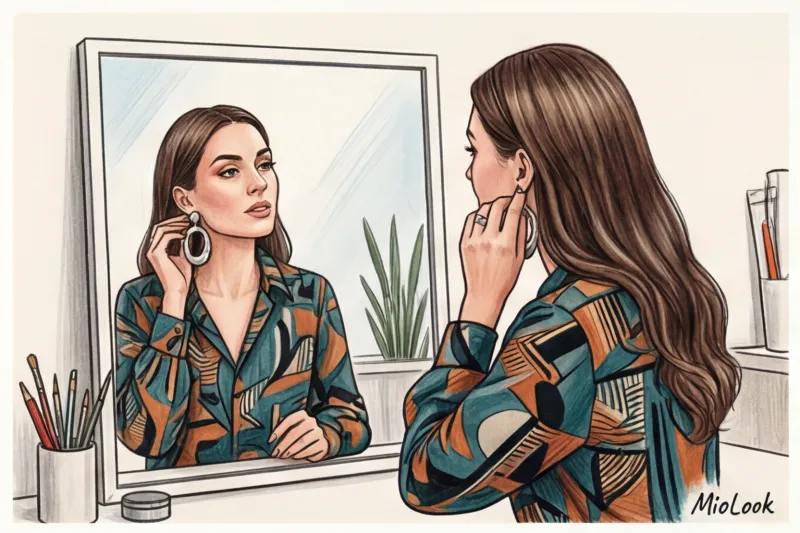
Coco Chanel's rule "take off the last thing you put on" should be doubled for creatives. Learn to edit your outfit. If you have a complex asymmetrical dress, remove the massive earrings. If you have crazy conceptual sneakers, let your trousers and top be a simple backdrop for them.
Checklist: Assembling a Creative Work Capsule
If you're looking to update your wardrobe but don't know where to start, here are 5 pieces I consider absolute must-haves for a creative capsule wardrobe. They'll cover 90% of your needs, from studio work to project pitching.
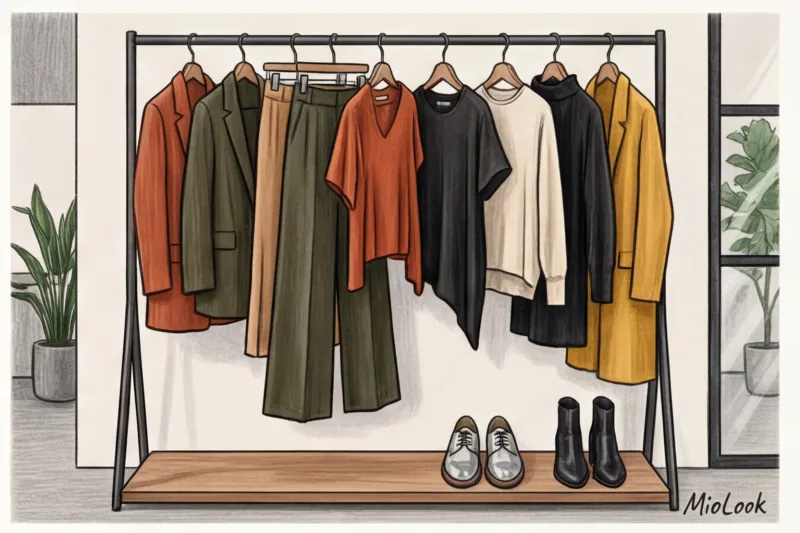
- Structured jacket with an unusual cut. Forget about short office blazers. Look for a masculine cut, a flared shoulder, or, conversely, a '50s-inspired, fitted silhouette without lapels. Fabric: heavy wool.
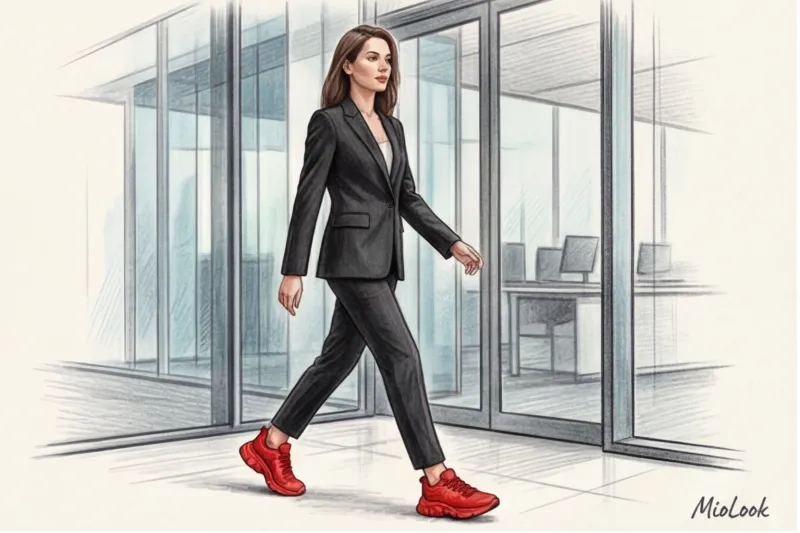
- Shoes with architectural heels or conceptual sneakers. A square toe, a slanted heel, or minimalist sneakers made of premium leather (like COS or local designer brands). Shoes convey your status faster than a watch.
- Basic top coat in a complex shade. Not pure white (it often looks too plain), but ivory, ecru, sage, or dusty blue. Material: heavy cotton (from 180 g/m²) or matte silk.
- Trousers with a non-standard detail. A perfect fit is the basics. But consider adding an asymmetrical waistband, deep double tucks, or unusual slits at the bottom.
- Glasses (optics) in an accent frame. Even if you have 100% vision, stylish glasses with a massive acetate frame are a powerful marker of intelligence and creativity.
By the way, to understand how these 5 things will fit in with what you already have hanging in your closet, I recommend using the "smart wardrobe" feature in the MioLook app You simply upload photos of your items, and the AI assembles dozens of non-obvious outfits from them.
Summary: Your style is your first portfolio
Clothing is the fastest form of nonverbal communication. Before you even open your laptop and show off your mockups, drawings, or texts, the client is already "gauging" your standard, your taste, and your organization by the way your jacket fits and the color combinations in your outfit.
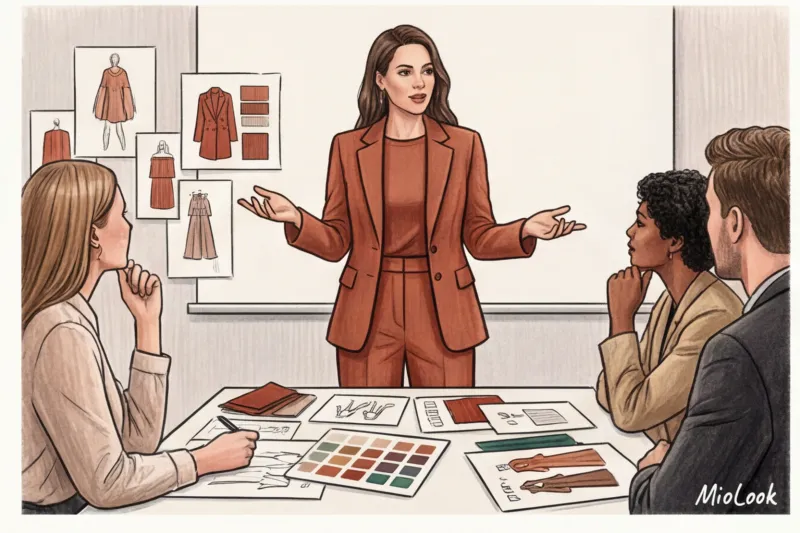
Take stock of your wardrobe this weekend. Look at your work clothes and ask yourself one question: "Would I buy from someone who looks like this?" If you're unsure, start implementing the 80/20 rule and incorporating tailoring.
To avoid wasting hours in the morning meditating in front of the mirror, delegate this routine to technology. Download your updated capsule to MioLook , and let artificial intelligence offer you images every morning that will sell your expertise at first glance.