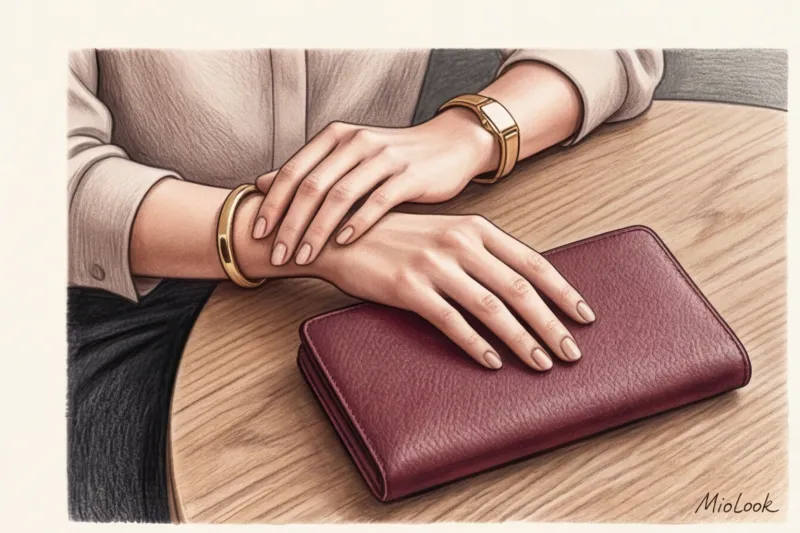
Imagine a classic work situation: a woman walks into an important meeting. She's wearing a perfectly tailored thick wool jacket, her hair is perfectly styled, and her gaze is confident. But then she sits down at the table, places her phone in a yellowed silicone case in front of her, and begins frantically searching for a business card in a shapeless tote bag with charger cables sticking out. The magic of professionalism is shattered in three seconds.
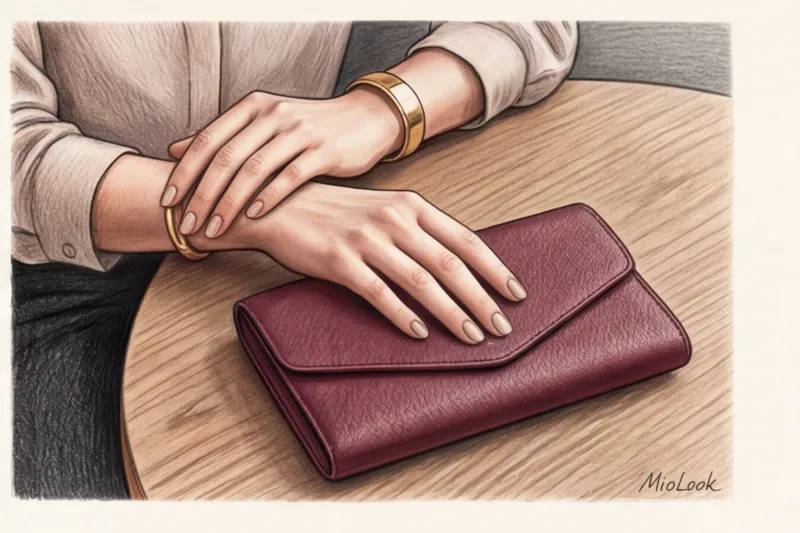
Over 14 years of working as a personal stylist, I've learned one ironclad rule: the devil is in the details. It's the accessories that put the finishing touches on your look, communicating to others how you value your time, comfort, and personal boundaries. We've already covered how basic pieces shape your professional brand in our the complete expert image guide Today we'll talk about the nuances that reveal your true level.
The Evolution of Luxury: Why Status Accessories No Longer Scream Brand Names
Just ten years ago, a belt buckle shaped like a giant "H" or a bag covered in monograms were considered a guaranteed entry into the club of the successful. Today, this paradigm has collapsed. According to a major Bain & Company report (2023) on the luxury market, the global consumer has finally embraced the concept of Quiet Luxury.
In my experience, I've seen how top managers' demands have evolved—from a desire to show off their price tags to a desire to demonstrate their taste. The abundance of recognizable luxury brand logos today doesn't enhance, but rather cheapens, an expert's image. Subconsciously, this is interpreted as a lack of confidence and a desire to "appear, not be."
According to the principles of visual sociology, the human brain perceives textures within the first seven seconds of contact. What works instead of logos?
- Pebble leather: It doesn't get scratched and looks expensive even after years.
- Brushed metal: Fittings with a muted, satin sheen always look more refined than cheap, glossy chrome, which quickly becomes covered in micro-scratches.
- The perfect line: stitches in the same tone as the product, made with thick thread with the same tension.
"In psychology, there's a concept called Enclothed Cognition. Your accessories influence not only those around you, but also yourself. By putting on a quality piece, you physically change your posture and manner of speech," says Olena Kovalenko.
Expert's Bag: From Chaos to Structure
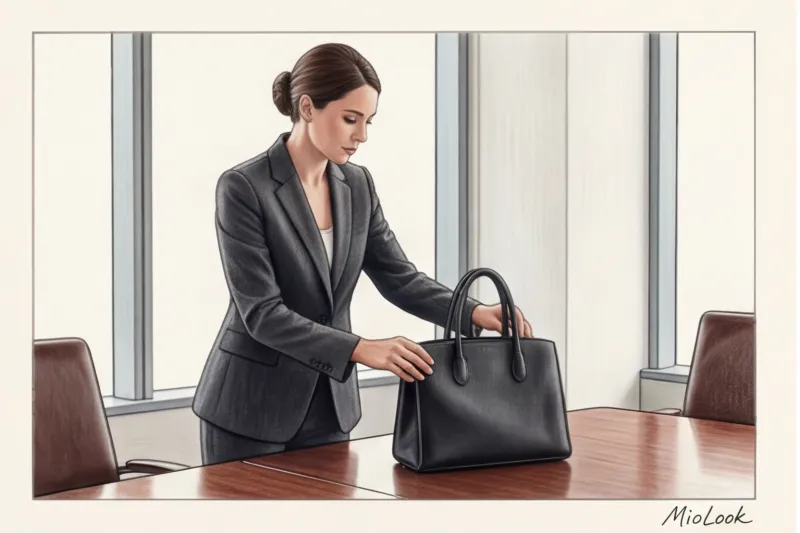
I had a client, Anna, the CFO of a large clinic chain. She carried an expensive, but completely soft, hobo bag (shaped like a half-moon). Before every meeting with investors, she'd spend two minutes trying to find her keys or a pen at the bottom of this leather bag. This fussing subconsciously conveyed chaos.
We replaced her hobo with a rigid, structured tote. The difference was dramatic. A rigid bag frame isn't just aesthetic. It's a direct psychological reflection of your system, focus, and orderliness.
Bag architecture and space organization
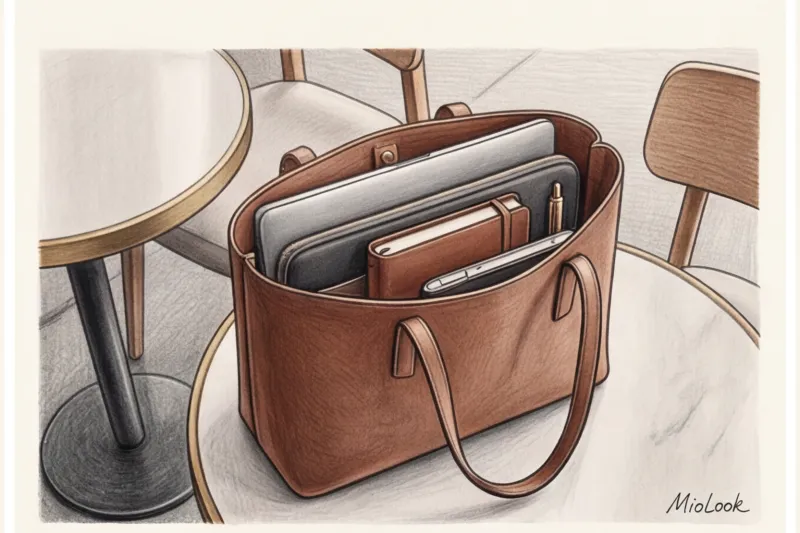
The size of your work bag is critical. It should accommodate a laptop (usually 13 or 14 inches) and A4 documents without the corners of the folders bunching up, and without the bag itself becoming bloated.
But true status is hidden inside. Internal organizers (thick felt inserts) are invisible status accessories. They protect the lining from makeup and pen marks, maintain the bag's shape, and permanently eliminate the "black hole effect." A clean, light-colored lining made of thick cotton or suede says more about your attitude to your belongings than any logo on the front.
Access to MioLook for €0.99 — one-time payment
A smart AI stylist will select the perfect look for every day and help you incorporate new accessories into your wardrobe.
Get access — €0.99 onceShoes that speak before you open your mouth
Let's be honest: a successful woman in 2024 no longer needs to suffer in 12-centimeter stilettos to prove her worth. Comfort has become the new status symbol. You're demonstrating that your comfort and back health are more important than outdated patriarchal dress codes.
However, the absence of a heel doesn't mean sloppiness. Uncomfortable pumps have been replaced by classic loafers, formal Oxfords, brogues, and proper minimalist sneakers (logo-free, flat, and made of smooth leather).
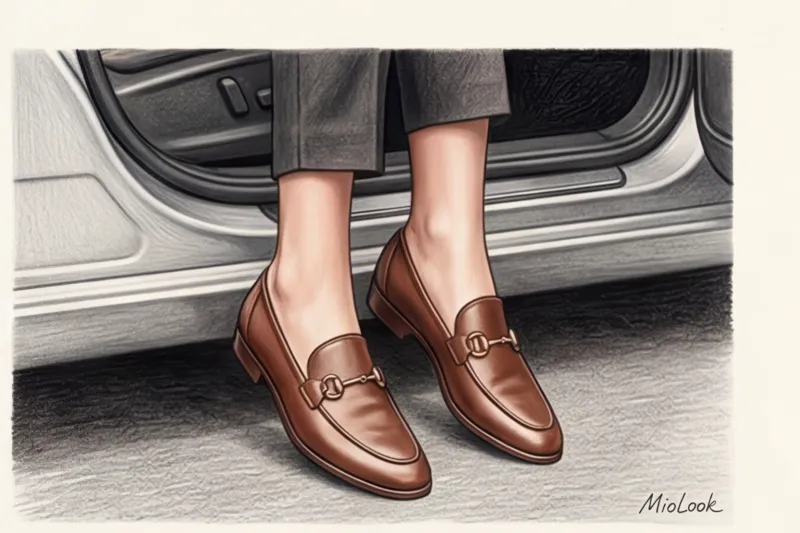
It's important to understand wardrobe math. Let's calculate the cost-per-wear formula. You buy a pair of premium loafers for $300. You wear them three times a week for three seasons—that's about 120 times a year. With proper care, they'll last you at least three years (360 times). The cost per wear is less than a dollar.
Compare this to buying three pairs of mass-market shoes for $50, which wear out and lose their shape after a month of active wear. Investing in quality shoes always pays off. But remember: worn toes, dirty welts, or worn heels will ruin even the most expensive Loro Piana suit. The condition of the shoes is always more important than the brand.
Watches and Jewelry: New Status Accessories for 2024
Research in nonverbal communication reveals an interesting statistic: when you're sitting at a negotiating table, about 70% of your interlocutor's attention is focused on your face and neck and your hands. That's why your hands are your primary display case.
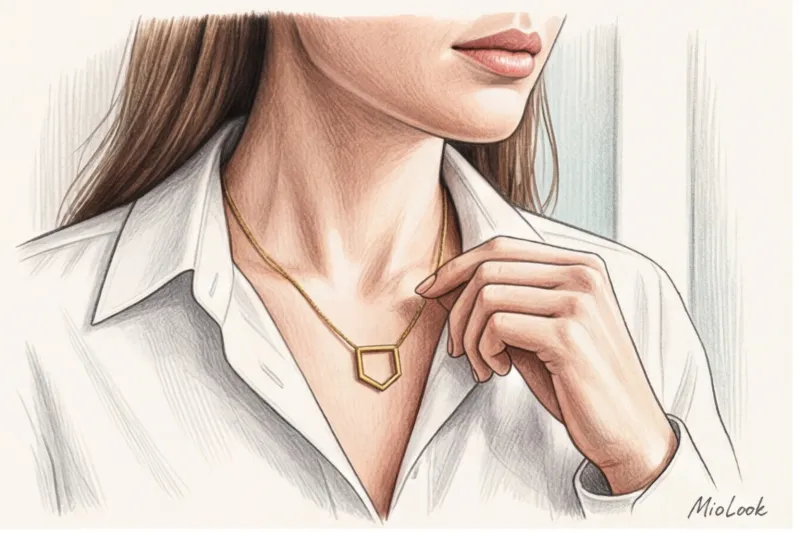
For business dress codes, I recommend adhering to the "three-point rule." There should be no more than three accent pieces visible. For example: a watch + stud earrings + one ring. Or: an accent necklace + a watch + a bracelet. My personal stylist rule: one accent, heavy ring with a complex texture is better than five thin, flexible mass-market rings.
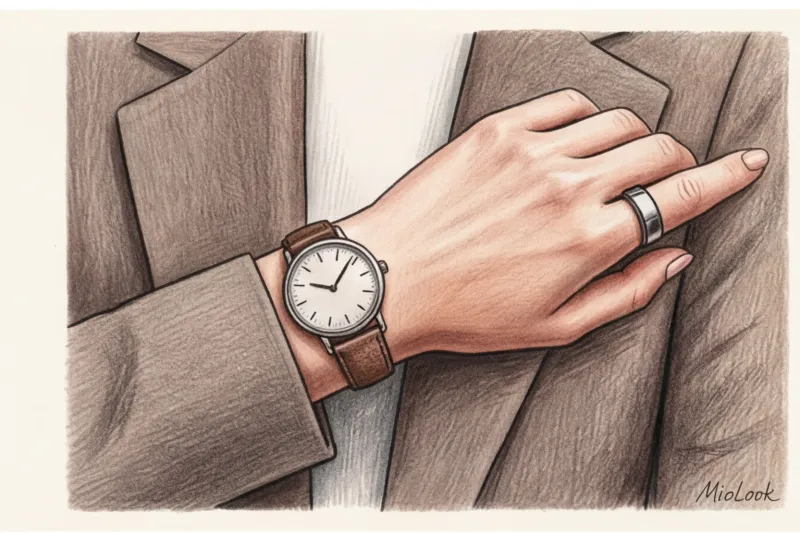
Forget about jewelry sets (where earrings, a ring, and a pendant are all made in the same design). These days, it looks old-fashioned. Status is conveyed through the ability to eclectically mix metals and styles.
Smartwatch or classic: how to find the balance
Herein lies the most common counterintuitive insight my IT clients argue with. An Apple Watch with a basic silicone band paired with a wool business suit is a faux pas. Silicone is for the gym. If you can't give up a smartwatch, invest in a quality leather band (for example, from Hermès or reputable local brands) or a metal Milanese mesh bracelet.
Health trackers (like the Oura smart rings) are becoming a new status marker. They send a powerful message: "I'm successful because I know how to manage my energy, sleep, and stress."
Glasses as an intellectual marker of personal branding
One of my clients, a practicing psychologist in the high-end market, had been struggling to break through her financial ceiling for a long time. We didn't radically change her wardrobe, but we did replace her discreet metal frames with statement architectural ones made of dense tortoiseshell acetate.
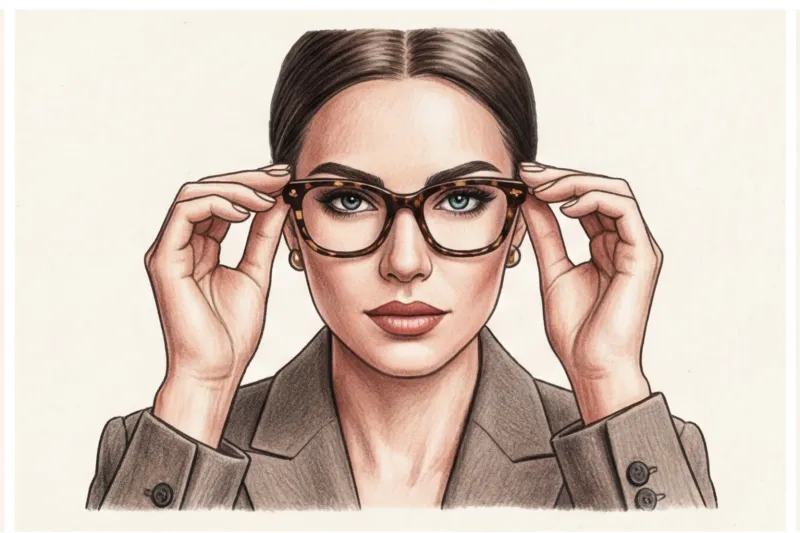
The glasses became her signature piece, making her memorable at conferences. This intelligent marker, combined with her new presentation, allowed her to increase her sales by 30%—clients subconsciously perceived her as a more authoritative professional. (By the way, if you're currently searching for your signature pieces, I recommend checking out our A guide to finding your personal style ).
Frames act as facial architecture: sharp angles (Wayfarers, rectangular shapes) add strong lines to the face, which is especially helpful for executives with soft features. And don't forget about the anti-reflective coating on the lenses—this is a critical element of respect for your audience if you frequently present on Zoom or record webinars with ring lights.
Your ideal image begins Here
Join thousands of users who look flawless every day with MioLook. Upload your accessories to your virtual wardrobe.
Get access — €0.99 onceStationery and gadgets: unobvious status accessories
A common mistake newbies make: you put together the perfect, expensive look, put on a cashmere coat, grab a good leather bag, show up to a meeting, and... pull out a laptop covered in worn-out children's stickers and a phone in a clear case yellowed with age.
In 2024, your gadgets are a full-fledged part of your wardrobe. Your phone case should be made of matte silicone in deep shades (burgundy, emerald, chocolate), genuine leather, or Kevlar.
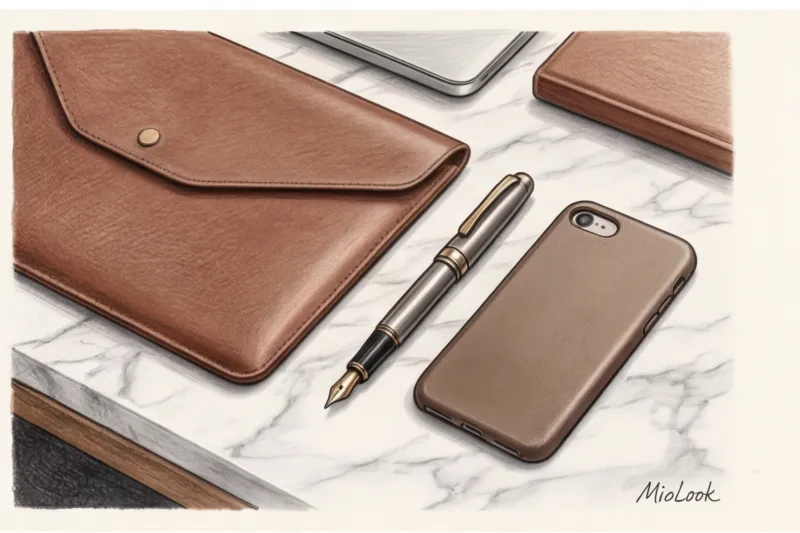
The same goes for papers. Ditching flimsy plastic folders for leather folders or minimalist folders made of thick matte cardboard immediately raises the level of seriousness of your intentions. And finally, a pen. You don't necessarily need a thousand-dollar Montblanc fountain pen, but a heavy metal pen with a smooth ink flow creates a completely different energy point in the contract than a plastic ballpoint pen from the supermarket.
Checklist: Audit your accessories before an important meeting
To avoid having to remember all these rules, I've created a 5-minute checklist for my clients. Run through it before leaving the house for an important meeting:
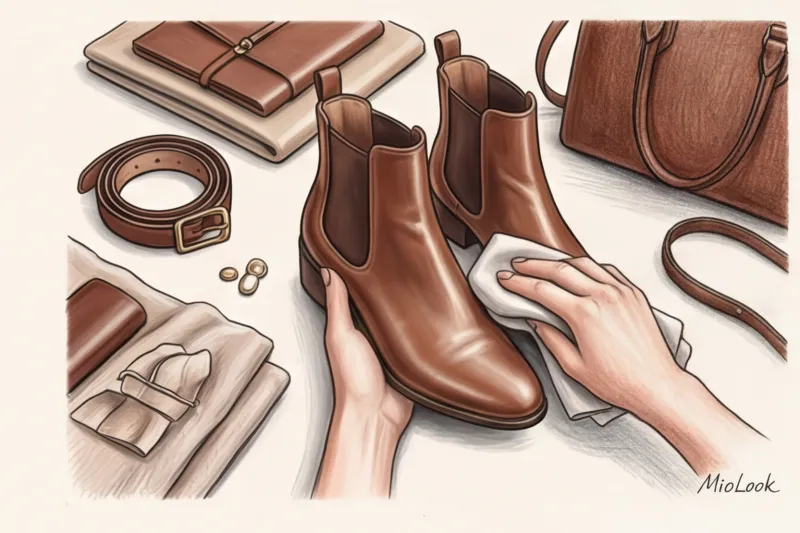
- Shoes: Check the toes for worn spots. Rub them with a wax sponge. Make sure the heel caps aren't worn at an angle.
- Bag: Put away anything you won't need for the meeting (receipts, extra makeup). Wipe your bag handles with a damp cloth—that's where sebum accumulates, making your skin look greasy.
- Fittings: Take a look at your belt buckle, bag clasps, and watch. Are there any obvious chips in the finish?
- Gadgets: Wipe your phone and laptop screens with a microfiber cloth. Fingerprints on glass look especially messy under office lighting.
To be fair, one caveat should be noted: the strict rule of formal attire doesn't work for everyone. If you're an art director at a creative agency, a rigid briefcase will make you look like a bank clerk. In the creative world, status is conveyed through relaxed attire—but it should be the relaxed attire of premium soft suede or limited-edition sneakers, not worn-out sneakers.
Investment Strategy: How to Build a Database Without Million-Dollar Budgets
My philosophy as a stylist is simple: impeccable style is accessible to any budget if you approach it strategically. I always recommend my clients use a shopping matrix, mixing high-street and premium brands.
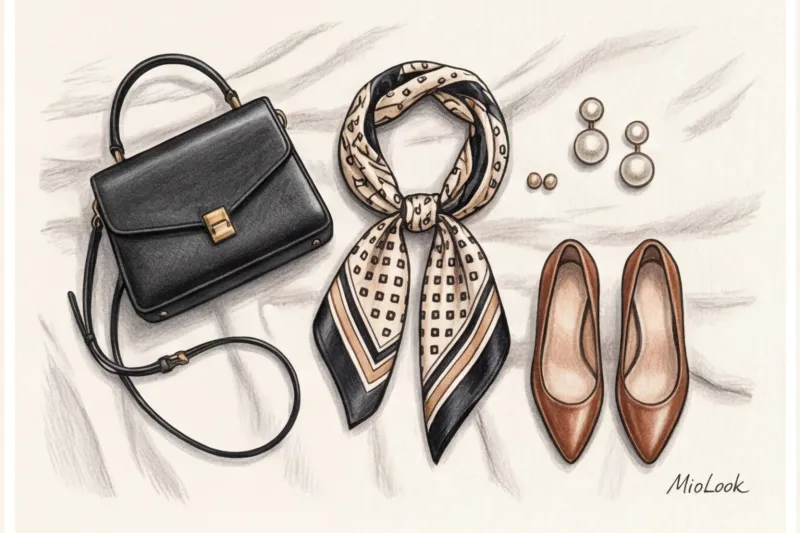
What you shouldn't skimp on:
- Shoes (especially those you wear every day).
- Frame bag for documents.
- Glasses frame (it sits on your face, so the savings are immediately noticeable).
What you can safely buy in the mid-market (at the level of Massimo Dutti, COS):
- Basic leather belts without accent buckles.
- Silk scarves (if the print is geometric and modern, no one will distinguish it from luxury).
- Cases for gadgets.
Don't try to buy everything at once. Build your base gradually. Status accessories aren't about showing off and spending your last dollar on a brand. They're an investment in your professional capital, a demonstration of respect for yourself and the people you do business with. Start by replacing one, the weakest detail in your look tomorrow, and you'll immediately feel the difference in your inner state.