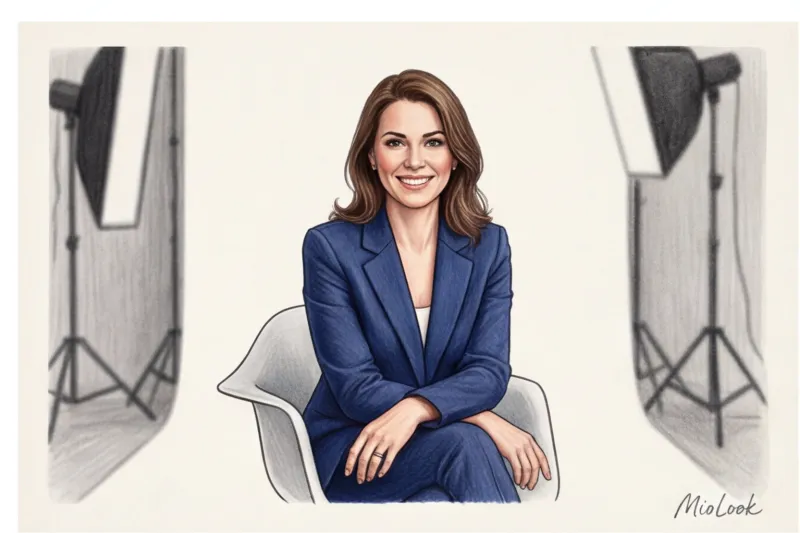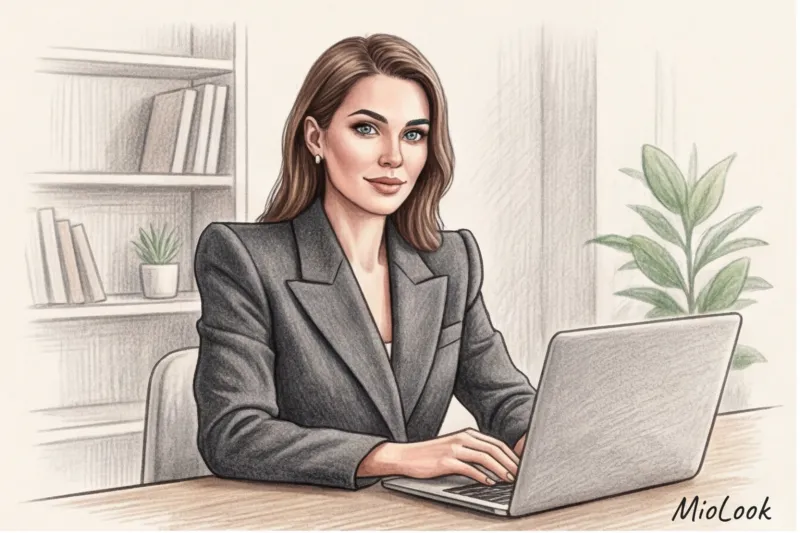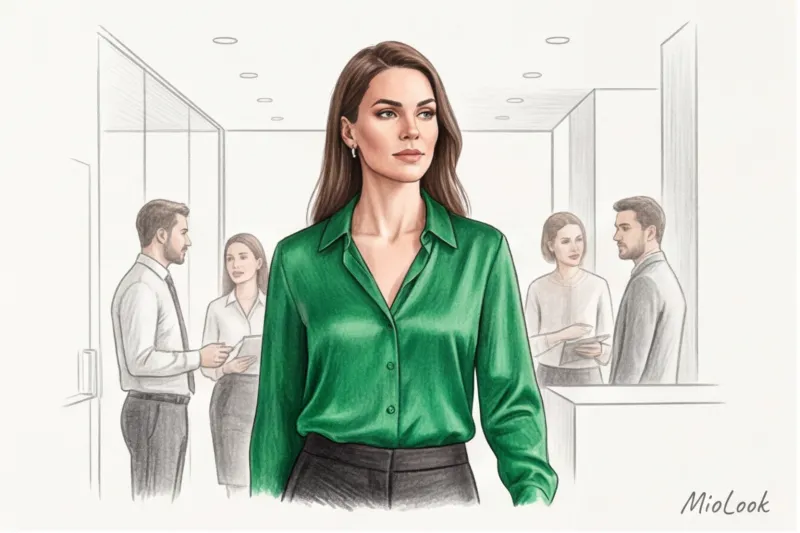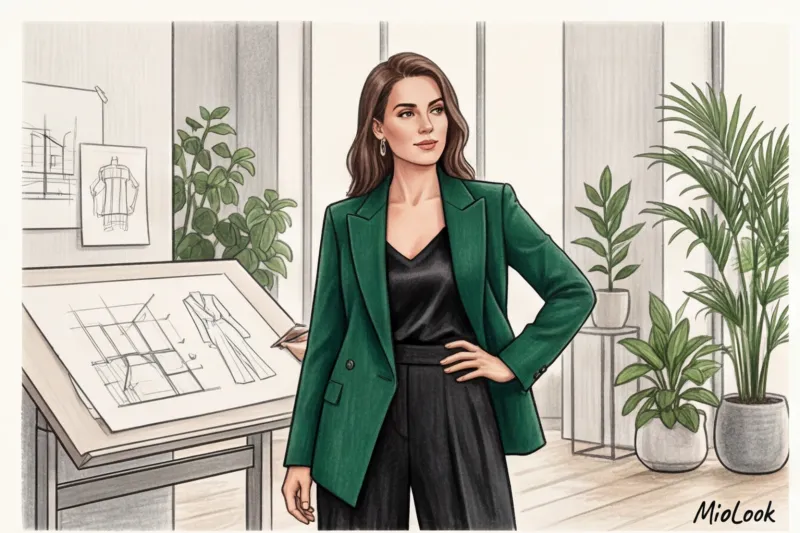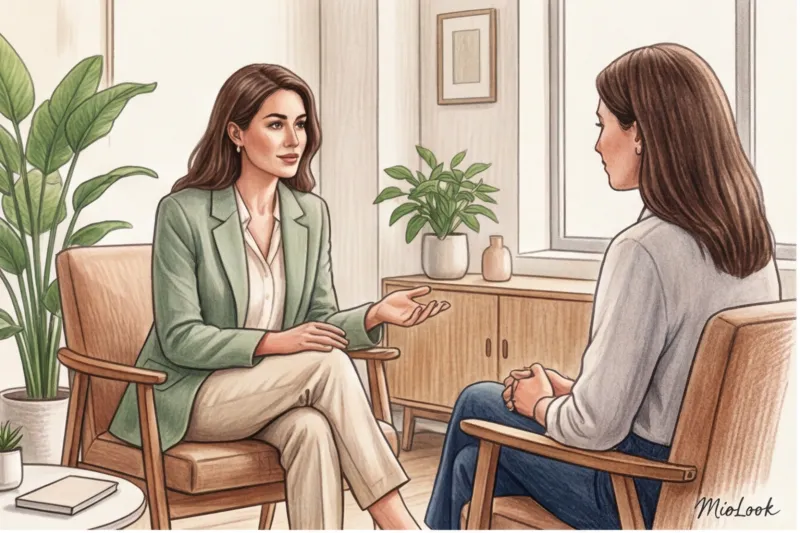
One day, a psychoanalytic client came to me with an unusual request: "My clients have been canceling sessions more often. We're making great progress in therapy, but during difficult transformations, they seem to get scared and disappear." We started going through her work wardrobe, and I saw an endless array of shapeless gray cardigans, stretched-out sweaters, and all-over beige that blended into the walls. Her logic was clear: she wanted to be "invisible" so as not to stand out and give her clients space. But in practice, this visual code worked against her.
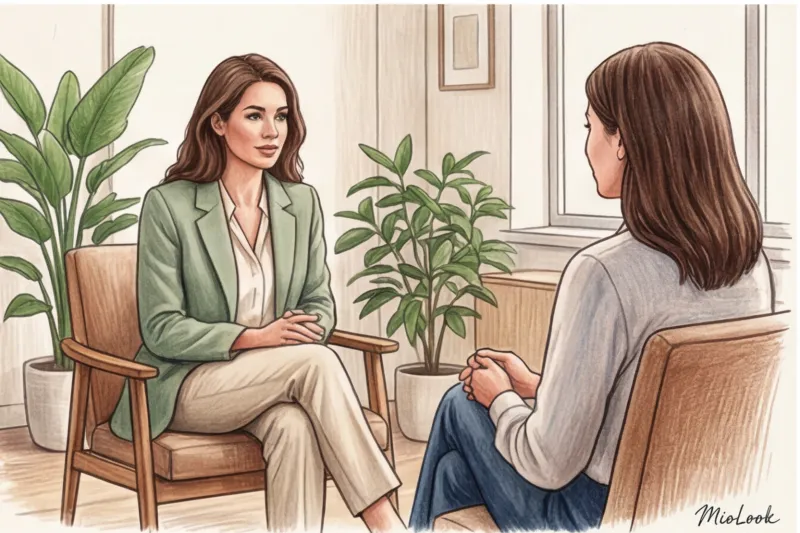
Over 12 years of working as a fashion journalist and stylist, I've learned one strict rule: your appearance speaks for itself before you even say, "Hello, come in." The image of a psychologist or coach isn't about fashion. It's a working tool for managing boundaries, tolerance, and trust. We've covered the fundamental principles of building such a wardrobe in more detail in our complete guide to expert image and personal branding , and today we'll talk about fine-tuning for helping practitioners.
Psychologist Image vs. Coach Image: What's the Fundamental Difference?
The main mistake professionals make is trying to use the same visual template for all helping professions. But the goals of these professionals are polar opposites.
In psychotherapy, the time vector is often focused on the past and present: it's about healing, slowing down, and experiencing pain. Coaching's time vector is always focused on the future: achievements, speed, breakthroughs. And this difference should be reflected in the lines of your clothing.
Based on Pearson-Marr's archetype theory (based on the work of Carl Jung), a psychologist most often channels a mixture of the Guardian and the Sage. A coach, on the other hand, works with the energies of the Hero, the Seeker, or the Magician. How can this be translated into the language of textures?
Therapist's Wardrobe: Containment and Safety
The therapist's clothing serves as a visual "container" for the client's emotions. Matte textures that absorb rather than reflect light are crucial here: suede, heavy cotton, cashmere, bouclé. Silhouettes should be enveloping but not loose.
- Layering: creates a feeling of security (for example, a silk blouse + a soft vest or a thick knit cardigan).
- Low contrast: the absence of sharp color transitions (black/white), which unconsciously “cut” the silhouette and cause strain on the optic nerve.
- Muted palette: complex shades mixed with gray.
A Coach's Wardrobe: Dynamics and Achievement
A coach should appear as if they are already where they are leading their client. Here, more precise geometry is appropriate.
- Smooth fabrics: Smooth wool, thick silk, leather – materials that reflect light and create dynamics.
- Contrast tolerance: Color blocking or a combination of light bottoms and dark tops will show energy.
- Status: elements that emphasize success, but without going into aggressive luxury that creates distance.
Access to MioLook for €0.99 — one-time payment
A smart AI stylist will select the perfect look for your sessions based on your profession.
Get access — €0.99 onceThe Anatomy of Trust: How Clothing Works on a Subconscious Level
Now let's debunk the biggest myth of the helping professions: the idea that a psychologist should be a "blank slate" and blend in with the rest of the work. This is a dangerous misconception.
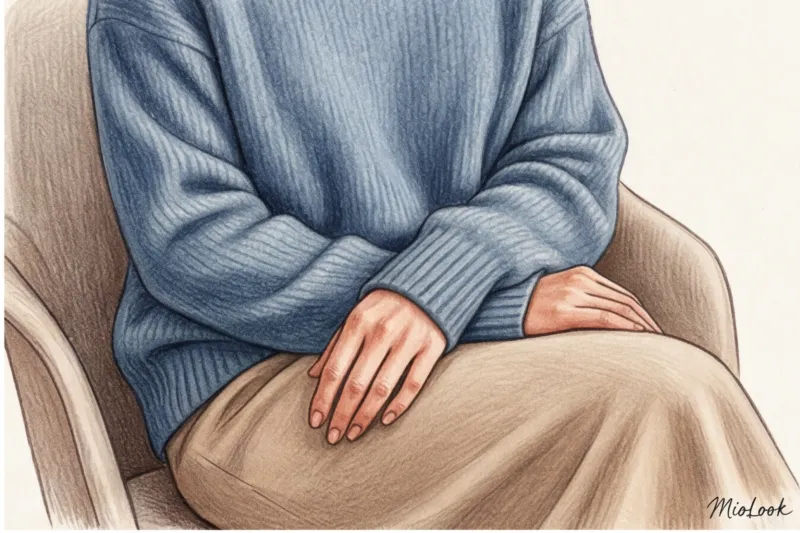
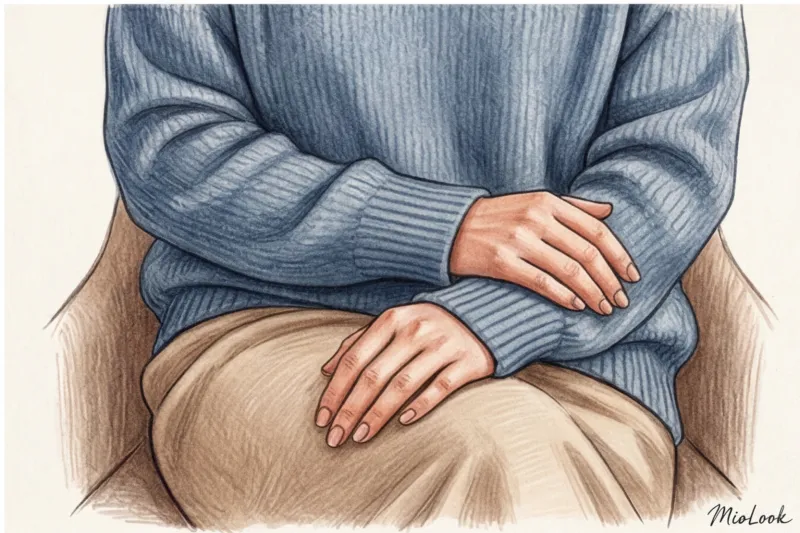
"A client who brings chaos and pain into the office doesn't need a soft, shapeless cloud. They need a strong, stable adult who can withstand the blow. Shapeless knitwear is frightening—it's unconsciously interpreted as weakness and a lack of inner support."
Albert Mehrabian's classic 1971 study proved that 55% of first impressions are formed solely by visual perception. You have just 7-10 seconds during which the client's limbic system decides: "Is this safe? Can I cry here? Can this person handle me?"
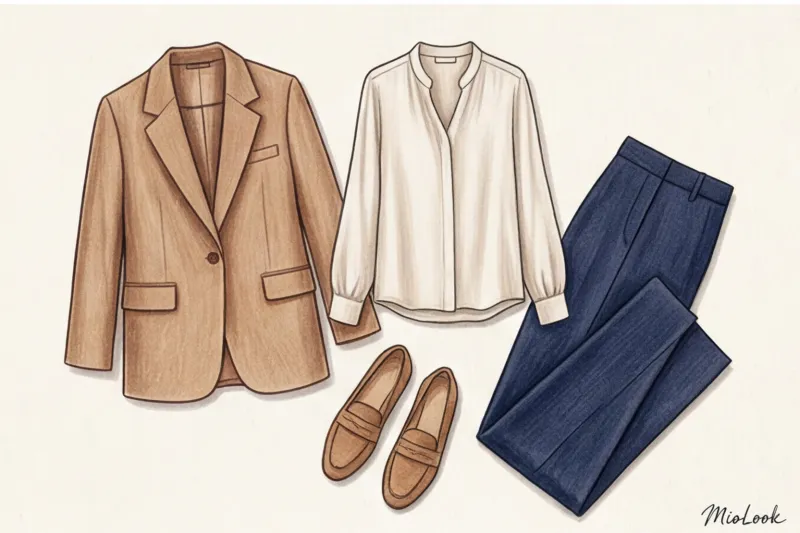
The solution lies in a concept I call "structured softness" What does this mean in practice?
- Choose jackets, but without the stiff, masculine shoulder padding. They set a frame (I'm a professional, I maintain boundaries), but remain flexible (I'm empathetic).
- If it’s knitwear, then it should be thick, weighing at least 300 g/m², so that it holds its shape and doesn’t hang like a rag.
- Full length trousers with pleats instead of skinny jeans.
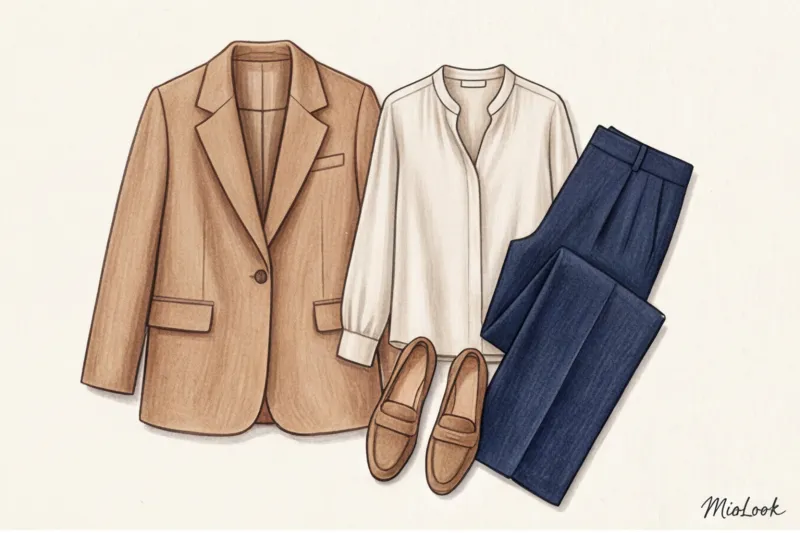
In science it's called Enclothed Cognition (embodied cognition). A 2012 study from Northwestern University (USA) demonstrated that clothing influences not only the viewer but also your own cognitive abilities. By wearing a structured jacket, you begin to better maintain a professional stance.
Color and texture in the office: what calms and what triggers
In a psychologist's office, the texture of the fabric is more important than the cut. Clients are in a vulnerable state, their sensory perception is heightened. They are visually "feeling" you.
Cashmere, matte silk, and viscose-blend wool—these materials act as visual calmers. However, stiff, starchy cotton, shiny satin, or squeaky synthetics create micro-tension.
Color is a separate topic. I often see beginning therapists cloak themselves in all-black, believing it to be the safest and most professional. But in the context of therapy, stark black acts like an impenetrable wall. It says, "I'm closed off; I won't let you in."
According to research by the Pantone Color Institute, pure spectral colors have a direct physiological effect. For example, an abundance of pure red can increase an observer's heart rate by 10-15%. Imagine a trauma therapist in a scarlet sweater—it's a rapport killer.
What to use instead?
Complex, dusty shades. Instead of emerald, wormwood. Instead of electric blue, stormy sky or dusty blue. Instead of snow-white, oatmeal or ecru. These colors don't overpower, but look deep and refined.
Your perfect look starts here
Join thousands of users who look flawless every day with MioLook.
Get access — €0.99 onceOnline Sessions: Image Specifics for Working on Zoom
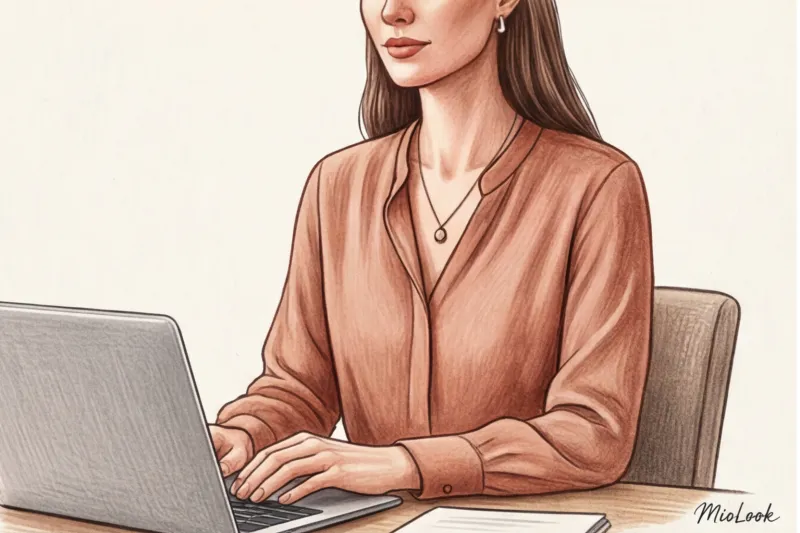
The pandemic has forever changed the way we work, and we're now faced with the phenomenon of "half-length portraits." On Zoom or Skype, your upper body takes on 100% of the visual load. What worked perfectly in a chair in an office can be quite disastrous on a webcam.
Here are three rules I've learned from TV stylists:
- Be careful with prints. Small checkered, pinstriped, or houndstooth patterns create a moiré effect on camera—the image begins to flicker and shimmer, giving the client a headache after just 15 minutes.
- Avoid pure white near the face. Most webcams automatically adjust exposure based on the brightest spot. If you're wearing a white shirt, your face will appear dark and sallow on screen.
- Focus on the portrait area. A V- or U-shaped neckline reveals the neck and collarbone, conveying openness. A turtleneck, on the other hand, creates a barrier.
Life hack from practice: Before adding a new item to your online wardrobe, call yourself on Zoom, record for 30 seconds, and move around. You'll immediately see if the fabric is reflective and if you blend into the background.
A Helping Practitioner's Wardrobe Taboos: Mistakes That Ruin Rapport
Of course, there's always room for exceptions in style. If you work with a rigorous, provocative approach, you can break the rules. But for 90% of professionals, there are strict taboos.
1. Jingling and distracting decorations
Multi-tiered bracelets that bang against the table or massive chandelier earrings are absolute no-nos for EMDR therapists and hypnologists—any extraneous rhythmic sound or flash of light disrupts the trauma processing process.
2. Logomania and flashy luxury
I had a case with a PCC ICF coach. She complained that clients often leave after an introductory session, citing "they can't handle it." We analyzed her look: a Gucci belt with a huge buckle, Cartier bracelets, and a Louis Vuitton bag in the shot.
For clients with impostor syndrome (and most coaching clients are), this visual noise screamed, "I'm better than you, I'm more successful." This shifted the focus from the client's process to the narcissistic side of the coach. We replaced branded items with high-quality minimalism from COS and Massimo Dutti (or their premium equivalents like The Row), and the conversion rate from introduction to contract doubled.
3. Excessive relaxation
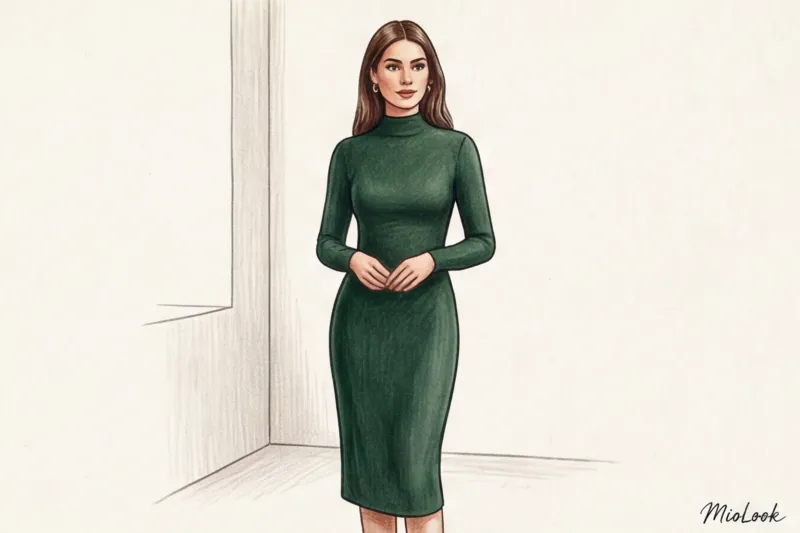
Pajama-style clothing, stretched hoodies, and slogan-covered T-shirts. It's tempting to relax at home in front of your laptop. But remember: clients are paying you not only for your knowledge, but also for the strong, collected, and professional stance you present.
Checklist: Putting together a capsule for a psychologist and coach
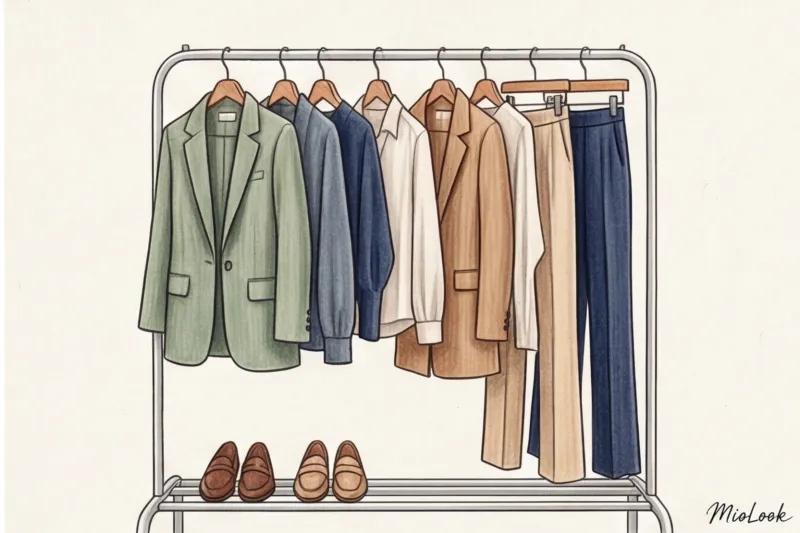
You don't need a huge closet. A well-organized capsule wardrobe of 10-12 items will cover all your needs for both in-person and online sessions. The basic formula is as follows:
- 2 soft-cut jackets: One in a basic color (navy, camel, graphite), the other in a complex shade (wormwood, dusty rose). Choose blended fabrics (wool + viscose), they wrinkle less when you sit.
- 3-4 blouses or tops: Made of matte silk, cupro, or viscose with a density of at least 150 g/m². No transparent chiffon.
- 2 pairs of trousers with the right fit: Palazzo or straight with arrows. They create that very "structure."
- 1 midi dress: A-line or straight cut, without a deep neckline.
Pay special attention to footwear. Even if it's 30°C outside, open sandals are inappropriate in the therapist's office—they're too intimate. Choose closed-toe shoes: soft suede loafers, almond-shaped ballet flats, or pumps with a stable heel of 3-5 cm. Save stilettos for social occasions—they convey tension and instability.
To avoid wasting your morning hours wondering "what to wear with what," I highly recommend digitizing your wardrobe. Upload your work capsule items to MioLook app — Artificial intelligence will automatically assemble ready-made kits and indicate if a connecting link is missing from the capsule.
A therapist's attire isn't just fabric. It's your first therapeutic or coaching tool. When your appearance conveys confidence, resilience, and empathy, you save months of building trusting rapport. Invest in the right textures, ditch the shapeless knits, and you'll see how the dynamics of your sessions change.