A Basic Wardrobe for a Woman Over 40: A Paradigm Shift
"Can I wear this, or is it too late at my age?" I hear this question at almost every first consultation. Over my 14 years as a personal stylist, I've witnessed a radical transformation in women's self-perception. While in the early 2010s, clients came to me with the sole goal of "hiding their stomachs and somehow disguising their age," today the request is radically different. The modern woman wants to look confident, prestigious, and trendy. That's why collecting Basic wardrobe for a 40-year-old woman The old patterns no longer make sense. We are at the point of a global paradigm shift.
First of all, forget about glossy lists of "10 things to throw away on your 40th birthday." Strict bans on miniskirts, denim, or bright colors are hopelessly outdated. The renowned research agency WGSN officially recorded a macro trend back in 2023. ageless style — style transcends age. The numbers in your passport no longer determine the length of your skirt. It's determined only by your proportions, the appropriateness of the situation, and personal comfort. In my practice, a 42-year-old client (a financial director) brilliantly wears leather Bermuda shorts with thick matte tights and a cashmere sweater for informal Friday meetings. And it looks a hundred times more elegant than the stereotypical "age-appropriate" godet skirt.
The concept of a "Smart Wardrobe" is replacing chaotic, emotional shopping. What does this mean? Clothes are no longer just covering the body or a blind tribute to fleeting trends. They are becoming a powerful tool for impression management. You open your closet and know for sure: this double-breasted jacket conveys tough expertise, this Mongolian cashmere jumper conveys relaxed luxury, and these wool-blend trousers are ideal for long business trips because they don't wrinkle on the plane. To automate the process of choosing such outfits, I recommend digitizing your closet. For example, uploading your items to MioLook — This app helps you create capsules right on your phone, saving you at least 20 minutes of precious morning time.
The main secret to elegance in your thirties is a ruthless shift from quantity to quality and conscious minimalism. Cheap synthetic fabrics and crooked stitching, easily forgiven in your 20s thanks to youthful exuberance, start to work against you after 40. They instantly cheapen your look and, worst of all, highlight signs of fatigue on your face. It's better to buy one flawless silk blouse for $150 than five polyester tops for $30. At this age, it works better than ever. cost per wear formula: An expensive but high-quality base that you wear for years ends up costing your wallet significantly less than fast fashion.
Cutting architecture instead of age restrictions
Let's get the terminology straight, because there's a huge gulf between "fashionable" and "current" silhouettes. What's fashionable is a microtrend (like extremely low-rise jeans, a la Y2K), which flares up and fades within a season or two. Current silhouettes are the spirit of the times, a global understanding of volumes and proportions that stays with us for five to seven years.
I strongly recommend my clients focus on trendy cuts. Remember the golden rule of elegance: a semi-fitted silhouette always wins. A tight fit, where the fabric literally bursts at the seams, looks outdated and often vulgar, revealing an inner insecurity and a desperate desire to appear younger. On the other hand, the rigid hyper-oversized cut so beloved by Zoomers can backfire, turning a statuesque figure into a shapeless rectangle.
The ideal silhouette is one where there's a little air between your body and the fabric (approximately 2-4 centimeters of loose fit). It's this air that creates a feeling of freedom, status, and comfort.
This is where the visual lifting technique comes into play. As we age, gravity takes its toll (and this is a completely normal physiological process), so our stylistic challenge is to create the right, upward-sloping lines with our clothing. How does this work in practice?
- Let's get rid of sloping shoulders: A raglan cut or dropped shoulder on a soft, shapeless knit visually draws the figure down. Opt for set-in sleeves and a crisp, structured shoulder line—this instantly sculpts the silhouette and elevates your posture.
- Watching the lapels: Narrow, downward-facing lapels on cardigans are inferior to wide, sharp, upward-facing lapels on jackets (peek lapels).
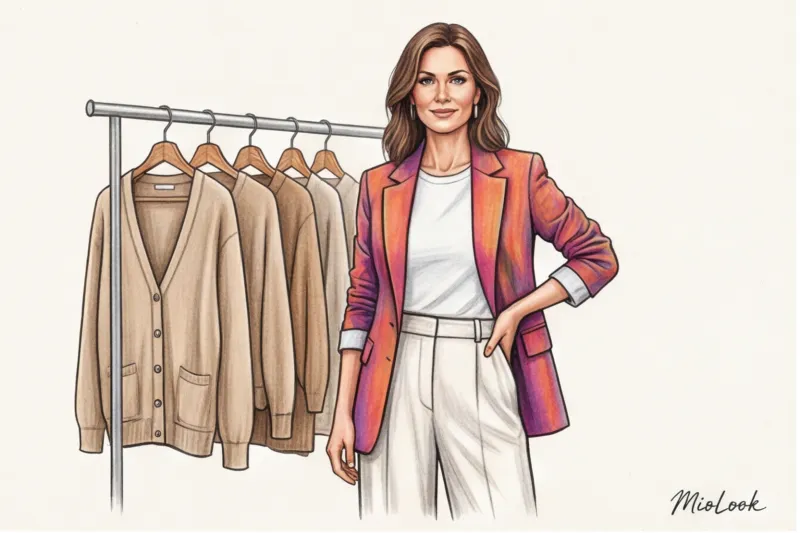
- Let's create verticals: An unbuttoned, straight-cut blazer in a crisp fabric, worn over a contrasting basic top, creates two strong vertical lines. They visually elongate your height and make you look slimmer without any dieting.
We no longer hide our bodies in dull robes—we build around them a competent, complimentary architecture that works for us, not against us.
Fabrics and textures: the main investment in status
Do you know what gives away a bad look faster than an outdated cut? The texture of the material. You can find a perfectly tailored jacket or impeccably fitted trousers, but if the fabric is treacherously shiny or doesn't hold its shape, all the magic of perfect proportions crumbles to dust. According to research by the PANTONE Color Institute, the visual perception of a garment's hue depends 40% on its texture. And when we create an elegant base, this rule becomes ironclad.
Thin, see-through knitwear is perhaps the main enemy of a status wardrobe. Flimsy, flowing fabrics act like a merciless magnifying glass. They cling to the body, highlighting the finest lines of underwear and the slightest unevenness of the skin, creating a persistent feeling of sloppiness. Instead of enhancing the silhouette, such fabric blurs it, visually adding fatigue and age.
My personal fitting-room test: slide your palm under the fabric. If you can clearly see the outline of your fingers and the color of your skin through the material (and it's not the designer's intended chiffon blouse), the item should stay in the store.
The most important thing follows from this density rule Let's take the most common item—a basic T-shirt. It should never cling to you like a second skin. A well-fitting T-shirt works like a soft corset: it defines a clear shoulder line, doesn't sag at the chest, and doesn't bunch at the waist. Remember this specific guideline: the cotton weight of a quality basic T-shirt should start at 180 g/m². Anything thinner (120–140 g/m² is common in mass-market clothing) is only suitable as an invisible base layer under a heavy cardigan.
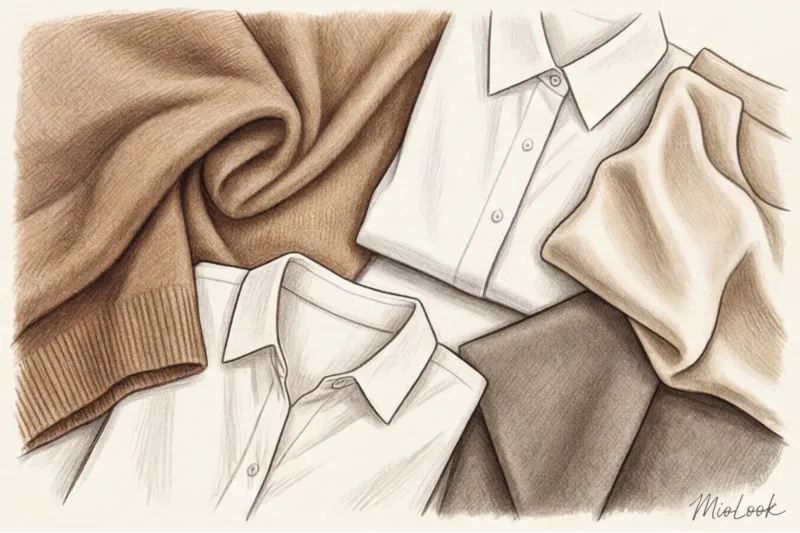
Now let's dive deeper and examine the compositions. I constantly see women, striving for maximum comfort, choosing trousers and jeans with a high percentage of elastane. The result is predictable: stretched knees by lunchtime, lost hip shape, and a cheapened look. How much elastane do you really need?
- For basic jeans: A maximum of 1–2%. This is enough for comfortable movement, while thick denim (12 ounces and over) will work like a sculptor, shaping the figure. Jeans with 5% elastane (jeggings) distort the proportions of the legs.
- For suit trousers and jackets: The ideal balance is high-quality wool with added synthetics for durability. The acceptable percentage of polyester in suiting fabric is no more than 30%. Any more than that and the garment will lose its breathability, quickly become pilled, and develop an unpleasant sheen where it rubs.
Speaking of gloss, in an adult woman's wardrobe, textures are divided into those that give noble shine , and those that emit cheap shine These are two completely different visual languages. Cheap satin polyester shimmers like foil or candy wrapper, refracting the light in sharp, contrasting highlights. It always looks simple and unnatural.
Access to MioLook for €0.99 — one-time payment
A smart AI stylist will select the perfect look based on your preferences and help you create a capsule wardrobe of the right textures.
Get access — €0.99 onceWhat can you replace it with? Choose the delicate, deep glow of natural silk, dense viscose (look for cupro, tencel, or modal), or smooth mercerized wool. These materials interact with light differently: they absorb and softly diffuse it, creating a rich, complex undertone. Even the most simple cupro top will look far more prestigious than a complexly tailored blouse made of shiny polyester.
The formula for the perfect silhouette: how to highlight your best features
Let's look at the figure through the lens of architecture and geometry. The main visual mistake I regularly see on the street is the 1:1 ratio. A loose, mid-thigh sweater paired with jeans divides the body exactly in half. This combination not only hides the waist but also visually "eats" the length of the legs, making the lower half of the body appear heavier.
Remember the golden ratio. The human eye perceives a harmonious proportion of 1/3 to 2/3. When putting together a basic wardrobe for a 40-year-old woman, we should incorporate this rule into the very foundation of everyday outfits. One-third is the top (for example, a slightly tucked-in blouse or a crop top under a jacket), two-thirds is the bottom (pants, jeans, or a skirt). This simple math instantly lengthens your legs by 10-15 centimeters without the use of heels.
Trouser fit and belly shape secrets
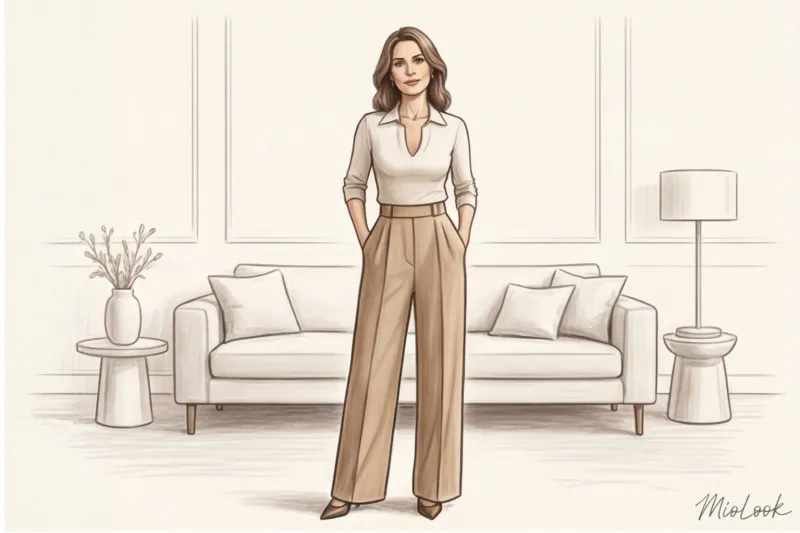
How can you technically achieve this correct proportion? With the right waist height. Low rises are a thing of the 2000s, and they're absolutely contraindicated for an elegant, put-together look. Your best bet is a mid-rise (just below the navel) or high rise.
I had a client with a pronounced apple-shaped figure. For years, she'd been using the same defensive tactic: black, skinny leggings paired with voluminous, knee-length tunics, hoping to hide the bulk around her waist. The result was a massive, bulky rectangle on her slender legs. We radically changed our strategy.
We ditched the fine knitwear and opted for thick wool trousers with a mid-rise and two deep darts at the front (a premium model priced around $150). Instead of a tunic, we opted for a cotton shirt, tucked in slightly at the front only.
Why did it work? The pleats created the necessary architectural freedom in the stomach area. The smooth fabric over the stomach always stretches as you move, treacherously emphasizing the volume, while the pleats act as a buffer, softly draping the fabric. Combined with the correct fit, the stomach visually disappeared, and the silhouette became elongated and dynamic.
The shoulder line as a status marker
The next most important element is the shoulder line. With age, posture inevitably changes, and shoulders may sag slightly. Our goal is to restore a clear frame to the figure. A structured jacket with built-in shoulder pads is an investment that pays for itself the first time you wear it.
A jacket like this (in the spirit of menswear cuts from The Frankie Shop or high-quality blazers from Massimo Dutti) works like a picture frame. It gathers the silhouette, creates a sense of static balance, and conveys confidence. Soft, shapeless knits with sloping shoulders often create a tired, relaxed effect bordering on sloppiness. A crisp shoulder line, on the other hand, instantly lifts the overall look.
Delicate areas: proper hand work
Another area that requires a tactful approach is the upper arms. If the skin here has lost its former tone, don't overly bundle up in turtlenecks. It's best to permanently banish cap sleeves and short diagonal cut T-shirts from your closet. These styles treacherously widen the shoulder girdle and draw attention to the largest part of the arm.
- T-shirts: Choose styles with straight, loose sleeves that reach the elbow (or a couple of centimeters above). This looks elegant and appropriate.
- Shirts: Always roll up long sleeves two or three times, exposing your wrists. The wrist is the most delicate part of the hand, and showing it off adds a delicate touch to your look.
- Knitwear: 3/4 sleeve is a great compromise between comfort and aesthetics.
To learn to feel your ideal proportions, I recommend not just looking in the mirror (our brain often distorts familiar reflections), but taking photos of yourself in new outfits. Upload these photos to MioLook app and create a personalized lookbook. The smart wardrobe feature allows you to visually compare multiple options on your phone screen. You'll be surprised to see how just a few centimeters in sleeve length or trouser rise can completely change the way you look.
Supporting items: assembling the capsule step by step
According to McKinsey's 2024 Global Consumer Habits Report, the average woman regularly wears only 19% of her closet's contents. The remaining 81% consists of emotional purchases, single items, and clothes waiting for "that special occasion." When creating a basic wardrobe for a 40-year-old woman, our main goal is to radically change this proportion. I call this approach "the mathematics of elegance": you buy less, but wear more often.
The secret lies in interchangeability. A properly assembled capsule functions like a well-oiled machine, with every part fitting perfectly together. Let's break this construction kit down into its components.
Wardrobe Foundation: Bottoms That Work for You
When putting together any outfit, I always start from the bottom. If the pants fit poorly or have a cheap shine, no amount of luxurious cashmere on top will save the situation. Your foundation should have three flawless pillars:
- Straight jeans of the correct density. Forget thin denim with lots of elastane that bunches at the knees. Look for 100% cotton (or a maximum of 1-2% elastane) in a 12- to 14-ounce weight. A straight fit with a mid- to high-rise waist visually elongates the legs without distorting the hips. Ideal shades are deep indigo without active fading or pure graphite.
- Palazzo pants. This is an absolute must-have for creating a classy, flowing silhouette. Wide-leg trousers made from a good suiting fabric (ideally a wool blend) conceal any leg nuances and add a dynamic gait.
- A-line midi skirt or slip skirt. If you're looking for a more formal look, choose an A-line skirt made of thick cotton or leather. For a more feminine touch, choose a silk or viscose slip skirt. The key to a slip skirt is to use a bias cut—this allows the fabric to gently hug your hips, rather than accentuating every detail.
Rope base: from the right T-shirt to cashmere
The top of the look is the portrait zone. This is where fabrics and lines play a decisive role in how fresh and rested the face appears.
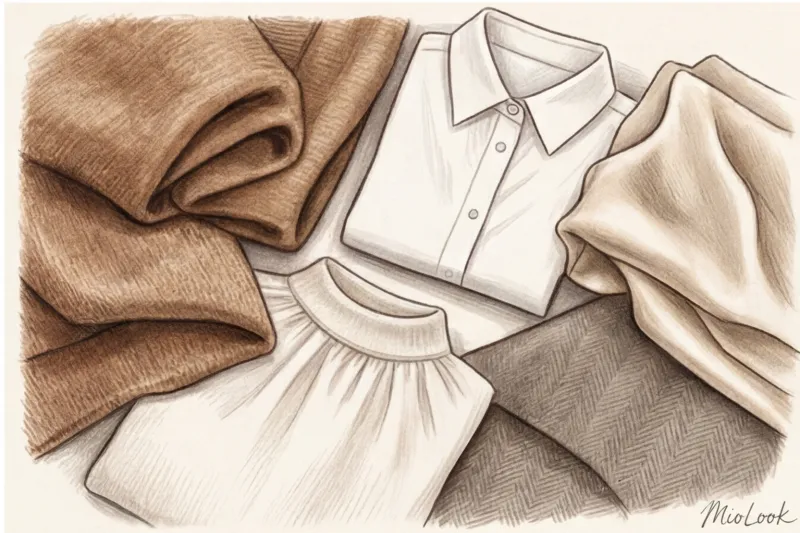
- Boyfriend shirt (cotton or silk). Stiff, fitted office blouses are long gone. They've been replaced by menswear-inspired shirts—slightly looser, with dropped shoulders. Thick cotton poplin holds its shape well and creates a dynamic look, while washed silk with a matte finish adds understated luxury.
- T-shirts with correct sleeves. A "proper sleeve" ends at the thinnest part of the forearm (usually a couple of centimeters above the elbow) or has a slight cuff. It shouldn't be too tight at the widest part of the arm. The fabric should be thick and opaque.
- Cashmere jumper. This is the kind of piece where skimping is unacceptable. Investing in quality cashmere ($150–$300) pays off with its durability and the elegant look it adds to even the most basic jeans. Choose a loose fit (there should be some air between your body and the sweater) and basic shades like camel, gray melange, or ecru.
Structure and Finish: Second Layers and Outerwear
The second layer is the architecture of your look. It's what brings together relaxed, basic pieces into a cohesive, complete statement.
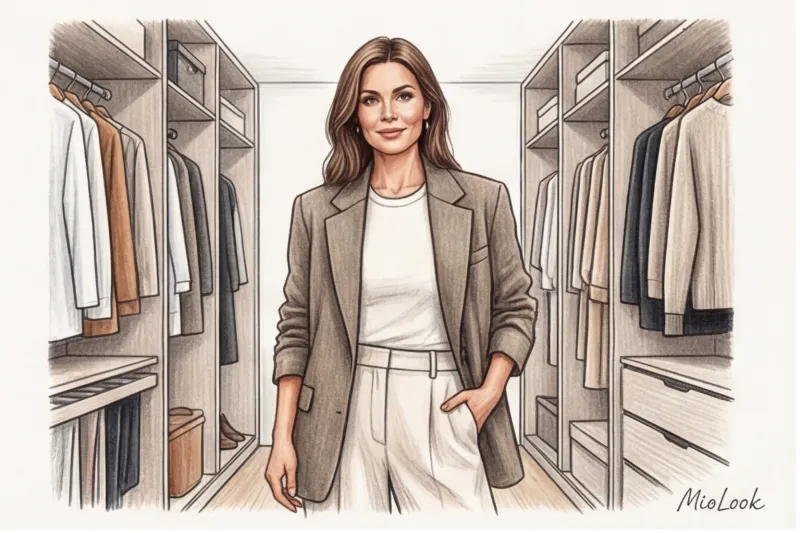
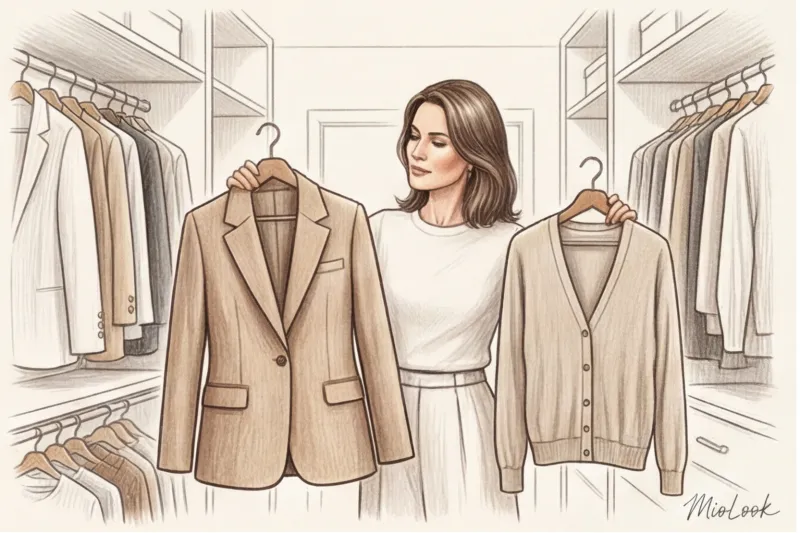
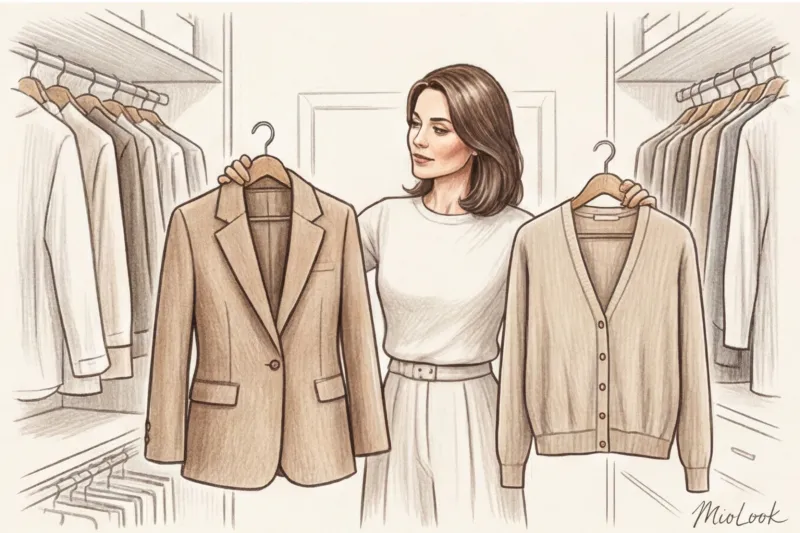
Straight-cut blazer (single-breasted or double-breasted) should fit as if you borrowed it from a men's wardrobe, but it's tailored to your measurements. A crisp shoulder line is a must. A softer alternative is thick knit cardigan Important: it should be voluminous enough to work as a standalone jacket, and not hang like a dull rag.
When it comes to outerwear, the "less is more" rule works flawlessly. Your basics are the holy trinity:
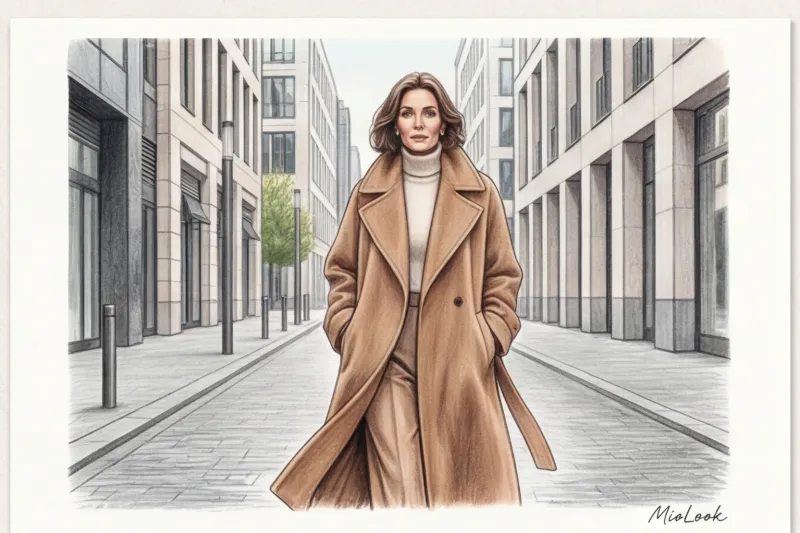
- Classic robe coat: Midi or maxi length, belted, no hard hardware. Drapes comfortably and looks incredibly expensive.
- Trench coat: Loose fit, raglan sleeves (for easy layering over a blazer), below-the-knee length.
- Quilted jacket: Thin, matte, and minimalist. Ideal for smart-casual looks and complex color transitions.
The Art of Layering: How to Style Without the "Cabbage" Effect
My clients' main fear when creating complex outfits is adding an extra 5 kilograms to their bodies. To avoid this, use my professional algorithm.
First, maintain a density gradient: the thinnest material should always be closest to the body, the thickest on the outside (silk shirt → thin cashmere → heavy wool blazer → coat). Second, each top layer should have a larger armhole than the one before. If the blazer is difficult to pull over the jumper, you'll experience restricted movement and the aforementioned "cabbage" effect.
And most importantly: always define the waist or vertical line. Use French tuck (partially tuck the edge of a shirt or jumper into the waistband) or leave the second layer unbuttoned, creating a stretchy column of color inside.
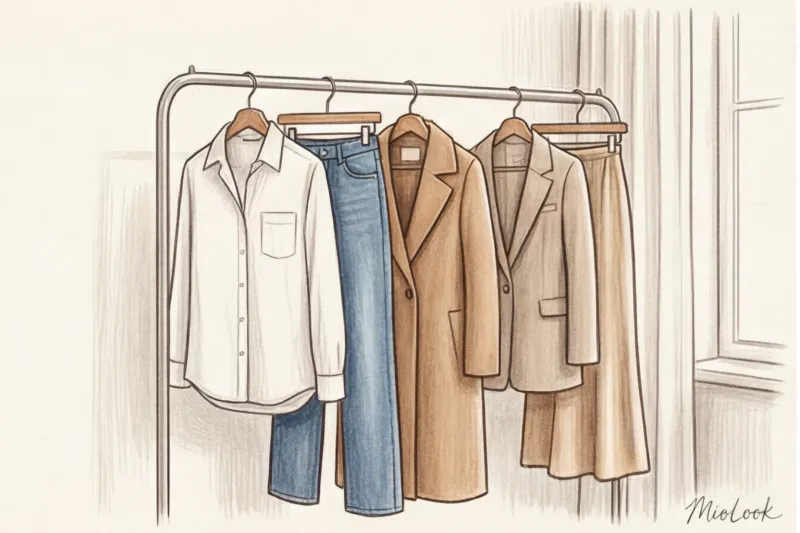
My signature checklist: a 15-item "Minimum" capsule
To make your inventory easier, I've put together a universal capsule formula that I use in my work. From these 15 items, you can create over 40 complete looks for different life scenarios:
- 3 bottoms: straight jeans, suit palazzo pants, midi skirt (slip or A-line).
- 5 tops: 2 basic t-shirts (white and graphite/black), cotton boyfriend shirt, silk blouse, cashmere jumper.
- 3 second layers: structured blazer, thick cardigan, suit-style vest (as a bonus layering element).
- 3 outerwear: robe coat, trench coat, thin quilted jacket.
- 1 dress: Basic midi dress with a laconic cut.
To avoid having to keep all these combinations in your head and to clearly see how your current items fit into the capsule, I highly recommend digitizing your closet. You can upload photos of your items to MioLook — a smart algorithm will analyze your database and suggest dozens of fresh combinations for every day.
Access to MioLook for €0.99 — one-time payment
Start creating perfect looks and managing your smart wardrobe with artificial intelligence.
Get access — €0.99 onceColor and Light: How Palette Controls Age
Physics-wise, color is reflected light. Dark surfaces absorb light rays, while light surfaces reflect them. This basic rule of optics is perhaps a stylist's most powerful tool when working with portraits. Unfortunately, many women have been falling into the same color trap for decades, believing that only one shade can impart drama and status to an image.
We're talking about a deeply ingrained myth surrounding the color black. In the popular imagination, it's firmly associated with Parisian chic and visual slimness. But let's face it: beyond a certain point, black on the face acts like a merciless spotlight, picking out even the slightest imperfections. It physically absorbs light, creating harsh shadows under the chin, deepening nasolabial folds, and emphasizing pigmentation or fatigue under the eyes. In coloristics institutes, this optical effect is called "shadow multiplication."
If you're not ready to give up your favorite black jacket or cashmere turtleneck, don't panic. Here's a practical tip: simply move this color away from your face. Let the white collar of your shirt show, tie a light-colored silk scarf around your neck, or add a strand of large pearls. Create a light buffer that will protect your skin from harsh contrast.
Instead of masking fatigue with thick layers of makeup, I suggest using a color-lifting technique. There are shades that act as natural reflectors. Think of how professional photographers use white reflectors to illuminate a model's face from below and blur harsh shadows. The right light tones work similarly in portrait photography: pearl, dusty rose, ecru, cream, and oatmeal. They cast a soft, diffused light on the chin and cheeks, providing an instant visual effect of freshness and a rested appearance.
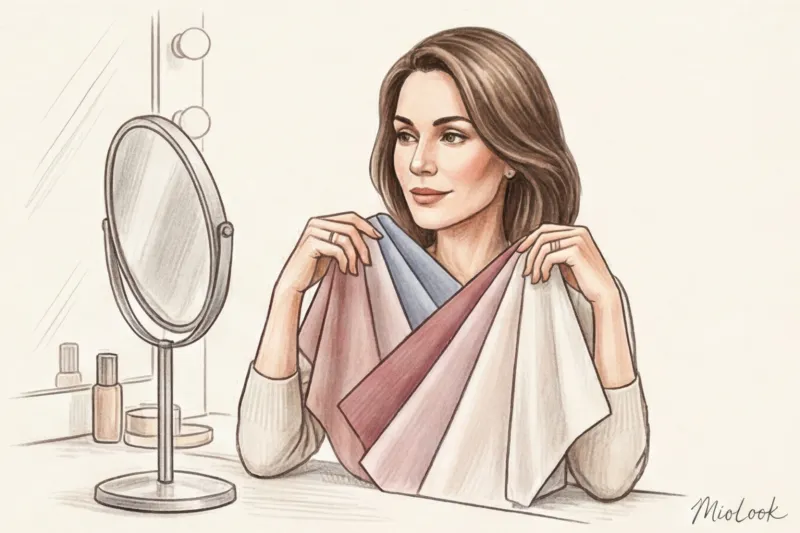
When creating a smart basic wardrobe for a woman over 40, we inevitably encounter the need for dark, rich tones in trousers, skirts, and outerwear. So, what can replace radical black? The PANTONE Color Institute regularly notes in its reports a persistent trend toward "new blacks" in the premium segment. Replace your usual gloom with the following alternatives:
- Graphite (dark gray) - looks intellectual, less contrasting and goes well with a cool palette.
- Dark chocolate — an incredibly expensive shade that makes the image warmer, deeper and more inviting.
- Deep blue (navy) — an absolute classic that gives the same slenderness as black, but retains the dynamism of color in daylight.
- Wine or Burgundy — a status color that works luxuriously in the textures of smooth leather and thick wool.
These shades possess the necessary depth, but lack the aggressive harshness. A dark chocolate-colored coat for $300 often looks significantly more refined than its black counterpart for the same price, because the brown pigment better reveals the texture and weave of the fabric.
And finally, the quickest and surest way to look "expensive" is with monochrome looks. Assembling an outfit in a single color scheme (for example, from ecru to rich caramel) solves two stylistic problems at once. Firstly, the absence of sharp horizontal color transitions (when a white top is sharply cut by a black bottom) creates a continuous vertical line that elongates the silhouette and adds height. Secondly, monochrome always conveys a high level of aesthetic intelligence. To easily put together such well-designed outfits and avoid spending hours on fittings, I recommend using the "smart wardrobe" feature in MioLook You upload photos of your items, and the algorithm helps you create the perfect color scheme from what's already hanging in your closet.
Shoes and accessories: modern accents
A French proverb says that a woman begins with her shoes. There's an immutable law in style: accessories are the main indicator of a look's modernity. Even the most carefully curated basic wardrobe for a 40-year-old woman instantly loses its elegance if it's complemented by outdated details.
I often encounter a strategic shopping mistake: a client buys a gorgeous wool jacket for €400 but tries to save money by pairing it with cheap, thin imitation leather shoes. My categorical advice: do the exact opposite. It's better to save on a cotton T-shirt, buying a great, heavy-duty option for €15-20, but invest a serious budget in a statement bag and quality loafers. Expensive accessories visually elevate and elevate even the most basic, affordable knitwear.
Shoes set the tone for the entire outfit these days. If you're looking to quickly modernize your style, pay attention to the toe shape. Short, round toes make the leg look heavy and hopelessly flatter the silhouette. We're swapping them for graphic, elongated or soft, square shapes—they add movement and visually slim the leg. As for the heel, the days of cumbersome stilettos for daytime wear are a thing of the past. A graceful micro heel is the perfect solution. kitten heel (like the iconic Prada or The Row models) or a stable block heel up to 5 centimeters high. It's the perfect balance of elegance and absolute comfort for the foot.
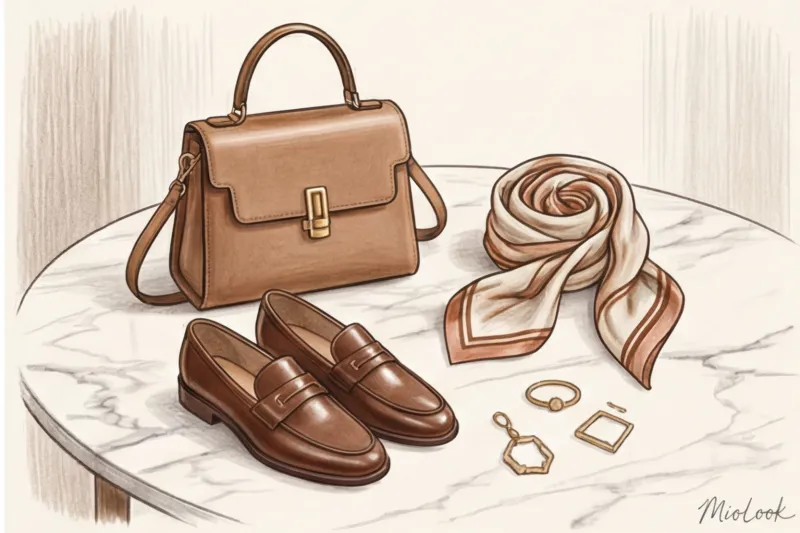
Let's move on to bags. Shapeless, soft "sacks" and relaxed hobo styles often add unnecessary bulk to the figure and make the look appear sloppy. Bags with a rigid shape, distinct geometry, and high-quality matte hardware work in a completely different way—like an architectural framework. They discipline relaxed, everyday pieces, adding the necessary polish and poise.
A true revolution has taken place in jewelry. The main rule today is a complete rejection of outdated sets. The classic "ring, earrings, and necklace" set, all in the same design, adds a decade to the age and looks like you've tried too hard. A modern staple calls for minimalism, clean geometry, and a touch of eclecticism. Mix white and yellow metals, wear a single sculptural accent ring, or asymmetrical earrings—this demonstrates refined taste.
The finishing touches to a classy wardrobe are glasses and belts. A medium-width leather belt without flashy logos ties the silhouette together. It's indispensable if you're using a stylistic technique. French tuck (Partially tucking in a shirt or jumper at the front.) And modern sunglasses or optical glasses with thick horn-rimmed frames work as an excellent visual lift: the correct shape elongates the face, conceals signs of fatigue, and draws attention to the portrait area.
To ensure your accessory collection works to its full potential and doesn't just sit in boxes collecting dust, you need to regularly incorporate it into your everyday outfits. I recommend photographing your jewelry, belts, and shoes and storing them in MioLook The app allows you to visually try on a new bag and your favorite coat before leaving the house, saving you hours in the morning.
Your perfect look starts here
Join thousands of users who look flawless every day with MioLook. Digitize your wardrobe and create stylish outfits in just a few clicks.
Get access — €0.99 onceChecklist: Wardrobe Review and Smart Shopping
The most common request I get is: "I have nothing to wear, I need to go to the store immediately." My answer is always the same: the best shopping starts with a closed wallet, right in front of your open closet. To build a working Basic wardrobe for a 40-year-old woman , we need to take a rigorous inventory and change the very culture of consumption.
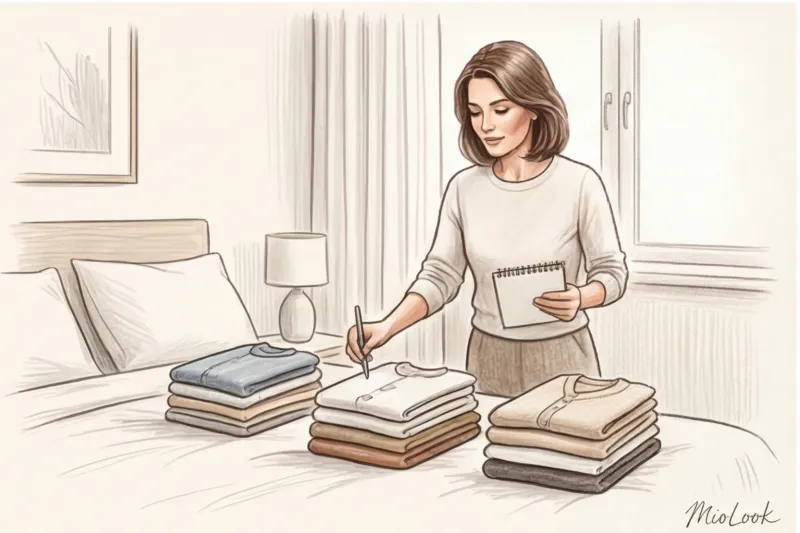
I use the uncompromising yet incredibly effective "Three Boxes" method with my clients. Place absolutely everything on the bed. Now each item of clothing has exactly three options:
- Box #1: We leave. Here you will find items with a modern cut, without pilling and stretched knees, which fit you perfectly straight Now (not "when I lose 5 kilograms by summer").
- Box #2: Repairing. A pair of excellent wool trousers that need shortening to go with new shoes, or a favorite blazer that needs its plastic buttons replaced with more prestigious metal ones. Give yourself a strict deadline—one week to get it to the tailor. If you don't take it in? It automatically moves to the third category.
- Box #3: Giving away or selling. What's too small is hopelessly outdated, or simply no longer brings joy. The infamous "I'll take it to the dacha" syndrome has ruined more than one style. Be honest with yourself: donate your clothes to charity or sell them on resale platforms.
I strongly recommend digitizing the items from the first box immediately. After adding them to MioLook app , you'll get a visual map of what you actually own. Visualizing your wardrobe on your phone screen will instantly highlight gaps—you'll see for yourself that you have five almost identical blue jeans, but not a single quality white shirt.
Only after a ruthless purge do we move on to shopping planning. And this is where the key rule of smart shopping comes into play: the formula. Cost Per Wear (CPW) , or the cost per wear. The calculation is simple: divide the item's price by the expected number of times it's worn.
Let's use a real-world example to calculate this. Let's say you buy a trendy polyester jacket at a mass-market store for $60. You'll wear it maybe five times per season, after which it'll become snagged, lose its shape, or you'll simply fall out of love. That's $12 per wear. Now let's take a classic, straight-cut, 100% wool coat for $400. You'll wear it at least four months a year for four years—that's about 150 wears. The CPW is only $2.60 per wear! Objectively, an "expensive" quality coat is almost five times cheaper than a disposable synthetic item.
That's why I strictly forbid my clients from spontaneous trips to shopping malls "to lift their spirits." Shopping is a strategic task. How to prepare for it properly? First, we create a mood board: we gather visual references of looks that resonate with your current lifestyle. Then we write a strict shopping list. If the list says "graphite-colored structured jacket," you don't buy a tenth floral blouse at 70% off, no matter how tempting it looks on the hanger.
This is precisely where the principles lie. slow fashion (slow fashion) in the context of 40+. At this age, conscious consumption ceases to be just a pretty global trend and becomes the only true stylistic decision. We stop chasing short-lived microtrends. Instead of five acrylic sweaters, we invest in one thick cashmere jumper in a refined shade. We choose pieces that age gracefully—the right denim, thick silk, and high-quality genuine leather.
Your practical task for today: open your closet and select exactly three items you haven't worn in over a year. Bag them now and prepare them for recycling or donation. Take this first step. You'll feel the visual clutter disappear along with the old, random items, making room for your new, conscious, and truly elegant style.
Guide Chapters
What prints should you wear after 40 to look expensive?
Forget the outdated rules of boring, monochromatic clothing. We'll show you how to stylishly wear animal prints and geometric patterns as you age.
Basic Bags for Women Over 40: Styles for Status
Cheap fittings or poor design can ruin even the most expensive outfit. We'll explore how to choose the perfect statement bag for women over 40.
Sporty Chic for Women Over 40: How to Wear It in the City
Forget shapeless sweatshirts and stiff suits. We'll show you how to create the perfect everyday wardrobe, masterfully combining clean lines and sporty comfort.
Evening looks for women over 40: style and status
Forty is the age of peak feminine power. Learn how to create stunning outfits without age stereotypes and boring compromises.
Outerwear for women over 40: status and style
Outerwear is the key architectural element of your look, conveying your status. Learn how to choose the perfect coat or trench coat based on your cost per piece (CPW).
Stylish Shoes for Women Over 40: Building a Foundation
Elegance no longer requires physical sacrifice. Learn how to assemble a basic shoe wardrobe that combines status and absolute comfort.
Business wardrobe for a 40-year-old woman: style and status
Modern office style is built on the concept of "soft power." Learn how to create a prestigious business wardrobe without rigid boundaries and outdated rules.
Dress Styles for Women Over 40: Stylist Tips
How can you stop hiding behind shapeless clothes and find your perfect silhouette? We're exploring the best dresses for those who want to look classy and modern.
What jeans to wear at 40: styles and looks
Forget age restrictions! A personal stylist explains how to choose the perfect pair of jeans that will accentuate your status and figure.
Autumn-Winter Wardrobe for a 40-Year-Old Woman: Style and Comfort
How to avoid looking like a cabbage this winter and maintain a slim figure? A stylist's secrets for creating an elegant and warm basic wardrobe.
Casual style for women over 40: modern and comfortable
Forget boring rules and uncomfortable clothes. Learn how to create a comfortable, modern, and classy everyday wardrobe without sacrificing style.
Wardrobe for plus-size women over 40: stylist tips
Stop hiding your figure behind shapeless clothes! Discover how an engineered approach to style helps plus-size women look slimmer and more elegant.
Anti-trends: Things You Shouldn't Wear After 40
Fashion is changing, and rigid age limits no longer apply. We'll explore the main anti-trends and create a modern wardrobe without relying on your passport.
Summer wardrobe for a 40-year-old woman: a capsule wardrobe for the city
Forget about overstuffed suitcases and one-season items. Learn how to assemble a smart, cross-functional capsule that's perfect for both the city and vacation.
Clothing colors that make you look younger: how to refresh your face
Forget the clichéd advice to wear only pastels. Discover how color and texture work together with the laws of optics to conceal fatigue and refresh the complexion.