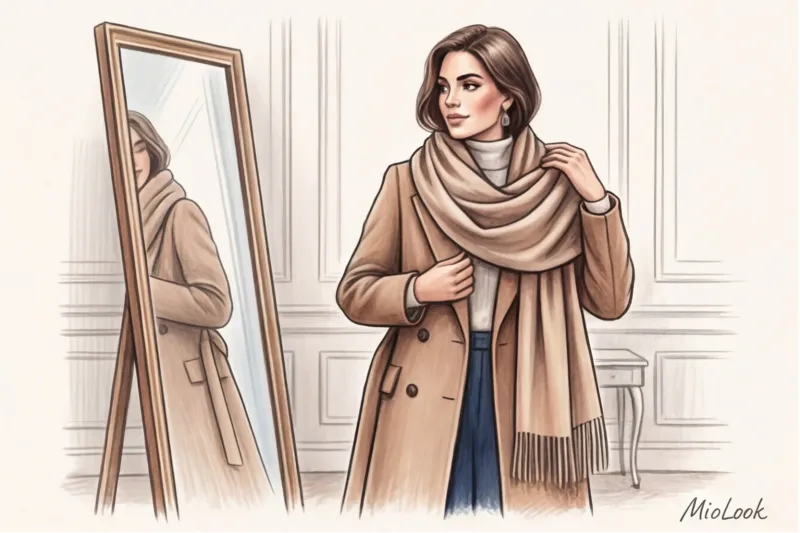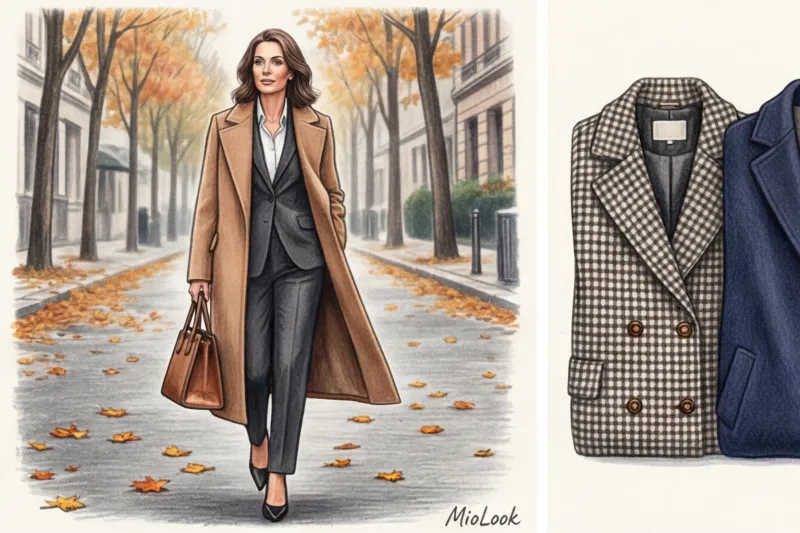
Imagine a familiar situation: you've spent 40 minutes styling your hair perfectly, put on a flawless wool suit, picked out some expensive loafers, and then... throw on a five-year-old, skimpy down jacket because "it's slushy outside and the car's only three minutes away." Sound familiar? In 12 years of working as a style coach, I've learned one harsh truth: outerwear for women over 40 A coat isn't just a utilitarian layer of fabric to protect you from the wind. It's the central architectural element of your look, conveying your status before you even utter a word.
We've already discussed the fundamental approach to style in more detail in the full guide: A Basic Wardrobe for a 40-Year-Old Woman: Style Without Rules But today we'll focus specifically on the top layer. Forget the "just keep warm" rule. We'll use Cost Per Wear (CPR) calculations and build a wardrobe that saves you time in the morning.
Why outerwear for women over 40 is the main indicator of status
Let's look at the numbers. In our climate, for five to seven months a year, we communicate with the outside world exclusively through coats, trench coats, and jackets. The "70% Rule" applies: that's how much of a first impression in the fall and winter is made by outerwear. People on the street, colleagues in the elevator at the business center, and business partners at the entrance to a restaurant see only your outer layer.
One of my clients, CFO Anna, complained that she felt uneasy during important meetings outside the office. We sorted through her wardrobe and found the cause: her luxurious Massimo Dutti suits and silk blouses were hidden beneath a shapeless, shiny jacket that was visually detrimental to her presence on the way to the meeting. Once we replaced the jacket with a structured, double-breasted midi coat, even her posture changed.
This is where metrics come into play. Cost Per Wear (CPW) A cheap, trendy $100 jacket that will lose its shape in a month and be worn 20 times will cost you $5 per outing. A high-quality basic $500 coat that will last 5 years and be worn 300 times costs only $1.60 per outing. Expensive outerwear is cheaper if you know how to choose it.
A coat that doesn't age: architecture, cut, and fabrics
The biggest mistake I regularly see during wardrobe reviews is buying "classics" that are actually relics of the past. A slim, fitted coat that hits just above the knee is a silhouette that instantly wears off 5-10 years. Modern essentials require airiness and proper structure.
What really matters when choosing a coat:
- Shoulder girdle rule: If you have sloping shoulders or a pear-shaped figure, choose a coat with a crisp, structured shoulder line (with shoulder pads) to balance your proportions. If you have broad shoulders (an inverted triangle figure), a raglan sleeve is ideal, as it will soften the top.
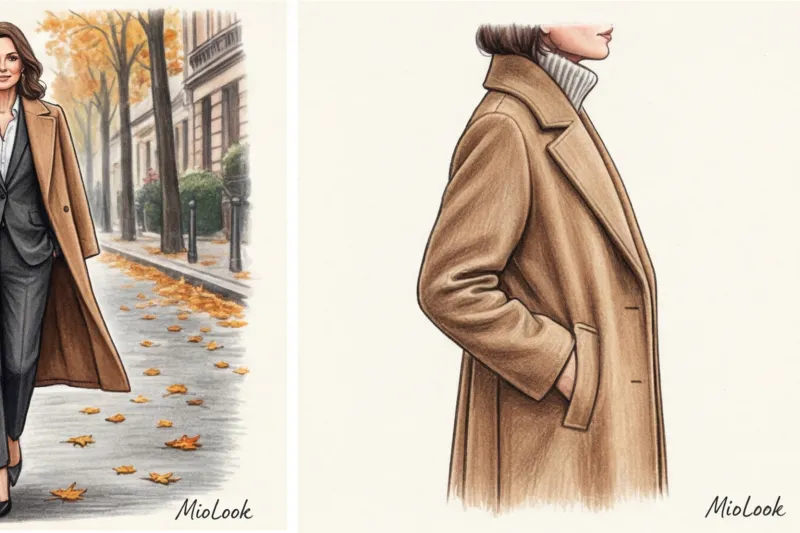
- Length formula: Forget knee-length. The most functional investment for those over 40 is a midi or maxi length (115–125 cm at the back). Why? Because it covers 90% of the hems of your skirts and dresses. A skirt edge sticking out from under your coat breaks up your silhouette and makes your legs look shorter.
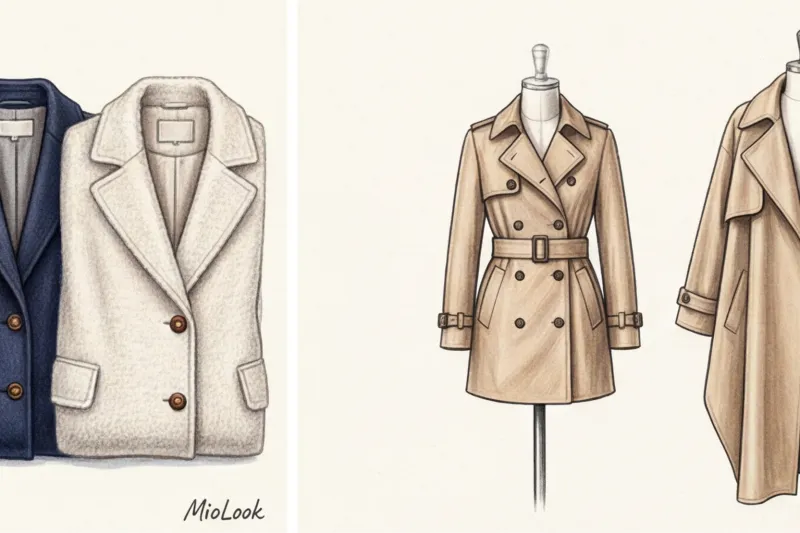
Materials Science: Why 100% Wool Isn't Always the Best Choice
Now here's a slightly counterintuitive tip. We're used to thinking that synthetics are the ultimate evil and looking only for 100% wool or cashmere on the tag. But data from textile institutes, particularly a 2023 study by Woolmark, confirms that adding 10-20% polyamide to natural wool significantly increases the fabric's durability.
"Pure cashmere is ideal for dry, cool weather and leisurely strolls. But if you drive every day, the seat belt will wear out the 100% cashmere on your left shoulder in just one season. For an active city life, blended fabrics aren't a compromise, but a technological necessity."
A small percentage of synthetics (nylon, polyamide) prevents your coat from sagging at the elbows and stretching out the pockets. Of course, this rule doesn't apply to premium double-face fabrics (two-layer hand-woven wool), but for everyday essentials in the mid-range segment, it's the gold standard.
Your perfect look starts here
Join thousands of users who look flawless every day with MioLook. Digitize your wardrobe and receive smart recommendations.
Get access — €0.99 onceThe Myth of the "Classic" Beige Trench Coat: How to Avoid the Retro Look
Perhaps the most ingrained myth in style is that "every woman needs a classic, figure-flattering beige trench coat." This rule, straight out of the 2010s, is hopelessly outdated today. Short, tight trench-dresses not only look out of fashion but also contradict the laws of layering.
Try wearing a modern, loose jacket under a slim trench coat—the sleeves simply won't fit at the armholes. A report by the analytical agency WGSN on the Ageless Style macrotrend clearly demonstrates that modern silhouettes call for flowing fabrics, a loose fit (oversize), and a length below the knee. It's this slightly relaxed cut that visually reduces age, adding dynamism to the look.
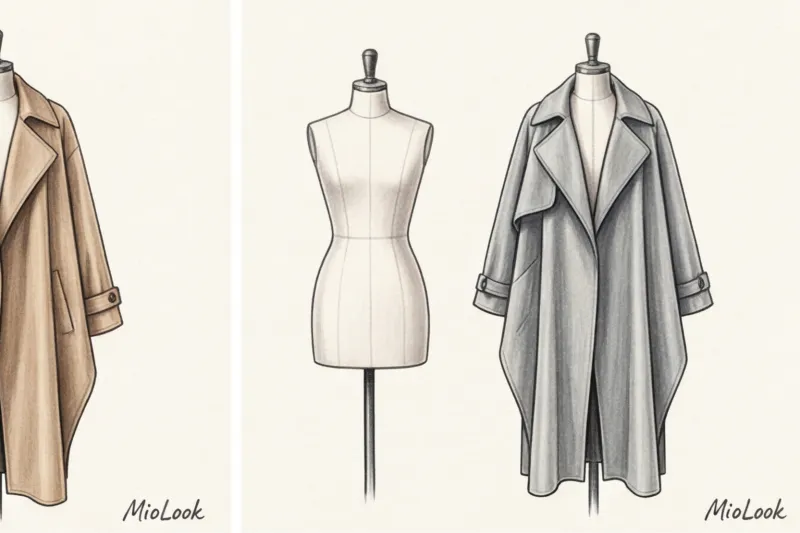
Furthermore, sandy beige isn't flattering for everyone. If you have a Slavic complexion with low contrast, classic beige can blend into your skin tone, making your face look tired. Alternatives for a smart wardrobe include deep khaki, graphite gray, rich navy, or dark chocolate. For more information on choosing status shades, read our article about quiet luxury style.
Jackets and down jackets: how to look elegant and avoid the "caterpillar" effect
Outerwear for women over 40 should be clearly categorized by function. A sporty ski jacket with bright accents and plenty of pockets is appropriate on the slopes, but not on city streets paired with a leather tote bag. For the city, a down jacket or a quilted coat-jacket is a must.
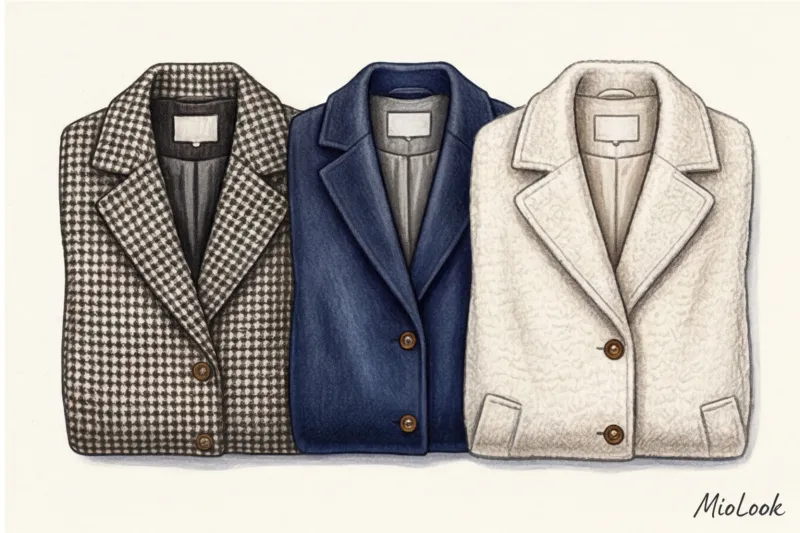
There are two main rules when choosing a warm jacket:
- Matteness is more important than color. Glossy, shiny raincoats cheapen the look. Matte, velvety textures (such as those with a peach-effect finish) always look premium and elegant.
- Geometry of stitches. Small horizontal stitching visually widens the figure, creating the infamous "caterpillar" effect. Choose wide horizontal stitching (from 15 cm), diamond-shaped, or diagonal—it elongates the silhouette.
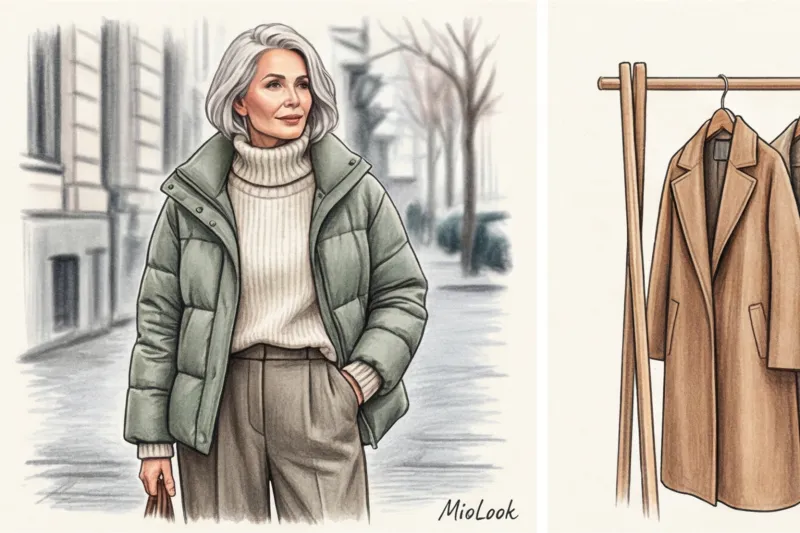
Leather biker jackets: are they appropriate after 40?
Absolutely! Leather jackets have long since moved from biker uniform to wardrobe staples. The secret is in styling them correctly. To avoid associations with "teenage rebellion," choose minimalist styles made of thick, matte leather without unnecessary embellishments (rivets, belts, epaulets).
The perfect pairing for a biker jacket after 40 is a play on contrasting textures. Wear it not with ripped jeans, but with cashmere sweaters, silk midi skirts, or wide-leg suit pants. More ideas can be found in the article. How to Dress Stylishly After 40: Forget About Age.
Checklist: Putting together a smart outerwear capsule at MioLook
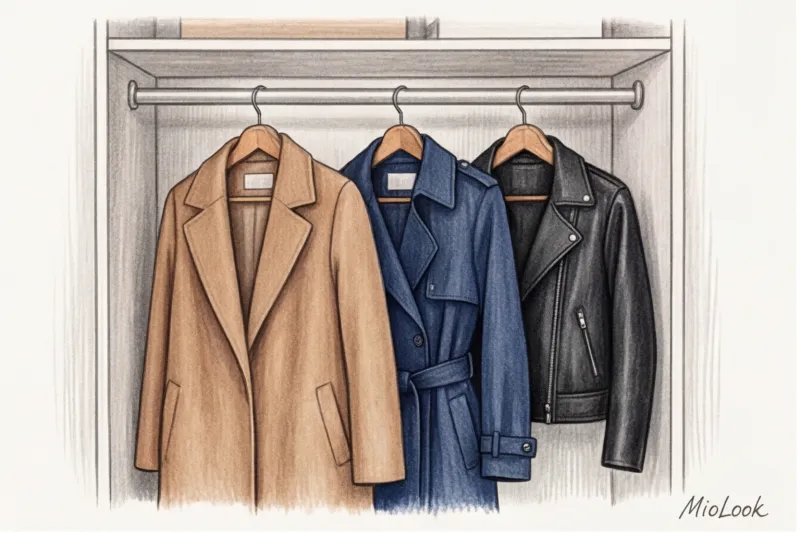
To cover 95% of life's situations, you don't need ten jackets. Three right pieces are enough. A minimal year-long capsule looks like this:
- Structured wool or blend coat (for work and evening wear).
- A loose trench coat or mackintosh (for the off-season and wind protection).
- A matte quilted jacket or urban down jacket (for weekends and active weekdays).
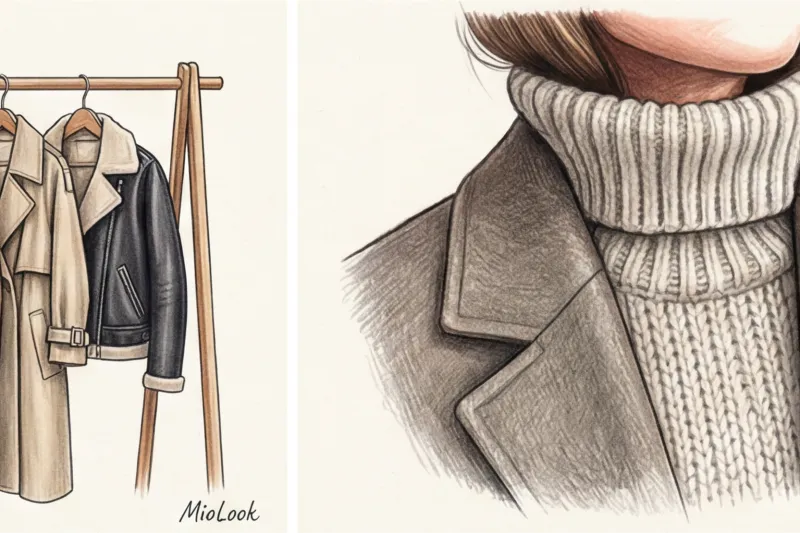
As a power user of style-conscious technology, I always recommend digitizing your wardrobe. When I first uploaded my clothes to the app MioLook I made a startling discovery: I had three similar black coats, but not a single lightweight jacket for warm autumn weather. The app's artificial intelligence allows you to create tags by season and check whether the chosen coat matches your favorite trousers. to after you make your purchase.
Access to MioLook for €0.99 — one-time payment
Start creating perfect looks with the help of artificial intelligence and get rid of the “nothing to wear” problem forever.
Get access — €0.99 onceThe main mistakes when choosing outerwear at 40 years old
Based on hundreds of wardrobe audits of my clients, I have identified three critical mistakes that ruin even the most well-thought-out look.
Mistake 1: Buying the right size. This is a technical error. It's not the coat fabric itself that keeps you warm, but the layer of warm air between your body and the clothing. If your coat fits tightly over a thin turtleneck, you'll freeze even at sub-zero temperatures. Furthermore, tight armholes make your arms appear fuller.
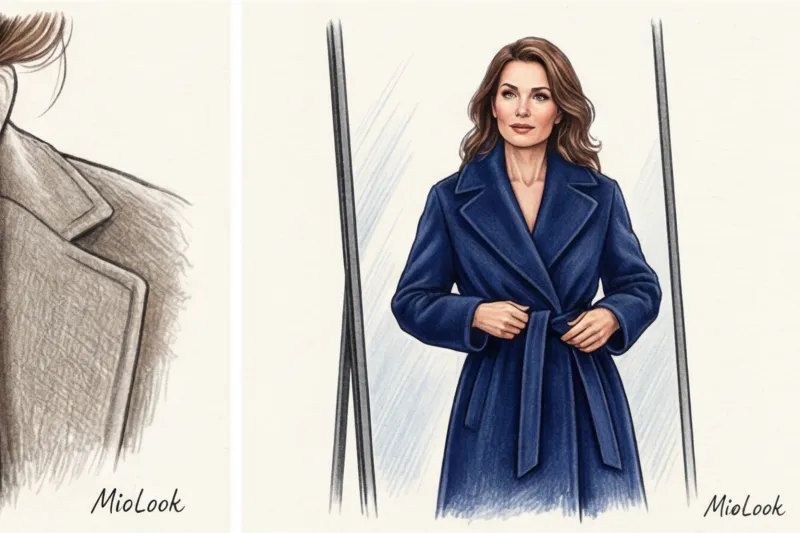
Error 2: Length mismatch. We've already talked about this, but I'll repeat: there's nothing sadder than an elegant silk dress peeking out 5-7 centimeters from under a sporty jacket. Either the jacket should end at the waist or upper thigh, or the coat should cover the dress.
Mistake 3: Outdated collar shapes. Huge stand-up collars, massive faux-fur hoods, and asymmetrical zip-up closures on down jackets—these are all details from the early 2000s. Opt for simple English collars on coats and neat stand-up collars on down jackets.
Your action plan for this season
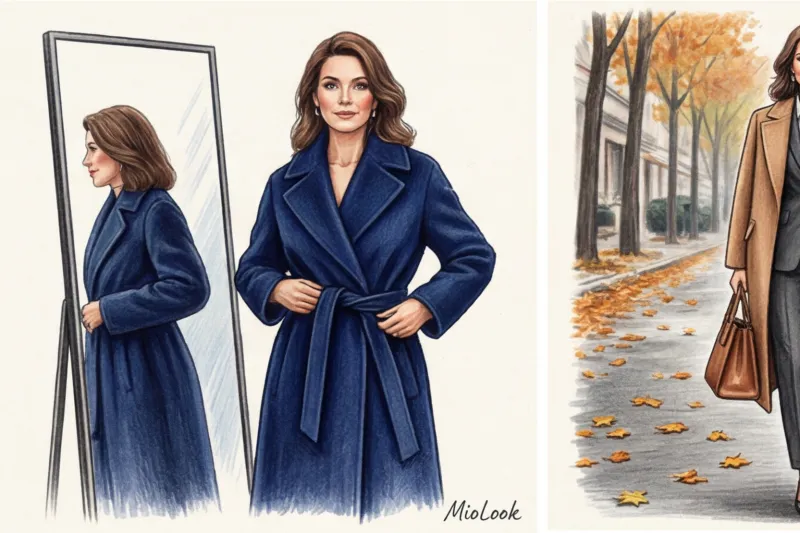
Instead of impulsively buying another sweater, redirect your budget to a quality outer layer. Take stock today: take out all your coats and jackets. Evaluate them critically – are they modern in cut? Are they long enough? Will your favorite oversized sweater fit underneath?
Create a wish list based on your actual lifestyle, not your imagination. If you work remotely and drive, you don't need a full-length coat—invest in a chic cropped pea coat. Outerwear is your confidence armor. Invest in quality, choose the right silhouettes, and every time you leave the house, you'll look flawless.