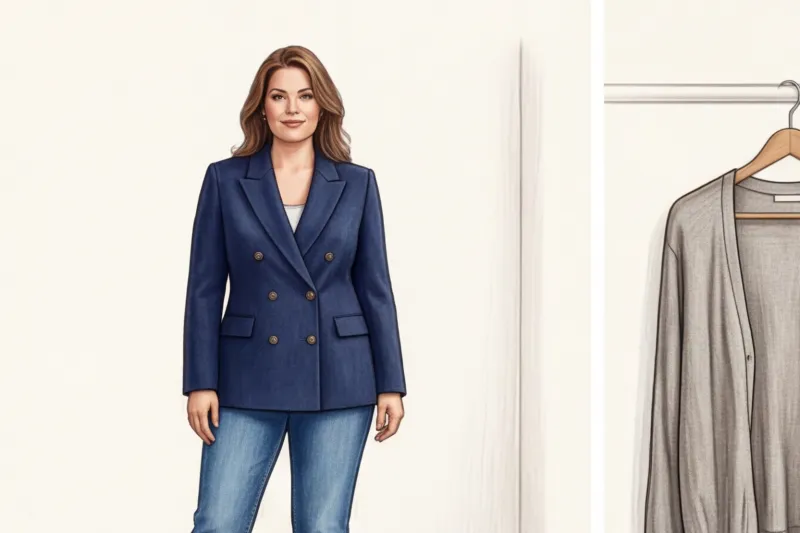
In my 12 years as a personal stylist, I've thrown out hundreds of shapeless black tunics. Every other plus-size client over forty comes to me with the same request: "Emily, help me hide this." And every time, we start by stopping hiding and starting to build. By creating Wardrobe for overweight women over 40 , most people make a fatal mistake: they choose drapery where rigid architecture is needed.
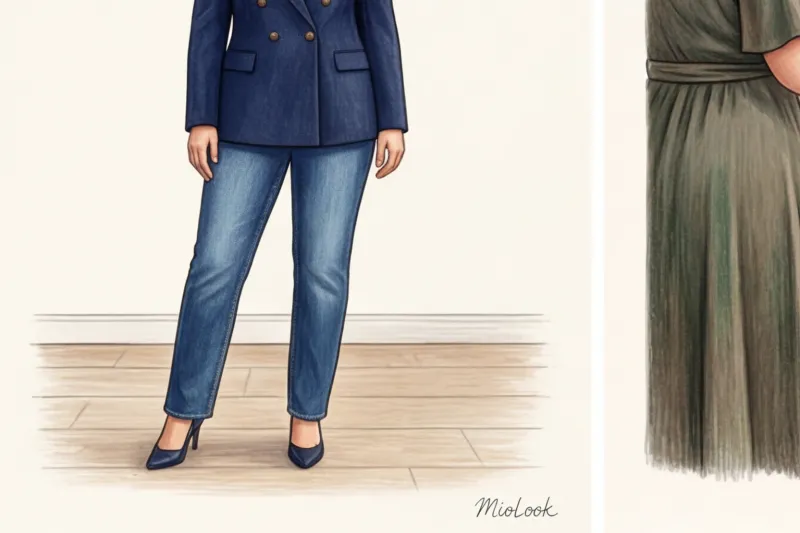
The internal statistics from our MioLook app are relentless: 82% of curvy women regularly buy clothes one or two sizes too big in the hopes of "hiding" their figure. The paradox is that excess fabric creates the effect of a monolithic block, visually adding those 5-7 kilograms you were trying to lose. It's time to take an engineering approach to your wardrobe.
Wardrobe for Plus-Size Women in Their 40s: Why the Old Rules No Longer Work
For a long time, the fashion industry offered plus-size women only two options: either tight knitwear that treacherously accentuated every fold, or voluminous robes. Today, the paradigm has shifted from the desire to "hide" to the goal of "impression management."
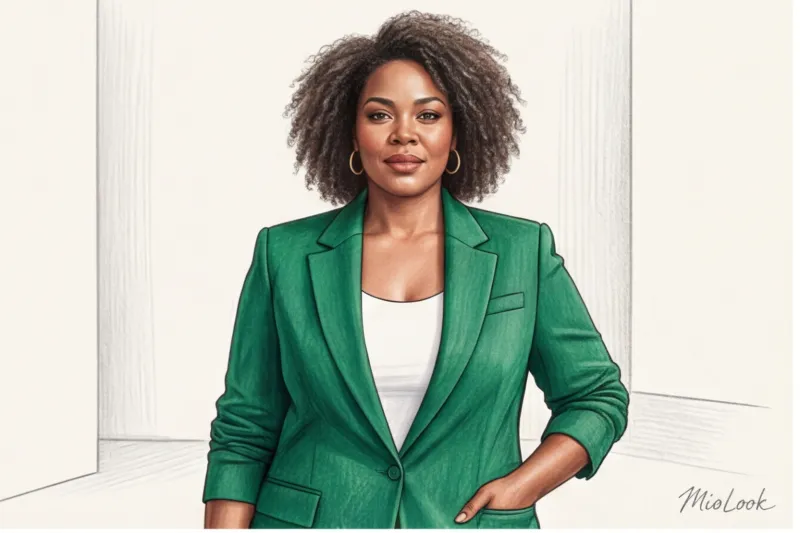
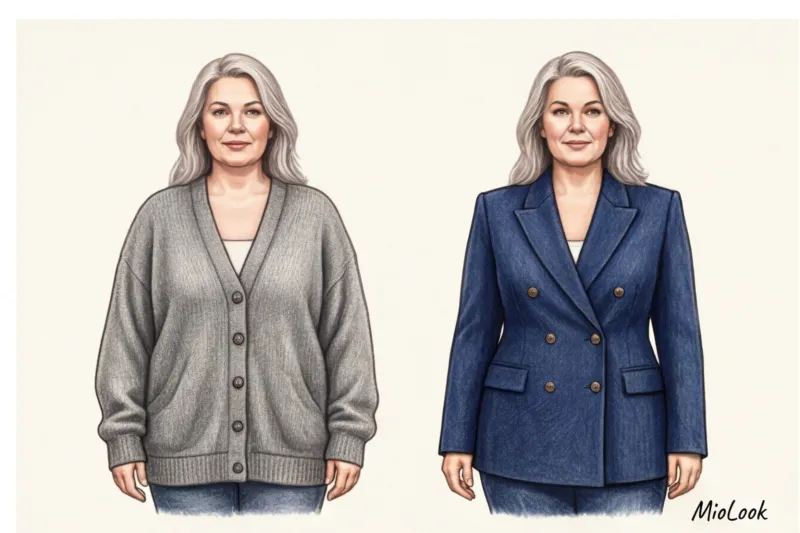
Let me recall a recent case from my practice. A 45-year-old HR director of a large IT company (size 52) came to me. Her closet consisted of soft, buttonless cardigans and wide, A-line dresses. When I first put a structured, double-breasted jacket with a sharp shoulder line on her, she couldn't believe the mirror. The jacket's rigid frame instantly pulled her silhouette together, the defined shoulders balanced her hips, and she visually dropped at least two sizes. We discussed the shift in fashion paradigms at this age in more detail in our A complete guide to a basic wardrobe for a 40-year-old woman.
"Clothing should function like a lightweight exoskeleton, not like a furniture cover. The Smart Architecture concept in styling means that clothing maintains its shape independently, regardless of the curves of your body."
MioLook's mood tracker shows that users 40+ who switch from oversized to fitted, dense fabrics report a 40% increase in self-confidence at work within the first month.
Architecture over drapery: 3 main secrets for figure correction
According to 2024 research by the WGSN Institute, the global trend toward "body neutrality" has brought structured cuts for plus-size clothing into the mainstream. The idea is simple: fabric physics matters more than fit.
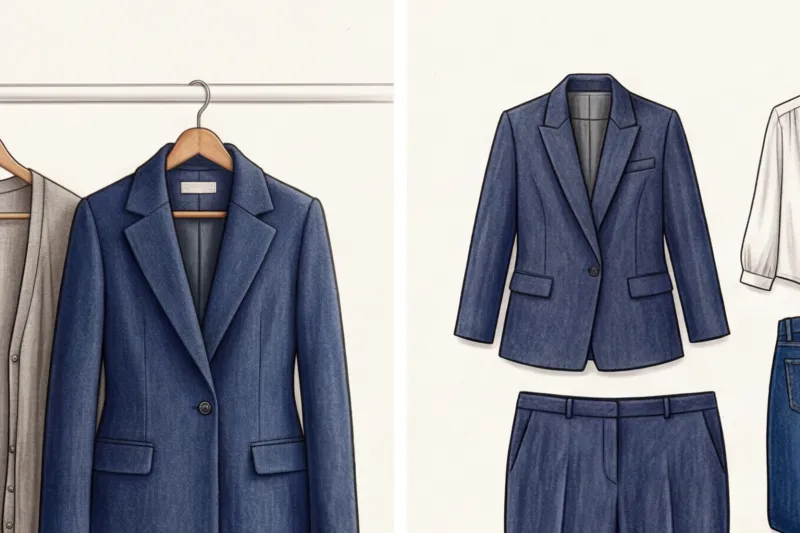
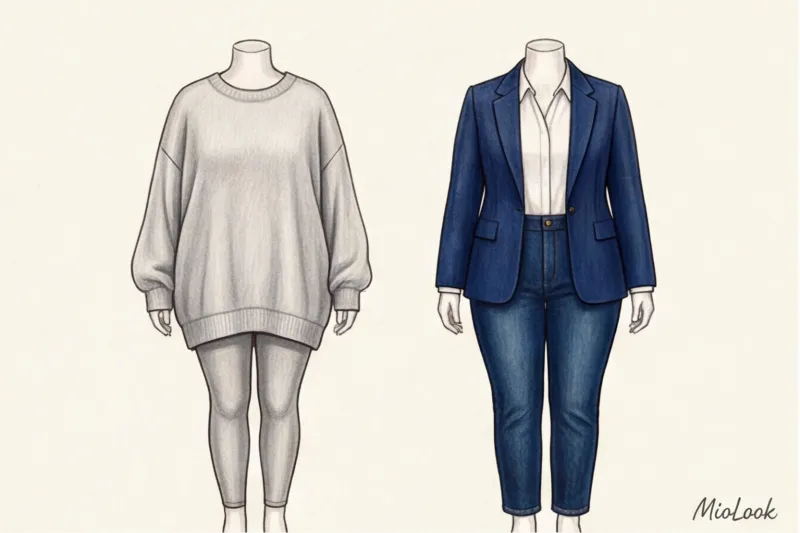
I personally tested how different materials perform during a 10-hour workday. After just three hours, thin jersey (sandwich jersey) stretches at the elbows, sinks into the folds of the back, and accentuates the contours of the underwear. However, thick wool blends, neoprene, or cotton with a weight of 180 g/m² or more perform like perfect sculptors.
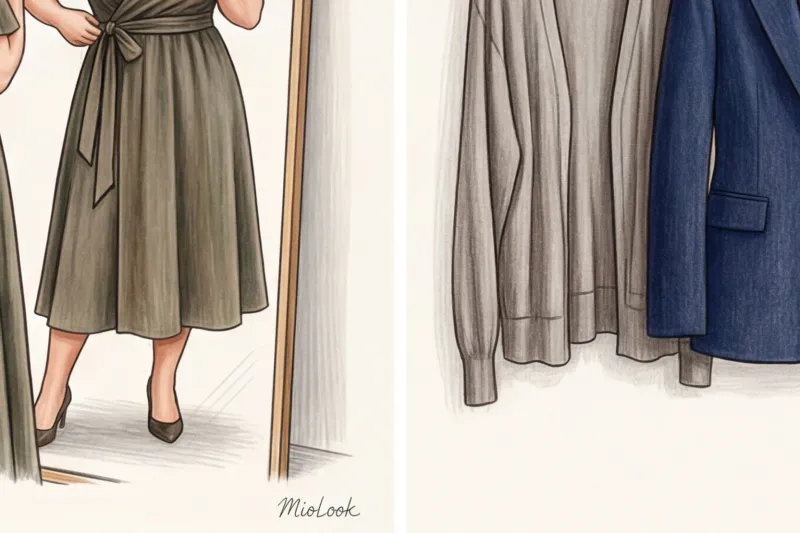
- Density rule: If you pick up an item by the hanger and it hangs limply, return it to the rail. We need fabrics that can hold their shape.
- Creating internal verticals: An open, thick cardigan (not a rag!), crisp, pressed creases on palazzo pants, a contrasting row of buttons on a shirtdress. These are the lines along which the other person's gaze glides.
- Focus control: Draw attention away from problem areas with a portrait zone. Statement earrings, a well-cut neckline, or a statement collar draw attention to your face, not your waist.
Access to MioLook for €0.99 — one-time payment
A smart AI stylist will select the perfect look based on your proportions.
Get access — €0.99 onceThe illusion of an elongated silhouette: how the right necklines and lengths work
In styling, we actively utilize the laws of optics. The Müller-Lyer illusion, when applied to clothing, demonstrates that a V-neckline visually elongates the neck and narrows the chest, while a crew neckline transforms a full bust into a monolithic block.
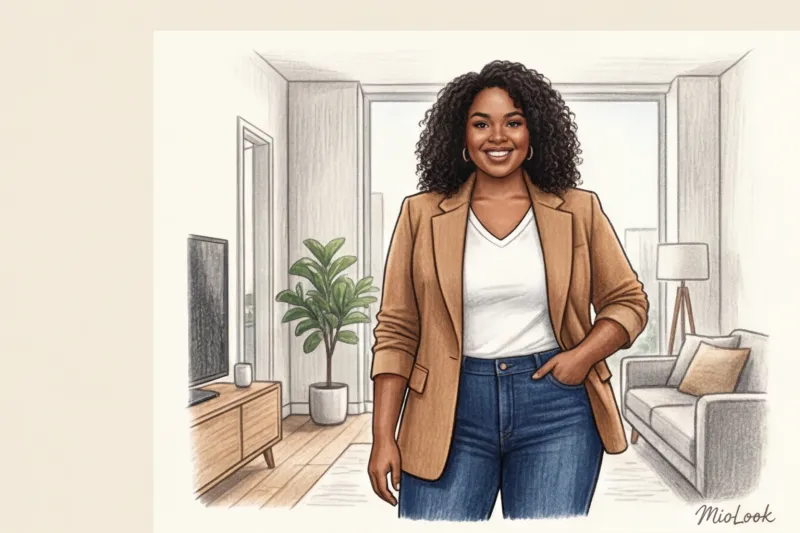
Another golden rule of proportions is to never cut a horizontal line across the widest part of your figure. If a top or jacket ends right at the fullest point of your hips, you'll make them appear even wider. The length should end either a hand's breadth above or below this line. And don't forget about air: exposed wrists (3/4 sleeves or rolled-up sleeves) and ankles showcase the most graceful parts of your body, lightening the overall look.
Basic Capsule: 7 Investments in Status and Slimness
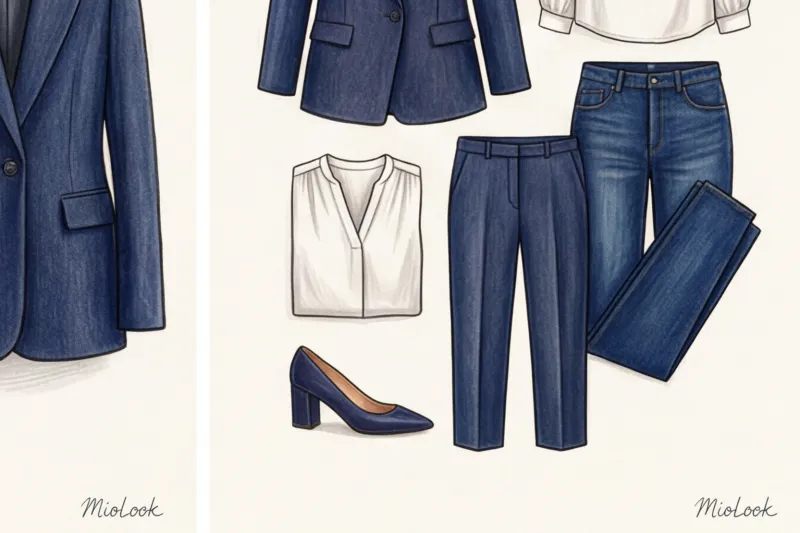
To avoid standing in front of your closet in despair, you don't need 50 random items. Just 7 items with the right characteristics are enough.
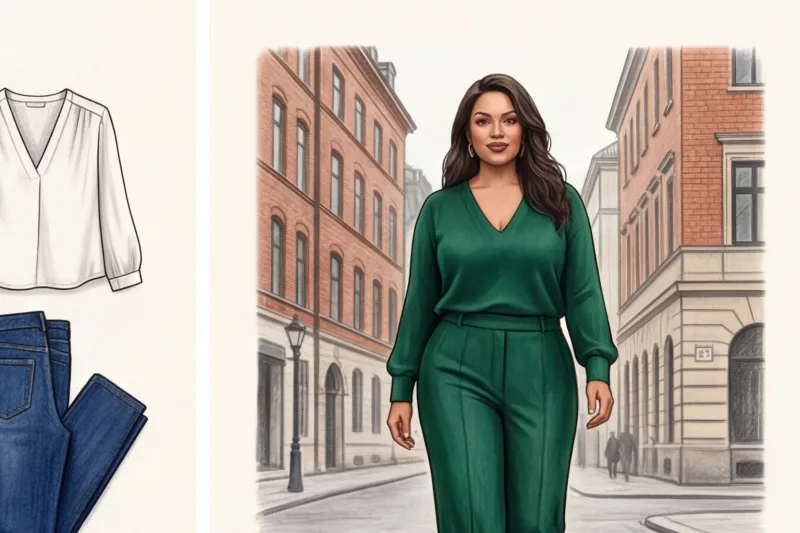
- Structured jacket. Double-breasted or single-breasted. The key is a clear shoulder line (with shoulder pads) and a lapel width that's proportionate to your facial features. Lapels that are too narrow will look short on a larger figure.
- Palazzo trousers or straight trousers with an arrow. High or mid-rise. The fabric should be flowy but heavy (for example, high-quality viscose with polyester).
- Shirt dress made of thick cotton. A versatile soldier. Tie the belt slightly to the side, not tightly in the center—the asymmetry distracts from your tummy.
- A-line or wrap-around midi skirt. Perfectly conceals the volume of the hips, accentuating the graceful calves.
- Silk or viscose blouse with a V-neck. No unnecessary frills, bows on the chest or patch pockets - they create an unnecessary 3D effect.
- Straight jeans made of thick denim. Look for a 12 ounce weight or heavier with a strictly 2% to 5% elastane content. No fraying (lightening works like a magnifying glass).
- Status shoes with a stable geometric heel. Stilettos create dissonance with a voluminous figure, but a massive block heel or kitten heel looks harmonious.
The only exception: This architectural capsule doesn't work if you choose items made of 100% rigid cotton without a drop of elastane. You simply won't be able to lift your arms or sit comfortably in a car. Always look for a minimum percentage of spandex.
Color, print, and monochrome: how to avoid adding bulk
The biggest myth I hate is that "black is slimming." In reality, oversized black, especially in matte fabrics, absorbs light and turns the figure into a flat, dark hole. Yes, black conceals shadows, but it also emphasizes the outer contour (silhouette). If your silhouette is shapeless, you'll look bulky.
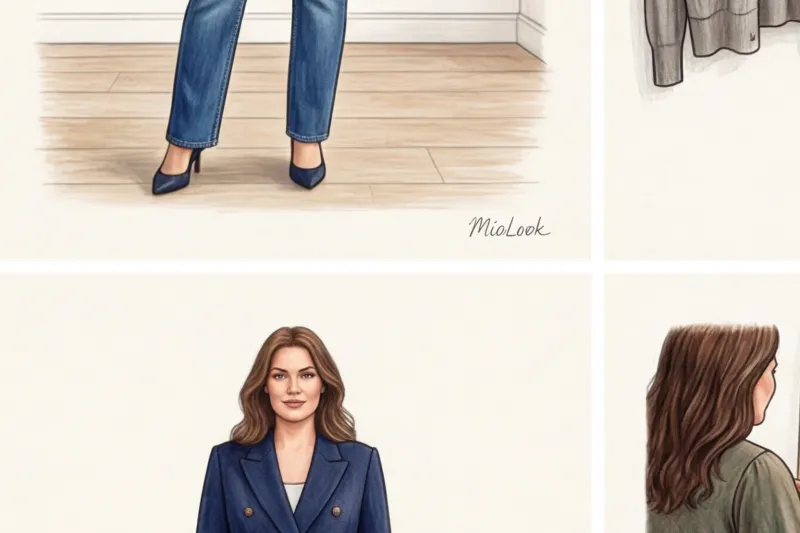
Replace black with sophisticated shades. PANTONE's reports on colors that look "expensive" confirm that navy blue (Navy Peony), deep emerald, wine (Burgundy), and dark chocolate are far more effective. They retain the corrective properties of dark colors but look sophisticated.
The power of monochrome is colossal. A single vertical color (for example, emerald trousers and a tone-on-tone blouse) deprives the other person's eye of horizontal boundaries. You appear 3-5 cm taller, and excess volume dissipates.
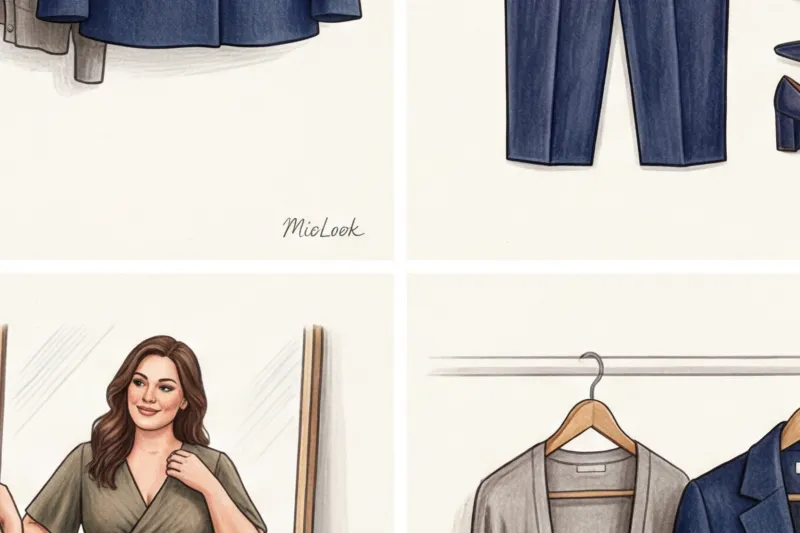
When it comes to prints, scale matters. A small millefleur floral on a larger woman creates the effect of a vast meadow, simplifying the look. Opt for medium-sized geometrics, abstract designs, or animal prints (but in moderation).
Your perfect look starts here
Join thousands of users who look flawless every day with MioLook. Digitize your wardrobe in just a few clicks.
Get access — €0.99 onceMistakes that visually add age and weight
Sometimes a single detail can ruin a carefully crafted look. When sorting through clients' shopping carts at mass-market stores (most often Mango or H&M), I constantly point out these "cheapening and aging factors":
- Round toe flat shoes paired with cropped trousers. Hoof-shaped ballet flats cut off the foot. If the shoe is flat, the toe should be elongated and almond-shaped.
- Contrast belt at apple waist. If your stomach is your problem area, don't outline it with a brightly colored belt. Use the inner waistbands of wrap dresses.
- An abundance of small decorations. Rhinestones, cheap guipure, and bows are the hallmarks of the "old lady's blouse." Minimalism always looks classier and slimmer.
- The sleeves are too tight. If the sleeve cuts into the fullest part of your arm (your forearm), it visually makes you look bigger, even if the item fits you. Choose a loose, straight sleeve.
Checklist: A Closet Inspection Using Algorithms
Buying new clothes without auditing your old ones is a waste of money. The first step to a smart wardrobe is digitalization. And here, technology is a huge time saver.
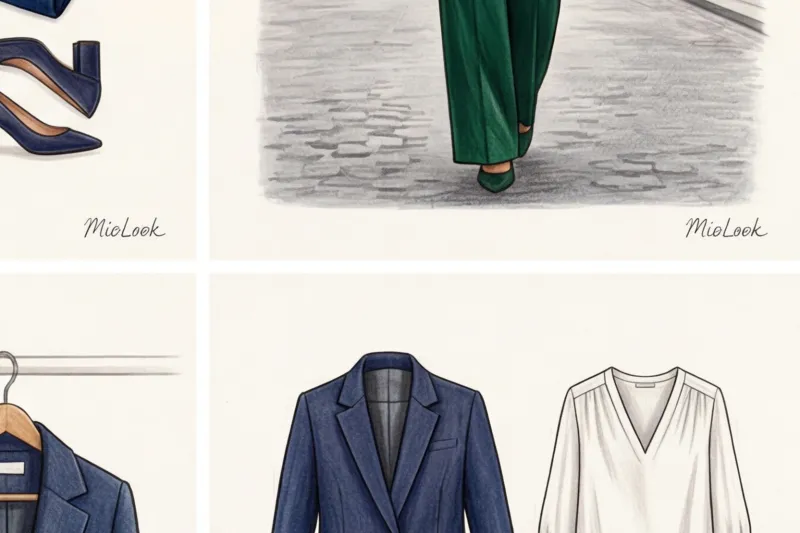
I recommend the strict "3 Look Rule": if you grab an item from the bottom of your closet and can't immediately come up with three different looks for it in your current life, get rid of it. It's either the wrong size or it's outdated.
Use apps like MioLook For virtual try-ons. You simply upload photos of your items, and the algorithm creates capsules from them, highlighting "blind spots" (for example, the algorithm will suggest: "You have five jeans, but no structured tops"). This is the best insurance against impulsively buying another shapeless tunic.
Clothes are your personal marketing tool, not a disguise. Stop hiding your body behind meters of flimsy fabric. Invest in proper form, maintain good posture, and you'll be surprised how your reflection and self-image will change.