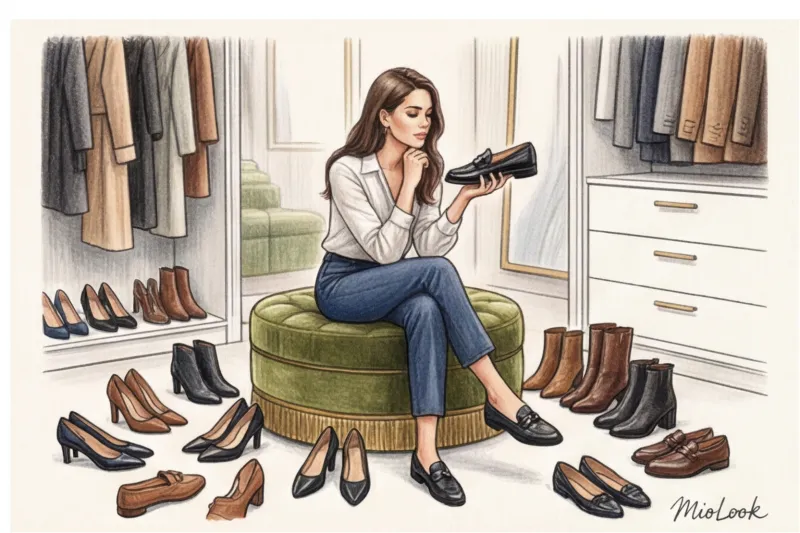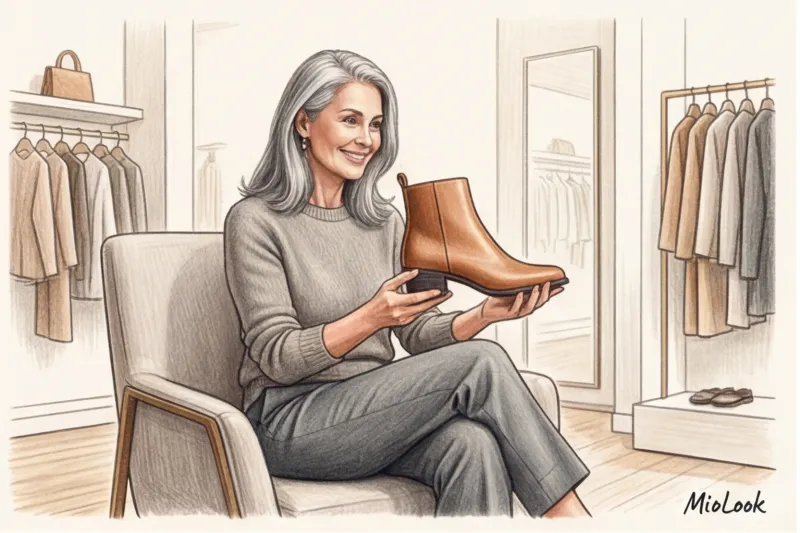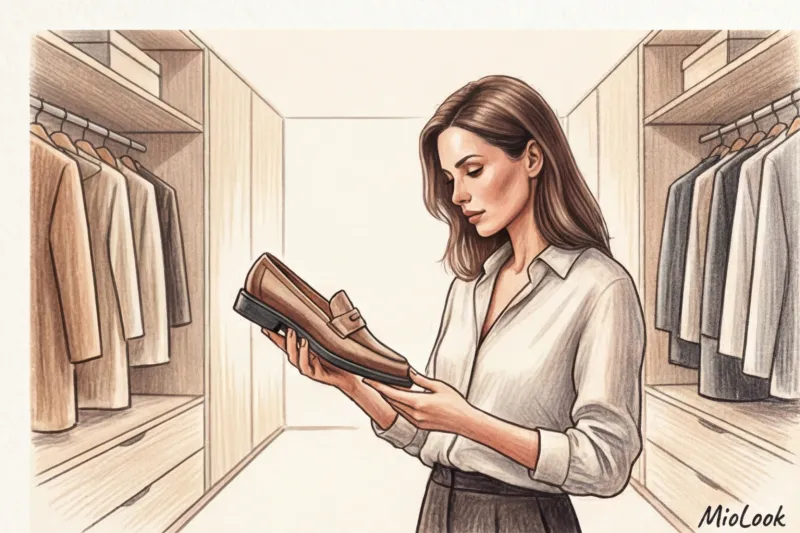
When my client, the CFO of a large corporation, came to see me for her first consultation, she took off her four-inch stiletto pumps in the hallway and breathed a sigh of relief that made everything clear. "I can't wear these anymore," she said. "But how am I supposed to chair the board of directors in sneakers?" This dilemma is familiar to almost every woman over forty. We're conditioned to think that status and elegance are inextricably linked to discomfort.
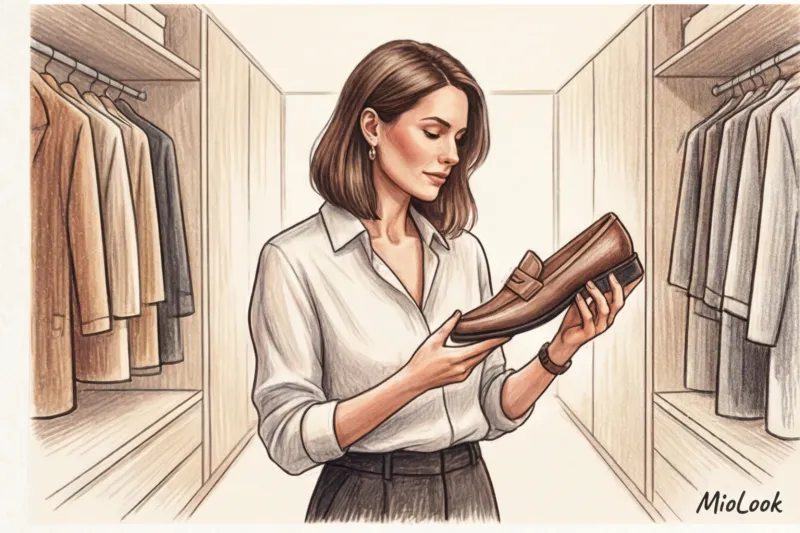
As I already wrote in our A guide to shifting the paradigm of basic wardrobes for women over 40 Style at this age no longer requires physical sacrifice. Stylish shoes for women in their 40s today are an engineering masterpiece, not a torture device. Instead of banal lists like "just buy black ballet flats," I suggest approaching your shoe wardrobe like an investment portfolio: with cold calculation, a focus on biomechanics, and an understanding of modern power codes.
Architecture over decor: why stylish shoes for women over 40 start with biomechanics
Let's face it, based on science. According to the American Podiatric Medical Association (APMA, 2023), after age 40, the natural cushioning fat pad on the sole of the foot thins by approximately 30%. Ligaments lose their elasticity, and the arch of the foot may collapse slightly. This is physiological, and ignoring it by trying to squeeze into mass-market shoes with flat, cardboard-like soles is a crime against your own body.
That's why shoe architecture, rather than decor, is taking center stage today. Trend analysis agency WGSN called this a macrotrend in its 2024 report. comfort-first luxury (comfortable luxury). Leading brands have begun to embed serious orthopedic properties into modern, minimalist designs.
The right shoes should work like a good corset for your foot. This means they have an anatomical arch support hidden inside, a rigid heel counter (to prevent the foot from "wandering" while walking), and a properly rolled sole that relieves stress on the joints. When you buy shoes with proper biomechanics, you're not paying for a logo, but for the ability to stay energetic after 10,000 steps.
The Heel Myth: How to Look Classy and Confident in Flats
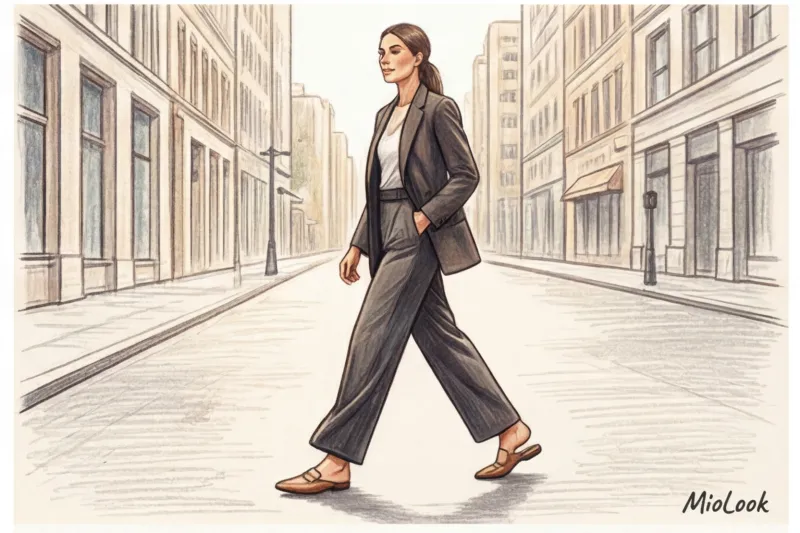
We grew up in a paradigm where femininity and professional authority were associated exclusively with high heels. But dress codes have changed. Let's return to my finance client: we replaced her torture pumps with structured leather oxfords and derbies made of thick, polished leather.
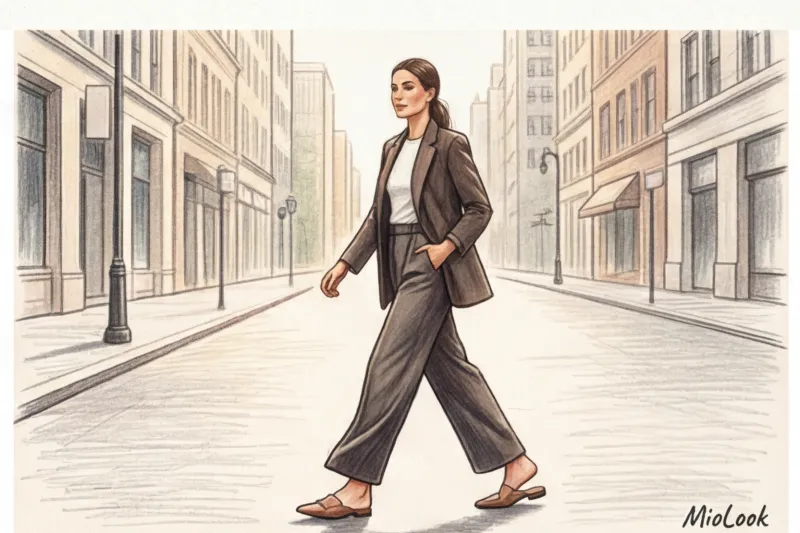
A confident, firm, and springy step on flats conveys far more power, control, and expertise than a shuffling, unsteady gait in high heels. Ditching stilettos isn't a downgrade; it's a shift to a new level of self-confidence.
The rigid shape of flat shoes ties the look together. If you're wearing a loose, flowing pantsuit, a shoe with a sharp, geometric shape (like square-toe loafers or derbies with a microporous sole) will create the right contrast and show you're in control. This is a technique used by top-tier stylists.
Access to MioLook for €0.99 — one-time payment
A smart AI stylist will select the perfect look based on your new shoe capsule.
Get access — €0.99 onceSmart Shoe Capsule: 5 Pairs That Will Solve 90% of Your Tasks
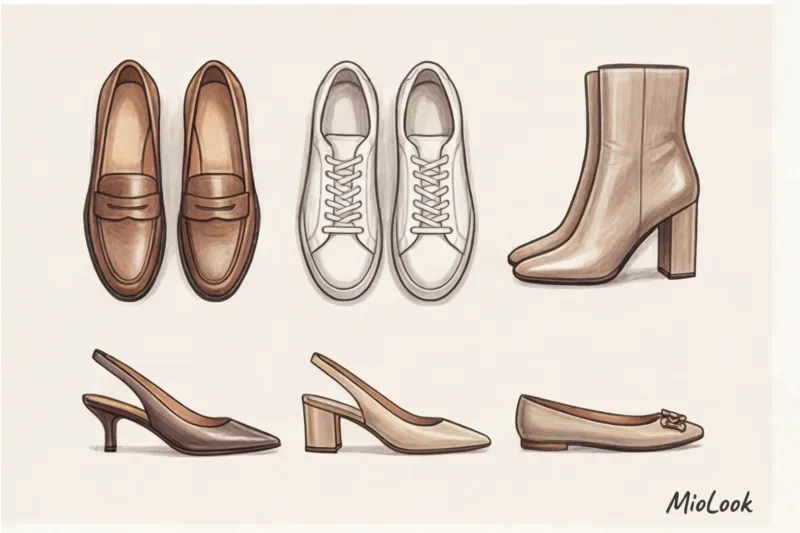
My experience confirms Pareto's golden rule: we wear 20% of the shoes in our closet 80% of the time. So why keep 30 pairs of dubious quality? The matrix of the ideal shoe wardrobe is built on the intersection of seasonality and your personal dress code. Here are five formulas that work without fail.
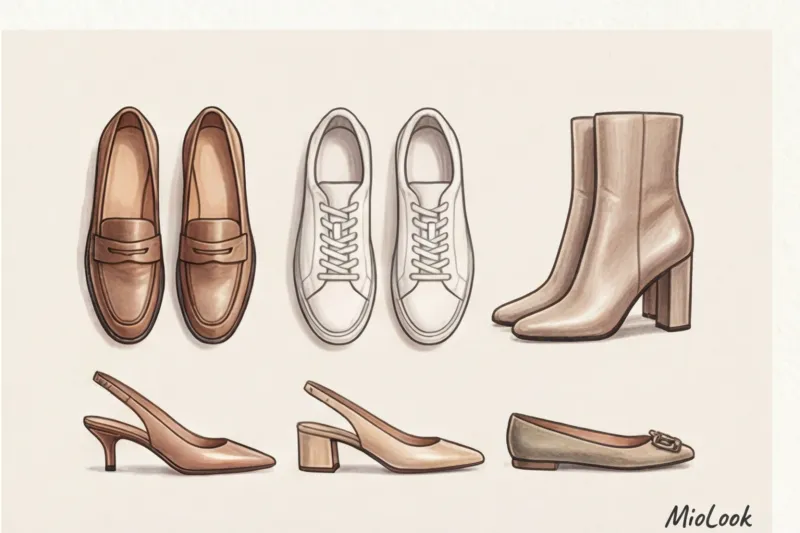
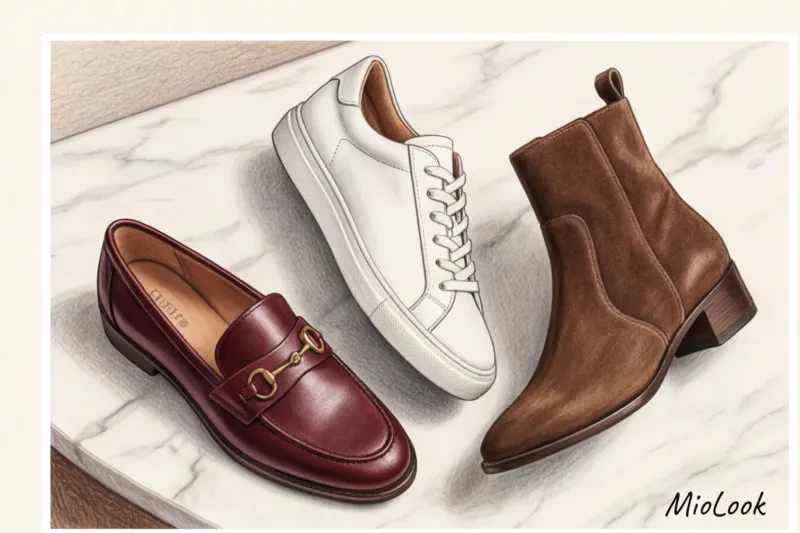
Structured Loafers (Smart Casual)
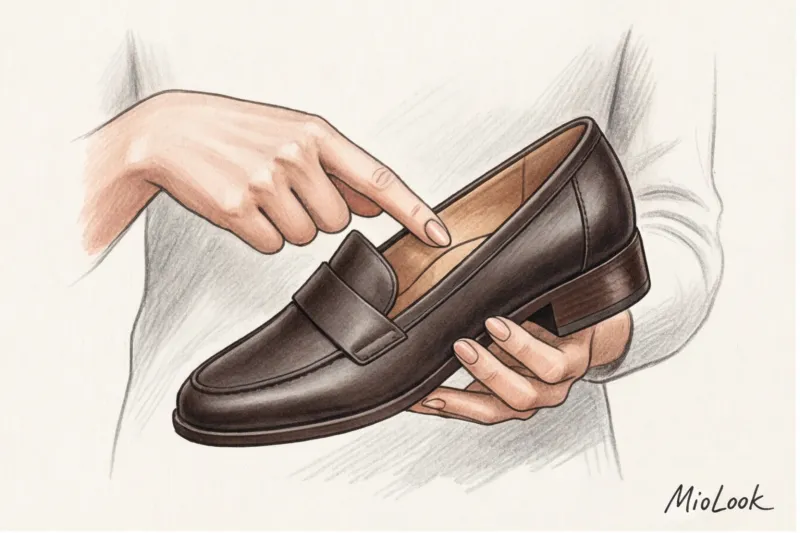
This is the absolute foundation of a modern business and casual wardrobe. The ideal loafers for a woman of elegant age should hold their shape even when sitting on a shelf. Look for leather models. spazzolato (semi-gloss, dense leather) with a moderate sole. Avoid hyper-tractive soles—they make the foot heavy and quickly go out of style. Loafers perfectly balance both cropped jeans and wide palazzo shoes.
Basic leather sneakers (Urban Casual)
Don't confuse running shoes with street sneakers. Athletic shoes paired with a classic suit only look expensive if they have a minimalist silhouette. No flashy logos, mesh inserts, or massive airbags. Pure white or off-white, genuine leather, and a well-designed almond toe. This pairing instantly softens the formality of a tailored blazer, creating a fresh and dynamic look.
Elegant ankle boots (Fall/Winter)
A detail that instantly elevates an outfit is the toe shape. Replace the traditional round toe with a bob (a soft square) or an elongated almond. When choosing ankle boots, it's crucial to follow the "gap rule." The shaft should be narrow enough to fit easily under wide-leg trousers or end exactly where the hem of a midi skirt begins. A strip of bare leg between the top of the shoe and the hem of the garment visually shortens the height.
Micro-heeled slingbacks (Office and Evening)
The perfect compromise for those who aren't ready to give up heels completely. Slingbacks (closed-toe shoes with an open back and a strap) with a kitten heel of 3-5 cm are a back saver. The open heel visually lightens the leg's silhouette, making the ankle appear more graceful. They look luxurious with 7/8-length trousers and silk skirts.
Red flags: shoes that will mercilessly forgive and age your look
Let's be honest. Caring about comfort shouldn't translate into buying shapeless, youth-defying shoes. In my styling practice, I have a strict stop list of pairs that sabotage even the most expensive outfit.
- Ballet flats with a round toe and a bow: The "baby feet" or "straight schoolgirl" look is very dissonant with a mature, confident woman. Replace them with pointed mules or square-toe ballet flats.
- Too thin, "papery" sole: Not only is it bad for your joints (you feel every pebble on the pavement), but it also looks cheap and deprives your feet of structural support.
- Hybrid shoes: Wedge sneakers from the 2010s, shoes masquerading as sporty moccasins. Shoes should have a clear species identity. Hybrids are always welcome.
- Excessive decor: Rhinestones, pearl embellishments, random perforations. Status is expressed in the quality of the leather and the purity of the lines, not in the quantity of hardware.
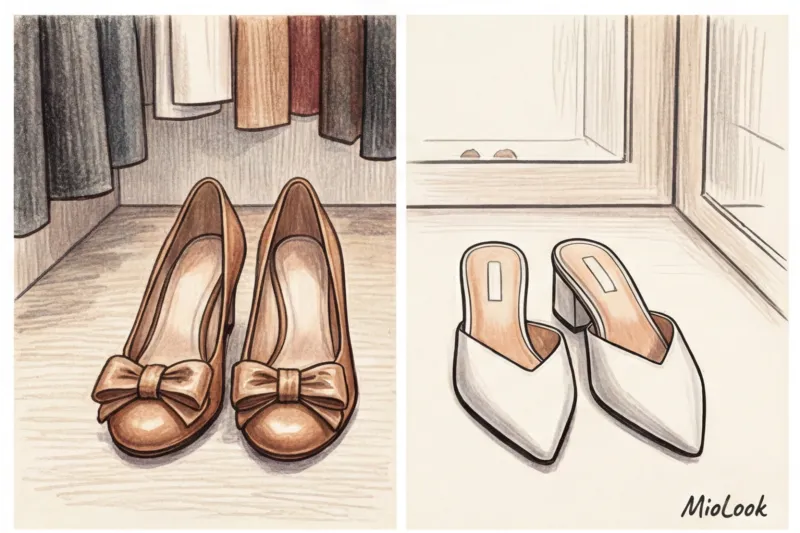
I always tell my clients: if a shoe looks like its only function is to keep you from dying of pain, we won't buy it. Comfort should be invisible.
Your perfect look starts here
Join thousands of users who look flawless every day with MioLook by digitizing their wardrobe.
Get access — €0.99 onceHow to Digitize Your Choice: A Checklist Before Buying a New Pair
I love data and precise calculations. A few years ago, I conducted a personal experiment: for six months, I recorded every time I wore shoes to calculate Cost Per Wear (cost per exit). The results are sobering.
I wore my $300 premium leather loafers 150 times this season—each outfit cost me $2. And I wore my striking $50 mass-market pumps, bought in a fit of rage, exactly twice (my legs were cramping). The cost per outfit was $25. Expensive, but the right basic shoes always turn out cheaper when you calculate the math.
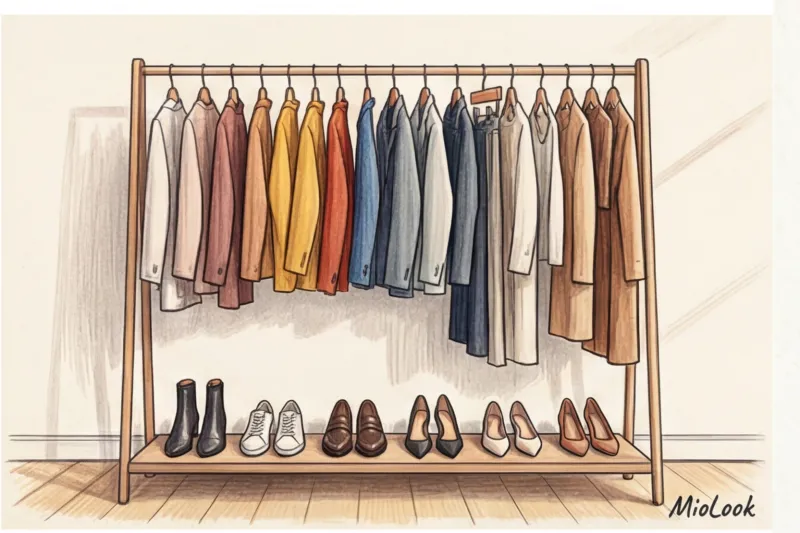
Before you take your pair to the checkout, run them through my checklist:
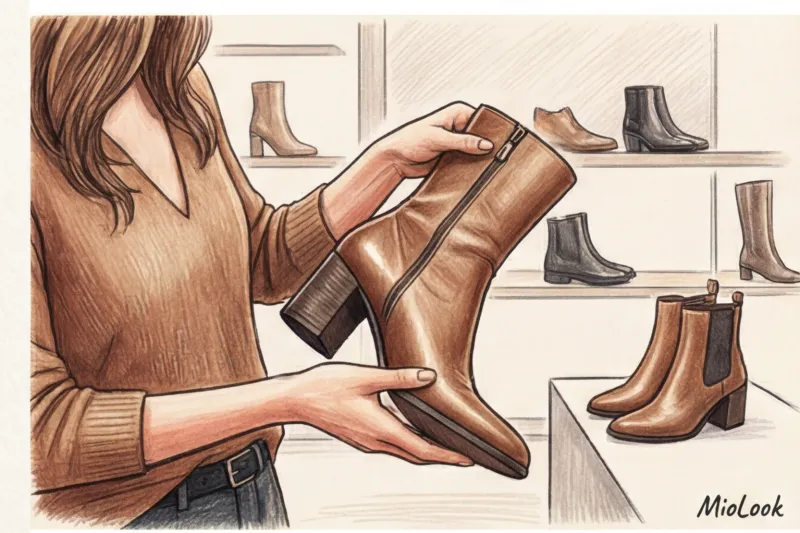
- Twist test: Grasp the shoe by the toe and heel and try to twist it slightly. It should give slightly, while maintaining a firm arch. If the shoe twists like a towel, there's no arch support.
- Rule of thumb: There should be a finger-width gap between your longest toe and the tip of your shoe. Your feet swell by the evening, and this space will prevent blisters.
- Virtual Integration: Before I buy a new pair, I take a photo of it and add it to MioLook app If the virtual stylist can't put together at least five looks from my current wardrobe, a couple stay in the store.
Investing in shoes is an investment in your mood, health, and the impression you make just by walking into a room. Choose architectural designs, trust the flatness of your shoes, and remember: a truly stylish woman is one who feels comfortable in her step.