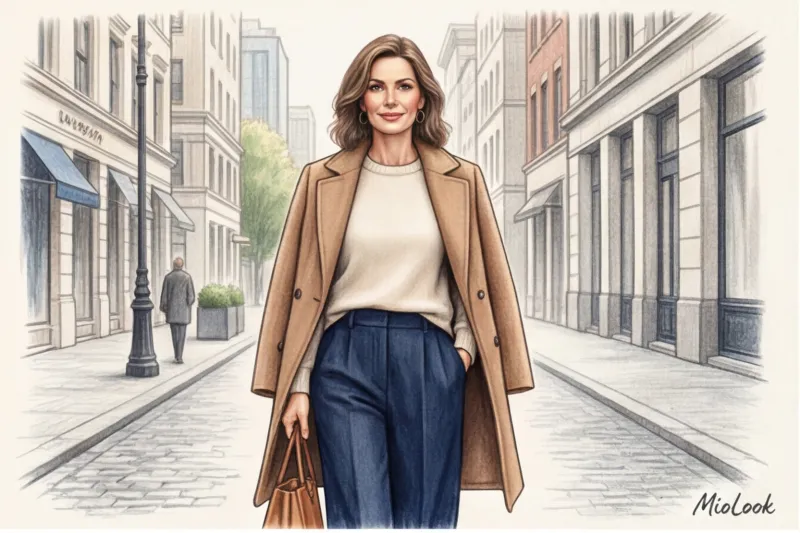
Take a look at your closet right now. How many items are there that you wear purely for their comfort, even if they look a little tired? And how many look luxurious, but by evening you can't breathe in them? Finding a balance between these extremes is the main challenge my clients face when they come to me.
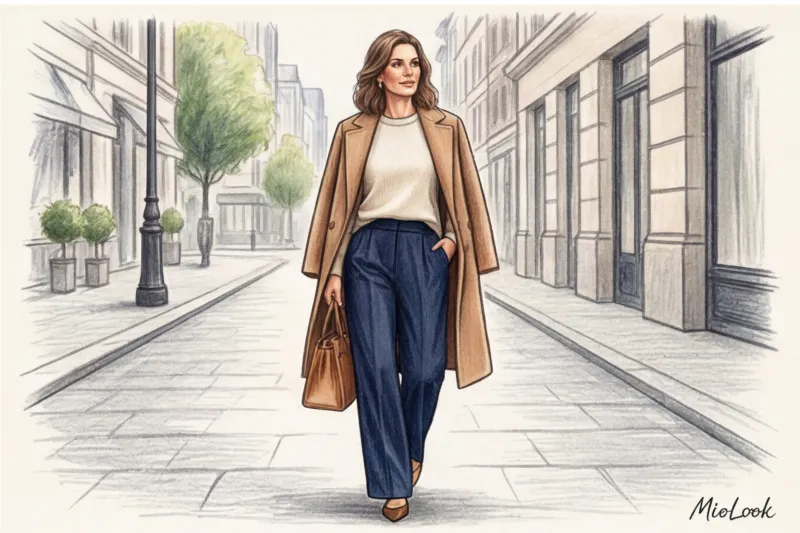
For years, glossy magazines have been feeding us lists of "things you shouldn't wear after a certain age." Forget it. Modern Casual style for women over 40 It's based not on prohibitions, but on a scientific textile approach: how to use fabric texture, thread density, and cut architecture to create a wardrobe that looks prestigious and lasts for years. We discussed the fundamental rules of the base in more detail in our A complete guide to a basic wardrobe for a 40-year-old woman , but today I want to focus on relaxed everyday life.
Casual Style for Women Over 40: A New Paradigm of Comfort and Status
The term "casual" has long ceased to be associated with clothes for trips out of town. Today, it's the language of elegant everyday life, which is perceived by others in a split second. In the 2024 report of the authoritative trend bureau WGSN, the macrotrend Ageless style Ageless style has been named the dominant trend for the next decade. The industry has finally realized that women want to look relevant, not tied to their passport numbers.
In my practice, this transition is often accompanied by insights. Last year, Anna, the CFO of a large company, came to me. She complained of chronic fatigue from the rigid dress code: "I come home and the first thing I do is rip off these armor-like suits." We transitioned her business wardrobe to smart-casual, replacing stiff jackets with thick merino wool cardigans and classic shirts with blouses made of dense Tencel. The result? She no longer felt physically tired from her clothes. Tactile comfort directly impacts our psychological confidence and stress levels.
Access to MioLook for €0.99 — one-time payment
A smart AI stylist will select the perfect look for every day, taking into account your preferences and body shape.
Get access — €0.99 onceBreaking the Stereotypes: Why Skinny Fit No Longer Works
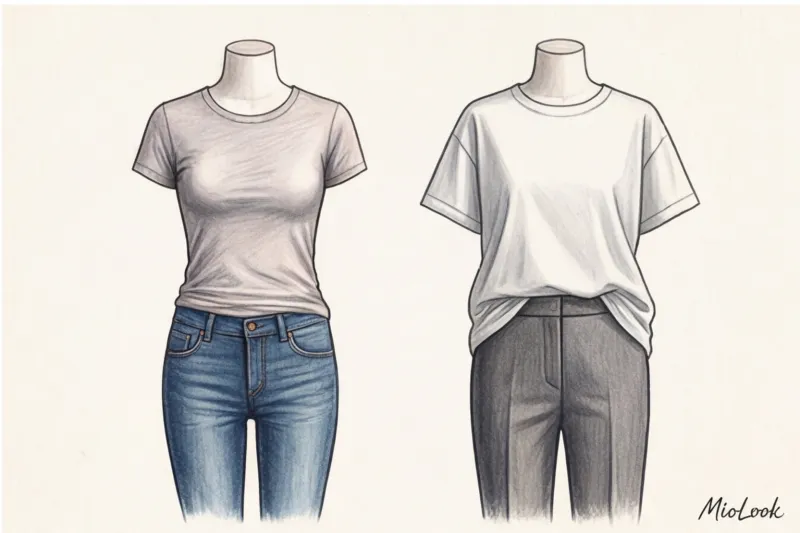
The most damaging myth I hear from new clients is: "To look slimmer, you need to wear tight-fitting clothes." This is a colossal misconception. Thin, flimsy, clingy knitwear mercilessly accentuates the contours of your underwear, even the slightest folds in your skin, and visually adds weight and age.
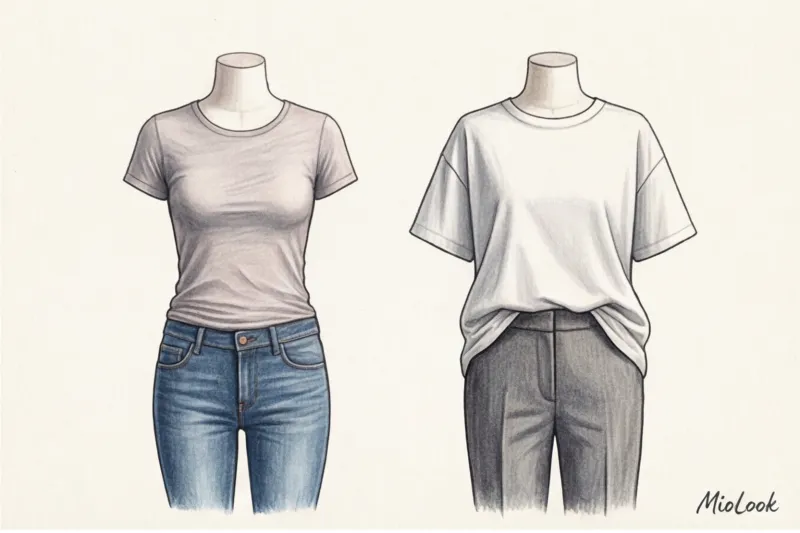
I regularly conduct the same experiment in the fitting room. I bring a client who usually wears a size M a basic T-shirt or jumper in a size L or even XL, but in a very dense, shape-resistant fabric. The reaction is always the same: "Sofia, I look two sizes smaller in this!" Why does it work? The secret lies in the concept of "air between the body and the fabric." A semi-fitted cut that doesn't cling but merely hints at the contours of the body creates the illusion of fragility.
"It's the loose fit that makes a look luxurious. When a garment doesn't burst at the seams, the subconscious interprets this as relaxation and status."
Fair Limit: This technique doesn't mean you need to wrap yourself in shapeless, oversized garments. If you have a prominent bust (like an apple or inverted triangle shape), a completely oversized garment will make you look bulkier. In your case, you need a structured sweater, not a bulky one. semi-fitted silhouette - for example, a shirt made of thick cotton with an unbuttoned collar forming a V-neck.
Textile Expertise: Fabrics That Make Everyday Look Expensive
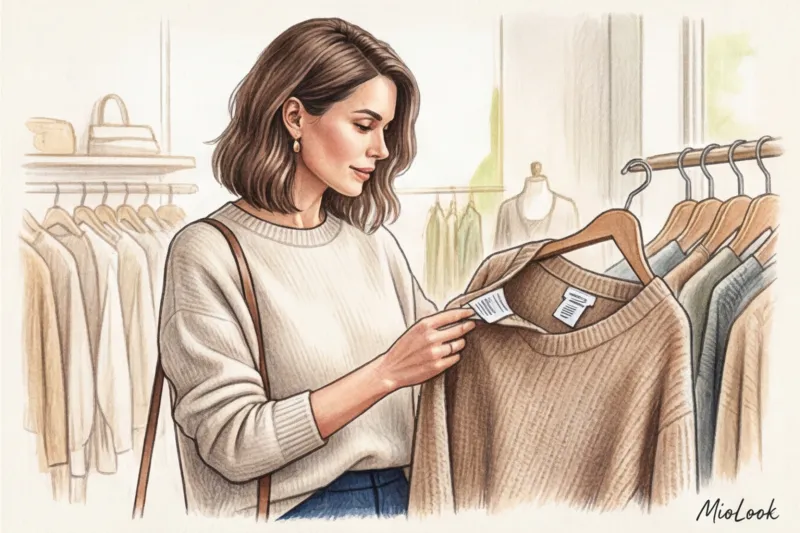
The difference between a cheap and an expensive basic T-shirt isn't the logo, but the length of the fiber and how it's processed. Have you ever noticed why some cotton T-shirts pill after the first wash, while others retain a subtle satin sheen for years? It's all about mercerization—a cotton processing process that removes the short fuzz from the thread, making it smooth and durable.
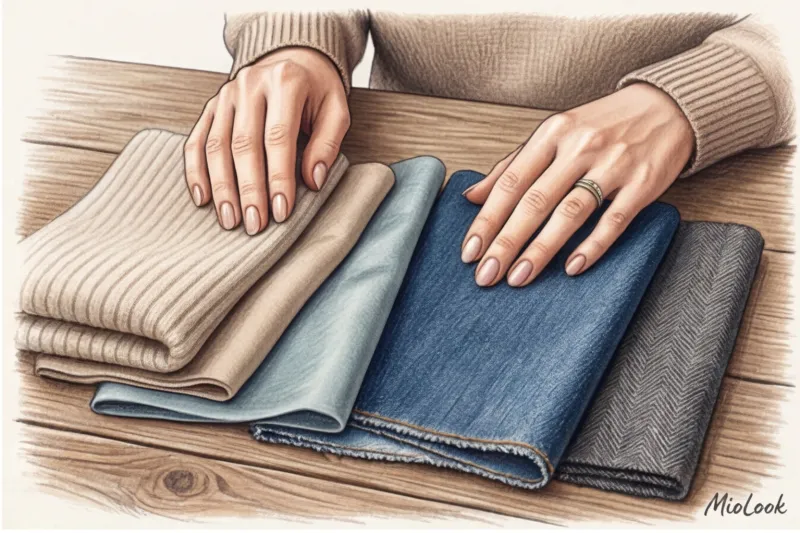
My personal method for testing items right in the store, which I call the "wrinkle and shine test":
1. Take the edge of the fabric (for example, the hem of a T-shirt or pants) in your fist and squeeze it hard for 5 seconds.
2. Unclench your hand. If the fabric remains crumpled, return it to the hanger. If it straightens out almost to its original state within a few seconds, it's a worthwhile investment.
3. Place your hand inside the garment and hold it up to the light. If you can clearly see the outline of your fingers through the fabric (and it's not summer linen or silk), the garment will cheapen the look.
In modern casual, especially if we are talking about quiet luxury style New-generation blended fabrics such as Tencel, Cupro, and EcoVero viscose work beautifully. They offer the comfort and flowing effect of silk, but don't require dry cleaning after every wear. The ideal balance is the 80/20 rule (80% natural fiber and up to 20% synthetics like polyester or elastane to maintain shape).
Your perfect look starts here
Join thousands of users who look flawless every day with the MioLook wardrobe organization app.
Get access — €0.99 onceCasual Capsule Architecture: 5 Key Elements
To stop standing in front of a full closet and thinking, "I have nothing to wear," you need to stop shopping haphazardly and switch to a more conscious wardrobe approach. The ideal formula for a functional capsule wardrobe that I use is: "3 bottoms, 5 tops, 2 layers" The "smart wardrobe" function is a great help in digitizing this system and seeing in advance how things will be combined. MioLook.
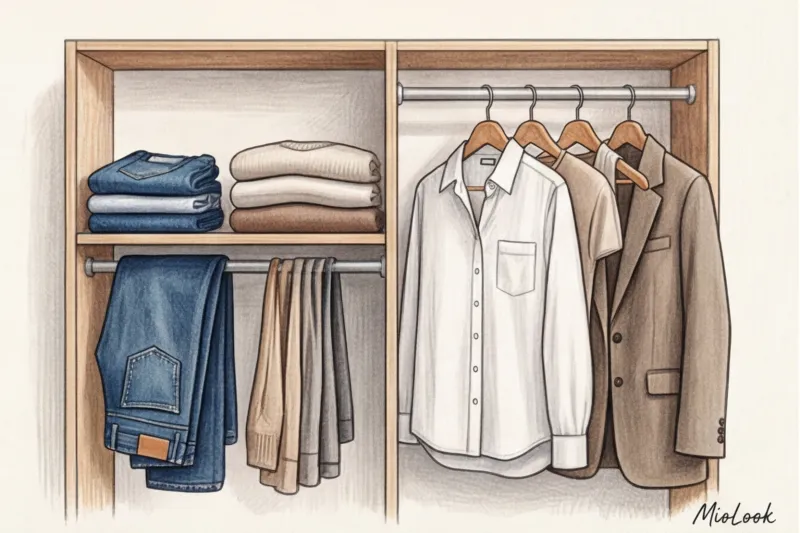
The Right Denim: Denim, Color, and Fit
Avoid jeggings with elastane content higher than 2-3%. They quickly stretch out at the knees and visually cheapen the look. Look for thick denim weighing 12-14 ounces. Trendy silhouettes for a casual wardrobe include straight, wide-leg, or bootcut. Choose deep indigo, graphite, or classic blue without aggressive fraying or "cat whisker" detailing at the groin.
Investment grade knitwear
Instead of bulky acrylic sweaters that will pill within a month, invest in smooth-knit sweaters and chunky cardigans. Practical tip: check the seams of basic t-shirts. A quality t-shirt will always have a twill tape (an additional strip of fabric) sewn into the back of the neckline to prevent the collar from stretching over time.
Second layer: structure on top of relaxation
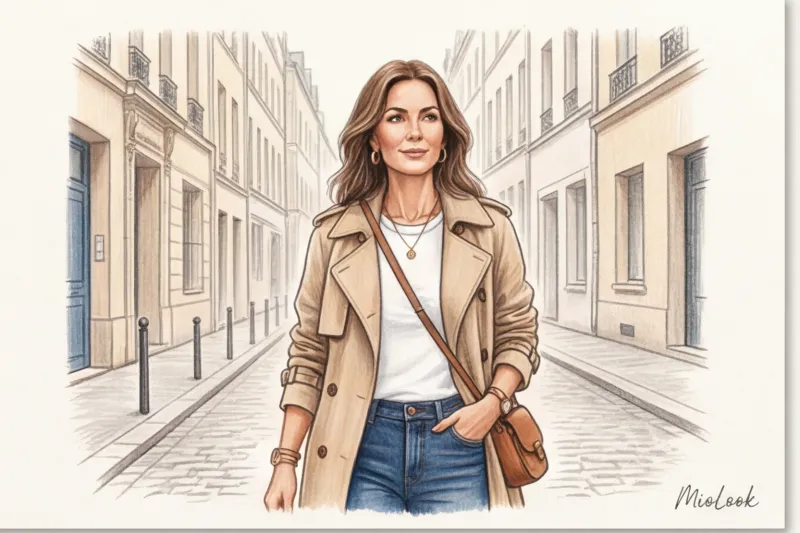
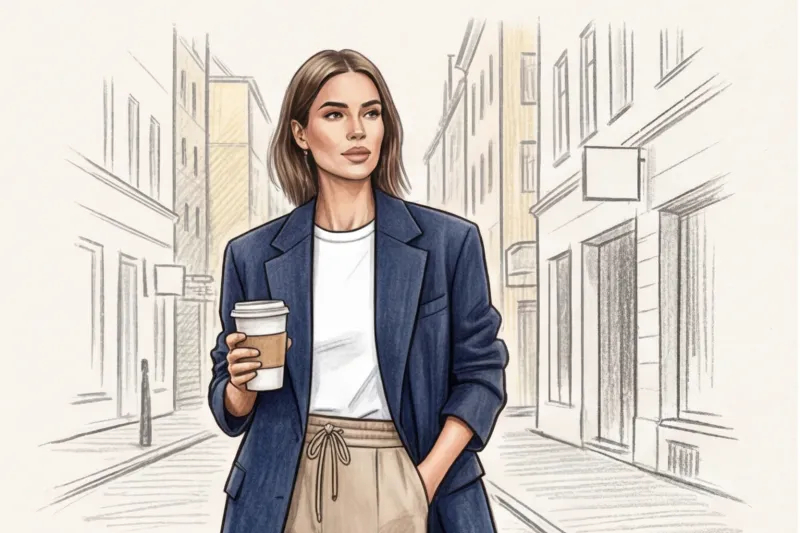
The formula for classy casual is simple: a soft first layer and a crisp second layer. A loose T-shirt and soft jeans look casual, but throw on a structured double-breasted blazer or a heavy trench coat and the look comes together instantly. Heavy cotton overshirts or suit vests are excellent alternatives to blazers.
Going Green: How to Reduce Cost Per Wear
According to research by the Ellen MacArthur Foundation (2023), on average, we wear an item only 7-10 times before throwing it away or forgetting it in our closet. This is not only an environmental disaster but also a financial drain. The status-conscious casual style for women over 40 is based on the concept of Cost Per Wear (CPW).
Let's do the math. A pair of fast-fashion jeans for 4,000 €, which will lose their shape after 10 washes, will cost you 400 € per wear. High-quality premium denim for 20,000 €, which you'll wear at least 200 times over three years, costs only 100 € per wear. It's a paradox, but expensive, high-quality items actually cost us less.
I have a basic cashmere sweater in my closet, a deep chocolate brown, that I bought in 2014. Over the past 10 years, its cost per wear has approached zero. The secret to its longevity is proper care. Avoid frequent machine washing. High-quality wool often responds to fresh air or a hand steam: hot steam kills bacteria, eliminates odors, and straightens the fibers without damaging them.
Ready to get started?
Try MioLook's free plan—no commitments required. Artificial intelligence will help you analyze your wardrobe.
Get access — €0.99 onceStylist Checklist: An Audit of Your Current Casual Wardrobe
Ready to move from theory to practice? Here's a step-by-step plan for this weekend to help you refresh your style.
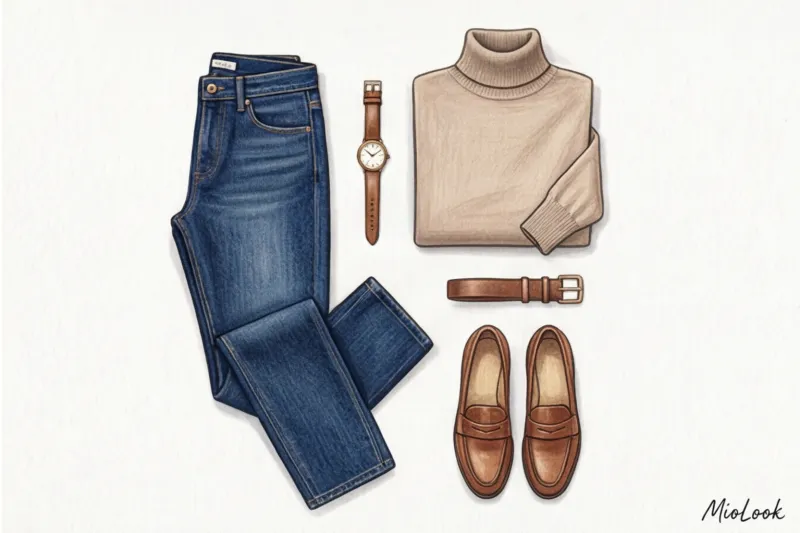
- Step 1: Ruthlessly filter out "fatigue". Get out all your basics. Get rid of (or relegate to loungewear) anything with unavoidable pilling, stretched collars, or faded pigment. No designer bag will save your look if you're wearing a washed-out T-shirt.
- Step 2: Checking proportions. Consider the length of your tops relative to your bottoms. Tuck your sweater into your pants asymmetrically (at the front only) to reveal your waist. If you wear long jackets, make sure they end below the widest part of your hips, rather than cutting them in half.
- Step 3: Color audit. Analyze your palette. Avoid "compromise colors" (dull, bland shades of gray-brown). Replace them with deep, natural tones: terracotta, emerald, dark chocolate, camel. They always look richer.
Once you've eliminated the unnecessary, take photos of the remaining "diamonds" of your wardrobe and upload them to MioLook app AI algorithms will suggest dozens of new combinations from your own items that you never even thought of.
Instead of a conclusion: your personal style manifesto
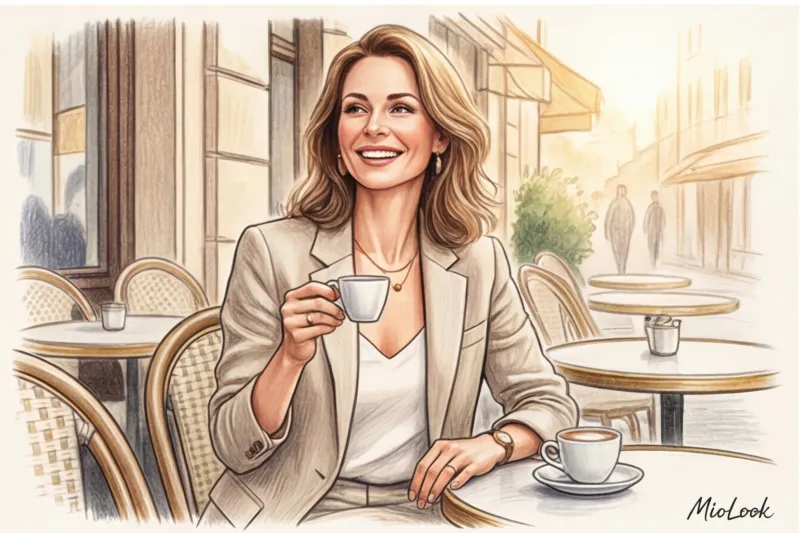
Style after 40 is a wonderful time of liberation from the grueling pursuit of microtrends. You no longer need to prove your worth to the world through uncomfortable clothes or flashy logos. Smart casual is built on a deep respect for your own body, kinesthetic comfort, and the understanding that quality always trumps quantity.
Invest in fabrics you want to touch. Choose silhouettes that allow you to breathe, walk, and live life to the fullest. After all, the most powerful thing you can wear is your confidence.