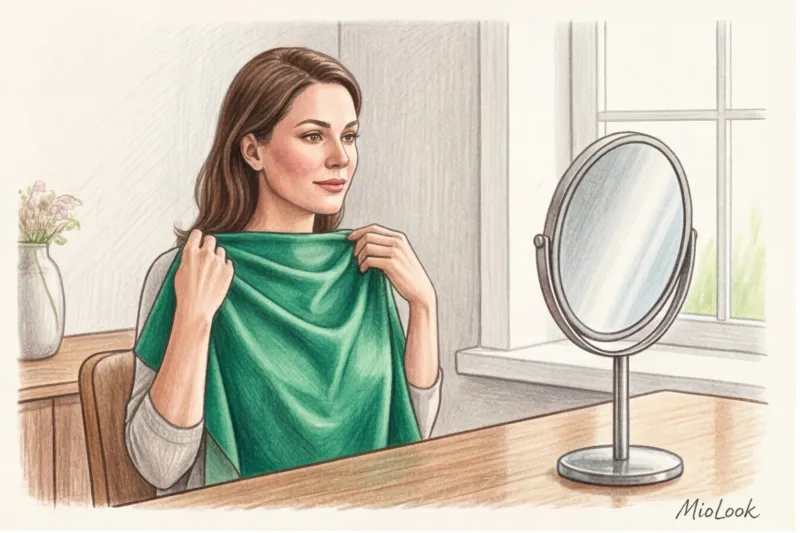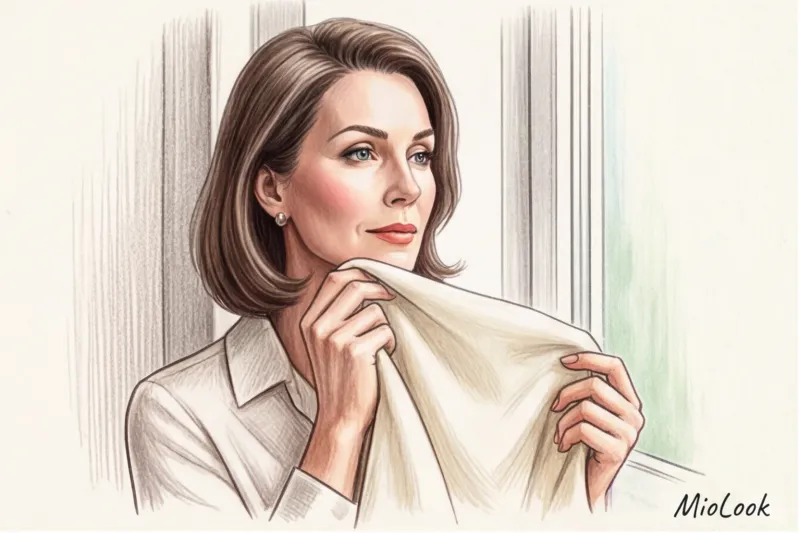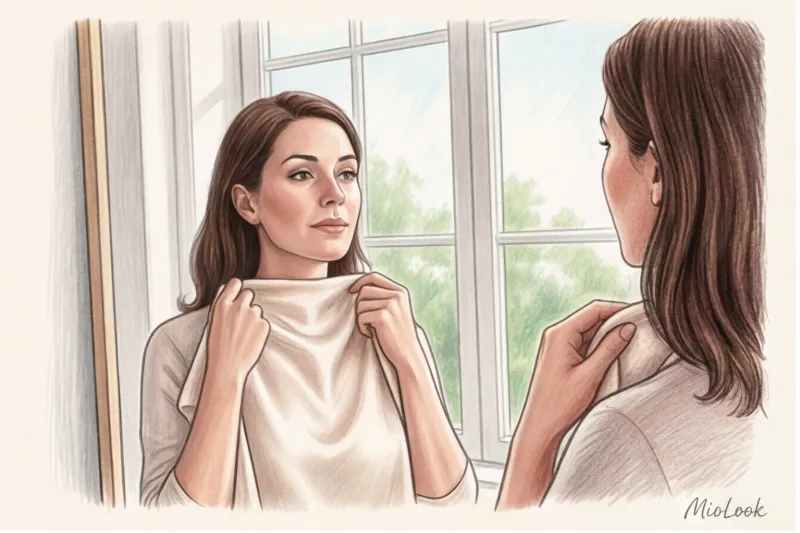
Just last week, a new client brought in three fuchsia blouses for a wardrobe review. "The magazine said bright pink is refreshing," she sighed, looking at her tired reflection in the mirror. The problem wasn't her appearance, but the matte neon fabric cast harsh shadows on her face, highlighting even the slightest redness. If you're looking for youthful-looking colors in clothing, forget glossy lists that consist of the banal "wear pastels." Color doesn't exist in a vacuum—it operates according to the strict laws of physics.
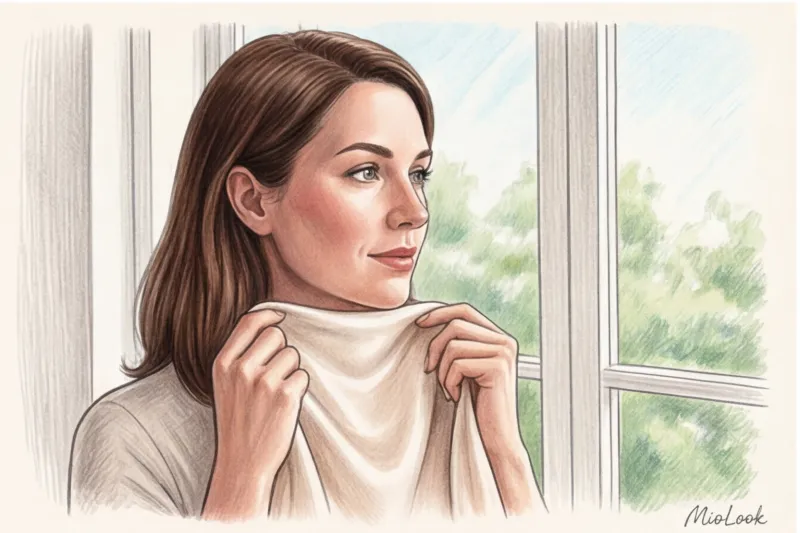
We've already discussed the systematic approach to style in more detail in our complete guide to Basic wardrobe for a 40-year-old woman , but today I want to explore optics specifically. As a textile expert and stylist, I'll teach you how to control light reflection so that your clothing acts as a professional reflector in photography.
The Physics of Light: Why Some Colors in Clothing Make You Look Younger, While Others Emphasize Fatigue
Any fabric near your face acts as a softbox or reflector. When light (sunlight or artificial light) hits your blouse, it bounces off it and illuminates your chin, neck, and lower third of your face. The amount of light this reflects is determined by the light reflectance value (LRV).
Low-LRV fabrics (deep, dark, matte) absorb light. They cast micro-shadows in the nasolabial folds and under the eyes, visually deepening wrinkles. High-LRV fabrics (light, luminous) fill these shadows with a soft glow. But here, the law of simultaneous contrast, discovered in the 19th century by chemist Michel-Eugène Chevreul, comes into play: our eyes perceive color differently depending on the background. If you wear a shade that clashes with your skin temperature, an optical resonance effect occurs, giving your face an earthy or grayish undertone.
"The biggest mistake when choosing 'anti-aging' shades is ignoring color temperature. A cool spectrum on skin with a warm olive undertone will instantly highlight dark circles under the eyes, even if it's the 'right' pastel blue," says my lecture on color for stylists.
Access to MioLook for €0.99 — one-time payment
A smart AI stylist will select the perfect look based on your color type and preferences.
Get access — €0.99 onceClothing Colors Guaranteed to Make You Look Younger: Top 5 Styling Tips
The transition from intuitive shopping to strategic palette management begins with a shift away from pure, spectral colors. According to the Pantone Color Institute (2023 Skin Tone Report), complex, blended shades create the most harmonious contrast with age-related changes in skin pigmentation.
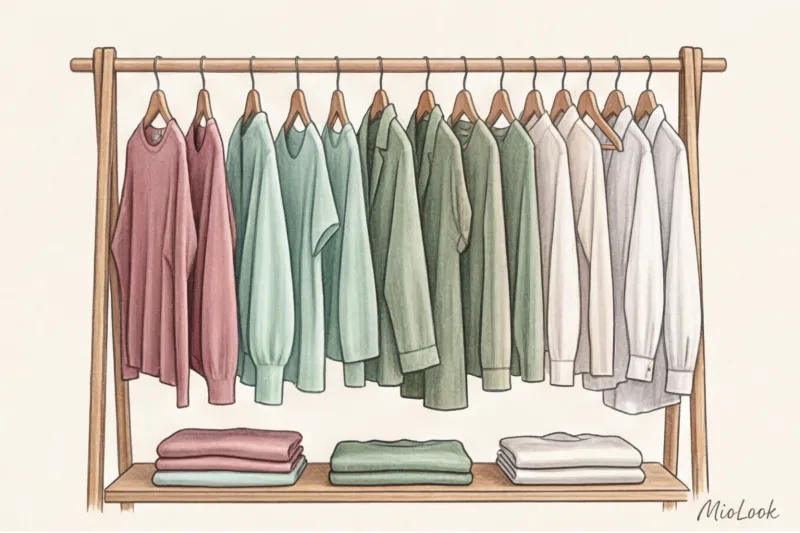
Dusty rose and salmon instead of Barbie pink
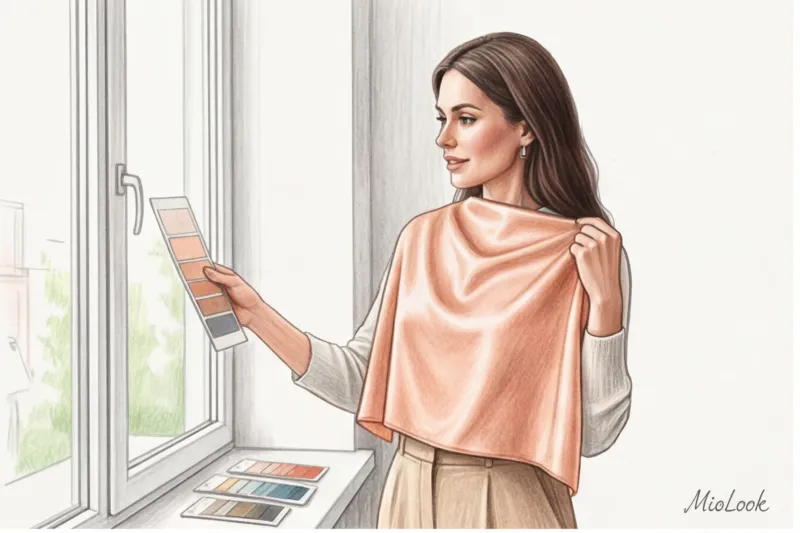
Why does the classic "Barbie pink" often fail in real life? Neon pink is merciless: it works like a magnifying glass on any inflammation, spider veins (rosacea), and redness on the face. If you love pink color in clothes Choose a sophisticated dusty pink or soft salmon. They contain a hint of gray or peach pigment that mimics a natural, healthy flush and illuminates the skin from within without clashing with its texture.
Refreshing menthol and sage
As we age, skin often acquires a slight yellowish or grayish undertone. Cool, slightly bleached green tones are a brilliant way to neutralize this yellowness. It's important to understand the difference: we're not talking about "hospital" green, but rather a classy sage green (with a hint of gray) or a cool menthol. They create the illusion of a well-rested complexion, even if you've only slept five hours.
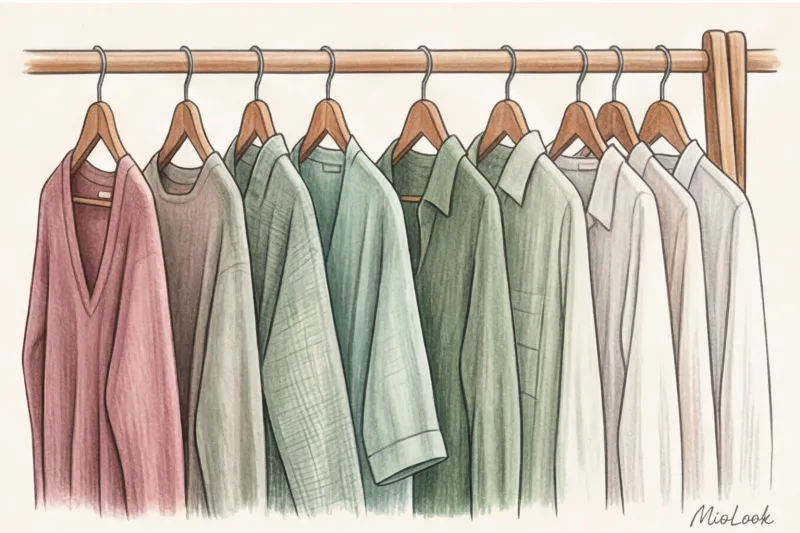
Pearly and milky versus snow-white
The statistics from my consultations are alarming: about 70% of women over 40 mistakenly choose a crisp white (the color of office paper), believing it to symbolize purity and freshness. In practice, stark white creates too much of a contrast. Against this background, tooth enamel and the whites of the eyes appear duller and more yellowish.
The solution? Switch to off-white shades: ivory, ecru, milky, pearl. They have the same high light reflectance, but their warmth blends seamlessly with the skin, creating that same effect of a well-groomed, expensive complexion.
The main myth: is it true that black always makes you look older?
For decades, glossy magazines have been peddling the adage: "After 40, throw away all black; it makes you look older." This incredibly superficial statement has deprived many women of the most elegant color in their arsenal. It's not the color black itself that ages. It's the flat, stand-up collars made of cheap, matte polyester that make you look older.
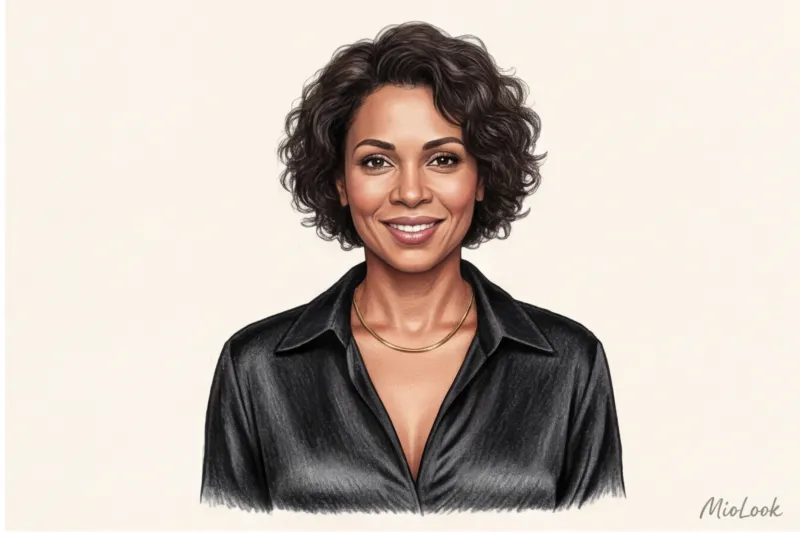
One of my clients, Anna (42, a top manager at an IT company), completely gave up black for fear of looking older. Her wardrobe had become a dull beige blob, devoid of status. We brought back black using open neck rule A V-neck or deep U-neck creates a buffer zone of your own skin. A 15-20 centimeter gap from the fabric to the chin eliminates any shadows.
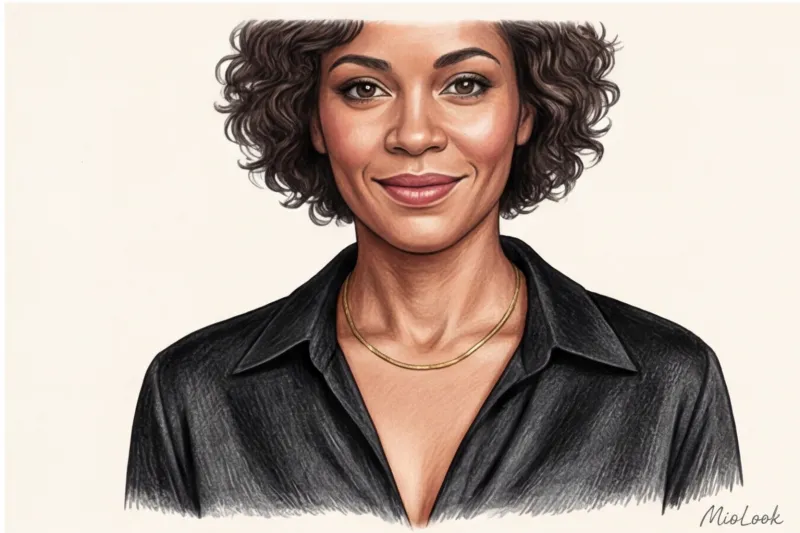
Moreover, black perfectly frames the silhouette and accentuates the oval of the face when paired with the right texture. Smooth black silk reflects light, creating highlights that add dynamism and vibrancy to the look.
Your perfect look starts here
Join thousands of users who look flawless every day with MioLook. Upload your items and receive ready-made capsules.
Get access — €0.99 onceTexture is more important than color: how fabric quality changes color perception
Over 12 years of working with textiles, I've developed a rule of thumb: the same powdery shade on natural silk makes you look younger, but on cheap acrylic it's dull and ages you. Why does this happen?
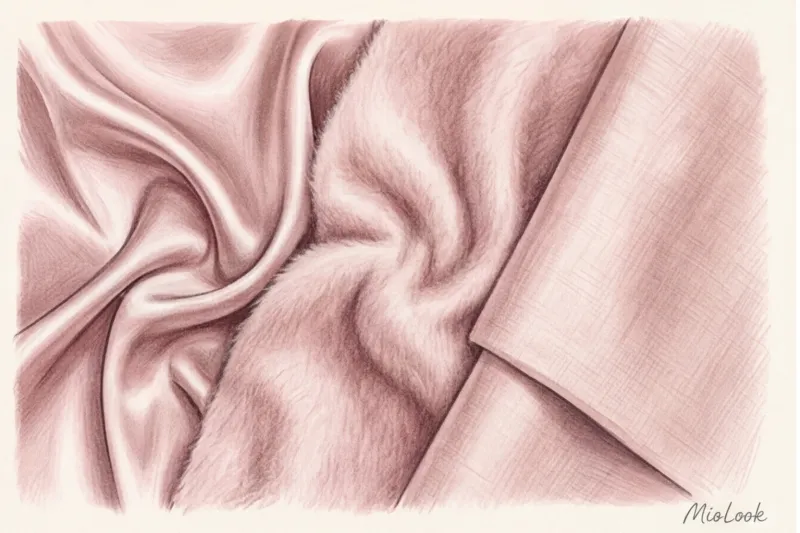
It's all about the fiber structure. Smooth fibers (silk, satin, mercerized cotton, fine merino wool) have a smooth surface. They act like micro-mirrors, dispersing light evenly. Loose, cheap, or stiff materials (acrylic, low-quality polyester, coarse linen) absorb light, making the color appear flat and lifeless.
- Invest in a subtle shine: An ecru viscose silk blouse will do more for your complexion than an expensive illuminating cream.
- Beware of matte textures near the face: If you choose a matte fabric (such as heavy cotton), make sure the color matches your skin tone perfectly. temperature subtone.
- Cashmere as an exception: Despite its matte finish, cashmere goat down has a unique light transmittance, creating a slight “glow” around the item (halo effect).
A practical checklist: how to check if a color is right for you
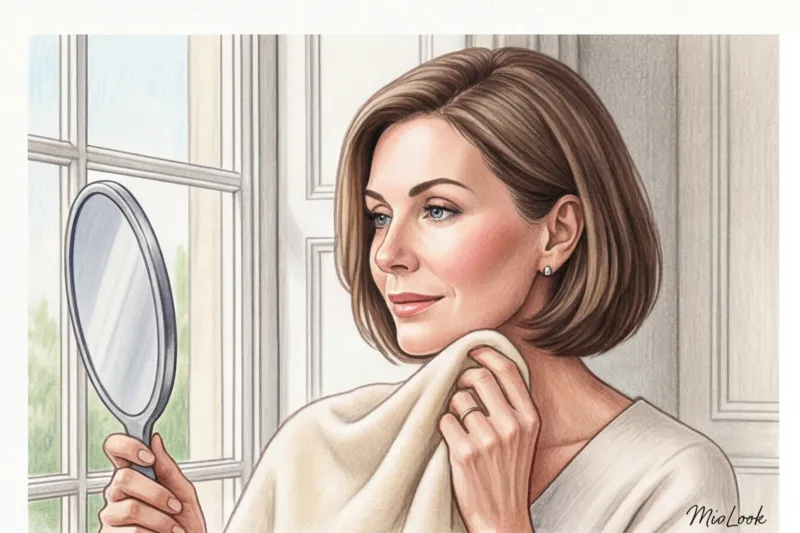
Stop holding fabric to your wrist or relying solely on eye color. To find out which clothing colors that make you look younger, conduct a professional "window test."
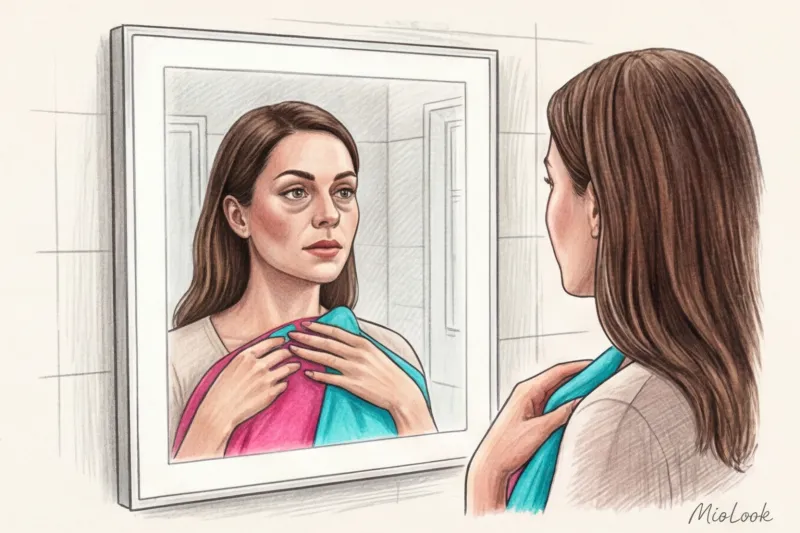
- Preparation: Remove makeup (especially foundation and concealer). Move to a window with natural light. Avoid direct sunlight.
- Process: Take several items in different shades (be sure to compare crisp white and off-white, black and dark blue). Apply them firmly to the décolleté area.
- Where to look: Don't look at the item. Look at three areas of your face: the nasolabial folds, the area under your eyes, and the jawline.
- Grade: If changing colors makes wrinkles appear deeper and a gray shadow appears on your chin, the shade isn't right for you. If your skin appears more even and uniform, you've found your perfect shade.
If you want to save time, my clients use color palette analysis function in the MioLook app You can Check if a clothing color suits you online By uploading a photo of yourself in good lighting, the algorithm will help you weed out unsuccessful options before you even go to the store.
Integrating rejuvenating shades into a basic wardrobe for 40+
Knowing the right shades is half the battle. The other half is incorporating them into real life, especially if you have a strict business dress code. Modern Ageless style (ageless style) doesn't mean you have to dress head to toe in pastels.
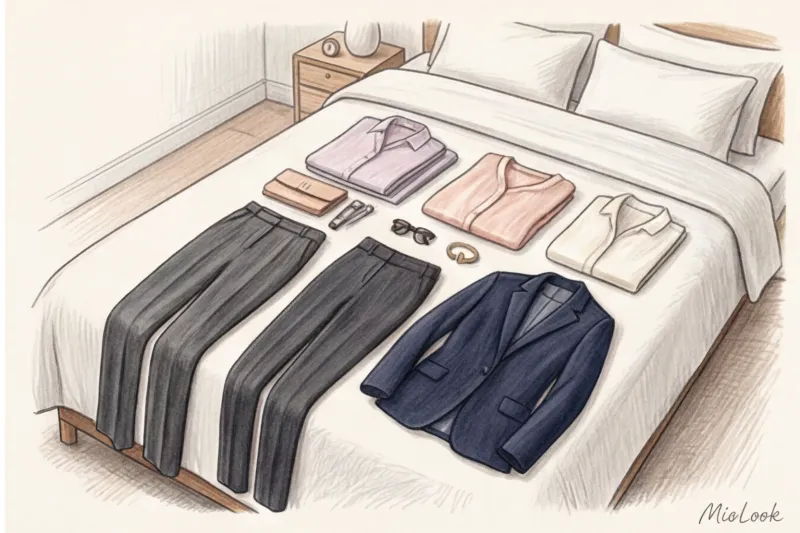
I recommend using the rule of proportions: 70% neutral, status base and 30% refreshing shades in the portrait zone Ditch your favorite graphite trousers, chocolate-colored midi skirts, and tailored jackets. Your base layer should create structure and elongate your silhouette. Meanwhile, pieces worn directly near your face (tops, flowing blouses, silk scarves, turtlenecks) should enhance your freshness.
For a jeans-wearing Friday at the office, but you want to look a little more put-together, try swapping out your usual gray tee for a sage-colored, heavyweight viscose top, layering a navy blazer over it. Blue color goes well together with soft green-gray tones, creating an intelligent and fresh look.
The main takeaway I want you to take away from this article is: don't just try to "buy a youthful color." Buy one that reflects the right light. Replace dull textures with smooth ones, spectral shades with complex undertones, and pure whites with pearlescent ones. And you'll see how your wardrobe will start working for you, not against you.