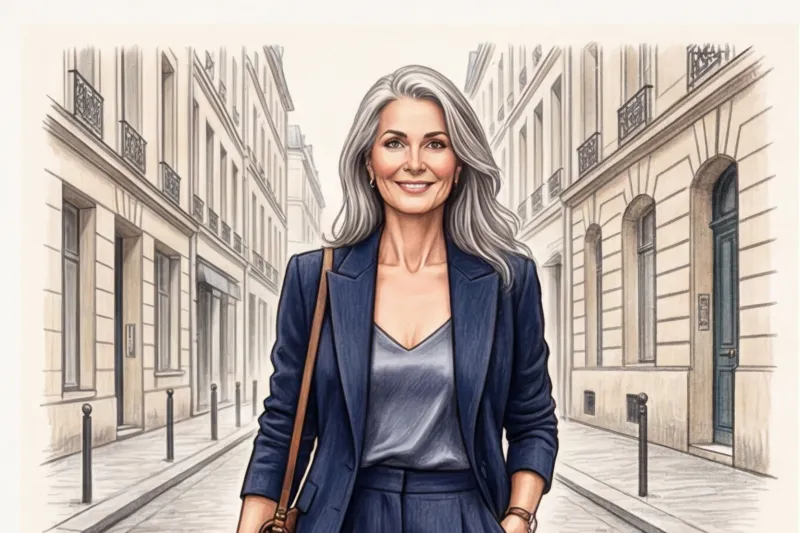
Clothing Style for Women Over 40: Why the Old Rules No Longer Work
You know what question I'm most often asked backstage at fashion shows and during personal consultations? "How do I avoid looking like an old woman, but also avoid looking like I'm desperately trying to look younger?" The right one. clothing style for women over 40 It doesn't start with a mindless closet overhaul. It starts with a rewired mindset. The concept of "dressing for your age" is a hopelessly outdated social construct, invented by the consumer industry to make women constantly doubt their own relevance.
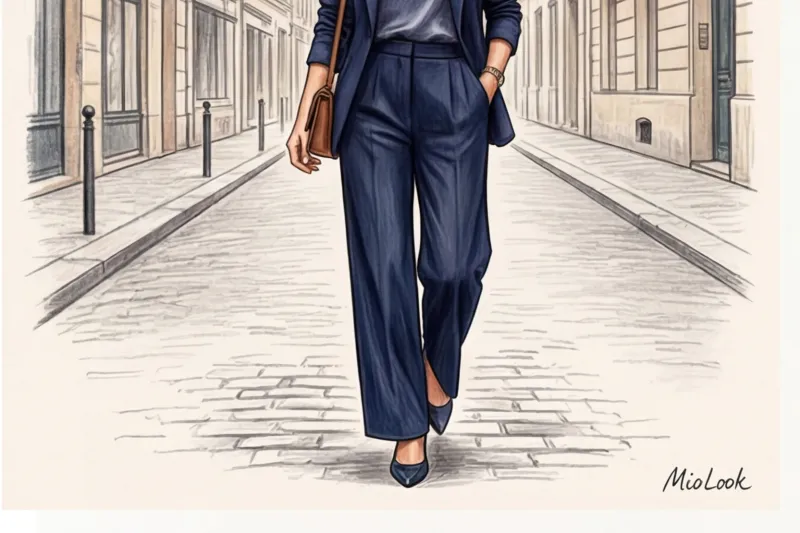
It is at this point that many people encounter a sociological phenomenon known as "invisibility syndrome" A society accustomed to evaluating women primarily through the prism of youthful, conventional attractiveness suddenly seems to drop you off the radar. But as a stylist, I see this not as a tragedy, but as a tremendous liberation. A powerful psychological shift occurs: you no longer need to dress simply to "please others" or to conform to the male gaze. Your wardrobe becomes a tool for expressing your personality, life experience, and status.
"Clothing at 20 is a search for self. Clothing after 40 is a manifesto of a woman who knows exactly who she is and no longer apologizes for it."
I had a particularly revealing case in my practice. Three years ago, a client working as a financial analyst approached me. Subconsciously trying to disguise the signs of aging and blend into the background, she began hiding in soft, shapeless knit cardigans. These garments blurred her silhouette, and her work image appeared apologetic and insecure. We radically changed our tactics: we removed the flimsy knitwear and introduced structured jackets with a sharp shoulder line (in the €150-€250 price range). The rigid shape instantly pulled her figure together, straightened her posture, and began projecting unquestionable authority. Six months later, she was promoted to CFO, later confessing to me: "Camilla, I'm finally getting listened to at board meetings about these things, even when I whisper.".
Why do old styling habits suddenly stop working? The main problem lies in patterns. Most mass-market brands base their basic patterns on the measurements of 20-year-old fit models. They simply don't take into account the anatomy of age-related changes in the silhouette: the subtle broadening of the ribcage or the micro-changes in posture. As a result, the clothes you've been buying for years suddenly start to pull at the armholes or wrinkle at the back.
Body and Wardrobe Evolution: What's Really Changing
To understand how to adapt your wardrobe, you need to honestly acknowledge the physiological changes. First, the natural contrast in your appearance decreases. Melanin levels drop: your skin tone becomes less visible, your hair loses its original pigment (even if you dye it, its structure reflects light differently), and the whites of your eyes no longer sparkle with their former luster. That same deep black complexion that made you look like a mysterious Parisian bohemian at 25 now acts as a telltale highlighter, emphasizing shadows, wrinkles, and fatigue. A shift to more complex, deeper shades is required.
Secondly, the center of gravity and waistline shift. Have you noticed that your old favorite pair of heavy denim jeans no longer flatters your figure, even though they still button just as easily? Due to the natural redistribution of soft tissue, the classic fit of trousers begins to require a different rise and volume in the hip area.
If Date look for a 30-year-old woman While a designer might still allow herself to compromise on cut for the sake of a passing trend or a fun print, a decade later, the impeccable design of a garment takes center stage. This leads to the golden rule of the new era: an uncompromising transition from quantity to quality It's much wiser to invest in one perfectly tailored pair of thick wool trousers for €180 that elongate the silhouette than to buy five pairs of synthetic ones for €35 that bunch up in cheap folds. We're no longer trying to disguise the body—we're creating a dignified, status-defying frame for it.
Architecture Instead of Camouflage: How to Work with Silhouette
At a private master class in Milan, the chief pattern designer of a famous Italian fashion house shared a tailor's secret with me. It turned out that high, anatomically correct armholes and carefully placed vertical darts alter weight perception more effectively than months of strict dieting. When we try to hide age-related changes in the body, our instinct often tells us to choose looser and softer garments. But true, prestigious style is built not on concealing flaws, but on intelligent design.
Look at the fit standards at luxury brands that specialize in "quiet luxury" such as The Row Their pieces are never tightly clinging, but they don't hang baggy either. Between the dense fabric and the skin, there's always that coveted "air," defined by strict, structural lines. The price of a perfect Olsen sisters jacket can easily exceed €2,500, but the physics of the cut are affordable for €150 to €300, if you know what to look for.
The tailor's secret lies in the details: high armholes visually lengthen the torso and make the arms appear slimmer, while relaxed, low armholes draw the figure down, adding heaviness. And waist darts—even on straight-cut garments—create a subtle hint of curves, shaping feminine proportions.
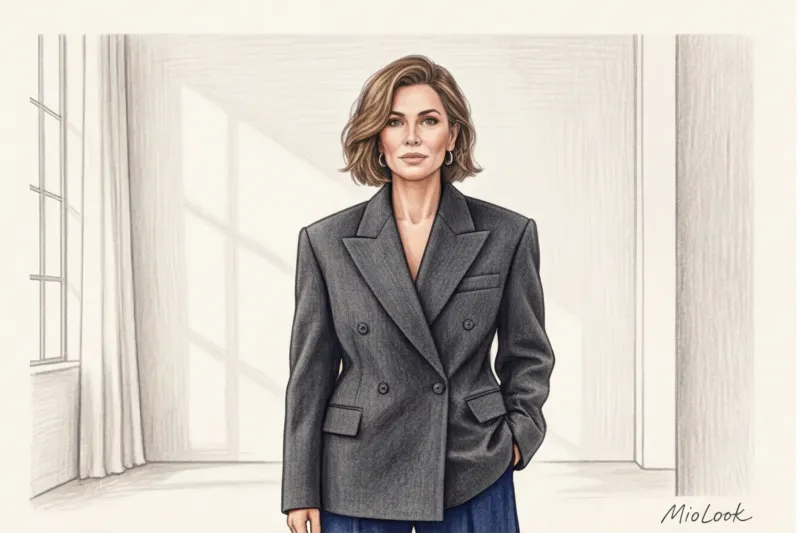
The basis of a correct age wardrobe is hard shoulder line With age, posture inevitably changes: shoulders may slouch slightly forward, and the back loses its perfect straightness. Soft knit cardigans and blouses with dropped shoulders mercilessly accentuate this slouching. Conversely, a jacket with well-placed, generous shoulder pads instantly cinches the figure. It creates a clear horizontal line at the top, making the waist and hips appear proportionally narrower. A semi-fitted cut with an emphasis on the shoulders creates a youthful appearance because it conveys energy, statics, and self-confidence.
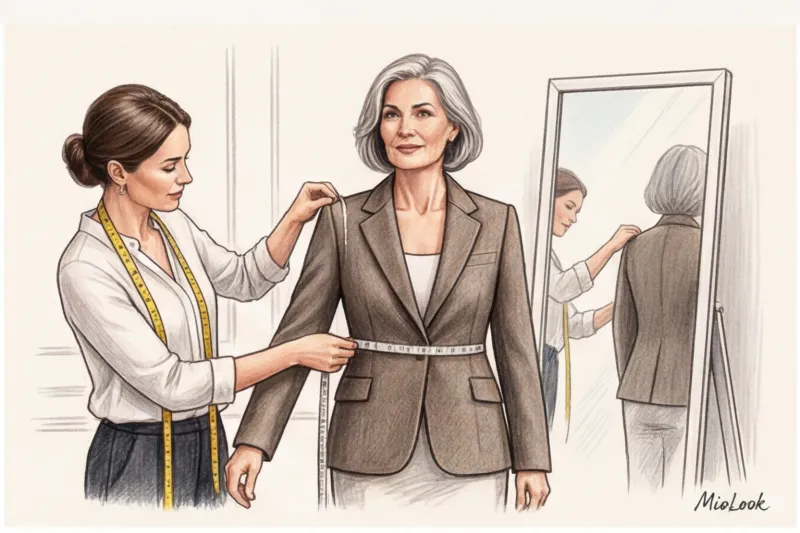
Another golden rule for silhouette design is that length is crucial. The human eye automatically focuses on the line where a garment ends. Therefore, any garment should end at the narrowest parts of the body. Have you ever noticed how some cropped pants make your legs look slimmer, while others turn your figure into a rectangular block? To avoid optical distortion, follow these three principles:
- Sleeves Should reveal graceful wrists. If you have fuller arms, choose a three-quarter length or simply roll up the cuffs of a thick shirt.
- The hem of a skirt or dress A midi length should end just below the knee or extend to the narrowest part of the ankle. If the hemline cuts off the widest part of the calf, the legs will appear heavy and bulky.
- Jackets and sweaters Under no circumstances should they end at the widest part of your hips—this will visually add at least two sizes. Look for a length that either reaches your hipbone or longer styles that extend below the groin line.
The Biggest Mistake: Why Robes Add Age
Over the years of analyzing real women's wardrobes, I've discovered a sad pattern. As soon as a woman over 40 notices weight gain, she often makes a fatal style mistake: buying a thin, shapeless robe in the hopes of hiding inside.
"The optical illusion of volume works against you: the human brain always reads the outer edges of clothing as the actual physical boundaries of your body."
By choosing shapeless clothing, you voluntarily strip your silhouette of vertical lines. It's the vertical line that draws the eye downwards, elongating height and concealing volume. In a loose-fitting robe, this line disappears, leaving only a heavy, blurry blur. This approach not only makes you look fat but also mercilessly ages you, conjuring up images of fatigue and a relinquishment of your ambition to look luxurious.
What's the alternative to soft oversize when tight clothes are no longer comfortable? The answer lies in texture: choose loose fit made of dense fabrics that hold their shape A classic men's shirt made of thick Oxford cotton will conceal the nuances of your stomach a hundred times better than a tunic made of thin, flowing, and clinging viscose. The garment should form its own frame, creating an elegant distance between the fabric and the body.
Access to MioLook for €0.99 — one-time payment
A smart AI stylist will select the perfect look based on your silhouette and help you create an architectural wardrobe without breaking the bank.
Get access — €0.99 onceTextures and fabrics: a new marker of status and age
Every autumn, I fly to Milano Unica, Europe's premier textile fair. There, spending hours studying samples for future collections, you understand a fundamental rule: after forty, fabric speaks volumes about you, far more than cut or brand logo. Texture becomes the primary status marker and your personal calling card.
Professional stylists use the term "facial materials." These are fabrics with inherent weight and structure: dense silk, structured cotton, high-quality cashmere, and thick wool. They don't bend to the slightest curves of the body, but instead create a refined, precise framework around it. Structured cotton (such as poplin) is ideal for basic shirts, as it creates a defined, geometric shoulder girdle.
When it comes to silk, forget about weightless, translucent blouses. Your investment is silk with a density of at least 19–22 momme. Only this fabric will form heavy folds, won't clutter, and will never highlight the contours of your underwear.
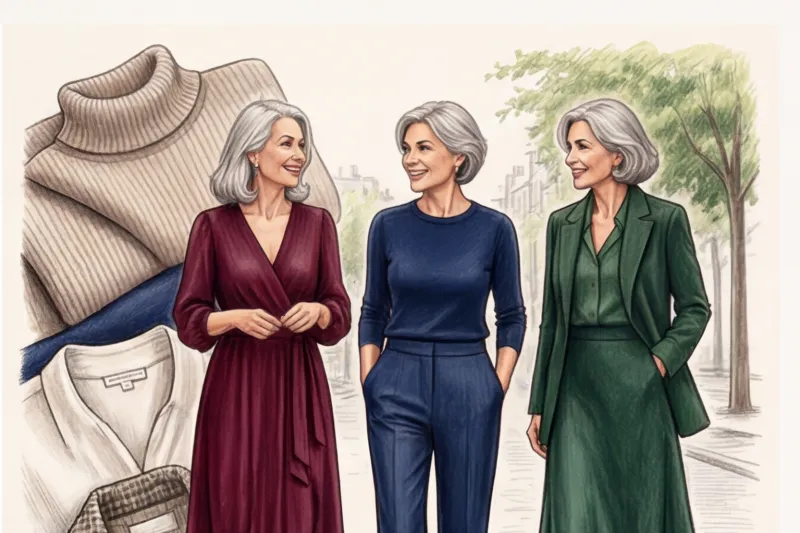
Let's talk about optics. A matte finish always beats a glossy one. Shiny materials act like a magnifying glass: they reflect light and treacherously highlight any unevenness of the skin or nuances of the silhouette. Matte textures—suede, thick crepe, matte wool—conversely absorb light. They create a soft-focus effect, visually smoothing the figure and making it look much more expensive.
The golden rule: if something hangs slackly on a hanger, lacking shape, it will sag on your body just as easily. Save flowing, shapeless style for beach pareos.
Now, let's talk about the "traitor fabrics" that should be ruthlessly banished from your wardrobe. These include thin, flimsy knits, cheap, shiny viscose, and squeaky polyester. Thin knits have the insidious ability to turn even the most toned figure into a "caterpillar," revealing anatomical details best left hidden.
Cashmere deserves special attention. You've probably seen one jumper last a decade, while another starts pilling after a week. The secret lies in the fiber length. Mass-market cashmere (in the €50-€70 range) uses short, downy fibers, which quickly become dislodged when rubbed. Invest in long-fiber knitwear—prices start at €150, but it's a garment that truly delivers on its value.
When I review my clients' closets, I always ask them to include information about the composition of their items in the MioLook It's brilliantly sobering: the statistics in the app clearly show that you've been wearing the 20% of your wardrobe made from high-quality, shape-resistant fabrics for years, while "disposable" acrylic simply steals shelf space.
Color and Contrast: How Palette Affects a Fresh Face
"Just add something light or pastel to your face and you'll instantly look younger"—this stereotypical advice is perpetuated in glossy magazines. Frankly, over the years of working in the industry, I've developed a strong professional allergy to it. In fact, it's one of the most dangerous myths in age-related styling. In 2022, at a closed London symposium on color, researchers clearly demonstrated that an all-out obsession with "refreshing" powder, peach, and pale pink shades often has the opposite effect. The face looks not rested, but unhealthy and washed-out.
Why does this happen? The answer lies in physiological changes in pigmentation. With age, our natural contrast inevitably decreases: hair loses its original pigment, the whites of the eyes become less vibrant. Melanin is distributed less evenly, and the skin itself takes on a different undertone due to natural changes in microcirculation. If you wear a dull, featureless garment with reduced contrast, your face literally blends into the fabric. As we discussed in detail in the article about 12 color types of appearance To bring facial features together, they need the right, well-balanced color scheme. Pale tones only highlight the loss of color associated with age.
Realizing this, many women instinctively try to restore the lost contrast with all-black. And they make a second fatal mistake. Black acts as a harsh reflector against the face: it mercilessly accentuates nasolabial folds, age spots, and deep under-eye shadows. My favorite styling trick is to replace harsh black with refined, deep shades. Emerald, burgundy, dark chocolate, and graphite sharpen facial features while softly highlighting the skin. Imagine the difference: a strict black jacket that makes you look tired, and a thick cashmere jumper in a burgundy shade (excellent basic options can be found in the 150-250 € range) - the second option visually works like a light lifting make-up.
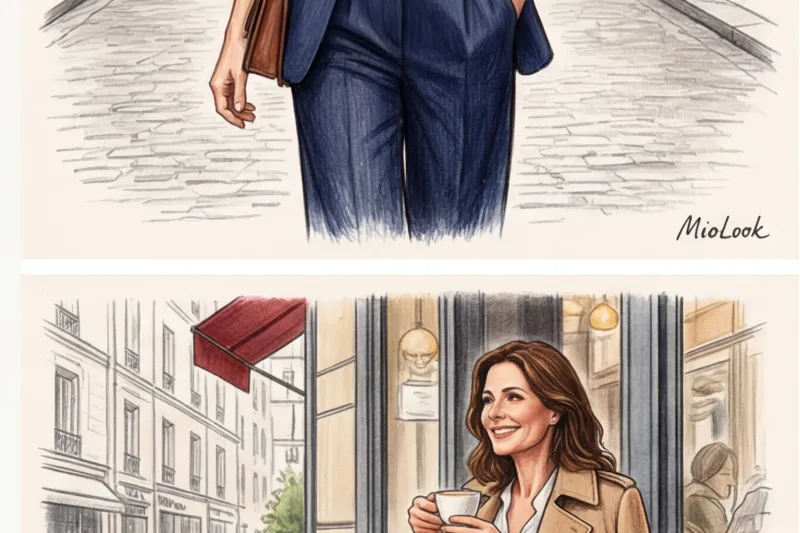
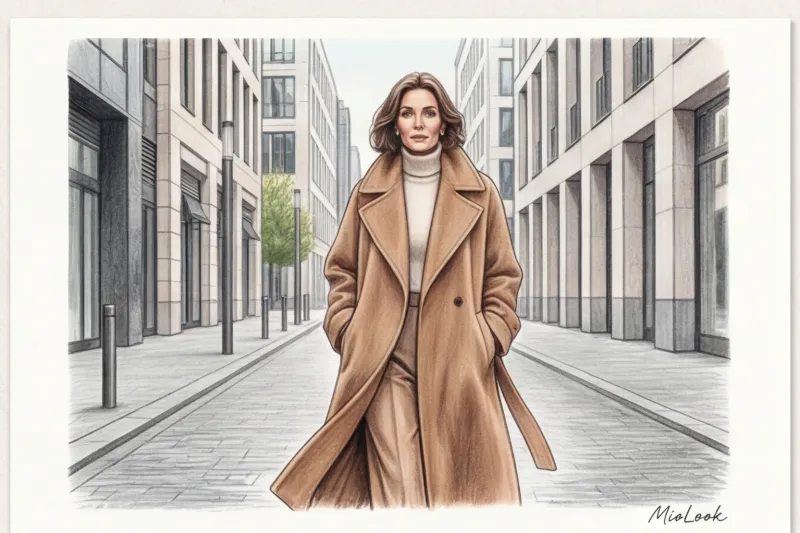
Monochromatic looks in these rich tones deserve special attention. They're a powerful tool for visually elongating the silhouette. When you wear one color from head to toe—for example, chocolate-colored straight-leg trousers, a matching silk blouse, and a dark caramel coat thrown over them—you create a continuous vertical line of color. The eye moves seamlessly from top to bottom along the horizontal lines, visually removing a few pounds and adding height.
The key to a fun monochrome that adds a touch of glamour to any look is a play of textures. Combine matte cashmere with smooth silk or thick wool with smooth leather in a single graphite shade. The different refractions of light create a voluminous, luxurious, and classy look.
When analyzing my clients' palettes, I always give one practical exercise: if you're unsure about a color, take a makeup-free selfie in daylight, holding a cloth to your chin. If you see the item first and then yourself in the photo, the color is too aggressive. If your eyes appear dull, the color is too washed-out. Look for the shade that makes your eyes sparkle.
Try MioLook
for free
Start creating perfect images with the help of artificial intelligence
Get access — €0.99 onceA Basic Wardrobe for 40+: What's Really Worth Investing In
Let's put emotions aside and do some serious wardrobe math. According to McKinsey's 2024 Consumer Behavior Report, the average fast-fashion item is worn only 7-10 times before ending up in a landfill. When it comes to style after 40, we can no longer afford such extravagance—both financially and visually. This is where the concept of Cost-Per-Wear (exit price).
Let's compare two approaches. Imagine buying five acrylic or semi-synthetic sweaters for one winter season at €40 each. The total cost is €200. After a couple of months of active wear, they inevitably become covered in pilling, the elbows lose their shape, and the buying cycle starts all over again the following fall. Over five years, you'll have spent €1,000 on items that never looked truly luxurious. Now consider the alternative: buying one premium cashmere jumper for €300. With proper care, it will last you the same five years. Wearing it at least 50 times per season (250 times over its lifetime), we get a cost per wear of only €1.20. The difference is colossal.
To see this math in action, I always advise my clients to digitize their closet. By uploading the database to MioLook , you'll start tracking which items are actually working every day and paying off their investment, and which ones are just sitting there doing nothing.
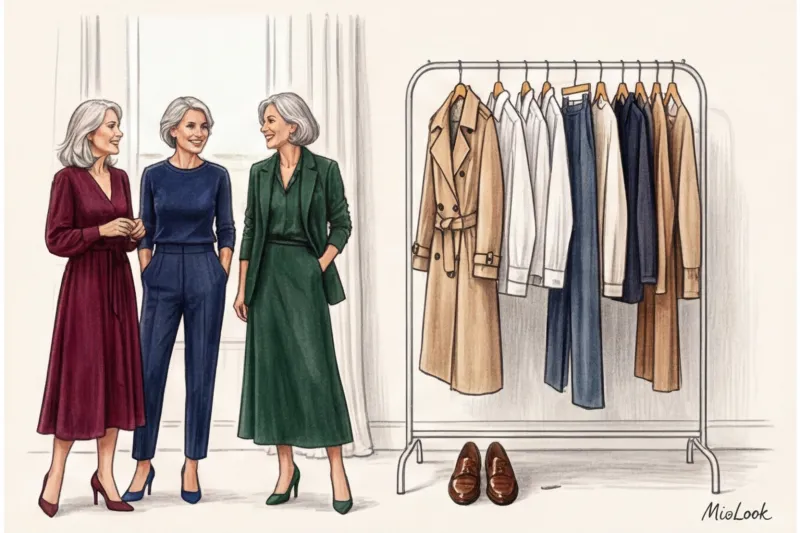
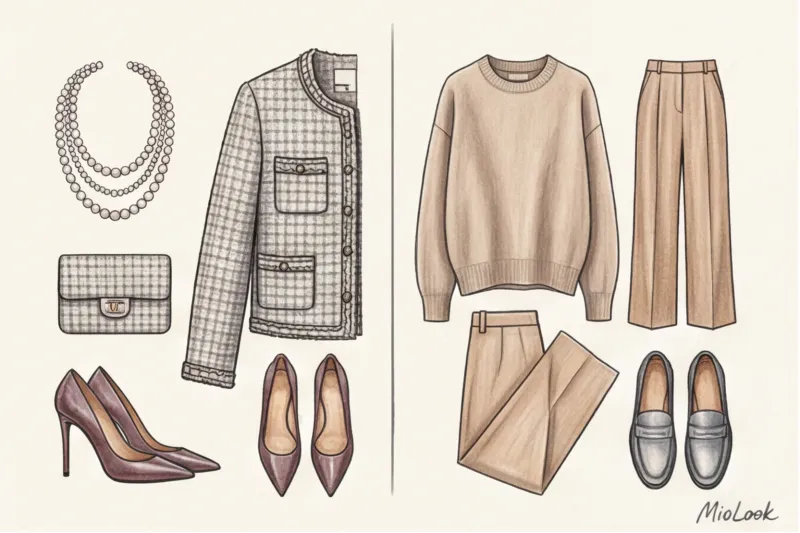
Building such a functional backbone isn't difficult if you know where to spend your budget. Over 12 years of styling, I've come up with the ultimate top 5 investments that will elevate any look:
- The perfect jacket. With a sharp shoulder line, a semi-fitted or straight cut, it gathers the figure like an architectural framework.
- Cashmere coat. Midi or maxi lengths, structured like the iconic 101801 from Max Mara. This is a piece that communicates your status even before you take off your outerwear.
- The trousers fit perfectly. Made from thick suit wool, high or mid-rise, the right length (covering the heel or revealing the thinnest part of the ankle).
- A status bag with a rigid shape. Shapeless, soft hobo bags are too forgiving and often look sloppy. A more rigid, geometric design (like a tote or a bag with a short handle) instantly brings a put-together look.
- Quality shoes. The base on which the entire outfit literally rests.
I'll elaborate on the last two points. Bags and shoes are ruthless indicators of the relevance of your look. You can wear impeccable trousers and an expensive sweater, but if your shoes have an outdated last (for example, with a hidden platform in the toe from the 2010s or a round, short toe), the whole outfit falls apart. An outdated last ruins everything, adding years to your age. The shape of the toe, the thickness and design of the heel, the neckline of the shoes—these are the nuances that reveal a woman who keeps up with the times.
Investment items vs. Fast trends
Does all this mean that your wardrobe should become a monumental and boring set of classics? Absolutely not. The gold standard for a mature wardrobe is the 80/20 rule. Where 80% consists of those high-quality, architectural basics, and the other 20% is left to the mercy of trends, mood, and irony.
The secret is in how you incorporate that 20%. Fast-moving trends are best integrated through accessories or textures without losing the overall solidity of the silhouette. Want to add a trendy leopard print or a buttery shade? Do it with a silk scarf, an accent belt, textured tights, or a trendy pair of sunglasses. The basics will remain intact, but the look will feel fresh and modern.
The only trend you should definitely avoid after 40 is logomania. T-shirts with huge brand names emblazoned on the chest or belts with massive logo buckles look less like proof of success than like a desperate attempt to demonstrate it. Today, the aesthetic of "quiet luxury" rules the world. Brands like The Row or Loro Piana have proven that true status is determined not by the inscription, but by the impeccable cut, the elegant matte sheen of silk, and the way the fabric flows when you move. Your face, your posture, and the quality of your clothes—these are your main logos.
5 Stereotypes About Style After 40 That Need to Be Disposed of Immediately
While sifting through the street style archives from the recent Paris and Milan Fashion Weeks, I caught myself thinking: the most captivating, complex, and captivating looks today don't belong to twenty-something influencers. My attention is consistently captured by the show guests who masterfully break every possible "fashion taboo." Unfortunately, shaping clothing style for women over 40 Many still rely on the dusty dogmas of the glossy magazines of the early 2000s, voluntarily confining themselves to the confines of boring age-appropriate uniformity. Let's do some spring cleaning and get rid of five major stereotypes once and for all.
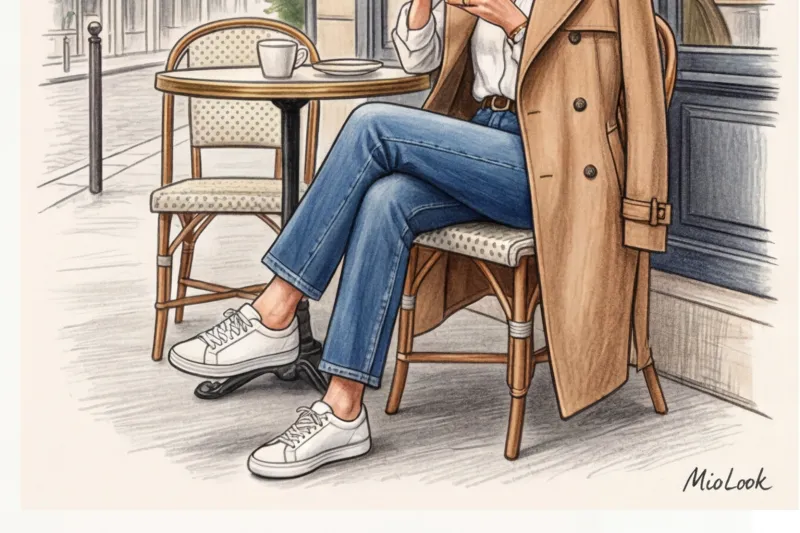
Myth 1: Jeans and sneakers are only for young people. Take a look at Parisian chic icon Inès de la Fressange or the incredible Grace Ghanem. At over 50, they make denim and sneakers their everyday staples, while looking undeniably chic. The secret lies in the design: forget distressed skinnies and oversized "ugly" sneakers. The formula for high-status casual is straight-leg or slightly flared jeans made of thick, elastane-free cotton in a deep indigo color (a good basic pair typically starts at €120) paired with simple, minimalist smooth leather sneakers.
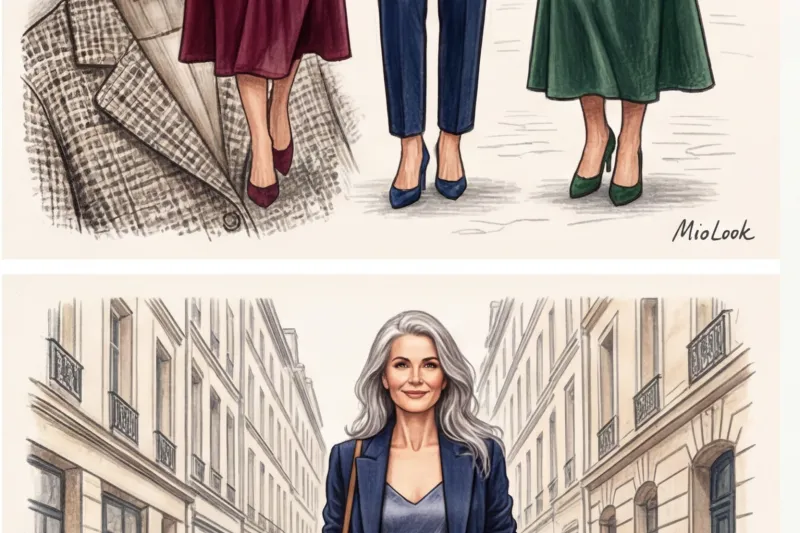
Myth 2: You definitely need to get a short haircut. The societal construct categorically dictates: if you're in your forties, get a bob or an ultra-short pixie cut immediately. In reality, it's not hair length that betrays your age, but rather its thinning texture and static, hairspray-caked style. Vibrant, thick, shoulder-length hair with a slight carelessness or delicate graduation refreshes the face much more effectively than a strict short haircut, which often mercilessly accentuates the slightest age-related changes in the contours of the face and neck.
Myth 3: Leather items look vulgar. Matte leather has become a new wardrobe classic, but the devil, as always, is in the styling. To ensure the leather texture looks expensive rather than overt, we categorically avoid tight-fitting pieces. A straight leather midi skirt or palazzo pants in a dark chocolate shade paired with a loose cashmere sweater is the quintessence of modern elegance. The key rule when working with this material is to always leave some air between the leather and your body.
Myth 4: Minis are strictly prohibited. The institutes for noblewomen closed long ago, but the irrational fear of exposed knees remains. If you have slender legs, hiding them under an endless maxi is simply illogical. The magic of the perfect age-appropriate mini is built on strict proportions: an A-line skirt made of thick wool, a hand's length above the knee, works flawlessly with sheer opaque tights (80 denier and above) and flat shoes—loafers or chunky Chelsea boots. We're leaving stilettos and short lengths behind. As stylists backstage at Prada like to say: the shorter the bottom, the more architectural and covered the top should be.
Myth 5: Bright prints make you look older. It's not the pattern itself that ages, but the small, high-contrast "granny flower" (called millefleur) on flimsy fabric. Want dynamism and character in your look? Choose clean geometric patterns, large abstractions in the spirit of Mark Rothko's paintings, or classic nautical stripes. These patterns create a rhythm, look intelligent, and don't steal the spotlight. To seamlessly integrate complex prints into everyday life, I often recommend that my clients load their pieces into MioLook This allows you to pre-create your look on your smartphone screen and ensure that the active geometry of the skirt harmonizes with the texture of the jacket, avoiding endless fittings and creative chaos in front of the mirror.
Your ideal image
it begins Here
Join thousands of users who look flawless every day with MioLook.
Get access — €0.99 onceA stylist's checklist: how to audit your wardrobe as you transition into a new age
American Vogue once published a brilliant insight: we wear 20% of our clothes 80% of the time because the other 80% of our wardrobe belongs to a woman we no longer are. When developing a clothing style for women over 40, the first and most painful step is an honest inventory. Your wardrobe is not a museum of past accomplishments or a warehouse of unfulfilled expectations.
Let go of the anchors of the past without regret. Abandon the illusion that you'll be able to wear those same skinny jeans from the 2010s if you lose a size. Clothes that don't fit right now only rob you of your morning energy and hurt your self-esteem. The same goes for clothes associated with closed life stages: stretched-out hoodies from your extended maternity leave or tailored sheath suits from your previous job if you've now gone freelance. Your wardrobe should serve your current life, not your memories of it.
The next filter is a ruthless assessment of wear. While at twenty, a touch of casualness might pass for conceptual grunge, after forty, any pilling on knitwear, stretched knees on trousers, misshapen T-shirt collars, or worn hardware on a bag work categorically against you. They are perceived by others not as slackness, but as unkemptness, visually adding years to your age. Remember this rule: a crisp, well-shaped basic long sleeve for €40 will always look more prestigious than a cashmere sweater from a luxury brand that's been worn to the point of being cobwebby.
To detach myself from emotional attachment to clothes, I always use the "try-on session" method, which includes mandatory photography. Our reflection in the mirror is too subjective: we reflexively suck in our stomachs, straighten our backs, and strike a flattering pose. A camera lens works differently—it captures reality. Put on a questionable item, take an honest, full-length selfie in good daylight, and analyze the frame. You'll instantly notice where the fabric is clinging to the wrong areas, and where the silhouette is losing its structure.
The most convenient way to conduct such an audit is by immediately digitizing successful sets. Having saved your best, rigorously selected images in MioLook app , you get a visual analysis of your closet. Only after you've cleared out all the unnecessary items can you begin compiling your shopping list. Here, we change our approach: instead of listing ephemeral "I need a new blouse," we're focusing on the architectural elements that are most needed. For example, a heavy-duty double-breasted jacket that will pull together relaxed dresses, straight-leg jeans in a stiff denim without elastane for a defined leg silhouette, or a structured, rigid bag. You're building a new framework that will confidently support your personal style.
Conclusion: Your style is your manifesto
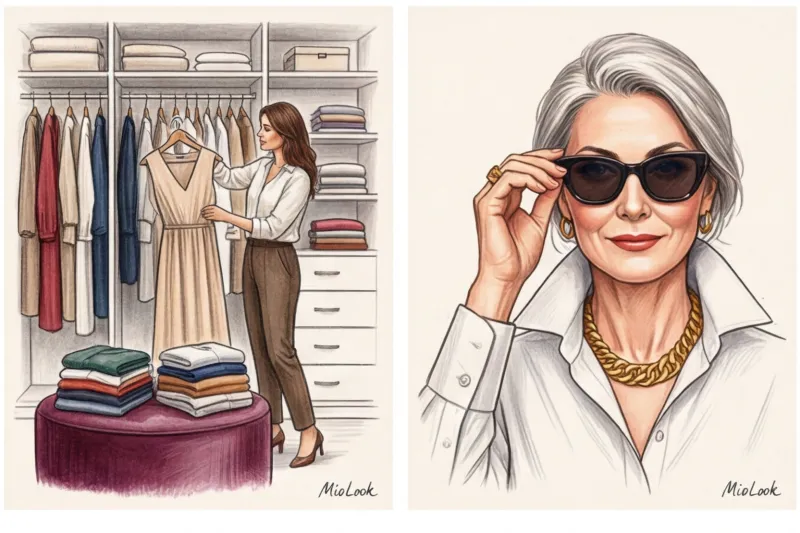
For decades, the fashion industry has sold us the idea of "aging gracefully"—a concept that often, in reality, entailed quietly fading away in beige cardigans and abandoning fashion ambitions. But today, we're witnessing a completely different phenomenon: sartorial liberation.
Age 40+ is a time of absolute freedom from other people's expectations. In our twenties, we dress to belong to a certain group and find our place in society. In our thirties, we dress to prove our professional worth and build a career. And after forty, that moment of truth arrives when you can afford the luxury of being uniquely yourself. No longer do you have to squeeze into uncomfortable but cutting-edge trends or try to fit imposed standards. The ideal clothing style for women over 40 — this is not an attempt to cling to fading youth, but a loud declaration of your personal strength and confidence.
Think of Phoebe Philo's aesthetic or Jil Sander's architectural collections: they're not designed for young starlets. They're made for women whose vision has deepened enough to embrace complex, intellectual minimalism. This is design that demands a certain background.
For too long, society has propagated the toxic idea that adult women should gradually become "invisible." Hence the instinctive attempts to hide behind shapeless robes and dark, dull fabrics. But we're changing the paradigm: clothes should serve you, your comfort, and your current goals, not hide you from the world. If you're wearing a jacket, let it be impeccably tailored with a firm shoulder line that maintains your posture during hours-long negotiations. If you choose a silk blouse, let it tactilely delight you with its coolness and heaviness every second, not just "look decent" against the backdrop of office walls. Clothes should earn their money and your trust.
In my practice, I often see this amazing turning point. When a client stops buying ten compromise dresses for €40 each and instead invests in one perfect, intricately cut coat for €400–500, it's not just her silhouette that changes. The way she walks into a room changes. This is what clothing does—a tool that physically enhances your presence in a space.
My final message to you: experiment with quality, not quantity. Replace the endless pursuit of micro-trends with an exploration of complex textures. Try on heavy matte silk, pure Mongolian cashmere, and dense, cold-spun wool that flows as you walk. Even if your closet contains a third as many pieces, each one will be a masterpiece of fit.
To make this transition systematic and painless, stop keeping your entire wardrobe in your head. I highly recommend digitizing your best investment pieces by uploading them to MioLook When you see your capsule collection on screen, you start thinking like a professional stylist: you easily analyze texture combinations, evaluate proportions, and know exactly which quality detail (for example, a structured bag or the right belt) you need to complete your look.
Don't try to dress "for your age." That's an outdated social construct. Dress according to your status, intelligence, lifestyle, and ambitions. You've already proven yourself to everyone—now it's time to simply enjoy yourself and your flawless reflection in the mirror.
Guide Chapters
Step-by-step makeup for aging: anti-aging secrets
Forget about thick layers of concealer and face masks. We reveal the secrets of runway makeup artists for creating luxurious anti-aging makeup.
Status Accessories for Women Over 40: What to Invest in
Learn how details shape 70% of your status. Rules for choosing investment accessories in the style of "quiet luxury."
MioLook: An AI-powered app for age-appropriate clothing selection
The concept of "dressing for your age" is nothing more than a marketing myth. Discover how unbiased artificial intelligence helps you find your unique style.
Youthful trends for women over 40: how to wear them
Afraid of looking ridiculous in baggy jeans or chunky loafers? A personal stylist explains how to elegantly incorporate trendy pieces into a high-status wardrobe.
How to choose jeans for women over 40: stylist's advice
Forget boring basic trousers! Learn the secrets to the perfect fit and stylish jeans for elegant women of a certain age.
Ideal Dress Styles for Women Over 40: Tips
Forget shapeless robes. Learn how to choose the perfect dress after 40 using the architectural wardrobe concept.
Haircuts that make you look younger after 40: choosing based on your face shape
Short hair doesn't always make you look younger by default. We'll explore how haircut design and face shape can help you shave a decade off your appearance without making mistakes.
Old Mane Style for Women Over 40: A Statement Look
True Old Money style doesn't scream wealth, but rather whispers impeccable taste. Learn how to create a prestigious and elegant wardrobe without flashy logos.
How to Dress for a 30-Year-Old Woman: Secrets of Perfect Style
It's time to say goodbye to your teenage wardrobe! We'll tell you how to find your unique style at 30 to look classy and balanced.
Fashion for Plus-Size Women Over 40: A Stylish Plus-Size Wardrobe
Forget about shapeless clothes and the "invisible woman syndrome." We'll explore the key rules of a plus-size wardrobe that will help you shape your figure and look classy.
Casual Style for Women Over 40: Secrets of Elegance
True taste is demonstrated not in business suits, but in everyday wear. Learn how to create a comfortable and elegant wardrobe for every day.
What Clothes Age a Woman: 10 Major Style Mistakes
It's not wrinkles that add age, but outdated cuts and unflattering textures. Find out which items in your wardrobe should be discarded to avoid looking older.
Clothing colors that make you look younger: how to refresh your look
The standard advice to wear only light and pastel colors no longer works. Learn how to use the laws of color science to choose a rejuvenating palette.
A 40-Year-Old Woman's Basic Wardrobe: A Stylist's Checklist
Forget about shapeless clothes and the "invisibility syndrome." Learn how to create a modern capsule wardrobe that will highlight your status and impeccable taste.