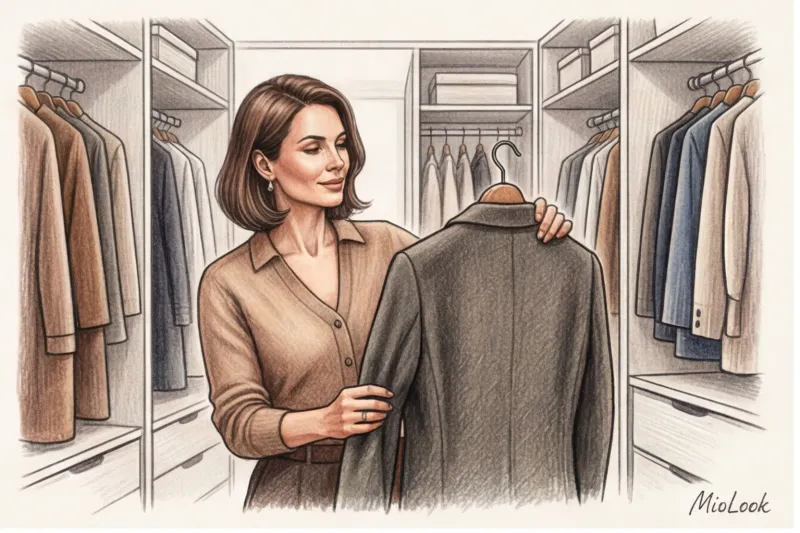
Over 12 years of working as a personal stylist, I've seen the same scene in fitting rooms hundreds of times. A woman crosses 40 and suddenly starts buying "comfortable" shapeless cardigans, soft viscose sweaters, and shoes that scream compromise. I call it "invisibility syndrome"—when clothes don't emphasize your experience and status, but rather literally erase you from the space.
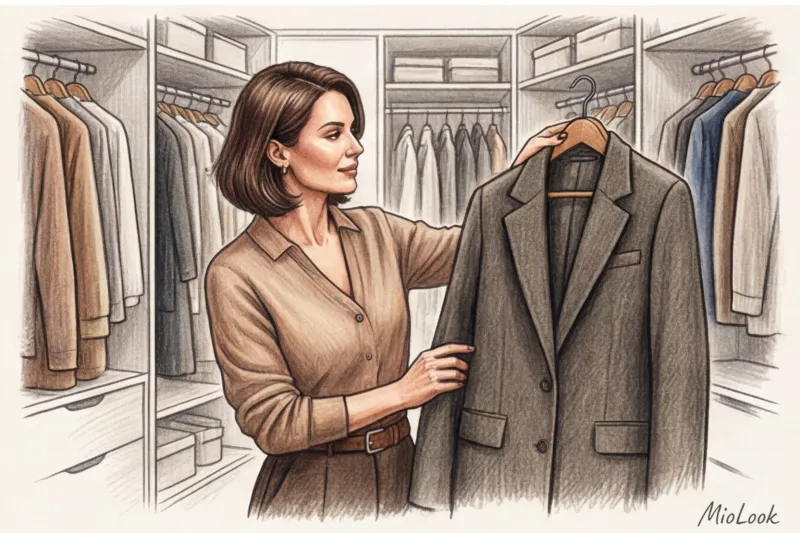
Let's be honest: a basic wardrobe for a 40-year-old woman isn't a boring list of a white shirt and black trousers. It's an engineering project. We're no longer masking imperfections with layers of fabric. We're building a new silhouette through the right cut architecture, material density, and smart wardrobe economy. We discussed in more detail why the old rules no longer work in our The Complete Guide to Dressing Style for Women Over 40: How to Stay Yourself.
Architecture over age: why a basic wardrobe is built differently
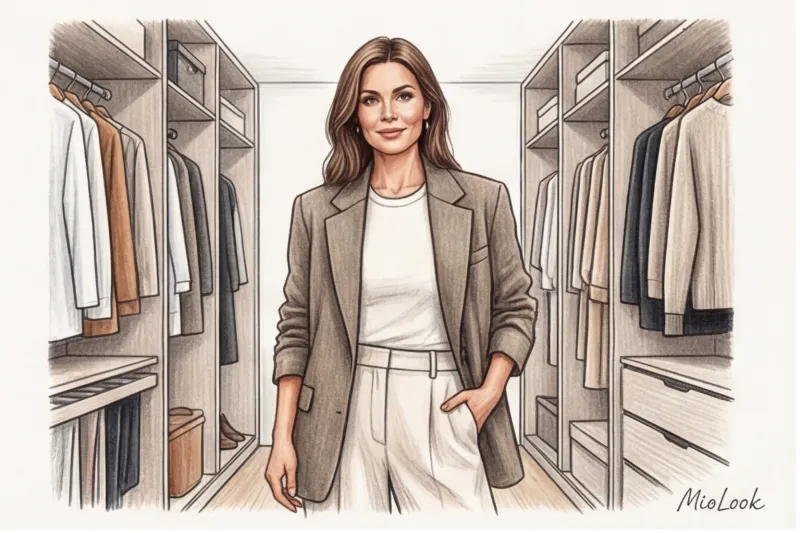
Once you cross 40, your clothes should begin to act as a frame. In youth, soft, form-fitting fabrics may look cute. Now, they will only highlight signs of fatigue and the slightest changes in posture. According to the silhouette design principles taught at Milan's Istituto Marangoni, a person's perceived status is 70% determined by their shoulder line.
Consider my client Elena (42, financial analyst). She came to me complaining that she was no longer taken seriously at work, even though her skills were only growing. We audited her closet and removed all the knit blouses with sloping shoulders. We replaced them with structured, straight-cut jackets from Massimo Dutti. The effect was immediate—the sharp shoulder line visually elongated her spine, lifted her face, and even changed the way Elena walked into a meeting room. Three months later, she received a promotion.
"Dress not for your age, but for your social status and ambitions. Status always requires structure."
The Main Enemy of Elegance: Why It's Time to Throw Out "Comfortable" Knitwear
There is an extremely dangerous myth: "After 40, you need to wear soft and cozy clothes to hide figure flaws." This is a catastrophic mistake.
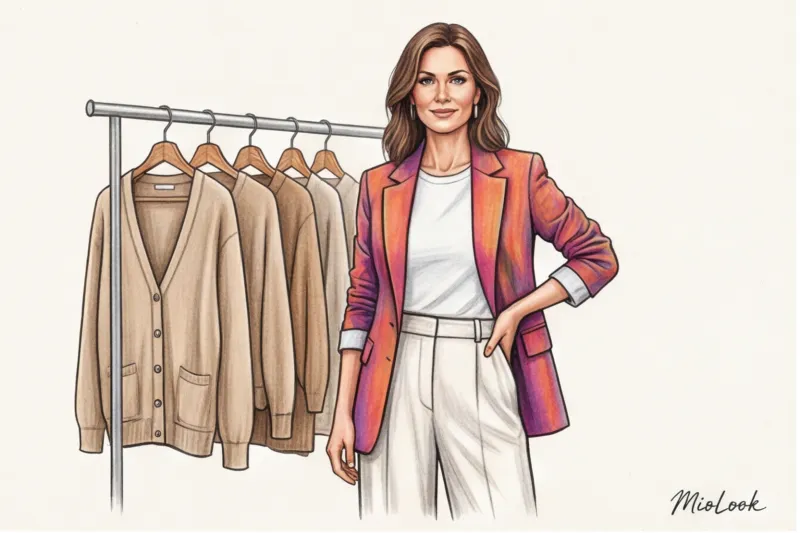
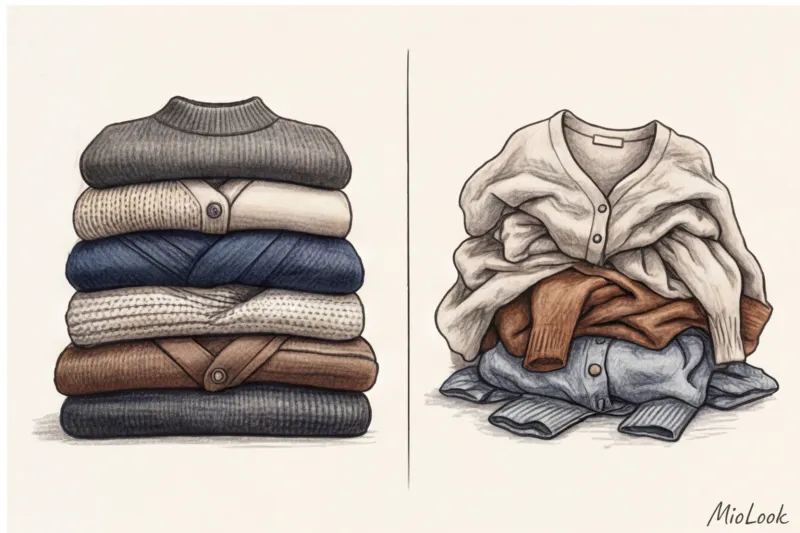
Soft, thin knits made of cheap acrylic or flimsy viscose are a traitor. They cling to every fold, accentuate the contours of your underwear, and make your entire silhouette look tired and bulky. If you want to look elegant, a stiffer texture is your best friend.
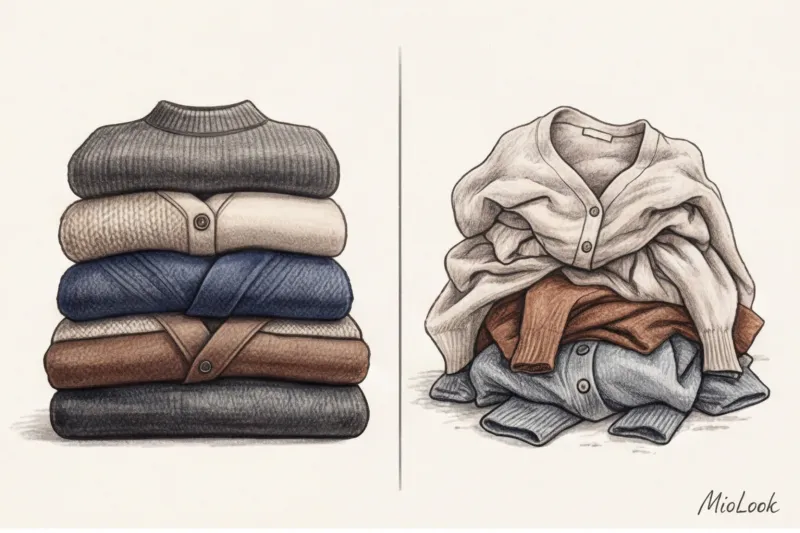
How do I test an item in the fitting room? I always have my clients do two quick tests:
- Transmission test: Hold the fabric up to the lamp. If you can see your fingers through it, return the item to the hanger.
- Compression test: Crinkle the edge of the garment in your fist for 5 seconds. If the fabric remains wrinkled, it will ruin your look by mid-workday.
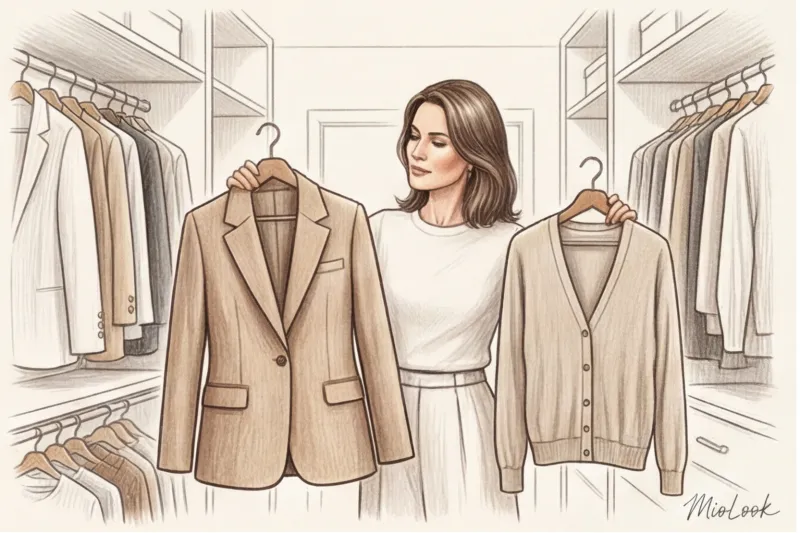
What can you wear instead of thin cardigans from basic mass-market lines? Opt for heavy overshirts, collarless tweed jackets (in the Chanel style), or thick merino wool jumpers (look for them at Arket or COS). Yes, they're more expensive. But while a €30 mass-market cardigan will pill after two washes, a heavy wool jacket for €150 will last you five years.
Access to MioLook for €0.99 — one-time payment
A smart AI stylist will analyze your clothes and suggest which knitwear should be discarded and which should be purchased.
Get access — €0.99 oncePerfect tops for every day: from T-shirts to shirts
The main rule for tops in a 40+ wardrobe: there should always be some air between your body and the fabric. No 2000s-style clinginess. Here's your checklist for the perfect basics.
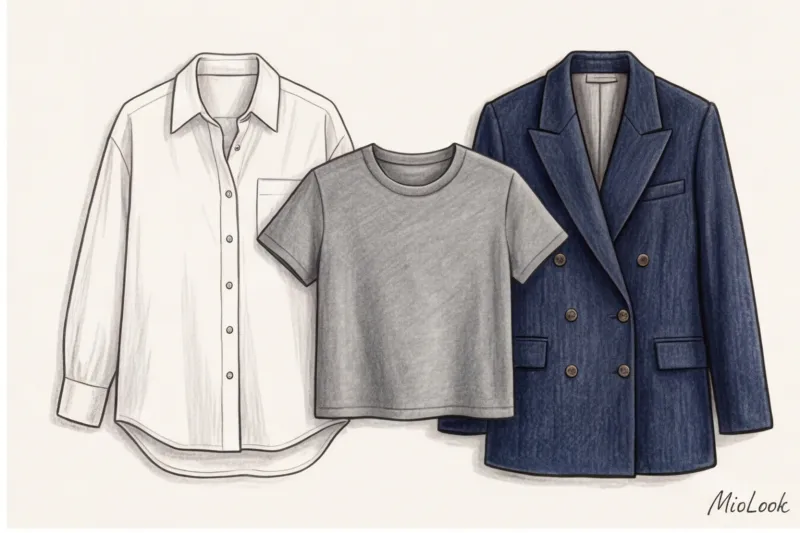
A thick T-shirt and a long sleeve: a basic outfit without compromise
Forget about translucent cotton T-shirts. We're looking for a weight of at least 180 g/m² (ideal options are always available in the men's department at Uniqlo or in the basic COS line). This type of T-shirt holds its shape, doesn't show through underwear, and looks expensive.
Sleeve length is crucial. Avoid short cap sleeves that cut off the arm at the widest part. A sleeve just above the elbow is your best bet. As for necklines, a V-neck is great for elongating the neck, but a classic crew neck looks more modern with layered looks.
Loose-fitting shirt
Ditch the fitted polyester office blouses—they're so 2010. The ideal shirt today is a heavyweight cotton, poplin, or matte silk. The cut should be straight, as if you borrowed it from your husband.
How to wear it: Never button your shirt all the way up unless you're wearing a tie. Unbutton the top two or three buttons, roll up the sleeves to reveal slender wrists, and tuck it in half (the "French tuck" trick). This creates a casual yet classy look.
Structured jacket
You need a jacket even if you work from home and create your own home capsule clothing for Zoom calls. It's an instant injection of composure into any look.
Choose a straight or slightly fitted silhouette. The correct length is below the widest part of the hip. Fabrics: wool, heavy linen, or blends. The main limitation: avoid 100% polyester. It shines in artificial light and is not breathable.
Wardrobe foundations: jeans, trousers, and skirts with a perfect fit
Your lower body is responsible for your proportions. The right pants can visually lengthen your legs by 5 centimeters and reduce the bulk around your stomach.
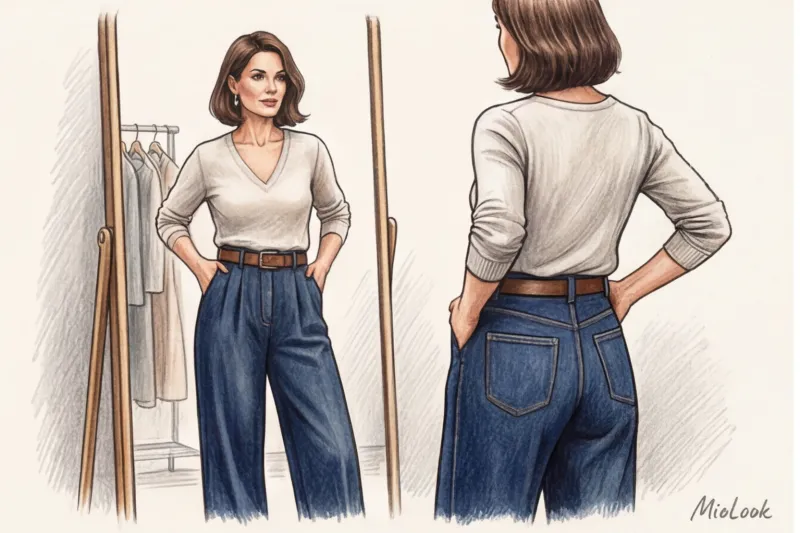
The Right Jeans: Forget Skinny Jeans
Skinny jeans distort the body's proportions, making the upper body appear bulky and the legs appear short. Modern alternatives include straight, wide, or bootcut jeans.
The rise should be medium or high. Choose a deep color: a solid blue without contrasting distressing, graphite, or white/off-white for warmer weather. Off-white jeans, by the way, look three times more expensive than blue ones at the same price.
Wide-leg palazzo trousers with pleats
Many people are afraid of waist pleats, thinking they add bulk. In fact, the right pleats create space for the stomach while concealing it. Pants made of flowing suit fabric should be full-length to pair with trendy loafers or low-heeled shoes.
Skirt: Focus on midi and texture
Forget knee-length dresses—they visually cut off the leg in the worst possible place. The elegant length for women over 40 is midi (to the narrowest part of the calf).
My favorites for basic wardrobe without rules An A-line silhouette in thick cotton or faux leather, or a silk slip skirt. Pair a flowing skirt with a chunky knit sweater—the play of contrasting textures always looks flattering.
Shoes and outerwear: the main investments in status
There's an ironclad rule in style: you can skimp on a T-shirt, but your coat and shoes must be impeccable. This is where wardrobe math and the Cost Per Wear principle come into play.
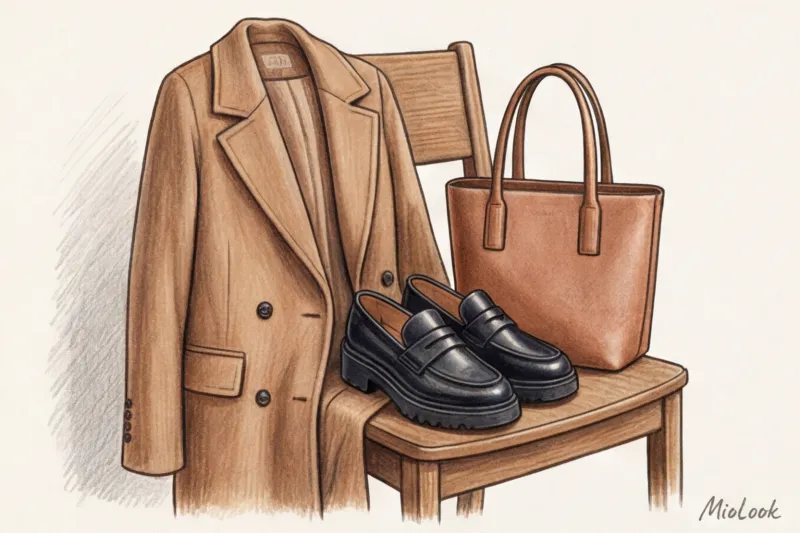
Let's do the math. You buy a polyester coat at a budget store for €70. It's thin, doesn't keep you warm, and starts to pill after a month. You'll wear it maybe 15 times before it starts to look worn out. Total: €4.60 per outing.
Alternative: you buy a high-quality Massimo Dutti coat (70-80% wool) for €250. You wear it for four seasons in a row, at least 120 times. Result: €2 per outing. An expensive item always ends up being cheaper in the long run.
According to research by Lyst (2024), the trend toward "quiet luxury" has cemented the fashion for high-quality, basic investments. Your minimum program:
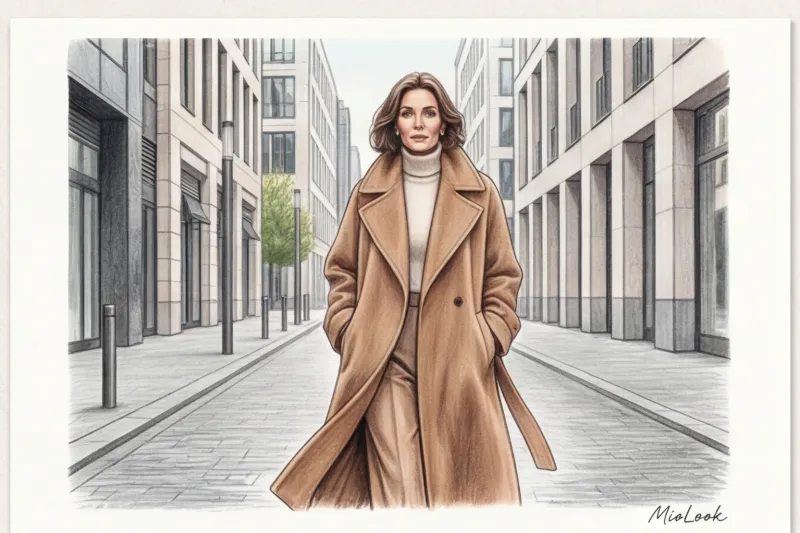
- Maxi or midi length coat: straight cut that elongates the silhouette.
- Full Length Trench Coat: Avoid short coats that reach to the knee or mid-thigh.
- Status shoes without heels: Loafers with thick soles, Chelsea boots, and minimalist leather sneakers without logos. Shoes should have a rigid frame and not wear out like soft slippers after a week.
The 5-Minute Formula for a Stylish Look: The Rule of Thirds
Are you standing in front of a full closet, but the thought "I have nothing to wear" still doesn't go away? Use my favorite packing algorithm that I give to all my clients when wardrobe digitization: the formula of the third thing.
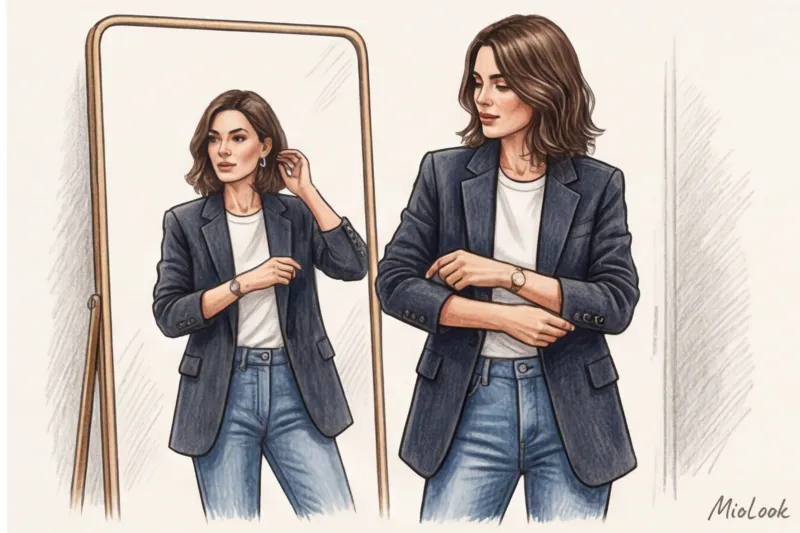
A basic look (Jeans + T-shirt) isn't a style yet, it's just clothes that cover the body. To get it right image , you need a third layer: a structured jacket, a sweater draped over your shoulders, or a quality leather belt. It's the third piece that ties the outfit together.
Accessories play a huge role. Pay attention to the hardware. Cheap, overly shiny gold metal on a bag or shoes instantly cheapens the look. Opt for matte hardware or metal with a slightly distressed effect (brushed gold or silver). Add a sturdy tote bag (which holds its shape even when empty) and modern sunglasses, and a basic outfit will take on a whole new meaning.
Your ideal image begins Here
Upload your basic items to the MioLook app, and the algorithms will suggest dozens of stylish combinations based on the “third thing” rule.
Get access — €0.99 onceChecklist: Where to start your closet overhaul today
Theory without practice is dead. No need to rush to the mall tomorrow and buy out half the store. Start with an honest audit of what you already own.
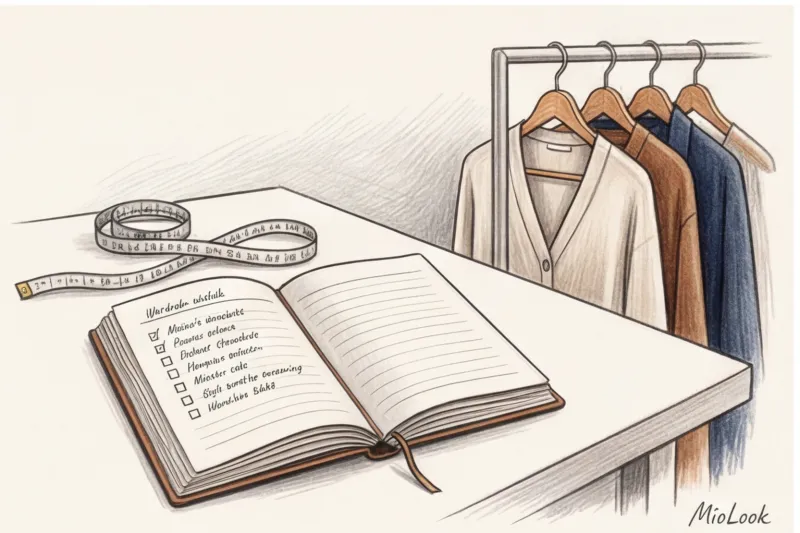
Step 1: Get rid of toxic knitwear. Take out all the pilling items, the ones with stretched collars, and that "comfy top" you wouldn't want to accidentally run into your ex in. Throw them in the trash or recycle them without regret.
Step 2: Find your gaps. We often buy a fifth pair of jeans simply because we have nothing to wear with the first four. Consider what's missing to complete your look. For example, you have great pants, but no matching T-shirt.
Step 3: Write a strict shopping list. Set a budget in euros. For example, allocate €150–€200 for the perfect boots, but buy T-shirts for €25–€30.
Remember the most important thing: style after 40 isn't about restrictions or trying to look younger. It's about recognizing your own worth and choosing clothes that convey that value to the world. Respect yourself enough to wear clothes that hold their shape and emphasize your status.