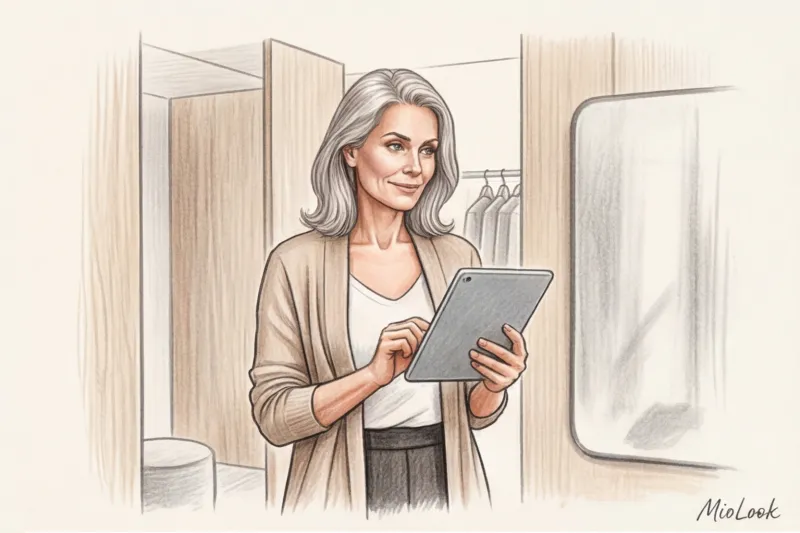
Have you ever wondered why glossy magazines are so obsessed with lists like "10 Things to Throw Away After 40"? Over 12 years of working as a style coach, I've realized something cynical yet liberating: the concept of "dressing for your age" is a brilliant marketing myth designed to trick you into buying new, "correct" clothes. We've explored how this sociological phenomenon works and why "invisible woman syndrome" occurs in more detail in our article. A complete guide to clothing style for women over 40.

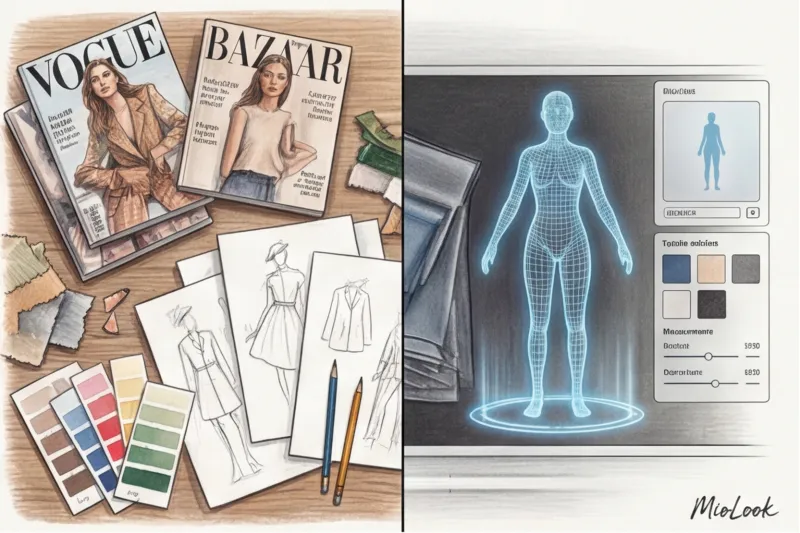
But today I want to offer you a completely different perspective. What if you trusted your image not to the subjective opinion of a fashion editor, but to impartial mathematics? Smart clothing selection app Powered by artificial intelligence, your year of birth isn't known. For a neural network, your passport is a blind spot. Algorithms see only vectors, body architecture, color contrast, and dry lifestyle metrics. And, as my experience shows, this emotionless approach is a thousand times more effective.
The End of Ageism in Fashion: Why Algorithms Are Better at Style Than Glossy Magazines
The fashion industry has been selling us anxiety for decades. First, they tell you you're too young for complex textures, then that your knees are no longer suitable for lengths above midi. According to WGSN's 2024 consumer research, women over 40 are the most affluent yet most frustrated demographic in fashion retail. They're offered either boring, "age-appropriate" casual styles or teenage trends that feel out of place.
When you start using technology, the rules of the game change. AI evaluates your wardrobe objectively. The neural network transforms style from the "do/don't" category to the realm of physics and geometry. The transition from dressing for status to dressing for self-expression occurs when you stop looking at other people's expectations and start analyzing your own data.
"A mature woman's style isn't a set of taboos. It's a manifesto of someone who knows their proportions, values their time, and refuses to compromise on cut."
Your perfect look starts here
Join thousands of users who look flawless every day with the help of selection algorithms.
Get access — €0.99 onceMioLook Clothing App: How AI Is Breaking the Pattern
For a long time, stylists (myself included) used the typology of "apple," "pear," or "hourglass" shapes. Today, these terms seem hopelessly outdated to me. They force a woman into a fruit stand instead of working with the architecture of her unique silhouette. When you load your clothes into MioLook clothing selection app , the visual analyzer breaks down your clothes into vectors: cutting guidelines, volumes, focal points.
Replacing emotional shopping ("I bought this dress because I was having a bad day") with a data-driven approach has an incredibly therapeutic effect. You begin to see your closet as a system of equations, where each item must earn its value.
Digitalization of appearance and coloristics
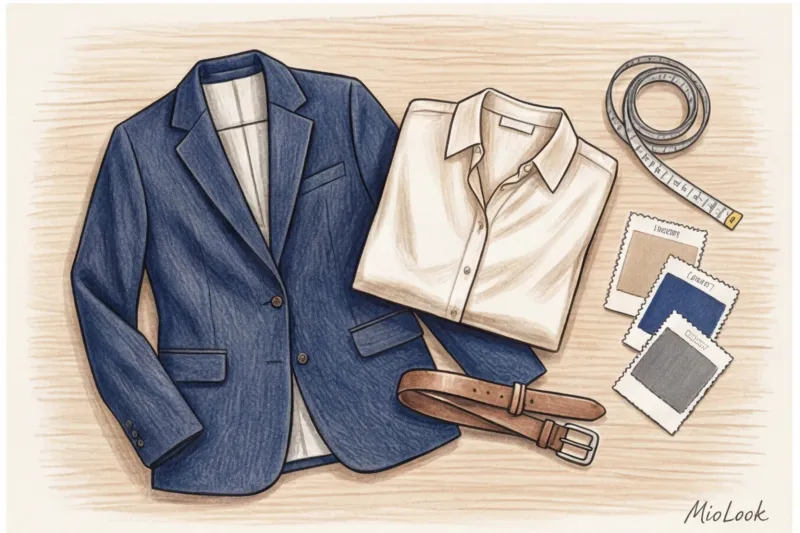
It's a physiological fact: with age, the level of natural contrast in appearance decreases. Hair pigment softens, and skin tone changes. While in your 20s you could wear a solid black sweater and look fresh, later, black on your face acts as a harsh reflector, highlighting fatigue, shadows, and even the slightest imperfections in your skin.
Algorithms capture this microcontrast. The app won't prohibit you from wearing dark colors; it will suggest intelligent alternatives: deep navy, cool graphite, dark chocolate, or rich emerald. These shades retain the visual austerity of black but act as a built-in ring light, illuminating your face.
Lifestyle Analysis: Why an Employment Chart is More Important than a Passport
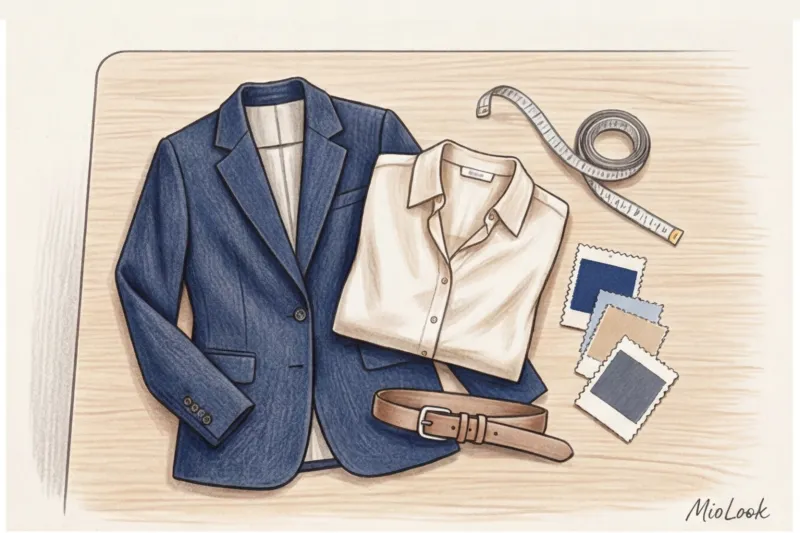
The most common mistake I see during wardrobe reviews is buying clothes for an "imaginary" life. The closet is filled with silk slip dresses and stiletto heels, even though the woman spends 80% of her time on Zoom calls, driving, or working a hybrid office schedule.
The connection between your actual schedule and the content of your virtual closet It should be straightforward. If the app shows that 60% of your time is spent working remotely and wearing smart casual, then you should invest in premium knitwear (such as merino wool or cashmere), not your tenth rhinestone blouse.
The Mathematics of a Status Wardrobe: 3 Parameters a Neural Network Considers
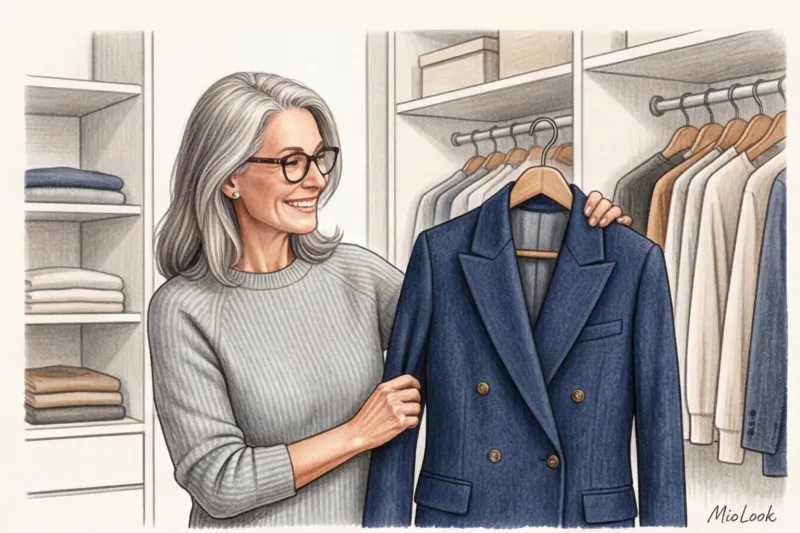
One of my clients, a financial analyst with a brilliant education, couldn't get a promotion. When we digitized her belongings, the statistics showed that 80% of her "work" wardrobe consisted of thin, shapeless knit cardigans. Soft, streamlined fabrics are psychologically perceived as compromised, homely, and submissive.
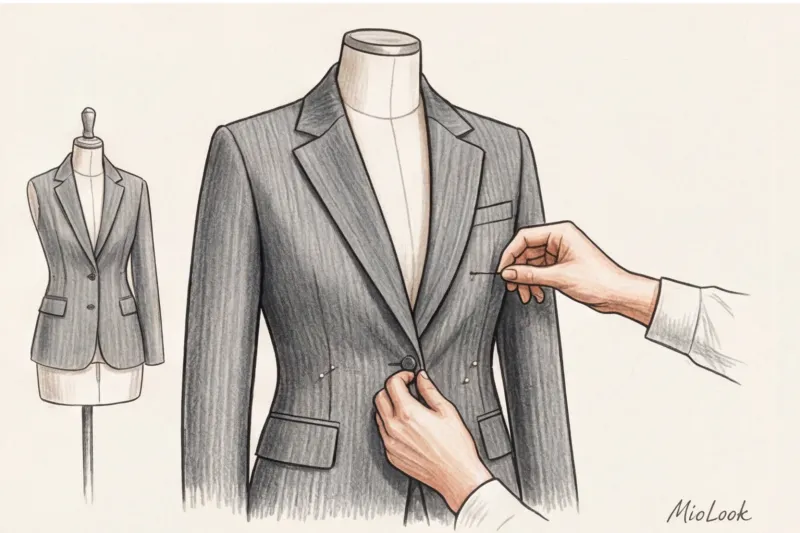
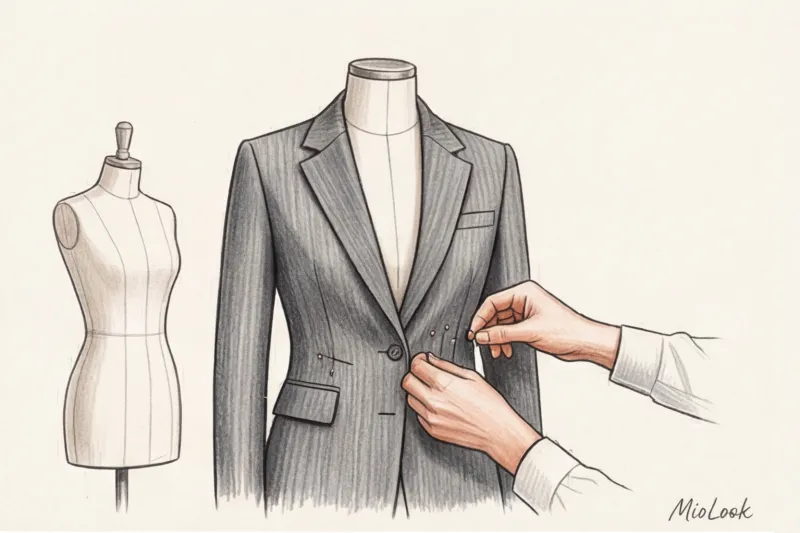
We removed them from her capsule collection and replaced them with structured jackets with a sharp shoulder line from Massimo Dutti and COS in the €150–€250 range. The rigid architecture of the cut instantly ties the silhouette together, conveying authority and boundaries. Three months later, the client was promoted to a senior analyst position. This isn't magic; it's social psychology coupled with the mathematics of style. And here are three key parameters:
- Architecture and form. Clothes with a clear geometric cut (straight trousers with creases, heavy shirts, jackets) act as a frame. They hold their shape regardless of your size.
- Texture and density of the fabric. Algorithms favor textures that aren't see-through or wrinkle easily. Cotton with a weight of 180 g/m² or more, dense viscose, and wool blends are all indicators of visual "expensiveness."
- Cost Per Wear (Cost Per Wear). A €200 jacket that you wear 100 times (CPW = €2) is mathematically better value than a trendy €30 polyester top that you won't like after the first wash (CPW = €30).
Ready to get started?
Try MioLook's free plan—no commitment, just pure analysis of your style.
Get access — €0.99 onceFrom Chaos to System: A Smart Closet Review with AI
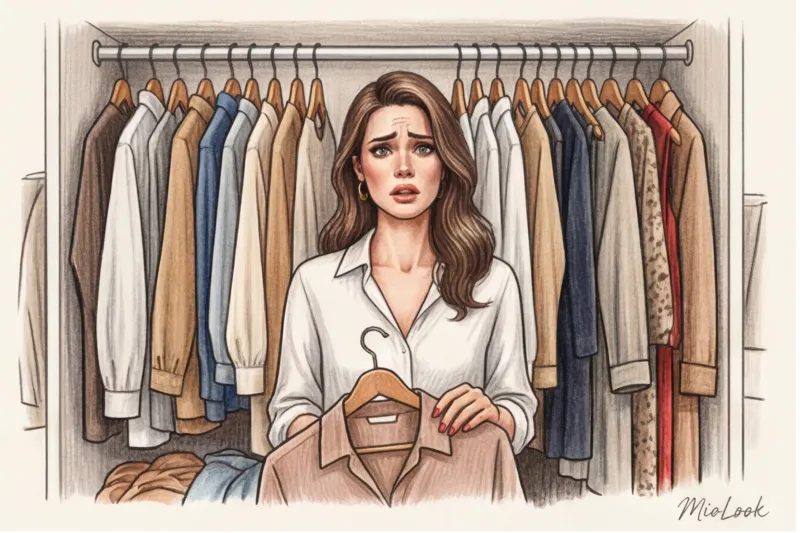
My personal turning point happened two years ago. I decided to conduct an experiment and tracked absolutely all my looks through an app for six months. The brutal truth the statistics revealed was the Pareto formula: I wore exactly 20% of my wardrobe 80% of the time. The rest were "dead weight"—emotional purchases, duplicates (I ended up with five identical beige turtlenecks), and clothes for that imaginary life.
Retail analytics confirm this global problem. According to the National Retail Federation (2023), women over 40 return up to 40% of clothes they order online due to poor fit and proportions. We buy with our eyes and wear with our bodies.
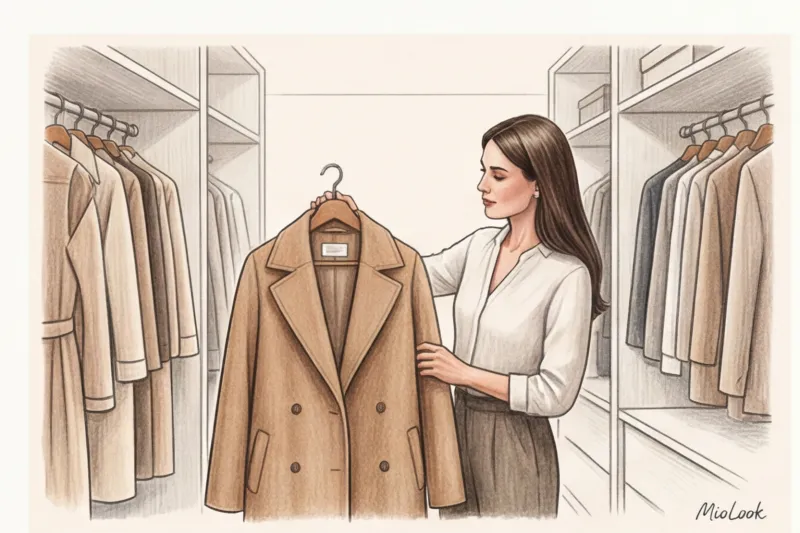
Using regularly A smart app for your basic wardrobe powered by AI , you initiate a self-regulation process. You photograph things, the neural network removes the background, and creates a clean database. The algorithm then generates new capsules from the items you forgot about, suggesting unobvious but stylistically sound combinations.
Step-by-step plan: update your style with MioLook in 7 days
As a practicing stylist, I must warn you about the biggest mistake newbies make: don't try to digitize 100% of your closet in one Sunday. That's a surefire way to burnout. Algorithms can't account for your emotional attachment to your grandmother's vintage silk scarf—and that's okay; leave those things out of the system. First, we need a working base. Here's my proven integration algorithm.
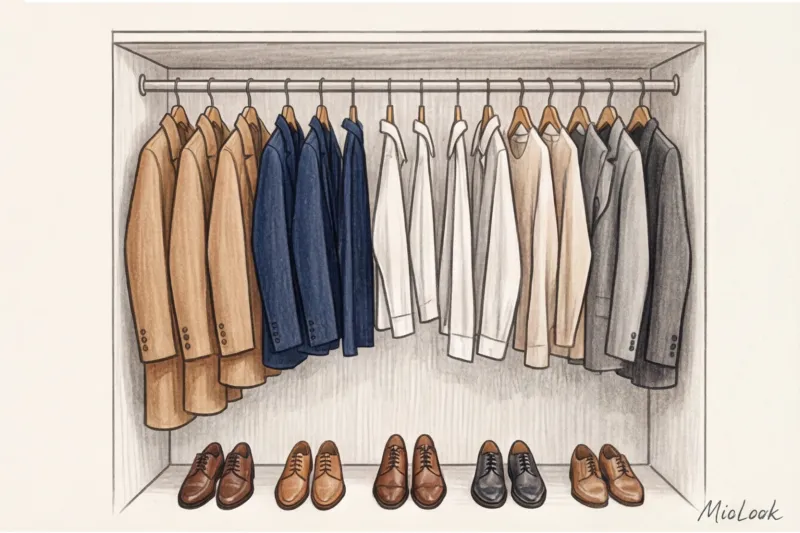
- Day 1-2: Spot digitization. Choose 15-20 of your favorite items that you wear most often (basic trousers, jeans, shirts, jackets). Photograph them in daylight against a contrasting background. For more information on how to get the perfect photos, read A guide to photographing clothes on a smartphone.
- Day 3-4: Data collection. Start capturing your real looks in MioLook every day. Honestly note what you wore to the office and what you wore for coffee on the weekend.
- Day 5-6: Metrics Analysis. Go to the statistics section. You'll see a heat map of your style: which colors dominate and which silhouettes recur. At this stage, it's easy to spot a lack of cohesive elements (for example, you have a lot of elaborate skirts but no simple, basic, chunky knit tees).
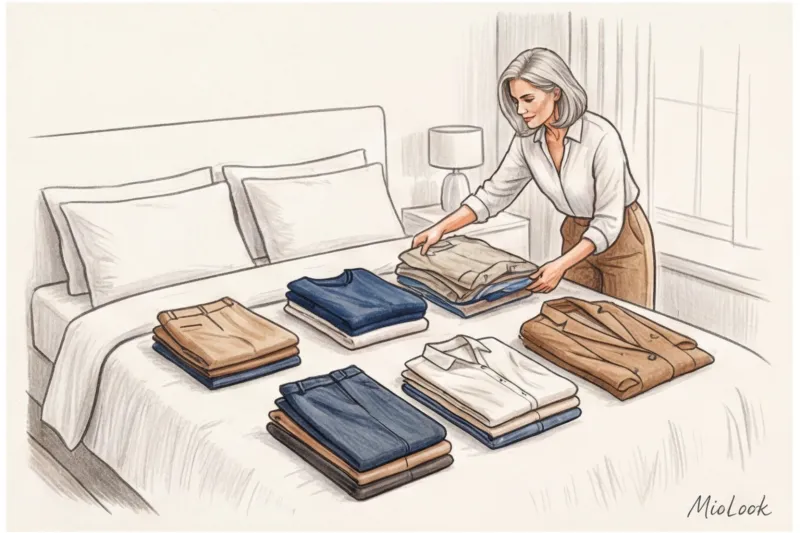
- Day 7: Creating a shopping list. Based on the gaps in the capsule, the app (or you yourself, based on the statistics) generates a shopping list. You go to the store not for "something new," but for a specific, structured white shirt of the right length that will tie together four existing bottoms.
Summary: Your style is your personal algorithm
Age is no excuse to lower your standards for appearance or, conversely, to frantically rejuvenate yourself with the help of TikTok micro-trends. Technology is finally giving us back control over our own wardrobes. Rejecting ageist stigmas in favor of a cool, analytical approach to proportions and fabric quality offers incredible freedom.
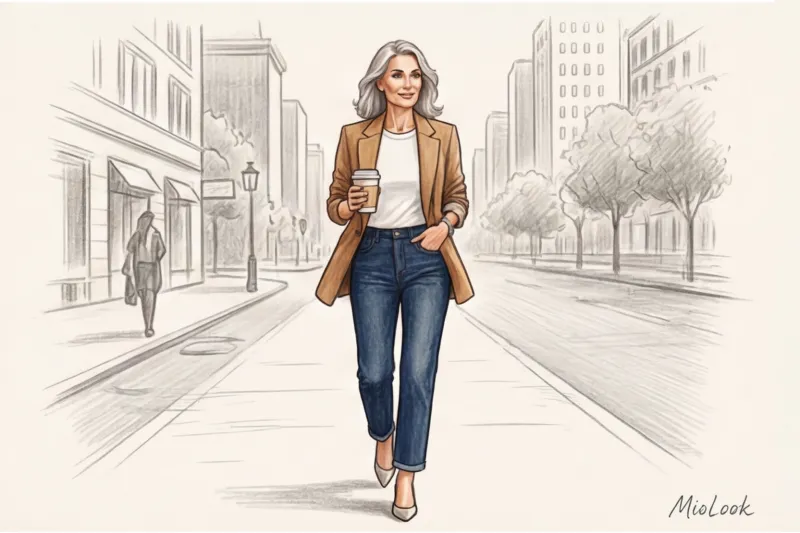
MioLook's artificial intelligence doesn't dictate who you should be. It doesn't impose stereotypes. It gives you a precise, personalized tool to ensure your look always works for your goals—whether it's a complicated Friday dress code at an IT company or a relaxed brunch with friends. Upload your top 10 favorite items today, and you'll be surprised at how much hidden potential your own closet holds.
Access to MioLook for €0.99 — one-time payment
A smart AI stylist will select the perfect look for every day, taking into account your real data.
Get access — €0.99 once