The Death of the "People Also Buy" Algorithm: Why Basic Personalization in E-Commerce No Longer Works
The other day, I went to a popular online store to put together a spring capsule collection for a client. I put a simple leopard-print midi skirt in my cart, and immediately the "Customers who bought this also" section popped up. Guess what the algorithm suggested? A loud red sequin blouse and neon pumps. Why? Simply because last weekend, a couple hundred girls bought this set for a 90s-themed party. As a stylist with 14 years of experience, I just laughed. But how does the average shopper feel, looking for an office look without a strict dress code? She closes the tab. It's at that moment that it becomes absolutely clear: classic personalization in e-commerce hopelessly outdated.
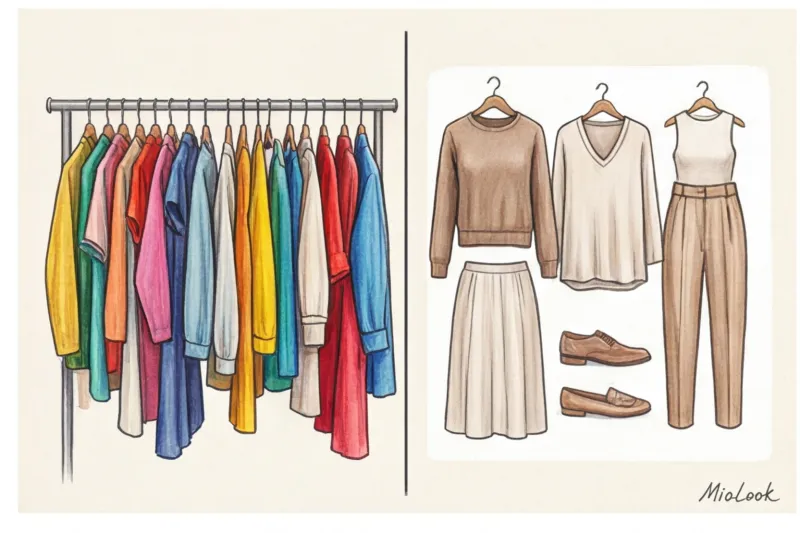
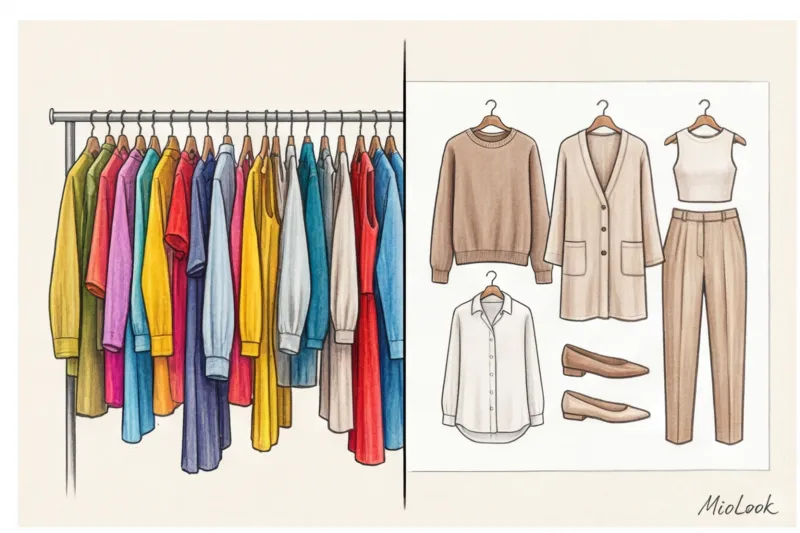
We're seeing a tectonic shift in consumer expectations. Customers no longer come to online stores for things—they come for decisions No one wants to waste three hours of their life scrolling through forty pages of the "Trousers" section. The modern woman needs to know what to wear to a morning meeting to look classy, and then how to transform that same look for an evening at the theater with just a few accessories.
"A customer isn't looking for the perfect jacket for €150. They're looking for the assurance that this jacket will pair well with their favorite jeans and won't just sit there like dead weight. You shouldn't sell fabric and seams, but a usage scenario."
Against this backdrop, standard product recommendation carousels like "Similar Products" irritate me rather than inspire me to increase my purchase. If I've already chosen a basic double-breasted trench coat, why does the site aggressively suggest five more of the same kind, but with different buttons? This isn't helpful; it's informational noise, which inevitably leads to decision fatigue.
It's important to draw a clear line here: there's a huge difference between a product recommendation and style advice. A typical marketplace's algorithm thinks in supermarket terms: ketchup goes with pasta, a screen protector goes with a smartphone. In the fashion industry, this straightforward logic kills conversion. If a customer buys oversized palazzo jeans, the machine will suggest an oversized hoodie (after all, that's also the "Casual" section). But a competent expert—or a specialist providing online stylist services — will suggest a fitted top or cropped jacket to create the right proportions and balance the silhouette.
This is how we arrive at the concept of an AI stylist for online stores—a technology that completely changes the rules of the game. This is no longer a primitive script for joint purchases, but an intelligent system trained on the Pantone Institute's color principles, body types, and the laws of image architecture. I often tell my colleagues how Neural networks for stylists help automate routine tasks , but for fashion retail, it's a true Holy Grail. Imagine: your customer opens a card for a basic white shirt for €80. Instead of a faceless "Wear with" section, an AI stylist instantly generates three complete looks from your store's selection. A formal office look with straight trousers, a relaxed casual option with wide-leg jeans, and a statement evening outfit with the same shirt casually tied in a knot over a slip dress. This shifts the focus from aggressive single-item sales to expert assistance, reducing returns and building the very trust that modern business relies on.
Shopping Cart Psychology: Why Your Customers Return (A Stylist's Perspective)
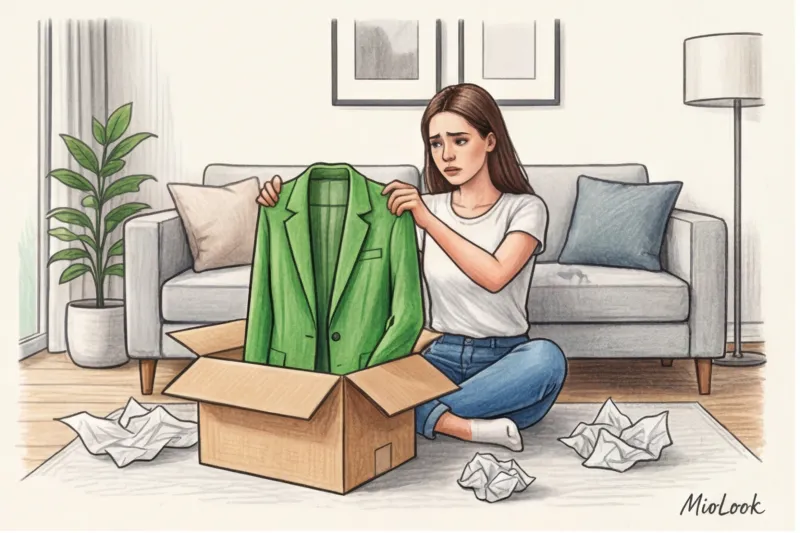
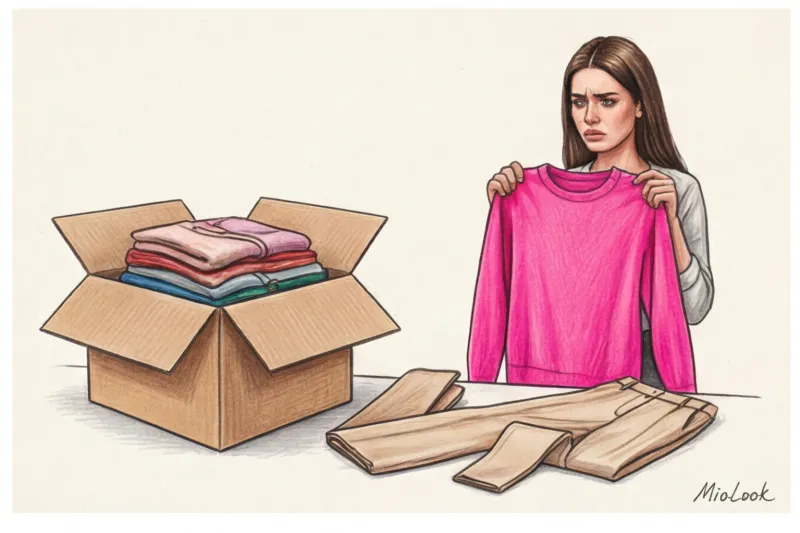
Do you know what the biggest money-losing hole in any fashion brand looks like? I see it every time I go through a new client's wardrobe. My recent client, Anna, had eight brand-new items with tags hanging in her closet. Among them were a luxurious asymmetrical fuchsia skirt for €180, a complex, architectural top made of thick cotton, and a straight-cut jacket. The quality is amazing, the fit is perfect. But why have they been hanging around for months? Anna admitted, "I look at this skirt and feel so frustrated. I can't figure out what shoes to wear with it without looking ridiculous."
The answer lies in what I call lonely thing syndrome When shopping online, a woman buys more than just a piece of fabric; she buys an emotion, a status symbol, and the promise of a new, more stylish look. In the professional catalog photo, the skirt looked bold. It was paired with chunky boots and a vintage leather jacket. But when her order arrived, Anna realized her closet only contained classic pumps and basic office sweaters. None of these items matched the fuchsia in style or texture. A paralyzing fear of error arises. For businesses, this fear translates into direct losses. A return is often not a complaint about loose threads. It's a cry for help: the brand sold a part from a complex construction set but forgot to include assembly instructions.
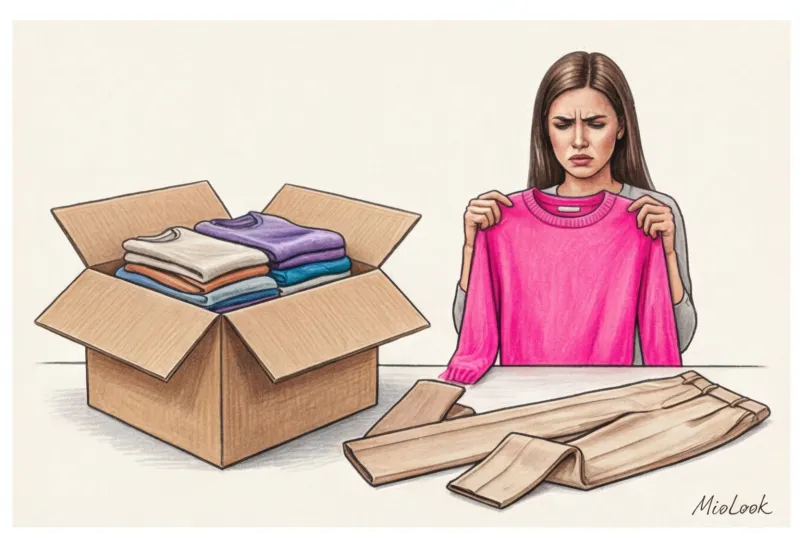
According to the National Retail Federation (NRF) for 2023, the average return rate in fashion e-commerce remains stable at 25-30%, rising to 40% during sales periods. Reverse logistics mercilessly eats into business margins. Inspection of returned items, dry cleaning (especially if the item was stained with foundation during trying on), repackaging, and shipping costs cost online stores between €15 and €25 per item. And the most frustrating thing is that more than half of these returns could have been prevented at the adding-to-cart stage.
The second huge obstacle of modern retail is total decision fatigue ( decision fatigue ). On average, a modern woman makes about 35,000 micro-decisions a day. And when she opens a store app in the evening to relax, the retailer unloads a new stressor on her. She's looking for "just nice wide-leg pants." The site displays 45 pages of filters. Her brain is overloaded by the third scroll. And when the pants are finally chosen, her inner critic asks the final question: "What jacket will you wear with this high-waisted one this fall?" If there's no obvious answer, the cart becomes an abandoned cart. It's physically taxing for the client to be their own stylist, buyer, and wardrobe analyst all at once.
Access to MioLook for €0.99 — one-time payment
A smart AI stylist will select the perfect look based on your wardrobe.
Get access — €0.99 onceThe capsule approach as a salvation for business
How can e-commerce break this cycle of returns and stalled transactions? The answer is radically simple, but it requires a paradigm shift: we need to stop selling isolated items and start selling complete looks. In my experience, when we create mini capsules for clients (for example, 10-12 items offering 30 different combinations), the likelihood of an item not working out drops to zero. Each shirt or skirt justifies its price because it works in three or four clear life scenarios.
This same principle is a gold mine for online retail. If a brand offers three ready-made options in the product listing for those same wide-leg trousers: a relaxed weekend look with sneakers and a chunky sweater, a formal office look with a jacket and loafers, or a dressy look with a silk top—the customer's anxiety level instantly drops. A woman sees not a product, but a ready-made solution to her "nothing to wear" problem.
This is where classic cross-selling changes its essence. Standard ads, where an algorithm mindlessly suggests a hat or simply a popular but ill-fitting top to pair with trousers, are perceived as aggressively pushy. True personalization transforms upselling into genuine care. When an algorithm suggests a shirt that perfectly matches the selected trousers in proportions (for example, the right length so it can be tucked in without creasing) and color, the customer perceives this as premium service.
From a unit economics perspective, capsule logic works wonders. It organically increases units per transaction (UPT). Instead of a single, spontaneous purchase for €80, a customer confidently pays for a complete look for €250, viewing it not as an impulsive purchase, but as a smart investment in their appearance. Moreover, progressive platforms are already integrating MioLook smart wardrobe feature This allows the system to not only suggest items from the current inventory, but also mathematically calculate which items the new product will work with among the customer's existing purchases. The result is increased conversion, loyal customers, and a dramatic reduction in returns logistics costs.
How an AI Stylist Works: Deep Personalization in E-Commerce
When I conduct an initial consultation with a client, my brain functions like a complex computing center. In the first ten minutes of conversation, I visually assess dozens of parameters: from the natural temperature contrast of their appearance to the flexibility of their movements and how much time they spend in the office. For a long time, it seemed impossible to translate this professional observation and empathy into machine code. But the WGSN consumer trends study (2024) proved otherwise: next-generation algorithms no longer simply parse text tags like "red" and "sweater." They have learned to "see" style and assemble harmonious outfits.
Let's take a look under the hood of this technology and figure out exactly how An AI stylist analyzes your color type, body type, and lifestyle. Customer. For a neural network, your appearance is a set of structured data. First, the algorithm reads the contrast level (the difference between skin tone, eye color, and hair color) and determines the color temperature. If a customer has a cool skin tone and a vibrant complexion, a smart online store widget will never top the search results with a muted mustard jumper—it will suggest an emerald or rich sapphire that will highlight her face.
With body type, the AI's magic works even more subtly. The algorithm doesn't just know your measurements; it takes into account the laws of proportion. For example, if a woman has full hips and a thin top, the AI, trained on the principles of professional styling, won't recommend jeans with heavily embellished pockets. Instead, it will focus on the portrait area, suggesting a blouse with a statement collar or voluminous sleeves, mathematically balancing the silhouette. And the integration of lifestyle data (via a short interactive onboarding process on the website) helps filter out visual noise. If the client is a freelancer, the algorithm won't create outfits with formal suiting, even if they suit her figure perfectly.
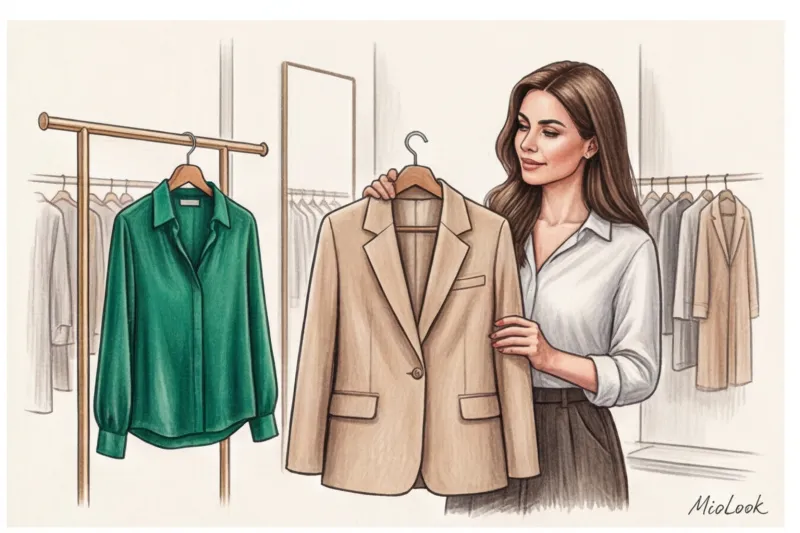
But analyzing the user is only half the battle. The second, more complex task for businesses is digitalization of brand DNA How does the algorithm understand which items in your catalog go together? This is where data tagging at the stylistic level comes into play. Each product is assigned not just the "pants" category, but a complex matrix of attributes: fabric density, texture type (matte, glossy, fuzzy), and stylistic vector.
"I always tell my clients: it's not the color that makes a luxurious look, but the clash of textures. AI understands this perfectly. If the algorithm creates a layered look with a smooth silk skirt, it will match it with a voluminous chunky cashmere sweater or a matte, thick wool jacket, creating that very 'delicious' contrast."
Imagine a brand that embraces the aesthetics of intelligent minimalism, where the average price for a complete look ranges from €200–€400. An AI algorithm wouldn't mix their strict architectural silhouettes with frivolous prints. It reads their DNA: simplicity, clean lines, and refined fabrics, and assembles outfits based on nuanced monochrome, strictly adhering to the designer's philosophy.
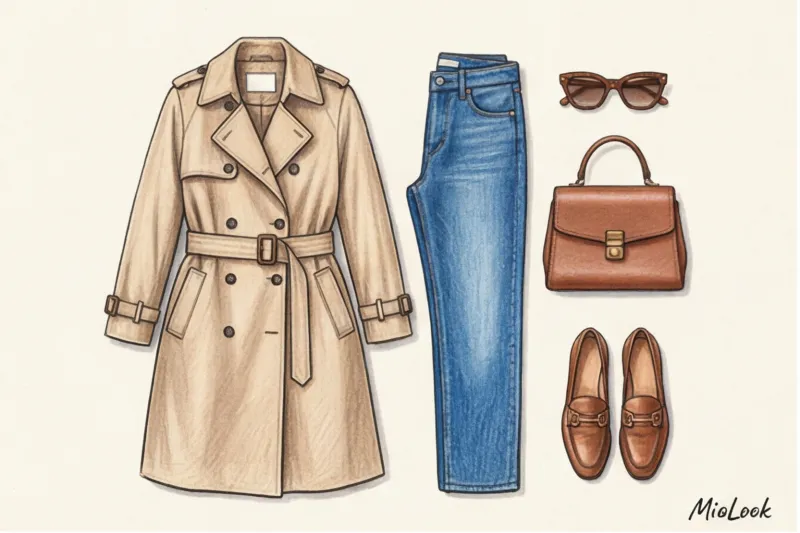
The result of this colossal computational work is generating personalized lookbooks in real time Technically, this is achieved through graph databases that connect each product item to other items through hundreds of invisible links. When a customer accesses a basic trench coat, they don't see the annoying "Customers also bought this" block, but ready-made scenarios: What to wear with this trench coat on a date , "Long Walk Look" Each proposed set is mathematically calibrated to suit the specific user's appearance. The client isn't just buying clothes—they're buying a ready-made solution to their problem.
Virtual Fitting Room vs. Smart Wardrobe: What's the Difference?
It's important to draw a clear distinction between two technologies that retailers often confuse. Fit tech (virtual try-on technology and AR mirrors) is a great utilitarian tool. It solves the sizing issue and really does reduce the rate of returns due to poor fit. But let's be honest: just because an item fits doesn't mean it suits your personal style. A virtual fitting room shows... How the clothes fit, but they don't answer the main question: what to wear it with tomorrow morning.
On the other hand, the concept of a smart wardrobe is a true holy grail for e-commerce. Why is knowing what's in a customer's closet right now so invaluable? The answer lies in integration with the client's existing wardrobe. Today, savvy users don't need to keep track of all their purchases in their heads—they digitize them using mobile apps.
By connecting your catalog to an ecosystem, such as the smart wardrobe feature in the app MioLook , the retailer gains an unprecedented advantage. The store no longer sells items in a vacuum. The AI stylist analyzes the customer's real digital database and says: "Look, this new cardigan from our spring collection is the perfect way to freshen up those beige palazzos you already have in your closet." Conversion rates with this targeted, thoughtful approach increase exponentially because you address the buyer's main objection—the fear of investing in something that will end up in the unworn clothing cemetery.
Debunking the Myths: "Artificial Intelligence Will Kill Our Brand's DNA"
Six months ago, at a closed workshop for conceptual brand owners, I encountered a rather categorical statement. The founder of a niche brand took the microphone and voiced what many were thinking:
"Olena, if we hand over image selection to algorithms, we'll lose face. Neural networks will simply start suggesting identical beige sweaters and straight jeans to everyone because it's mathematically safe."
Fear of total standardization and the loss of unique style is the main thing that today prevents creative directors from implementing deep personalization in e-commerce.
But let's look at this from the perspective of a practicing stylist. This fear is based on the logic of old recommendation systems. The counterintuitive insight is that Algorithms don't make everyone the same. On the contrary, the primitive "bestsellers" search results forced everyone to buy the same thing. Smart AI helps niche, complexly tailored items find the exact woman for whose figure and personality they were designed. An asymmetrical skirt with complex architectural draping for €240 will no longer hang like dead weight in the catalog, discouraging casual shoppers with its uniqueness. The system will show it to the precise customer whose wardrobe and style this complex piece will fit perfectly.
It's important to understand: AI doesn't replace a creative director. A neural network doesn't invent the meaning of your collection, draw sketches, or dictate which fabrics to source. The algorithm works like a brilliant sales assistant in a private boutique. Imagine an ideal employee who thoroughly understands the history of every stitch on your garments, has a phenomenal understanding of color, and, most importantly, remembers the contents of each of your tens of thousands of customers' closets. They don't change the brand's DNA—they translate it into the language of each customer, creating a personalized story for them.
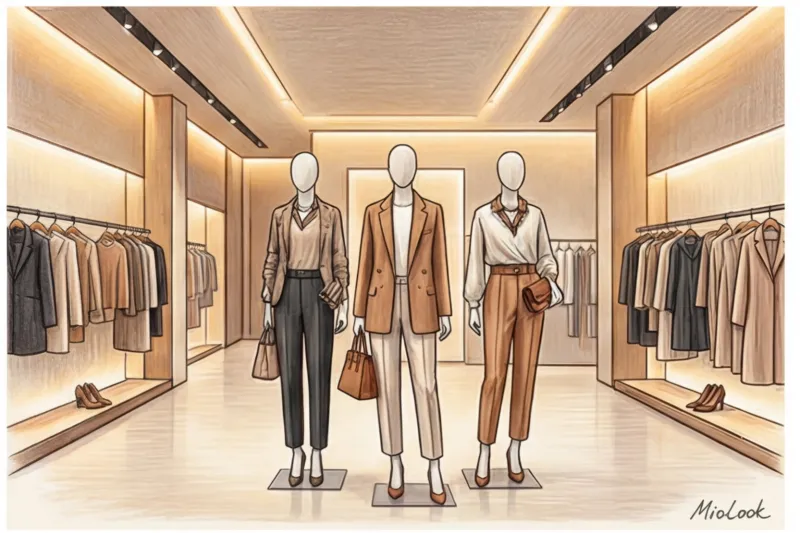
How does this work in practice? Let's look at premium segment cases. Leading luxury retailers have already realized that exclusivity in the digital environment depends on absolute relevance in search results. According to a McKinsey report (2024), intelligent personalization in the luxury segment increases customer retention by 20% without diluting the premium positioning.
If a shopper is looking at a deconstructed trench coat for €1,200, a trained AI won't suggest five more of the same trench coat (which would devalue the uniqueness of her initial choice). Instead, the algorithm will assemble a complete avant-garde look around it: adding your conceptual ankle boots and a rigid bag. Moreover, if your brand uses tools like MioLook This trench coat will be virtually styled with items already hanging in the client's physical closet. The uniqueness of the designer's concept is fully preserved, but the main barrier to purchase—the fear of "how will I wear this?"—disappears without a trace.
Access to MioLook for €0.99 — one-time payment
Start creating perfect images with the help of artificial intelligence
Get access — €0.99 onceA Step-by-Step Plan: How to Implement AI Personalization in Your Online Store
Whenever I'm hired as a fashion expert to audit large online stores, I regularly see the same thing. A fantastic IT department implements sophisticated recommendation systems that, for some reason, suggest pairing a flowy linen blouse with tailored wool trousers. Why does this happen? Because algorithms often think in terms of dry metrics: "matching color" or "users frequently click on these products in the same session."
There is a ruthless rule when working with data: garbage in — garbage out (Garbage at the input produces garbage at the output). Recently, we discussed the sales funnel with the director of e-commerce for a brand in the €150–€300 segment. The problem was classic: excellent targeted traffic, but critically low transaction depth. If you're facing a similar problem and want to transform a soulless storefront into a smart consultant, here's my highly practical checklist for launching an AI stylist.
Step 1: Correct digitization of the catalog (tagging by style, texture, occasion)
This is the stage where most fashion tech startups fail. You can't just automatically download a product feed from a warehouse program and expect magic. The neural network must "understand" clothing as deeply as I do. To achieve this, each item must receive multidimensional stylistic annotation when it's loaded into the database.
We tag more than just obvious physical parameters like color and composition. We factor in temperature undertones (warm/cool), natural contrast levels, and fabric flexibility. The algorithm needs to know that a heavy corduroy jacket will visually outshine a fine silk one if their stylistic core doesn't match. But the key, game-changing tag is the reason. A basic €50 top should be labeled "evening wear," "under a jacket for the office," and "for brunch." If the catalog is managed solely by data scientists without the involvement of practicing stylists, the system will remain blind.
Step 2: Implementing an onboarding quiz for buyers (style profile)
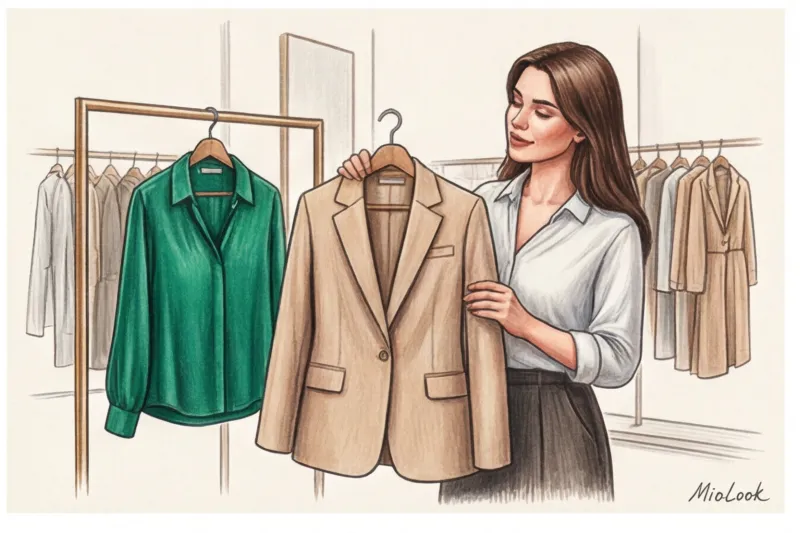
To offer a personalized solution, an algorithm must get to know the customer. A WGSN study (2023) confirms that over 70% of online shoppers are willing to share their personal preferences if they receive real time savings in return. But there's a catch: conversion rates plummet if the questionnaire resembles a 40-item tax return.
The ideal onboarding is completely visual and takes no more than a minute. Don't force a woman to describe her style verbally (many confuse "minimalism" with "smart casual"). Show three beautiful mood boards and ask, "Which aesthetic resonates with you?" Clarify silhouette preferences through clear images and ask a short question about her lifestyle. This micro-questionnaire instantly creates a digital style profile that will become an invisible filter for your entire storefront.
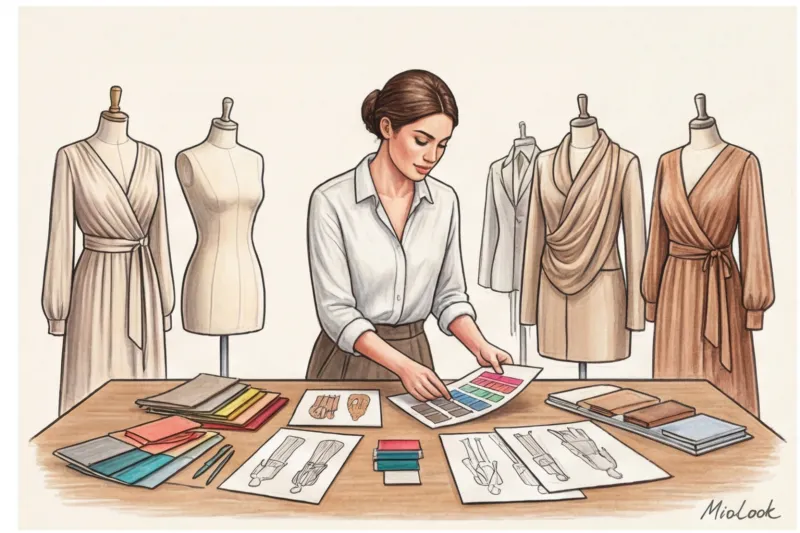
Step 3: Setting up the “Collect a Look” widget on the product card
Feel free to remove or completely rethink the classic "Customers Also Bought" block. It works brilliantly for smartphones and cases, but in fashion retail it just creates visual noise. Replace it with an interactive "What to Wear With This" block.
Imagine the user experience: a customer opens a card for basic straight-leg jeans for €90. Instead of a random selection of T-shirts, the widget dynamically assembles three ready-to-wear outfits from your current assortment. For example: "For Office Friday" (jeans + structured jacket + loafers) and "For Weekend" (the same jeans + an oversized cashmere sweater). A crucial technical rule is that the algorithm must check the inventory in real time. There's nothing more frustrating than falling in love with the outfit you were offered only to discover at checkout that the jacket size you needed is sold out.
Step 4: Using AI Stylist Data for Email Marketing
This is where the most powerful tool for working with repeat sales lies. Standard mass mailings with the text "We have a new spring collection, take a 15% discount" are gradually fading, and their open rates are declining.
Focus on triggered emails generated by AI based on purchase history. Imagine an email with the subject line, "We found the perfect match for your gray jacket." A woman opens it and sees a specific offer: "This skirt will perfectly match the jacket you bought a month ago. We've already added your size to our cart." This is a radical shift in brand perception. The copy sounds like it was crafted by a personal assistant. You're not just selling fabric and stitches—you're showing genuine care, relieving the morning headache of "what to wear," and dramatically increasing your customer lifetime value.
Integration with MioLook: a ready-made solution for fashion brands
Developing a custom neural network from scratch and deeply tagging tens of thousands of SKUs requires a colossal IT budget and months of hypothesis testing. However, modern e-commerce is increasingly opting for B2B partnerships, integrating with already trained systems.
In the appendix MioLook A unique audience has been assembled—women who have consciously digitized their physical closets. They've photographed their items and are actively compiling them into digital capsule collections. For a fashion brand, integration with such a platform opens access to customers at the stage of maximum engagement in the styling process.
How does this work in practice? The app's neural network analyzes the user's virtual wardrobe and identifies a gap. For example, a woman has an excellent collection of basic shirts, but is sorely lacking in trendy bottoms. The AI natively suggests high-quality trousers from your catalog for €130, clearly showing her right on the smartphone screen how flawlessly they would look with three outfits. her own Shirts. You're no longer trying to outshine competitors in the aggressive environment of targeted advertising. You seamlessly integrate into the wardrobe management process, offering precisely the item that will meet your customer's needs right now.
A New Success Metric: From One-Time Transactions to LTV Through Trust
In 14 years of working as a personal stylist, I've learned a paradoxical law of sales. Do you know when a client begins to trust me 100%? Not when I find her the perfect cashmere sweater. But when I gently take the €250 silk blouse from her hands and say, "Don't even try it on. That shade will flatter your complexion, and the cut will highlight what we're trying to hide."
For many years, the fashion industry was built on greed: to sell as much as possible here and now. But deep personalization in e-commerce is a complete game-changer. Today, true loyalty is built on honesty. Imagine an algorithm that acts like that caring, expert friend. If a shopper adds low-rise jeans to her cart, and her digital profile indicates a body type that complements a high waist, a smart AI stylist intervenes.
"This style can visually shorten your silhouette. We've selected three high-waisted options that will perfectly complement the crop tops from your previous orders."
Does it seem like the store is risking losing the deal? Quite the contrary. By dissuading a customer from a surefire, impulsive purchase (which would have an 80% chance of being returned), you're acquiring a brand ambassador. Your LTV (Lifetime Value) skyrockets because the customer realizes you care about their style, not just trying to empty their wallet.
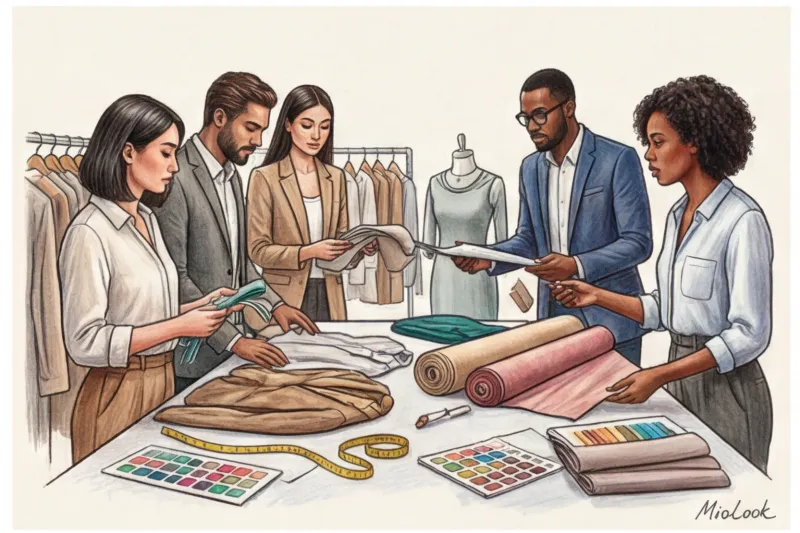
This approach directly addresses the biggest financial pain point of modern businesses: the sky-high customer acquisition cost (CAC). Traditional performance marketing is becoming prohibitively expensive. You pay tens of euros per click to get someone to visit your website, get lost in a bland catalog of thousands of items, and then leave. But when your online storefront greets users with ready-made capsule collections, tailored to their individual proportions and coloring, the conversion rate to first purchase increases exponentially. And most importantly, this customer stops looking around. They no longer need to waste hours searching for a basic turtleneck from competitors when your website already shows them that perfect item in the perfect shade for €80 that seamlessly integrates into their current seasonal wardrobe.
We are on the cusp of a global retail transformation. My prediction: in the next five to seven years, the concept of endless catalogs will be completely obsolete. The future belongs to personalized digital storefronts. When you visit your favorite brand's website, you won't see the entire assortment, but a carefully curated selection of 30-40 items that suit you personally. Physical retail locations will gradually transform into warehouse-free showrooms (guideshops)—beautiful spaces where we'll come to drink coffee, touch textures, and try on samples. The order itself will be placed in one click through a digital profile and delivered directly from the warehouse to your home.
Your ideal image begins Here
Join thousands of users who look flawless every day with MioLook. Digitize your wardrobe and let technology work for your style.
Get access — €0.99 onceWhat can you do as a business today? Stop measuring success solely by conversion rates. Introduce a new metric: wardrobe integration index (wardrobe integration rate). Track how often your items are purchased not individually, but as part of AI-suggested looks.
As an expert who sees tears of disappointment from unsuccessful shopping experiences and genuine joy from a perfectly functioning capsule every day, I affirm: trust can't be bought with promo codes. Trust is built when a brand solves a person's problem before it's even mentioned. Integration with smart ecosystems like MioLook Allows brands to communicate with their audiences through ready-made visual solutions. Artificial intelligence offers a unique opportunity to scale this personalized approach to millions of users. Your online store is no longer just a shelf full of products—it's a personal stylist on every customer's smartphone. And this service is the future of the fashion industry.
Guide Chapters
Omnichannel in fashion: merging online and offline
True omnichannel isn't just about shared inventory, but about a unified customer stylistic profile. Learn how to effectively connect your online store and offline boutique.
AI recommendation system for an online clothing store
The "Similar Products" block often kills conversions by offering customers identical items. We'll explore how smart algorithms create capsule looks and boost sales.
Artificial Intelligence in Fashion Retail: Trends and Case Studies
Outdated recommendation algorithms are hurting sales. Learn how modern AI technologies help customers curate the perfect looks in just a few clicks.
Selling ready-made looks: capsules in online retail
Customers rarely just search for clothes; they seek ready-made scenarios. We explore how a capsule approach in e-commerce helps avoid stylistic mistakes.
Clothing Product Card Conversion: AI and Personalization
Standard recommendation blocks often ruin the shopping experience and turn off customers. We'll explain how to save your sales funnel with smart personalization.
Clothing returns to online stores: how to reduce the percentage
Why do customers abandon unsuitable items but never return to a brand? We explore the problem of "wardrobe incompatibility" and the role of personalization in e-commerce.
How to Increase Average Order Value in a Clothing Store: A Smart Approach
The problem with most online stores is that they're trying to digitize their inventory. Find out how thinking like a personal stylist can help you sell more.
A virtual fitting room for a clothing website: implementing a widget
Customers want to buy not just clothes, but complete looks. Find out how an AI stylist is transforming fashion e-commerce and helping to radically reduce returns.