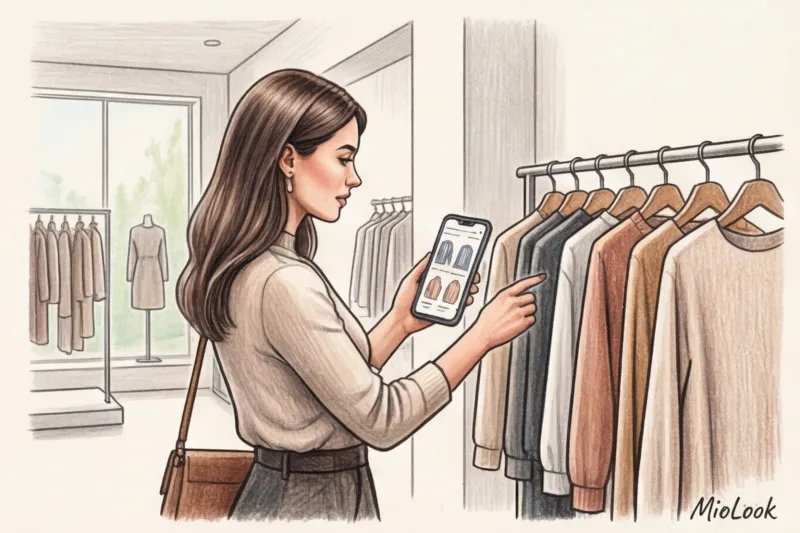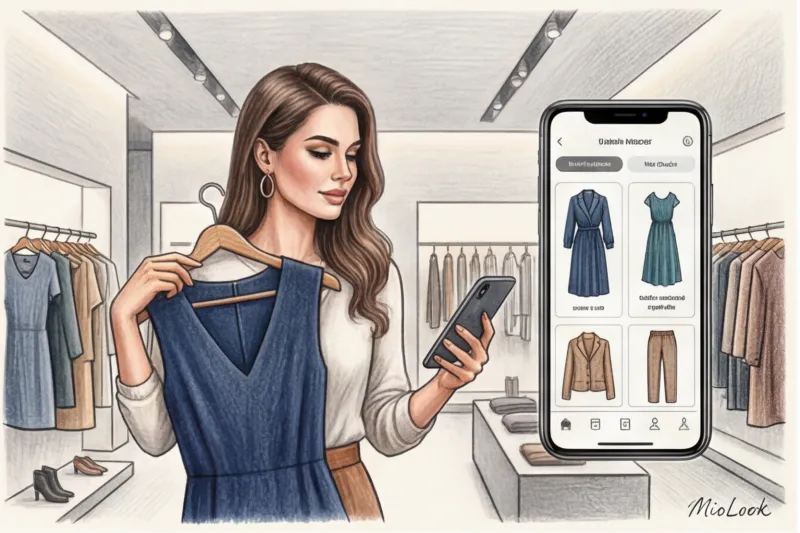
Imagine this: you ordered the perfect pair of wide, heavy wool palazzo pants online. A week later, you visit the same brand's physical boutique to find a jacket to pair them with. The salesperson greets you with a smile and suggests... a slim pencil skirt or dress that's completely out of your style. Why is this? Because to the salesperson in the store, you're a blank slate. They have no idea what's already hanging in your closet.
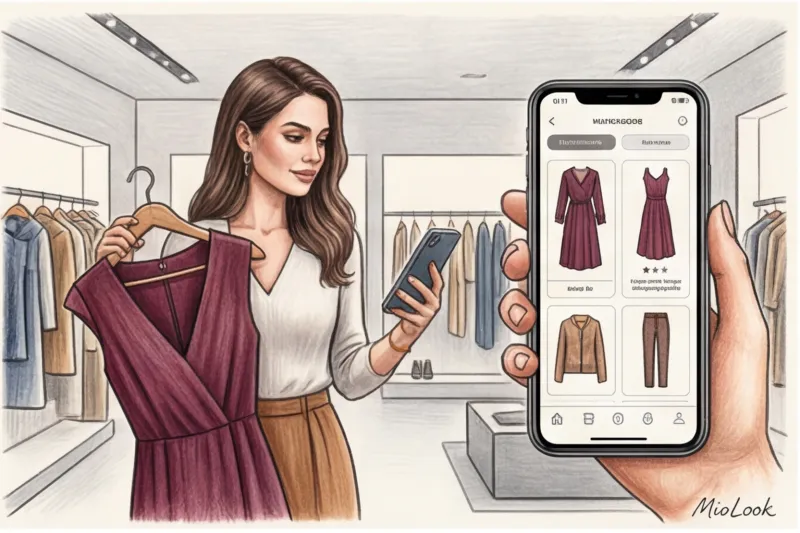
The main myth of modern retail is: “Omnichannel is when the inventory on the website matches the inventory on the store shelf every day.” In fact, the true omnichannel in fashion — this is when a customer's stylistic context travels with them. The store needs to know which trousers from a previous online order you're currently looking for a complement to. We discussed the architecture of such databases and profiles in more detail in our article. Personalization in e-commerce: AI stylist for fashion.
What is true omnichannel in fashion: Forget about warehouse synchronization
Let's differentiate the concepts. Multichannel is when a brand has a beautiful store in the city center, a user-friendly app, and a social media page, but they exist in parallel universes. You can't start putting together an outfit in an app on your way to work, then pop into the boutique that evening and ask the consultant to bring that exact capsule collection to the fitting room.
Omnichannel is built around customer experience, not IT infrastructure. According to the report McKinsey & Company "The State of Fashion 2024" , seamless transition between the digital and physical worlds is no longer a premium feature – it's now a basic customer expectation. Moreover, statistics show that customers who use more than three channels of communication with a brand (online catalog, offline visit, social media, smart app) spend an average of 9% more in-store and 10% more online.
"We don't sell things anymore. We sell real-life use cases" – this phrase should hang over every fashion director's desk.
Offline as a tactile showroom, online as a stylistic brain
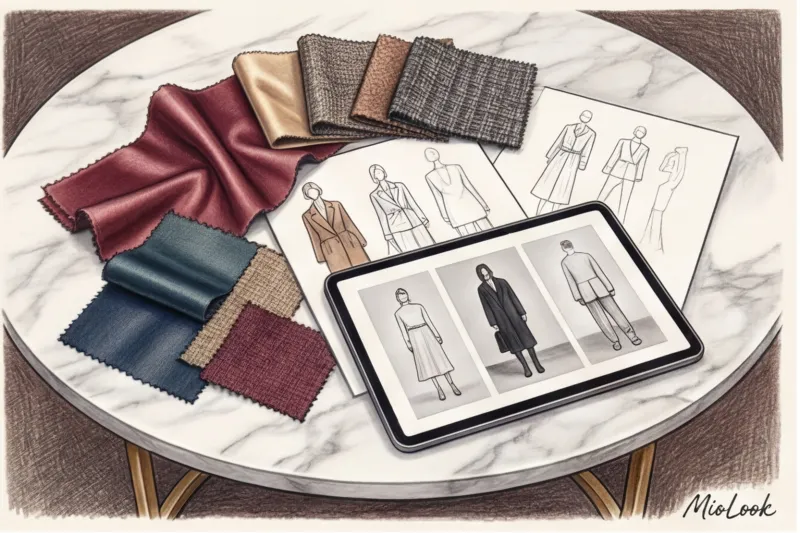
As a textile expert, I can confidently say: online photography, even 3D renderings or videos, will never convey the noble heaviness of high-quality 200 g/m² linen, the cool fluidity of cupro, or the perfect smoothness of mercerized cotton. Textile expertise requires touch.
I had a revealing experience. One of my clients stubbornly refused to order a basic capsule collection online. "I'm not ready to pay €150 for a silk blouse until I understand how it flows and whether it's static-free," she said. And she was absolutely right. Handfeel determines up to 70% of purchasing decisions in the mid- and premium segments.
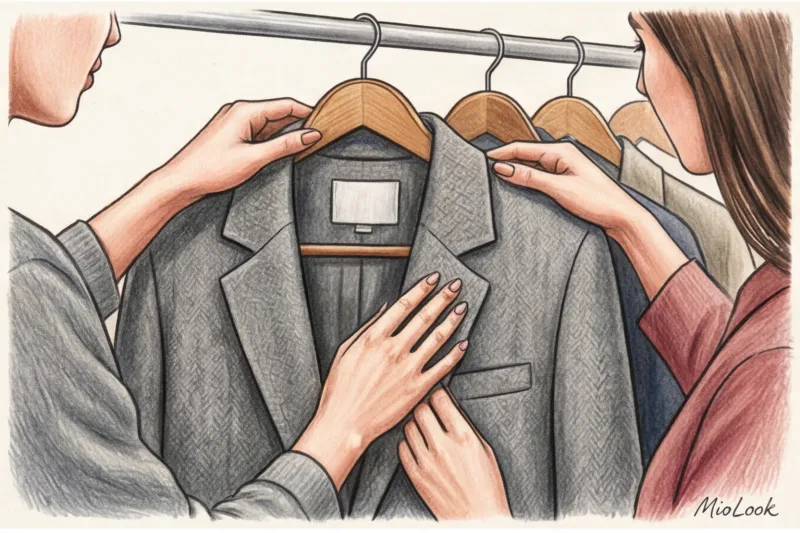
This is where the physical boutique takes on a new role. It's no longer a warehouse where you have to sift through hangers to find your size. It's a place for sensory experiences. You come to appreciate the quality of the stitching, touch the fabric, and feel the fit of the patterns. And then the app takes over—it remembers your tactile choices and completes your look with accessories and basics, which you can then order online with confidence, knowing exactly what quality they are.
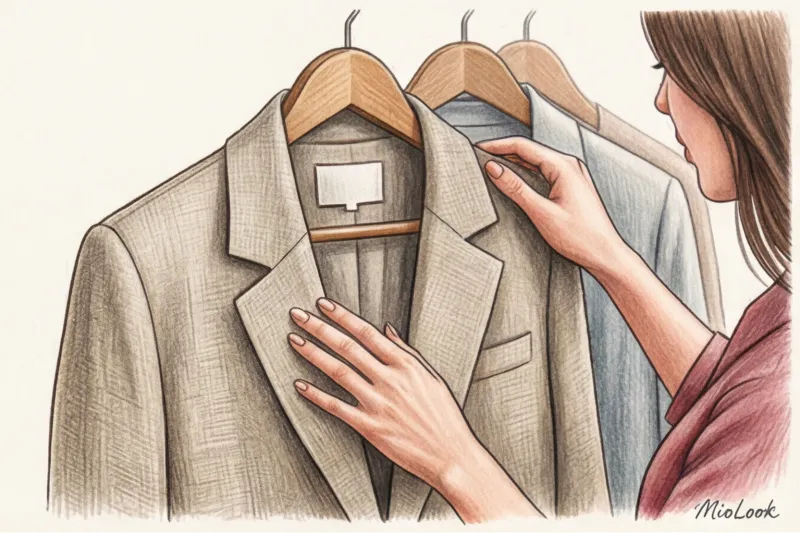
The Role of Smart Fitting Rooms and AI Stylists
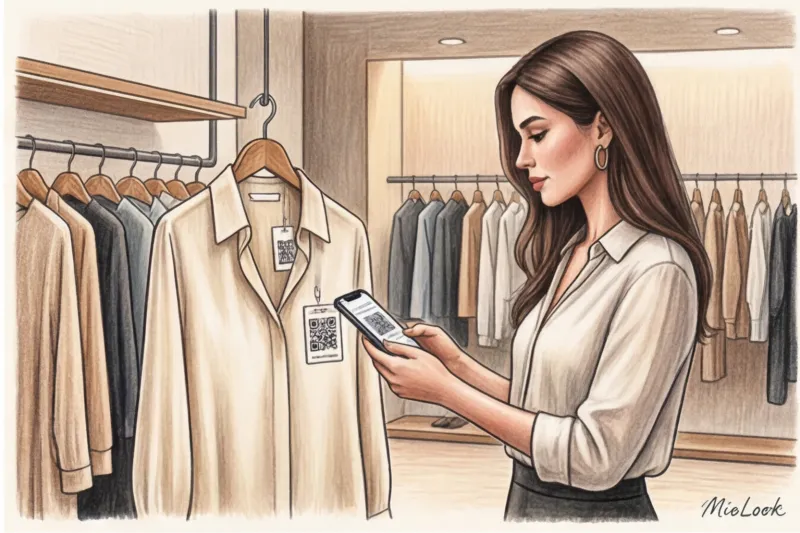
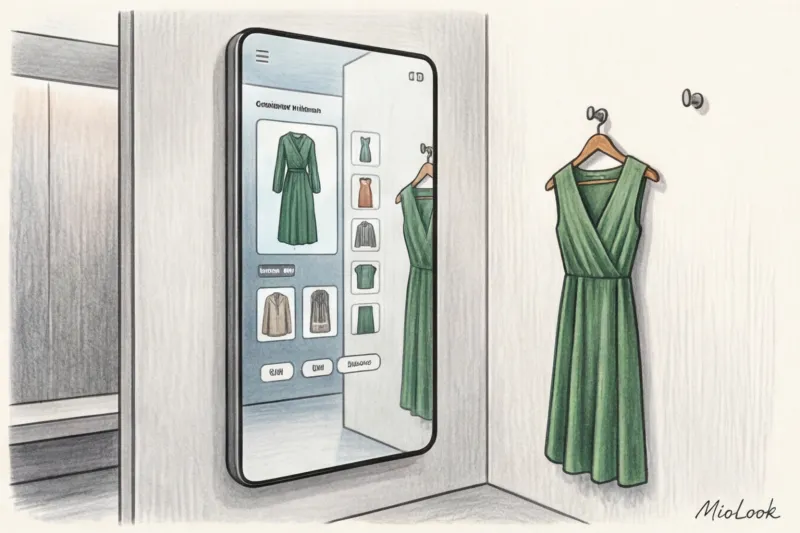
How can we connect the feel of fabric in your hands with a digital brain? Through smart fitting rooms. Items are equipped with RFID tags. When you enter the booth with your chosen jacket, a smart mirror scans the item's code.
Instead of a dry message, "Available in sizes S and M," the mirror displays, "This jacket will perfectly complement those wide-leg trousers you bought from us last month. Want to try a basic top from the new collection with it? Press the button, and a consultant will bring it to you." Magic happens: the brand shifts from the "buy this jacket" paradigm to the "here's a ready-made solution for your business meeting tomorrow" paradigm.
Your perfect look starts here
Join thousands of users who look flawless every day with our smart app.
Get access — €0.99 onceThe biggest mistake brands make: a disconnect between the digital storefront and the physical store.
Many brands sincerely believe that by introducing a single rewards card for their website and store, they've become omnichannel. This is a profound misconception. Harvard Business Review proves that the impact of an omnichannel approach on LTV (customer lifetime value) lies in the personalization of service, not in discounts.
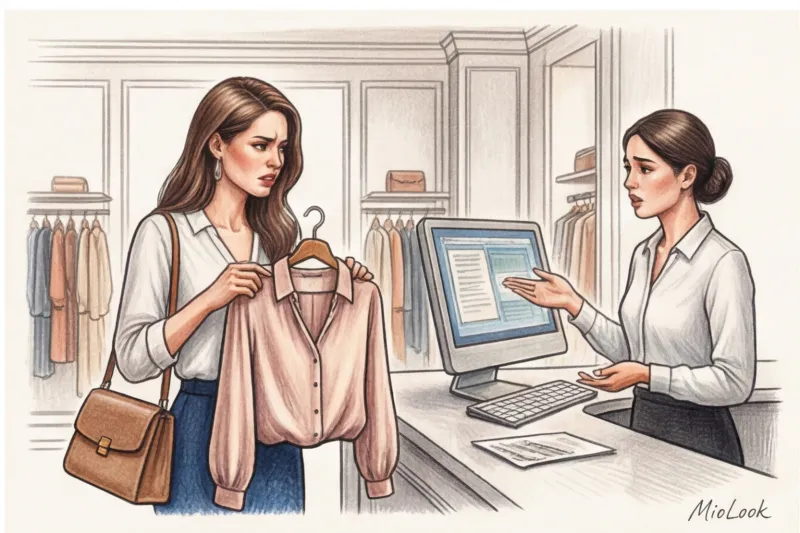
Imagine the "blank slate" from the beginning of this article. A loyal customer who has been buying the brand's clothing online for two years walks into a brick-and-mortar store. In the CRM database, they're a VIP customer. But to the salesperson in the store, they're a stranger. The salesperson doesn't know that the customer has a pear-shaped figure, avoids synthetics, and prefers warm autumnal shades.
In a proper omnichannel model, a consultant, having scanned a guest's electronic card at the entrance (or received a push notification via beacons), immediately sees their style profile. They won't offer an allergy sufferer an angora sweater, but will immediately direct them to a rack of hypoallergenic cashmere or heavy cotton.
The Eco-Friendly Aspect: How Omnichannel Saves the Planet from Returns
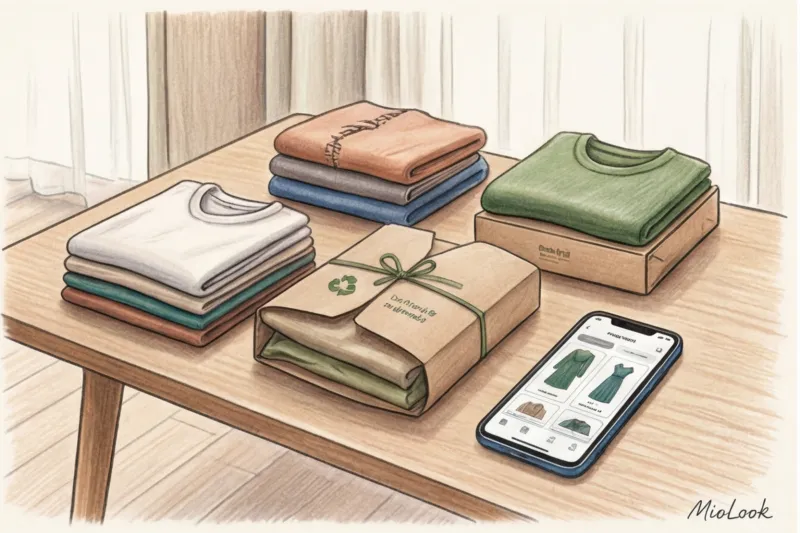
Few people realize it, but returns in fashion e-commerce are a silent environmental disaster. According to industry data, the average return rate for clothing in traditional online shopping is a staggering 30-40%. Every returned item doubles the CO2 emissions from transport, repackaging (often in new plastic), and carries a huge risk of being simply discarded, as inspection and dry cleaning would cost the brand more than its production cost.
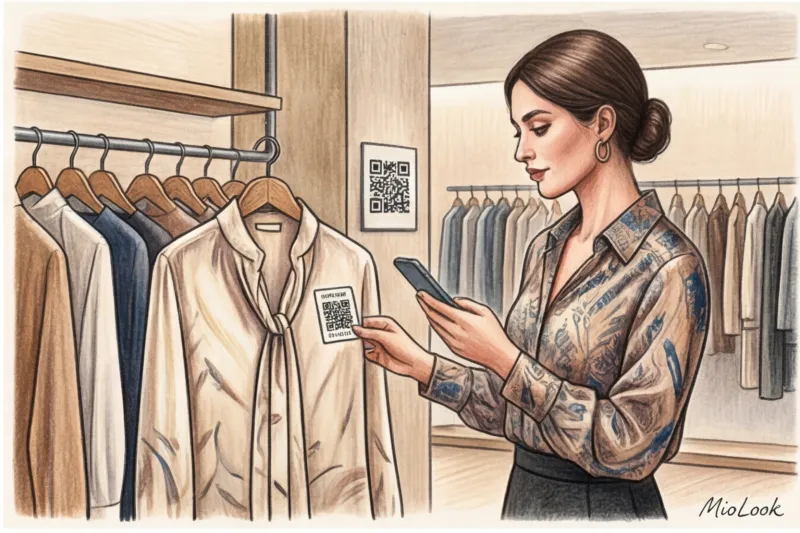
The combination of online and offline shopping solves this problem. The BOPIS (Buy Online, Pick Up In-Store) model allows customers to assemble their capsule at home in a relaxed atmosphere, come to the store, try everything on, and pay only for items that fit perfectly. No back-and-forth courier trips.
Last year, I helped implement a similar system at a mid-range Berlin boutique (average order value: €150–€300). By implementing AI-powered pre-styling and the ability to try on the assembled capsule collection in-store before final withdrawal, they reduced the return rate from 28% to 12%. This represents a significant savings for the brand and a positive impact on the planet.
Access to MioLook for €0.99 — one-time payment
A smart AI stylist will choose the perfect look for you and help you integrate new purchases into your current wardrobe.
Get access — €0.99 onceA step-by-step plan: how a business can integrate offline and online without losing its brand DNA
If you want to transform your brand into a unified ecosystem, you need to take a step-by-step approach. Here's a practical checklist based on real-life consulting:
- Step 1: Deep digitalization of the product range. It's not enough to specify "Dress, item number 123." Each item needs tags by style, fabric thickness, seasonality, color type, and pairing. The system needs to "understand" why this top goes with these pants.
- Step 2: Implementing a capsule buyer profile. Move away from the metric of "what size does the client wear?" Start collecting data: what textures they prefer, what dress code they adhere to (for example, casual Fridays at an IT company or strict corporate attire).
- Step 3: Integrate AI tools. Connect virtual fitting and image generation services. For example, using the platform's tools MioLook , the brand can automatically generate lookbooks for each customer based on their digital footprint.
- Step 4: Train the team. This is a critical moment.
Important limitation (when this does NOT work): I've seen brilliant technology projects fail because offline consultants sabotaged the process. If a salesperson on the floor sees a competitor in the app "stealing" their sales commission, the system will collapse. Offline staff need to be retrained from "cashiers and tote bag men" to personal stylists armed with digital data, and motivated to deliver omnichannel sales.
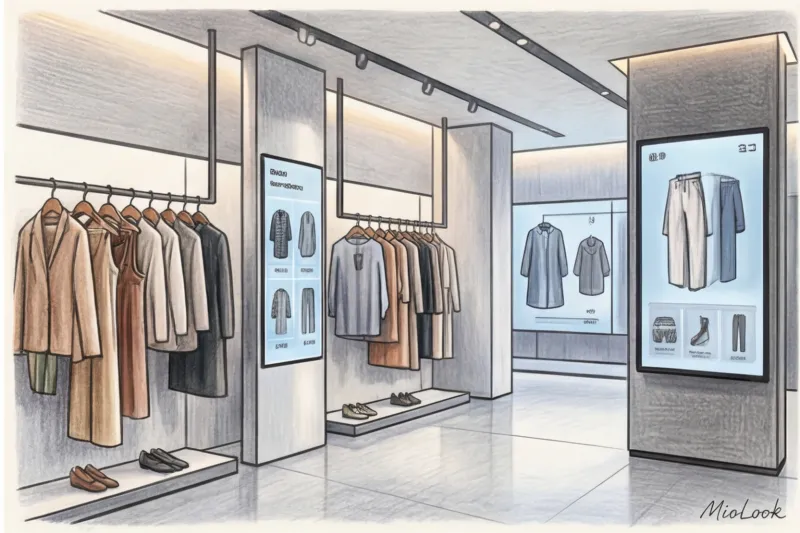
The Future of Fashion Retail: A Client's Wardrobe as a Single Ecosystem
Very soon, omnichannel fashion will cease to be a competitive advantage and become a basic hygiene requirement without which a brand simply cannot survive. Shoppers no longer want to spend 20 minutes in the morning agonizing over their open closet.
Competition is shifting. Brands won't be competing over who has the most precise stitching on a basic €40 T-shirt. They'll be competing over how seamlessly and intelligently that T-shirt integrates into a customer's existing digital wardrobe. Invest in technologies that help people envision the future use of your garment, not just a pretty piece of fabric on a hanger. Those who understand the context of their customers' lives will earn their loyalty forever.