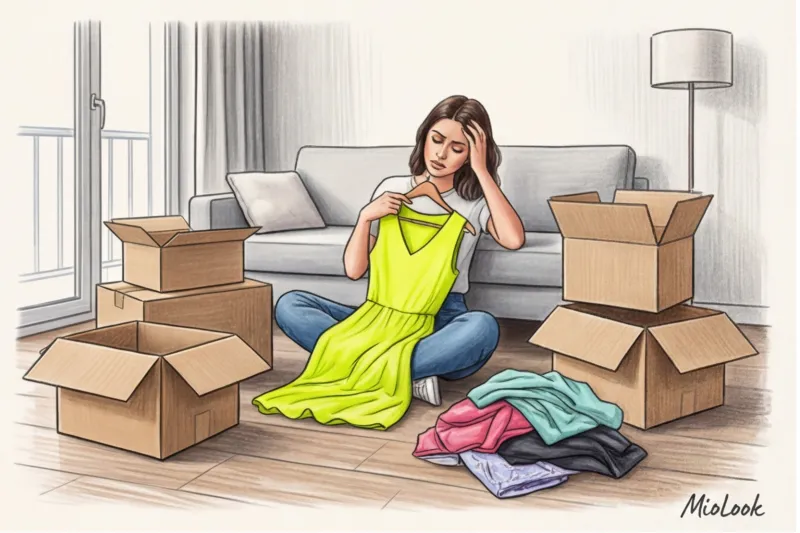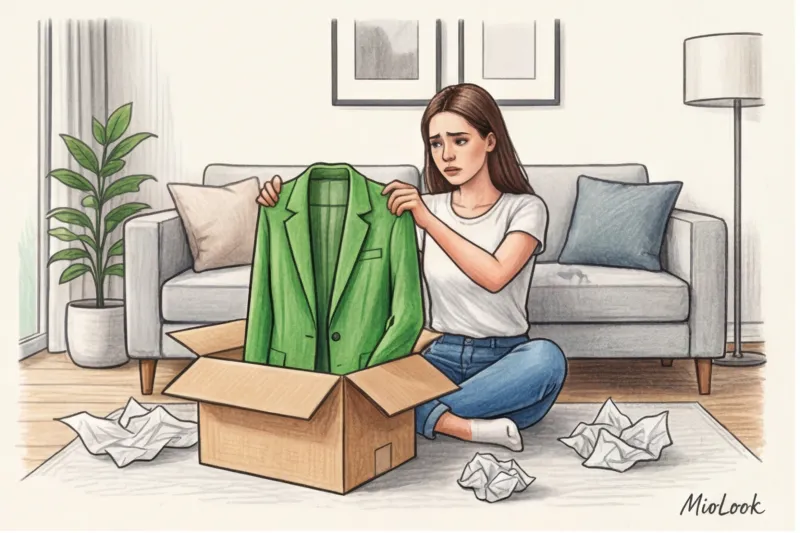
Over 12 years as a personal stylist, I've conducted hundreds of wardrobe reviews. Do you know what I see in every other closet? A "graveyard of unworn clothes"—stacks of clothes with tags still attached from online stores. When I ask clients why they haven't returned these items, the answer is always the same: "I thought I'd lose weight," "They looked great on the model," or "I was too lazy to process the return."
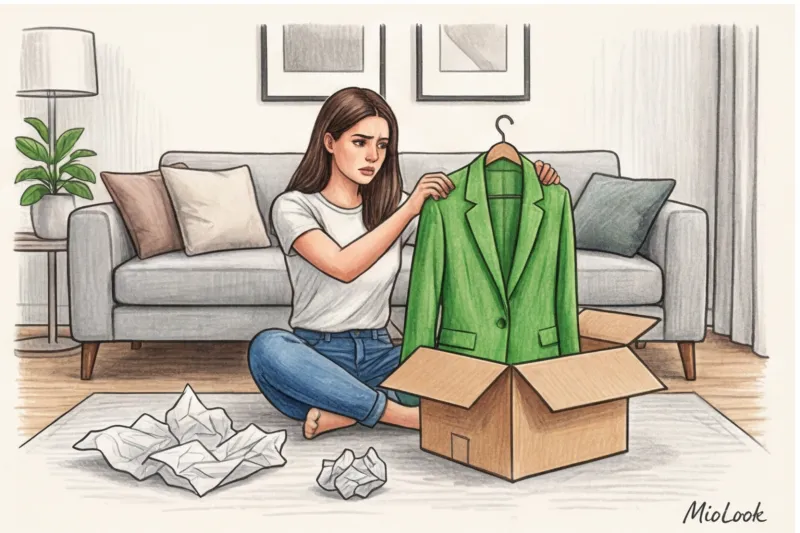
But if for the customer it's just €50-100 frozen in the closet, then for the business it's a ticking time bomb. Yes, the customer kept the item. But they're disappointed. They won't return to that store again. When brand owners ask me, How to reduce the cost of returning clothes to an online store , they usually look for technical solutions: complicating the return form, rewriting the size chart. But the problem isn't a matter of centimeters. It's a matter of "wardrobe incompatibility." In our detailed article Personalization in e-commerce: AI stylist for fashion We've already touched on this topic, but today I want to look at it from the perspective of a practicing stylist.
Instead of forcing customers to study complex size charts, it's time to start selling them not just a product, but a complete scenario for integrating it into their lives. Let's explore how personalization is changing the rules of the e-commerce game.
The Anatomy of Returns: Why Customers Actually Send Items Back
Let's face it: every time a courier takes a box of your goods back to the warehouse, you lose margin. According to the National Retail Federation (NRF) in 2023, approximately 30-40% of clothing purchased online is returned to the store. And now the most interesting part: over 65% of these returns are not due to defects at all.
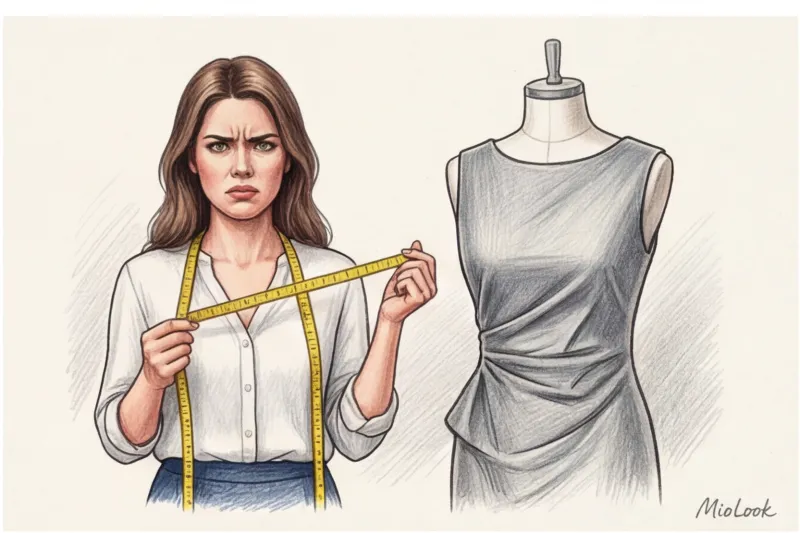
People return items because of poor fit or because the garment didn't live up to their style expectations. I call this the illusion of size. Just because your waist and hip measurements match in centimeters doesn't guarantee a perfect fit. Fit is influenced by pattern, fabric texture, material density, and, most importantly, body type, which size charts ignore.
Let me give you a real-life example. Recently, my client Anna ordered five dresses from Massimo Dutti (the average order price for each was about €120). She was looking for something for an office with a formal yet modern dress code. When the package arrived, four of the dresses fit. Guess how many she kept? One. The rest went back because Anna simply couldn't figure out which shoes from her closet to wear them with or how to throw a jacket over them without looking out of place.
"A client isn't buying a dress. They're buying a feeling of self-confidence at the morning meeting. If they don't feel that way after trying your piece on in front of the mirror, it's sent back."
Access to MioLook for €0.99 — one-time payment
A smart AI stylist will create the perfect look and help your customers visualize their purchases before placing an order.
Get access — €0.99 onceHow to Reduce Online Clothing Returns: Shifting the Paradigm with AI
The old product recommendation algorithms are broken. The "Customers Also Bought" block is a conversion disaster and a surefire way to returns. Why? Because the algorithm doesn't understand style. It sees that user X bought classic trousers and a sports hoodie (probably for work and for her teenage son for school), and it starts recommending this absurd combination to everyone else.
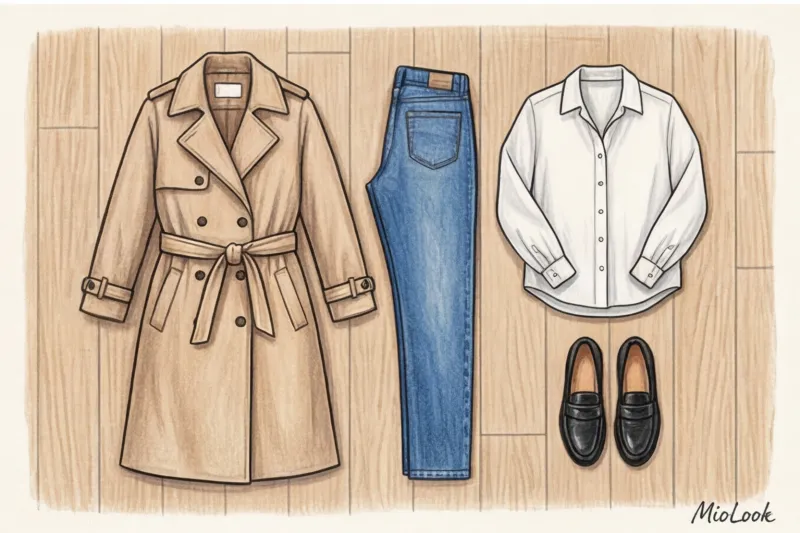
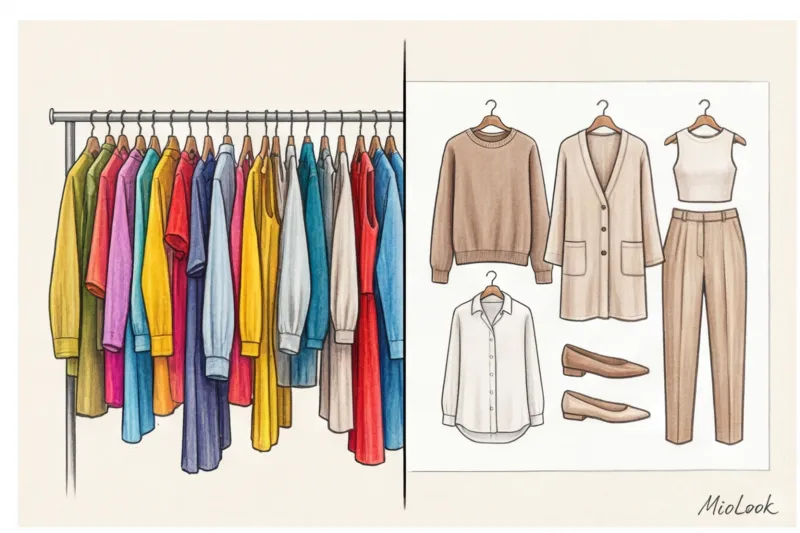
The only way to break this vicious cycle is to move from recommending individual SKUs to selling "styling solutions." You need to manage the customer's expectations before they hit the "Pay" button. If you show the girl how choose the perfect pantsuit and immediately offer him the right basic top and loafers, the risk of refusal will be reduced significantly.
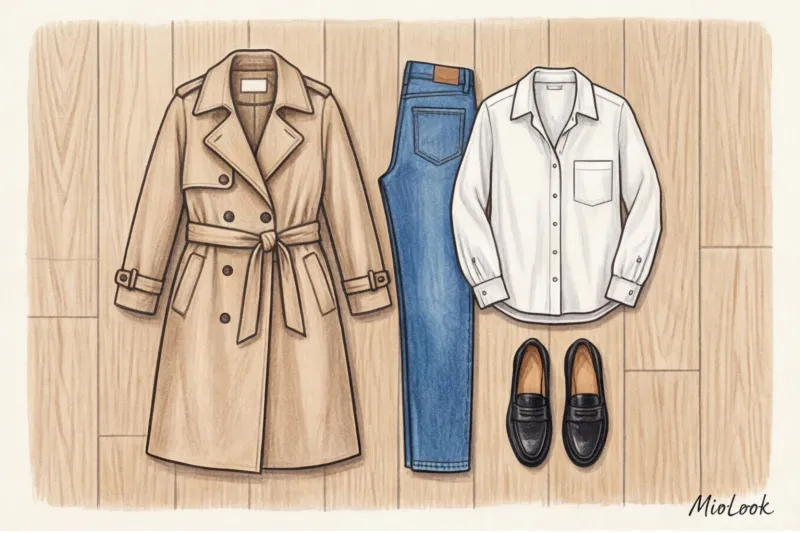
This is precisely the problem that the introduction of AI stylists into store catalogs solves. For example, when a retailer integrates technologies like MioLook The system analyzes not only the user's click history but also their stylistic preferences, helping to create a ready-made image for a specific request.
Three major fashion e-commerce mistakes that guarantee returns
As a shopper, I browse dozens of European brand websites daily. And I'm struck by how user-friendly many store interfaces are. Shifting responsibility for choice onto the customer is a surefire way to kill loyalty. Here are three anti-patterns that need to be eradicated.
Mistake 1. Using a "blind" size chart instead of taking your body type into account
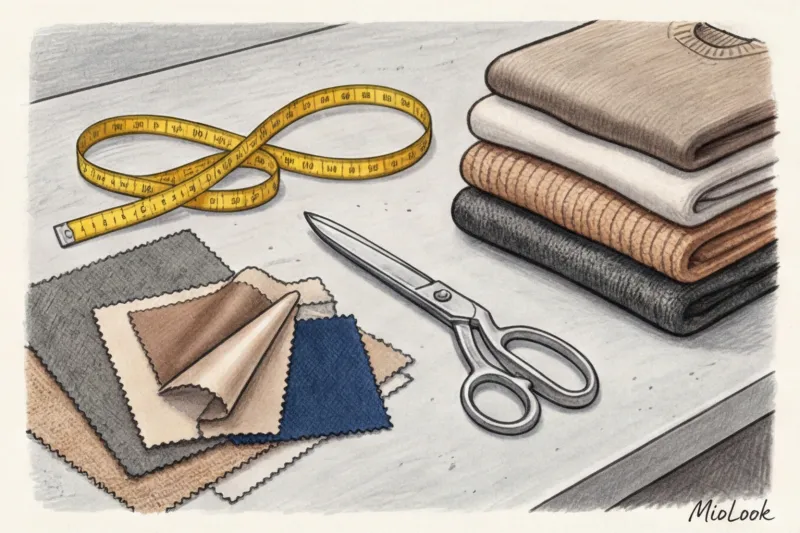
The "Chest-Waist-Hips" chart is hopelessly outdated. A 95 cm chest measurement in stiff poplin and a 95 cm chest measurement in viscose with 5% elastane are two completely different universes. If you don't specify the fabric density (ideally in g/m²) and its stretch, you're forcing your client to play roulette.
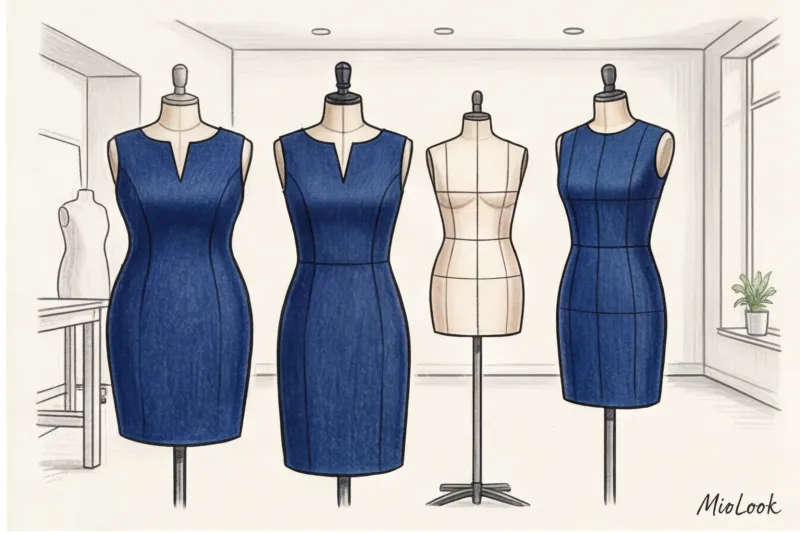
Learn from brands that indicate, "The model is wearing a size S, is 178 cm tall, and has an oversized fit." Better yet, implement tagging by body type. Learn more about How to choose clothes for your body type without stereotypes , you can find more information in our separate guide. Let the client know that these specific jeans are designed for a figure with a pronounced difference between the waist and hips.
Mistake 2: Toxic cross-selling and "visual noise"
Aggressive offers of "similar products" cause decision fatigue in customers. When a woman chooses a simple wool coat for €250, don't offer her a leopard-print polyester scarf for €15 in her shopping cart simply because it's a "popular item." Impulse purchases that don't match the style of the main cart are returned 90% of the time.
Mistake 3: Ignoring the client's lifestyle and context
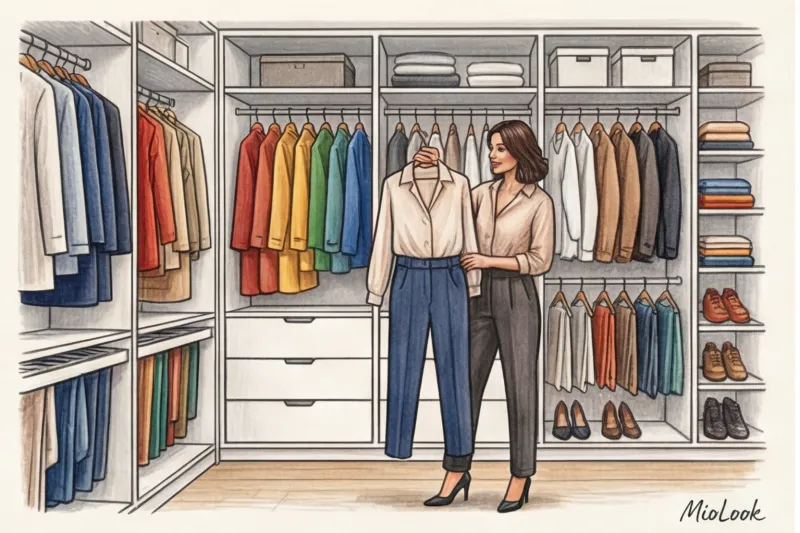
A client doesn't come to you for beige trousers. They come to you for a solution to a problem: "I need clothes for a business trip that won't wrinkle on the plane" or "I'm looking for summer office clothes , in which it will not be hot." If your catalog cannot filter items by stylistic archetypes, dress codes, or even by fabric properties (for example, What fabric doesn't wrinkle? ), you lose money.
Your perfect look starts here
Join thousands of users who look flawless every day with MioLook. Automate your catalog styling.
Get access — €0.99 onceHyper-personalization in Practice: How Market Leaders Work
According to McKinsey's "State of Fashion 2024" report, brands that implement deeply personalized customer experiences increase revenue by 10-15% while simultaneously reducing returns. Let's compare these approaches.
Basic mass-market brands like H&M have long been guilty of displaying clothes "in a vacuum"—just a sweater on a white background. But now even they are implementing the Shop the Look concept. Consider the more premium segment of the H&M group—brands like COS or &Other Stories. They almost never sell items individually. Each product page is a complete, complex, layered look. When buying a €90 skirt, a customer sees that it pairs perfectly with a chunky knit jumper and chunky boots from the same collection.
Why is this necessary? When a client buys a complete look or clearly imagines how to wear the item, the purchase's value increases in their eyes. This is pure psychology: we rarely return something that we've already incorporated into our plans for tomorrow.
E-commerce Checklist: 5 Steps to Reducing Returns
If you want to improve your bounce rate statistics as early as next quarter, here's my professional checklist. These steps are based on real-world experience optimizing online storefronts.
- Integration of a virtual AI stylist into the catalog. Let customers collect capsule wardrobe directly on your website.
- Implementation of smart tags. Label clothes not only as “Red/Size M,” but also as “High Waist,” “Smart Casual,” and “Do Not Iron.”
- Transition to capsule recommendations. Replace the "People also bought this" block with "Stylist recommends adding to this look."
- Tissue data enrichment. Be sure to indicate the parameters of the material: density, wrinkling, ability to hold shape.
- In-depth analysis of return reasons. Add the following items to your return form: "Nothing to wear with" or "Expected a different style" to get a realistic picture.
A fair point: this checklist won't work if you have objectively poor patterns, crooked seams, or cheap fabric that pills after the first wash. An AI stylist might sell an item once, but product quality is the foundation without which any algorithms are powerless.
Ready to get started?
Try MioLook's free plan to generate stylish looks—no commitment.
Get access — €0.99 onceThe Future of Online Shopping: A Smart Wardrobe Instead of One-Time Purchases
Personalization isn't just a marketing ploy. It's a matter of survival in the face of rising logistics costs. Moreover, reducing return rates directly impacts a brand's environmental and ESG performance. Transporting returned goods generates millions of tons of CO2 emissions annually.
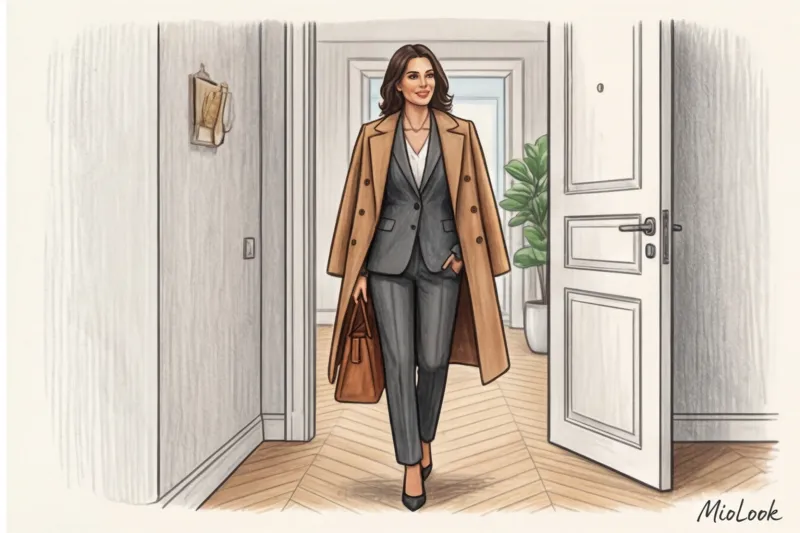
Stop selling customers just fabric and seams. Start selling them confidence and ready-made solutions for their wardrobe. A loyal customer isn't someone who buys a lot and returns frequently. They're someone whose closet works for them 100% and who knows they'll find things in your store that will make their life easier and more beautiful. Use intelligent visualization tools, and you'll see your customers start keeping items.