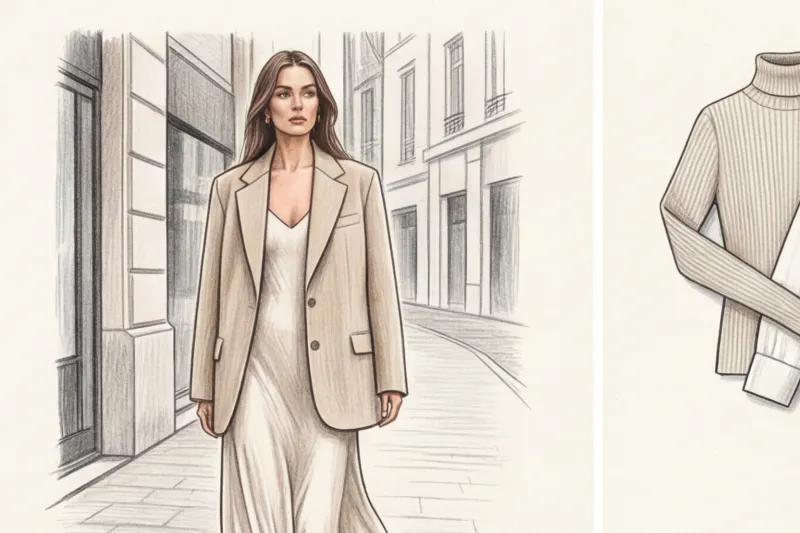
What is modest fashion today: from a niche trend to a global aesthetic?
Sitting at the Parisian fall/winter shows, I caught myself thinking something unexpected: the catwalk seemed to have forgotten the existence of miniskirts and revealing necklines. At The Row, Dior, and even the traditionally provocative Saint Laurent, I saw models in flowing, full-length maxi dresses, voluminous coats that concealed the contours of the figure, and strict, closed-neck blouses. This wasn't a one-time experiment by a single designer, but a monumental shift. Today, properly assembled Basic wardrobe modest fashion (or modest fashion ) has ceased to be a narrow niche story and has become the main synonym for modern elegance.
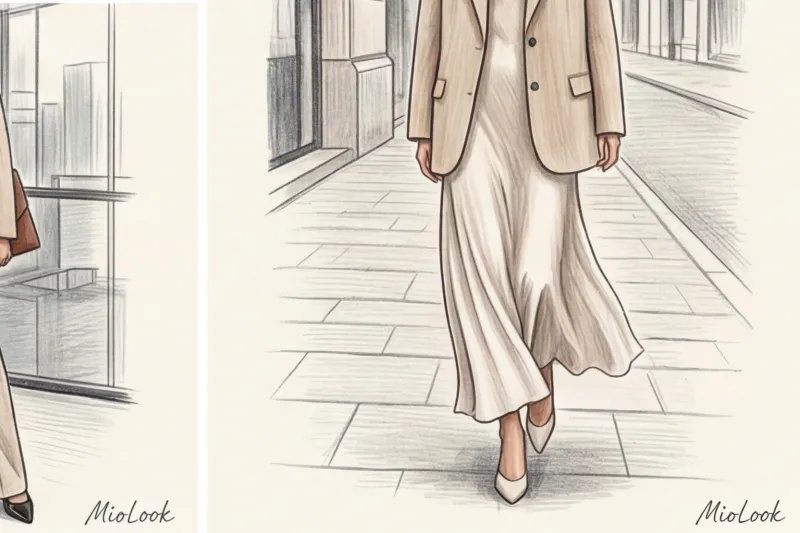
For many years, the term "modest fashion" was associated in the public consciousness exclusively with religious precepts. But in 2024, the focus shifted dramatically. It is now a global manifesto of conscious consumption, uncompromising comfort, and intellectual chic. Modern women are tired of clothing that requires constant self-control—pulling down a short skirt, adjusting a slipping neckline, sucking in a stomach. Modest fashion offers a new paradigm: dressing first and foremost for one's own comfort, not for the objectifying gaze of others.
"According to the latest analytical report by DinarStandard, the global modest fashion market is valued at over $300 billion. And the main driver of this colossal growth today is socialite shoppers who have made a conscious choice in favor of a reserved, high-status aesthetic."
That's why the mammoth brands of intellectual minimalism—The Row, Lemaire, and Jil Sander—have made closed silhouettes the absolute core of their DNA. Why is this so effective? Because when we remove the naked body from the visual equation, the pure architecture of the cut comes to the fore. Designers have nothing to hide behind: if a garment is completely covered, its fit must be brilliant, and the fabric impeccable. The viewer's attention is focused on the drape of the heavy matte silk, the precise shoulder line of the jacket, and the refined texture of the cashmere. These are clothes that don't scream sexuality, but quietly proclaim high status.
Who needs such a wardrobe these days? Over 12 years of styling, I've noticed a clear trend: two categories of clients most often come to me for closed-off silhouettes.
- Corporate leaders and top managers. For them, covering up is a subtle way to control attention. As I often tell my clients, "At a board meeting, they should listen carefully to your idea, not stare at your knees." If this approach resonates with you, I recommend exploring Basic wardrobe for a female executive , where the principles of closed cut work flawlessly.
- Adherents of minimalism. Those who value functionality and interchangeability. Loose-fitting pieces without flashy details pair perfectly with each other, creating an endless variety of combinations.
Creating such a capsule requires a systematic approach. When we conduct an audit with our clients, we always digitize things through MioLook app This allows you to clearly see how one high-quality, high-neck maxi dress can become the basis for dozens of different looks if you layer jackets and change accessories wisely. Modest fashion today isn't about restrictions. It's about the freedom to be yourself, leaving room for intrigue.
Closed-Silhouette Architecture: Key Principles and Common Mistakes
When we talk about low-profile clothing, many people mistakenly imagine shapeless, baggy pieces. In fact, modern modest fashion is pure geometry and architecture. Think of the brilliant works of Yohji Yamamoto or Cristóbal Balenciaga: they built shapes around the body, rather than clinging to it. The foundation of this aesthetic is air rule.
As soon as fabric clings to the skin, the look instantly loses its status. The space between the skin and the material creates that elusive distance and "quiet luxury." Even an $800 premium wool jacket will look cheap if it's too tight at the shoulders or hips. If there isn't at least a couple of centimeters of freedom between your body and the fabric of your trousers, you've chosen the wrong size. Tight, thin viscose or flimsy knitwear are the main enemies of a closed-fit silhouette, as they emphasize the contours of your underwear and detract from the structure of your look.
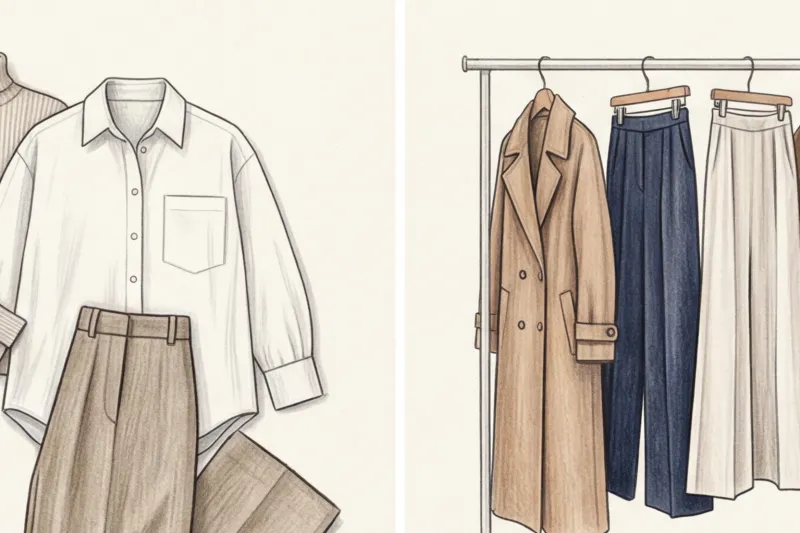
The second cornerstone is balance of volumes A completely oversized silhouette will transform you into a monumental column. The secret lies in combining exaggerated volume with a straight cut. If you're wearing a voluminous men's jacket with wide shoulders, straight-leg trousers with pleats or a strict column skirt are recommended, not a full A-line skirt. A structured hem should gather and support a soft, voluminous top.
This leads to the most common problem, which I call "cabbage mistake" Incorrect layering can visually add 10 kilograms to even the most petite figure. This happens when we layer items of similar weight, length, or texture (for example, a chunky knit sweater over a loose flannel shirt). Effective layering relies on a strong contrast in thickness: the first layer should be a thin turtleneck made of smooth merino wool, the second a heavy cotton poplin shirt, and the third a shape-stabilizing trench coat. Each subsequent layer should be heavier yet looser than the previous one.
Access to MioLook for €0.99 — one-time payment
A smart AI stylist will select the perfect look.
Get access — €0.99 onceAnd finally, length matters When putting together a basic wardrobe in a modest fashion style, remember: an incorrect hemline is a death sentence for the entire silhouette. In my experience, every second client unconsciously shortens their height with an inappropriate skirt length. The golden rule of proportions works reliably here. 1/3 to 2/3 , where the smaller part is the upper part of the body (visually up to the waist line), and the larger part is the bottom.
We recently worked with a client's wardrobe, who is 160 cm tall and complained that tight-fitting outfits made her look squat. The problem turned out to be trivial: she wore skirts that reached exactly mid-calf (the widest part of her leg), and her top layer (a cardigan) ended at mid-thigh, dividing her figure into a 1:1 ratio. We dropped the hem to the ankle, creating a full-length maxi, and replaced the cardigan with a cropped, structured jacket. Her silhouette instantly lengthened by at least 5 centimeters.
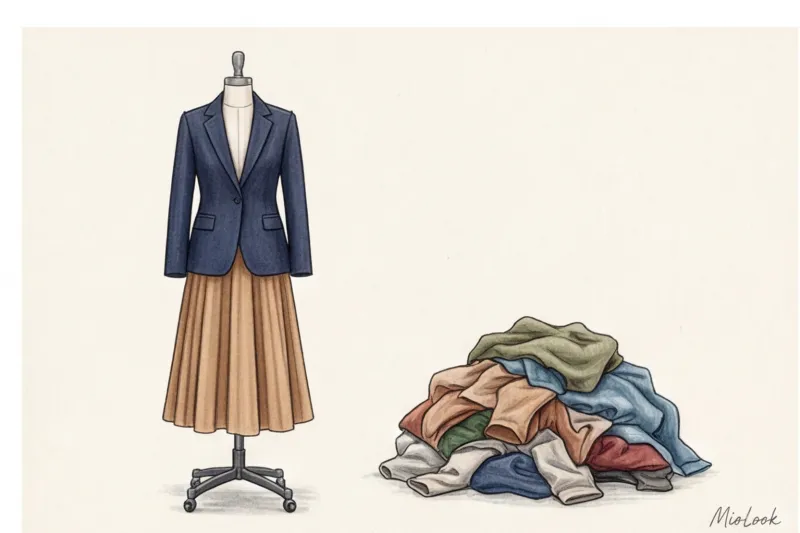
For petite women, a maxi length (leaving only the toe exposed) is ideal. If you prefer a midi, the hem should end exactly where your calf begins to taper toward your ankle. To avoid racking your brains in the fitting room, I always recommend planning your proportions in advance. Upload your basics to MioLook and see on a virtual mannequin how different lengths fit together—this saves a huge amount of time and prevents you from buying clothes that will weigh down your silhouette.
Basic Wardrobe for Modest Fashion: A Checklist of 12 Essential Items
"I have a closed-off style, so I need twice as many items: one for the bottom layer, one for the top layer, to cover everything properly..."—this is the most common and most damaging misconception I encounter in my practice. In reality, a basic modest fashion wardrobe is built not on the number of hangers in the closet, but on the mathematical precision of combinations.
Last season, I put together a seasonal capsule collection for a top executive at a Swiss bank who had decided to go completely private. Her shopping budget was practically unlimited, but her main requirement was a challenge: "I want to spend exactly three minutes getting ready in the morning." We didn't buy up half the boutiques on Avenue Montaigne. Instead, we created a strict matrix of just 12 elements.
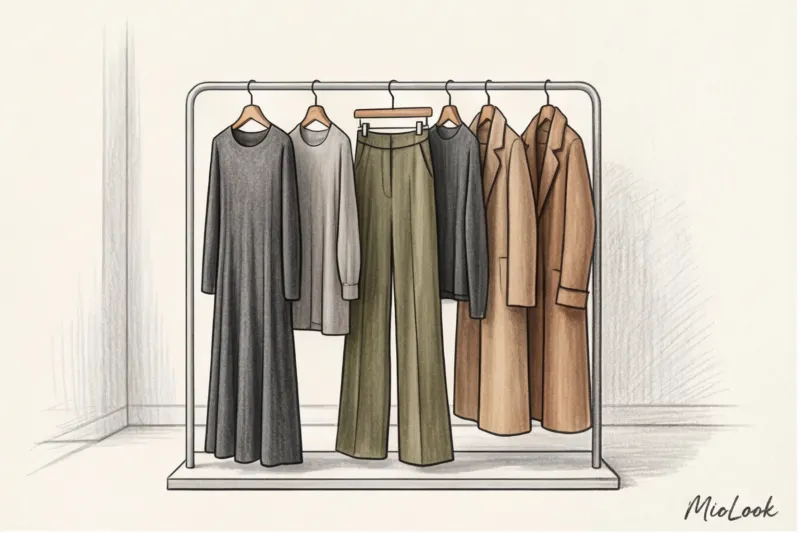
In the 1970s, Wardrobe boutique owner Susie Fox invented the capsule wardrobe concept. But for modest fashion, the classic capsule wardrobe requires a serious upgrade. The problem is that in a typical wardrobe, items are most often combined in a single layer (top and skirt). In a closed-off style, we need to assemble two or three layers so that they don't clash in texture or volume. The formula for the perfect capsule wardrobe is based on absolute interchangeability. Any bottom should seamlessly pair with any top and invisible base without distorting the proportions.
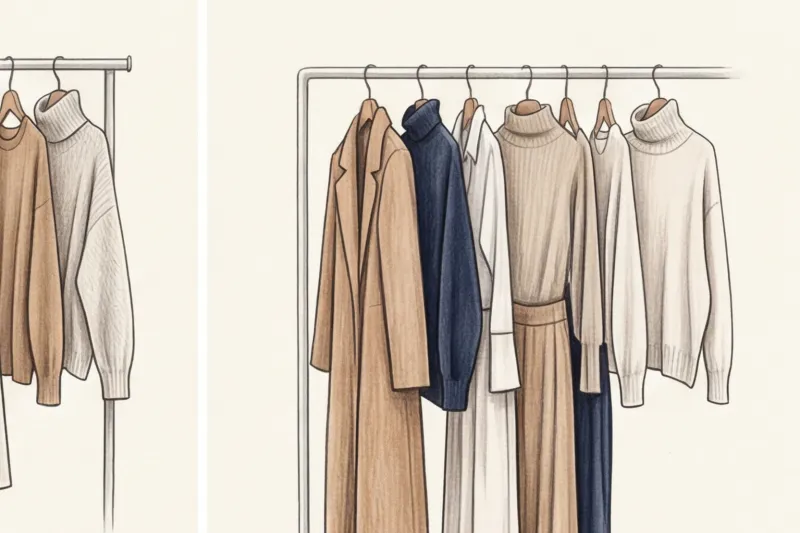
When you build this geometry, just 12 items generate over 40 unique combinations. And to avoid having to keep this entire complex matrix in your head, I always recommend that clients use MioLook — You simply upload these 12 items to the smart wardrobe function and instantly get dozens of ready-made, layered looks on your smartphone screen. This saves not only time but also stress in the mornings.
Bottom and middle layers: dresses, skirts and trousers
Let's start with the basics. Dresses in a modest wardrobe aren't just standalone pieces; they're the perfect midlayer for complex looks. Maxi shirt dress made of thick cotton (or blended viscose) and A-line dress — your versatile staple. Why choose them? A shirtdress can be styled three different ways: worn buttoned up for a classic look, unbuttoned and layered over wide-leg trousers and a turtleneck for a lightweight summer trench coat, or layered with an oversized sweater, leaving only the collar and long hem visible.
Let's move on to trousers. Palazzo pants And wide straight trousers with creases — an absolute must-have for a closed-leg aesthetic. The secret to a perfect fit lies in the waist and hip area: trousers should sit snugly at the waist (which will be covered by the top layer anyway), but flare out just below the hipbone. If the fabric sits even a centimeter lower on the hips, the silhouette instantly loses its status and creates unnecessary emphasis on the curves. In the premium segment (around €400–€600), Lemaire makes impeccable patterns for these trousers, while in the mid-price range (€100–€150), excellent structured options can always be found at COS.
For skirts, there's only one rule: play with texture. A closed silhouette requires movement, otherwise the lower half of the figure will visually turn into a heavy, monolithic block. A-line skirt made of thick denim or shape-stable wool sets the correct geometry, and maxi length pleats Creates that perfect play of light and shadow as you walk. Choose pleats with only small, sharp folds—they visually elongate your height, unlike large, box-like pleats, which can add unwanted bulk to your hips.
Top layer and "invisible" base
If the bottom layer defines the silhouette, the top layer dictates the status. The main investment element of your entire capsule is structured elongated jacket This is an item you absolutely cannot skimp on. A high-quality wool jacket (look for at least 70% wool) costing between $250 and $500 will last you a decade. The length should completely cover the widest part of the hip. An important detail: choose styles with a clear, architectural shoulder line (perhaps even with small shoulder pads in the 80s style). A strong shoulder is what brings a relaxed, layered look together, preventing it from becoming sloppy.
The second pair of tops - a loose shirt made of thick cotton (classic Oxford) and silk blouse with a closed collar (with an ascot or soft stand-up collar). A heavy shirt works great as a lightweight jacket in warmer weather, while matte silk adds the necessary touch of elegance for business meetings or evening outings.
Finally, we come to the secret weapon of modest fashion: the "invisible" base. This is the inner layer that allows you to adapt almost any item to the requirements of modesty. You will need thin merino wool turtlenecks and high-quality basic long sleeves (Modal or heavy viscose; avoid 100% thin cotton - it loses shape too quickly and looks cheap).
Many underestimate these elements, considering them purely technical. But it's a thin, smooth turtleneck worn under a loose-fitting summer slip dress or an unbuttoned shirt that creates that very intellectual layering. The main requirement for the inner layer is that it should fit like a second skin, without constricting the chest. Merino wool is ideal here: it's ultra-fine, doesn't add bulk, yet has natural thermoregulation properties.
Let me be clear: this 12-piece formula won't work at all if your base is overflowing with bold prints or logos. A basic wardrobe requires monochromatic colors or the most subtle geometric patterns. Build this core in a neutral, deep palette (dark chocolate, graphite, rich camel, milky), and then the math of style will work flawlessly for you.
Fabrics and textures: the secret code of "quiet luxury" in closed-toe clothing
One of Selfridges' leading buyers once told me on the sidelines of London Fashion Week: "If a designer shows the body, the viewer looks at the body. If a designer covers the body, the viewer obsessively examines the seams and textures." This is the fundamental rule: a basic wardrobe of modest fashion demands an absolutely uncompromising approach to the quality of materials. Why? The absence of distractions like exposed skin, plunging necklines, or miniskirts shifts the visual focus to the fabric itself. When the silhouette is covered from neck to wrists and ankles, the material becomes the primary and sole conveyor of your status. The eye immediately notices the slightest pilling, the cheap sheen of polyester, or the crude draping.
The second critical problem with closed-fit styles that my clients constantly encounter is treacherous transparency. Often, a brand will label a garment as "modest," but in bright daylight, the fabric reveals the contours of underwear or the silhouette of legs. To avoid this, in our professional environment, we always rely on an objective measurement of fabric density—GSM (grams per square meter). If you're ordering online, look for this measurement in the description or ask customer service. For the perfect white cotton shirt that won't require layering (which prevents it from looking too heavy), the GSM should be at least 130-150. When choosing silk blouses, aim for a density of 19 to 22 momme (approximately 82-95 GSM)—this silk flows luxuriously but remains completely opaque.
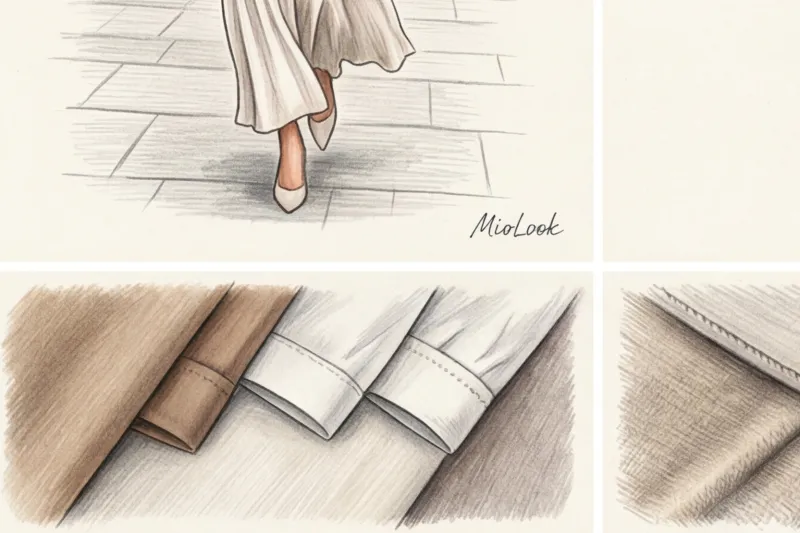
A solid matte wall of a single fabric is a surefire way to transform a figure into a heavy, monolithic block. To make a closed-off look appear three-dimensional and dynamic, it's essential to employ the technique of architectural contrasting textures. The secret is simple: combine materials with different light-reflecting properties in a single outfit. A foolproof formula I've been using for years: combine matte cashmere (it absorbs light and creates a soft feel), smooth silk (reflects light and adds airiness), and dense suiting wool (it maintains a rigid frame). This play on contrasts creates that visual depth that makes a look appear sophisticated and expensive.
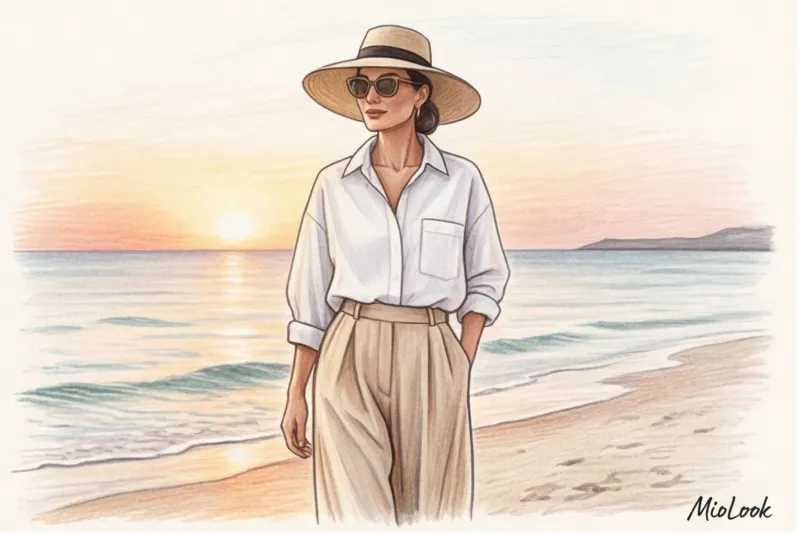
Here, I simply must dispel the main myth I hear at every other consultation: "It's unbearably hot to wear closed-toe clothing in the summer." This is a complete illusion, born from the experience of wearing cheap, mass-market synthetics. Research from the Institute of Textile Technology (Aachen) proves that properly cut, closed-toe clothing made from innovative fabrics cools the body more effectively than open tops, creating a protective microclimate and protecting the skin from direct sunlight. Forget thin polyester. Your summer arsenal consists of high-tech, breathable fabrics: cupra (viscose with a silky finish that literally cools the skin to the touch), tencel (eucalyptus fiber that absorbs moisture 50% better than cotton), and dense, softened linen with a special treatment. Investing in a basic maxi dress made from high-quality Tencel will cost you around €150–250, but its temperature-regulating properties will make it your savior in any heat wave.
Try MioLook
for free
Start creating perfect images with the help of artificial intelligence
Get access — €0.99 onceTrend Integration: How to Modernize Your Basic Wardrobe with Modest Fashion
Have you noticed how a modest style cleverly incorporates the hottest catwalk trends without losing its essence? A basic wardrobe doesn't have to be a boring collection of bland pieces. The key to modern modest fashion lies in skillfully adapting high-profile trends to your personal boundaries.
Let's take for example, maxi-length denim This year, it's experiencing an absolute renaissance on the catwalk. But while mass-market brands are offering styles with extreme thigh-high slits, our task is to find an elegant alternative. Choose A-line denim skirts or straight styles with a deep inverted pleat at the back. This pleat (in tailoring, it's called kick pleat ) provides the necessary freedom of movement, but completely conceals the legs dynamically, unlike a classic slit. Pair this solid, utilitarian bottom with a delicate top—say, a silk ascot blouse or a fine cashmere polo. This creates the perfect contrast of textures.
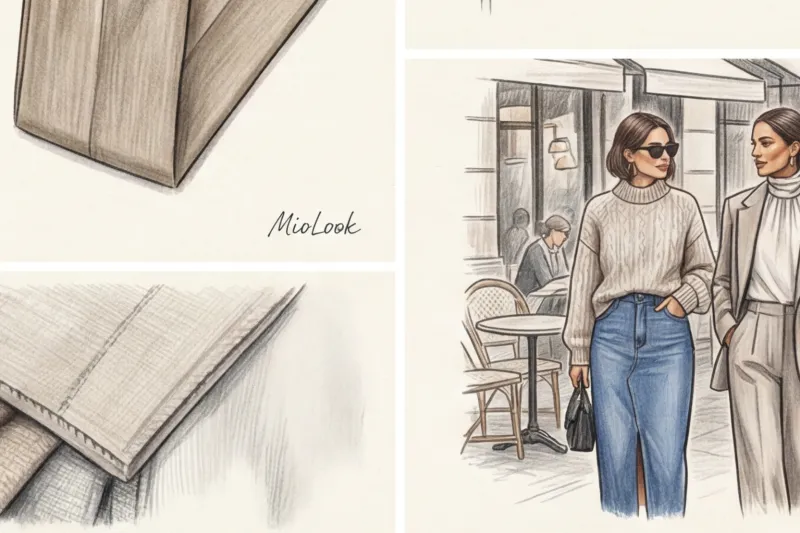
The next level of stylization is monochrome looks and complex color schemes of the current season. Studying the latest analytical reports from the Pantone Color Institute, I advise moving away from flat, open shades. The season's favorites are deep, enveloping tones: rich wine ( Red Dahlia ), muted olive or soft peach ( Peach Fuzz ). The secret to a luxurious monochrome look in a closed-off outfit is the gradient. Don't try to match tone-on-tone pieces—it looks flat and artificial. Layer similar shades with different light-reflecting properties: a matte wine-colored skirt and a voluminous Marsala sweater create a vertical line that visually elongates the silhouette.
If you prefer minimalism with color, the most important things come to the fore asymmetry and deconstructivism These are the safest experiments with cuts for those who adhere to strict modesty rules. Deconstruction here works as an intellectual accent: a shirt with a misaligned button line, a top with an asymmetrical hem worn over wide trousers, or a jacket with exaggerated shoulders in the spirit of early Martin Margiela. You don't reveal a single centimeter of skin, but the look instantly becomes complex and compelling.
Integrating such striking runway looks requires a certain amount of foresight. To avoid buying a "disposable" trendy item, I always recommend testing combinations beforehand. Add a photo of a potential purchase to your digital database via the "smart wardrobe" feature in MioLook — the algorithm will clearly show whether an asymmetrical top for €120 will fit into your everyday capsule wardrobe and what exactly you can wear it with.
Modest Office Fashion: Balancing Personal Boundaries with the Dress Code
Have you ever noticed that the most influential women in global politics and business rarely wear plunging necklines or dresses above the knee? In the corporate world, especially at the C-suite level, clothing is more than just a uniform; it's a powerful tool for commanding attention.
Strict business dress codes (Business Formal) have historically required women to compromise: either a pronounced masculine style or a conventional, sometimes overly revealing femininity. Today, adapting this standard to the demands of modest fashion is not a concession, but a strategic move. A 2023 study in the Journal of Applied Psychology confirmed what I've observed in my practice for many years: a closed, architectural silhouette increases the perceived competence of a speaker by 34%. When nothing in your appearance distracts from your words, your personal brand conveys absolute credibility and expertise.
The main stumbling block in the traditional office wardrobe is the classic pencil skirt. It's a categorical no-no in the modest fashion paradigm due to its tight fit at the hips. And please don't try to simply buy it two sizes too big—you'll end up with a sloppy, baggy silhouette that will instantly detract from the look. The ideal replacement is an A-line maxi skirt made of heavy suiting crepe or wool. The smooth texture and precise cut of this skirt hold its shape, creating that essential formality for business formal. Pair it with a wide leather belt in the same color, and you'll achieve a flawless, vertically elongating silhouette.
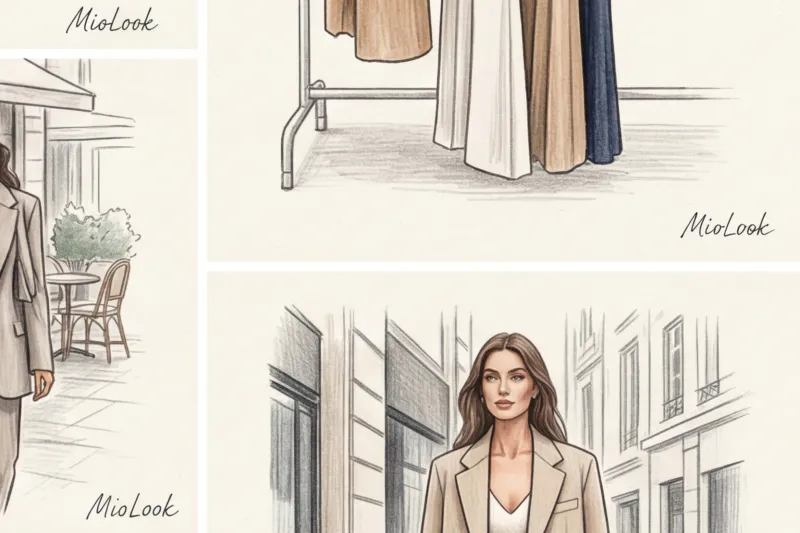
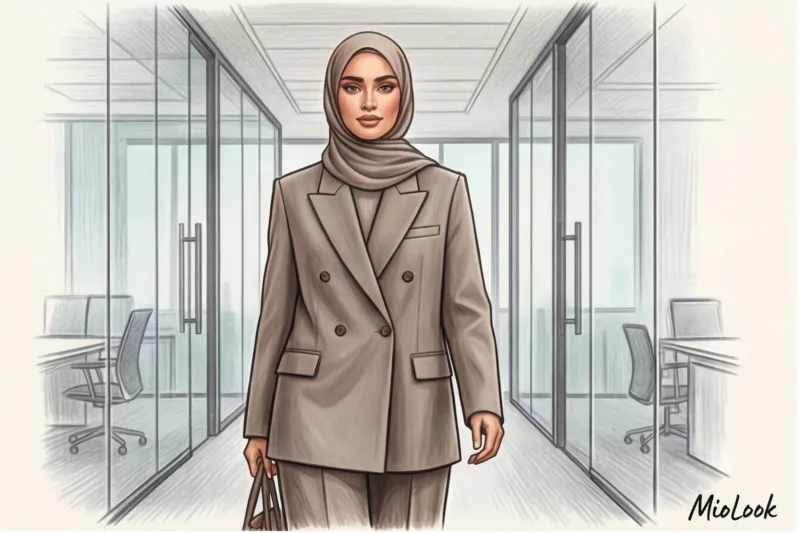
For executives and top managers, my absolute favorite remains a three-piece suit with wide-leg trousers. This is perhaps the most elegant and functional solution for a closed-off dress code. A suit vest provides an opaque, structured layer (perfectly layered with a basic poplin shirt or silk blouse with a stand-up collar), while a long, straight-cut jacket smooths out curves, creating a comfortable distance. Wide, pleated palazzo trousers not only conceal the legs but also add a confident, dynamic gait.
A good three-piece suit in the mid-price range will cost around €500–€900, but it's an investment that pays for itself immediately. To avoid wasting mornings wondering how to properly combine proportions, I strongly recommend digitizing your business capsule wardrobe. By uploading your basic pieces to the "smart wardrobe" feature in MioLook , you'll let algorithms create dozens of strict yet modest looks for important meetings in seconds.
Your ideal image
it begins Here
Join thousands of users who look flawless every day with MioLook.
Get access — €0.99 onceRule of thumb: When creating a business wardrobe in a modest fashion style, completely avoid thin, flimsy knitwear. Authority is built on clean lines, so your choice should be shapely gabardine, tweed, and high-quality Super 120s suiting wool.
Accessories and shoes: setting the right accents
For years, classic styling has taught us to match necklaces to necklines and bracelets to delicate, open wrists. But when we assemble a basic wardrobe in a modest fashion style, these familiar rules break down. Fine, delicate jewelry simply disappears against the backdrop of dense fabrics and closed cuts. Here, a completely different approach comes into play—working with shape and scale.
To prevent a look from feeling dull and monotonous, we need large, legible accents. Shift the focus from bare skin to the clothing itself: wear chunky jewelry directly over it. Layer stiff metal cuffs over the sleeves of thin turtlenecks or tailored cotton shirts. Use large architectural pendants on long leather cords and sculptural brooches on jacket lapels. This styling technique is beloved by designers at Saint Laurent and Schiaparelli—it instantly elevates a low-key outfit.
A stylist's secret: the use of rigid geometric accessories "pulls together" a voluminous, closed-off look and makes it more disciplined. The metal acts as a frame, visually restraining the abundance of soft, flowing fabric.
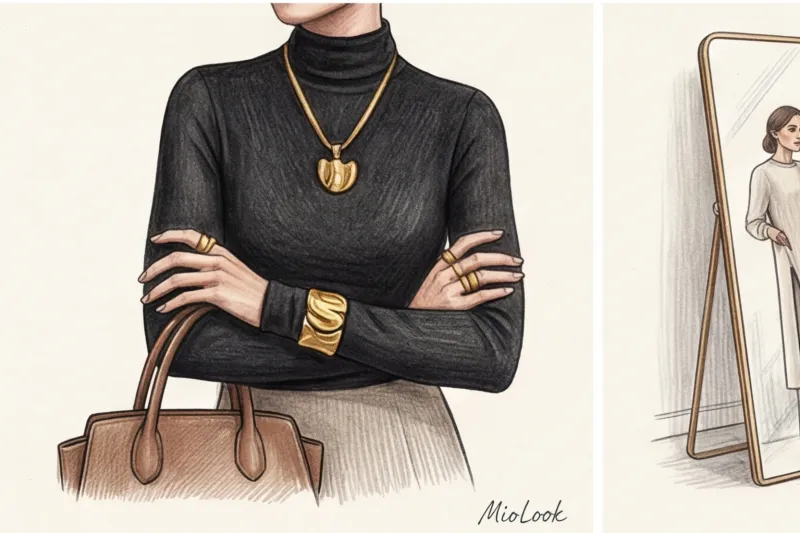
The same architectural principle applies to handbags. If you wear a loose-fitting maxi dress, throw an oversized jacket over it, and grab a soft, shapeless hobo bag, the silhouette will instantly "flow." Structured bags with a rigid frame (like box bags, sharply angled totes, or graphic crossbody bags) are a surefire way to add rigidity to a soft, layered silhouette. The contrast of flowing fabric and crisp leather always looks expensive, whether you buy a bag for $150 or $1,500.
The foundation of the look—footwear—deserves special attention. The most common question I hear during consultations is, "How can I add height to a maxi dress if the dress code doesn't allow leg exposure? Heels, perhaps?" The paradox of modest fashion is that flat shoes (loafers with thick soles, minimalist ballet flats, or Mary Janes) look much more elegant with low-cut outfits than stilettos.
A slender, high heel paired with a heavy, closed hem often creates an unflattering imbalance and visually harks back to the outdated aesthetic of the 2000s. A flat heel, on the other hand, grounds the look, balances the volume of the fabric, and conveys a confident, intellectual chic.
It can be difficult to mentally plan such non-obvious combinations. To avoid wasting time selecting details in front of a mirror, I recommend photographing finished combinations of "clothing + accessory + shoes." After digitizing your best outfits, MioLook , you'll create a personal visual cheat sheet. In the morning, all you have to do is open the app and choose the look you want, confident that this rigid bracelet will sit perfectly over the sleeve of your favorite dress.
A Step-by-Step Plan: How to Build a Basic Modest Fashion Wardrobe from Scratch
According to a large-scale textile industry study by WRAP (2023), women regularly wear only 20-30% of their closet contents. The remaining 70% are impulse purchases and single items. In the context of a closed style, this statistic sounds like a death sentence: we often buy disparate items that later refuse to be layered. Experience shows that a well-designed basic wardrobe (modest fashion dictates mathematical precision here) pays for itself within the first season. Let's turn this theory into a working system.
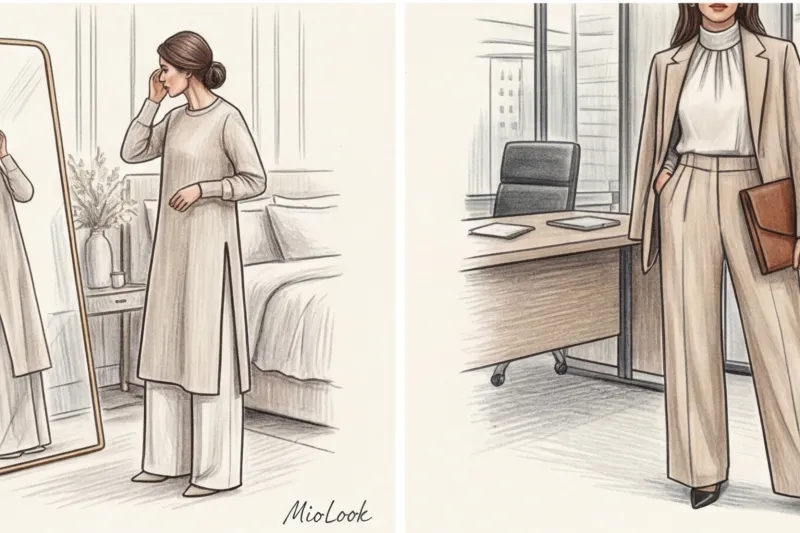
Step 1: A thorough audit of your current wardrobe
Before you go shopping, it's essential to clear the space of "visual clutter." Take out all your clothes and filter them through three questions: does the item hold its shape, is it see-through, and can you wear a thin turtleneck underneath?
- What to leave (foundation): Straight, wide trousers made of thick wool, midi or maxi shirt dresses, voluminous jackets with a clear shoulder line, high-quality textured knitwear.
- What to remove (ballast): Items made of flimsy viscose that clings to tights; tight cardigans with small buttons (they visually cheapen the look); skirts of indefinite length, reaching mid-knee; translucent blouses without a cover.
A stylist's secret: if an item requires complicated tricks like special invisible tops and special combinations to look "modest," get rid of it. Cover-ups should be comfortable by default.
Step 2: Defining a color palette using the 3+2 rule
An architectural cut requires a refined color. The worst thing you can do with a layered look is turn it into a motley patchwork quilt. I always use the "three base colors and two accent colors" rule with my clients.
Choose three foundations that blend easily together. For example: deep graphite, cool ecru and dark chocolate. These colors will take up 70% of the capsule (outerwear, trousers, jackets). Then add two accents for silk blouses, bags, or scarves: for example, burgundy and muted sage This approach allows for the creation of monochrome verticals that elongate the silhouette, even when wearing flat shoes.
Step 3: Investment Strategy – Where to Spend and Where to Save
High style is built on the contrast between luxury and affordable. No need to spend your entire budget on basic turtlenecks.
- What to invest in ($300–$800): Top layer and shoes. A structured wool blazer, a cashmere maxi coat, leather loafers, and a rugged bag. This is the "armor" of the look—these are the pieces that people notice in the first few seconds.
- How to save ($30–$80): Inner layer. Ideal basic long sleeves, thin merino turtlenecks, and heavy cotton T-shirts can be found at Uniqlo, COS, or Massimo Dutti. They wear out the fastest and are easy to update once a season.
Step 4: The Magic of Numbers – The Formula: 15 Things = 45 Images
The ideal modest fashion capsule isn't a huge wardrobe, but a smart matrix. Here's a proven 15-element formula that will cover 90% of your life situations:
- 4 bottoms: wide-leg trousers with creases, flowing palazzo trousers, straight-leg jeans, A-line maxi skirt.
- 5 elements of the bottom layer: 2 thin turtlenecks (light and dark), a loose white shirt, a silk blouse with an ascot collar, a thick long sleeve shirt.
- 3 top layer elements: an elongated jacket, a thick, chunky knit cardigan, and a voluminous, maxi-length trench coat.
- 3 pairs of shoes: Leather loafers, ankle boots with a narrow shaft, minimalist white sneakers.
Using simple combinatorial calculations (replacing only tops or only the outer layer), these 15 items yield at least 45 unique outfits. To ensure this math works every day, I strongly recommend digitizing the resulting database. After uploading your items to MioLook , you can visually construct looks, check texture compatibility, and plan outfits for the week ahead while stuck in traffic or sipping your morning coffee.
Modest fashion today is a manifestation of supreme self-confidence. When you don't need to shout about yourself with extreme cuts or flashy logos, your intelligence, professionalism, and charisma speak for themselves. A well-crafted basic wardrobe simply helps amplify that voice.
Guide Chapters
The Perfect Color Combination: Modest Fashion and Style
In a closed maxi silhouette, color carries all the visual weight. We'll explore how to create luxurious and harmonious combinations without the dreary all-black look.
Elegant, closed-off clothing for stylish evening looks
Evening fashion no longer requires compromising comfort and elegance. Learn how to put together a luxurious evening capsule collection with a modest fashion twist.
Smart Wardrobe: Closed-End Clothing in a Stylish App
Forget the "cabbage effect" and buying dozens of turtlenecks. Discover how digital tools can help you stylishly organize your modest fashion capsule.
Office Style: Cover-Ups for Confident Women
A business dress code without compromise: how closed-cut silhouettes and thick fabrics help you feel more confident at work. Discover the secrets of a status-conscious wardrobe with modest fashion.
Closed-toe basic shirts: the foundation of modest fashion
A notch collar isn't about excessive modesty, but rather about creating an architectural frame for the face. Let's explore the ideal basic top in terms of cut and fabric.
Stylish, Cover-Up Summer Clothing: How to Dress in the Heat
Short shorts are a major mistake in hot weather. We'll show you how to put together a summer capsule wardrobe in a modest style to look stylish and stay cool.
Basic halter dresses: how to choose and what to wear them with
The high-necked dress has long since ceased to be associated with strict dress codes. Discover the secrets of styling elegant dresses for a classy look.