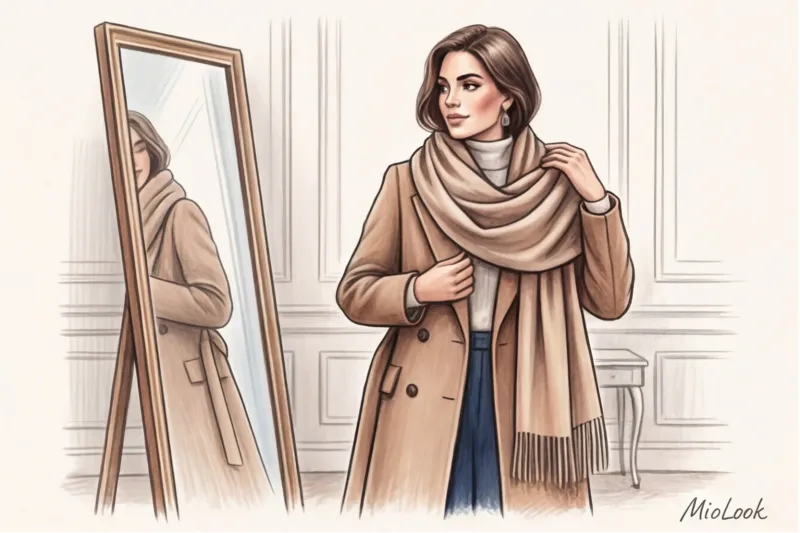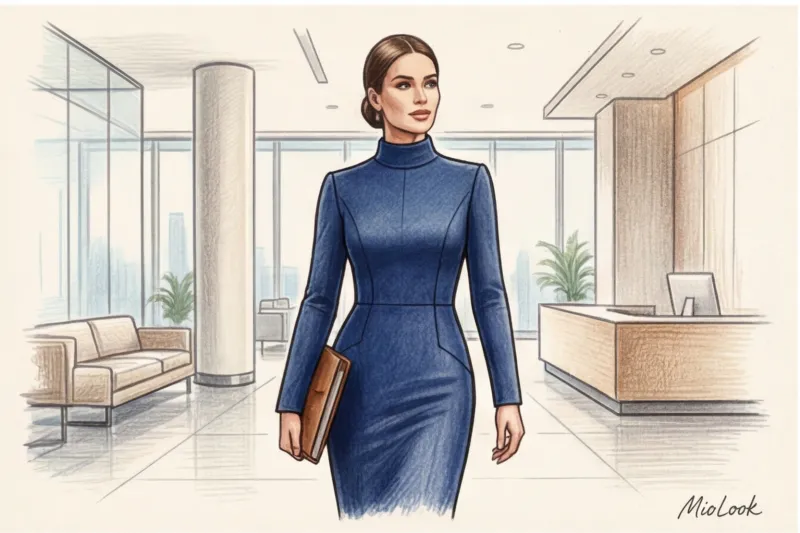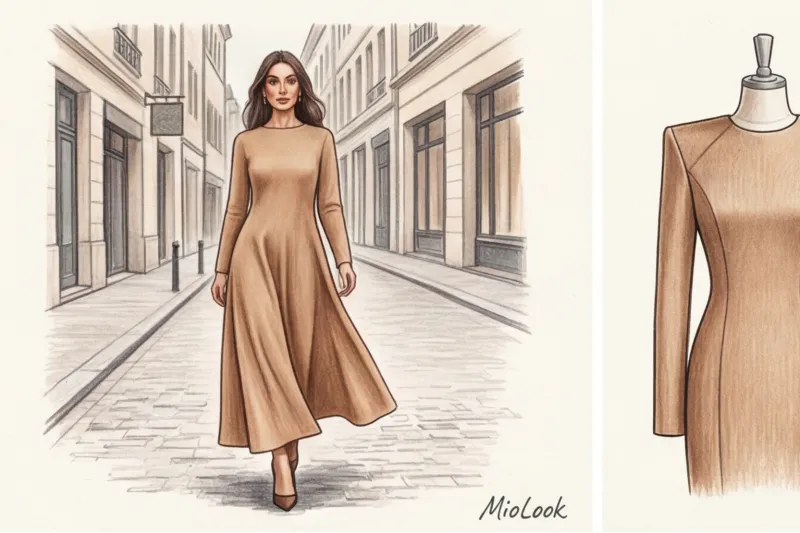
Three years ago, the CEO of a major fintech company approached me with a request that radically changed her approach to business attire. She was tired of classic two-piece suits, which felt too stiff, and silk blouses that required constant attention. Instead of updating her collection of fifteen jackets, we bought just three pieces: basic one-piece dresses from The Row and Jil Sander. A month later, she admitted that she had never felt so confident and relaxed at the same time.
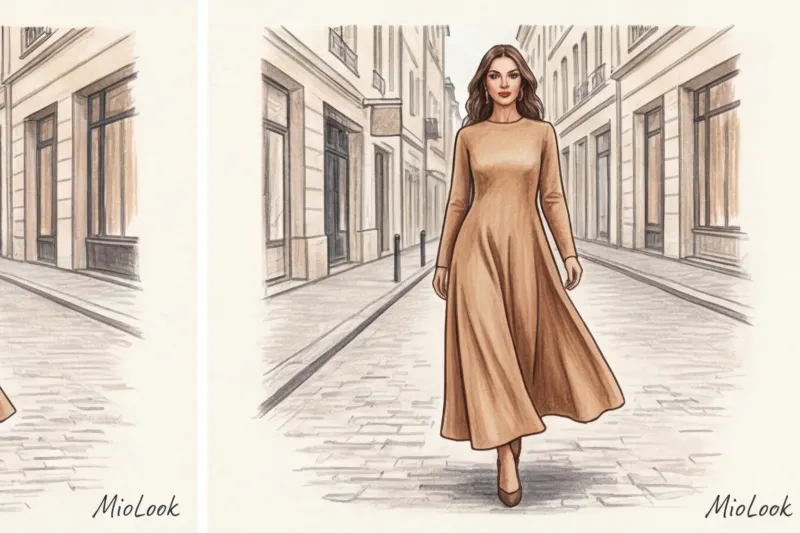
I discussed the architecture of such capsules in more detail in our The Complete Guide to a Basic Modest Fashion Wardrobe , but today I want to talk about the most important element of this style. The modest dress has long ceased to be associated exclusively with religious or strict dress codes. Today, it's the height of elegance, a blank canvas for status accessories, and the smartest investment in your wardrobe.
The Architecture of Minimalism: Why Basic Cap Dresses Have Become a Wardrobe Mainstay
We're witnessing a global paradigm shift. According to DinarStandard's 2023 research, the modest fashion market is valued at over $300 billion, and the main drivers of this growth are not only traditional consumers but also socialites. Why? Because we're tired of visual noise and overtness that leaves nothing to the imagination.
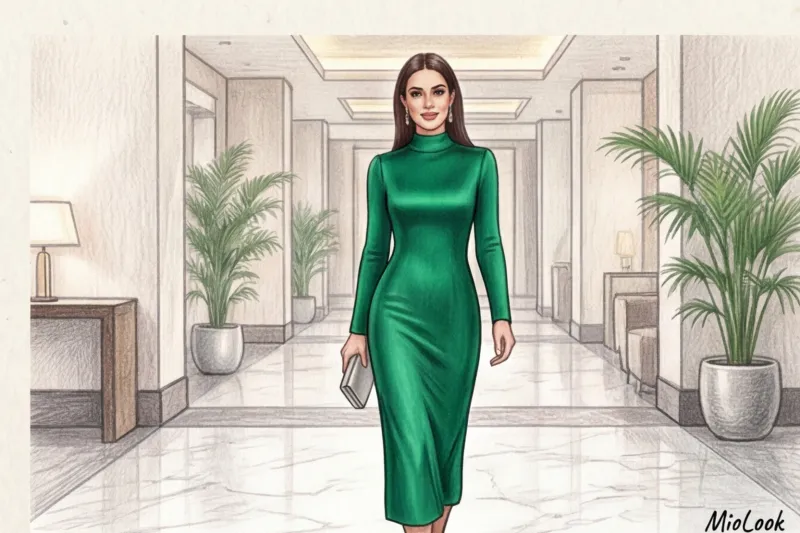
In the era of "quiet luxury" aesthetics, a closed silhouette becomes a status symbol. When you wear a dress with long sleeves, a high collar, and a midi length, you convey to the world: "I don't need to strip down to get attention. My confidence speaks for itself." This dress works as the perfect architectural framework. It doesn't distract from your face, doesn't clash with a complexly shaped bag, and allows you to wear statement shoes without overwhelming your look.
Access to MioLook for €0.99 — one-time payment
A smart AI stylist will select the perfect look based on your wardrobe and preferences.
Get access — €0.99 onceThe main misconception: why a closed dress doesn’t make you look fat, but rather elongates your silhouette
Now let's bust one of the most persistent myths of old-school styling. For years, stylists have been telling us that to appear slimmer and taller, you need to expose your collarbones, choose a V-neck, and show off your legs. In my experience, this advice has ruined more than a few looks. The reality (and the laws of visual physics) is this: nothing elongates height as powerfully as a continuous vertical line.
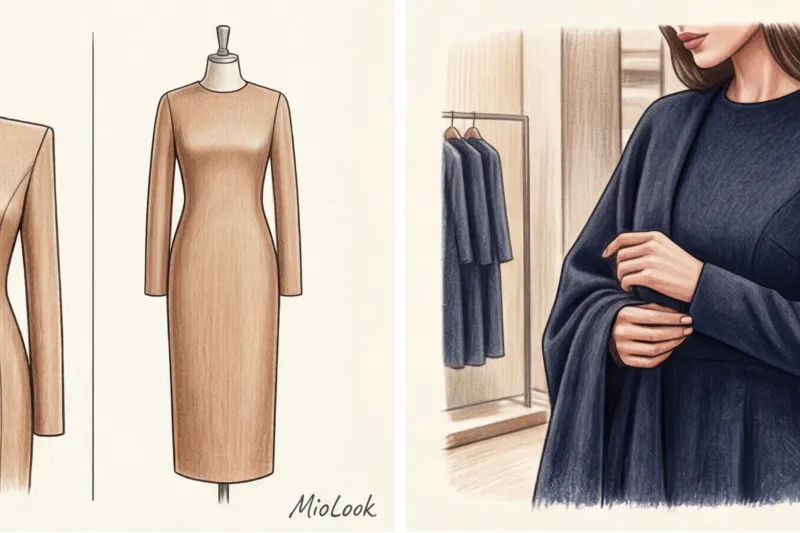
When you wear a blouse and skirt, you cut your figure in half with a horizontal line. When you choose a plunging neckline, you break up your upper body into color blocks (skin/fabric). Basic one-piece dresses create a single, monolithic column of color from neck to ankle. The eye follows this line from top to bottom without obstruction, visually adding 3-5 centimeters of height.
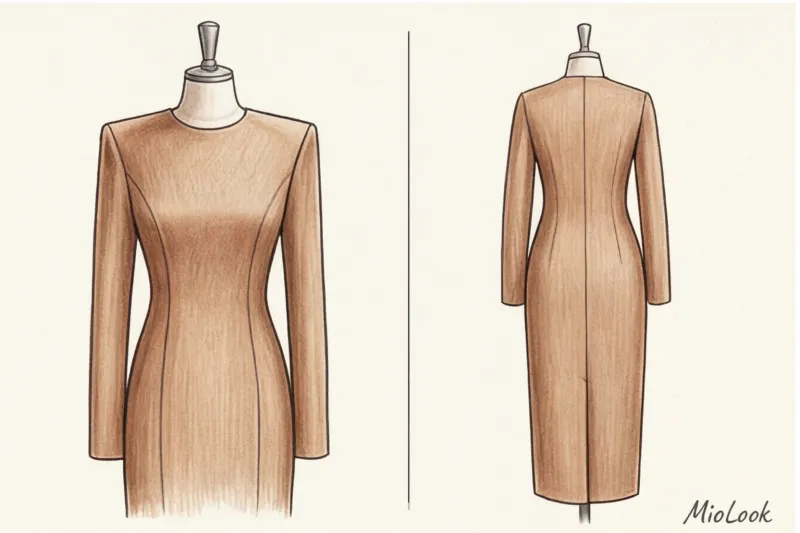
Shoulder girdle and fit rule
Let me make it clear right away: the closed silhouette works only With the right design. If a maxi dress has a dropped, shapeless shoulder line (a raglan sleeve made of thin fabric), you really risk turning into a shapeless cloud. This is a fair limitation of this style.
- Hard shoulder: Look for dresses with delicate shoulder pads or a defined, defined armhole.
- Freedom of fit: There should be air between your body and the fabric (at least 2-3 centimeters). An architectural cut means the dress holds its shape rather than clinging to your curves.
Midaxi and Maxi Lengths: The Mathematics of Proportions
Forget knee-length dresses—they cut mercilessly at the widest point. The ideal length for a full-length dress is midi (mid-calf) or a full maxi. The golden ratio dictates that the hem ends at the narrowest part of your leg—the ankle. It's this contrast between the voluminous, closed top and the slender, graceful ankle in open loafers or mules that creates that all-too-expensive effect.
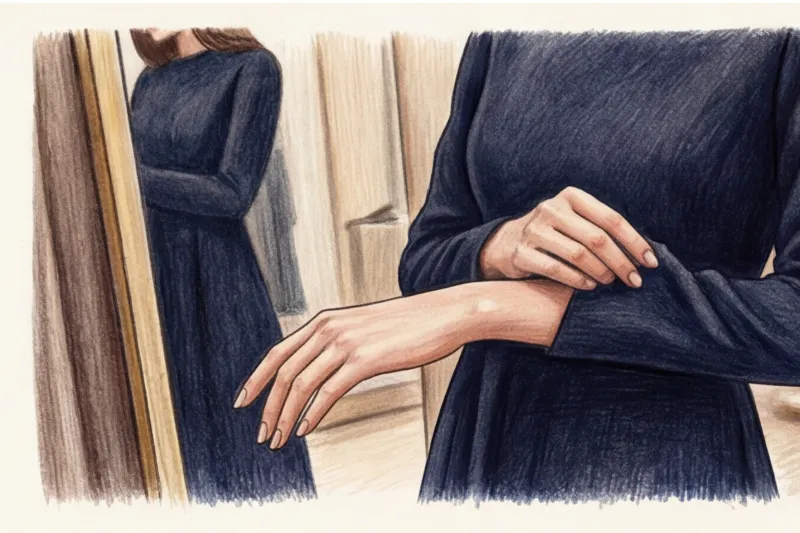
Investing in Fabric: How to Choose the Perfect A-Line Dress
As British Vogue notes (in its review of minimalist trends for 2024), when clothing lacks cutouts, embellishments, ruffles, and sequins, the texture of the fabric takes 100% responsibility for your appearance. Basic, high-necked dresses don't forgive cheap materials.
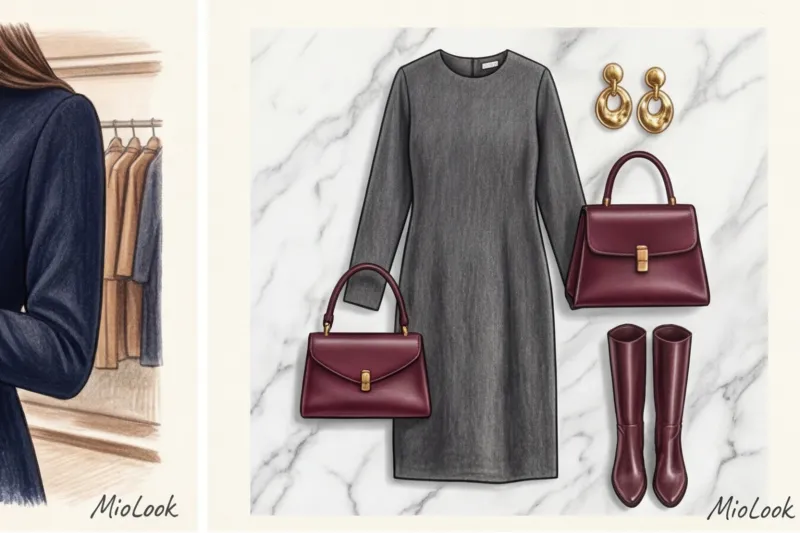
Thin viscose knitwear is the worst enemy of a closed-fit silhouette. It will cling to your underwear, bunch up when you walk, and reveal even the slightest details of your figure. For a classy dress, you need a fabric with good "stretch" (weight). Look for the following in the composition:
- Merino wool: It retains heat well, does not wrinkle, and creates a beautiful, heavy drapery.
- Crepe marocain or thick silk: A matte, slightly grainy texture that looks luxurious in any light.
- Blended suit fabric: Wool with the addition of 5-10% silk or high-quality viscose with a density of 200 g/m².
"In minimalism, quality fabric isn't a luxury, but a structural necessity. Heavyweight fabric naturally creates the perfect silhouette, flowing around the figure rather than clinging to it."
How to recognize a cheap invoice
When you're in the fitting room, perform the basic stylist test. Squeeze the hem in your fist for 10 seconds and release. If the fabric is chewed, leave the dress in the store; otherwise, after an hour in an office chair, you'll look unkempt. Cheap polyester often reveals itself with a telltale glassy sheen under artificial light and static electricity (the fabric sticks to your legs even through tights).
Your perfect look starts here
Join thousands of users who look flawless every day with the MioLook smart wardrobe.
Get access — €0.99 onceStyling: How to Wear Basic Cap Dresses in Different Scenarios
One of the main advantages of a one-piece dress is its incredible versatility. One of my clients bought a dark chocolate wool Lemaire dress and wore it literally from morning until night, changing only the accessories.
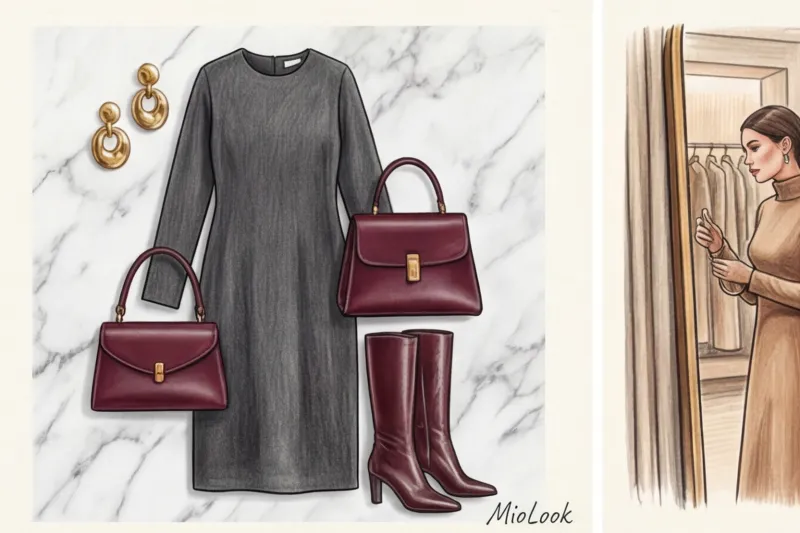
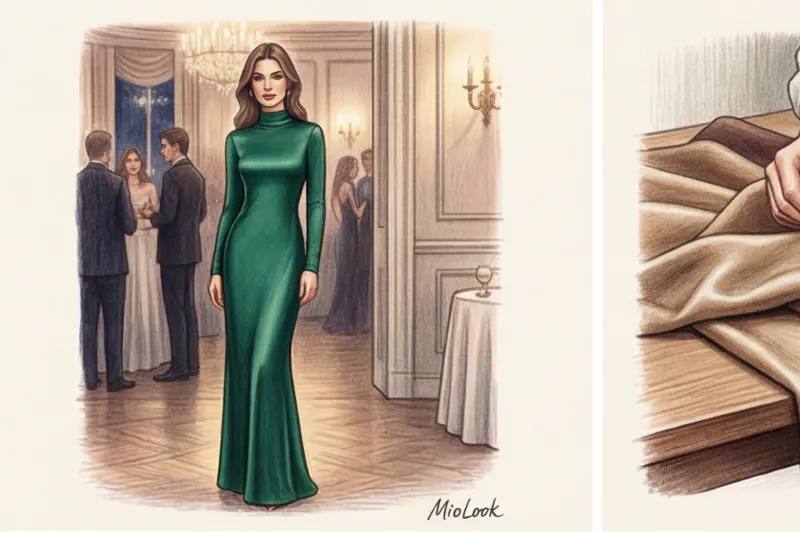
For the morning board meeting, we styled it with a crisp men's houndstooth blazer, thick tights, and chunky-soled leather loafers. And for the evening charity dinner, the blazer and loafers were swapped for pointed suede mules, and two symmetrical wide hammered gold bracelets were worn on the wrists (right over the dress's long sleeves). One dress—two completely different, yet equally powerful messages.
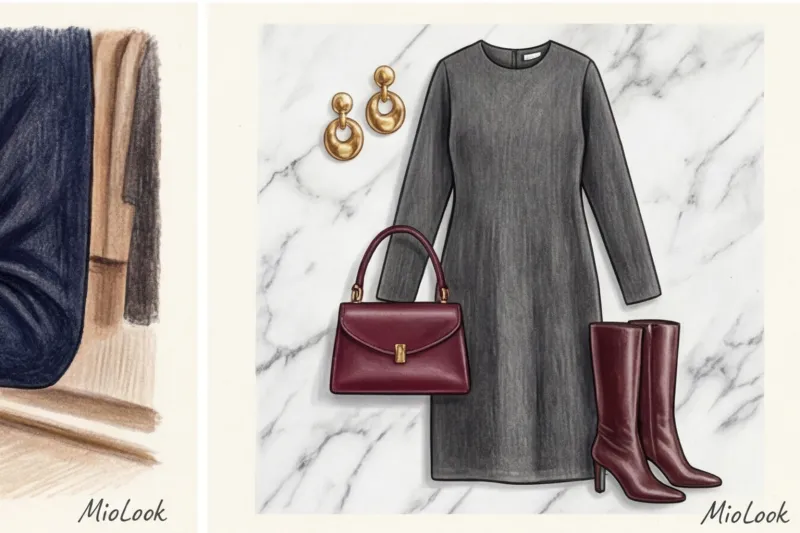
Status accessories as the main accent
A closed collar is the perfect backdrop for jewelry. Have you ever noticed how luxurious large pendants on a leather cord or vintage brooches look against a smooth, solid-colored wool background? It's a favorite touch of old-money aesthetics.
- Belts: If your dress has an A-line or straight fit, you don't always need to cinch it with a thin belt. Sometimes, a loose, flowing fabric creates a more relaxed look. If you want to accentuate your waist, choose wide leather sashes or structured belts with a chunky matte buckle.
- Shoes: A high-neck dress calls for a contrast of textures. Wear it with tall leather tube boots (with the hem covering the shaft—a trendy style move of recent seasons) or with elegant kitten heels.
Pre-purchase checklist: 5 signs you're looking for the best investment
Before you take your dress to the checkout, check it against this checklist. Remember: we're not just choosing a one-season item, but a functional tool that will save you dozens of hours of morning preparation.
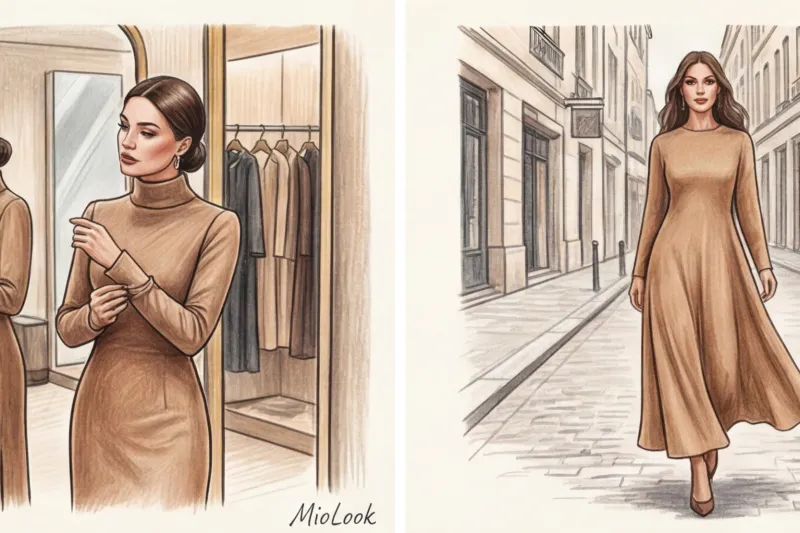
- The fabric has weight and is not see-through. In daylight, the outline of your legs shouldn't be visible through the hem. If the fabric is light, a high-quality lining (viscose or silk, not polyester) is absolutely essential.
- Ideal shoulder geometry. The sleeve seam line should be exactly at the anatomical point of your shoulder. No loose seams.
- The face has a flawless complexion. Since a high-necked dress sits close to the face, color is crucial. If black makes you look tired, choose dark chocolate, graphite, deep navy, or cool camel.
- Absence of unnecessary details. The fewer buttons, zippers, strange draping and patch pockets, the longer the item will stay in fashion.
- The mathematics of Cost-per-wear (CPW).
Let's do the math. You can buy a trendy mass-market dress for 10,000 €, wear it three times to parties, and then throw it away (the cost per outing is 3,333 €). Or you can invest in a premium basic one-piece dress for 60,000 €. If you wear it to the office at least once a week for eight cold months, you'll wear it about 65 times in two years. The cost of one impeccable, high-status outing is less than 1,000 €. Which is more cost-effective?
A basic one-piece dress isn't armor you use to hide from the world. It's your personal pedestal. By choosing the right cut and sturdy fabric, you'll have a tool that works for you 24/7, requiring minimal styling effort.