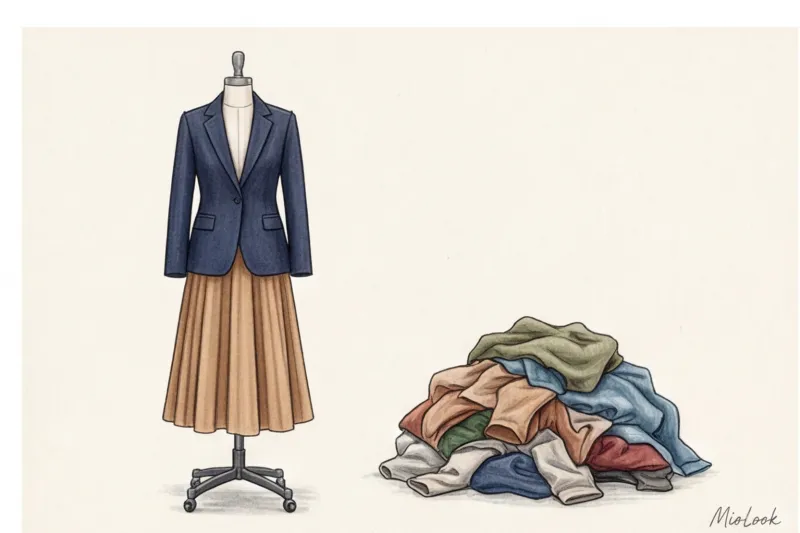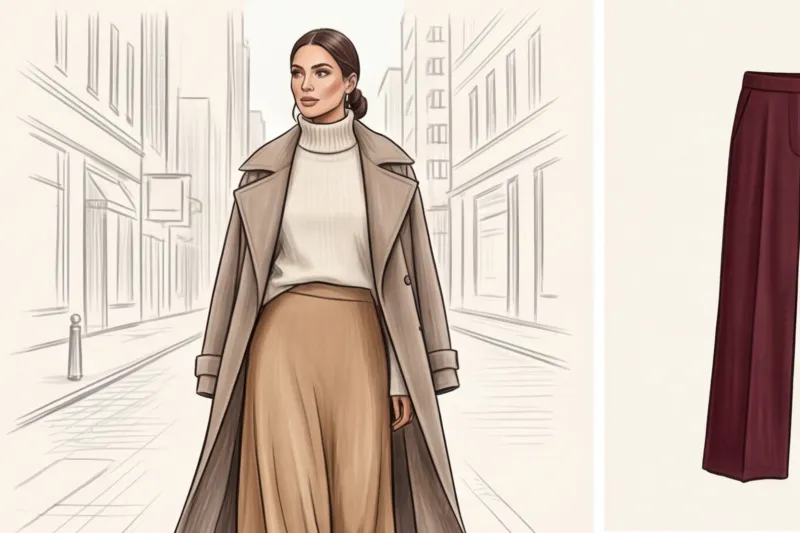
Over 12 years of working as a stylist and fashion journalist, I've learned one paradoxical rule: black is the most insidious choice for a high-necked silhouette. Many clients come to me convinced that black is slimming, a lifesaver in any situation, and the best base. But when it comes to long-sleeved maxi dresses with a high neckline, total black without any texture creates a heavy, monolithic effect that literally engulfs the figure and erases individuality.
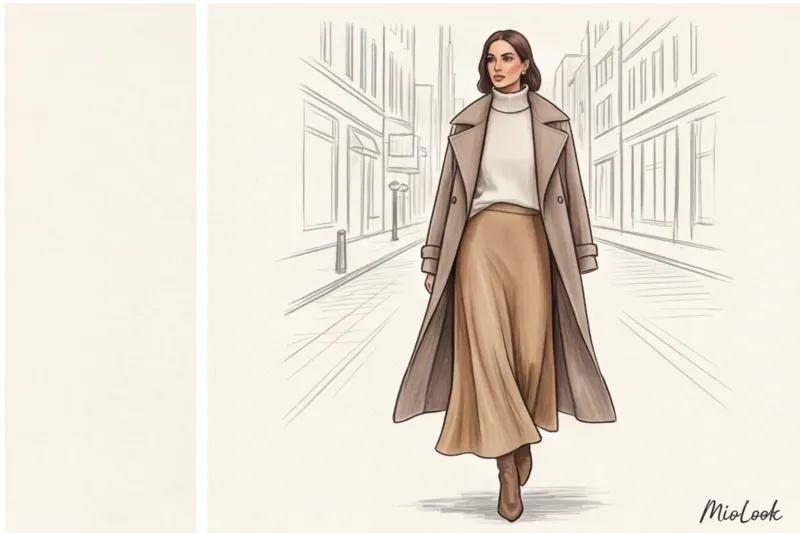
Unlike standard styling, where exposed skin serves as a buffer between shades, here color takes on 100% of the visual impact. We've already covered the global evolution of this trend in more detail in our The Complete Guide to a Basic Wardrobe in Modest Fashion Today, we'll explore how to make your palette work for you, creating rich, intellectual, and profound looks.
Why color combinations in modest fashion work by different rules
When the body is covered by maxi silhouettes, a single color takes up a huge visual area. In traditional fashion, exposed skin on the face, neck, arms, or legs acts as a "color break"—a natural neutralizer that allows you to combine fuchsia with neon green and still look acceptable. In full-coverage outfits, this function falls entirely to clever styling. color combination: modest fashion does not forgive accidental contrasts.
A WGSN study (2024) on the evolution of closed-toe silhouettes confirms this shift: designers are moving away from rigid color blocking in favor of tonal gradients. The abrupt transition from a white top to a black bottom over a large area of fabric visually "cuts" the figure in half, making the figure appear shorter and the hips wider.
"Take a look at the latest shows by Lemaire or Jil Sander. The architecture of their closed-toe tailoring is emphasized by a monochrome, fluid palette. The color flows from one layer to another, creating a continuous vertical effect," notes the fashion analyst and costume historian.
When choosing a palette for a maxi silhouette, we adapt Johannes Itten's classic color theory specifically for "large spaces." Our goal is not to clash colors, but to make them resonate.
Your ideal image begins Here
Join thousands of users who look flawless every day with MioLook. Its smart algorithm will help you organize your wardrobe by color.
Get access — €0.99 onceBasic Color Palette for a Modest Fashion Capsule: Wardrobe Anatomy
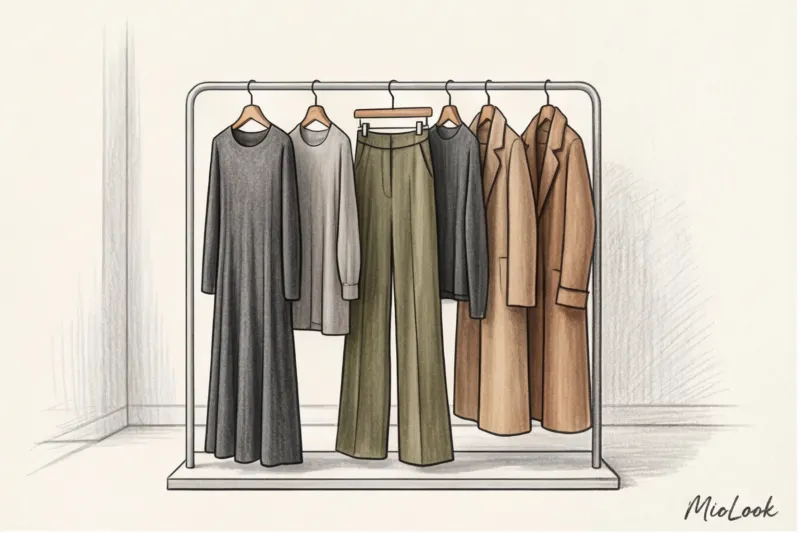
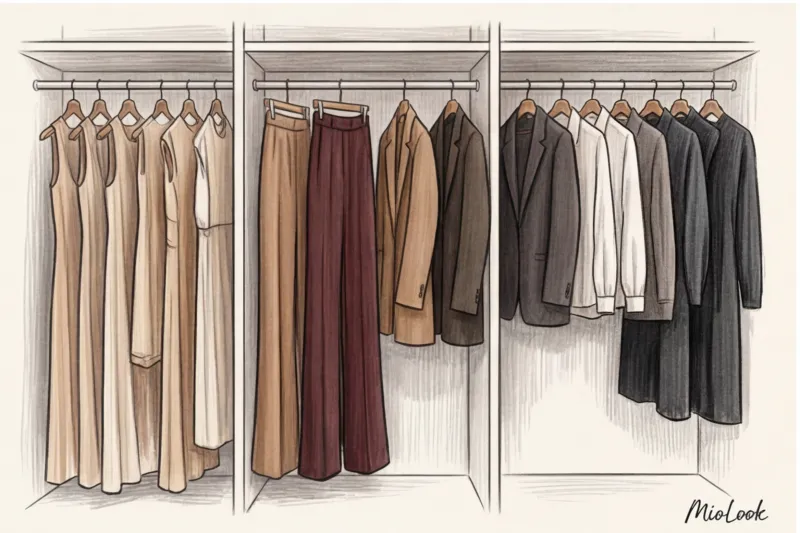
According to a recent DinarStandard report, 70% of women who prefer closed-toe clothing instinctively choose monochrome simply out of fear of making a mistake. But monochrome doesn't have to be limited to dull beige. A successful capsule collection is built on the 60/30/10 principle, where each layer has its own purpose.
- Formation of the core (60%): 2-3 leading neutral shades. Forget flat black. Your choices are camel, deep navy, graphite, or cool taupe.
- Accent group (30%): 1-2 status-conscious, "expensive" colors: burgundy, olive, deep chocolate, or terracotta. They add weight and elegance to the look.
- Linking shades (10%): light tones (ecru, pearl, cream), which are located near the face and work as a built-in light reflector (ring light).
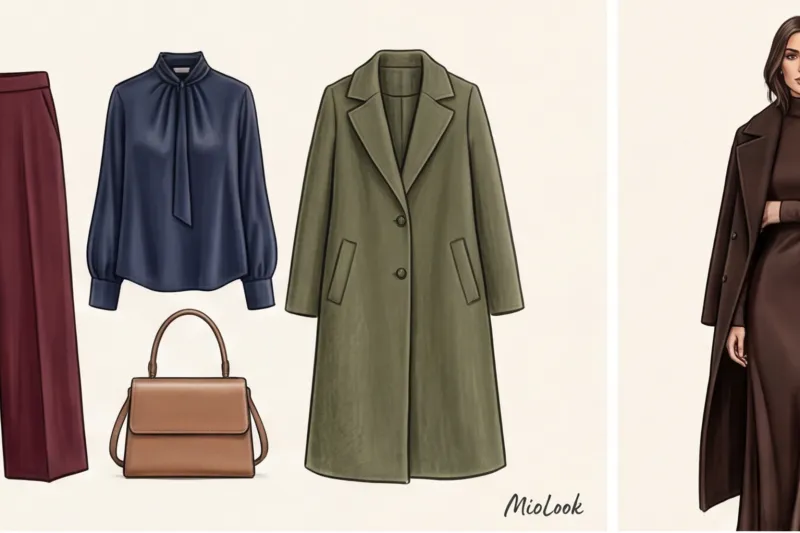
Dark Shades: How to Avoid the "Monolithic" Effect
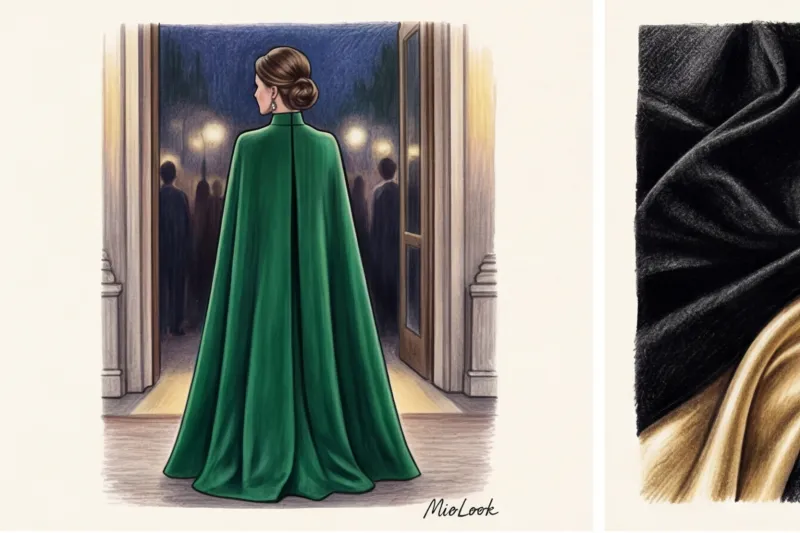
Let's return to the myth of black. Black absorbs light. On a long dress made of matte fabric (such as heavy viscose or crepe), it turns into a 2D blur. If you want to achieve a slimming effect with a dark vertical line, choose a deep chocolate or navy shade. They retain depth, but, unlike black, they reflect light, allowing the eye to read the draping and cut.
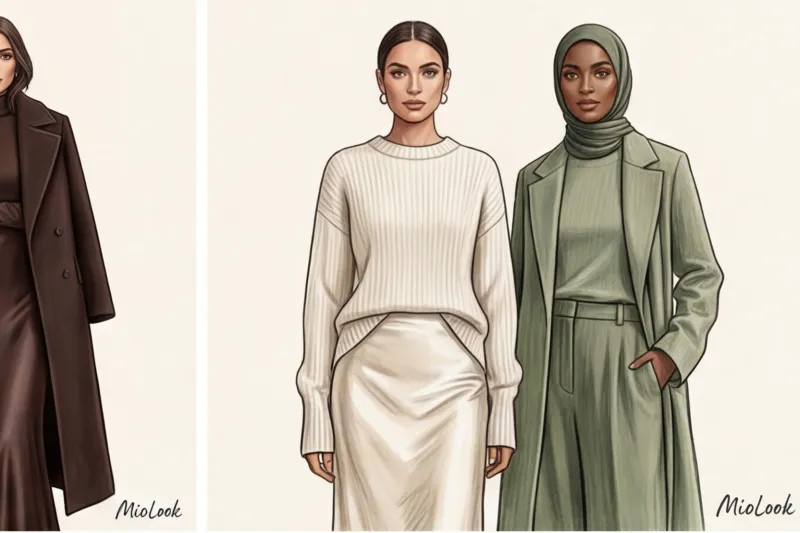
If you do wear a dark maxi, be sure to break up the silhouette with a light or colorful pop at the bottom or side: milky ankle boots, a caramel-colored bag, or peeking out light cuffs from the first layer.
Light and pastel colors: the aesthetics of "quiet luxury"
Light-colored maxi dresses have historically been associated with leisure and high status (they're harder to maintain). But with full-length styles, there's a risk of slipping into the aesthetic of a hospital gown or pajamas. How can this be avoided?
First, avoid stark white in large areas—it reflects light too aggressively and looks flat. Second, replace it with sophisticated shades: oatmeal, ivory, and almond milk. These have warm undertones and look much more refined.
Color Combination Formulas: From Lemaire to Smart Street Style
One of my clients thought modest fashion was boring. We completely redesigned her wardrobe for a business trip to the Middle East, using just three color formulas. The result? Five completely different, high-status looks from just 10 pieces.
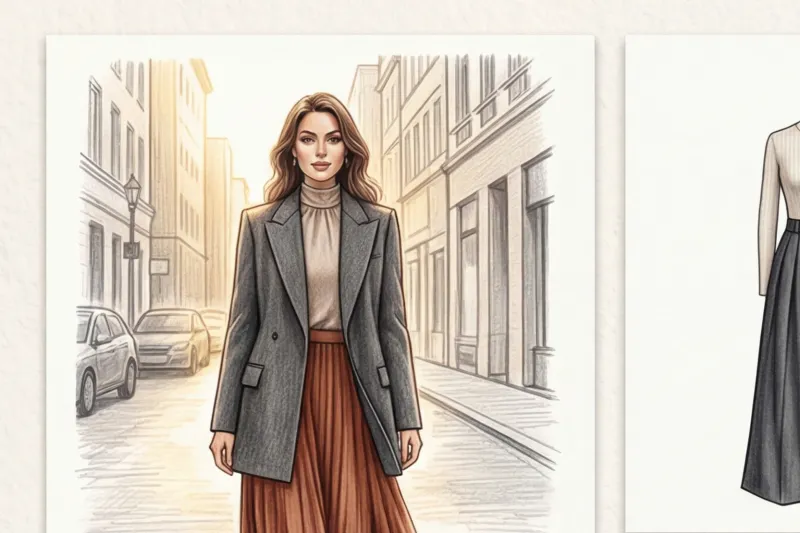
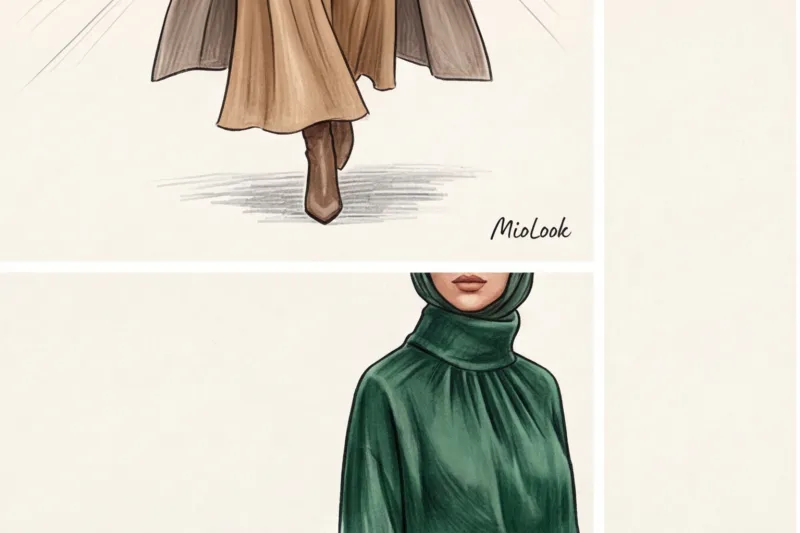
- Tonal dressing: Using three or four shades of the same color. For example: a light sand-colored silk skirt, a camel-colored sweater, and a dark caramel coat. The eye glides over the look without obstruction, which dramatically elongates the figure.
- The 80/20 Rule: 80% neutral base and 20% deep accent. A beige maxi suit in heavy linen, accessorized with a burgundy silk scarf and matching bag. The accent doesn't compete with the base, but rather frames it.
- Analog Harmony: Combining adjacent colors according to Itten's color wheel creates soft, fluid looks. Try pairing a navy blue bottom with an emerald top and turquoise details. It's more sophisticated than monochrome, but not jarring.
Ready to get started?
Try the MioLook free plan—no commitments required. Upload items from your closet and let AI create the perfect tonal looks for you.
Get access — €0.99 onceThe main secret: when the color is one, but the textures are different
Here lies the most important rule, without which all the previous tips are meaningless. If you choose a monochrome color combination, modest fashion requires a mandatory contrast of textures.
The same texture in one color (for example, a knit top and knit bottoms) on a closed silhouette turns you into a caterpillar. Textures should contrast with each other: matte versus glossy, smooth versus fleecy.
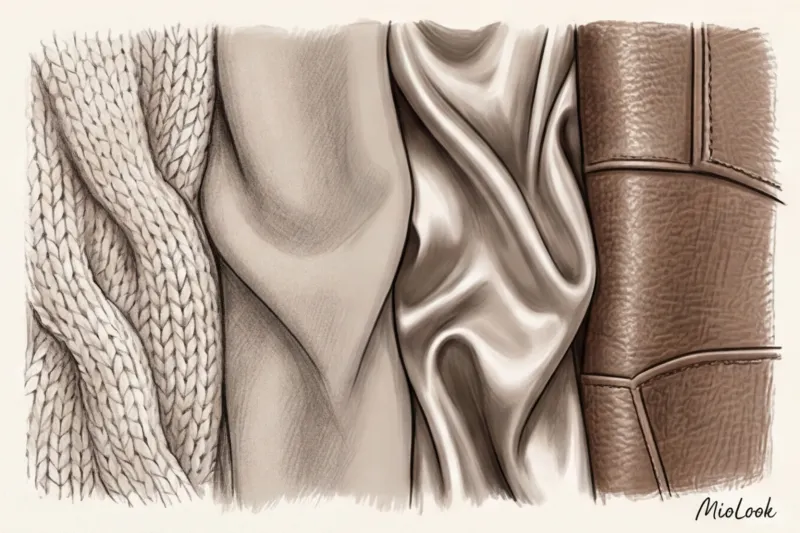
- Silk (satin) + coarse merino knit
- Smooth leather + soft cashmere
- Rough, dense linen + flowing viscose
Let's break down the perfect all-black look that *works*. It's not a solid polyester dress. It's a black silk maxi skirt (it adds highlights), a black cashmere sweater (it absorbs light and adds softness), and black embossed leather boots (it adds a rugged, geometric look). One color, three perceptions.
How to adapt a palette to your color type (without breaking modesty)
Because modest fashion often features stand-up collars, scarves, and covered shoulders, the color of the fabric sits close to the face. This means the wrong shade will instantly highlight under-eye circles or give your skin a sallow tone.
If you are unsure of your palette, I recommend exploring 12 Color Types of Appearance: A Guide to Choosing a Palette But what if your favorite color (for example, mustard) absolutely doesn’t suit you, but you still want to wear it?
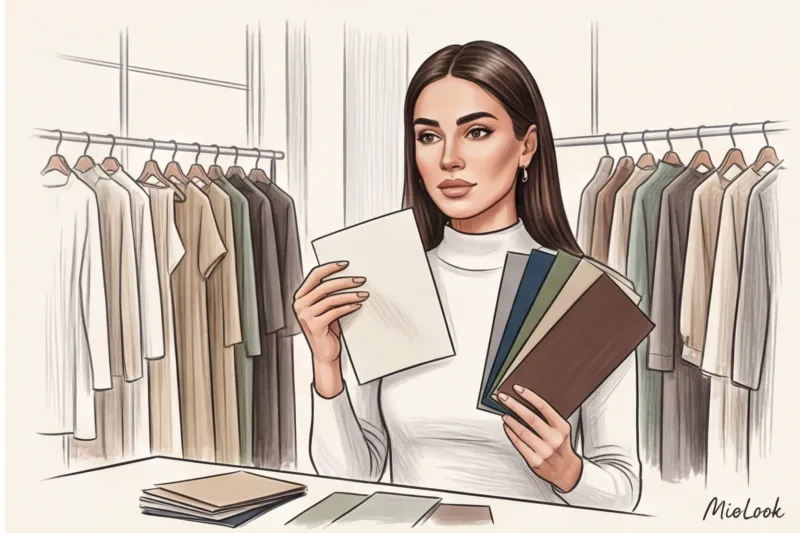
A stylist's secret: keep the "dangerous" color away from your face with a layer. Wear a cotton shirt in a flattering shade (like off-white or light blue) under a mustard jumper, allowing a couple of centimeters of the collar to show. This tiny light strip will act as a barrier, protecting your complexion.
Instructions: Putting together your ideal capsule wardrobe (stylist's checklist)
Theory is great, but let's move on to practice. How can you build a capsule in one weekend? Here's the step-by-step plan I give my clients:
- Step 1: Choose two basic dark colors for bottoms and outerwear. Let's say graphite and rich chocolate. No black.
- Step 2: Choose three light shades for the first layer (blouses, turtlenecks, at least 180 g/m², so they don't show through). For example: ecru, dusty rose, gray-blue.
- Step 3: Add two accent colors for depth (jackets, cardigans, shoes). For example: burgundy and emerald.
- Step 4: Blind Choice Test. Close your eyes and randomly select one bottom, one top, and one jacket from this capsule. If they don't match, your system has malfunctioned. In a proper capsule, all shades have the same saturation and temperature, so they complement each other.
A fair limitation: this approach won't work if your entire wardrobe consists of cheap synthetics. Tonal layering in polyester looks flat. Invest in natural blends—they give color that vibrant, premium feel.
Conclusion: Color as a tool of intellectual style
The right palette turns closed-body clothing from a constraint to an art form. By eschewing boring black in favor of deep chocolate, wine, and emerald tones, playing with contrasting textures and using tonal layering, you create looks that beg to behold.
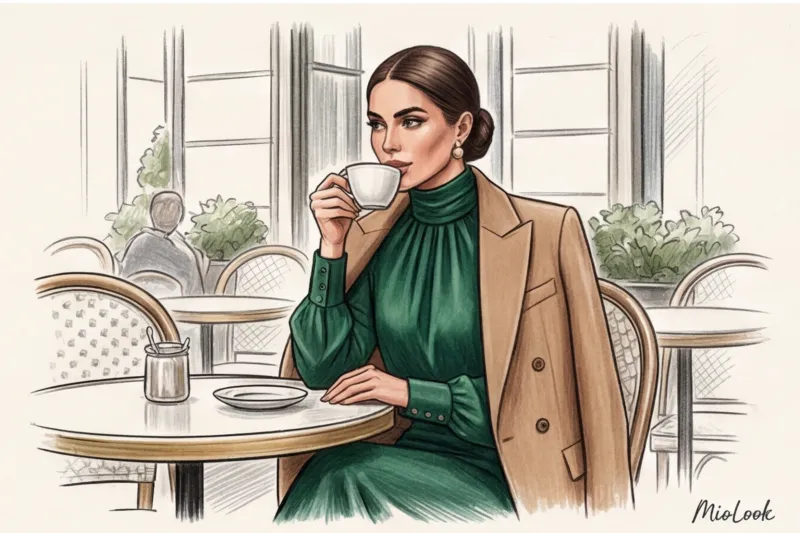
Start simple: review your current wardrobe. Choose three items of the same color but different textures and try them on together. And to avoid wasting time in the morning mulling over your closet, digitize your items in an app. MioLook — a virtual fitting room will help you test the boldest color combinations in advance and assemble an intelligent capsule wardrobe without unnecessary purchases.