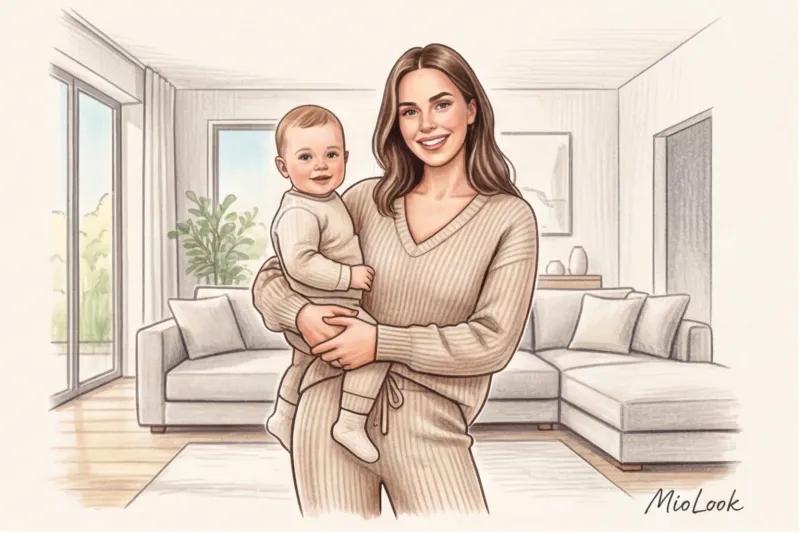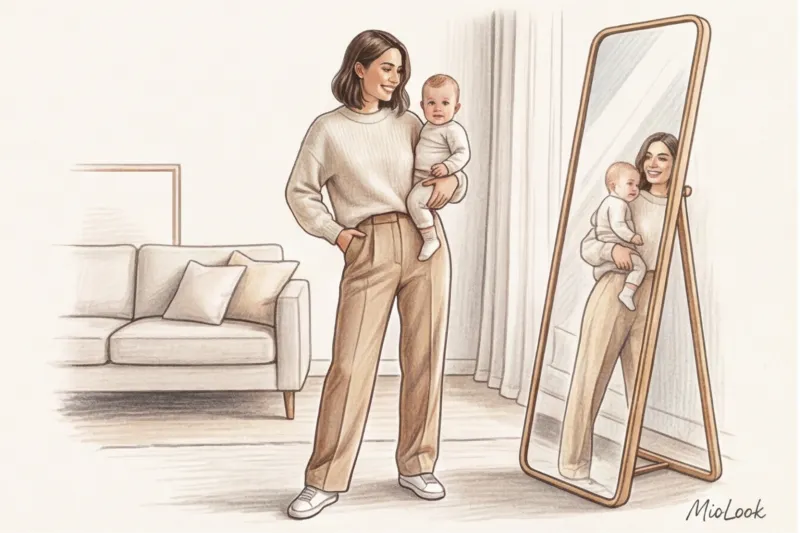
Why a "wardrobe for a stay-at-home mom" isn't a style death sentence
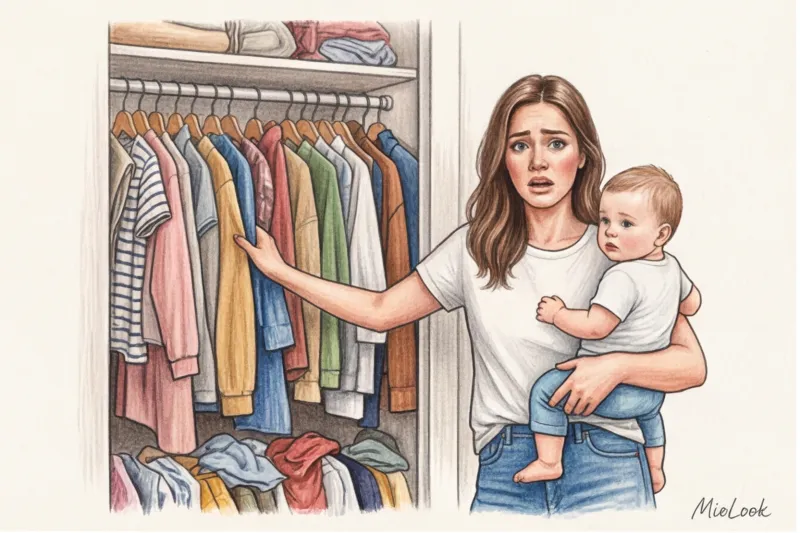
At 7:30 a.m., when you're holding a waking toddler with one hand and fumbling for a clean T-shirt on the shelf with the other, talking about style seems like a joke. In 12 years of working as a personal stylist, I've heard the same phrase hundreds of times: "I don't care about fashion right now; the main thing is to be comfortable." The bottom line wardrobe for a mother on maternity leave often mutates into a chaotic pile of stretched-out sweatpants, random hoodies with mashed potatoes stains, and those same jeans that "you don't feel sorry about yet."
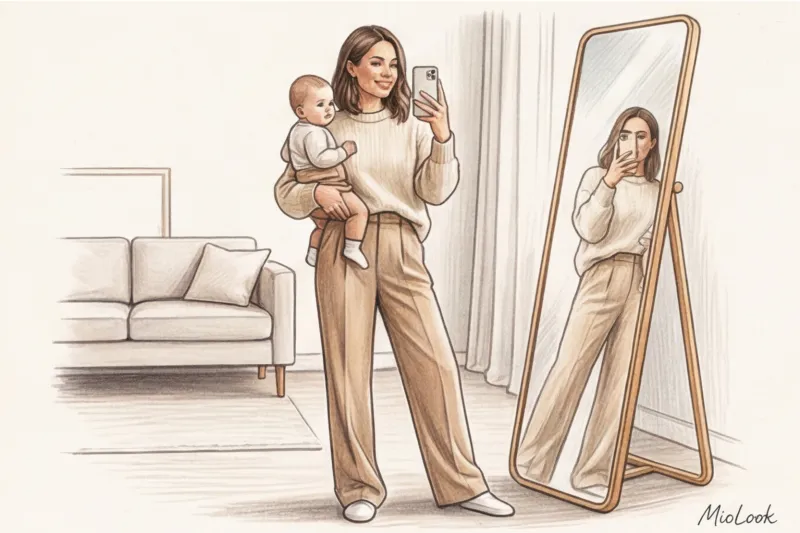
But let's face it: maternity leave isn't a pause in your life that you simply "tough it out" in your old clothes. It's the perfect opportunity to completely reset your personal style. When we abandon beautiful, neat clothes in favor of shapeless pieces, we inevitably encounter what psychologists call "invisibility syndrome."
A woman on maternity leave becomes so focused on the needs of her child that she literally erases her own identity. And this takes a severe toll on self-esteem. One of my clients, a successful marketer before the birth of twins, admitted during a consultation that she had begun physically avoiding mirrors in her own apartment. It was painful for her to see her reflection. We put together a functional home capsule for her with just eight items, and within a week she wrote to me: "Emily, I feel like myself again. I've even started wearing lipstick in the mornings!"
This effect has a rigorous scientific basis. In 2012, researchers from Northwestern University (USA) Hajo Adam and Adam Galinsky introduced the term Enclothed Cognition (embodied cognition). Their research proved that clothing directly influences our cognitive processes and psychological state. What we wear in the morning literally programs our energy levels for the entire day. By wearing loose, baggy clothes, you signal fatigue and apathy to your brain. By choosing a structured, clean, and stylish (even knit) suit, you activate a state of composure and confidence.
"Clothing isn't just fabric on your body. It's a tool for managing your energy. On maternity leave, when your energy is at a premium, the right clothes act like a power bank."
That's why you need a smart maternity pod. What is it? It's a mathematically calculated minimum of things that allows for maximum combinations with zero time spent thinking. If you want to dive deeper into the mechanics of creating such systems, I recommend checking out our The Complete Guide to Creating a Capsule Wardrobe.
A Data-Driven Approach: Why We Only Wear 10% of Our Wardrobe
Let's look at the numbers. Before having a baby, your wardrobe was likely divided like this: 60% for work, 20% for weekends and social gatherings, and 20% for home and exercise. While on maternity leave, your lifestyle changes dramatically. Now, up to 80% of your time is spent at home, at playgrounds, at the clinic, and walking with the stroller.
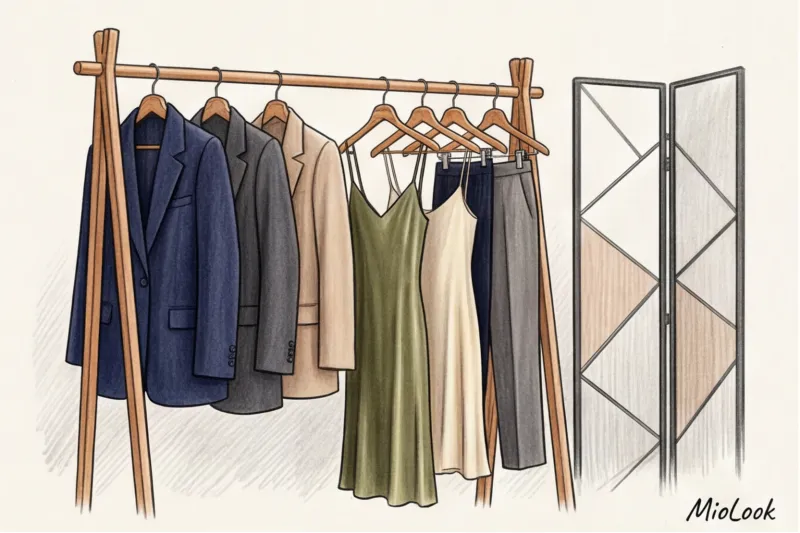
The problem is that your closet stays the same. You open the doors and see silk blouses, tailored jackets, and pencil skirts. Your brain processes a daily visual clutter of clothes you can't wear right now. This triggers feelings of guilt and frustration: "The closet is full, but I have nothing to wear." So rule number one: office clothes and special occasion items should be put away out of sight.
To stay in control of my things, I always use technology. In the app MioLook My clients create a separate seasonal filter called "Maternity Leave." We transfer all outdated clothes to a virtual archive. You know your favorite €150 trousers are safely waiting for their turn, but they don't stop you from quickly putting together your outfit in the morning.
Another important insight from wardrobe analytics: while on maternity leave, clothes wear out exactly three times faster. Constant washing at high temperatures (thanks to baby food stains), friction from slings and baby carriers, and vigorous movement in the sandbox—all of this can wear out flimsy mass-market clothing in just a couple of weeks. That's why the "buy 30 cheap T-shirts for $5" strategy doesn't work here. We need a data-driven approach: fewer items, but with maximum wearability, which we'll discuss in detail below.
Anatomy of the Ideal Capsule: A Formula for Comfort and Functionality
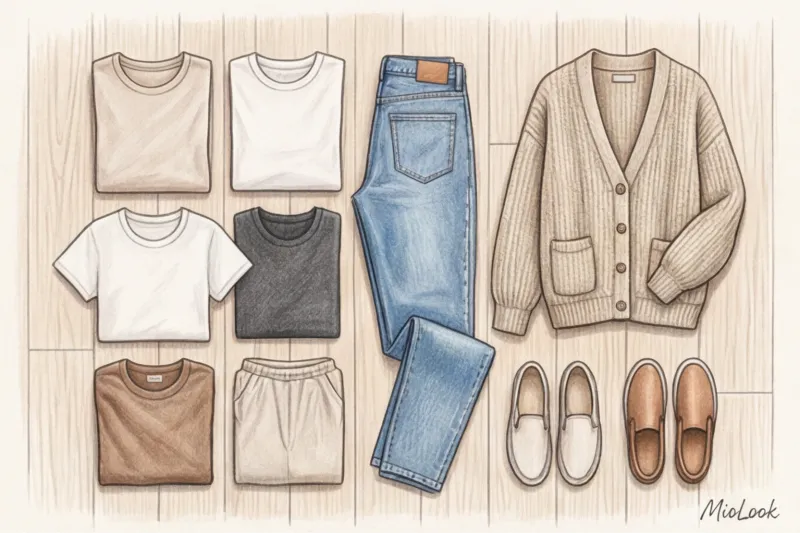
When reviewing wardrobes, I like to show my clients a sobering calculation. We're used to evaluating clothes by the price tag at the checkout, but in the world of sustainable style, the Cost Per Wear (CPW) metric rules. Imagine a fashionable €20 jumper that's pilled and lost its shape after the second wash. Its real cost to you is €10 per wear. Now consider a premium, thick long-sleeve top for €60 that you've worn 60 times a year without losing its shape—its CPW is only €1. The math behind a smart maternity capsule is built on this very principle: 15 well-chosen, durable items always perform better than a closet full of cheap compromises. These 15 basic items can generate over 50 unique looks, forever ending the question of "what to wear on a walk."
Selection for such a capsule collection should be as strict as face control. The basic rule of my maternity formula: the item must withstand a harsh machine wash at 40-60 degrees. If the silk tag says "hand wash only at 30 degrees" or "dry clean," it absolutely has no place in your current schedule. Lack of complicated ironing is another critical factor; modern maternity clothes should straighten themselves while drying on a hanger. The second essential filter is the "sandbox squat test." When trying on new pants, jeans, or a skirt, do a deep squat right in the fitting room. If the tight waistband painfully digs into your stomach, the fabric splits at the seams, and you have to tug at the back to avoid exposing your lower back, the item has failed the test.
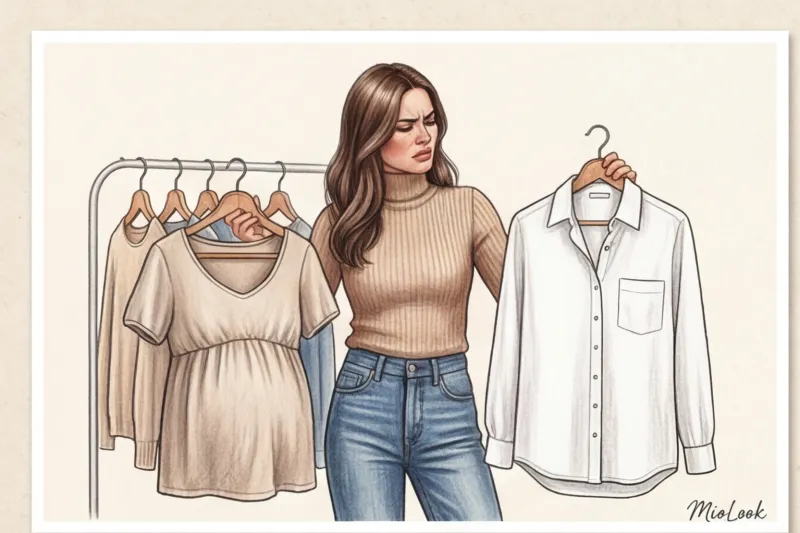
A particular challenge is the wardrobe specifics for nursing mothers. For years, the industry has pushed women into wearing downright ugly "nursing" tops with weird ruffles, garish prints, and intrusive hidden zippers. Forget them. You can incorporate nursing essentials without sacrificing style. A great alternative to specialized clothing is well-cut basics: deep V-necks on stretchy long-sleeved tops, wrap dresses, and thick, oversized men's shirts that are easy to unbutton with one hand. My favorite styling trick for the playground is to wear a cropped sweatshirt or crop top over a form-fitting, stretchy tank top with thin straps. When nursing, the top layer rises and the bottom layer is pulled back—keeping your belly and back warm and hidden, while you look absolutely fashionable.
To ensure that the process of putting together these functional looks doesn't take up your mornings, I highly recommend digitizing your basic pieces in MioLook — the app will generate ready-made image formulas based on your tasks and the weather outside.
Tired of racking your brains over images?
Try MioLook for free: A smart AI stylist will analyze your clothes and select the perfect outfit for a walk with your child in just a few seconds.
Get access — €0.99 onceTechnological fabrics: your main ally against stains
There's a deeply ingrained myth that 100% cotton is the best clothing for direct contact with your baby. Is it eco-friendly? Absolutely. Is it practical for an active mom? Absolutely not. Pure cotton is a fickle material: it instantly absorbs any liquid, takes a long time to dry, wrinkles with one awkward movement, and stretches out catastrophically at the elbows and knees. To debunk this stereotype, I always recommend choosing the right blended fabrics. The ideal formula for basic knitwear is cotton + modal + elastane (usually in a 70/25/5 ratio). Modal gives the fabric a luxurious, silky smoothness that literally sheds dry dirt and sand, while a small percentage of elastane acts as a micro-spring, returning stretched joggers to their ideal original shape after a full day of activity.
The modern textile industry has made great strides. Many brands (from mass-market brands like Uniqlo to more expensive ones) actively use fabrics with anti-stain and hydrophobic (water-repellent) finishes. Spilled apple juice, bubbles, or baby drool simply roll off such surfaces without penetrating the fibers—all you need to do is wipe them away with a paper towel.
Another hidden enemy of maternity wardrobes is constant localized friction. Slings, baby carriers, and the wide straps of heavy diaper bags destroy items on the shoulders and chest faster than the harshest washing machine. In the textile industry, there's a term called the "Martindale test"—a fabric abrasion test in which a special machine rubs the material until tears or pilling appear. Soft, loose knits, cheap cashmere, or fluffy angora give way within the first thousand cycles. To prevent your favorite cardigan from turning into a shaggy rug after a week in a baby carrier, choose items made of high-twist yarn or dense, smooth Milanese knits. These items feel slightly cooler, heavier, and springier to the touch. Their fibers are twisted so tightly that they physically cannot fray and form pellets even with daily aggressive friction against backpack straps.
A Basic Wardrobe for a Stay-at-Home Mom: A List of 15 Must-Have Items
A 2023 study by the analytical agency WGSN found that the ideal everyday capsule wardrobe is built on a strict ratio: three tops to one bottom. This mathematical approach proves that a basic wardrobe for a mother on maternity leave doesn't require endless shopping marathons. Just 15 carefully selected items are enough to create over forty unique combinations for any occasion—from a trip to the doctor to brunch with friends.
"The main rule of a functional capsule collection is an uncompromising fit. Mid- or high-waisted trousers aren't just a trend; they're an ergonomic necessity. When you bend over to the stroller, squat in the sandbox, and pick up toys from the floor dozens of times a day, a low waist becomes pure torture."
Let's break down the anatomy of this compact yet incredibly powerful capsule into categories.
Tops: The Basics for Layering (5 Items)
The top of the outfit gets dirty the fastest, so here we need a slight numerical advantage and materials that can withstand frequent washing.
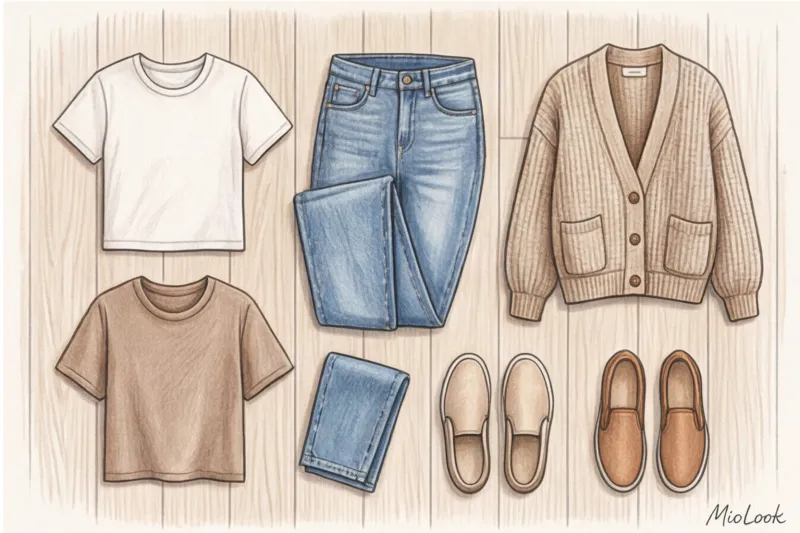
- Thick basic T-shirts (2 pcs). Choose cotton with a weight of at least 180 g/m². Thin knits quickly lose their shape and reveal the contours of your underwear, while thicker fabrics visually gather the silhouette and look more expensive.
- Ribbed long sleeves (2 pcs). Texture rib-knit (the rib) stretches phenomenally, does not restrict movement at all and, most importantly, instantly returns to its original state.
- Voluminous shirt (1 piece). This menswear-inspired piece works as a flawless second layer. Throw it on over a simple T-shirt, roll up the sleeves, and the look instantly transforms from casual to urban.
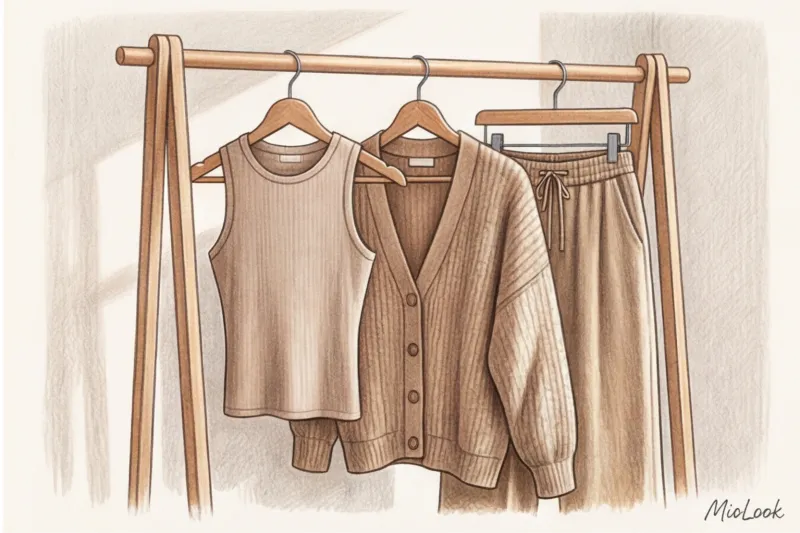
Bottoms: Freedom of movement without losing shape (4 items)
Trousers and jeans undergo a rigorous crash test while on maternity leave. Fabric composition and a proper cut, with a high or comfortable mid-rise, are critical.
- Joggers made of thick cotton. Avoid thin, melange knits right away—they'll inevitably stretch out at the knees after a couple of hours of wear. Look for styles made of thick French terry that hold their shape.
- Mom-fit or wide-leg jeans with elastane. Save pure denim (100% cotton) for occasional outings without the kids. For active everyday wear, consider 2-3% elastane, otherwise squatting will be difficult.
- Knitted palazzos. A genius invention: they look like elegant wide-leg trousers, but feel as comfortable as your favorite pajamas.
- Ribbed leggings. A great alternative to sports tights, especially when paired with a bulky sweater or shirt that covers the hip area.
Warm Layer: Coziness and Structure (3 Pieces)
Layering is your best friend in changeable weather and when constantly changing locations (street, cafe, shopping center).
- Chunky knit voluminous cardigan. This is not only a stylish accent, but also the perfect nursing garment. No complicated fasteners or tight necklines—just open the hem and you're ready to go.
- A hoodie or sweatshirt of the correct cut. Avoid oversized fits, which visually add extra pounds. The optimal length is just below the hipbone.
- Structured knit jacket. Soft, without stiff shoulder pads, yet still holding its shape (similar styles are often found in the collections of COS or Massimo Dutti), it can "save" even the most relaxed joggers.
Outerwear and footwear: packing speed (3 items)
When your baby is already dressed and sweating in the hallway, you have exactly 30 seconds to get dressed yourself.
- An elongated quilted jacket or parka. A must-have is a length that covers the hips and a functional deep hood.
- Slip-on sneakers. Hands-free shoes are an absolute must-have. When you're carrying a baby in one arm and a bag in the other, there's simply no time to fiddle with laces.
- Chelsea boots with chunky soles. A thick track sole protects against slush on playgrounds and visually makes the ankle appear thinner.
A high-quality basic set of these 15 items will cost around €300–€450 in the mass-market plus segment, but it's a smart investment in your everyday comfort. Feel like 15 items aren't enough? Digitize them in MioLook The virtual wardrobe feature will clearly show you how these items fit together into dozens of ready-made outfits, eliminating morning panic and thoughts of "I have nothing to wear."
The "Non-Staining Colors" Myth: How to Wear Light Colors with Kids
"I never buy light-colored clothes because the baby will stain everything in five minutes." If I had €10 for every time a client said that, I would have invested in my own clothing line a long time ago. To settle this question once and for all, I conducted a visual test. I took two identical basic T-shirts: a charcoal black one and a classic melange gray one. I dripped a mixture of baby food and milk onto both, along with a little bit of regular street dust. Guess what happened after they dried? A sharp, whitish stain formed on the black background, screaming from a mile away. On the gray melange, the stain literally melted into the texture of the fabric.
Here lies the most counterintuitive insight into the maternal wardrobe: Black is the absolute record holder for dirtiness It reveals every dried drop of drool, sandbox dust, and ubiquitous pet hair as if under a microscope. The dark background creates maximum contrast for the most common "childhood" messes, making them the visual center of your image.
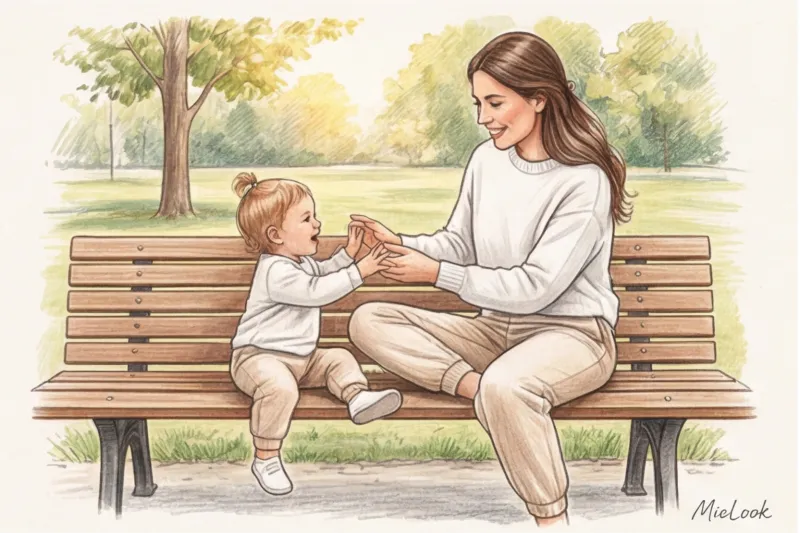
That's why I strongly recommend moms switch their focus to beige, melange, camel, and dusty pastel shades (like muted sage or gray-blue). Natural dirt and food residue often have warm, earthy undertones. Beige or camel work as the perfect camouflage—the difference between the fabric and the stain is so minimal that you can easily finish your shift at the playground without feeling sloppy.
If solid, light-colored items still make you uneasy, try optical illusions. A small print acts as visual noise, masterfully deceiving our eyes. A classic pied-de-poule or a small Breton stripe perfectly disguise accidental splashes of fruit puree or juice. The human brain simply can't quickly distinguish a new spot from an existing, contrasting pattern.
Beyond their purely practical benefits, light-colored items have powerful psychological benefits. From a coloristic perspective, light shades near the face act as portable reflectors. White, cream, or light beige softly illuminate the skin, erasing the traces of sleepless nights and the gray undertones of fatigue better than an expensive concealer. Black, on the other hand, absorbs light and casts harsh shadows on the face, mercilessly emphasizing under-eye circles.
To gradually introduce light-colored items into your routine, start small. Upload your current light-colored tops and printed items to MioLook The app will help you pair them with safe dark or denim bottoms in seconds. You'll experience a new level of freshness in your look, and the algorithm will suggest how to wear light colors every day without having to think twice in front of the mirror.
Try MioLook
for free
Start creating perfect looks with AI and build your smart light capsule without fear of stains.
Get access — €0.99 onceInvesting vs. Saving: What Moms Shouldn't Skimp On
The most style-destroying phrase I hear during wardrobe reviews: "I'll buy something cheap, the kid will get it dirty quickly anyway." It's a cognitive trap. Cheap, thin knitwear doesn't just get dirty—it quickly loses its cut. Sagging knees, crooked side seams, and a neckline that starts to ripple after the first wash instantly make a look sloppy and tired, even if the garment isn't spotted.
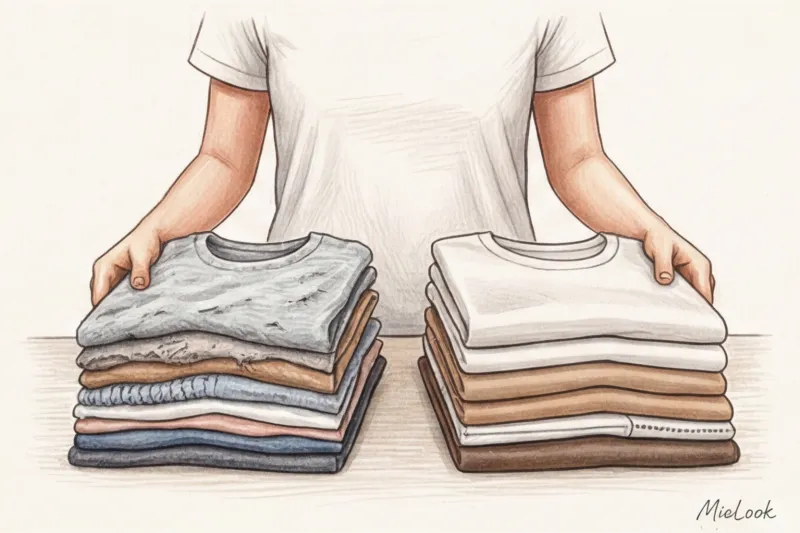
The financial mathematics of a functional wardrobe follows the rule Cost Per Wear (CPW) — the cost per wear. Let's compare two scenarios. You buy a tracksuit made of thick, high-quality diagonal sweatshirt for $150. During your year on maternity leave, you'll wear it at least 100 times. The cost per wear will be only $1.50, and the suit will retain its shape and color. Alternatively, consider a cheap, mass-market equivalent for $35. Due to the loose weave, its knees will stretch out after just five wears, and after the tenth wash, it will be covered in pilling and destined for the dacha. The CPW will be $3.50. You're paying double for a look worse.
Here are three categories of things that you absolutely must not skimp on:
- Quality shoes. Daily walks with a stroller and carrying a 10-kilogram toddler puts extreme strain on the lower back and joints. An anatomical footbed and good cushioning (like EVA foam in sneakers) aren't a matter of fashion; they're an investment in your back health.
- Thick knitwear. Those joggers, hoodies, and cardigans. Choose a weight of 320 g/m² or higher—this material is springy and returns to its original shape even after you've been squatting by the sandbox for half an hour.
- Outerwear. High-tech membrane fabrics, reliable hardware that won't snag when you try to zip up your jacket with one hand, and the right insulation will protect you from wind and slush on long walks.
But where you can and should boldly cut your budget is on the base layer near the face. Basic cotton T-shirts and long sleeves They really take the brunt of the damage from berry purees and children's paints. Buy them in sets of 3-5 from affordable brands and mercilessly update them once a season. Also, a great article for saving money— trendy micro-accessories Accent plastic glasses, fun socks, or trendy hair clips cost next to nothing, but they'll perfectly tone down the seriousness and freshen up a typical look.
By the way, if you start recording the things you wear using the app MioLook , built-in analytics will quickly confirm this theory: an expensive but well-designed database earns every cent, while spontaneous, cheap purchases simply hang in the closet like dead weight.
Styling Secrets: How to Create a Look in 3 Minutes
Let's be honest: when you're only getting snatches of sleep, it's physically impossible to be creative in front of the mirror in the morning. The main request women make after giving birth sounds like a cry for help: "Give me an algorithm so I can look great without even choosing clothes." And such an algorithm exists. The secret lies not in innate talent, but in mathematically proven stylistic formulas that work without fail.
The most powerful of these techniques is monochrome images Simply wearing gray joggers and a casual T-shirt can look like housecleaning attire. But if you create an all-over look in a single, elegant shade (for example, head-to-toe ecru, camel, or deep graphite), the look instantly gains polish. Visually, monochrome doesn't break up the figure into color blocks, creating a continuous vertical line. This is especially helpful if you're still recovering from childbirth. A graphite all-over look elongates the silhouette and always looks like a deliberate, "expensive" choice, even if the pieces themselves are bought at a high-street store for $30-40.
The second pillar of the fast style is the rule of the "Third Element" The basic formula is: top and bottom are just clothes. Add a third element, and they become an outfit. What can save a simple "jeans and long sleeve" pairing? A structured bag, a stylish cap, or a contrasting sweater casually draped over your shoulders and knotted at the chest. It's this seemingly insignificant detail that tells others you didn't just throw on the first thing that popped out of your closet, but took the time to style it (even though it actually took exactly two seconds).
The secret to functional style lies in minimizing daily decisions. Your stay-at-home wardrobe should work for you, not require morning deliberation in front of your open closet doors.
And this is where my favorite tech lifehack comes in: preparing your baby's "uniform" the night before using your smartphone. Nighttime feedings or rocking sessions are the perfect time to manage your wardrobe. Instead of mindlessly scrolling your news feed, open your virtual closet in MioLook With all your items digitized, the app helps you plan outfits right on your smartphone screen. With just a few taps, you can create an outfit for tomorrow's outing, save it, and in the morning, simply grab the items you need using your pre-made cheat sheet. Zero energy expenditure and guaranteed stylish results.
Safe accessories that make your look
Accessories are subject to strict security screening during maternity leave. I'll always remember one case in my practice where a client came in for a wardrobe review with her earlobe taped shut—her six-month-old had abruptly tugged on a long chain earring. Since then, my capsule collections have had a strict no-no: no long earrings, thin pendant chains, or bracelets with small, easily detached parts.
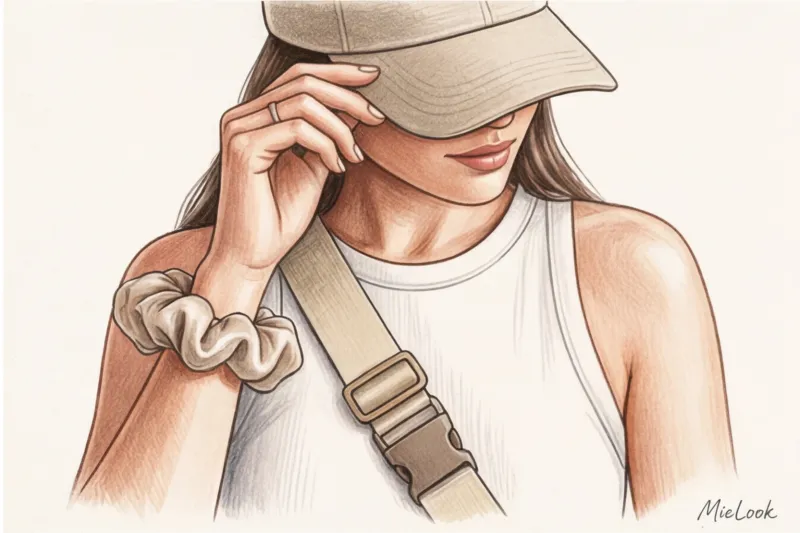
What can you replace them with to avoid a bland look? Opt for a simple yet masculine look. A large watch with a steel bracelet (basic vintage models for $50-$100 are ideal) and smooth signet rings without protruding stones will add the right texture and won't scratch your baby's delicate skin. For hair, use voluminous silk hair ties ( silk scrunchies ) - they don't leave creases in your hair and look great as a bracelet on your wrist if you let your hair down.
Don't write off hats. Baseball caps and thick cotton bucket hats save your look on days when you don't have the energy to style your hair (that same bad hair day ), and brilliantly fulfill the role of the third element.
Bags are a particular stylistic pain. The industry actively markets huge, shapeless "mummy backpacks" with numerous pockets that instantly ruin any proportions. Replace them with a rigid crossbody bag with a wide fabric strap. Your phone, hand sanitizer, and keys will always be within reach, and the bag's rigid geometry will visually "pull together" a relaxed knitted look. The diagonal line of the strap further slims the silhouette, and bulky baby items (diapers, nappies, toys) are best left in a stylish fabric shopper on the stroller handle.
Your ideal image
it begins Here
Join thousands of users who look flawless every day with MioLook.
Get access — €0.99 onceChecklist: A Quick Audit of Your Maternity Wardrobe
Behavioral economics perfectly explains why we have such a hard time parting with old clothes: the so-called "endowment effect" comes into play. We value those skinny jeans from before pregnancy not for their actual present utility, but simply because they're already hanging on the hanger, holding memories. But let's face it: a stay-at-home mom's wardrobe isn't a museum of her past. It's your uniform, your work tool, and your armor for the next couple of years. And that tool needs to be perfectly tuned.
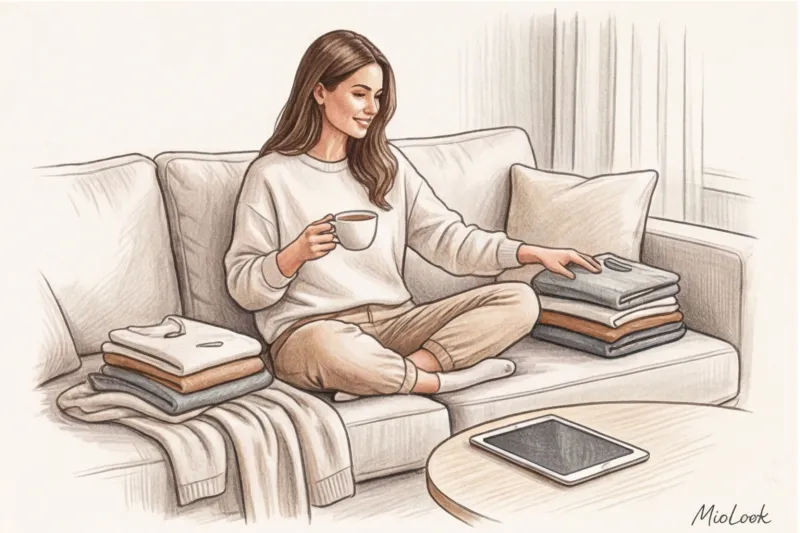
A study by the Princeton Neuroscience Institute has proven that the visual clutter around us directly depletes cognitive resources. Every morning, sorting through a pile of inappropriate clothes, you're wasting energy that you desperately need to interact with your baby. To stop this drain, I suggest conducting a radical yet highly effective audit in four simple steps.
Step 1: Remove anything that is tight, painful, or requires you to pull in your stomach.
Right now, take out all the clothes you hypothetically plan to wear in the next month. Now, ruthlessly filter out anything that causes even the slightest discomfort. Stiff denim without elastane, itchy wool sweaters, overly tight elastic bands on sweatpants. A postpartum body needs care, not constricting corsets. The physiological discomfort of a belt digging in will inevitably transform into psychological irritation by midday. We leave only those things that you can easily squat in the sandbox without adjusting your clothes.
Step 2: Put away items that require dry cleaning or heavy ironing until better times.
Natural silk, wrinkle-resistant linen, blouses with complex cuts, or delicate cashmere that shrinks just by looking in the washing machine—we pack them all in vacuum bags. If an item requires hand washing, a trip to the dry cleaner (which will cost you at least €15-20 each time), or 20 minutes of masterful steaming, it becomes a burden in the maternity realities. Your only selection criteria at this stage are: throw it in the washing machine at 30 degrees, take it out, shake it out, and wear it.
Step 3: Evaluate the remaining base using the 3-5-2 rule.
Look at what passed your strict filter. The ideal starter capsule, as shown by the rational wardrobe methodology, should fit into a strict proportion: 3 bottoms, 5 tops, and 2 warm layers. For example: 3 bottoms (joggers, loose mom-fit jeans, knit palazzo pants), 5 tops (basic tees, long sleeves), and 2 warm layers (a voluminous cardigan and hoodie). If you have 10 tees but not a single pair of comfortable pants, the system will fail. This mathematical formula guarantees you over 30 unique combinations, which is more than enough for a month without stylistic repetition.
Step 4: Create a shopping list of missing items (preferably in an app).
Don't rush to the mall and buy things at random. First, identify what exactly your base needs to achieve the perfect formula. I'm categorically against lists in phone notes, which don't provide a visual representation. The best approach is to take photos of the remaining items and upload them to MioLook app The smart wardrobe management feature will clearly show your blind spots. You'll immediately see that a structured camel sweatshirt will pair perfectly with your bottoms, not just another gray T-shirt. You can add it to your shopping list and buy it selectively, without wasting your budget on random items.
To summarize, I want to emphasize the most important thing. Rethinking your style while on maternity leave isn't about selfishness, a waste of money, or trying to prove anything to anyone. It's a direct investment in your mental health. By replacing the morning chaos of your closet with a smoothly functioning, automated system, you free up precious time and reduce daily stress. When your clothes work for you, you have the resources to simply enjoy motherhood and feel confident and beautiful every day. Your style isn't on hold—it's just smarter.
Guide Chapters
Practical clothes for moms: which fabrics are easy to wash
Forget about stubborn mashed potatoes stains and stretched knits. Discover fabrics that combine a premium look with incredible ease of care.
The Perfect Mommy Bag for a Walk: Stylist Tips
Forget about clunky stroller backpacks. We'll show you how to create a stylish and comfortable maternity bag from a basic shopper and a felt organizer.
Mom's Going Out Looks: How to Dress for a Date
Tired of maternity routine but afraid of choosing an uncomfortable dress for the evening? We'll explore how moms can dress stylishly and comfortably for a long-awaited meeting.
A Basic Wardrobe for Maternity Leave: A Minimum of 15 Items
Beat morning stress with a smart approach to dressing. Learn how to put together a complete and stylish capsule wardrobe for mom using just 15 items.
The Perfect Summer Wardrobe for Mom: A Capsule for Every Day
Forget shapeless clothes and impractical linen. Let's put together a comfortable, stylish, and realistic summer capsule wardrobe for a stay-at-home mom.
Stylish Outerwear for Moms: Alternatives to Down Jackets
Maternity leave isn't an excuse to hide behind a shapeless down jacket. We're exploring stylish and warm alternatives to winter jackets that will keep you feeling chic.
Shoes for walking with a child: comfortable and stylish models
Forget boring sneakers! We'll explore comfortable footwear for long walks with your baby, balancing high fashion with proper biomechanics.
What to wear at home while on maternity leave: a stylish mom's wardrobe
How to look beautiful at home and maintain mental health after having a baby? We explore the principles of creating a convenient home capsule for new mothers.
How to Avoid Getting Old on Maternity Leave: 7 Mommy Style Mistakes
A young mother spends up to 20 hours a week on walks, but often forgets about herself. We explore the 7 biggest style mistakes made while on maternity leave and how to correct them.
Winter wardrobe for walks with a child: style and warmth
Moms with strollers complete veritable half-marathons during the winter. Learn how to choose stylish and warm clothing to enjoy every walk.
How to Look Stylish on the Playground: Tips for Moms
Taking a walk with your baby isn't a reason to forget about yourself. Discover the formula for the perfect, comfortable mommy look that can withstand any activity.
How to dress after childbirth: stylish and comfortable
Practical stylist tips for creating a comfortable and beautiful postpartum wardrobe. Find out which styles will conceal your baby bump and restore your confidence.