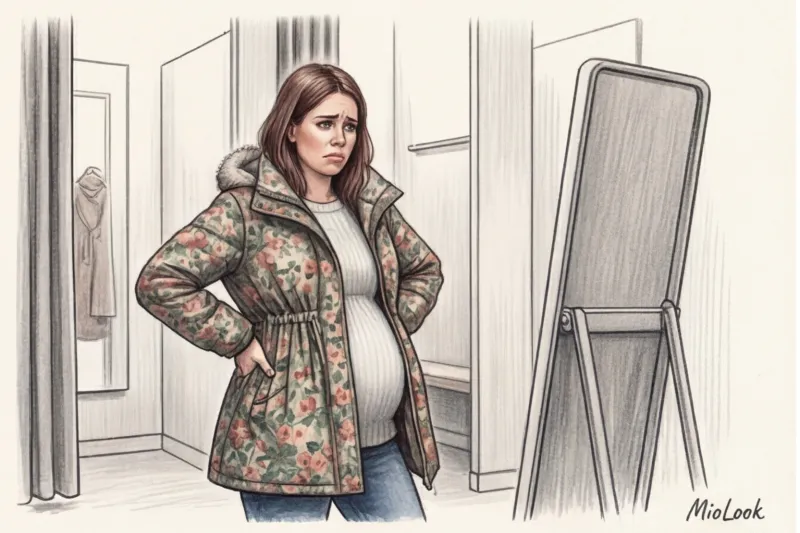
It's a familiar scene: the thermometer is minus five, you approach the hallway mirror and see not a stylish young woman, but a giant, shapeless caterpillar. To keep warm, you've donned that same down jacket-like blanket that flattens your figure, but "is good for sleeping in a snowdrift."
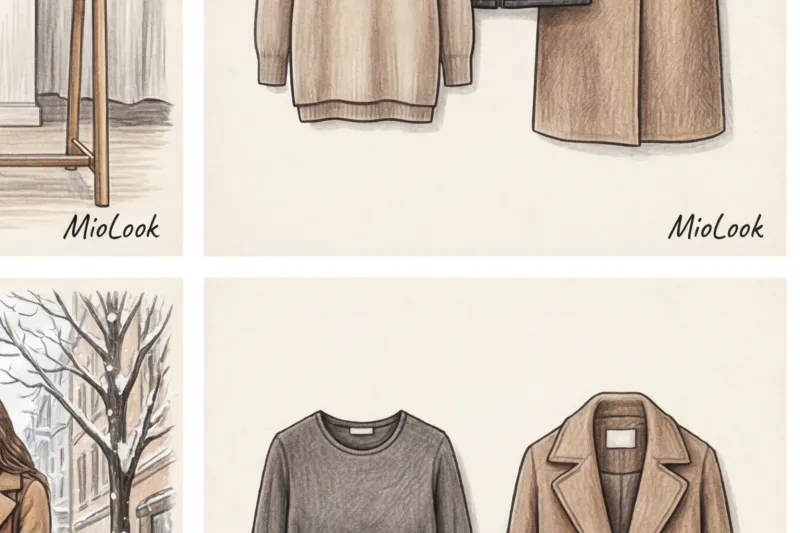
As a personal stylist, I see this mistake every winter. Maternity leave is often perceived as a time when aesthetics must be sacrificed for practicality. But the European approach to winter wardrobe proves otherwise. The right outerwear for mothers It doesn't have to make you three sizes bigger. Moreover, an elegant coat can keep you warmer than a bulky synthetic sack, if you understand the principles of modern materials.
I talked in more detail about the basic principles of creating a functional wardrobe in our A complete guide to creating a capsule wardrobe for a stay-at-home mom Today, we'll explore a specific, most "painful" winter category and find stylish alternatives to the ubiquitous down jacket.
Caterpillar Syndrome: Why Maternity Outerwear Doesn't Have to Be Shapeless
Let's start with the biggest myth buster: volume doesn't equal warmth. This is the biggest misconception that causes women to buy oversized padded jackets.
Modern technology has made great strides. According to the WGSN Textile Innovation Study (2024), high-tech membranes and microfiber insulation (such as Thinsulate) retain 40% more warmth with a third of the volume of traditional polyester. It's not the thickness of the jacket that keeps you warm, but the air trapped between the layers.
I often observe "invisibility syndrome" in my clients. One of them, Anna, admitted: "Katya, I've been wearing this black sleeping bag to the playground for six months now. I've stopped putting on makeup and doing my hair, because what's the point if all that's showing is my nose?" Constantly wearing oversized, purely utilitarian clothes slowly but surely kills self-esteem.
Another trap is the "I'll buy the cheapest one, it'll get dirty in the sandbox anyway" rule. In practice, this is the most expensive mistake. A cheap mass-market down jacket loses its appearance after the third wash (and you'll have to wash it often), the fittings break, and the filling clumps. If you calculate the cost-per-wear (cost per wear), a high-quality mid-range membrane coat will cost you less in the long run.
Your perfect look starts here
Join thousands of users who look flawless every day with MioLook. A smart AI stylist will help you put together your capsule wardrobe.
Get access — €0.99 onceThe Right Outerwear for Moms: 5 Golden Rules of a Stylist
Over 12 years of experience, I've developed a strict checklist of criteria for selecting winter clothing for clients with small children. If an item fails even one of these criteria, we leave it in the store.
- Freedom in the shoulders (the “lift the child” test). The armholes should be slightly lowered, and there should be at least 3-4 centimeters of extra room in the shoulders. You'll have to bend over quickly to lift the stroller up the curb and pick up a protesting toddler. Narrow shoulders = torn lining within a month.
- Midaxi length (110-120 cm). It's the perfect balance. If the garment is shorter, it will be drafty and your hips will get cold. If it's longer (floor-length), the hem will collect all the dirt and chemicals when you get into a car or bus. A length of 110-120 cm covers the knees, looks great with any footwear, and stays clean.
- Matte texture of the fabric. Shiny, oilcloth-like down jackets not only simplify the look but also highlight every stain. Matte, water-repellent fabrics (coated cotton, heavy-duty nylon) look elegant and are easily wiped clean with a damp cloth.
- Smart fittings. No tiny buttons! Try fastening them with frozen fingers when your child is running off down the street. Only two-way zippers (so you can unzip them from the bottom to take a step) and hidden magnets. One of my clients once ruined a luxurious €800 coat—the Velcro from the stroller muff had snagged the delicate fabric of the sleeves, leaving irreparable snags. Since then, I've been especially careful about checking the cuffs.
- The correct hood. It shouldn't pull your collar back and ruin your posture. Look for styles with a hood sewn into the collar stand, or choose detachable options.
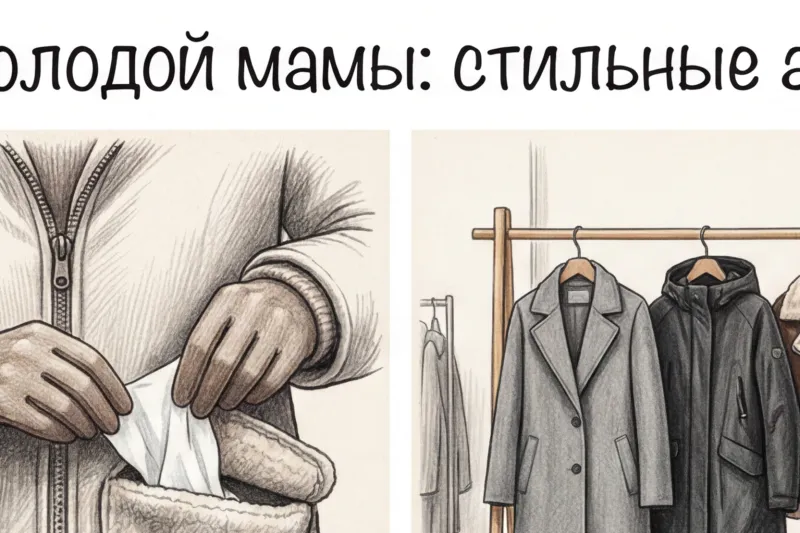
Stylish alternatives to a down jacket for every day
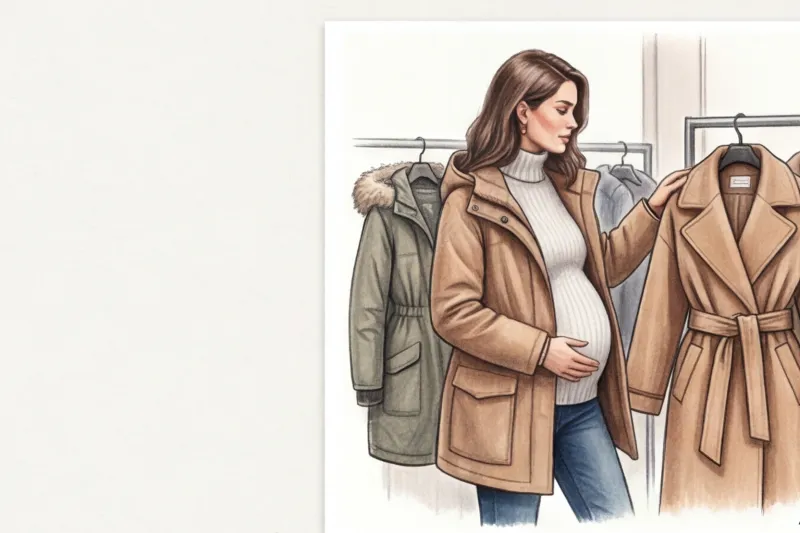
So, we've given up on shapeless oversized clothes. What should we wear instead? I offer three outerwear options for moms that will withstand a two-hour walk at -10°C or a trip to a trendy coffee shop.
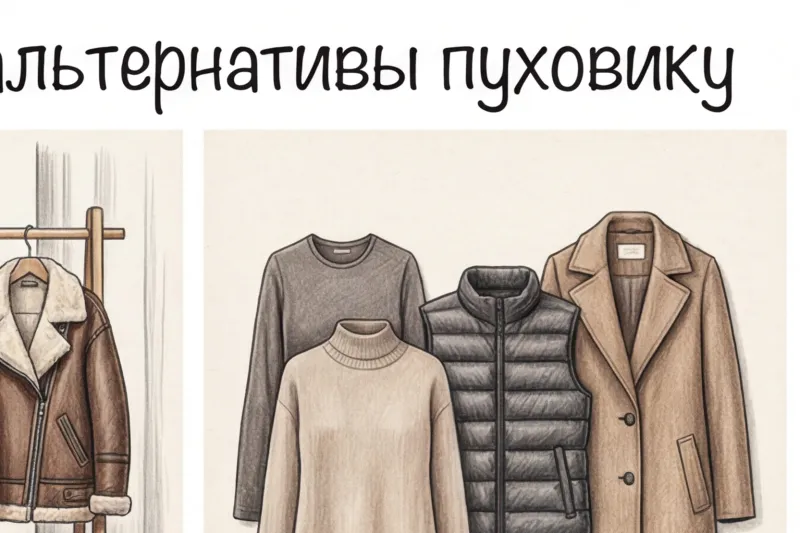
Insulated wool coat with a straight cut
My personal favorite for European winters. I tested the Massimo Dutti wool coat with its hidden membrane on the chilly playgrounds of Vienna—it's completely windproof.
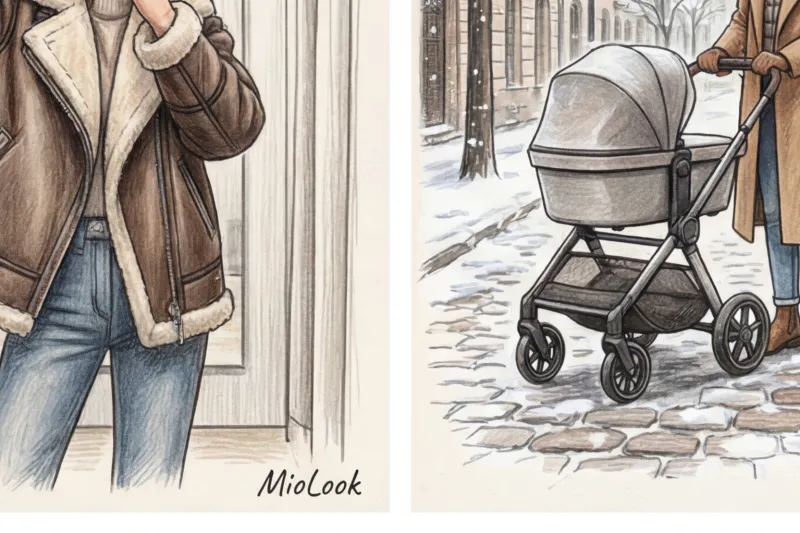
The secret lies in the composition and technology. Look for at least 70% wool on the label (ideally with 5-10% cashmere for softness). Avoid items with more than 30% acrylic—they'll make you sweat indoors and freeze outdoors. Modern brands (such as COS or &Other Stories) often use an ultra-thin windproof lining under the wool.
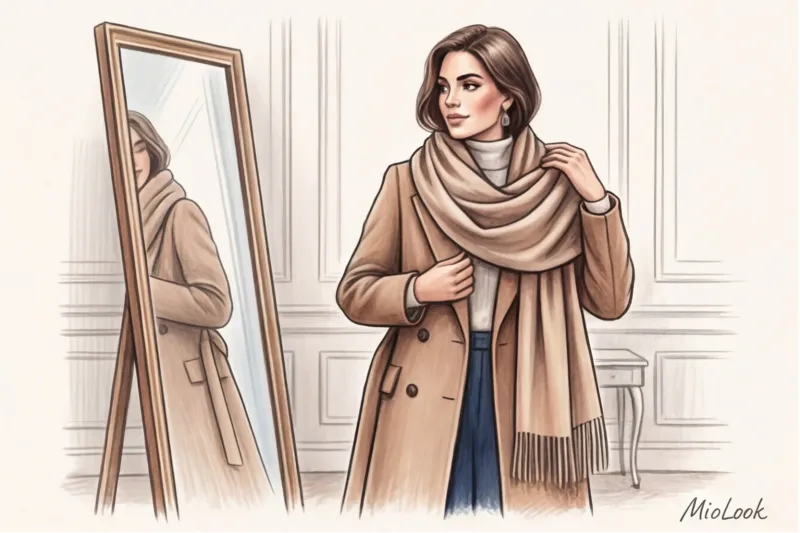
This coat is perfect for contrasting looks: with chunky Chelsea boots with lug soles, relaxed knit suits, and oversized scarves. It instantly elevates your style from "exhausted mom" to "trend-conscious woman."
A minimalist parka with high-tech insulation
Forget the parkas of the 2010s with their shabby faux fur hoods and drawstring waists. The parka of today is a triumph of Scandinavian minimalism (inspired by Arket).
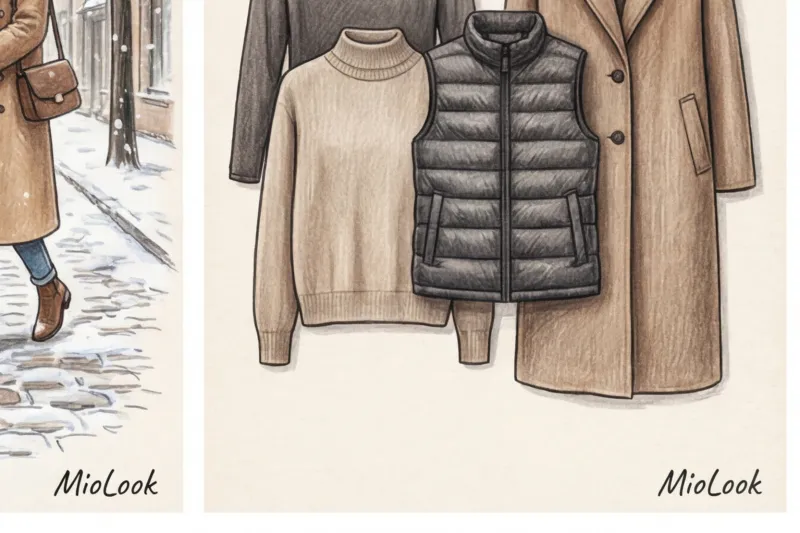
This is a straight, sleek jacket made of a dense membrane fabric (like Gore-Tex), without unnecessary embellishments. Its main superpower is complete waterproofness. For moms living in climates with frequent sleet and rain, this is a lifesaver. Unlike a down jacket, a parka doesn't make you look like a ball; it maintains a clear geometric shape, perfectly fitting into a smart casual style.
Oversized aviator shearling coat
An ideal choice for moms who drive. If your daily commute is "home, car, garden, and store," long coattails will only get in the way.
An aviator jacket creates a beautiful contrast of volume: a chunky jacket makes legs (especially when worn with skinny jeans or leggings) appear slimmer and more delicate. High-quality eco-suede can now be easily cleaned with a special rubber brush.
But here I have to do important caveat (when this does NOT work) Aviator pants are a poor choice for long hikes in windy weather (-15°C and below). The cropped cut leaves the lower back vulnerable, no matter how high you pull the pants up.
Ready to update your wardrobe without stress?
Try MioLook's free plan—upload your items to the app, and the AI will create dozens of warm and stylish outfits.
Get access — €0.99 onceThe secret of European mothers: layers instead of volume
As a stylist working in Europe, I've long noticed that European women rarely buy clothes with extreme cold in mind. They invest in layers.
The anatomy of ideal winter warmth looks like this:
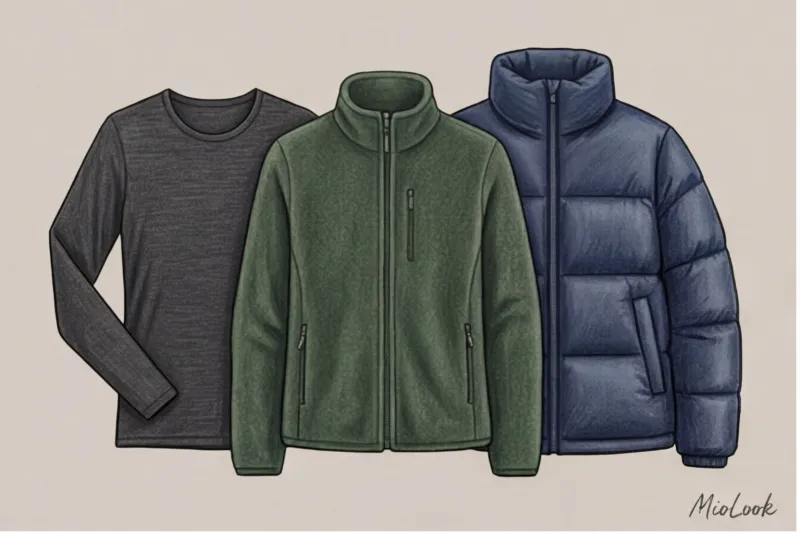
- Base layer: Thermal underwear made from 100% merino wool (not cotton! Cotton absorbs sweat and cools the skin).
- Middle layer: a thick cashmere sweater or hoodie made of fleece with a brushed finish.
- Secret layer: ultra-thin down vest (a hit from Uniqlo) that you put on under coat or parka.
- Top layer: wool coat or raincoat.
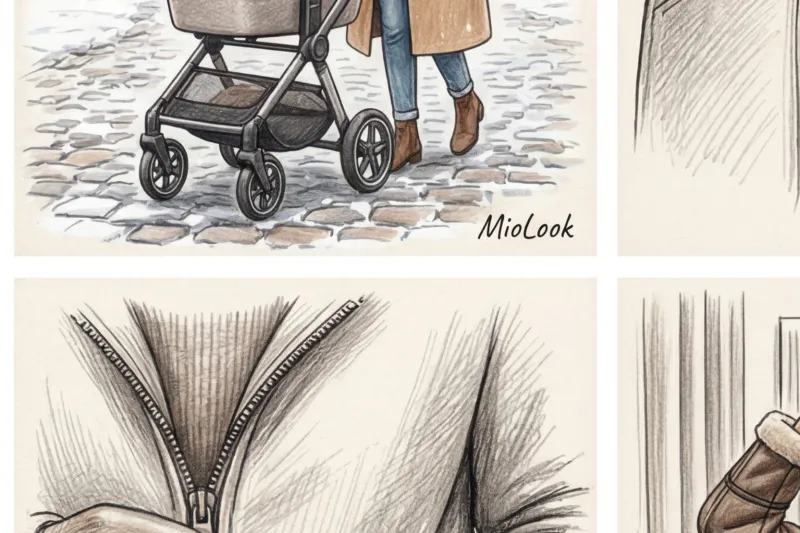
"Laying works like a thermos. Three thin layers of the right composition will keep you much warmer than one thick synthetic jacket over a thin cotton T-shirt."
Instead of uncomfortable long scarves that constantly unravel and get in your face, use puffy bibs or removable hoods. And the most important life hack that changes everything is thermal insoles. According to physiologists, the body's thermoregulation is critically dependent on the feet. Add foil-lined sheepskin insoles to your favorite shoes, and you'll be able to wear lighter, more elegant outerwear without the risk of freezing.
Pre-purchase checklist: test-drive outerwear in the fitting room
Never buy a winter item just by standing in front of the mirror in it. My clients know: the fitting room is a real workout.
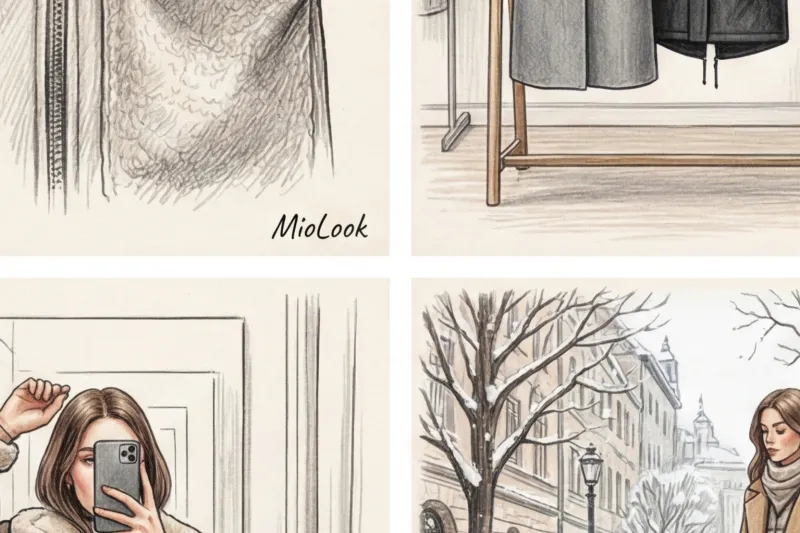
- "Squat test". Squat down in the store as if you were adjusting a child's hat. The coat shouldn't be bursting at the seams, and the hem shouldn't drag on the fitting room floor.
- "The Hug Test." Wrap your arms around your shoulders. If your back feels tight, you need a larger size. Remember, you'll be wearing a sweater underneath.
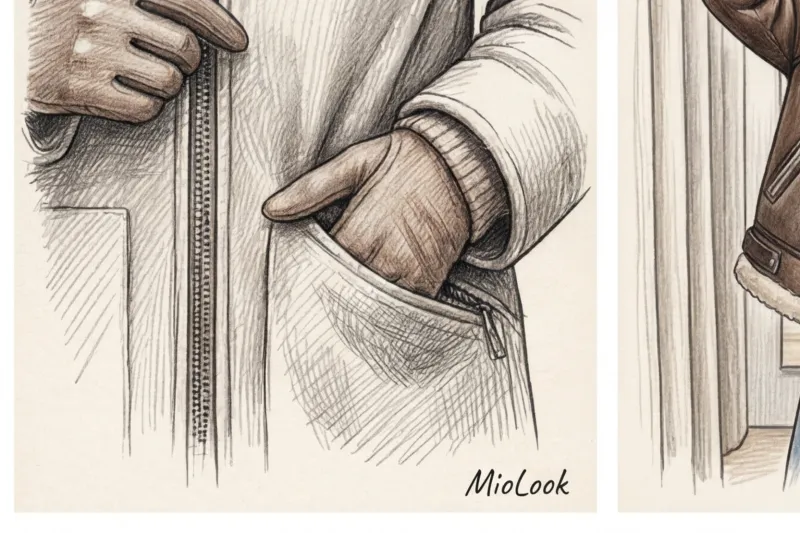
- Checking pockets. The trend for fake pockets or micro-pockets should be a thing of the past. Put your smartphone, a pack of wet wipes, and a spare pair of mittens in the pocket. Fit? Great. Are the pockets bulging and ruining the silhouette? Look for a different style.
- Collar analysis. Zip up your jacket all the way. Tilt your head down. If the stiff zipper or collar digs uncomfortably into your chin, it will become red and irritated after 15 minutes in the cold.
Motherhood is a lot of work, but it shouldn't deprive you of the joy of seeing your reflection in the mirror. Choose smart fabrics, layer, and remember: you're a woman first, and a mom pushing a stroller second. And your wardrobe should project that confidence.