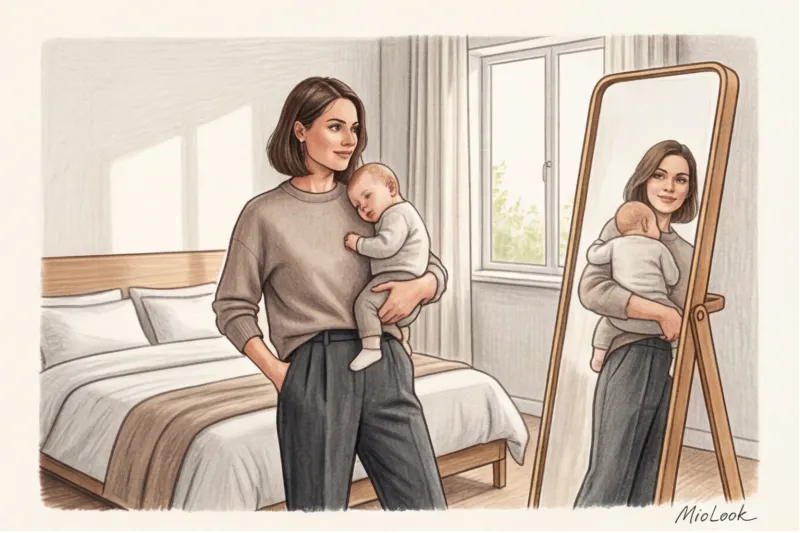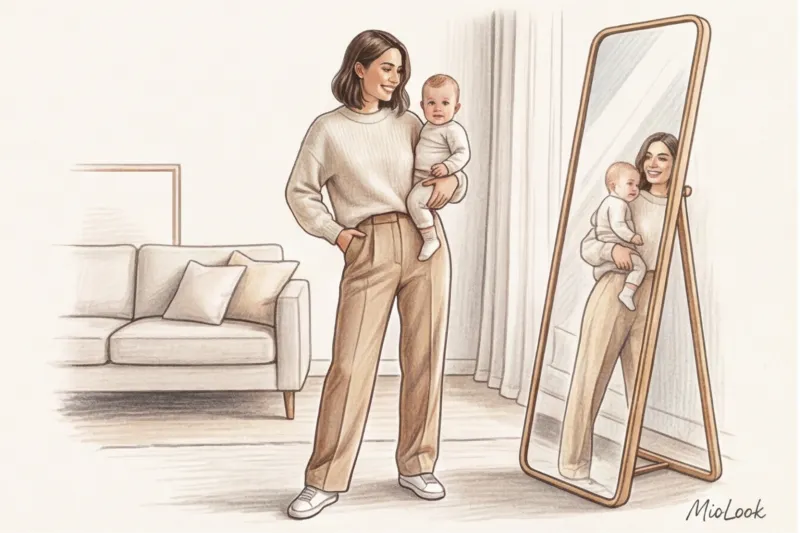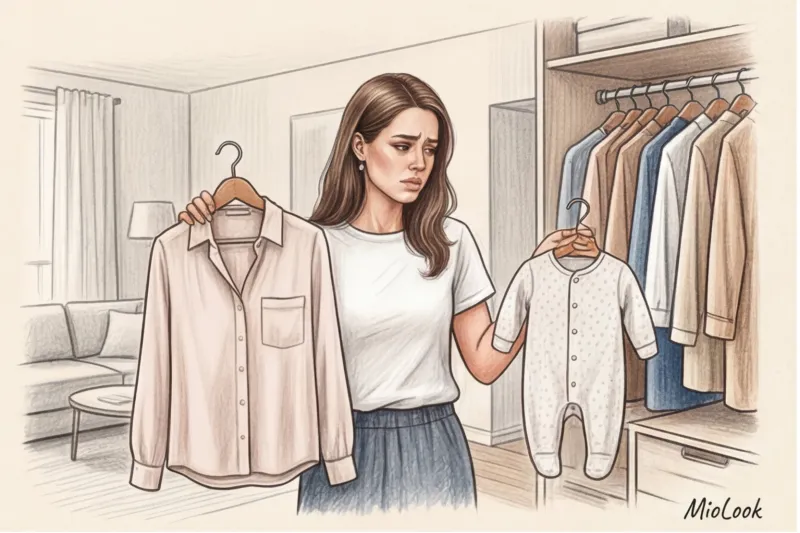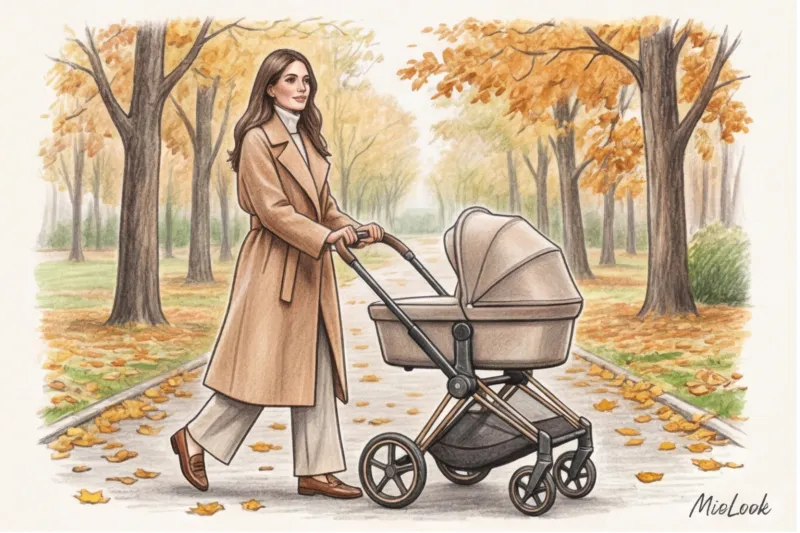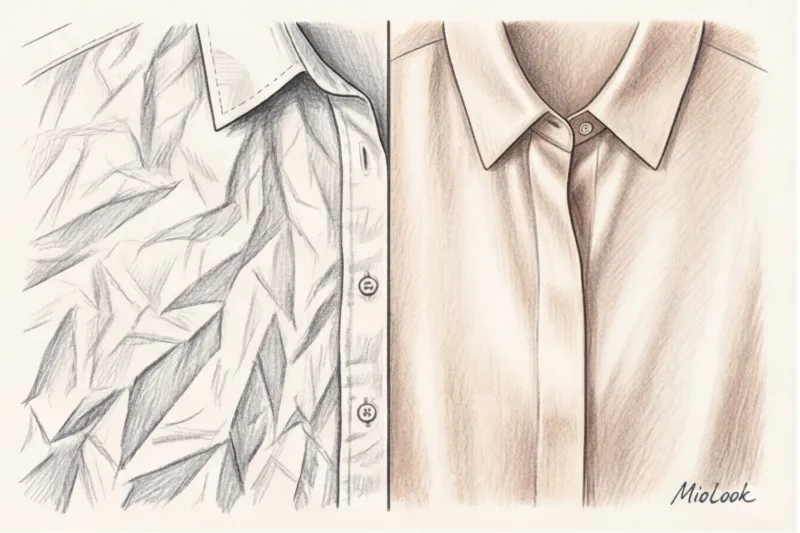
Have you ever noticed this paradox: we spend hours choosing the perfect, breathable, 100% cotton shirt for babies, and then, out of inertia, we buy the same "natural and safe" clothes for ourselves. And what happens? After a couple of hours of wearing them, deep creases appear on our stomachs, by evening our elbows stretch out, and a broccoli stain sets in so hard that our T-shirt becomes "cottage wear" after just one wash.
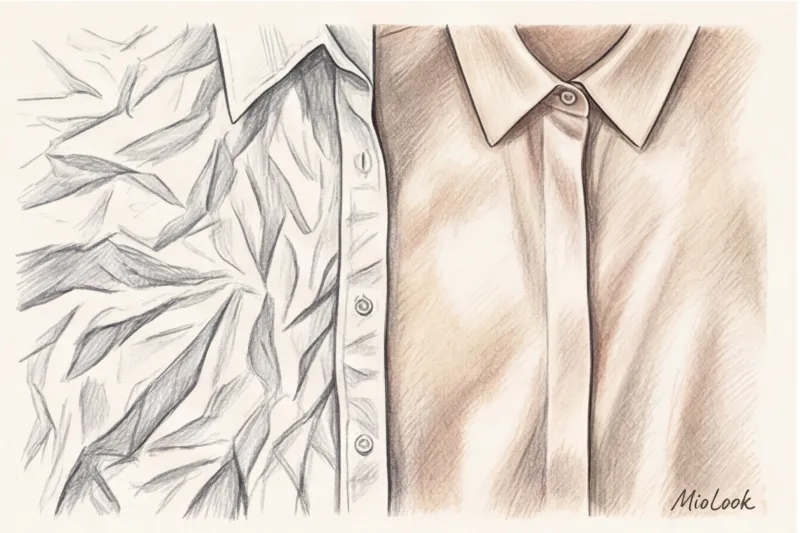
When I first began analyzing the wardrobes of my clients going on maternity leave, I saw the same picture: mountains of boring, faded knitwear that women wear simply because they "don't mind wasting it." I wrote more about how to break this vicious cycle in our A complete guide to a capsule wardrobe for a stay-at-home mom: style and comfort Today I want to talk about the physics and chemistry of your closet.
For real practical clothes for mothers — these are not dark, shapeless robes. This is a concept. Performance Casual: the use of high-tech blended fabrics that look like luxury silk or fine wool, but at the same time easily survive machine washing at 40 degrees and the attack of baby food.
Why 100% Cotton Is a Myth, or Which Practical Maternity Clothes Work Best
Let's be honest: pure cotton is an active woman's worst enemy. According to research by the Textile Institute (2023), cotton fiber is hydrophilic. This means it doesn't just absorb moisture; it literally draws any liquid into its structure.
When milk or baby formula spills on a cotton shirt, the protein instantly penetrates the core of the thread. Removing such a stain is difficult. Furthermore, pure cotton lacks elasticity. In my 12 years as a stylist, I've seen hundreds of expensive, basic 100% cotton T-shirts lose their shape and become covered in micro-lint after just five washes.
Outdated standards are being replaced by fabrics Performance Casual They are created by blending natural fibers with high-tech synthetics (such as viscose with nylon or elastane). These materials have hydrophobic properties: a drop of juice simply rolls off the surface of the fabric, giving you those precious 10 seconds to wipe it away with a damp cloth.
Access to MioLook for €0.99 — one-time payment
A smart AI stylist will select the perfect look from your practical items.
Get access — €0.99 onceTop 5 Tech Fabrics: Practical Clothes for Moms That Look Classy
When I collect capsules for clients, I always calculate cost-per-wear (cost per garment). And the statistics are relentless: modern blended fabrics last three times longer than cheap mass-market fabrics. Highly twisted yarn withstands intense friction from an ergonomic backpack and endless washing machine cycles, saving you up to three hours a week on ironing alone.
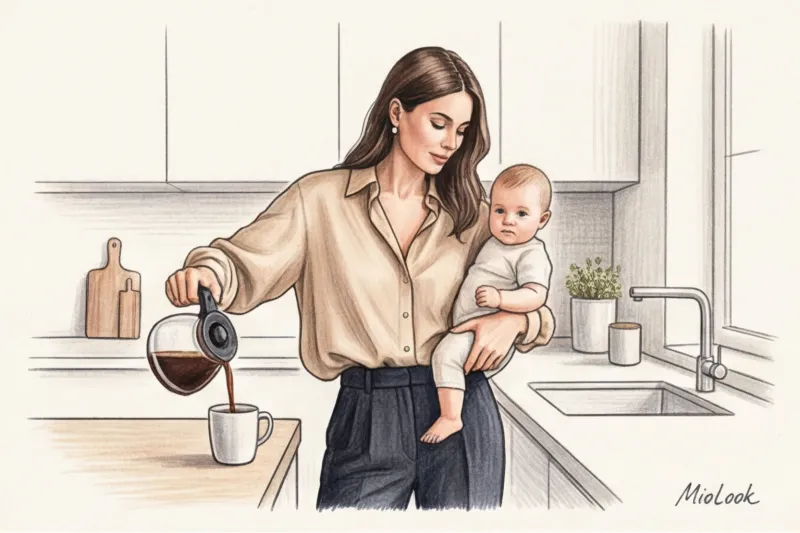
Tencel (Lyocell) is a silk that is not afraid of the washing machine.
Tencel is the commercial name for lyocell, a regenerated cellulose fiber derived from eucalyptus wood. Visually, it brilliantly imitates the matte, dense texture of silk. It flows beautifully, delicately reflects light, and feels pleasantly cool on the skin.
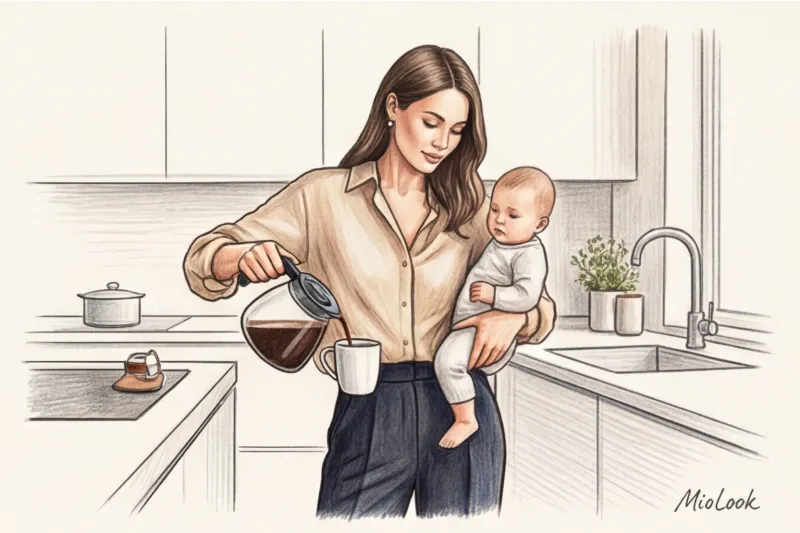
But its main advantage is its absolute resistance to pilling and ease of care. Unlike silk, Tencel is machine-washable. Almost any organic stains come out of it on the first try. The only caveat: it must be washed inside out on a delicate cycle; otherwise, light creases may appear in the seams over time.
"I always recommend loose, oversized shirts and wide-leg summer drawstring trousers made from Tencel. They look like a beach resort outfit in Como, but they work like a durable uniform."
Ponte (Ponte di Roma) – smart knitwear with a lifting effect
If you haven't heard of Ponte fabric, your life will be divided into "before" and "after." It's a dense, double-knit fabric that's equally smooth on both sides. It combines the seemingly incompatible: it looks like an expensive suiting fabric, but stretches in all directions like your favorite athletic leggings.
Ponte is brilliant because it doesn't stretch out at the knees after an hour of building bricks on the floor. The fabric has a light bandage effect—it sculpts the figure, smoothing out lines, which is especially important in the first months after giving birth. It's an ideal choice for straight trousers, A-line dresses, and jackets without a stiff lining.
Linen blend (linen + viscose/Tencel) – summer aesthetics without wrinkles
I adore the aesthetics of linen, but pure linen turns into chewed-up paper within 10 minutes of getting in the car. For a mom, that's an unaffordable luxury.
The solution? Look for a blend on the labels: 50-70% linen and 30-50% viscose or Tencel. Viscose softens the stiffness of the linen, preserving that elegant knotted texture, but adds heft and drape to the fabric. Yes, such a garment will still wrinkle a little by evening, but it will have a soft, aesthetically pleasing "wave" rather than sharp creases.
Your perfect look starts here
Join thousands of users who look flawless every day with MioLook. Digitize your wardrobe in one click.
Get access — €0.99 onceFabric Enemies: What You Should Never Buy While on Maternity Leave
To get rid of outdated things , you first need to stop buying clothes that are doomed to failure.
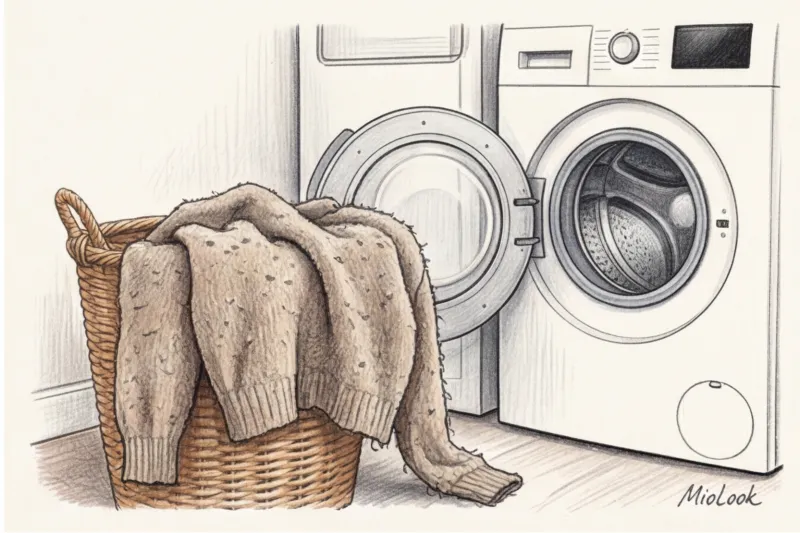
- Natural silk. Besides the fact that every drop of water (or baby drool) leaves marks on it, silk requires delicate care. Why? To remove protein stains (milk, food), we use enzyme powders. The problem is that silk itself is made of animal protein (fibroin). The enzymes in laundry detergent literally "eat" the fabric, making it brittle and dull.
- Cheap 100% viscose (Rayon). Thin, mass-market viscose is the champion of unpredictability. Forget about it and wash it at 60 degrees along with baby bodysuits? The result will be a garment that's shrunk two sizes, with crooked side seams.
- Loose acrylic and cheap cashmere. A 2024 study by materials scientists at the WGSN agency confirms that short acrylic fibers break instantly under tension. Just wear an ergo backpack or sling a heavy shopper over your shoulder a couple of times, and a shell of pilling forms at the points of friction, detracting from the overall look.
Optical Illusions: How Color and Print Save You from Daily Washing
One of the most pernicious fashion myths is that black is the most practical color. This is a disastrous mistake.
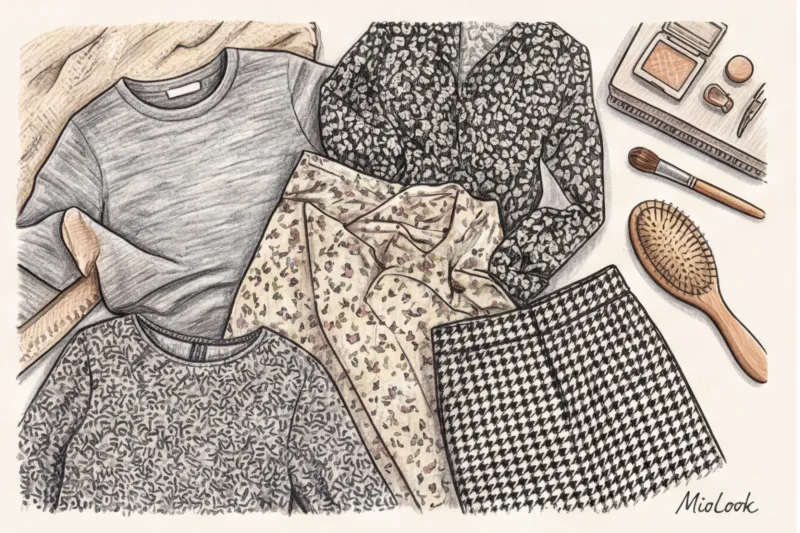
Against a smooth black background, every speck of dust, cat hair, powder stain, and dried milk droplets stand out in stark contrast. Black requires impeccable cleanliness and hourly use of a clothes roller.
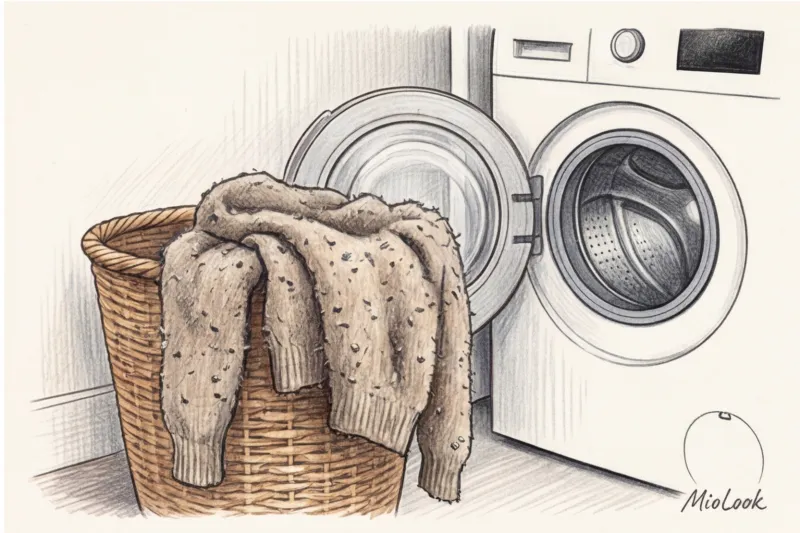
One of my clients, Anna, a mother of twins, was convinced that light-colored clothes were off limits to her forever. She wore dark blue and black turtlenecks, constantly stressing about their unkempt appearance. We replaced her dark knitwear with a chunky mélange sweater (a mix of beige, gray, and cream yarns). The result? The number of washes was cut in half. Mélange works like digital camouflage—the human eye simply can't detect small spots against a mottled background.
The same principle applies to micro-prints. A small flower, a classic houndstooth print in miniature, or a subtle ripple visually conceal not only dirt but also fine wrinkles. If you're looking for something you can wear all day, from the playground to a café, choose texture over a solid color.
Test Drive in the Fitting Room: How to Check Out a Item Before Buying
I never allow clients to bring an item to the checkout until we've given it a thorough test drive right there in the fitting room. Here's my professional checklist:
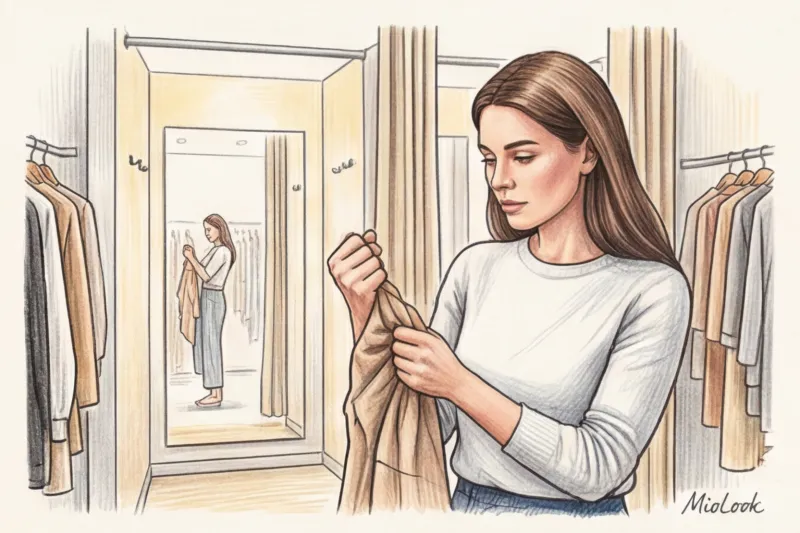
- Crash test for crumple resistance. Firmly squeeze a piece of fabric (preferably near the hem) in your fist for 10-15 seconds. Release your hand. If the fabric remains in a stiff, accordion-like shape, return it to the hanger. If the folds are soft and smooth out before your eyes, take it.
- Return test (Stretch-test). Pull the fabric at the knee (on trousers) or elbow (on a long sleeve). Release. How quickly does the material return to its original shape? If there's a "bubble" left, you'll look sloppy at the end of the day.
- Scan of the label. Look for elastane/spandex (2% to 5% is sufficient for comfort; more can create an unsightly shine) and polyamide/nylon in wool (up to 20% nylon makes wool virtually immortal). Absolutely avoid the circle symbol (dry clean only).
Ready to get started?
Try the free plan—no commitments. Create your perfect capsule in the MioLook app.
Get access — €0.99 onceThe Stylish Mom Capsule: A Checklist of Indestructible Basics
Wardrobe construction follows the rule Enclothed Cognition (clothed cognition). Psychologists have proven that what we wear directly impacts our sense of self. When you wear clothes that make you feel like a beautiful, competent woman, not just a baby's attendant, your stress levels decrease.
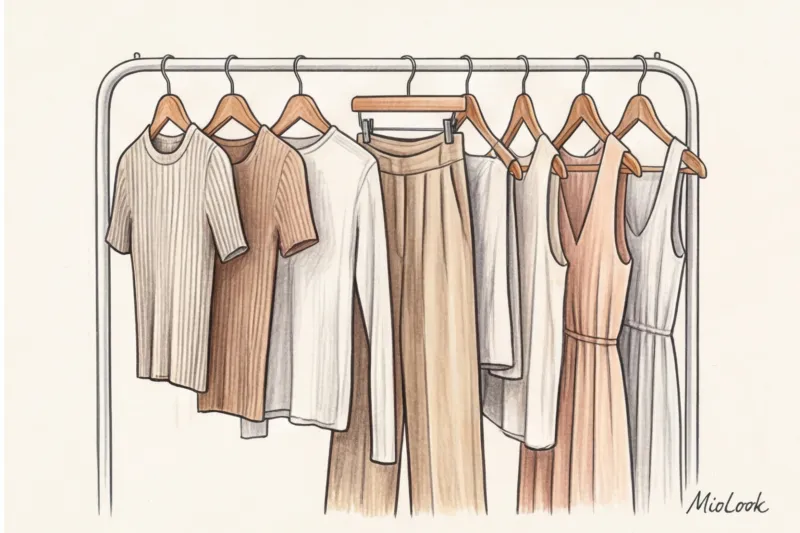
Here is the basis of a functional capsule that is easy to load and combine into MioLook app:
- Trousers made of ponte fabric with a wide soft elastic waistband. The perfect compromise between joggers and office slacks. You can wear them even after maternity leave, which will perfectly fit your office wardrobe without a strict dress code.
- Oversized shirt made of tencel. Wear it solo, layer it over a T-shirt like a jacket, or tie it up. Choose sophisticated shades like taupe, dusty olive, and taupe.
- Merino wool blend cardigan. Look for the following composition: 70-80% merino, 20-30% polyamide (nylon). The nylon thread acts as reinforcement, preventing the wool from pilling and stretching.
- Rib knit top. The noodle texture fits the figure brilliantly, stretching with changes in body volume and, thanks to the vertical stripes, visually elongating the silhouette, hiding minor imperfections.
Practical maternity wear doesn't mean sacrificing style for comfort. It's a smart approach to materials. Save fickle silk and crisp linen for a Riviera vacation. In real life, the winner is the one whose clothes work for them, not require hours at the ironing board.