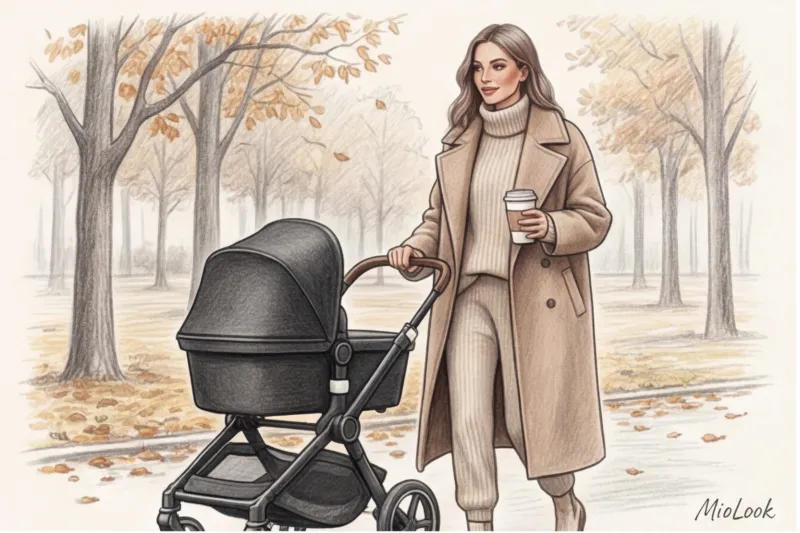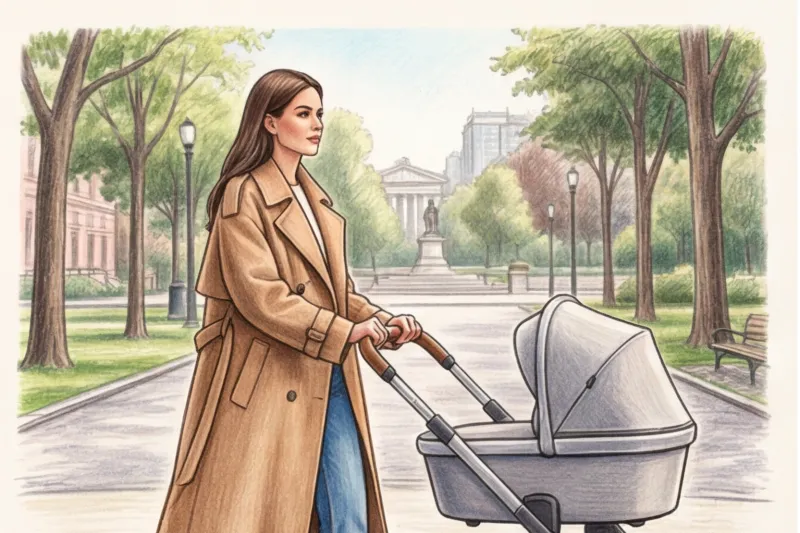
I remember my first season working at Paris Fashion Week. After ten hours of running around the cobblestones of the Marais between shows, I was ready to take off my perfect pointed-toe pumps and throw them in the Seine. Later, when I became a stylist and started working with new mothers, I noticed a striking similarity. Maternity leave is just like Fashion Week, only instead of shows, you have daily marches through the park, and instead of a micro-Jacquemus bag, you have a 15-kilogram stroller. And in both cases, the right footwear makes all the difference.
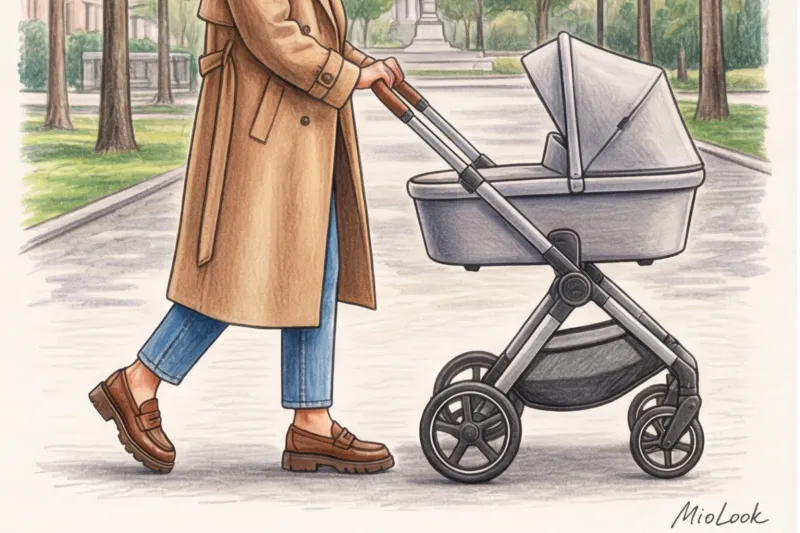
The standard advice a woman hears after having a baby is, "Just buy some sneakers." But as a fashion journalist and stylist with 10 years of experience, I categorically disagree. Properly chosen shoes for walking with a child shouldn't turn you into a faceless shadow on the playground. Today we'll explore this topic at the intersection of biomechanics and haute couture—from gorpcore trends to quiet luxury aesthetics. And if you want to dive deeper into creating a functional base, I recommend checking out our detailed guide to creating one. capsule wardrobe for a mother on maternity leave.
The Anatomy of a Perfect Pair: What Happens to Mom's Foot During a Walk
Let's face it: a mother on maternity leave averages 10,000 to 15,000 steps a day. That's a full-fledged athletic workout. But it's not just about the steps. Ever notice how your calves ache and your lower back tightens by the end of the day, even if you're just standing by the sandbox?
The secret lies in hidden biomechanics. When you push a stroller, your center of gravity inevitably shifts forward. According to podiatry research, this greatly increases the static load on the forefoot and Achilles tendon. That's why completely flat soles are your worst enemy. Classic soft Ugg boots, thin-soled ballet flats, or your favorite Converse sneakers will ruin your back faster than stilettos.
"The golden rule of orthopedics, which we apply in styling: ideal everyday shoes should have a drop between the heel and toe of exactly 1–1.5 cm. This relieves excess tension from the calf muscle and relieves the lower back."
Another critically important parameter is the width of the last (the so-called toe box ). After three hours of walking with a stroller, the foot swells and physiologically "flattens." If shoes are too tight, blood circulation is impaired. In 2012, researchers Hadjo Adam and Adam Galinski coined the term Enclothed Cognition (embodied cognition), proving that what we wear directly impacts our cognitive functions and mood. Physical discomfort in the legs literally programs the brain for irritability and fatigue.
The Biggest Myth: Why Running Shoes Are Bad for Walking with a Child
I'm going to tell you something that might surprise you. Running shoes are the worst choice for daily walks with a toddler.
"But they're designed for sports and maximum comfort!" you might object. True. But they're designed for movement. straight ahead along a smooth trajectory. Running shoes are designed with a strong heel-to-toe transition and a lightweight mesh upper. On the playground, your goals are completely different.
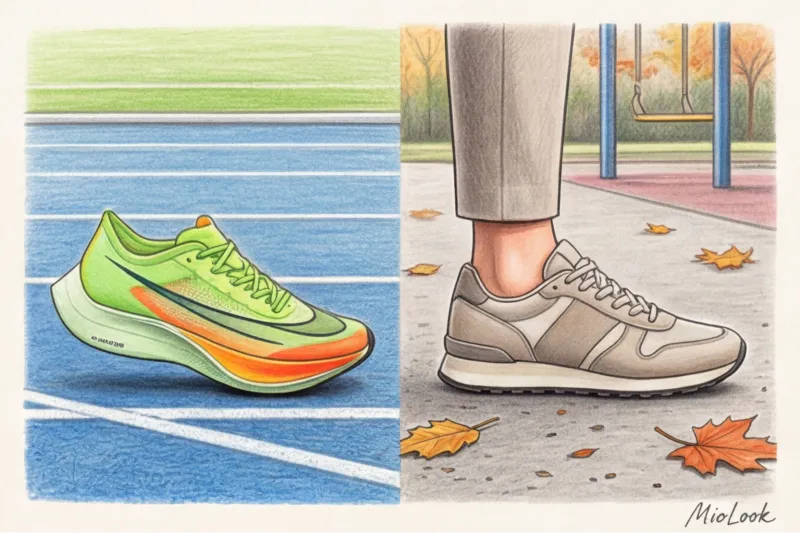
You have to jump up quickly to catch a toddler falling down a hill, balance on curbs, and stand in awkward positions. Running shoes offer virtually no lateral support. With a sharp lateral jerk, the risk of twisting your foot in soft, breathable sneakers increases dramatically. Furthermore, the thin sole in the forefoot offers absolutely no protection from the cold coming from the frozen asphalt.
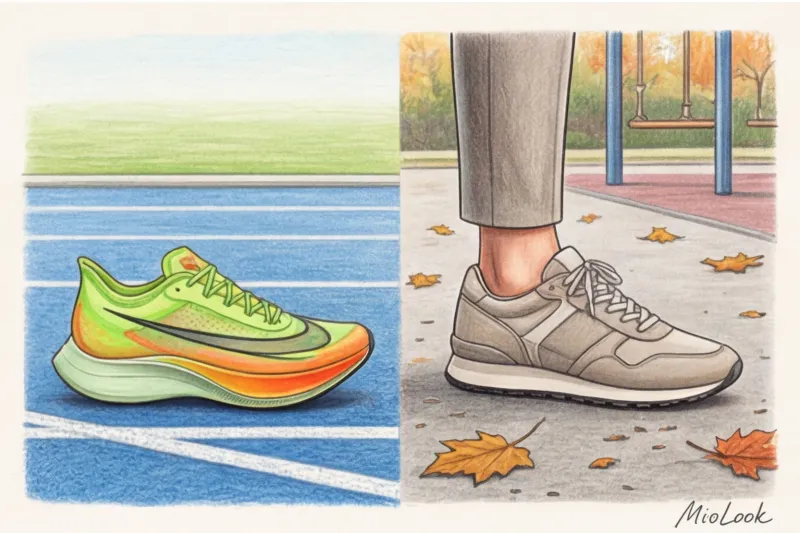
Styling-wise, running shoes are also a loser. They have a distinctly athletic DNA. When you wear them with jeans and a wool coat, the look falls apart, creating the impression that you accidentally left the gym and forgot to change your shoes. Urban casual calls for more structured, architectural forms.
Your perfect look starts here
Join thousands of users who look flawless every day by managing their wardrobe with MioLook.
Get access — €0.99 onceShoes for walking with a child: Top 5 stylish and comfortable models for every season
So what should you wear? Over the past few years, the fashion industry has given mothers a luxurious gift. Aesthetics ugly shoes (ugly shoes) and orthopedic comfort have finally become a luxury standard. What we choose today for long shoots is ideal for hours-long marches through puddles.
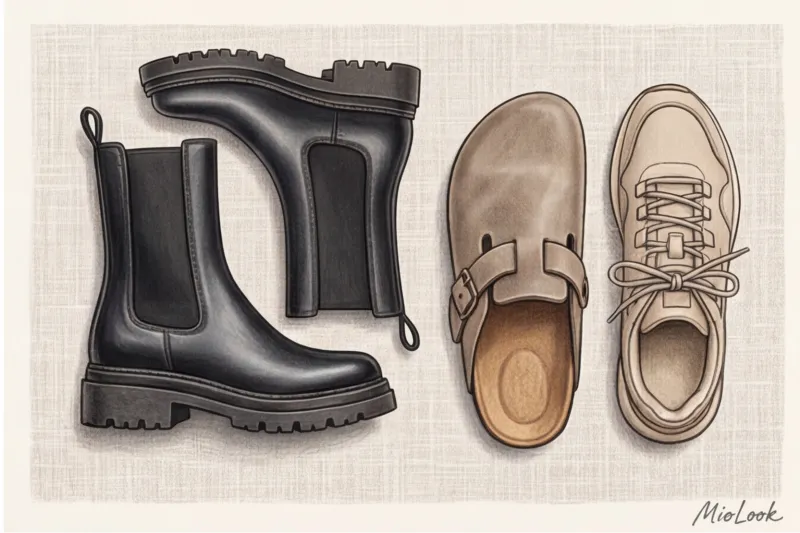
Demi-season: Chelsea boots with chunky soles and moon loafers
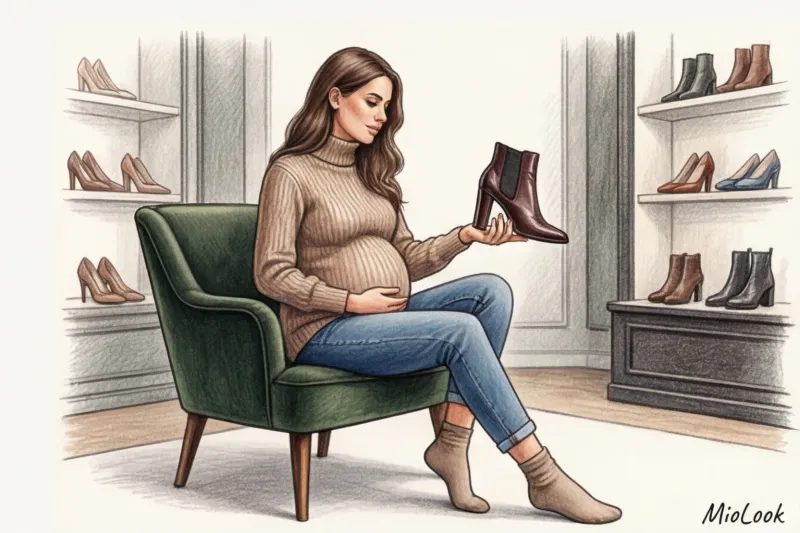
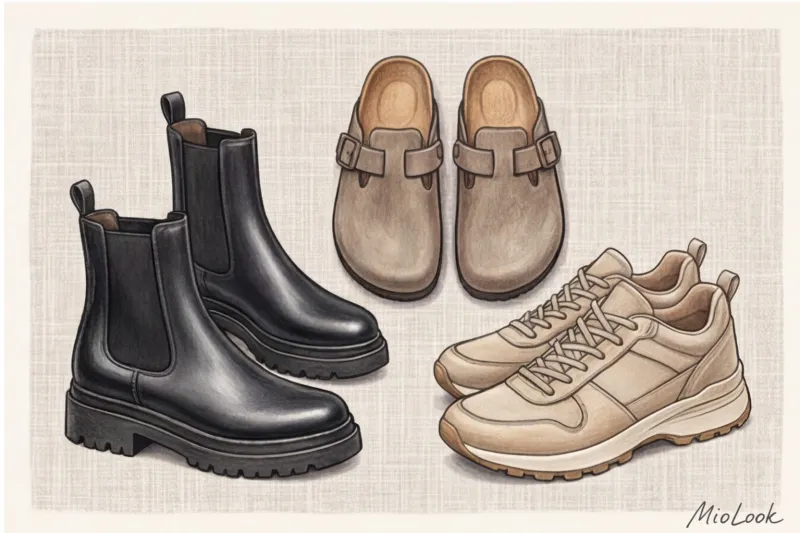
Thanks to Miuccia Prada and the phenomenal success of the Prada Monolith boots, the tractor sole has become a staple. For slushy autumn and spring, there's nothing better than leather Chelsea boots with a 3-4 cm platform. The chunky sole lifts you above mud and puddles, working more effectively than any rubber boots.
The main stylistic and practical advantage of Chelsea boots is the lack of laces. They pass the one-handed test (when holding a child in one hand and a bag in the other) with flying colors. Pair them with stirrup leggings, joggers, or flowy midi dresses.
Winter: Insulated trekking boots (Gorpcore) and moon boots
Trend on Gorpcore (outdoor style integrated into the urban environment) has legitimized hiking boots on the streets of megacities. Brands like Salomon, Roa, and Diemme are now worn by influencers at Fashion Week.
For winter walks, choose trekking boots with a Gore-Tex membrane. Unlike porous classic Ugg boots, which get wet and wear out, the membrane fabric ensures your feet stay warm and dry even after three hours of building snowmen in wet snow. They're the perfect stylish alternative to shapeless felt boots.
Summer: Anatomical sandals and suede clogs
The Birkenstock Boston phenomenon proved that orthopedic shoes can be an object of desire. This is the influence of The Row and the Olsen sisters—an aesthetic of quiet luxury where comfort is an absolute.
The cork insole of these clogs molds to your foot's shape over time with body heat, providing ideal arch support. Furthermore, the closed toe (unlike open sandals) will protect your pedicure from accidental swings or scooters. If you're unsure how to incorporate these clogs into your summer wardrobe, upload a photo of them to your smart wardrobe. MioLook — the app will collect a dozen fresh combinations for you with your dresses and shorts in a second.
Style Formulas: How to Wear Comfortable Shoes Without Looking Like a "Tired Mom"
It's not enough to just buy the right shoes—you need to know how to style them. One of my clients, Anna, came to me complaining of lower back pain and a complete lack of inspiration. She was wearing old, worn-out slip-ons with tracksuits. We swapped the slip-ons for structured, thick-soled loafers and the hoodie for a voluminous, menswear-inspired jacket. Anna's posture instantly straightened out, and her look gained a certain air of class.
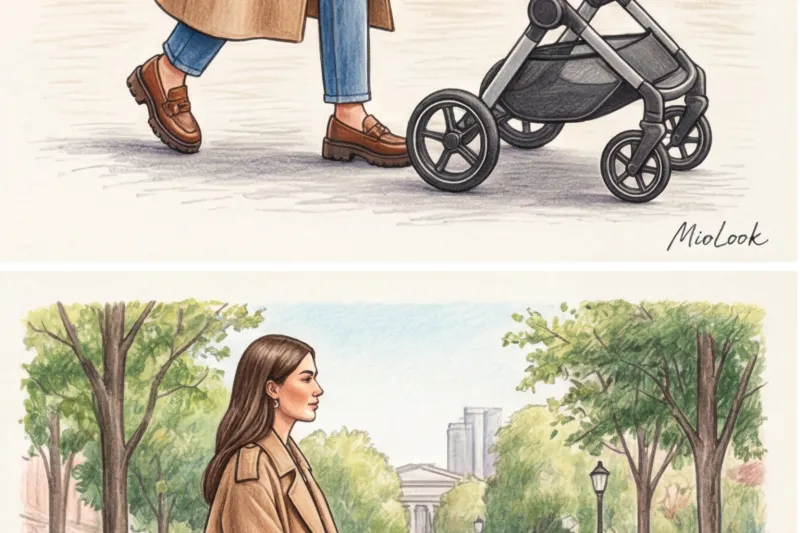
Here are three rules that work without fail:
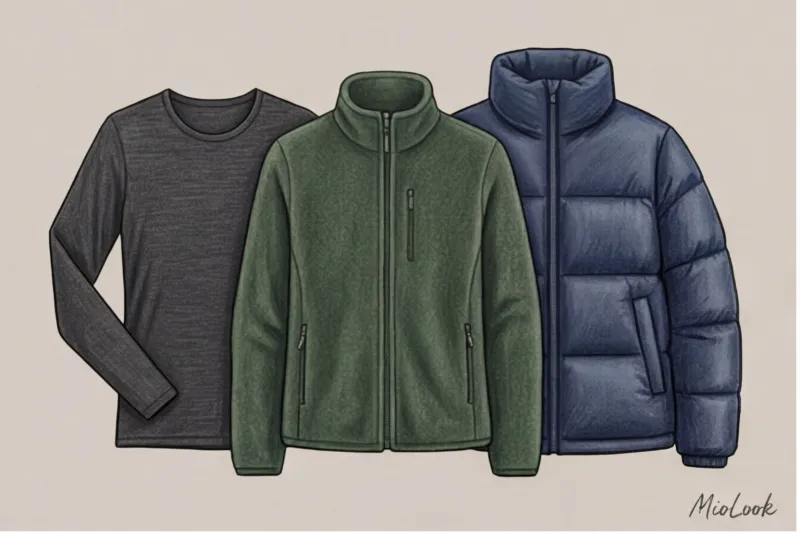
- Contrast rule: Chunky, utilitarian footwear calls for structured outerwear. When wearing trekking sneakers, layer a classic double-breasted wool maxi coat over a shapeless down jacket. Contrasting styles is the key to street style.
- Balance of volumes: If you're wearing chunky clogs or heavy Chelsea boots, your ankle should be accentuated. This is the only place where we show off the elegance of the leg. Leave a couple of centimeters between the hem of your trousers and the shoe, or wear a high-quality ribbed sock in a contrasting color.
- Monochrome Magic: Any shoe with a complex shape looks a hundred times more expensive if the entire look is pulled together in a single shade. A solid beige, graphite, or chocolate will tone down the sportiness of trekking boots.
But there is one limitation: This trick doesn't work if you're pairing chunky moon boots or oversized Chelsea boots with tight skinny jeans and a fitted top. The out-of-proportion look will make your feet appear larger. Always add volume on top.
Pre-purchase checklist: test drive in-store
To prevent shoes for walking with a child from becoming another mistake, gathering dust in the closet, I always make clients do a thorough test drive before they even reach the checkout.
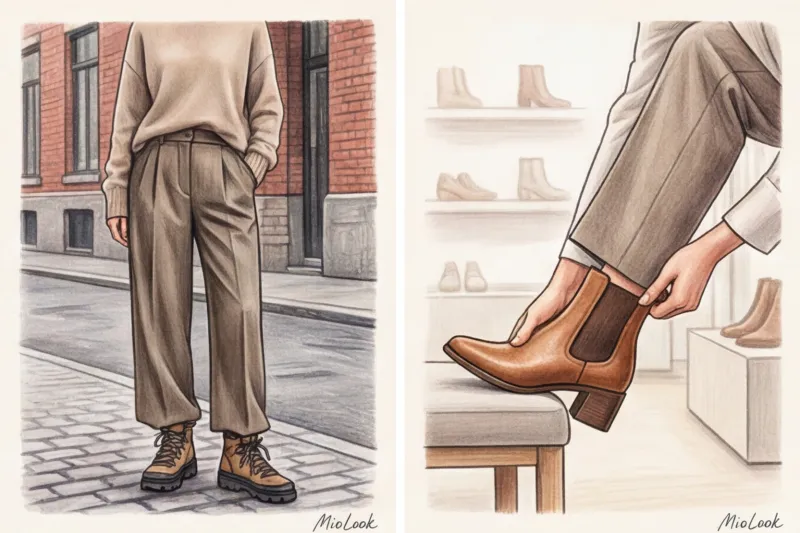
- The rule of the second half of the day. Never buy everyday shoes in the morning. By 4:00-5:00 PM, your feet naturally swell and increase in size. What was perfect at 10 AM will be a dud by the evening.
- Spring test. Take the shoe in your hands and try to bend the sole. shouldn't Bend in half (at the midfoot). A proper sole should be rigid in the center and bend only in the first third—where your toes are. This ensures an anatomically correct roll during your step.
- One-hand test. Can you put this pair on and take it off without bending over at all, using only one hand (or a shoe horn)? If you have to spend a lot of time lacing, undoing tight zippers, or peeling off Velcro, you'll hate these shoes in real life with a baby in your arms.
- Crash test of material. Ask yourself: "What will happen to this surface if someone spills sweet juice on it or steps on dirt?" Smooth leather, treated suede, and membrane can be cleaned with a damp cloth in 5 seconds. Save textiles and velvet for restaurants.
Access to MioLook for €0.99 — one-time payment
A smart AI stylist will analyze your shoes and select the perfect everyday looks to pair them with.
Get access — €0.99 onceYour Style is Your Support: Taking a Step Toward Confidence
For years, the industry has taught us that beauty requires sacrifice, and maternity leave is a time when it's best to forget about those sacrifices (and beauty, too). But modern realities prove otherwise. You don't have to choose between a healthy back and a stylish reflection in a coffee shop window.
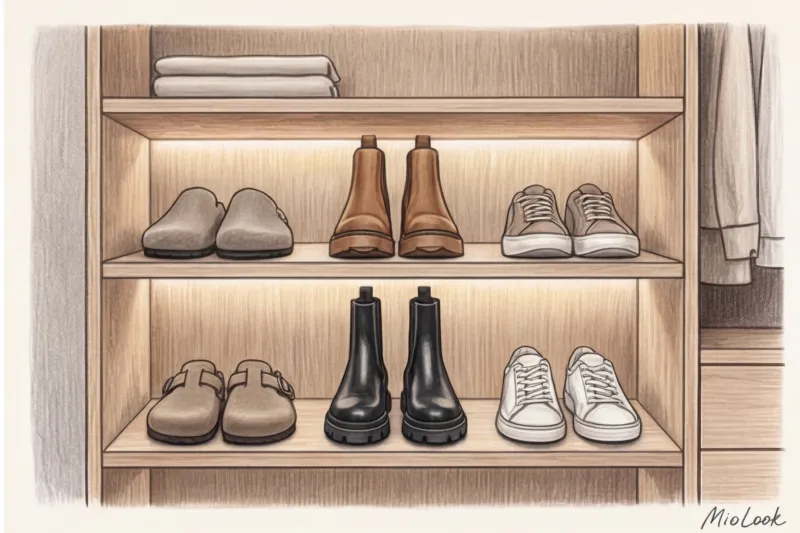
Footwear is the foundation of your wardrobe. When your feet are firmly and comfortably planted on the ground, when you don't feel pain taking the next step, motherhood itself feels different—easier and more joyful. By choosing the right hiking boots or stylish Chelsea boots, you're investing in more than just style—you're investing in your resources.
Take a look at your shoe rack today. Put away what's causing you discomfort and add trendy silhouettes to your smart wardrobe. MioLook and start building your own flawless base, where you'll be comfortable conquering any playground in the world.