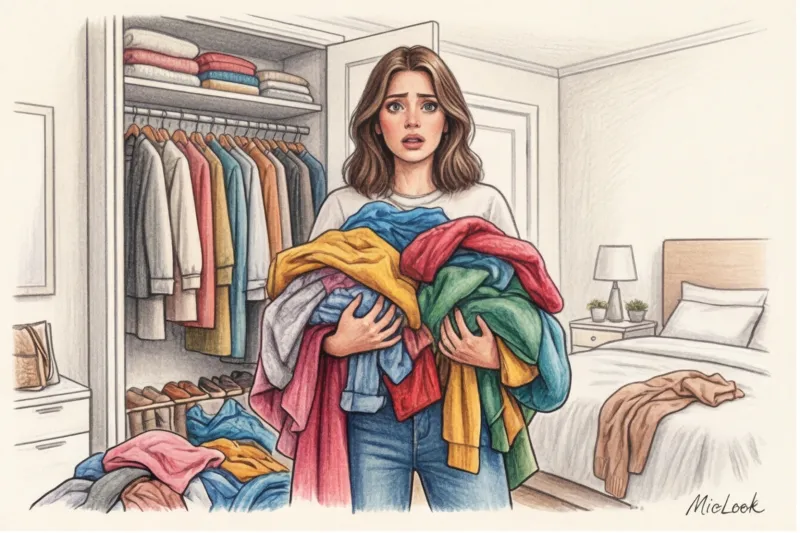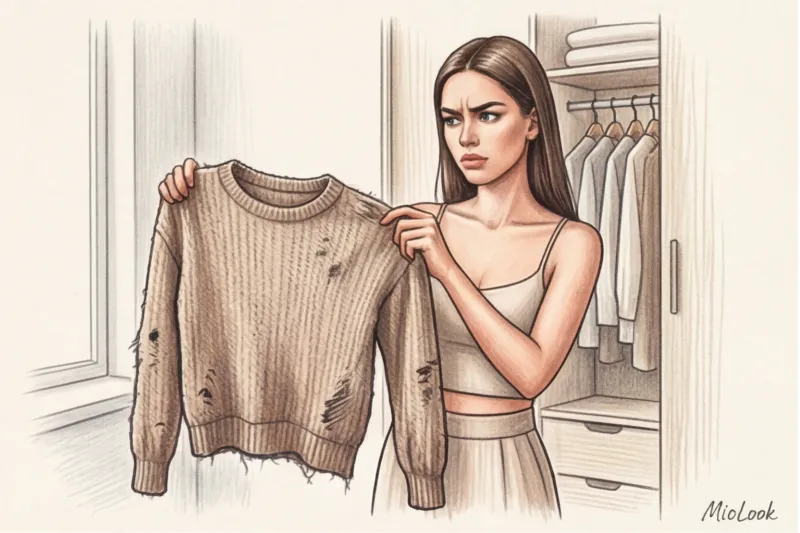
В прошлую пятницу я стояла посреди спальни моей клиентки, окруженная горами одежды. Мы проводили сезонный разбор, и статистика оказалась безжалостной: около 40% вещей висели на вешалках с нетронутыми магазинными бирками. Еще 30% — это изношенный трикотаж, покрытый катышками, который клиентка планировала «отвезти в детский дом, чтобы сделать доброе дело». Знакомая картина?
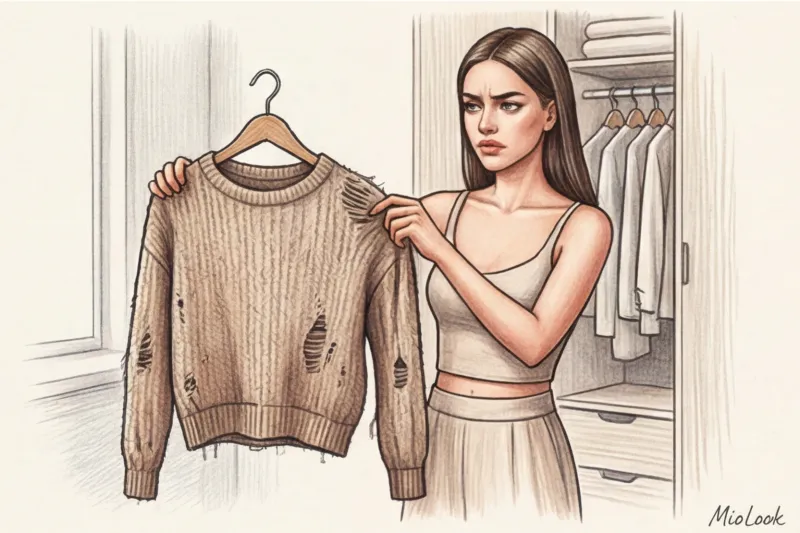
За восемь лет работы персональным стилистом я поняла одну важную вещь: мы отлично научились покупать, но совершенно не умеем экологично прощаться с вещами. Запрос «куда сдать старую одежду» часто скрывает за собой не столько заботу об экологии, сколько желание быстро снять с себя чувство вины за импульсивный шопинг. Подробнее о философии осознанного потребления мы рассказали в нашем полном гиде по экологичному гардеробу, а сегодня я хочу поговорить о суровой реальности утилизации.
Как правильно расставаться с вещами, чтобы они действительно принесли пользу, а не пополнили свалки? Давайте разбираться без иллюзий и гринвошинга.
Миф о «добрых делах»: почему не всю старую одежду можно сдать на благотворительность
Самое большое заблуждение, с которым я регулярно сталкиваюсь на разборах гардероба — это святая вера в то, что любая тряпочка кому-то нужна. Спойлер: нет, не нужна.
Сдавать грязную, растянутую, покрытую пятнами или рваную одежду на благотворительность — это не доброе дело. Это банальное перекладывание расходов по утилизации вашего мусора на плечи некоммерческих организаций. Крупные локальные фонды (например, стандарты проекта «Второе дыхание») тратят миллионы на то, чтобы отсортировать и вывезти на полигоны откровенную ветошь, которую люди приносят под видом «помощи малоимущим».
У меня есть жесткое, но честное правило для клиенток: отдавайте на благотворительность только то, что вам не было бы стыдно предложить своей лучшей подруге, оказавшейся в сложной ситуации.
Психологическая ловушка шопоголизма работает безупречно: мы покупаем пятый ненужный свитер за 40 €, утешая себя мыслью, что «потом отдадим его бедным». Но людям в кризисных центрах не нужны ваши неоновые кроп-топы из скрипучего полиэстера или туфли на 12-сантиметровой шпильке с потертыми носами. Им нужна базовая, теплая, целая и чистая одежда.
Куда сдать старую одежду: 4 проверенных пути для ваших вещей
В мире устойчивой моды (Circular Fashion) существует четкая иерархия того, как следует поступать с текстилем. По данным отчета Ellen MacArthur Foundation (2023), лишь около 1% всего производимого текстиля в мире перерабатывается в новую одежду. Остальное — это каскадная переработка (в материалы более низкого качества) или свалка. Поэтому наша задача — максимально продлить жизнь вещи в ее первозданном виде.
Благотворительные фонды и социальные проекты
Если вещь в отличном состоянии, без дырок, пятен и сломанных молний — ей прямая дорога в благотворительные организации, шелтеры (убежища для женщин) или ночлежки. Что там действительно отрывают с руками?
- Базовую теплую верхнюю одежду (куртки, пуховики).
- Удобную обувь без каблука (кроссовки, ботинки).
- Мужскую повседневную одежду (ее всегда критически не хватает).
- Сумки и рюкзаки в рабочем состоянии.
Все вещи должны быть строго постираны. У фондов нет ресурсов на химчистку.
Ресейл-платформы и свопы (обмен вещами)
Ошибки шопинга можно и нужно монетизировать. Если вы купили отличный жакет Massimo Dutti или жакет COS за 150 €, надели его один раз и поняли, что цвет вас «бледнит» — не несите его в контейнер. Продайте его через локальные ресейл-платформы (Vinted, Vestiaire Collective или местные аналоги).
А для вещей из масс-маркета идеальным решением станут своп-вечеринки (swap). Это экологичный способ обновить гардероб без денег: вы приносите свои хорошие вещи, которые перестали радовать, и забираете то, что принесли другие.
Контейнеры для переработки: вторая жизнь текстиля
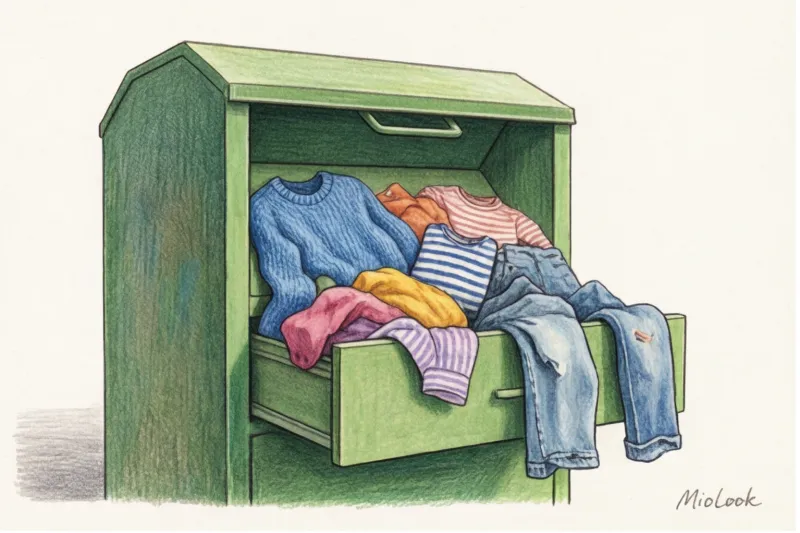
Куда сдавать ветошь? Растянутые футболки, застиранные полотенца, вещи с невыводимыми пятнами от вина или въевшимся запахом пота нужно нести в специализированные контейнеры с пометкой «на переработку».
Не ждите чудес: из вашей старой футболки не сделают новую. Во что превращается старая одежда при механической переработке? В обтирочную ветошь для автосервисов и заводов, в наполнитель для мягкой мебели, в строительную шумоизоляцию. И это отличный сценарий, который спасает планету от лишнего мусора.
Апсайклинг и ремонт: спасаем любимые вещи
Прежде чем гуглить пункты приема, задайте себе вопрос: вещь разонравилась или просто требует ремонта? Заменить подкладку у качественного винтажного пальто обойдется в 30–50 €, что гораздо дешевле покупки нового сомнительного качества.
Апсайклинг (переделка) — мощный тренд. Из мужской рубашки можно сделать отличный летний топ, а джинсы с протертостями превратить в актуальные шорты-бермуды. Но буду честна: это работает только если вы действительно любите рукоделие или готовы оплатить работу портного.
Доступ к MioLook за €0,99 — разовый платёж
Умный AI-стилист подберёт идеальный образ на основе вещей, которые вы решили оставить в гардеробе.
Открыть доступ — €0,99 разовоАлгоритм стилиста: как правильно сортировать гардероб перед сдачей
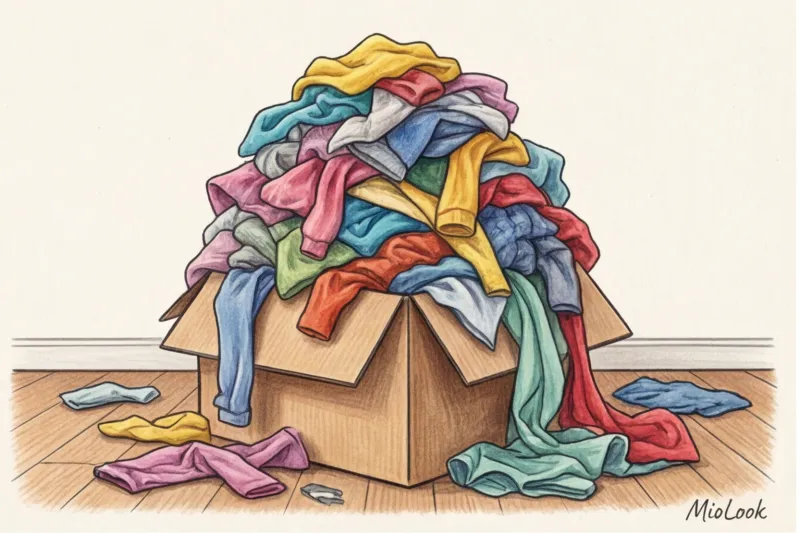
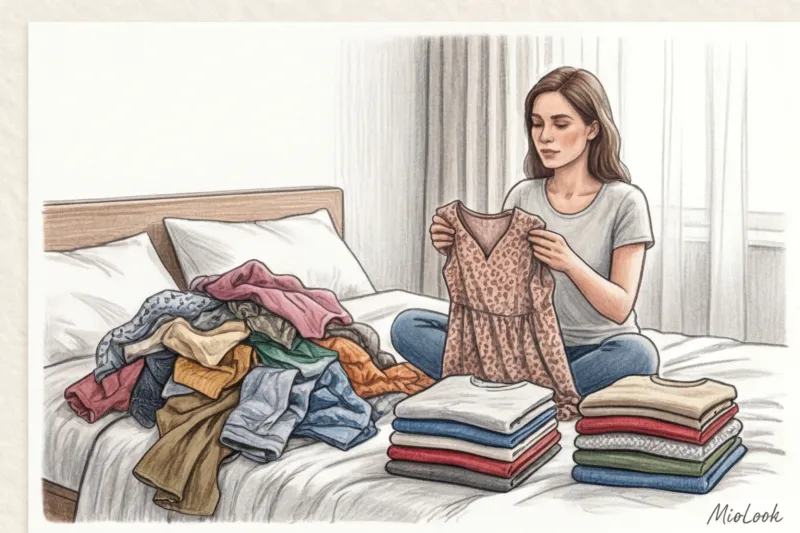
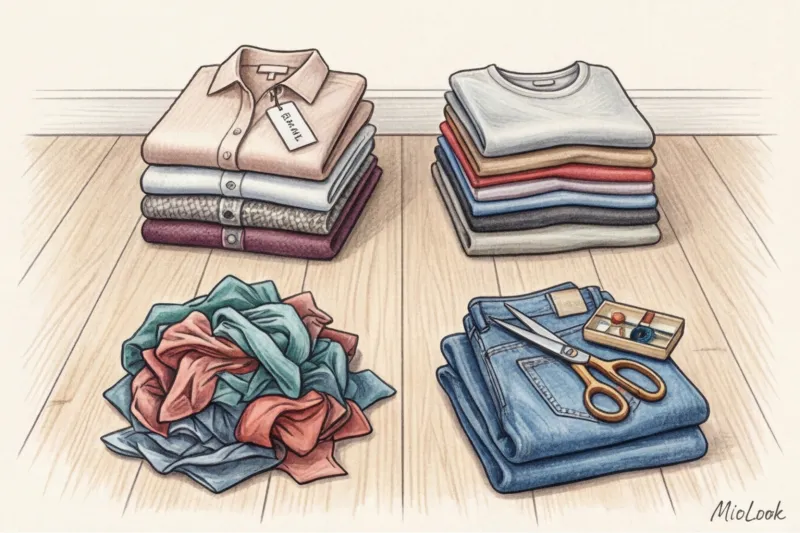
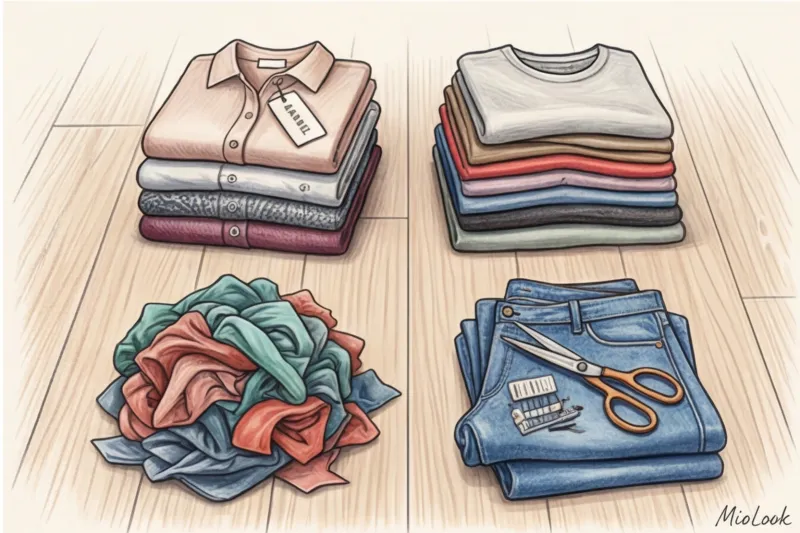
На своих онлайн-разборах с клиентами я использую строгий протокол. Нельзя просто свалить всё в один мусорный пакет. Мы используем метод «Трех коробок» (иногда к ним добавляется четвертая — «На починку»).
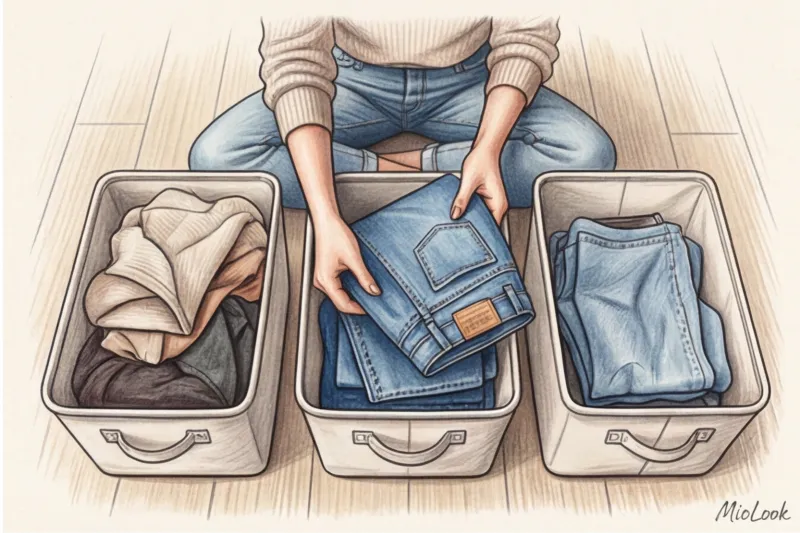
- Коробка «Отдать / Продать». Сюда идут актуальные вещи в идеальном состоянии. Тест простой: осмотрите воротник, подмышки и манжеты при дневном свете. Если есть желтые следы или лоск — вещь переходит в следующую категорию.
- Коробка «На переработку» (ветошь). Сюда летит безнадежно испорченный трикотаж, вещи в стойких катышках, которые не берет машинка, и вылинявший хлопок.
- Коробка «Сомнения». Вещи, которые нужно примерить, постирать или отнести в ателье. Даю на эту коробку ровно две недели. Если через 14 дней вы ничего с ней не сделали — содержимое отправляется в первые две коробки.
Важнейший этап — проверка на пригодность состава. Всегда смотрите на ярлыки перед тем, как отправить вещь в пакет «на переработку».
Отдать нельзя выбросить: что категорически не принимают в переработку
Многие думают, что переработчики могут «переварить» абсолютно всё. Это опасный миф. Есть категории вещей, которые вам придется просто выбросить в бытовой мусор, как бы больно это ни было для вашего внутреннего эко-активиста.
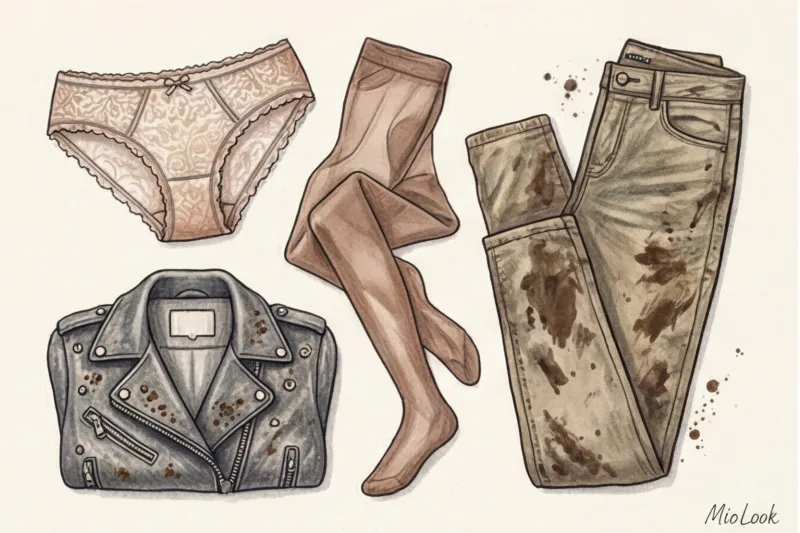
Что НЕ примут на переработку (и почему):
- Нижнее белье, носки и капроновые колготки. Это строгие санитарно-гигиенические ограничения. Никто не будет сортировать чужое ношеное белье вручную.
- Одежда с плесенью или сильными химическими загрязнениями. Если вы красили в старых трениках забор масляной краской или чинили в них двигатель (мазут) — ткань испорчена безвозвратно. Она может заразить плесенью или испачкать всю партию чистого текстиля в контейнере.
- Сложные смесовые ткани с высоким процентом эластана. Технический факт: если в составе ткани больше 5% эластана (спандекса/лайкры), её практически невозможно переработать механическим путем. Волокно просто расплавится от трения или забьет чесальные машины.
- Натуральная кожа и мех. Это материалы животного происхождения со специфической химической выделкой, они требуют совершенно иных технологий утилизации, которых нет у стандартных сборщиков текстиля.
Гринвошинг масс-маркета: работают ли магазинные боксы по приему одежды?
«Принеси пакет старых вещей и получи купон на скидку 15%» — звучит как идеальная сделка, правда? Вы очистили совесть, бренд показал свою эко-ориентированность. Но за этой красивой витриной часто скрывается банальный гринвошинг (экологичное позиционирование, не подкрепленное фактами).
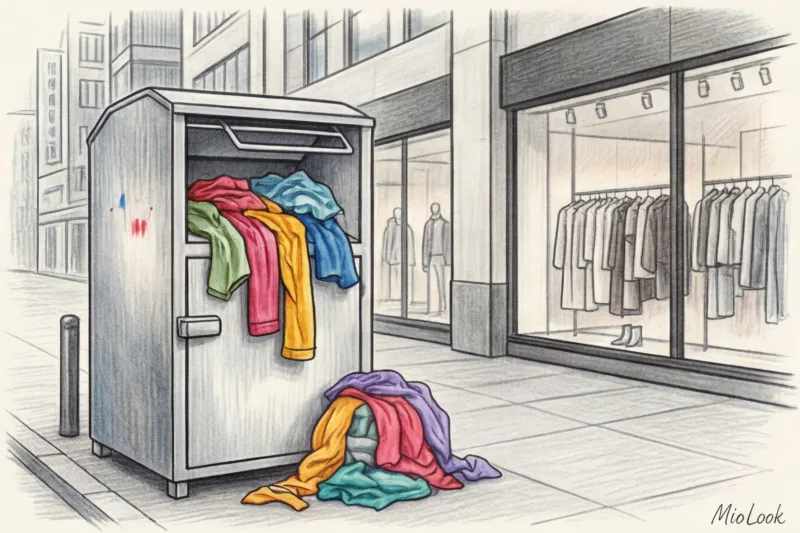
В 2023 году вышло громкое журналистское расследование (трекинг вещей через спрятанные AirTag). Журналисты сдали вещи в идеальном состоянии в боксы гигантов быстрой моды. И знаете, где оказались эти маячки через пару месяцев? На гигантских нелегальных свалках в Африке и Южной Америке.
Около 80% одежды из масс-маркет боксов «на переработку» в итоге попадает на полигоны или сжигается. Проблема в колоссальных объемах: корпорации физически не способны переработать те горы низкокачественного полиэстера, которые сами же и производят. К тому же, выдавая вам купон на скидку, бренд стимулирует вас купить еще больше дешевой одежды, замыкая порочный круг фаст-фэшна.
Моя позиция как эксперта: я не рекомендую схемы «сдай старое ради скидки на новое». Прозрачность и эффективность локальных, специализированных фондов всегда в разы выше, чем у международных корпораций.
Ваш идеальный образ начинается здесь
Присоединяйтесь к тысячам пользователей, которые каждый день выглядят безупречно с умным гардеробом от MioLook. Анализируйте свои вещи экологично.
Открыть доступ — €0,99 разовоЧек-лист: как экологично избавиться от ненужных вещей прямо сейчас
Готовы действовать? Вот ваш четкий план на ближайшие выходные. Сохраните этот чеклист, чтобы не упустить важные детали.
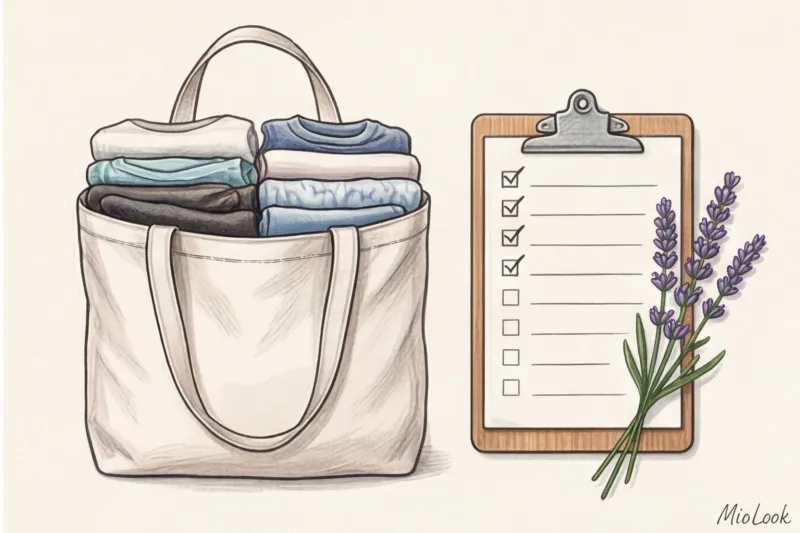
- Шаг 1: Постирать и высушить. Абсолютно всё, даже ветошь, должно быть чистым. Грязные вещи в закрытом пакете начнут гнить.
- Шаг 2: Проверить карманы. Вы не представляете, сколько паспортов, ключей и купюр фонды находят в пожертвованной одежде.
- Шаг 3: Подготовить ветошь. Если сдаете вещи строго на переработку (на тряпки), некоторые фонды просят срезать металлическую фурнитуру (пуговицы, жесткие молнии), так как они ломают ножи шредеров. Обязательно уточните это правило на сайте вашего фонда.
- Шаг 4: Упаковать. Используйте плотные мусорные пакеты, крепко завяжите их. В контейнерах высокая влажность, пакет защитит текстиль.
- Шаг 5: Найти точку. Откройте интерактивную карту вашего города, вбейте «пункты приема одежды» и выберите ближайший профильный фонд.
Главный секрет: что делать, чтобы сдавать старую одежду приходилось реже
Знаете, в чем заключается настоящая устойчивая мода? Она начинается не возле контейнера для переработки. Она начинается в примерочной (или перед экраном монитора) на этапе покупки.
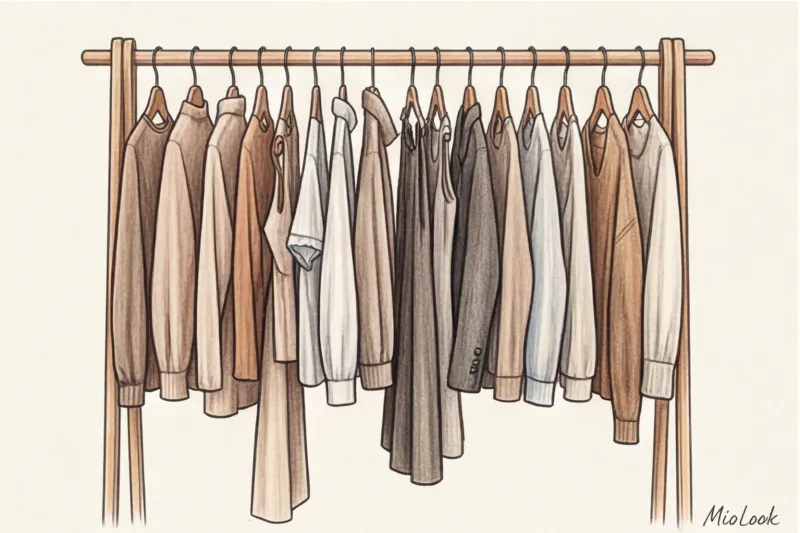
Стиль — это не про количество вещей, а про их математическую точность. Переход от fast к slow fashion (медленной моде) меняет качество жизни. Инвестируйте в качество. Свитер из 100% мериноса за 120 € прослужит вам 5 лет, в то время как акриловая кофточка за 20 € потеряет вид после третьей стирки и отправится на свалку. Подробнее о том, как создать работающую базу, читайте в нашей статье про капсульный гардероб в стиле минимализм.
В индустрии есть прекрасный термин — cost per wear (стоимость за один выход). Брюки за 100 €, которые вы надели 50 раз, стоят вам 2 € за выход. Платье со скидкой за 30 €, которое вы надели 1 раз на корпоратив и повесили в шкаф навсегда, обошлось вам в 30 €. Что из этого действительно выгодно?
На моей практике знание своего цветотипа, понимание архитектуры своей фигуры и грамотная организация шкафа сокращают количество выброшенных «неудачных» покупок на 80%.
Именно для того, чтобы помочь вам избежать импульсивных покупок, мы создали MioLook. Умный помощник позволяет оцифровать шкаф, увидеть реальную картину того, что у вас есть, и составлять комплекты из имеющихся вещей, а не бежать за новыми.
Расхламление — это терапия. Но конечная цель этой терапии не в том, чтобы освободить полки для новой партии быстрого пластикового тренда. Настоящая победа наступает тогда, когда во время очередного сезонного разбора вы понимаете: вам нечего сдавать на переработку, потому что каждая вещь в вашем шкафу любима, носится и отражает именно вас.