The Biggest Myth: Why Typical Style Tests Don't Work
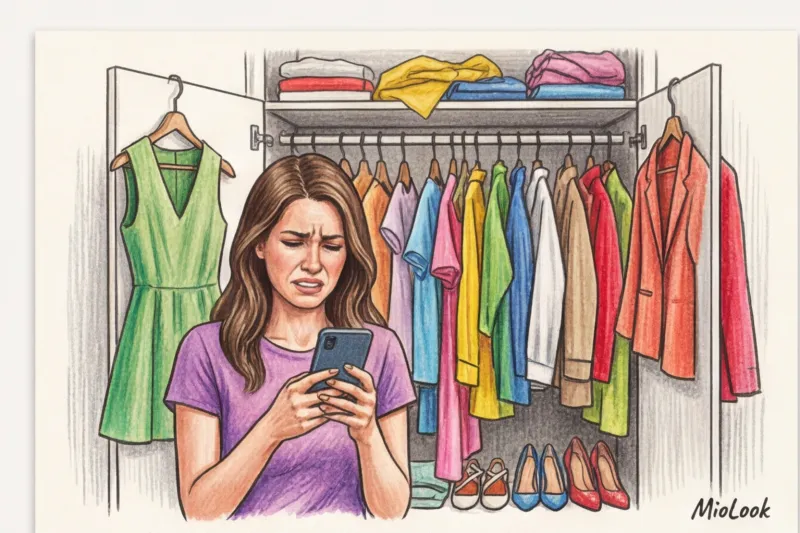
Imagine a familiar situation: you take a fifty-question online quiz that solemnly declares you a "Dramatic Classic" or "Mild Winter." Inspired, you buy a velvet jacket and a formal pencil skirt, and the next morning... you're back to your favorite jeans and hoodie because you have to take the kid to daycare and then work on your laptop. The question is, How to find your clothing style , is a question that worries many people today, but we often start looking for answers in completely wrong places.
Over 14 years of working as a personal stylist, I've realized one important thing: the rigid division of women into "dramatics," "romantics," "naturals," and "classics" (the famous David Kibbee system and its 1980s counterparts) is hopelessly outdated. Today, most women's daily lives are too dynamic to fit into a single stylistic template. You can't be a 100% "romantic" if your schedule includes morning workouts, strategy sessions on Zoom, and weekend trips out of town. A modern wardrobe demands flexibility, not strict adherence to a set of strict lapels that dictate what shape you should wear.
"Style doesn't start with who you want to appear to others, but with an honest audit of how you spend 80% of your time."
I had a particularly revealing case in my practice. I had a client, a top IT project manager, who was desperately trying to fit into the "French chic" aesthetic. She was buying up tweed jackets, silk Rouje wrap dresses, and skinny loafers. But her real life consisted of remote work, long flights, and walks with her active Labrador. As a result, expensive items hung in her closet, causing constant guilt, and she felt uncomfortable every day. Once we shifted focus to premium athleisure—adding cashmere suits, structured hoodies made of thick cotton, and technical sneakers—the puzzle came together. Her clothes finally began to serve her, not the other way around.

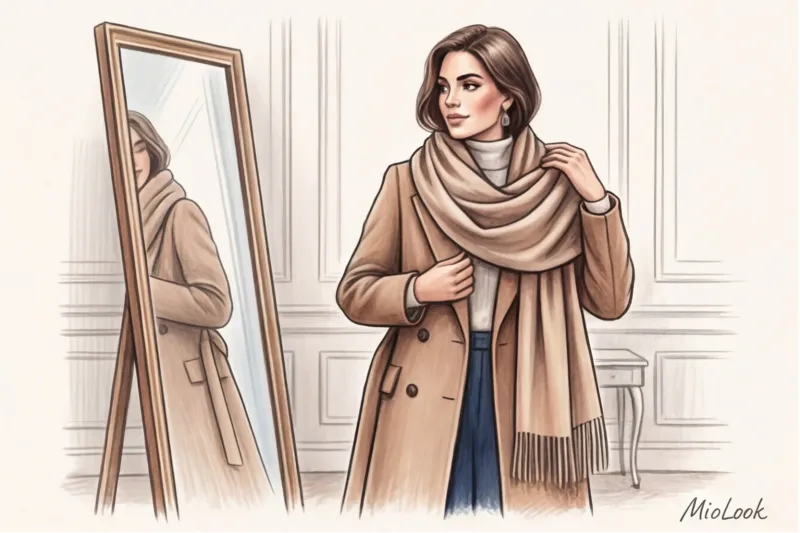
And here we encounter the second major problem: the Pinterest trap. Aesthetic mood boards compel us to buy things for a life we don't have. We save hundreds of images of girls in unbuttoned camel coats (in the spirit of The Row collections), casually sipping coffee on the terraces of springtime Paris. And then we try to integrate this thin, buttonless coat into the reality of a snowy winter or morning metro rides. Pinterest is great at selling a visual dream, but it mercilessly disconnects us from the physical context: climate, lifestyle, and body type.
The fashion industry calls this psychological phenomenon the concept "Fantasy Self" This is the idealized version of you who goes to the theater every evening, visits contemporary art exhibitions, and never stains light-colored pants. According to a WSGN report (2023) on consumer habits, women regularly wear only about 20-30% of the contents of their closets. The remaining 70% is an investment in that very same fantasy life. It is because of this "fantasy self" that sequined dresses with untouched tags and stiletto heels whose lasts make your legs cramp have been gathering dust on hangers for years. Meanwhile, the real you wears the same basic straight-leg jeans until they're full every day.
Your first priority is to fire your fantasy self from the role of chief shopper. To avoid this trap and realistically assess your assets, I always recommend using wardrobe digitization feature in the MioLook app When you load all your things onto your phone and see them on the screen instead of tucked away in the dark depths of shelves, the moment of truth arrives. It becomes crystal clear: you already have five stunning tops for those hypothetical parties, but you're critically lacking a convenient, high-quality base for real-life everyday tasks.
Step 1. Life Audit: How to Find Your Clothing Style Using Math
Forget about color types, Kibbe shapes, and TikTok microtrends for a minute. You know what the most common mistake my new clients make is? They try to dress a version of themselves that exists only in their dreams or on Pinterest boards. Remember the basic rule we start any transformation with: Style doesn't start with fashion magazines, it starts with your diary..
When a woman asks me how to find her style, the first tool I pull out isn't a palette of the season's hottest colors, but a simple calculator. We need to realistically calculate how much time you actually spend at the office, at home, out with the kids, or at parties. There are 168 hours in a week. If we subtract the average 56 hours for sleep, we're left with 112 active hours. Do you work a standard five-day week in the office? That's 40 hours, or about 35% of your real life. The remaining 65% is divided between commuting, household chores, rest, and the occasional outing.
There's a cruel but true rule in retail, backed by the numbers. According to a 2023 McKinsey Consumer Behavior Report, most people wear just 20% of their clothes 80% of the time. Why is this? Because it's this modest fifth of our closet that meets our real, everyday needs, while the remaining 80% are impulse buys for hypothetical occasions.
I had a particularly revealing experience with IT director Anna. She had a luxurious collection of silk blouses from Equipment and tailored tailored jackets. The only problem was that her company had gone fully remote two years ago. She spent 90% of her time in front of her laptop in her home office or driving her children to extracurricular activities, but out of inertia, she continued to buy office classics. She had absolutely nothing to wear for Sunday brunch with friends or for a comfortable yet neat workday at home. Her closet was living in 2019, while she herself was in a different reality.
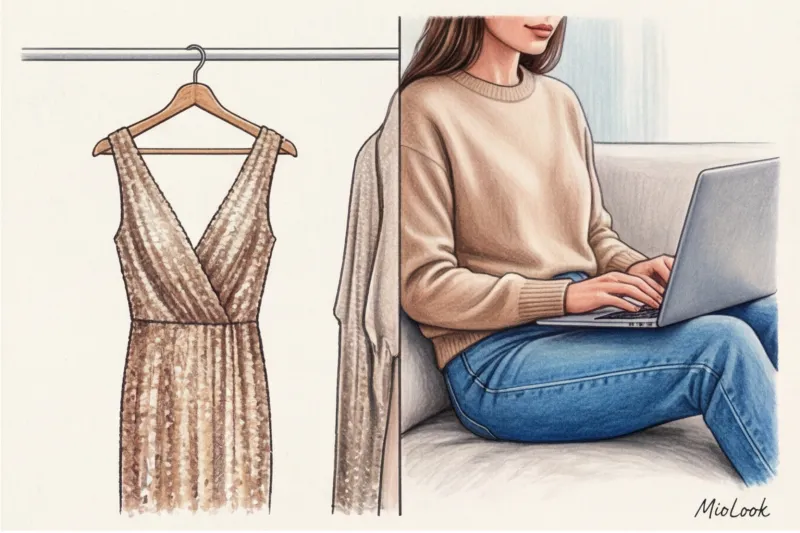
The ideal formula for a functional closet sounds dry, but it works flawlessly: it is necessary to ensure complete matching the proportions of your closet to the proportions of your actual workload If you spend 40% of your time walking the dog and playing with the kids on the playground, then 40% of your rack space should be occupied by stylish, high-quality, and comfortable items for this activity. These could be sturdy Pangaia joggers, technical Uniqlo parkas, and impeccably fitted basic tees, not one randomly purchased tracksuit among a dozen cocktail dresses. Buying a fifth pair of jeans that you can only wear on Saturday night is a mathematical crime against your budget.
Wardrobe Pie Chart Exercise
To clearly identify your blind spots, I give all my clients a simple homework assignment. You'll need a piece of paper, a pen, and 15 minutes. This exercise is more sobering than any fashion critic.
- List the areas of life. List all your regular activities for a typical month. For example: an office with a strict dress code (or not), remote work, active weekends/sports, household chores (trips to the supermarket, clinic), dates, or get-togethers with friends.
- Digitize time. Allocate 100% of your time between these categories. Be brutally honest. If you go to the theater or an exhibition once every six months, that's 1%, not 15%. If you work from home four days a week, that's a solid 60%.
- Draw a diagram. Turn these percentages into a pie chart (a pie divided into slices of different sizes).
- Open the cabinet for confrontation. Now visually assess how much actual space on rails and shelves items for each category take up.
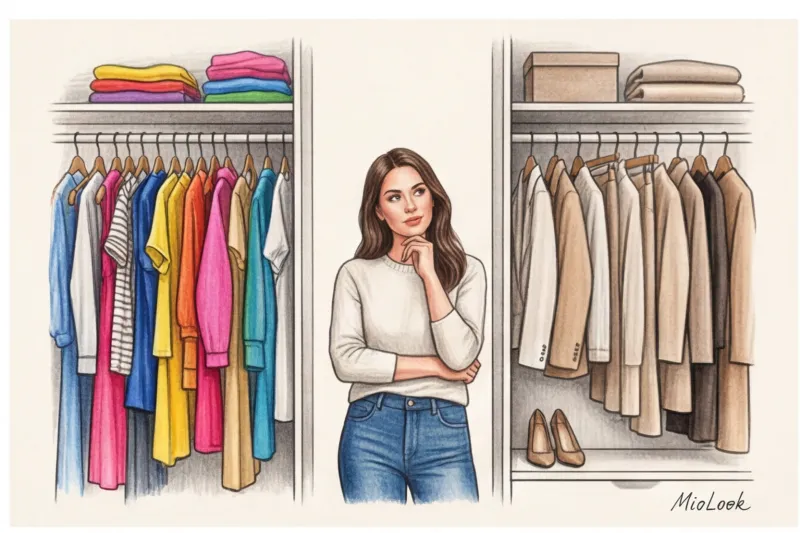
It's when comparing your life diagram with your current closet contents that key insights emerge. We often ignore the so-called "middle"—clothes for simple, everyday wear. Women buy formal wear and formal work essentials, but completely forget about the "running errands" category. So, when we run out for coffee or pick up a package from the courier, we pull on an old, stretched-out sweatshirt, feeling self-conscious. You might discover that the "party" section of your life takes up 5% of your closet, while sequins and slip dresses occupy 30%.
By the way, to avoid calculating the volume of things by eye, I recommend using digital tools. After uploading your things to MioLook , you'll automatically get statistics by category. The app will ruthlessly but honestly highlight where you have an overabundance of evening wear and where you're severely lacking in quality everyday essentials.
The secret of women who "always have something to wear" isn't innate taste or an unlimited budget. Their secret is that their closet contents mathematically precisely support their actual lifestyle, not their fantasy of it.
Access to MioLook for €0.99 — one-time payment
A smart AI stylist will select the perfect look based on your actual workload.
Get access — €0.99 onceStep 2: Closet Review as a Tool for Self-Discovery
The first impulse of any woman deciding to radically change her style is to pull out a credit card and go shopping. It seems like a new, perfect item will automatically solve the daily morning problem of "nothing to wear." But my professional position remains unchanged: a true style transformation begins not in the fitting room of TSUM or the Zara flagship store, but on the floor of your own bedroom.
Buying new clothes before you've analyzed your old ones is like putting up designer wallpaper over peeling plaster. Your current wardrobe, even if it frankly irritates you, is a vast database. It stores information about your real habits, hidden insecurities, and physiological needs. We just need to learn to correctly decipher these signals.
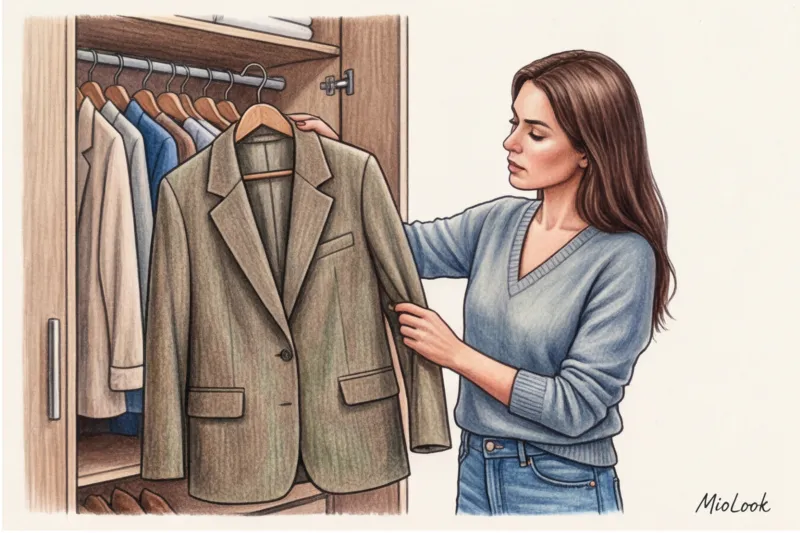
When I conduct an offline wardrobe review, I always ask clients to pull out their three most worn-out items. I don't want to look at stunning evening dresses worn once to a colleague's anniversary. I want those jeans with slightly flared knees, the sweater with pilling on the sleeves, or the favorite T-shirt that's been washed a hundred times. It's these often-unpresentable items of clothing that reveal your true preferences for fabric texture and cut, not those dictated by trends.
As a stylist, I literally turn these "favorites" inside out and read the ingredients. If your absolute favorite is a dropped-shoulder cardigan made of a merino-viscose blend, and five stiff, straight-cut cotton shirts are hanging sadly in your closet, the conclusion is obvious. Your body language and your nervous system demand soft, supple shapes, freedom in the armholes, and kinesthetic comfort. You can cherish images of elegant women in structured jackets as much as you like, but in reality, your hand will always reach for cozy knitwear. Understanding this, we stop fighting our nature. We simply begin to seek out status-conscious, elegant shapes, but made from flexible, pliable materials.
"The biggest mistake when building a wardrobe is ignoring your physical comfort. If a piece makes you hold your breath, have to watch your posture 24/7, or constantly tug at the hem, it will never become a staple, no matter how many zeros are on its price tag."
The next, no less important stage of self-discovery is uncovering your "fashion failures." These are those items with the tags still attached or worn exactly once. According to consumer behavior research by the British organization WRAP (2023), approximately 30% of the clothes in the average woman's closet go unused for an entire year. Why do we keep buying them?
Most often, these are the victims of spontaneous sales or outfitting for that very "fantasy self." But a cool-headed analysis of these mistakes gives us a clear list of your personal "no's." For example, you bought a striking pencil skirt. Why is it hanging like dead weight? It requires special seamless underwear, mercilessly wrinkles at the mere glance of a car seat, and rides up with every step. Bingo! Now we know for sure that in the future we will categorically avoid thin suiting fabrics without added elastane and skinny silhouettes that require complex preparation before going out.
Another common item in this category is items in non-complimentary shades. Have you ever bought a sweater in a Pantone Color Institute shade, only to notice that it made your face look painfully tired? Analyzing these "color missteps" allows you to create your own personal stop list of pigments that should be permanently crossed off your portrait shopping list.
The "Keep, Give, Rethink" formula
To prevent the review from devolving into sentimental chaos, I use a strict sorting system. No intermediate piles like "I'll save these for a messy weekend at the dacha" (you don't need 15 T-shirts for the dacha). Just three work categories.
1. Leave. This is your golden reserve. It contains items that fit your figure perfectly. right now (and not in dreams about minus five kilograms), correspond to your current life and do not require a trip to the studio. It is at this stage that I highly recommend digitizing your base: add these proven things to MioLook The smart wardrobe algorithm will quickly analyze your actual, clutter-free capsule wardrobe and later help you create dozens of new looks from what you already own.
2. Give. In this pile, we practice radical honesty. Absolutely everything that:
- Causes the slightest physical discomfort (the neck pricks, there is a pull in the shoulders, the belt cuts in).
- Associated with difficult or negative memories.
- They don't fit for more than six months. Storing tight jeans "to motivate you to lose weight" isn't an incentive, but a daily visual reproach that only increases cortisol levels every time you open the closet doors.
3. Rethink. This is the most creative category. It includes high-quality pieces that you truly love visually, but you're unsure how to integrate them into your everyday life. Often, the problem isn't the piece itself, but the habit of wearing it in a too-conventional way.
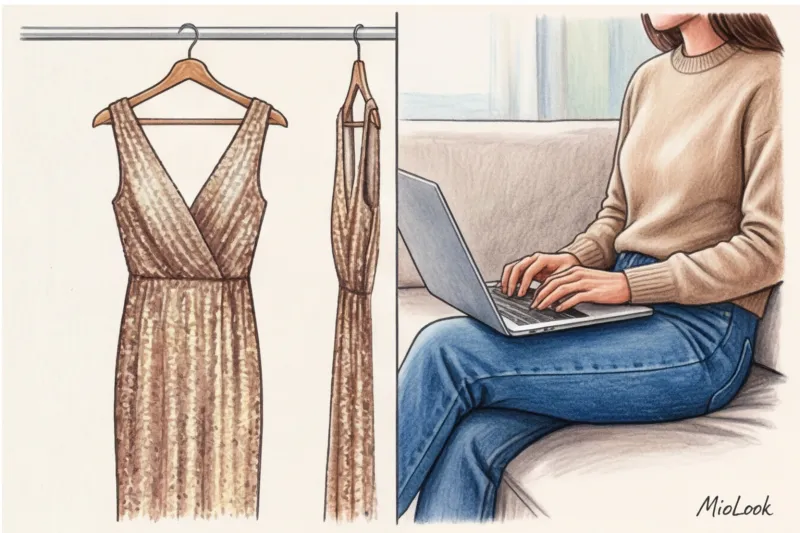
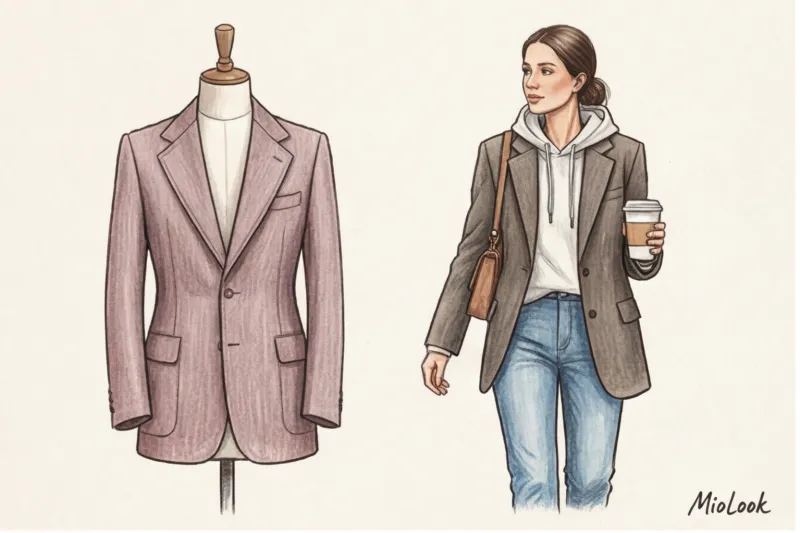
How to give them a second chance with a new style? Use layering and contrasting textures. For example, that silk slip dress that seems too revealing for a daytime office outing works amazingly as a skirt when layered with a chunky knit sweater and chunky leather Chelsea boots. And that tailored office shirt that makes you feel like you're in a sheath instantly relaxes when worn unbuttoned like a lightweight jacket over a simple white T-shirt and wide-leg jeans. A simple change of context often brings a piece back to life, saving you money and expanding your personal style.
Step 3: The Three Words Method for the Perfect Wardrobe
Do you know what happens to our brains in a large shopping mall? Classic sensory overload. Amidst thousands of racks, bright lights, and obsessive trends, we lose focus and end up buying yet another, fifth, gray turtleneck. So, if you're wondering how to find your style without disappointment and wasted money, you need a powerful mental filter. The best tool today, I believe, is the "three words" method, developed and popularized by New York stylist Allison Bornstein.
This concept is brilliant in its utility. Instead of cumbersome style matrices and complex color types, you define just three adjectives. They become your personal compass in the world of clothes and eliminate 90% of unnecessary assortments even before you try them on.
Anatomy of a style formula
Let's break down the mechanics of this method. Each of the three words has its own specific function and is responsible for a specific segment of your image:
- Word 1: Your base. This word describes your objective reality. How do you dress right now most of the time? It's about your physical comfort and daily habits. Be honest: if you work remotely and live in jeans, your first word will be relaxed , practical or cosy No fantasies at this stage.
- Word 2: Your goal. What impression do you want to make on others and, more importantly, on yourself? This is where we set the direction for your wardrobe. If a "relaxed" base feels too casual, we add "put-together" with the second word: elegant , professional , polished or status.
- Word 3: Your emotional emphasis. The most complex and interesting variable. It's the spice that makes a style truly unique. It's what saves a basic wardrobe from total boredom. Bold , romantic , vanguard , Bohemian , ironic It's the third word that gives you the legal right to add leopard-print loafers or a fringed bag to a formal office suit.
According to WGSN's 2024 consumer behavior study, 68% of women cite the conflict between "wanting to look good" and "being comfortable" as their top wardrobe challenge. Ellison's method addresses this issue aesthetically—the third word acts as a stylistic glue between the base and the goal.
How it works in practice: client cases
The theory sounds great, but let's look at some real-world examples. Last week, we tried these words with three completely different women, and here are the combinations we came up with:
- Marina, senior IT developer: Relaxed, architectural, daring. The base is heavyweight 100% cotton denim from Levi's (relaxed). The goal is to add structured jackets with exaggerated shoulders (architectural). The accent is chunky Dr. Martens boots with tractor soles and asymmetrical mono earrings in cast silver (daring).
- Elena, owner of a specialty coffee shop: Practical, welcoming, vintage. She needs to be physically comfortable behind the bar, but she's the face of her brand. We took comfortable cashmere-blend knitwear, added warm caramel tones (welcoming), and integrated '70s silk scarves and Coach bags from archive collections (vintage).
- Anna, corporate lawyer: Strict, elegant, sensual. We've added silky lingerie-style tops, layered under jackets, and deep wine-colored lipsticks to classic three-piece suits in thick wool. The sensuality here is expressed in the textures—flowing silk against the body instead of stiff cotton poplin.
Once we've established this formula, shopping is no longer a lottery. To implement this method into your daily life, I highly recommend using tagging function in MioLook You can set your three words directly in the app and filter all your items. My personal, strict rule for clients: if a sweater in the online cart doesn't match at least two of your personal three words, we close the tab and don't buy anything. This simple algorithm saves hundreds of hours and tens of thousands of € on impulse purchases over the course of a year.
Access to MioLook for €0.99 — one-time payment
Start creating perfect images with the help of artificial intelligence
Get access — €0.99 onceStep 4: A Unique Capsule to Counter Other People's Must-Have Lists
In the 2010s, glossy magazines firmly ingrained the pernicious concept of "10 things every woman should have in her wardrobe" into our consciousness. Open any article and you'll find a categorical list: the perfect white shirt, classic pumps, a pencil skirt, and, of course, a beige trench coat. According to analytics platform Lyst, searches for classic trench coats predictably soar every spring. However, return statistics from major online retailers paint a different picture: we buy this forced "must-have" and then simply don't know how to incorporate it into our real lives.
Let's be honest: you don't need a white shirt if it makes you feel like an intern or you're constantly afraid of getting a coffee stain. And you definitely don't need a beige trench coat if your climate and lifestyle require a windproof jacket made of a high-tech membrane. There's no such thing as a one-size-fits-all basic.
"Every woman has her own 'white shirt,' and often it's not white at all, or even a shirt. Trying to find your own style based on someone else's templates is like trying to wear shoes that aren't your size."
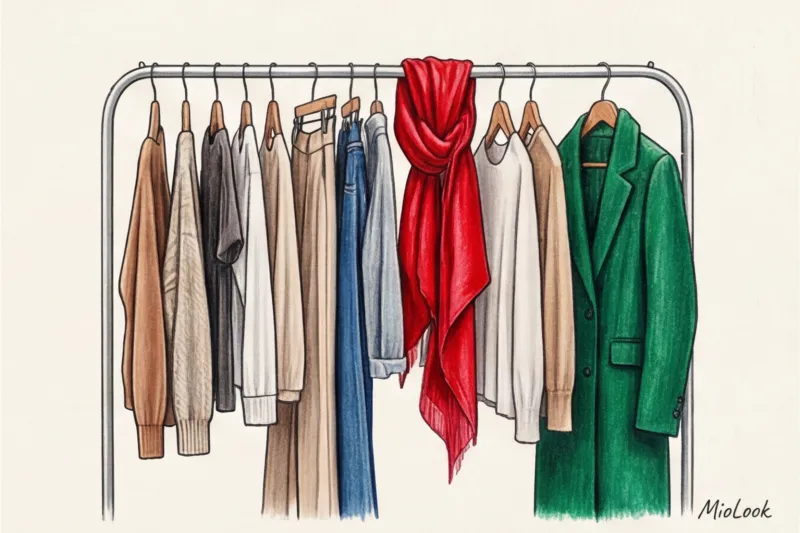
A year ago, a client who works as a UX designer approached me. While sorting through her closet, we discovered five crisp white shirts from different brands. "They're basic—stylists say they're the foundation of a wardrobe," she sighed, admitting she felt self-conscious in each one. We ruthlessly removed them all. Her personal "white shirt"—that flawless foundation that goes with everything and inspires confidence—was a thin black turtleneck made of high-quality merino wool. It paired perfectly with oversized jackets, her favorite jeans, and sophisticated asymmetrical skirts.
The Mathematics of Your Personal Database
So how do you create your own capsule if online lists aren't working? Your personal database is the direct intersection of your pie chart of busyness (where you actually spend your time) and the "three words" method (the impression you want to convey). We've already covered these tools in the previous steps.
If your schedule consists of 70% remote work and walks with the baby, and your three style words are "dynamic, minimalist, and cozy," then tailored pleated trousers will never be your base. Your foundation will be perfect joggers made of thick cotton, oversized sweatshirts in the right cut, and technical sneakers. These are the pieces you'll build your looks around.
To avoid having to keep all these formulas in your head and making impulsive purchases, I recommend digitizing the process. Upload your favorite and most-worn items to MioLook app Use the smart wardrobe feature: the algorithm will clearly show you which silhouettes are truly worth their weight in your daily routine, and which ones are long overdue for retirement.
Wardrobe Budget: The Rule of Contrasts
Once your personal foundation is established, the question of budgeting arises. My approach to shopping is based on a smart mix of mass-market and premium items. You don't have to buy everything at expensive boutiques to look classy.
The main rule: Invest your maximum budget in the categories that take up the largest percentage of your life chart and form the visual framework of your silhouette. Typically, this includes outerwear, shoes, and bags. Leather ankle boots from a niche brand or a thick wool robe coat will instantly elevate the entire look, even if worn with simple straight-leg jeans from Zara or a basic T-shirt from Uniqlo. A quality coat that you wear 120 days a year will cost you next to nothing per outing.
What can and should you save on? On hot trends (leopard-print tights or fishnet tops that will go out of style in five months) and on consumables. Simple white T-shirts, tank tops, and basic knitwear can now be found at COS, H&M Premium, or Massimo Dutti without having to overpay for luxury logos. A smart wardrobe isn't about how much you spend, but about the precision of your investments.
Checklist: 5 questions before buying a new item
According to a 2024 McKinsey research report, modern consumers wear a new item on average only 7-10 times before discarding it. The dopamine rush in the fitting room often drowns out reason, causing us to ignore our real needs. To break this cycle of impulsive shopping, I ask my clients to establish a strong mental filter. Before you pull out your credit card at the checkout, ask yourself five specific questions.
- Does the item live up to my "three words"?
If your style vector, as defined earlier, is "sleek, relaxed, and classy," then a neon crop top with intricate draping won't fit into that mold. While it may be objectively beautiful, it conveys a different aesthetic. - Will I be able to create at least 3 looks from my current wardrobe with her?
This is a basic rule of combination. If, for the sake of one new jacket, you have to buy trousers of the right cut, a top with a certain neckline, and the right shoes, you're not looking at a profitable investment, but a financial black hole. By the way, to avoid guessing from memory, I recommend looking at MioLook app Open your digital wardrobe right in the store and check if the new item fits with your current wardrobe. - Is it comfortable to sit, bend over, and raise your arms in?
The main illusion of any fitting room: we stand up straight, suck in our stomachs, and freeze in front of the mirror. But clothes should be dynamic. Be sure to sit on a ottoman, raise your arms as if reaching for the top shelf, and take a long step. Is the fabric cutting into your skin? Is the hem riding up dangerously? We leave the item in the store without regret. - What will be the cost per wear (cost-per-wear formula)?
This is my favorite math sobering formula. The formula is simple: divide the price of an item by the expected number of wears. Let's do the math. We have a stunning pair of $300 evening shoes that you'll wear to exactly one wedding. And then there are quality basic jeans for $150 that you'll wear at least three times a week for a whole year (about 150 times). So, the shoes cost you $300 per outing, and the jeans only $1. Which of these is really too expensive?

- Am I buying this for my real life or for my fantasy self?
Let's get back to the math behind our pie chart from step one. Are you wearing that silk slip dress for those bohemian parties that happen once every few years, or for real-life everyday wear? Be extremely honest with yourself when answering this question.
If you answered "no" to at least two of these items, it's time to return the item to its hanger. This break will save you money and eliminate the stress of opening your closet in the morning.
Your ideal image
it begins Here
Join thousands of users who look flawless every day with MioLook.
Get access — €0.99 onceAction Plan: Your Personal Algorithm for the Next Weekend
The most common question I get from hesitant clients at the end of their first consultation is, "Olena, what if I get rid of the excess, make a mistake, and end up with nothing to wear?" This fear of style paralysis is far more devastating for women than a limited budget or unconventional body measurements.
Letting Go of Perfectionism: Why Style Is Never Static
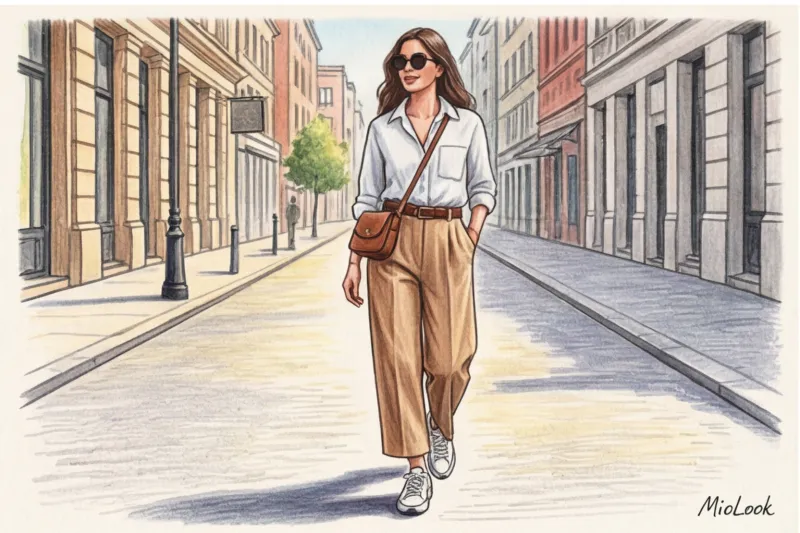
Let's get this most important point out of the way: a perfect, once-and-for-all wardrobe doesn't exist. Giving up perfectionism is the very first step, without which no method will work. Style is an evolution, not a destination.
What worked flawlessly for you at 25 in a creative agency will naturally no longer meet your needs at 32, when you move into the corporate sector, move to a different climate, or become a mother. And that's perfectly normal. Many people still think that the task is about How to find your clothing style , is resolved in one incredibly successful shopping trip. In practice, it's an ongoing, yet incredibly exciting, process of fine-tuning your closet to your changing reality.
Your Weekend Algorithm: 3 Practical Steps
To make sure all the theory in this article doesn't just remain text on a screen, I've put together a clear, step-by-step plan for this coming weekend. No trips to the mall—we'll be working exclusively with the assets you already own.
- Saturday morning: unload the wardrobe onto the bed. Physically remove absolutely everything. Yes, even those vacuum-sealed bags on the far shelves. I call this the "shock therapy method." While clothes hang neatly on hangers, your brain gets used to them and perceives them as a safe environment. A huge pile of things on your bed will force you to honestly assess the scale of the disaster and ruthlessly launch into the sorting formula we discussed above.
- Saturday evening: write 3 words. Brew your favorite tea, sit in silence, and define your stylistic DNA. Don't try to please the fleeting aesthetics of social media. If your honest words are "cozy, minimalist, bold," that's great. Rely on them like an internal compass.
- Sunday: Make a wishlist without shopping. Identify any gaps in your wardrobe, but put away your credit card. Create a strategic shopping list for the coming season. To avoid having to keep everything in your head, digitize the remaining list. My clients use Smart wardrobe in the MioLook app Once your current items are clearly visible on your phone, you can add to your wishlist only those items that are guaranteed to create 3-4 new looks with your current clothes.
The main rule: trust yourself, not trends
In concluding this guide, I want to relieve you of the heavy burden of fashion expectations. Trust your physical and emotional senses more than any authoritative forecast.
The Pantone Color Institute may dictate new palettes every year—be it complex Peach Fuzz or rich Viva Magenta. But if these colors make your face look tired and you feel self-conscious, they're not worth a single inch of shelf space. You don't need to understand the intricacies of Martin Margiela's deconstruction or nostalgically recall Phoebe Philo's old Céline collections to look stunning. Simply knowing yourself is enough.
"Your wardrobe should be a resource, not a source of daily stress and guilt over wasted money. Allow yourself to wear what makes you happy and confident today."
Allow yourself to experiment, make mistakes, and wear the same perfectly fitting pants three days in a row. Ultimately, the most luxurious thing you can wear is the confidence that you're completely comfortable being yourself.
Guide Chapters
How to adapt trends to your style and stay in style
We'll learn how to incorporate fashion trends into your wardrobe without losing your individuality. A professional approach to mindful shopping from a stylist.
Kibbe's Body Types: How to Define Your Style
Why do the same clothes look different on different body types? Learn how body geometry and David Kibby's system can help you find your unique style without relying on outdated tests.
How to Organize Your Wardrobe: Stylist Tips
Tired of having a full closet and nothing to wear? Learn how to conduct a systematic wardrobe audit and eliminate random purchases once and for all.
MioLook, an AI app for choosing clothes based on photos
Is your closet overflowing with clothes and nothing to wear? Find out how artificial intelligence and virtual fitting rooms are solving the wardrobe selection problem once and for all.
How to choose clothes for your body type without stereotypes
Tired of being pigeonholed into "pears" and "apples"? We'll show you how a modern, architectural approach to style can help you create the perfect silhouette.