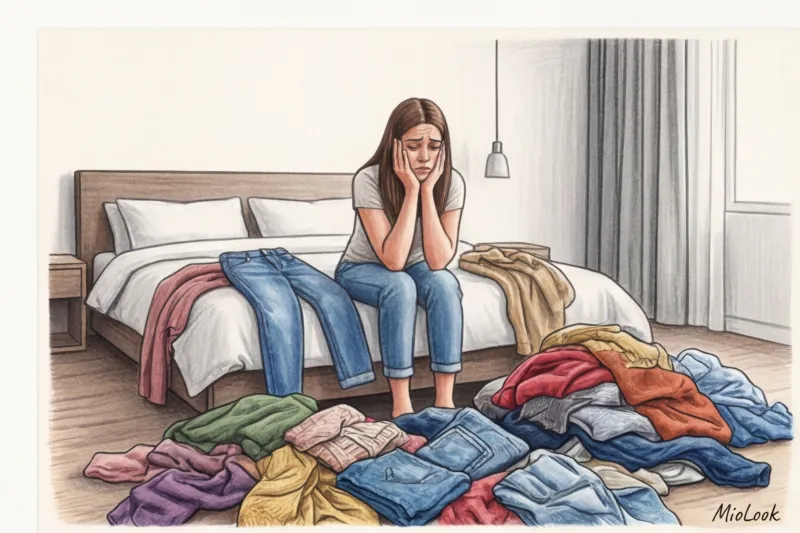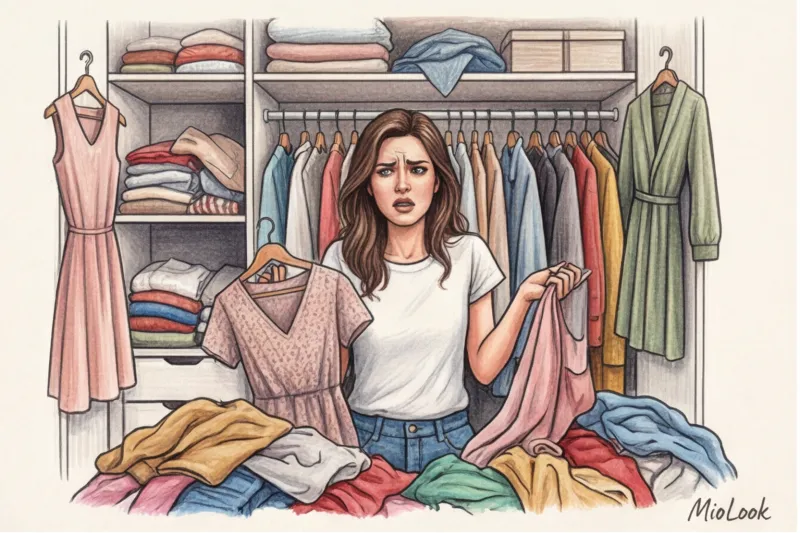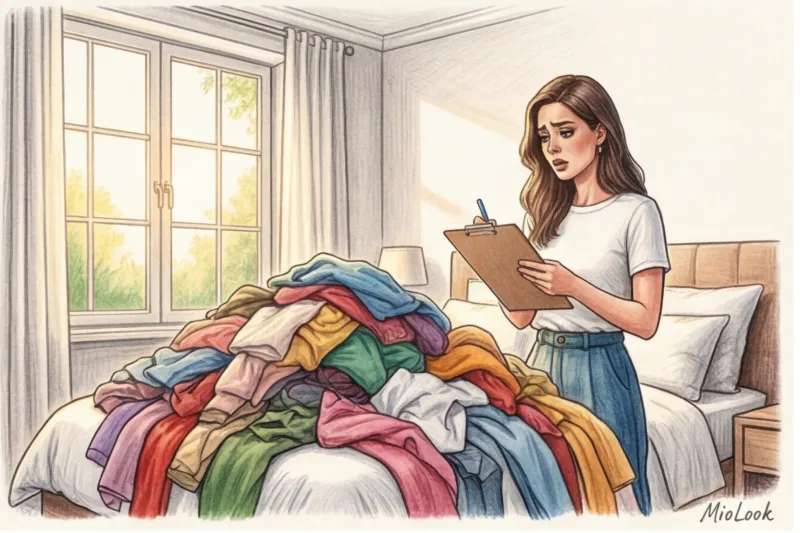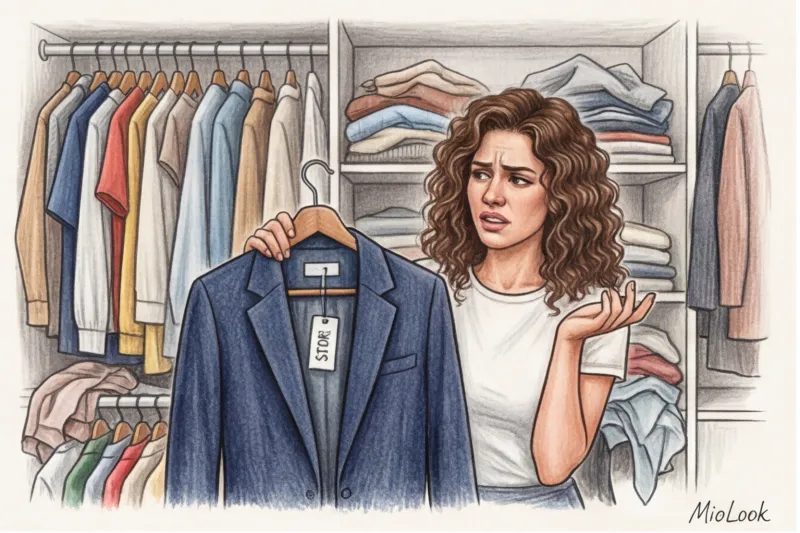
In my 14 years as a personal stylist, I've seen the same scene dozens of times: a woman proudly shows off three huge trash bags filled with clothes. "Well done, I cleared out the space!" But just a month passes, the shelves are once again filled with random purchases, and the morning panic of "I have nothing to wear" returns. Have you ever wondered why this happens?
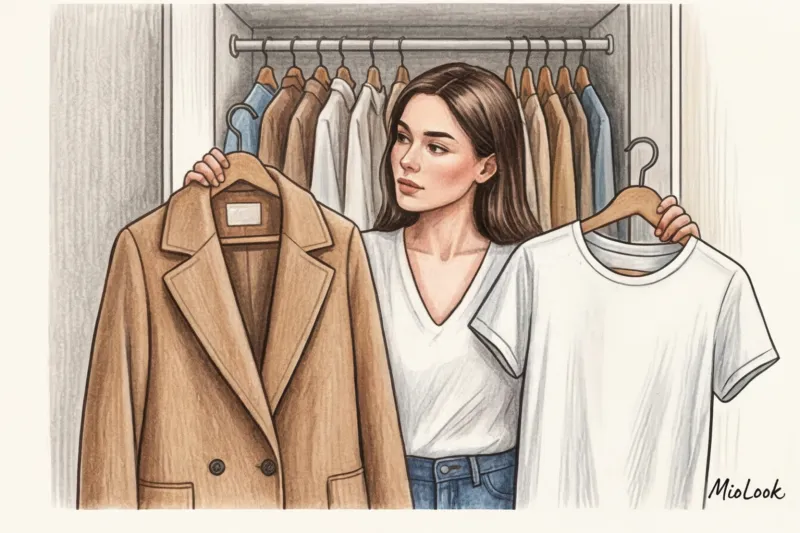
The answer is simple: we confuse an emotional closet cleanout with a systems audit. If you want to know, How to properly sort out your wardrobe , you'll have to forget the glossy life hacks from social media. True style doesn't require trash bags, but rather ruthless honesty with yourself and an understanding of how fabrics work. We've covered more about how to build the foundation of your image in our the complete guide to finding your style And today we'll get down to practical work—the anatomy of your closet.
The biggest wardrobe decluttering myth: why the "one-year" rule is hopelessly outdated
"If you haven't worn something in 12 months, throw it away." Sounds like the perfect minimalist mantra, right? In reality, this rule is deeply unsustainable and only benefits fast fashion companies.
According to the report Ellen MacArthur Foundation (2022), over the past 15 years, the average number of times a single item is worn has decreased by 36%. We've come to treat clothing like disposable tableware. And the one-year rule only fuels this mindless consumption.
Let's look at this through the lens of investment. A high-quality double-breasted coat made of thick camel wool or an impeccably tailored vintage tuxedo might sit in your trunk for two years. Perhaps you were on maternity leave, working from home, or simply didn't have the right occasion. Does that make it a bad coat? No. It's your "dormant investment."
But a worn-out, pilling polyester blouse from a mass-market store should be thrown out after just one season, even if you wear it to work every week. It's not the length of time the item has been sitting, but its condition, the relevance of the cut, and the Cost Per Wear metric that should be evaluated.
"Feeling guilty about buying something with a tag but never wearing it is the main enemy of objective analysis. We leave it in the closet as a self-reproach, even though it would be better to sell it and recoup some of the money."
How to properly declutter your wardrobe: Start with an honest lifestyle audit
Your personal style doesn't start with color tests or the Kibbe typing system. It starts with how you spend 80% of your time.
I had a classic case in my practice. My client, a top manager at an IT company with a fully remote work environment, was obsessively buying flowing silk dresses. Rouje and elegant blouses with Peter Pan collars. In her fantasies, she lived the aesthetics of "French chic" and strolled along Parisian boulevards. In reality, she spent eight hours on Zoom and walked her Labrador through a forest near Moscow.
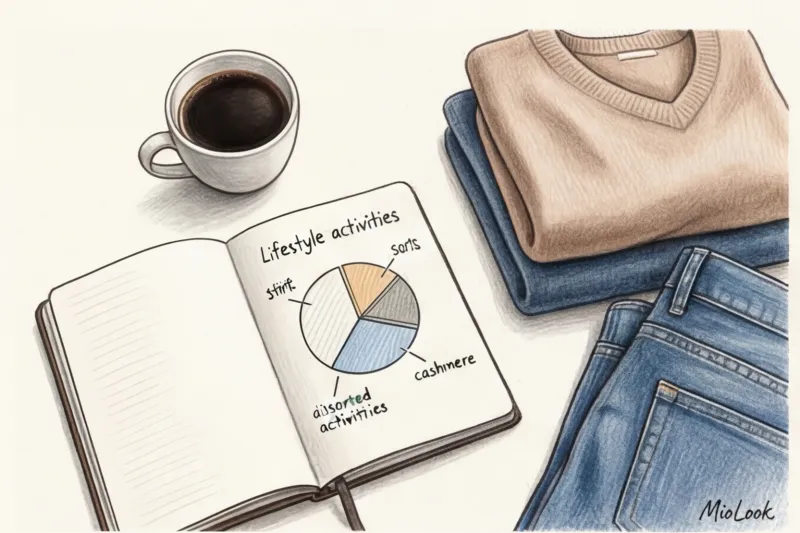
It's a typical conflict between the "real me" and the "fantasy me." Her closet was bursting with silk, but she physically had nothing to wear for coffee. When we analyzed her actual schedule, we invested in premium athleisure: thick cashmere hoodies, structured leggings, and high-quality cotton T-shirts with a weight of at least 200 g/m². And the "nothing to wear" problem vanished.
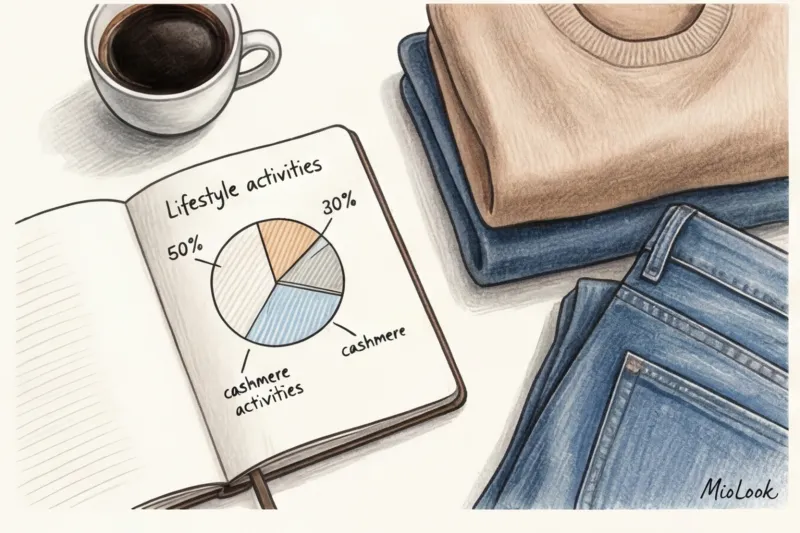
Practical exercise "Life Diagram":
Take a piece of paper and draw a circle. Divide it into sections proportional to your time (office, home, sports, evening outings, walks with the kids). Now look at your wardrobe. Are the proportions consistent? If 70% of your time is spent at work without a dress code, and 50% of your closet is filled with sheath dresses and stilettos, you've found the root of the problem.
Access to MioLook for €0.99 — one-time payment
A smart AI stylist will select the perfect look based on your real lifestyle and the clothes you have.
Get access — €0.99 onceFabric and Wear Analysis: A Textile Expert's Perspective
How do you know when an item is time to save it and when it's time to part with it? I always ask my clients to look not at the brand, but at the behavior of the threads. Textile science is unforgiving.
Take elastane (aka spandex), for example. It's often added to mass-market blended fabrics for a cheap fit. But polyurethane fibers are essentially rubber. Over time, as well as from hot water and drying on a radiator, these microfibers burst. The result? Irreversibly stretched knees on jeans and blisters on the elbows of a cardigan. If a fabric loses its ability to return to its shape (recovery stretch), the garment is dead. It cannot be saved.
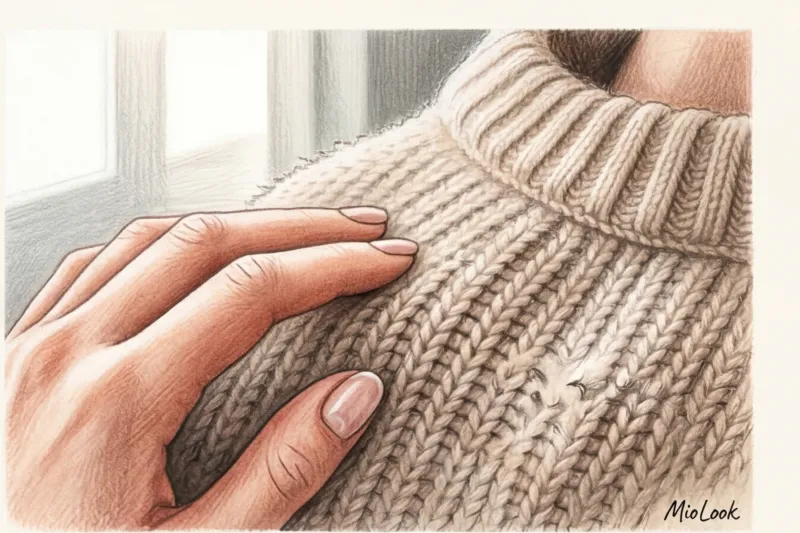
Distinguish between the types of pilling (pilling):
- Cheap peeling: On polyester or acrylic, short fibers break and twist, but the strong synthetic warp thread prevents them from breaking off. Hard, prickly pilling forms, difficult to remove even with a machine. It's best to dispose of such items.
- Noble peeling: On 100% long-fiber merino or cashmere, fuzz can also form where it rubs (like from a bag). However, these fuzzies are soft and can be easily removed by hand or carefully trimmed with a special machine, leaving the sweater looking like new.
Important limitation: My advice for saving and restoring clothes doesn't work if the garment was originally cut crooked (the grain is broken). If the side seam on a T-shirt has sagged onto the stomach after washing, no tailor can fix it; the fabric's geometry is distorted.
Smart sorting algorithm: 4 categories for eco-friendly sorting
Abandon the "keep it or throw it away" school system. We're moving toward conscious auditing. According to a reputable organization WRAP (Waste and Resources Action Program) , extending the active life of clothing by just 9 months reduces its carbon footprint and water consumption by 20-30%.
The Gold Reserve
This is where your absolute favorites come in. These are the items that fit perfectly, don't pull anywhere, have excellent composition, and meet the needs of your Life Chart. Their Cost Per Wear approaches zero because you wear them constantly. These items are the foundation of your style.
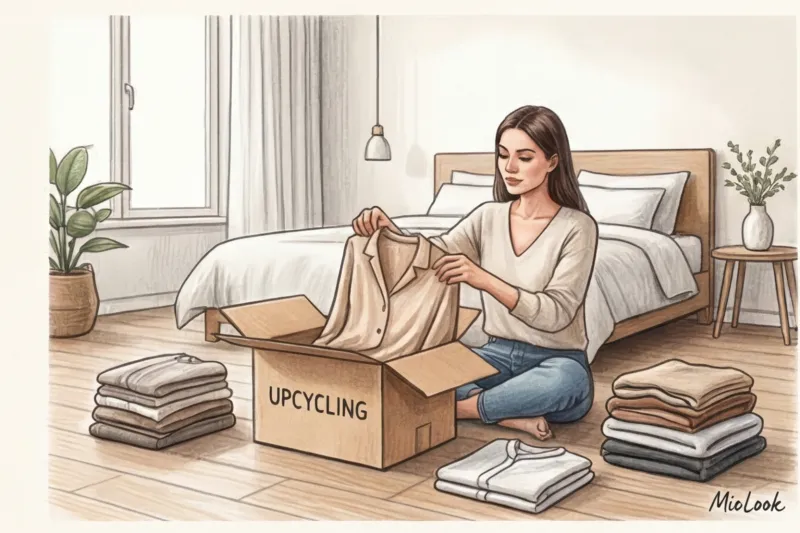
Repair & Upcycle
High-quality items that require professional attention. Remember the secret of a prestigious "old money" wardrobe: items look expensive not because of logos, but because of a custom fit. A jacket made of good wool Massimo Dutti A tailored jacket will look far more luxurious than a casually fitted luxury brand jacket. Set aside items for dry cleaning, button replacement (replace plastic with horn or metal!), and length adjustment.
The Quarantine Box
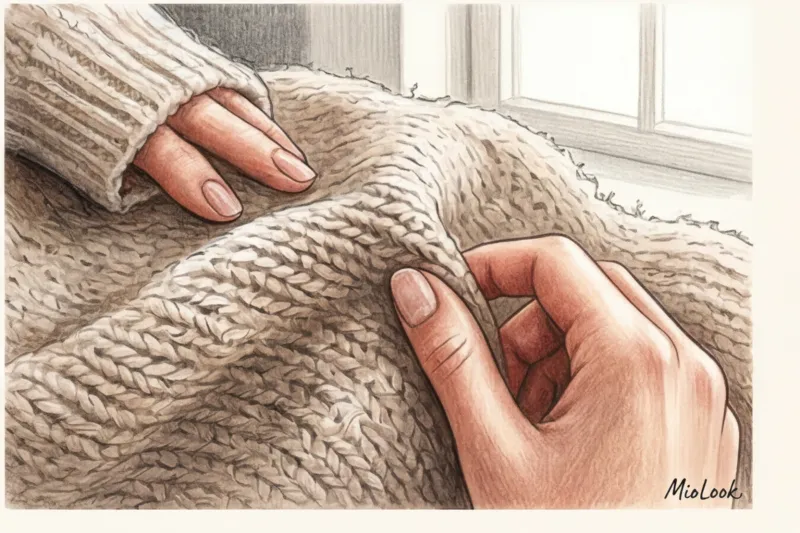
A box for things that evoke emotional doubts. That dress you wore on your first date, or those jeans you're planning to lose weight in. Put them in a sturdy suitcase and stash them on the top shelf for 3-6 months. If during that time you haven't remembered their existence or wanted to take them out, say goodbye. The emotional attachment will cool.
Eco-friendly Disposal
I am categorically against trash bins. We live in the era of a circular economy. Branded items (even mid-range ones like COS or Arket ) sell well on resale platforms. Donate items in good condition to charity or organize a swap party with friends. Take worn or damaged items to textile recycling centers (most large stores have them).
Your perfect look starts here
Join thousands of users who look flawless every day with MioLook. Digitize your "Golden Fund" right now.
Get access — €0.99 onceHow to figure out what really suits you by examining the remaining items
The most valuable part of decluttering isn't getting rid of the clutter, but rather analyzing what's left. Take a close look at your "Golden Fund."
Instead of squeezing yourself into stereotypical body types ("pear," "apple," "hourglass"—those terms are long overdue for a noughties retirement), look for common denominators in your favorite things.
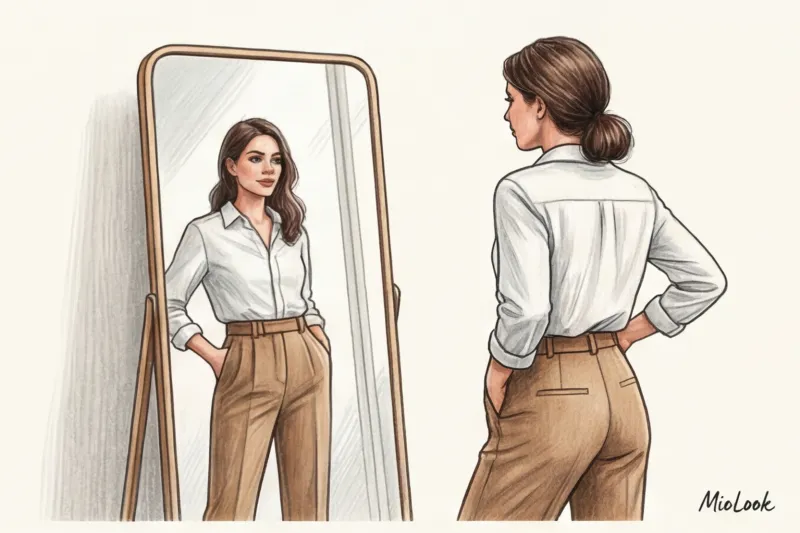
Ask yourself three questions about every item you love to wear:
- Texture: Is the fabric dense and shapely (cotton, gabardine, heavy wool) or flowing and soft (viscose, silk, fine knit)? This will tell you which fabric's texture complements your natural linearity.
- Freedom of fit: Are you comfortable with some air between your body and the fabric, or do you prefer an architectural, form-fitting fit?
- Color temperature: What shades predominate? Don't try to tie this to a mythical "fall color type," just evaluate whether the items are warm (with a yellow undertone) or cool (with a blue undertone).
One day, a client and I analyzed her favorite pieces and realized something surprising: all her successful off-the-shoulder pieces had dropped shoulders and a V-neckline. Once we figured this out, shopping took her 15 minutes instead of agonizing hours in fitting rooms.
Checklist: 5 Steps to Maintaining a Clutter-Free, Smart Wardrobe
A wardrobe cleanup is pointless if you go to a sale the next day and buy everything in sight. To make the system work, implement these 5 habits:
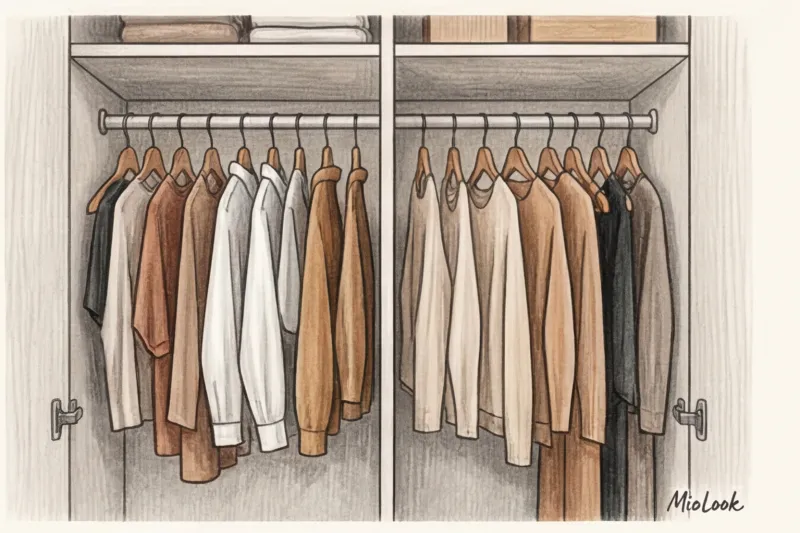
- The "One in, One out" rule. If you buy a new sweater, the old one (or something similar in function) must go. This strict rule prevents overcrowding.
- Wishlist instead of impulse shopping. As you sort through your outfits, write down what you need to complete the look. For example: "I need dark blue straight-leg jeans with no fading." Download this list to MioLook app , and buy strictly according to it.
- Invest in the right hangers. Throw away thin metal hangers from the dry cleaner—they distort the shoulders of your clothes. Use wooden hangers for heavy outerwear and thin velvet ones for blouses (they prevent slippage).
- Create "air" in the closet. Clothes need to breathe. If you have trouble pulling apart hangers to get a shirt, the fabric will wrinkle, fray, and wear out faster. Fill the hanger to a maximum of 80%.
- Care as an investment. Wash items less frequently. Wool sweaters and jeans often respond well to simply airing them out on the balcony or steaming them (hot steam kills bacteria and odors without damaging the fibers as harshly as machine washing).
Your wardrobe isn't a museum exhibit or a storage unit. It's a living instrument that should serve your current goals, protect you, and give you confidence. If a piece drains your energy with endless smoothing, tugging, or makes you feel guilty, it has no place in your life. Keep only what works for you.