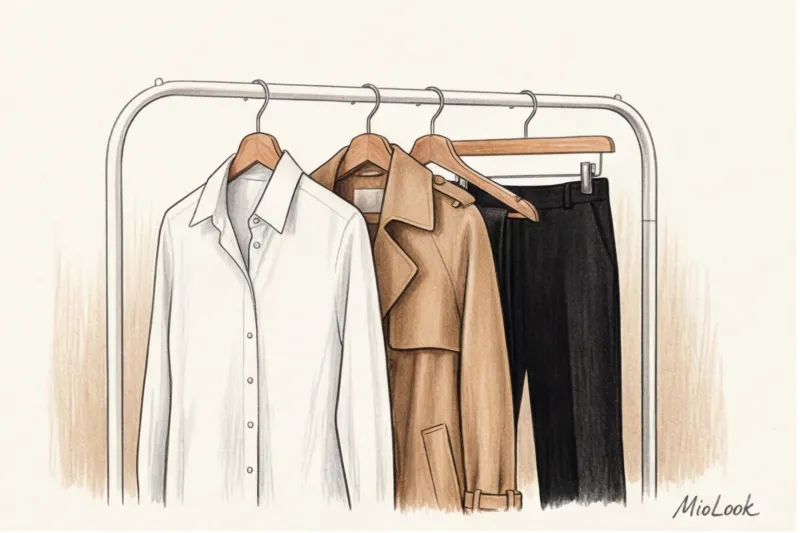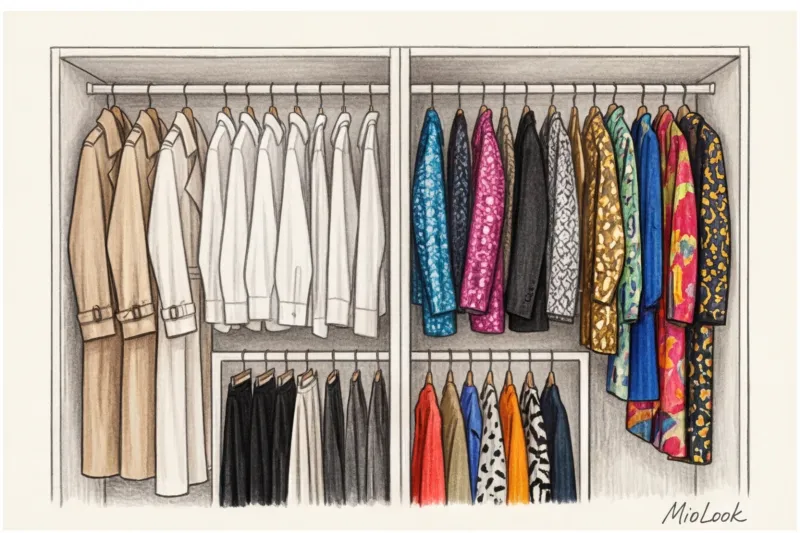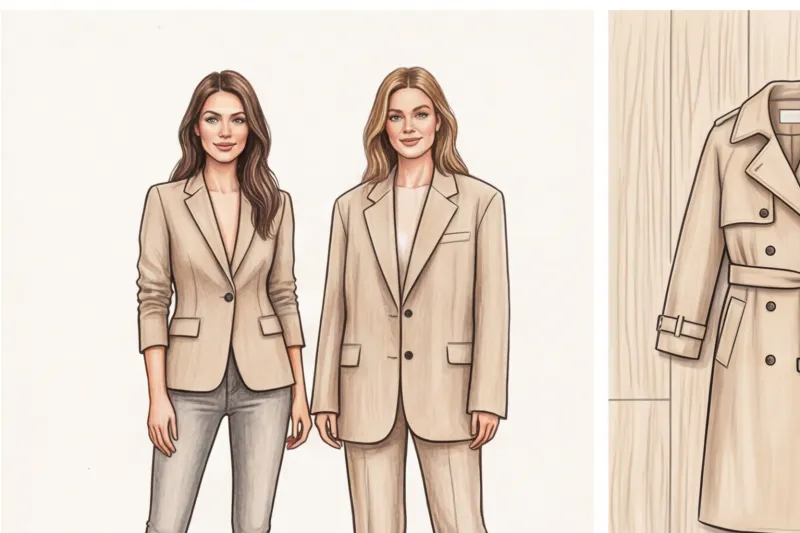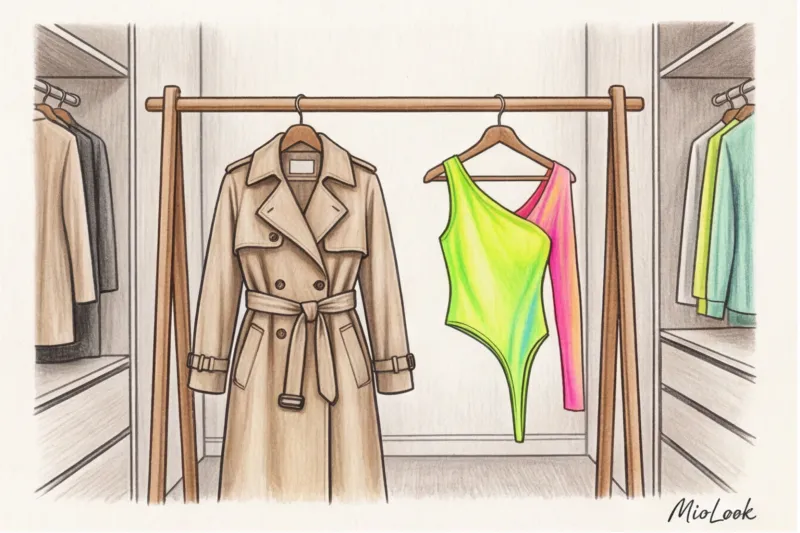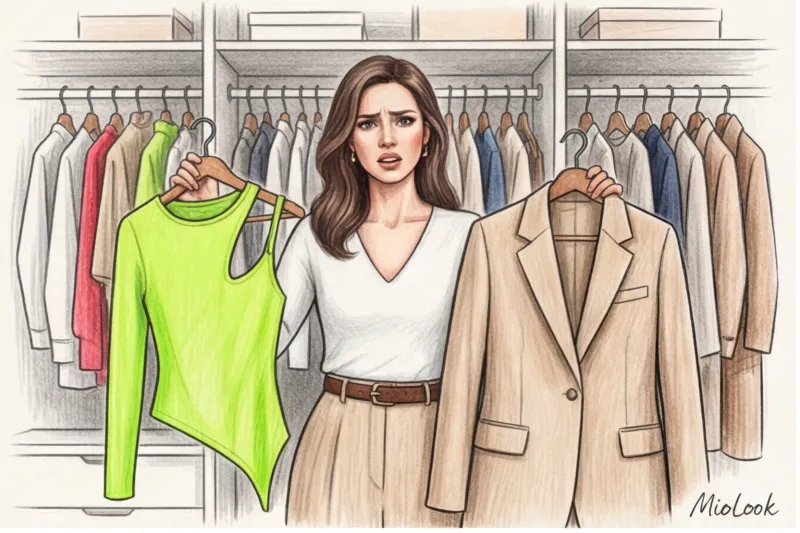
Have you ever noticed that the most treasured item in your closet is often that extravagant new piece you've worn exactly once? You're standing in front of your open closet, holding a neon green asymmetrical top you bought in a fit of inspiration in one hand and your trusty beige blazer in the other. Sound familiar? You're not alone. Today, I, Darina Marchenko, will show you... How to adapt trends to your style , without becoming a victim of aggressive marketing and maintaining its individuality.
We won't be discussing trivial advice like "just add a trendy handbag." I'll share with you a professional deconstruction method I use when shopping with clients. We've covered in detail why any style analysis should begin with an honest audit of your real life in our The Complete Guide: How to Find Your Style: A Guide for Women Now let's figure out why new purchases so often end up on hangers with the tags still attached.
The Fast Fashion Trap: Why New Fashion Items Often End Up in Closets with the Tags Still On
The gap between the glossy image on social media and our real lives is colossal. When we buy sequins on Tuesday morning, we're not buying a blouse. We're buying a fantasy of ourselves—that bold, free woman who drinks cocktails every evening on Patriarch's Ponds or in Soho. The problem is that on Wednesday morning, this "new us" has to go to the office, take the kids to school, or sit through hours-long Zoom calls.
According to the extensive McKinsey State of Fashion (2024) report, 68% of consumers today experience severe "wardrobe fatigue" due to the inappropriate pace of microtrend changes in the fast-fashion segment. The statistics I always share with my clients are merciless: on average, a trendy microtrend item is worn only 3-5 times before being consigned to the trash or a back shelf.
"We often become hostages to rigid typing systems. After reading that you're a "Dramatic" according to Kibbe, you might conclude that comfortable oversized clothing is strictly forbidden. This is fundamentally wrong. Any trend can be tamed if you understand how it works."
Rigid frameworks prevent us from being flexible in our approach to innovation. Fashion should serve you, not you, fashion.
Access to MioLook for €0.99 — one-time payment
A smart AI stylist will select the perfect look based on your individual parameters and lifestyle.
Get access — €0.99 onceDeconstruction Method: How to Adapt Trends to Your Style
When you see a stunning total look on the catwalk or in a Zara window, your brain instinctively wants to copy it entirely. This is a major mistake. As a practicing stylist, I teach my clients the "Trend Deconstruction" method. This is the ability to mentally break down any item into four basic molecules: color, texture, print and silhouette.
The main rule: to ensure a piece stays in your closet, borrow only one or at most two "molecules" of the trend, leaving your usual elements intact. If you adore sporty style, but the world is going crazy for "quiet luxury," you don't need to rush out and buy a Max Mara cashmere coat. Take just the "color molecule" of the trend—a monochrome beige palette—and apply it to your favorite hoodies and joggers made of heavyweight cotton (at least 300 g/m²).
Herein lies my favorite paradox, one that fashion magazines rarely cover. A popular myth states, "To look modern, you must wear trendy styles." In reality, silhouette is the most dangerous part of a trend. If a trendy low waist visually cuts off your legs and distorts your proportions, ignore it! Incorporate trends exclusively through current colors and textures in tried-and-true, personalized, ideal shapes.
Adaptation through color: tips from a colorist
As a certified colorist, I regularly see genuine panic in my clients' eyes. For example, when Pantone 13-1023 Peach Fuzz is announced as the color of the year, what should you do if this warm, washed-out shade makes the face of a "winter" girl look sickly yellow?
The answer lies in the portrait zone rule. We move unsuitable but desirable shades down—into pants, skirts, shoes, or bags. Your "safe" color should always remain near your face. You can read more about how natural palettes work in the article 12 Color Types of Appearance: A Guide to Choosing a Palette.
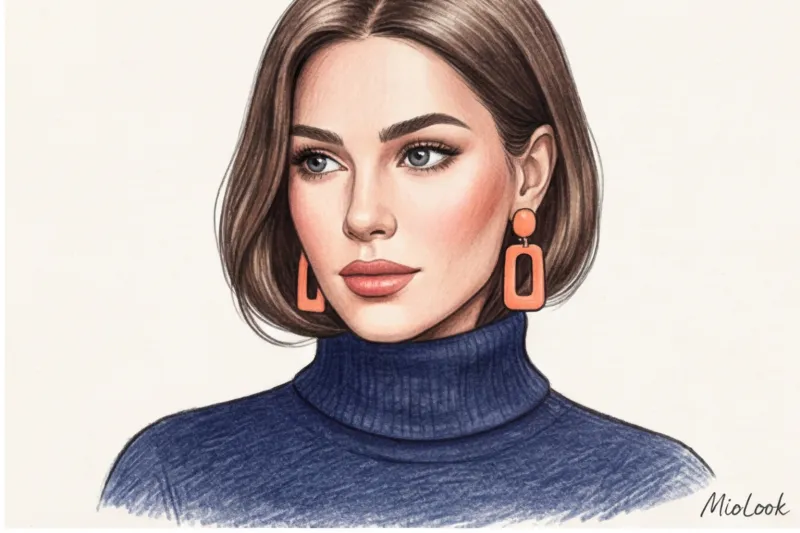
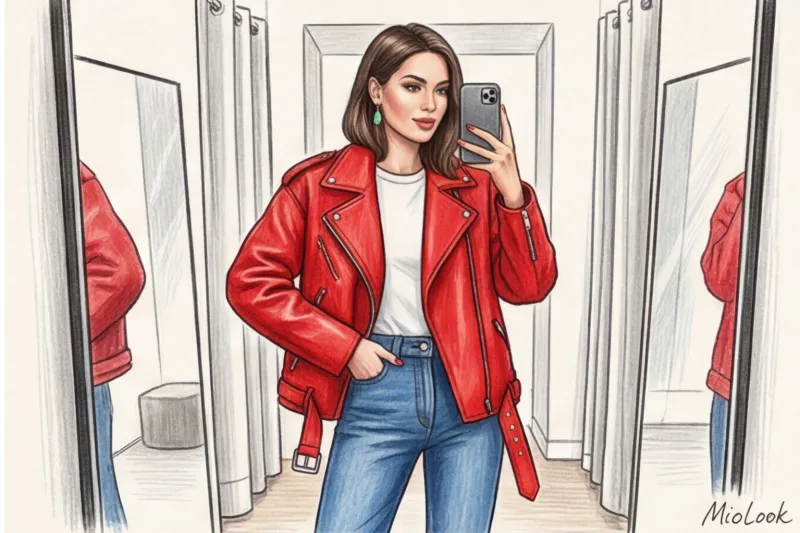
The second trick is to control temperature and saturation. You don't have to wear the exact neon red shown on the runway. Find your own version: for a softer complexion, it's a muted terracotta; for a deeper complexion, a rich burgundy or wine. The red trend is on trend, but your individuality isn't erased.
Adaptation through texture and print
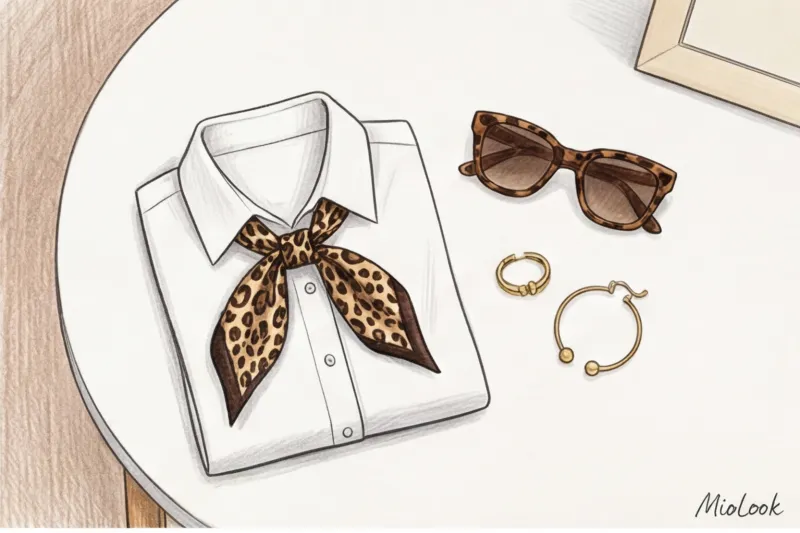
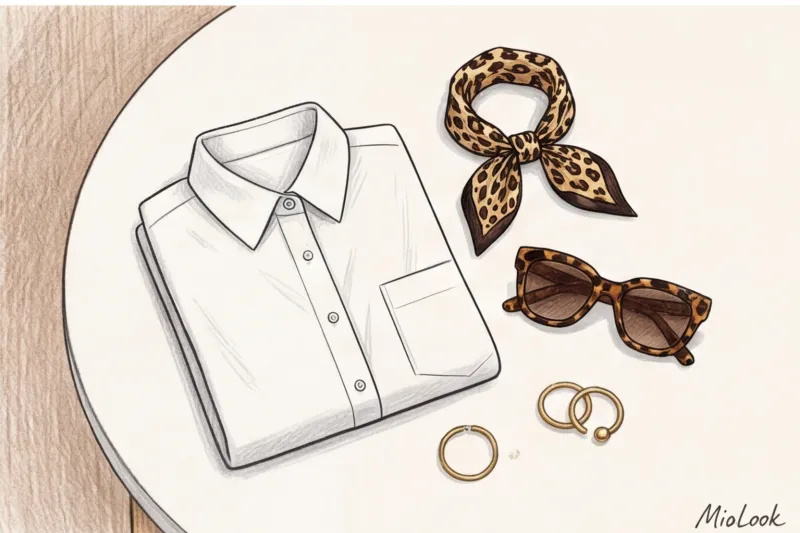
Aggressive animal prints (leopard, snake) make a comeback every few seasons. But if your style DNA is strict minimalism in the spirit of COS or Jil Sander, a leopard slip dress will feel like a Halloween costume.
Instead, use microdoses. A sleek black turtleneck, straight-leg wool trousers, and—check it out—a skinny zebra-print belt or a textured embossed leather baguette bag. It's a safe testing ground for experimentation.
A real-life example: I had an introverted client come to see me. Persuaded by her friends, she bought an ultra-fashionable crop top with large metallic sequins. At our meeting, she admitted she felt "like a Christmas tree" in it. We discussed the trend: she liked the metallic sheen itself, but not the overt texture. The solution was a matte silk blouse (19 momme) in a cool steel shade. The metallic trend was still there, but adapted to her comfort zone.
Your perfect look starts here
Join thousands of users who look flawless every day with MioLook. Artificial intelligence will help you incorporate new textures into your existing style.
Get access — €0.99 onceMacro and micro trends: where to invest and where to save
To ensure your wardrobe works for you, you need to understand the differences in the life cycle of fashion trends. The authoritative agency WGSN (World Global Style Network) clearly distinguishes between macro and micro trends in its reports.
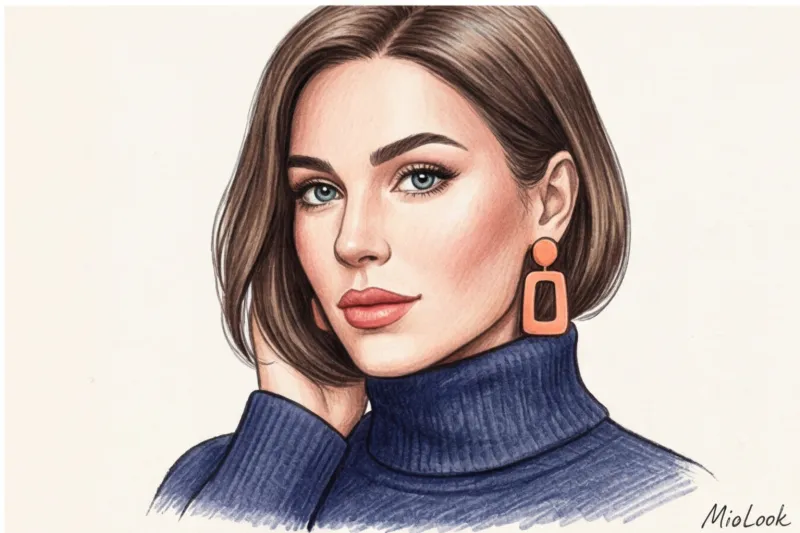
Macrotrends last from 5 to 10 years. They represent global changes in society. For example: total oversizing, a focus on eco-friendly materials, the blurring of gender boundaries in cuts, and a focus on absolute physical comfort. This is where you should invest your money. When you buy a loose-fitting cashmere sweater, you know it will be relevant for years to come.
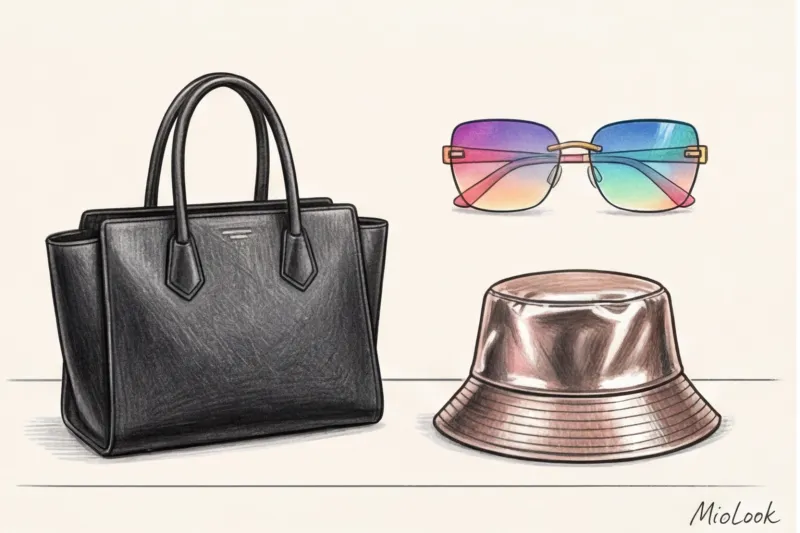
Microtrends (zero-length sunglasses, mesh gloves, neon micro-bags) flare up on TikTok and fade away within three to six months. Investing hundreds of dollars in them is a financial crime against yourself. This is where vintage shops, resale platforms, and high-quality mass-market brands come to the rescue.
Important anti-advice from a stylist: never buy so-called "expensive basics" if they're tailored to the latest trends. A basic white T-shirt with oversized shoulder pads will cease to be a basic the moment shoulder pads go out of style. For more tips on seasonal investments, check out this article. Spring/summer fashion trends: what to invest in?.
The 80/20 Formula and Integrating Trends into Everyday Work
My golden rule, which I implement during every wardrobe review, is the 80/20 formula. Exactly 80% of your items should reflect your real lifestyle, your stylistic DNA, and consist of a perfectly fitting base. The remaining 20% is a testing ground for fashion experiments, the spices that make a dish delicious. If the base capsule wardrobe order, any trendy thing will fit into it without any problems.
How does this work in a strict dress code environment? Another case from my practice: a client, a top manager at an IT company, wanted to implement the cutting-edge trend of sheer fabrics. Clearly, a sheer blouse worn over bare skin at a board meeting is taboo. We adapted the idea to smart casual for women: We took a sheer chocolate-colored silk organza blouse and wore it over a thick, opaque, tone-on-tone ribbed top, and then layered it with a structured jacket.
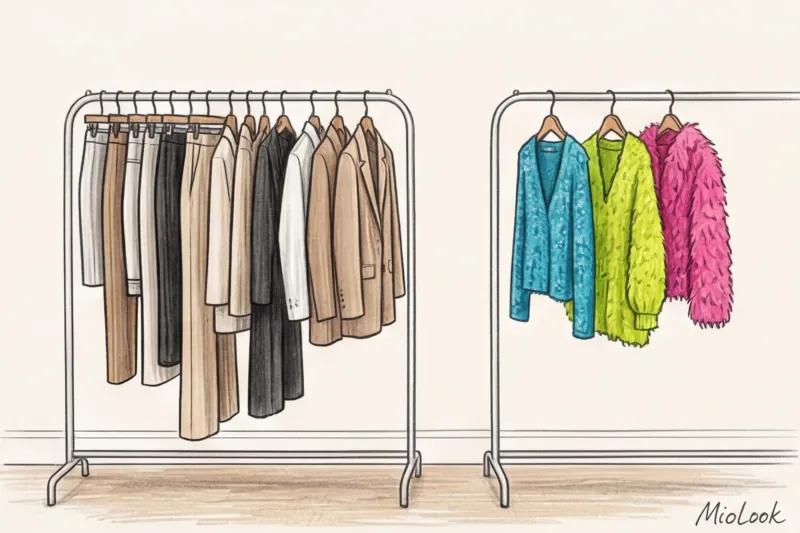
Trend followed? Yes. Corporate etiquette violated? No. Layering saved the day. This is a prime example of how pairing mistakes most often occur when trying to wear a trendy item with a decidedly outdated, out-of-shape base.
Ready to get started?
Try MioLook's free plan—no strings attached. Take a photo of your essentials, and the app will suggest the 20% of trends you're missing.
Get access — €0.99 onceStylist's Checklist: 5 Questions to Ask Before Buying a New Fashion Trend
Save this section, take a screenshot, and open it every time you're standing in the fitting room at H&M, Uniqlo, or a luxury boutique, holding a single-use item. These 5 questions have saved my clients hundreds of thousands of euro:
- Will I be able to create at least 3 looks with this item right now from what's already hanging in my closet? If you need to buy additional shoes and special trousers to integrate the new item, return it to the hanger.
- Does this item fit into my actual lifestyle for the next month? (Not fantasies about a vacation in Italy in a year, but real everyday life).
- Am I physically comfortable? If the fabric (for example, 100% polyester without lining) is itchy and the cut is restrictive, you won't wear it twice.
- Does the message of this item conflict with my personal brand? Does it evoke the associations you want to convey to others?
- Would I have bought this if I hadn't seen it on three of my favorite Instagram influencers yesterday?
Trends are a tool, not a law. Like salt in cooking: a pinch makes a dish a masterpiece, but too much makes it inedible. You wouldn't eat salt with a spoon, would you? Don't let the fashion industry dictate your rules. Deconstruct, play with color and texture, but always stay true to your silhouette and comfort.