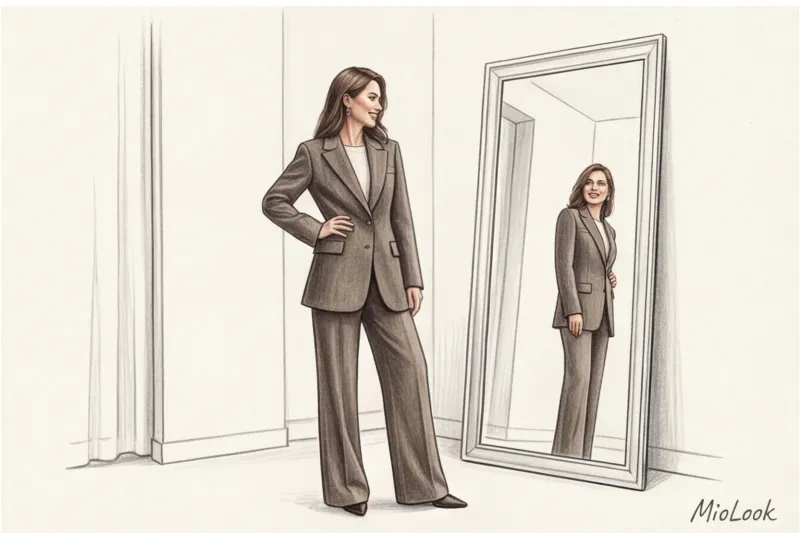
I sincerely don't understand why, in the 21st century, beautiful, shapely women are still equated with the produce section. When a client sits down in the chair across from me and sighs sadly, "Julia, I'm a typical pear; I can't wear light-colored pants," I want to ban those glossy magazines from the 2000s forever. The classification of "apples," "pears," and "inverted triangles" isn't just outdated—it causes body dysmorphia and forces women to fight their own bodies daily.
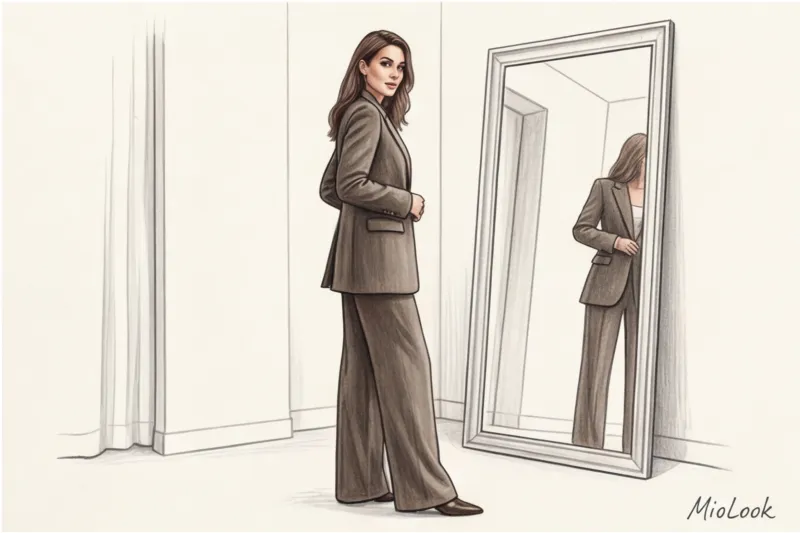
If you are looking for an answer to the question, How to choose clothes according to your body type , I propose a radical shift in focus. We will no longer "hide" or "mask" anything. Instead, we will apply an architectural and engineering approach to wardrobe construction. As we have already discussed in detail in our a guide to finding your clothing style Your lifestyle and personal comfort always come first. Today, we'll explore how to use geometry, focal points, and the physics of luxurious fabrics to create a flawless silhouette, no matter your weight.
How to choose clothes for your body type: why it's time to forget about "apples" and "pears"
The fruit body type system was popularized in the 80s and 90s. Its main problem is that it's built on negativity: it focuses your attention on "flaws" that you desperately need to hide under layers of fabric. It's psychologically draining. You start choosing clothes not based on "how beautiful it is," but on "does it reliably hide my hips?"
Over 14 years of working as a stylist and studying luxury brand patterns, I've developed a rule of thumb: trying to hide volume with shapeless clothing always results in its visual expansion. I worked with a client, Anna, a successful financial director, who spent years hiding her belly under loose linen robes and boho-style cardigans. She thought the oversized garments were saving the day. In reality, however, the shapeless clothing made her look bulky and deprived her of status.
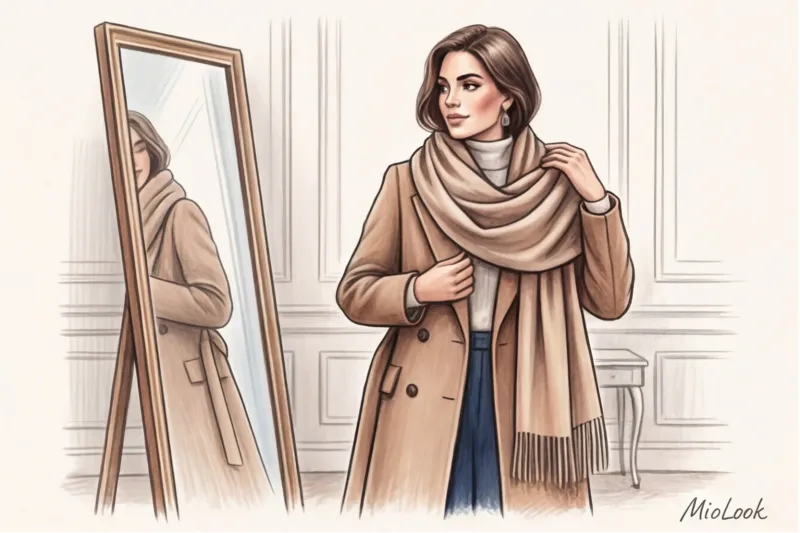
We tried an experiment: I dressed her in a structured, double-breasted jacket made of thick English wool with a crisp, clearly defined shoulder line. The effect was astounding. Visually, Anna lost about five kilograms, her posture straightened, and her silhouette became a single, stately line. The secret to a slim figure lies not in the width of the garment, but in its structure and ability to hold its shape.
Access to MioLook for €0.99 — one-time payment
A smart AI stylist will select the perfect look based on your proportions and silhouette.
Get access — €0.99 onceAnatomy of Style: Geometry and Proportions Instead of Fruity Metaphors
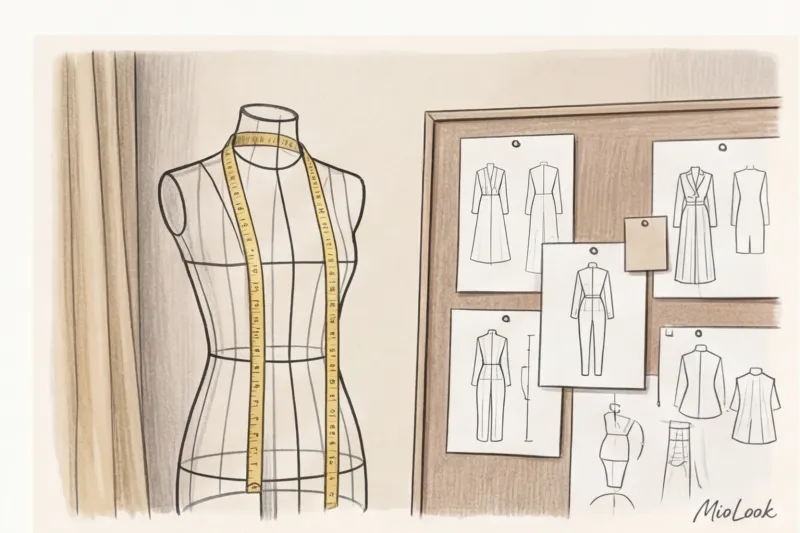
Instead of measuring your hips and getting frustrated, let's turn to the golden ratio rules used by Italian tailors. The ideal, harmonious silhouette is based on a proportion of 1/3 to 2/3. This means that your top (from the crown of your head to your waistline or the beginning of your trousers) should visually take up one-third of your figure, and your bottom (your legs) two-thirds.
The most common mistake I see on the street is the 1:1 ratio. Imagine an untucked shirt that ends right at mid-thigh, paired with jeans. This horizontal line cuts the figure in half, visually shortening the legs and making the hips appear wider. Just tuck the shirt into high-waisted trousers (creating that same 1/3 to 2/3 ratio), and your legs instantly "grow" ten centimeters.
When assessing your proportions, consider the vertical (the ratio of leg length to torso length), not just the horizontal (shoulders and hips). Your natural waist may be high (short torso) or low (long torso). And it's not always necessary to emphasize your waist with a belt—sometimes a more elegant silhouette is more flattering.
Vertical lines: the secret to visually elongating the silhouette
If you want to look taller and slimmer, monochrome is your best friend. Creating a single vertical color scheme (for example, navy blue pants, a navy cashmere sweater, and matching shoes) draws the eye down, avoiding problem areas.
Additional silhouette-stretching tools that premium brands actively use:
- Arrows on trousers: An ironed or stitched crease creates a strong vertical line that works as an optical illusion of length.
- Deep V-neck: Opens the collarbones and lengthens the neck.
- Long lapels: An unbuttoned classic coat or trench coat creates two parallel vertical lines on the sides, making the figure within this “frame” incredibly fragile.
Avoid color blocking (harsh color contrasts) in areas you don't want to emphasize. A bright white belt on a black dress will immediately draw the eye to your waist.
Focal points: managing the attention of others
There's a brilliant concept in styling called "distraction." We don't waste energy hiding what we don't like. We focus the spotlight on what we love. You control the attention of others by using focal points.
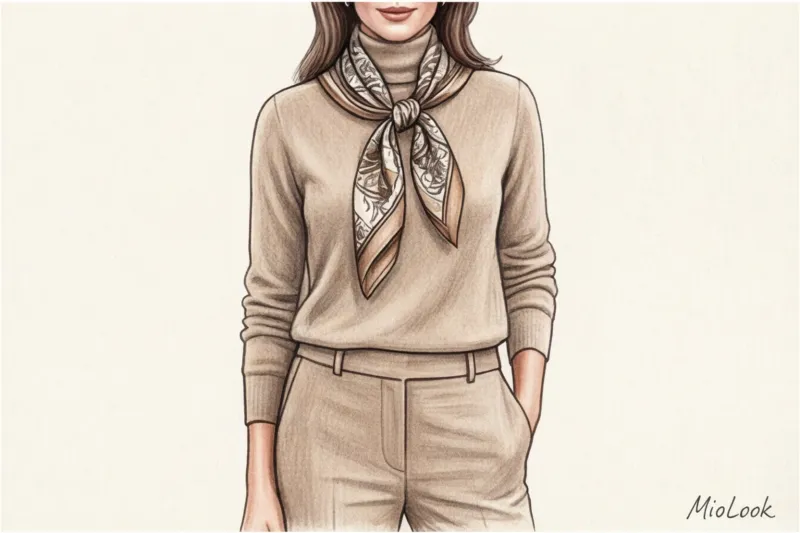
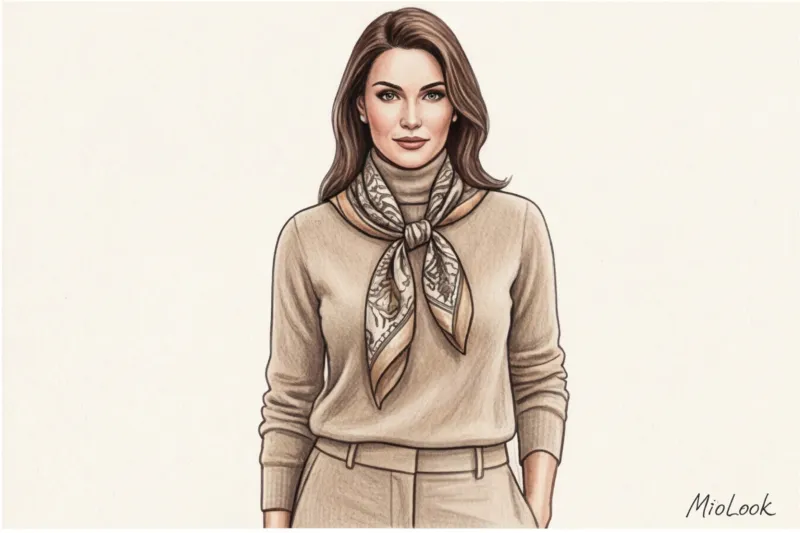
If you don't want to draw attention to your hips, wear simple, dark-toned matte trousers and accessorize your lower half. A luxurious silk scarf, statement vintage earrings, a designer brooch on your jacket lapel, or simply a perfectly styled hairstyle and bright lipstick will draw people to your eyes and face, ignoring your lower half. Remember the basic rule of optics: light and shiny textures draw the eye and add volume, while matte and dark colors absorb light and flatten out your figure.
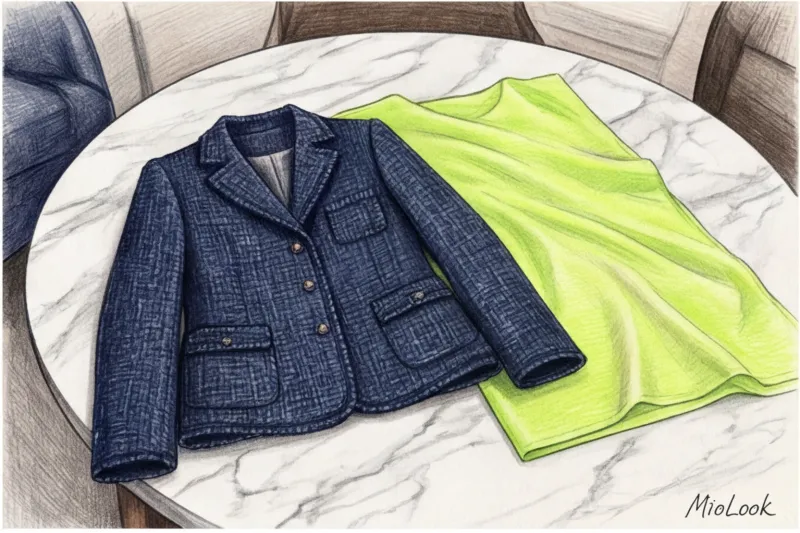
Fabric Physics: How Fabric Dictates Fit
According to McKinsey's global report "State of Fashion 2024," premium consumers have become 40% more attentive to the composition and density of fabrics, rejecting flimsy materials. And this is the best choice for your silhouette. Cheap, thin viscose or polyester knitwear is the absolute enemy of any figure over twenty.
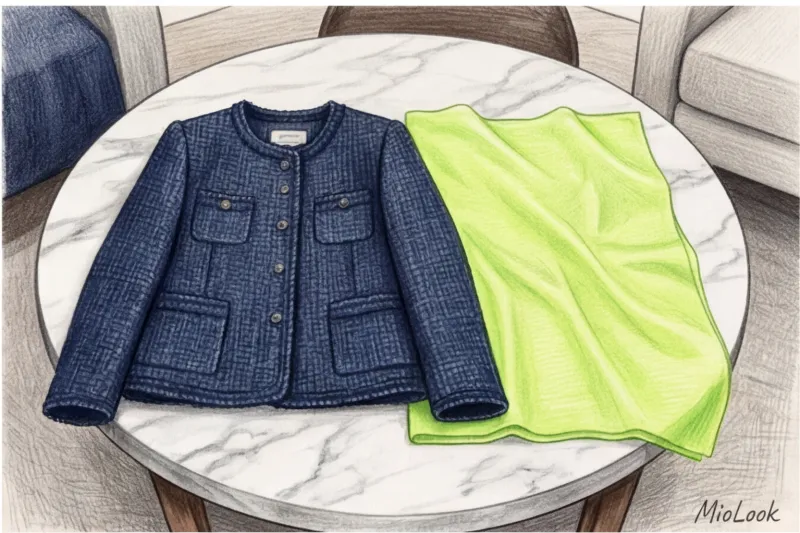
Thin fabrics become staticky, cling to the body, and treacherously highlight the contours of your underwear, the slightest unevenness of your skin, and those creases you didn't even know you had. In contrast, investing in the right textures pays off immediately. Thick cotton, gabardine, shape-stabilizing cashmere, heavy silk, and tweed all work on the principle of the "frame effect."
The principles of bespoke tailoring from London's Savile Row dictate that the fabric should have sufficient heft to drape over the body rather than cling. Think of the iconic Chanel jacket. Why does it fit so perfectly on both a size zero and a plus-size figure? It's all about the rigid shoulder structure and the weight (the famous chain) at the hem. A garment made of dense, premium fabric maintains its shape regardless of any slight fluctuations in weight.
Ready to get started?
Try the MioLook plan for free—no commitments required. Digitize your wardrobe and create stylish outfits in one click.
Get access — €0.99 onceCustom tailoring and fitting: the real secret of "old money"
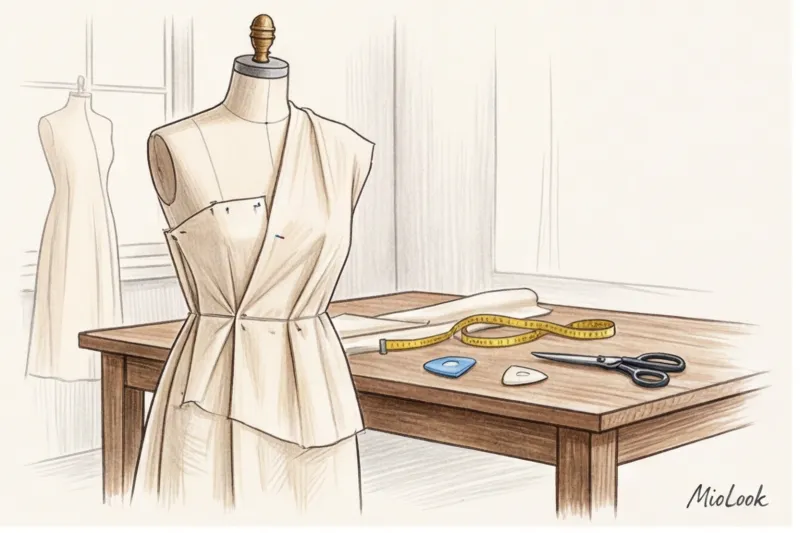
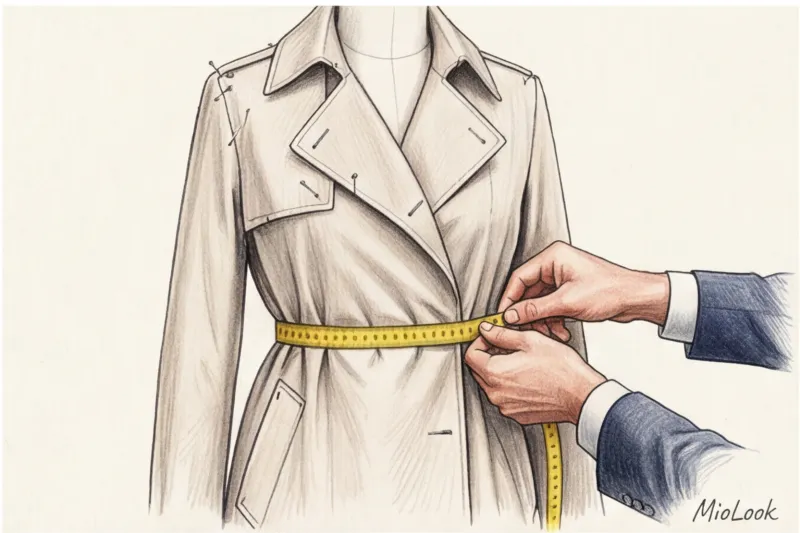
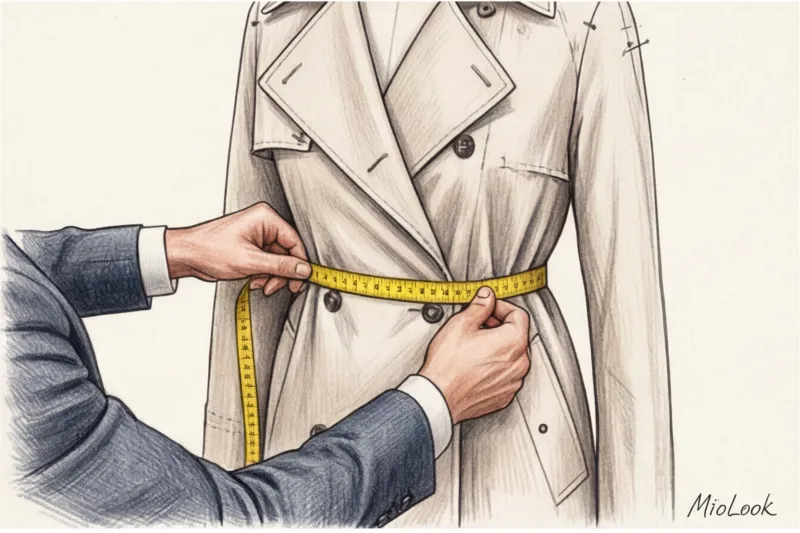
There's a pernicious myth that high-quality store-bought clothing should fit you perfectly right in the fitting room. This is a lie. Brand patterns (even in the high-end luxury segment) are based on an average fit model with specific height and back measurements. If you differ from this mannequin even by a centimeter, the garment will require adjustments.
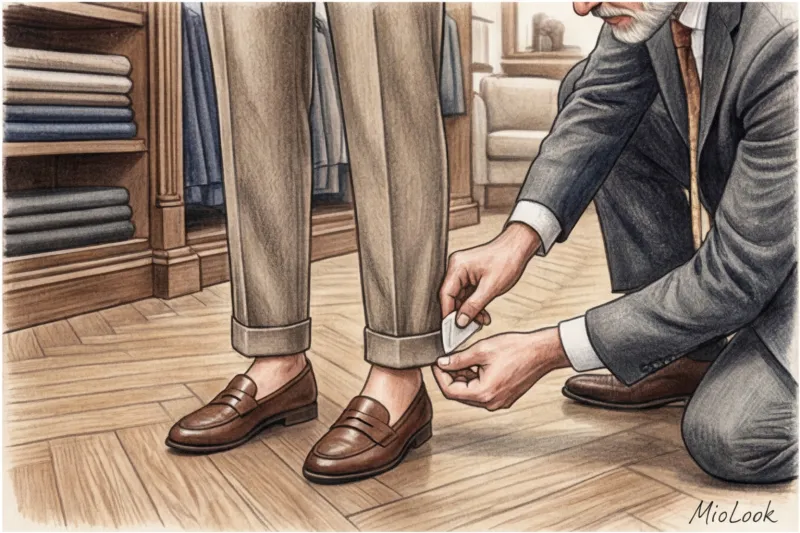
The real secret to the "old money" aesthetic lies in a perfect fit. I'll give you some concrete statistics: about 80% of my VIP clients' wardrobes pass through the hands of an experienced tailor before they even make it to the closet. There are three things that almost always require professional attention:
- Trouser length: It must be calculated for the specific heel height of your shoe, accurate to the millimeter.
- Darts on shirts and jackets: Remove excess volume at the waist and back to avoid the “bubble” effect.
- Shoulder line: The jacket should not hang or fit too tightly around the biceps.
A $20 alteration of basic trousers from a mass-market store like Zara or COS can make them look like they cost $1,000. In the long run, considering the cost-per-wear, it's much more cost-effective to buy one high-quality pair of trousers and have them tailored to your body than to buy five cheap ones that will bunch up at the crotch.
"True elegance is invisible. It's revealed in how the fabric interacts with your body as you move. If you have to tug at your skirt every five minutes, it's bad design, not a bad figure."
However, in fairness, I must point out: this advice doesn't work with everything. If the armhole (sleeve opening) is cut incorrectly and pulls when you raise your arm, or the fit of the trousers is messed up at the factory, even the best Italian tailor won't be able to save the garment. Choose a high-quality base for adjustments from the start.
Wardrobe Analysis: A Checklist for Creating the Perfect Silhouette
Now let's move from theory to practice. To start dressing for your unique proportions, follow these steps this weekend:
Step 1: Conduct a ruthless audit. Get rid of all items made of flimsy fabrics, thin knits, and clothes that are objectively too small or too big. If something makes you breathe hard after lunch, it has no place in your life.
Step 2: Identify your winning areas. Find the two or three most graceful parts of your body. These are usually your wrists, collarbones, ankles, or neck. Roll up your shirt sleeves, wear cropped pants that reveal a slender ankle—these little tricks visually lighten your entire silhouette.
Step 3: Create a structured base. Invest in a heavy double-breasted jacket, straight-leg trousers with a crease in a quality wool blend, and a heavy poplin shirt.
Step 4: Find “your” tailor. Bring him a few of your favorite, but not perfectly fitting, items and you'll be amazed at the difference.
By the way, it is for the automation of these processes that I recommend using the "smart wardrobe" feature in the MioLook app Simply upload your well-fitting items, and the artificial intelligence will automatically create dozens of new combinations, saving you time in the morning.
The final piece of advice I want you to remember is that today, comfort is the new luxury. The silhouette shouldn't resemble medieval corset torture. If clothes make you slouch or cause physical pain, they won't make you more beautiful, no matter how much they cost. Invest in the right cut, premium, dense fabrics, and the services of a good tailor, and you'll forget about the problem of an "unflattering figure" forever.