What is the Kibbe system and why is the classic test hopelessly outdated?
Over 14 years of practice, I've regularly observed the same pattern: a stunningly beautiful woman puts on an ultra-fashionable oversized jacket and suddenly looks like she's wearing a cardboard box. Meanwhile, another woman, a similar size, looks fragile and incredibly stylish in the same jacket. The answer lies not in weight or the proverbial "apple" or "pearl" shape, but in the contours of the body. We discussed the components of personal aesthetics in more detail in the article How to Find Your Style: A Guide for Women But today we'll talk about the technical basis—the geometry of your body.
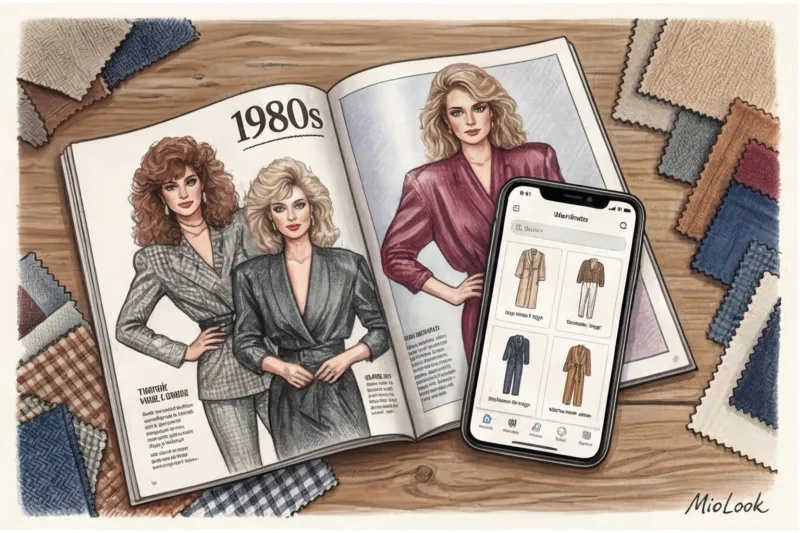
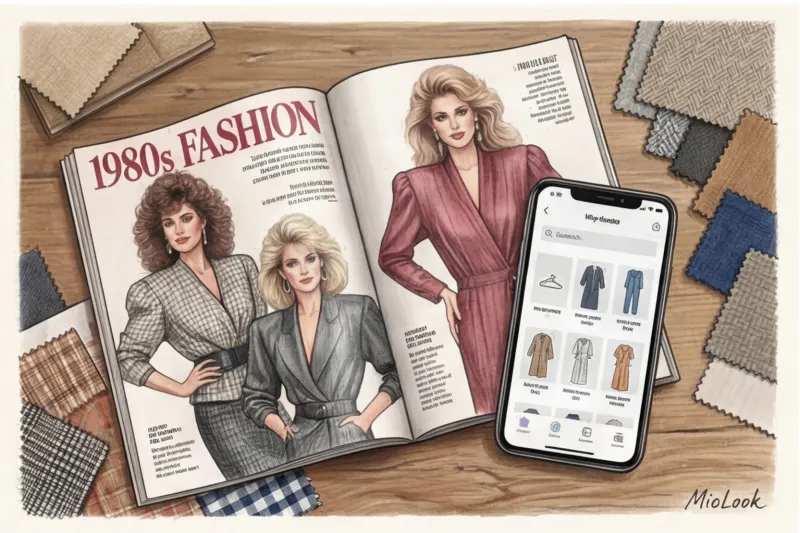
In 1987, stylist David Kibby published the book "Metamorphosis," which revolutionized the industry. He proposed evaluating a figure through the balance of yin and yang—soft tissue and bone structure. In the 1980s, this was a breakthrough. However, today, when trying to understand this system, you inevitably encounter 50-question tests that ask you to measure the width of your nose and the fullness of your lips.
According to WGSN's 2024 global study, 76% of modern women prioritize wardrobe functionality and the adaptability of items to different lifestyles. We're no longer divided into corset-clad "femme fatales" and ruffled "sweet housewives." The trap of the 13 Kibbe subtypes (like "Soft Dramatic" or "Theatrical Romantic") today leads to only one thing: shopping paralysis. Trying to find the perfect match for a complex description from the last century, my clients were simply afraid to buy basics.
Kibbe Types: How to Determine Your Foundation Without Complex Math
The question naturally arises: how can we determine Kibby body types so that they actually work and don't complicate our lives? Forget about micro-measurements of facial features. Your wardrobe is built on macro-geometry. To choose the right cut and fabric texture, we only need to understand two parameters.
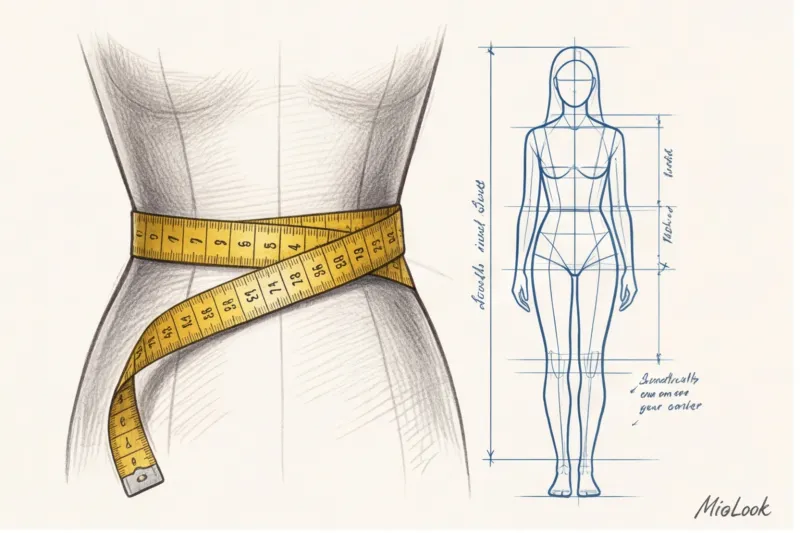
The first one is yours bone structure Stand in front of a full-length mirror. Assess which lines predominate: long or short, sharp or rounded. Note your height (do you appear taller or shorter than you actually are?), shoulder width, and the size of your hands and feet in relation to your body.
Second - soft tissues How is your weight distributed when you gain a few kilograms? Does your natural curves remain even when you're very thin, or does your body immediately become sinewy and angular? This visual analysis, rather than the mathematical calculation of points in an outdated test, provides the key to understanding your curves.
Access to MioLook for €0.99 — one-time payment
A smart AI stylist will select the perfect look based on your natural curves and preferences.
Get access — €0.99 onceYin and Yang in Your Wardrobe: Reading Your Body's Lines
To understand why some clothes fit perfectly while others ruin your figure, you need to understand how Yin and Yang manifest themselves in fabrics.
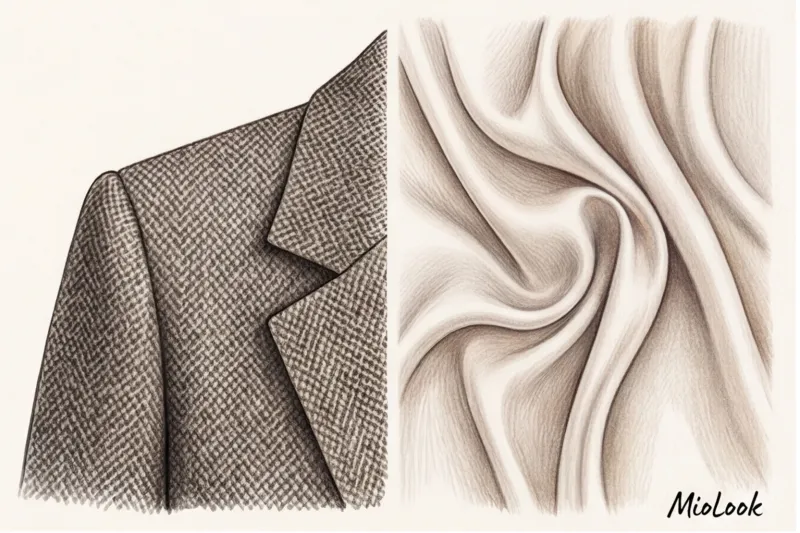
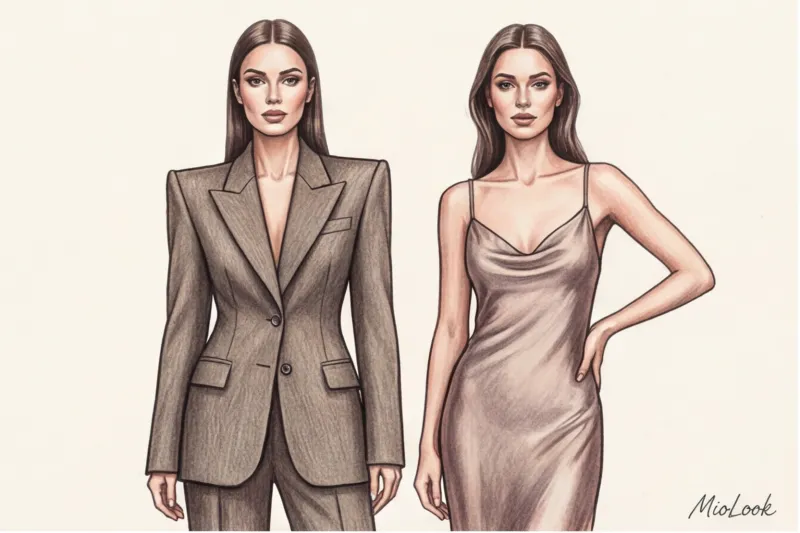
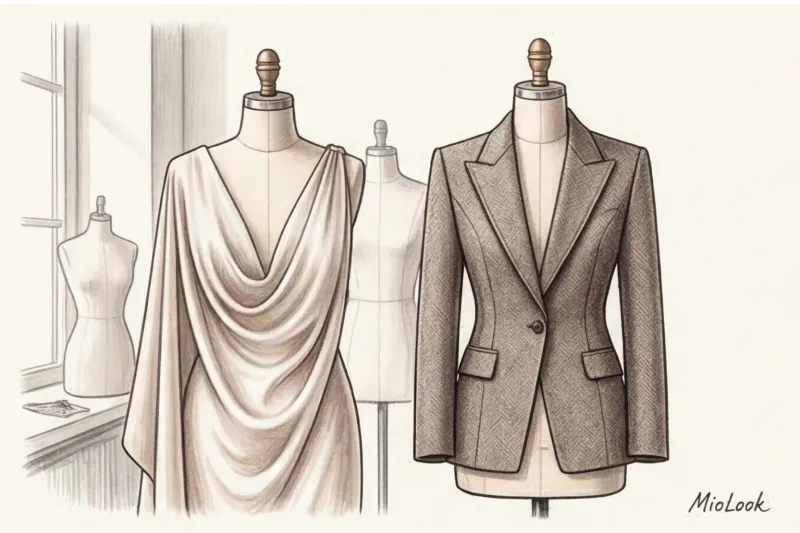
Yang (Male energy in proportions) — these are sharp angles, elongated lines, dense and wide or narrow bones. If your body is high in Yang, your clothing should have a frame. Stiff fabrics that can hold their shape on their own (for example, cotton with a weight of 180 g/m², dense suiting wool, and shape-resistant denim)
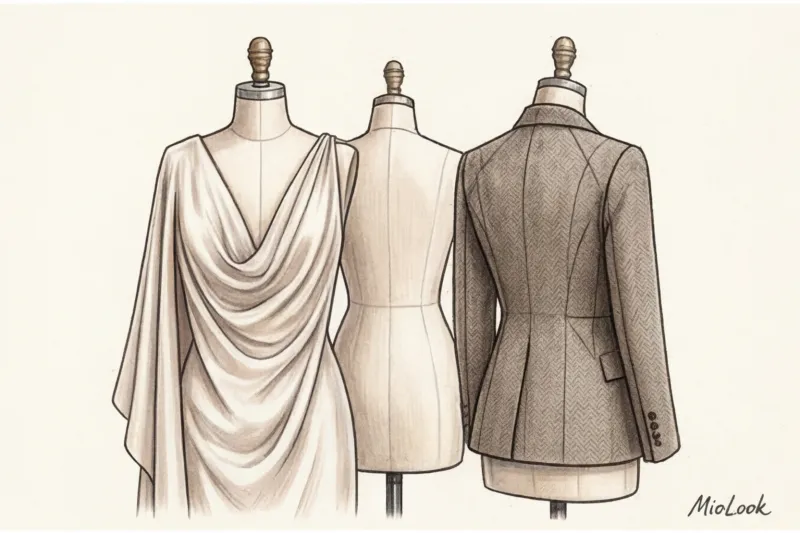
Yin (Feminine energy in proportions) — smooth curves, compactness, and delicacy of bone structure. In clothing, Yin demands draped, flowing materials (viscose with 5% elastane, silk, thin, flexible knits). Such fabrics should flow around the figure, not be rigid.
"The biggest mistake when sorting through your wardrobe on your own is buying pieces that are the opposite of your ideal wardrobe. Stiff linen is guaranteed to make a Romantic look boxy, while thin viscose knitwear will highlight even the slightest imperfections in a Dramatic, making the look look cheap."
I had a revealing case in my practice. A client who works as a lawyer came to me. She was clearly a Natural, but the dress code required her to wear formal suits. She felt like she was wearing someone else's suit because she was trying to wear stiff, smooth gabardine (the fabric of Dramatic and Classic styles). We simply changed the material: we chose a dense but slightly textured wool (tweed and bouclé), and created a slightly more relaxed silhouette, without the stiff shoulders. The dress code was adhered to, but the clothes finally flexed to the curves of her body.
5 Basic Types: How to Adapt Them to Modern Times
In nature, there is no such thing as a completely pure Yin or Yang; they are always mixed in varying proportions. But for practical purposes, it's enough to focus on five basic macro-types: Dramatic, Romantic, Classic, Natural, and Gamine.
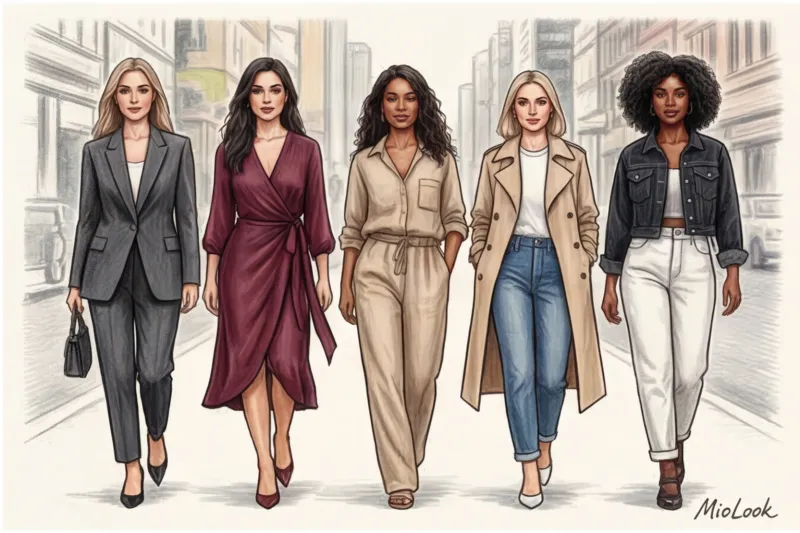
A modern approach to kibbie doesn't prohibit you from wearing jeans or a hoodie. Any body type can wear a basic wardrobe! The only question is the cut, length, and texture of these items. Trends are cyclical, but understanding your own personal style allows you to choose only what flatters you. The oversized style, so popular in recent years, looks completely different on different body types.
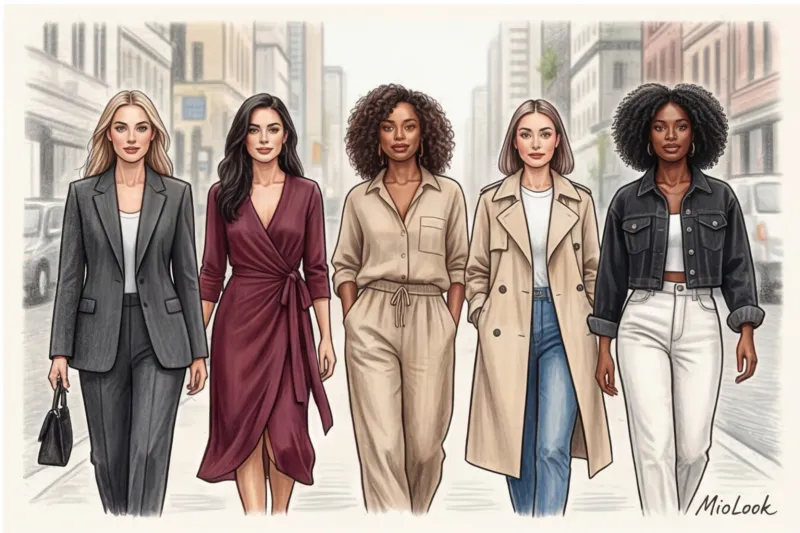
Analyzing Types in Practice: From the Dramatic to the Gamin
Let's look at how this works on specific items you can find in stores today (from mass-market brands like COS or Massimo Dutti to premium ones):
- Dramatic (extreme Yang): Your weapon of choice is structural minimalism. Look for smooth, thick leather, suited wool, and asymmetrical cuts. A jacket should have a defined shoulder band. If you choose a basic T-shirt, choose a thick, smooth mercerized cotton that's opaque and holds its shape.
- Romantic (extreme Yin): Your base is soft knits and viscose. Even in casual wear, you want to accentuate your waist (not with a stiff belt, but with a tailored fit or a soft belt). Instead of a classic men's shirt, choose wrap blouses or flowing cupra shirts. Jeans are best made of soft denim with added elastane.
- Natural (combination of Yang with blunted angles): A relaxed silhouette is your thing. The trendy, relaxed oversize style looks perfect on you. Choose linen, suede, chunky knits, and matte textures. Your clothes shouldn't restrict your movement. If you're wearing a jacket, choose a straight cut, slightly longer.
- Classic (perfect balance of Yin and Yang): Symmetry and simplicity. You need medium-weight fabrics and a semi-fitted silhouette. Any exaggerated detail (overly large puff sleeves, excessive oversize, oversized prints) will obscure your natural harmony. Your length is midi, your cut is straight or slightly fitted.
- Gamin (clash of Yin and Yang): Your secret is a broken silhouette and detailing. Monochromatic floor-length looks make you look shorter and are lost on you. But color blocking, cropped jackets, heavy cotton, medium- and small-sized prints, and statement collars fit you like a glove. Dynamic styles suit you.
Your perfect look starts here
Join thousands of users who look flawless every day with MioLook. Create your own capsule wardrobe based on your personality type.
Get access — €0.99 onceThe Biggest Myth: Why Romantics Can Wear Hoodies, While Dramatics Can Wear Sneakers
Here we come to the most important limitation of the Kibbe system, which many theorists remain silent about. The system does not work at all if you try to use it to choose your visual style (aesthetics). Knowing your type doesn't dictate your lifestyle.
You might be a Romantic and adore minimalism or punk rock. You might be a Dramatic working remotely in Bali. In styling, there's a strict "80/20 Rule": your wardrobe should consist of 80% pieces for the activities that take up 80% of your life. And if 80% of your time is spent walking with your kids or working on your laptop in a coffee shop, you don't need ruffled evening dresses, even if you're a pure Kibbe Romantic.
One of my clients, a top IT project manager, is a Gamin type. After reading articles, she bought "French chic" clothing, including striped shirts and berets. But in reality, she needed premium athleisure, as her schedule consisted of flights and hours-long Zoom calls. We adapted her lines to a comfortable wardrobe: we replaced the shapeless sweatsuits made of loose sweatshirts with sturdy, cropped hoodies (Gamin lines) made of smooth cashmere, and added sneakers with contrasting details (color blocking) and structured crossbody bags. The aesthetic remained sporty, but the lines harmonized with her body.

A stylist's guide to using your lines when shopping
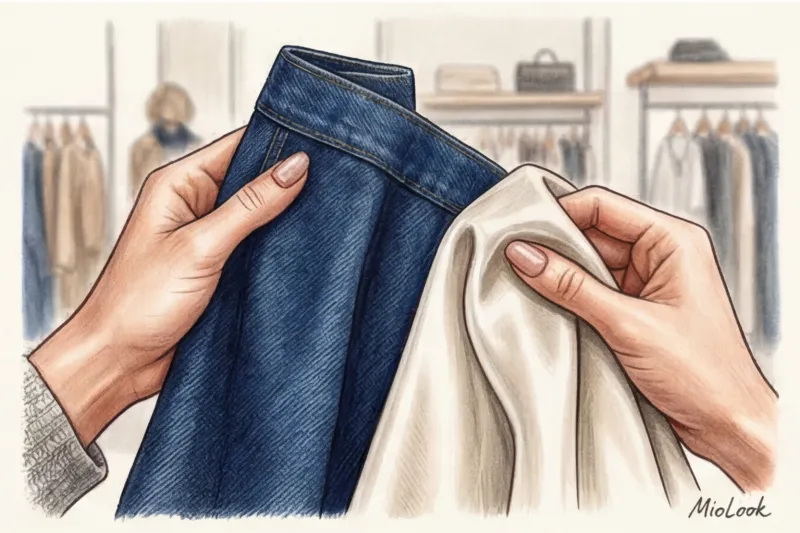
Once you understand your Yin and Yang proportions, your shopping will take three times less time. I often ask my clients to do a blind fitting. Close your eyes and simply touch the fabric hanging on the rail. This is called first touch rule.
If you're a Dramatic type and the fabric feels like loose gauze under your fingers, don't even take it off the hanger—it won't shrink, no matter how trendy the color. If you're a Romantic type and the fabric feels like cardboard or tarpaulin, pass it by.
Here's my working checklist for checking items in the fitting room:
- Crease test: Squeeze the edge of the garment in your fist for 5 seconds. If the fabric wrinkles heavily, it won't suit body types that require strict structure (Dramatic, Classic), but it might fit perfectly into the relaxed wardrobe of a Natural.
- Shoulder seam test: Look at the sleeve seam. For Classics and Gamins, it should be right at the knuckle. For Naturals, it should be dropped. For Dramatics, it should be accented, possibly reinforced with a shoulder pad.
- Dynamic test: Be sure to walk around in your clothes in front of a mirror. Clothes with a strong Yin charge should flow beautifully as you step, while clothes with a Yang charge should retain their original shape without deforming.
And one more important piece of advice from personal experience: ignore the sizes on the tags. Focus only on how the garment's lines follow the contours of your body. Sometimes, a Natural needs to go up two sizes to achieve that perfect, airy fit.
Ready to get started?
Try the free plan—no commitments required. Create a capsule that perfectly matches your body shape.
Get access — €0.99 onceConclusion: The Kibbe system is a tool, not a cage
To summarize, I want to say the main thing: don't let old typologies dictate who you are. You are not a "Soft Winter" from the 90s or a "Bright Gamine" stuck within the rigid confines of a single aesthetic. You are a modern woman with a unique lifestyle, career, and personal tastes.
The Kibbe system is a brilliant technical tool. Knowing your natural lines (Yin/Yang) is a superpower that helps you filter out fleeting mass-market trends and save huge amounts of money on shopping, keeping in your cart only what highlights your individuality.
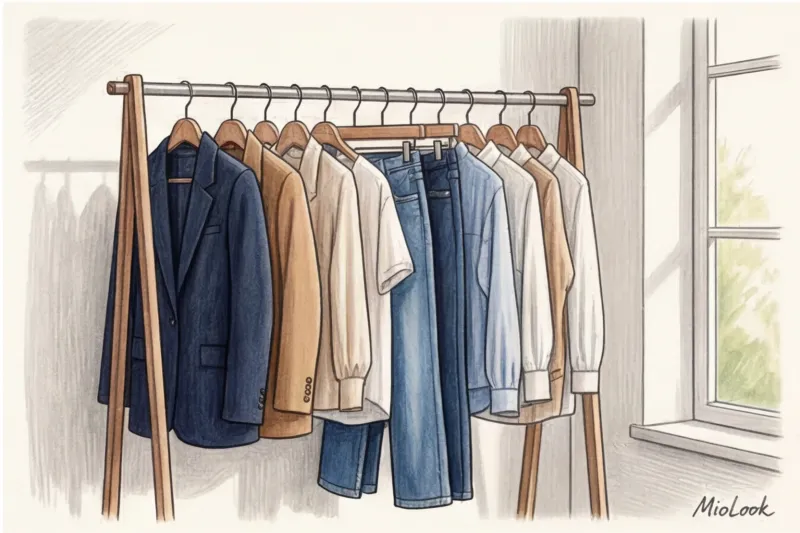
Instead of taking endless online tests, take one practical step today. Open your closet, pull out three of your favorite pieces—the ones that make you feel like a million bucks—and analyze them. Is the fabric stiff or soft? Is the silhouette straight, fitted, or voluminous? These favorite pieces will tell you more about your true curves than any theory.