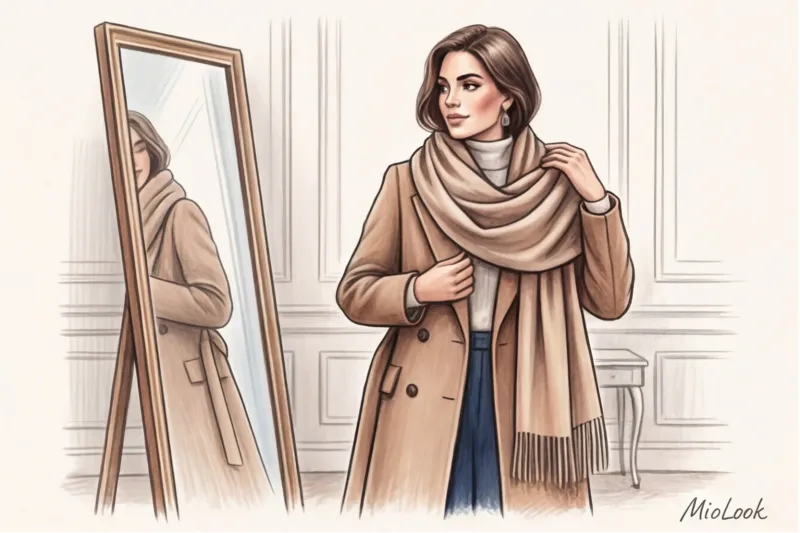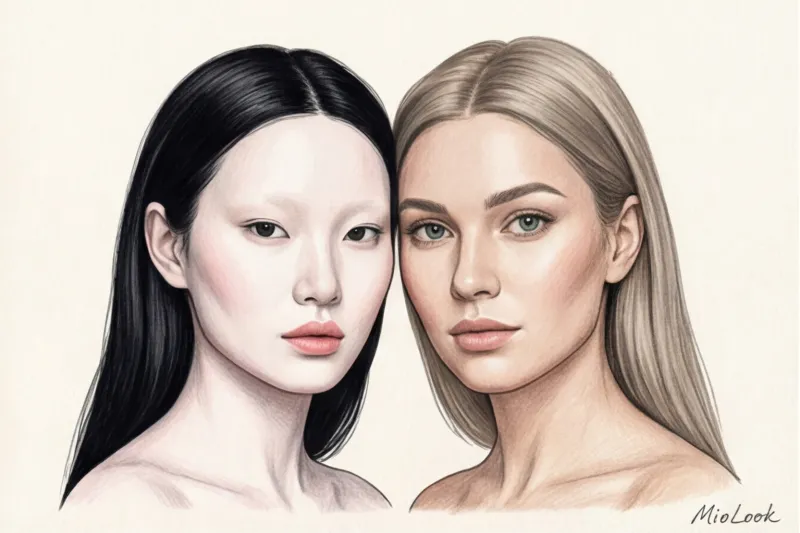
For years, one of my clients wore only powder beige and dusty rose. She was absolutely certain that bright colors would "overwhelm" her. Why? Because one day she read popular advice online, took a selfie, converted it to a black-and-white filter, and saw a gray, blurry mess. There was just one problem: her smartphone's algorithms mercilessly distorted the shadows. In reality, she was a bright, high-contrast "Winter," and this at-home experiment cost her five years of a dull wardrobe.
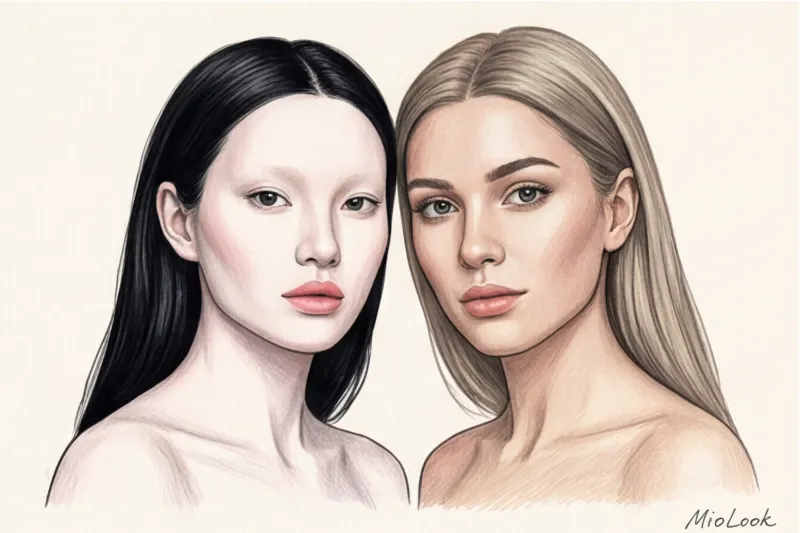
I'm Darina Marchenko, a colorist and stylist. Over 12 years of practice, I've seen hundreds of such "victims" of incorrect tests. And today, I want to settle the issue once and for all. How to determine the contrast of appearance Objectively. Spoiler: you won't need filters on your phone anymore. We'll use math and artificial intelligence.
We covered in more detail how algorithms are replacing outdated manual typing methods in our extensive article: MioLook's neural network will be able to determine a person's color type. And here we'll delve into the most important characteristic of your palette: contrast.
What is appearance contrast (and why it works better than the basic color type)
Most women begin their style journey by finding their undertone—warm or cool. But the truth is, color temperature is forgiving. If you wear a slightly warmer blue instead of an icy one, your world won't fall apart. But if you get the contrast wrong, your face will either appear washed out and lost against your clothes, or it will take on a sickly, sallow hue.
Back in 1905, artist Albert Munsell created his famous three-dimensional color system, dividing color into three vectors: Hue, Value, and Chroma. Professional stylists use this system.
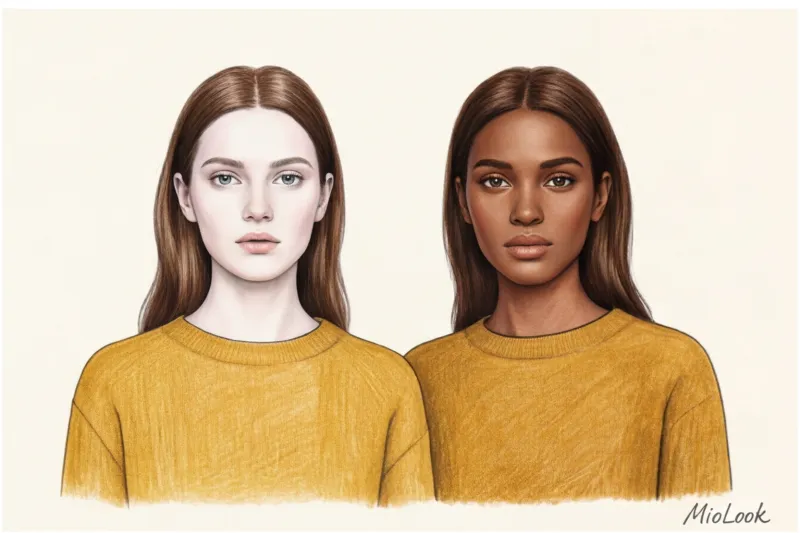
- Lightness Contrast (Value): The difference between the darkest and lightest areas of your face. Typically, this is the difference between your skin tone, the whites of your eyes, and the shade of your hair/eyebrows.
- Color Contrast (Chroma): the intensity of the pigment itself in your appearance.
"Knowing your contrast level gives you control over your wardrobe. It dictates the scale of prints, the acceptable width of stripes, the heft of accessories, and the rules of color blocking."
The COS brand, for example, builds its collections on nuanced, low-contrast combinations, while Zara often relies on sharp graphics. If you understand your facial math, you'll immediately recognize "your" stores.
Access to MioLook for €0.99 — one-time payment
A smart AI stylist will select the perfect look based on your natural contrast.
Get access — €0.99 onceThe Biggest Myth: Why the Black-and-White Photo Test No Longer Works
Open any article from ten years ago and you'll see this advice: "Take a photo in daylight, convert it to black and white, and look at the gray scale." If the hair is black and the skin is white, the contrast is high. If everything blends into a medium gray, the contrast is low.
That worked in the days of point-and-shoot cameras. In 2024, it's the worst thing you can do.
Why? Because of technology. Smart HDR Modern smartphone processors (starting with the iPhone XS and similar Android flagships) artificially lift shadows and tone down highlights before you even press the shutter button. The phone's camera analyzes the frame and brightens dark areas of your face by 20-30% to make you appear fresher. The camera will brighten sun-bleached hair and enhance pale skin.
So, when you apply a black-and-white filter, you're not analyzing your face, but rather the work of an Apple or Samsung neural processor. It artificially smooths out your natural contrasts.
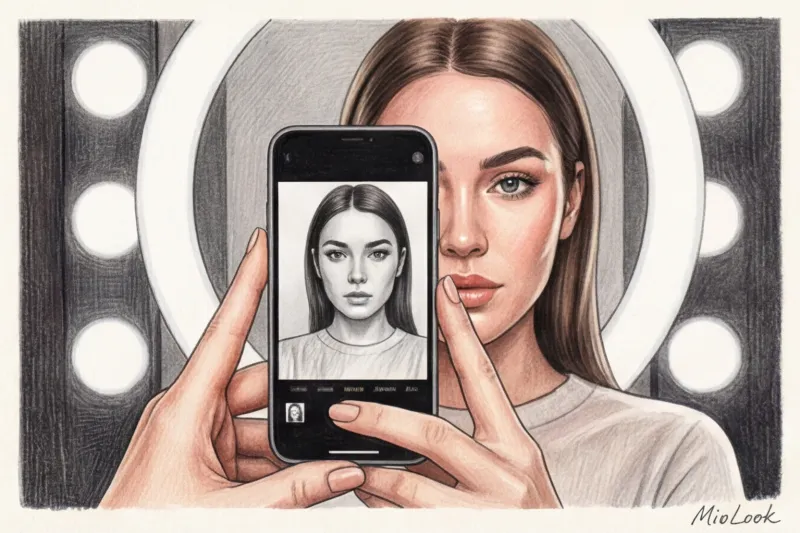
Add to this metamerism—the physical property of color to change depending on the light source. Popular LED ring lights, often used for selfies, have a flat spectrum. They literally "eat up" the natural shadows under the cheekbones and jawline, making a high-contrast face appear flat and featureless.
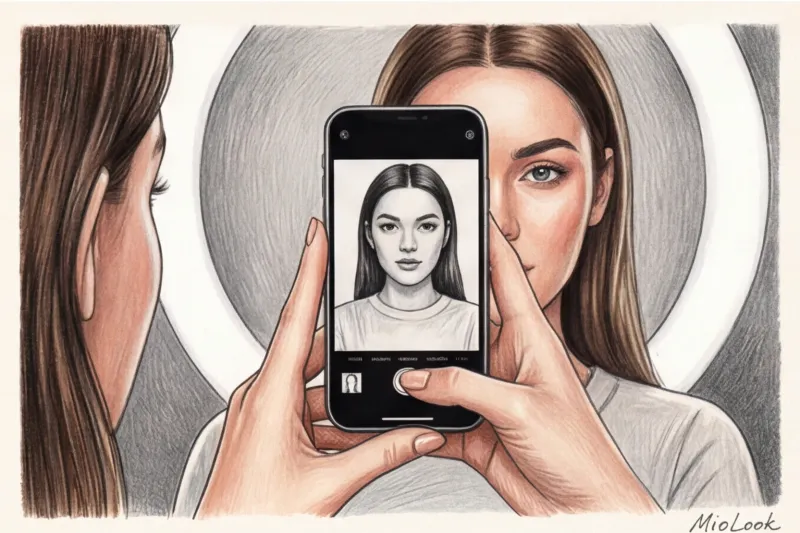
How to determine contrast in appearance: math versus eye
If your phone is lying, why not just go to a stylist and trust their eyes? Because the human brain loves optical illusions.
In his seminal book, "The Interaction of Color" (1963), Josef Albers brilliantly demonstrated that our brain "infers" contrast where there isn't any, depending on the background. Place a woman with medium-brown hair against a white wall—she'll appear contrasty. Place her against a dark gray sofa—the contrast will disappear.
There's also a physiological factor: retinal fatigue. If the colorist has already conducted two consultations, applying brightly colored fabrics to clients' faces, their eyes are physically unable to objectively assess the nuances of your skin.
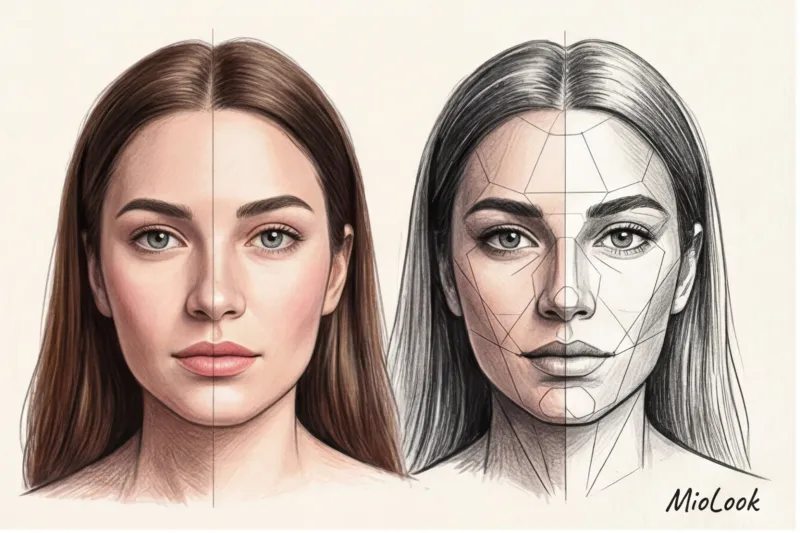
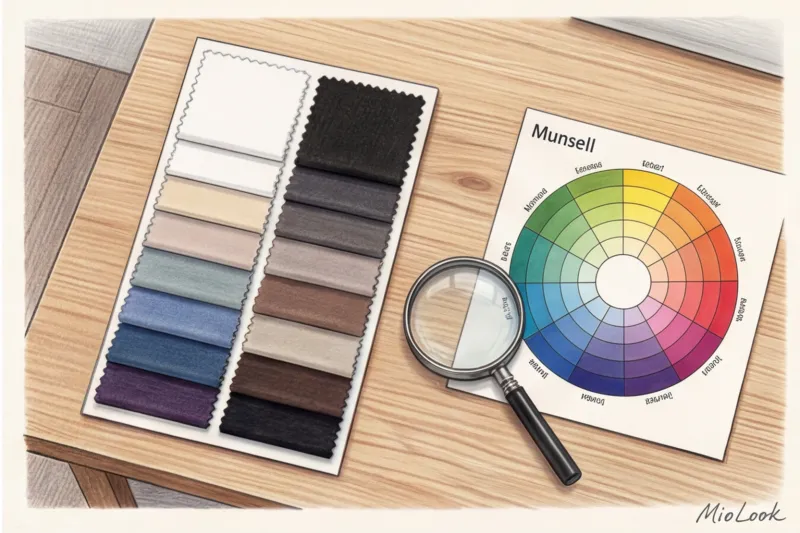
True contrast is always pure mathematics. In professional settings, we convert facial colors into HEX codes (hexadecimal color format) and calculate the delta—the mathematical difference between the lightest pixel (usually the white of the eye or the lightest patch of skin without highlights) and the darkest pixel (the hair root or iris).
Ready to get started?
Try MioLook's free plan—no commitments required. Upload your photos and let the neural network perform precise calculations.
Get access — €0.99 onceThe Hidden Factor: Chroma Contrast
And now for a counterintuitive insight. Have you ever noticed that sometimes a blonde looks brighter and more contrasting than a striking brunette with brown eyes? It's all about color contrast.
If a woman has peach skin (orange undertones) and vibrant blue eyes, these hues are directly opposite each other on the color wheel. This is a complementary contrast. Even if their lightness (Value) is approximately the same, the clash of opposing colors (Chroma) calls for bolder, more contrasting clothing combinations.
3 Levels of Contrast and How to Manage Them in Your Wardrobe
Once we've calculated your objective mathematical delta, your wardrobe becomes a construction kit. Here's how the rules work in practice.
1. High Contrast (Winter, Bright Spring)
People with a pronounced difference between their skin and hair. If they wear a beige all-over look, their face looks like it was cut out of another photo and pasted in poorly. They need a little edge.
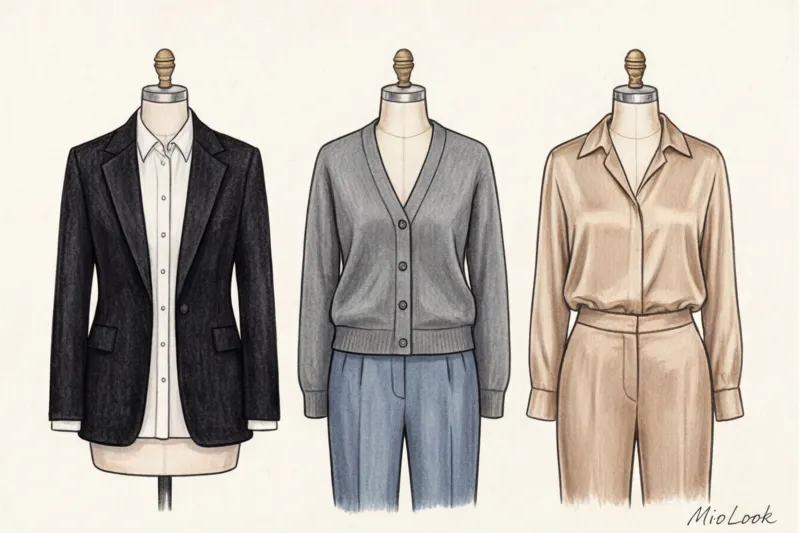
- Best reception: Crisp color blocking. A crisp white shirt and black jacket. An emerald sweater and ruby scarf.
- Fabrics: Smooth, reflective textures that maintain color boundaries. Heavyweight cotton (from 180 g/m²), poplin, patent leather, and heavy silk.
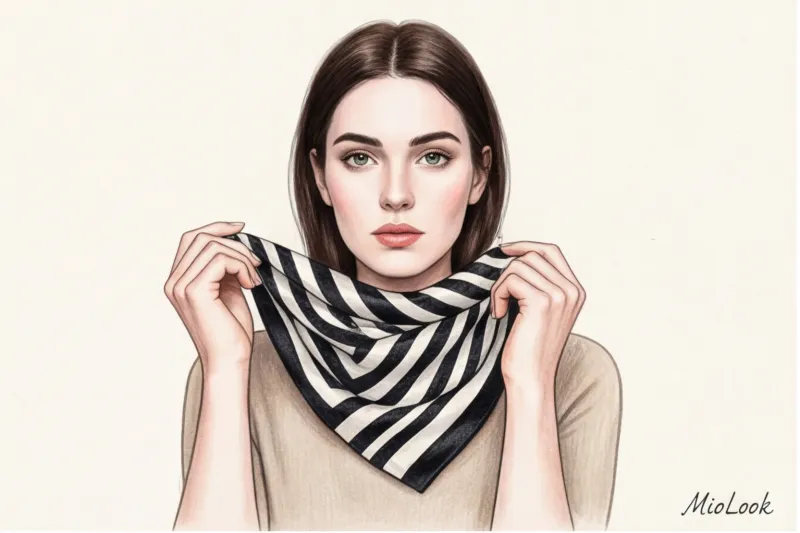
- Prints: Geometry with clear edges (houndstooth, zebra, wide contrast stripes).
2. Medium contrast
The most common and most insidious type. Step right and you look pale; step left and your clothes get ahead of you.
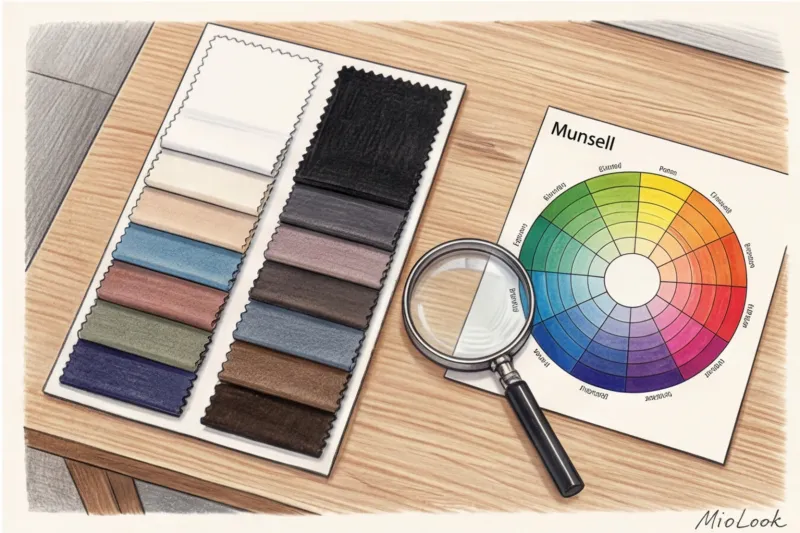
- Best reception: Analogous combinations (colors adjacent to each other on the color wheel) and the ombre effect. A great example: dark blue jeans, a light blue shirt, and a gray cardigan.
- Fabrics: Matte, calm textures - denim, suede, thick viscose, suit wool.
- Prints: The cage is medium-sized, with floral print and no sharp black border.
3. Low contrast
A look where skin, hair, and eyes flow into each other in a soft watercolor gradient. In a black turtleneck, such a girl looks tired, but in complex shades, she blossoms.
- Best reception: The magic of monochrome and nuanced shades. It's precisely on low-contrast surfaces that the aesthetic of "quiet luxury" (old money) works flawlessly.
- Hidden rule (fair limitation): Low-contrast monochrome absolutely DOESN'T work if the pieces have the same smooth texture. A smooth beige cotton T-shirt with matching pants looks like pajamas. To make monochrome look expensive, you need a contrast of textures: a fluffy cashmere sweater for €200 paired with a flowy silk skirt in the same tone.
How a Neural Network Calculates Your Contrast Level (and Why AI Doesn't Make Mistakes)
Understanding the imperfections of the human eye and the insidiousness of smartphone algorithms, we MioLook We took a fundamentally different approach. When you upload a photo to the app, magic happens, based on the strict physics of color.
How it works "under the hood":
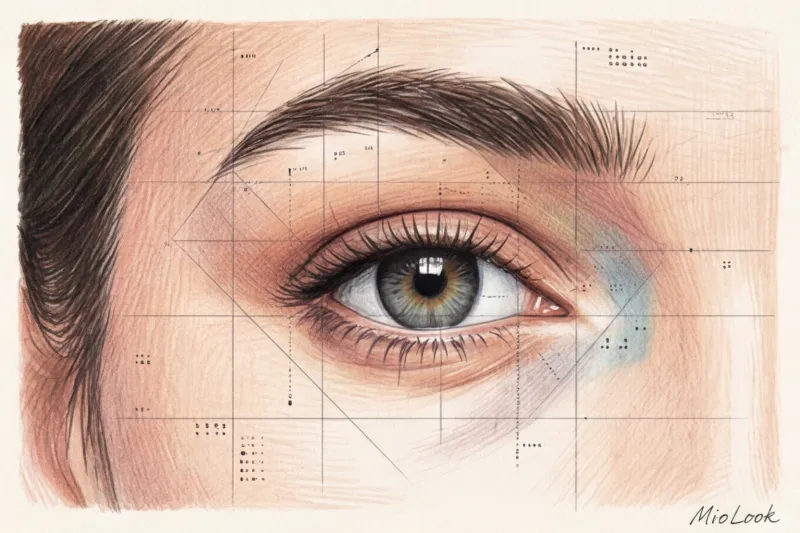
- Pure pixel isolation. AI doesn't look at the entire face. The algorithm scans thousands of microzones, intentionally ignoring shadow areas (under the nose or chin) and overexposed areas on the forehead. It extracts the pure RGB code of your skin.
- Building a heat map. The neural network calculates the mathematical distance between the iris pixel, skin pixel, and hair root pixel using the Munsell scale.
- Rejection of stereotypes. Old-school stylists like to say, "Redheads can't wear red" or "Black suits everyone." MioLook's AI builds a customized contrast map without regard for these outdated dogmas. If the math shows that your color contrast can withstand a scarlet hue, the algorithm will suggest it.
Your perfect look starts here
Join thousands of users who look flawless every day with MioLook, trusting color math instead of filters.
Get access — €0.99 onceChecklist: How to adapt your current wardrobe to your contrast needs
What should you do if AI shows you have low contrast, and you've got your favorite black dress hanging in your closet that you bought at Massimo Dutti for €150? Throw it out? No. Style it.
Here's a step-by-step plan for working with your wardrobe:
1. Use adapters near your face
Your contrast only matters in the portrait area (from the chest to the crown). Pants and skirts can be absolutely any brightness. If you're a low-contrast blonde in a black sweater, wear a white or light blue shirt underneath, leaving the collar loose. This light barrier will break the conflict between the dark fabric and your light complexion.
2. Consider changes (makeup and coloring)
Are you obsessed with your contrast? Did you wear bright red lipstick and thick mascara? You've artificially increased your contrast level. Now you can confidently wear that graphic black-and-white jacket that looked "pale" in the morning (without makeup). Did you go from light brown to platinum blonde? Your contrast has diminished, and you'll need to tone down your wardrobe.
3. Digitize your closet with AI
Instead of guessing in front of the mirror, delegate this task to a smart wardrobe in MioLook Upload your items to the app. The algorithm will compare the contrast level of each blouse or jacket with your natural features (which it has already calculated) and generate ready-made combinations for every day. This is especially helpful when getting ready for an office with a casual dress code, when you want to look put-together but don't want to spend more than five minutes choosing an outfit.
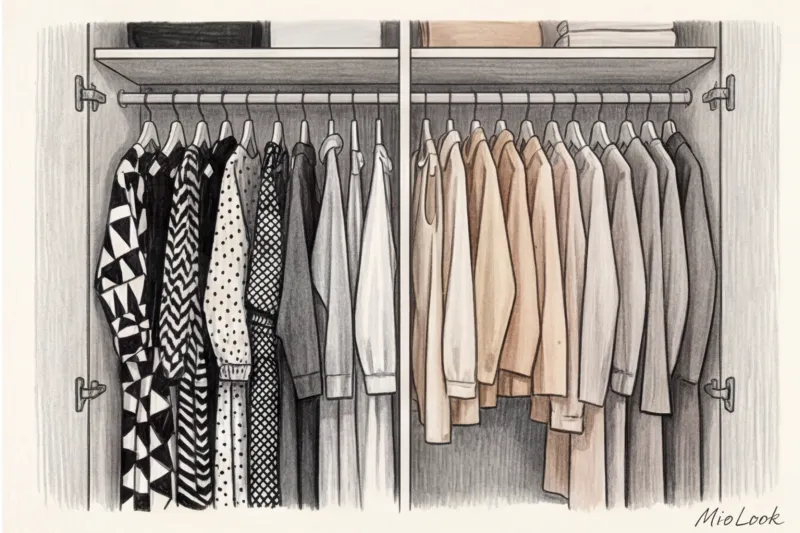
Stop torturing yourself with black-and-white filters and trying to guess the shade by eye. Color is the most precise science in fashion. Entrust the math to algorithms, and reserve for yourself the most pleasant thing—the pleasure of your reflection in the mirror, where your clothes no longer compete with your natural beauty, but enhance it.