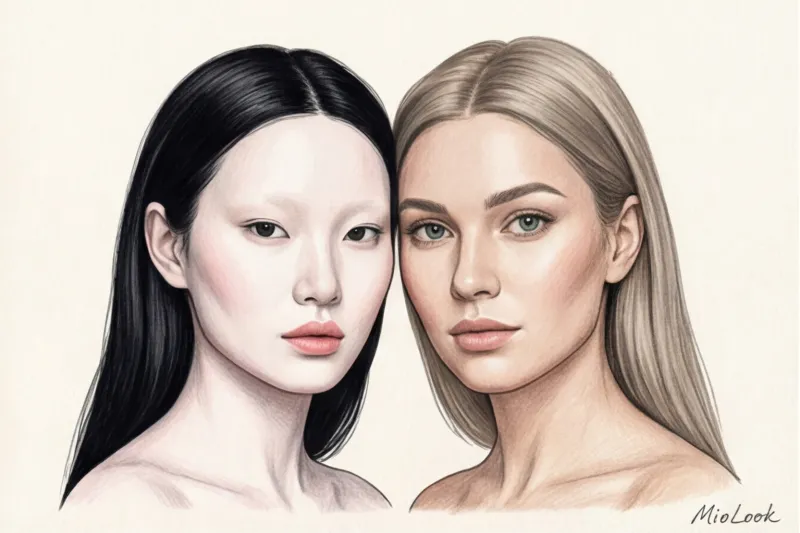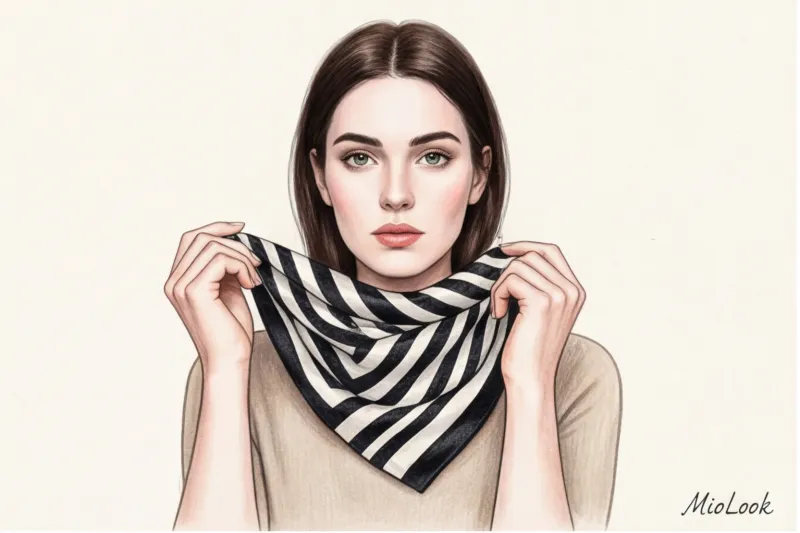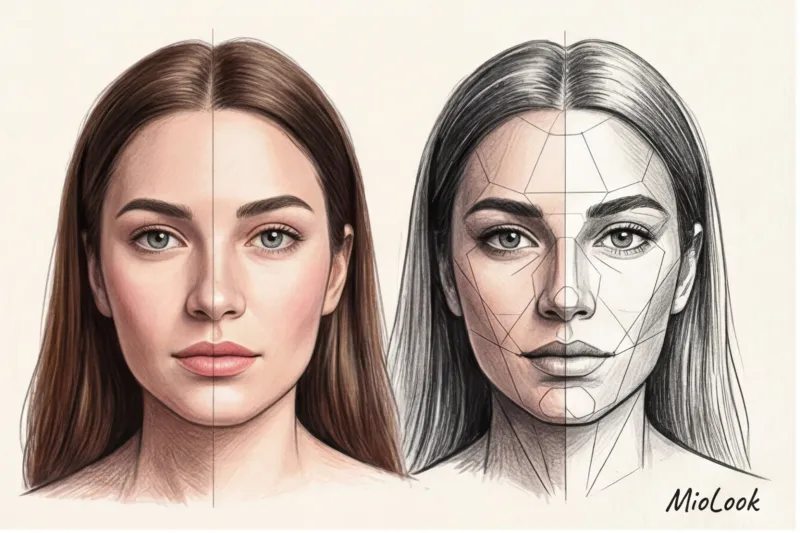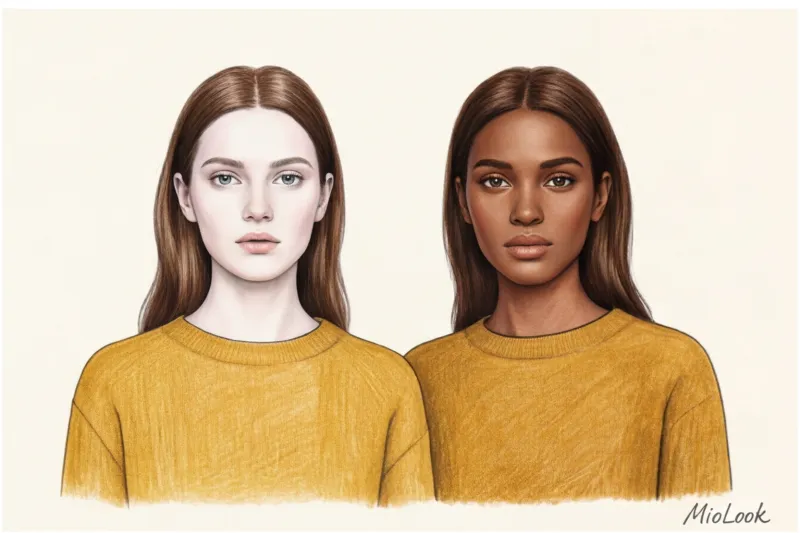
Over 12 years as a stylist, I've sorted through hundreds of wardrobes and noticed one paradoxical thing. Women spend thousands of euros on basics in "their" shades, obsessively applying color palettes to their faces, yet still look tired in their new clothes. Have you ever noticed how sometimes even the "right" €150 cool blue sweater suddenly erases you from your face, leaving only a talking head?
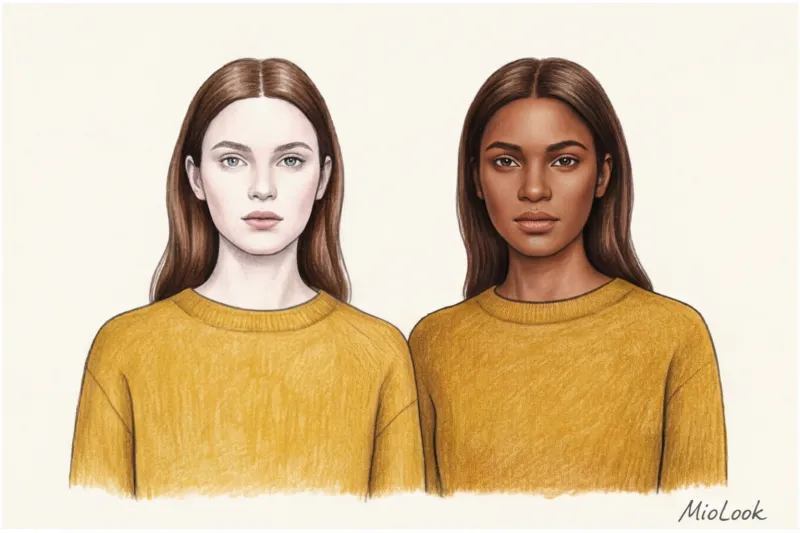
The problem isn't the color. The question is, How to determine the contrast of appearance — a parameter that in 90% of cases is more important than the shade itself. Contrast is the difference between the lightest and darkest areas of your face. And instead of guessing by placing fabrics in front of a mirror, I offer a mathematically precise, objective tool: your smartphone camera and a black-and-white filter.
We discussed the origins of this approach in more detail in our the complete guide to choosing the perfect flowers , but today we'll be doing pure practice. We'll be counting points.
Why classic color type tests often lie
The popular 12-season system ("mild summer," "deep autumn") is prone to widespread failure. Why? The human eye and brain are designed in such a way that we tend to infer colors and be fooled by reflexes. We confuse hue and value.
In his famous book, The Art of Color (1961), Johannes Itten proved that the contrast between light and dark is processed by our brains faster and more acutely than any color nuances. If you wear something with a contrast that is much higher than your natural one, people see the dress first and then you.
"80% of unsuccessful clothing purchases are not due to the 'wrong' color, but to a mismatch between the contrast of the garment and your appearance. You buy a dress that 'outshines' your face"—this is the rule I came up with after analyzing over 300 clients' wardrobes.
Recently, a client named Elena came to see me. She had a classic low-contrast "summer" look (light brown hair, light eyes, translucent skin). After reading a bunch of glossy magazines, she decided to embrace the color-blocking trend and bought a suit: a fuchsia jacket and emerald trousers. In the mirror, she saw bright spots, but her own face appeared a gray blur. We converted the photo of her in the suit to black and white, and it became clear: the clothes offered a harsh contrast of black and white, while Elena's face blended into a single, light gray mass.
Preparation: How to take the right photo for the test
To understand how to determine the contrast of a person's appearance without distortion, we need to determine your "zero" point. A smartphone camera sees the world through a histogram of light and shadow distribution, and we need to leave it alone.
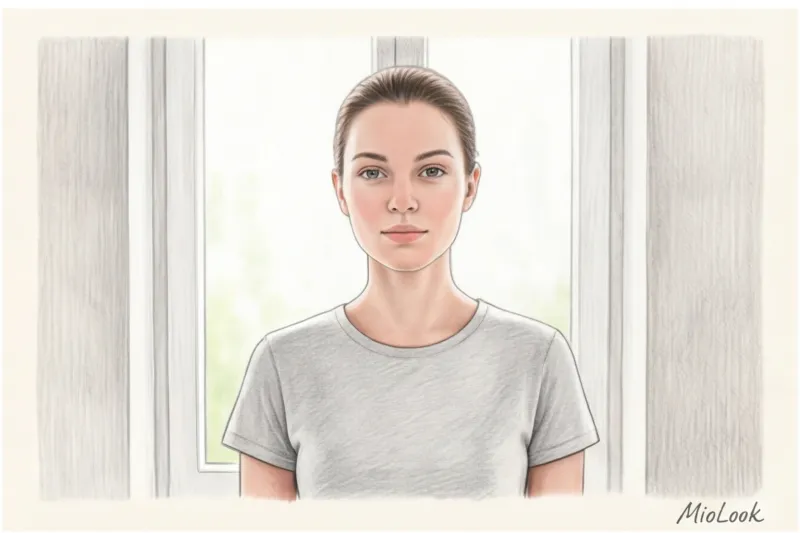
- Light: Direct sunlight (which will create harsh shadows) and ring lights (which will brighten the face, destroying true contrast) are strictly prohibited. Face a window on a cloudy day or during diffused light hours. The yellow light from incandescent bulbs at home will distort skin tone by 2-3 shades.
- Face: Absolutely clean. No foundation, mascara, contouring, or traces of self-tanner. Hair left loose, revealing its full volume around the face.
- Cloth: Wear a white, light gray, or black T-shirt that reveals your neck. Bright clothing (especially red or neon) will cast a color reflection on your chin, which will appear as a dark spot in a black-and-white filter.
- Camera settings: Disable HDR and any beauty filters (including built-in skin smoothing on Android smartphones). They artificially "pull out" shadows, reducing true contrast.
How to Determine Contrast in Your Appearance: A Step-by-Step Test with a Black and White Filter
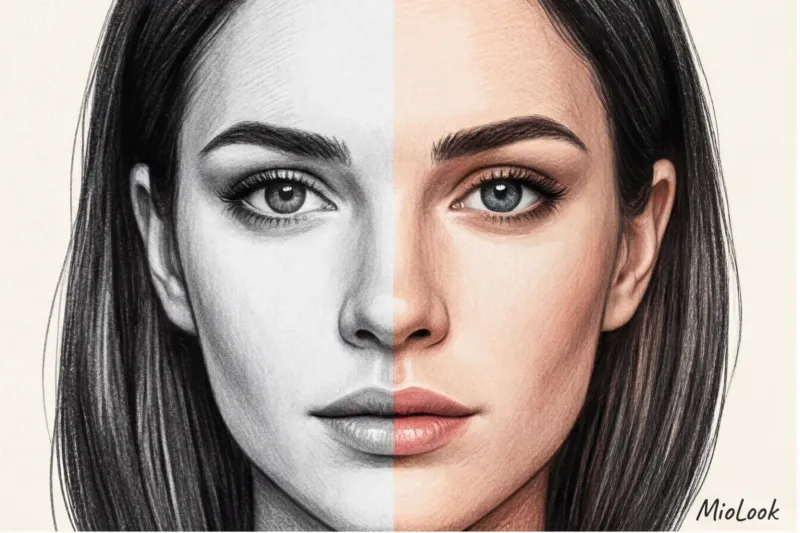
So, the photo is ready. Now go to your phone's basic gallery editor and apply a Mono or Noir filter, or simply reduce the saturation to zero.
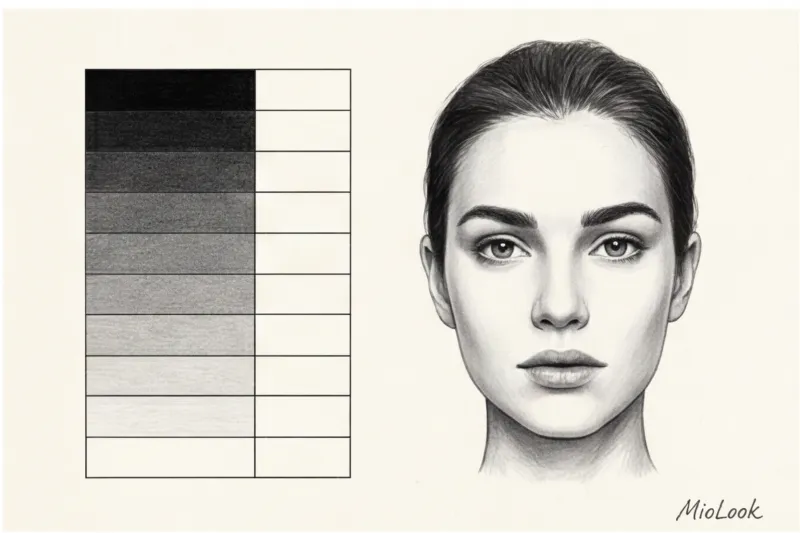
To decipher this, we'll use Albert Munsell's achromatic scale. Imagine a scale from 0 to 10, where 0 is absolute, light-absorbing black (like soot), and 10 is pure, reflective white (like snow). All the shades of your appearance in black and white will fall on this scale.
Step 1: Find the extreme points in the photo
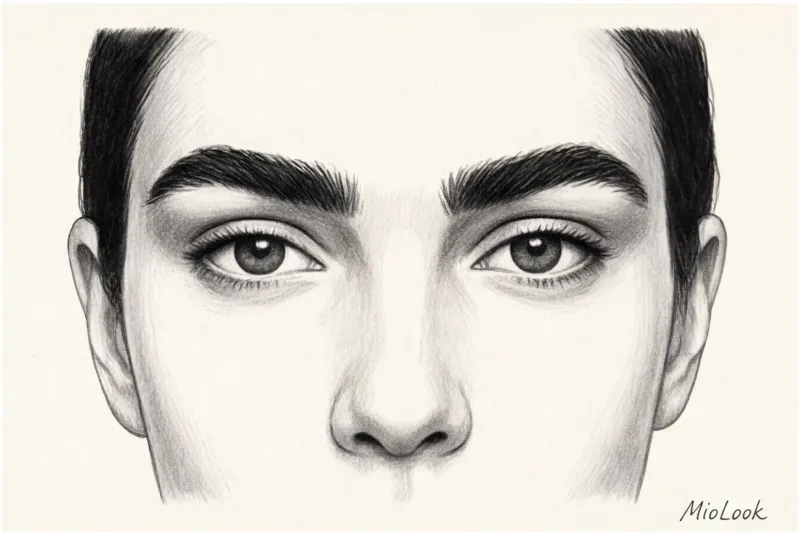
Look closely at the monochrome photo. Find the lightest and darkest areas of your face.
- Bright spot: Typically this is the skin on the forehead, cheeks or neck. Important: whites of the eyes and teeth do not count!
- Dark spot: Hair roots (even if the ends are burnt out), eyebrows or eyelashes.
Step 2: Working with the Value Scale
Now mentally apply your extreme points to a 10-point gradient scale from black to white.
Let's say your fair porcelain skin corresponds to the number 8 or 9. And your dark blond eyebrows and roots correspond to the number 3. The math is simple: subtract the smaller from the larger. 8 - 3 = 5. Your contrast ratio is 5.
Step 3: Deciphering Contrast Level
The resulting figure is your shopping navigator. How to wear contrasting colors in clothing , depends on which category you fall into.
- Low contrast (difference 1-3 points): For example, fair skin (8) and wheat-blond hair (6), or dark skin (3) and black hair (1). All facial features blend into a soft, unified palette without any sharp contrasts.
- Average contrast (difference 4-6 points): The most common European type. Light brown or chestnut hair, medium skin tone.
- High contrast (7-10 points difference): Snow White-esque skin (9) and jet-black hair (1). A dramatic, dramatic change.
Fair warning: This method has a limitation. It doesn't work on severe rosacea (redness) or active acne. The camera will convert red spots to a dark gray color, artificially lowering your skin's "light" value by 2-3 points. In such cases, only evaluate clear areas of skin (for example, on the neck).
Tired of guessing with flowers?
Upload your photos to MioLook, and our smart AI stylist will automatically select a palette and contrast level guaranteed to suit your look.
Get access — €0.99 onceThe biggest mistake beginners make: why you shouldn't rely on eye color
If you read women's magazines in the 2000s, you probably remember the advice: "You have dark eyes and white skin? That means you're a high-contrast winter!" This is perhaps the most persistent and damaging style myth.
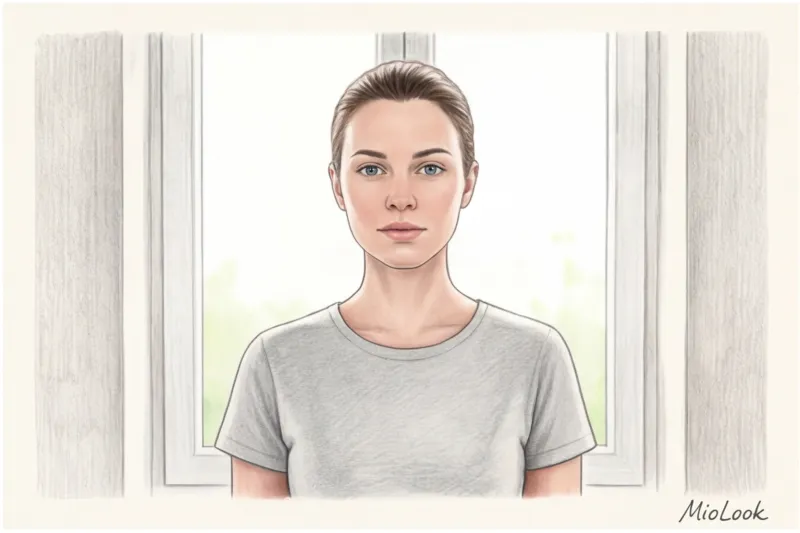
Why doesn't this work? The answer lies in the laws of visual composition. The area of the iris accounts for less than 1% of the total area of your face and head. Eyes simply don't create enough visual weight to carry a contrasting outfit. If you have light brown hair and pale skin, but piercing black eyes, you're still a low-contrast type.
But what really matters are the eyebrows. Wide, thick, dark brows (think Cara Delevingne) take up a significant amount of space. It's the subtle contrast between skin and brows that often allows women with light brown hair to wear more dramatic pieces, elevating their contrast from "medium" to "medium-high."
Instructions for use: how to adapt your wardrobe to your level
The basic rule of style is: The contrast of your clothing near your face should match the natural contrast of your appearance. This very principle is discussed in detail in our material about color combinations in clothes.
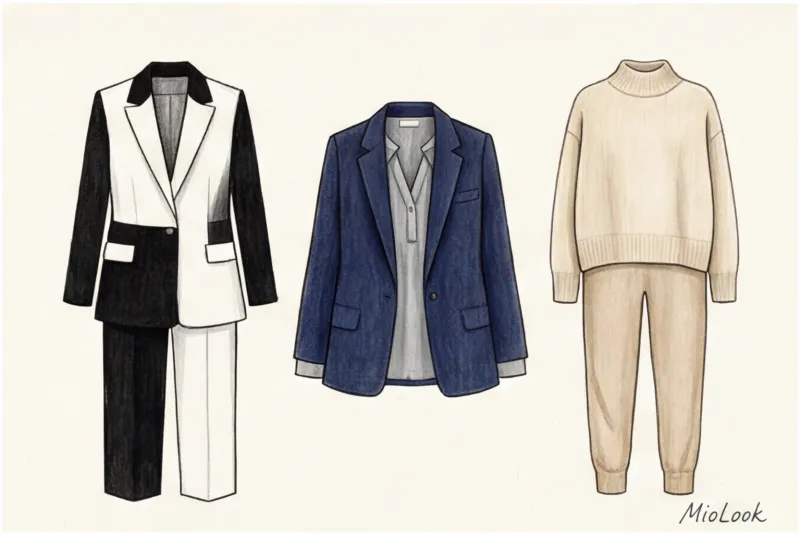
Wardrobe for high contrast
You absolutely need dynamism. If you wear a dusty pink monochrome suit, your vibrant appearance will be detached from your body—your face will seem isolated, and your body will become a pale blur.
- Perfect: Black and white geometric patterns (houndstooth, zebra, wide stripes). Sharp color blocking—for example, a combination of electric blue and rich orange.
- Fabrics: Smooth, shiny textures (thick silk, leather, varnish) enhance the contrast.
Wardrobe for medium contrast
You're a master of complex, elegant combinations. A harsh black and white print will "kill" your face, make it look tired, and highlight the shadows under your eyes.
- Perfect: Combinations of basic colors with a medium tone gradient. A dark blue jacket (basic models from Massimo Dutti for €120–€150 look great) and a light blue shirt. Burgundy and dusty rose. Emerald and khaki.
- Buffer rule: Want a bold contrast? Use a buffer. Wear a medium gray T-shirt under a black blazer to soften the transition to your face.
Low Contrast Wardrobe
Your strength lies in nuances, gradients, and textures. Your appearance is very easily overpowered by dark colors.
- Perfect: Total looks in one color scheme. Beige and milky ensembles, complex achromatic Monochrome in light gray tones. Tone-on-tone prints (for example, a sand-colored check on a beige coat).
- How to wear black: If you're a low-contrast blonde but adore black, choose items with a deep V-neck (moving the color away from your face) or use translucent textures (chiffon, lace, fine knitwear) that show through the skin and reduce the density of the black.
A smart wardrobe in your pocket
Digitize your clothes in MioLook. The app will automatically sort your items by contrast level and suggest ideal combinations for every day.
Get access — €0.99 onceIs it possible to "cheat" your contrast?
The short answer is yes. Contrast isn't a death sentence, but a flexible system. You can control it if you understand the mechanics.
First, makeup. A rich foundation that evens out skin tone (removing shadows), plus bold black eyeliner and red lipstick can increase your contrast by 1-2 points. That's why evening makeup allows us to wear luxurious dark dresses that would make us look like moths in the morning without makeup.
Secondly, hair coloring. And this is a trap that many fall into. A low-contrast platinum blonde who decides to go a scorching brunette often finds she has nothing to wear. Her old pastel wardrobe no longer works—her new high-contrast complexion demands deep, rich colors. And vice versa, for rejuvenating effect after 50 years Stylists often recommend reducing hair contrast by opting for soft highlights, as high contrast can mercilessly highlight wrinkles.
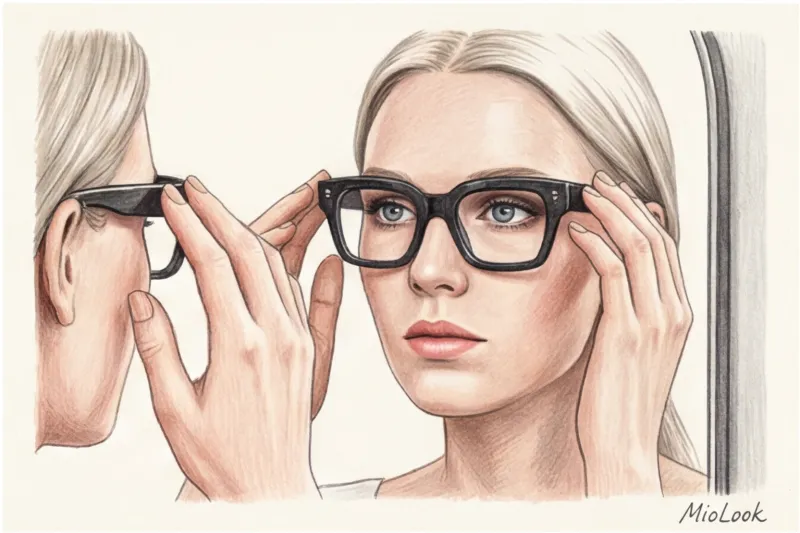
Thirdly, my favorite cheat code is glasses. Thick, graphic black or horn-rimmed frames (in the spirit of classic Celine or Tom Ford models) work like legal face lift. One of my clients, a blonde with light eyelashes, bought chunky black frames. This single accessory added just the right amount of dark spots to her face, allowing her to wear her favorite black turtlenecks without a lick of makeup.
Checklist: Smart cabinet revision based on new data
Knowing your contrast ratio is useless unless you put it into practice. Let's take a quick, smart look at your closet using a technologically advanced approach.
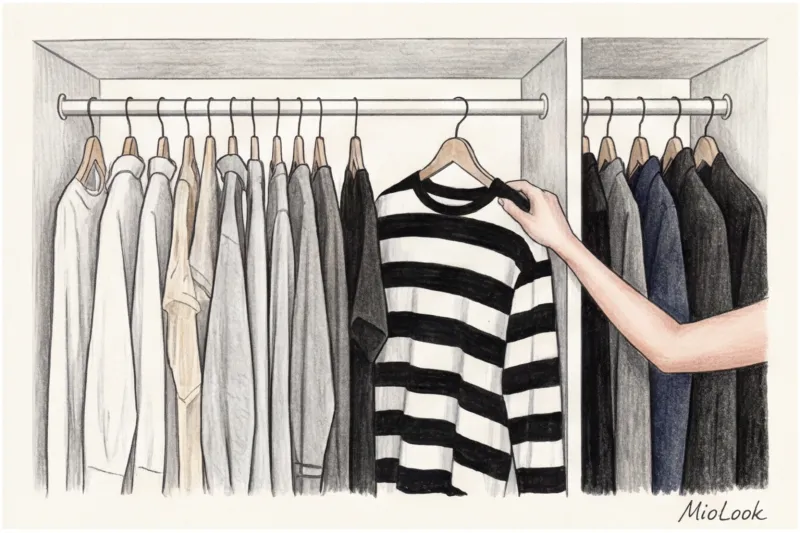
- Favorite Looks Test: Put on your favorite outfit, take a photo in daylight, and convert it to black and white. Be honest: does the clothing in the photo have more contrast than your face? If you only see the bright spots of the print and your face disappears, the outfit is "loud" you.
- Sort by lightness: Hang your closet not just by color (like a rainbow), but by the level of lightness and contrast of prints. Keep monochrome soft pieces separate from graphic tops and Breton tops.
- Digital integration: If you use the app MioLook To manage your wardrobe, add tags to items: "low contrast" and "high contrast." This will allow the AI stylist to more accurately select capsule wardrobes to match your morning mood (and makeup).
- Saving "errors": Don't throw away sweaters that are too dark or brightly colored and made of high-quality fabrics (like thick cashmere or merino wool). Layer them with the right base layer. A white shirt collar peeking out from under a black sweater will create the necessary cushioning and highlight your face.
The main conclusion you should draw is that the perfect wardrobe does not begin with finding a mythical “color of your choice,” but with an honest assessment of your natural geometry of light and shadow. Once you learn to sync the contrast of your clothes with the contrast of your appearance, shopping will stop being a lottery and turn into a precise, predictable algorithm.