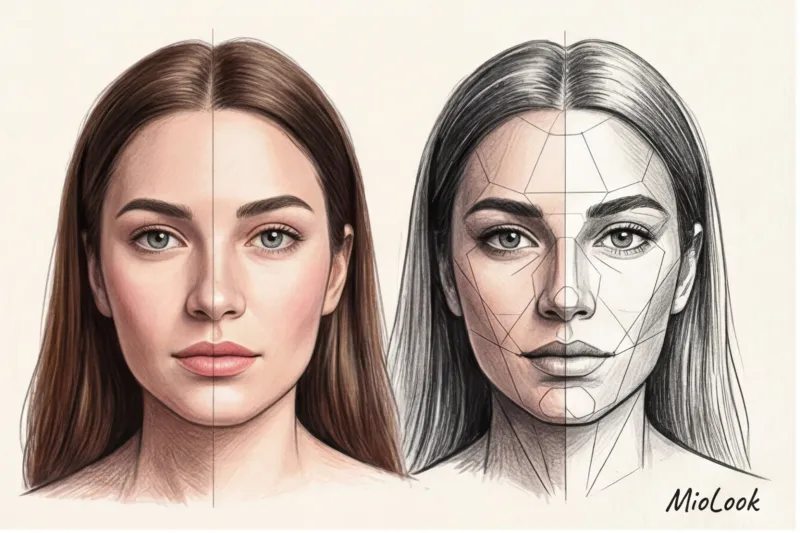
In fourteen years of working as a personal stylist, I've learned one harsh but sobering lesson: the human eye can't be trusted 100%. You can be a brilliant colorist, but dim lighting in the fitting room, a client's light summer tan, or even your own fatigue by the end of the day will inevitably distort your perception of shades. We used to determine hair types intuitively, by holding dozens of handkerchiefs to the face. Today, the approach has changed. We've already covered the basic principles in more detail in the full guide on how Determine color type from a photo: neural network for style analysis does it in seconds.
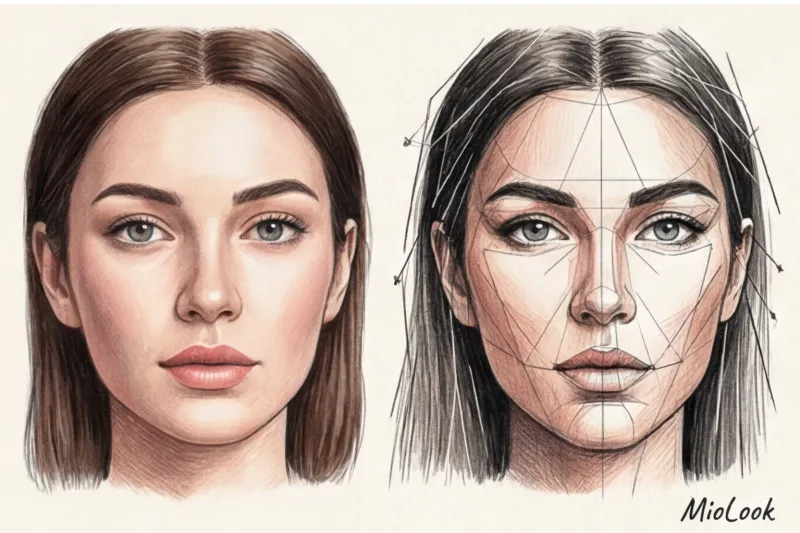
But color is only half the equation. The second, and often more important, part is contrast. It's what determines whether a graphic black-and-white jacket will elevate your appearance or whether it will "swallow" your face, leaving only a pale shadow. In this article, I'll explain why old testing methods no longer work and how modern color mathematics can help resolve the issue of choosing prints and combinations once and for all.
What is contrast in appearance and why does a stylist's eye make mistakes?
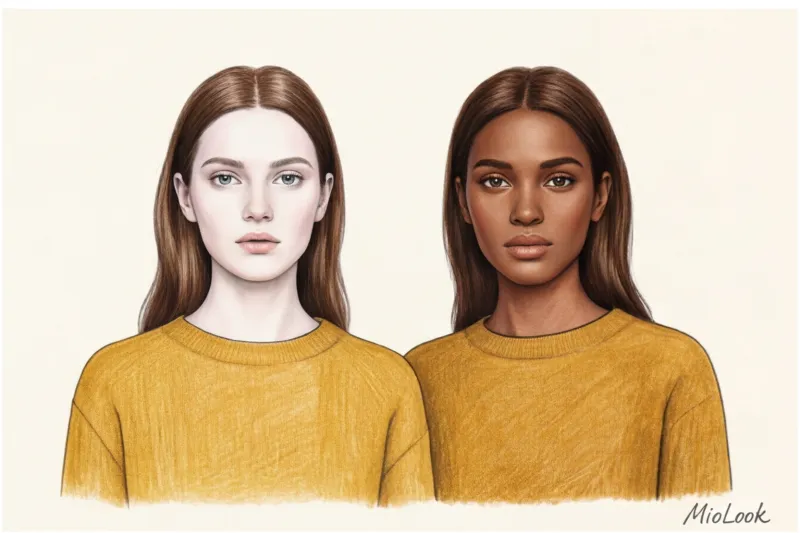
Simply put, contrast in appearance is the difference in value (the level from lightest to darkest) and saturation between your skin, hair, eyebrows, and eyes. The greater this difference, the more contrasting you can wear near your face.
Sounds simple? In practice, it's much more complicated. Our brain constantly "completes" the picture. One of my clients, Marina, considered herself a low-contrast girl for years. She had light brown hair, a calm skin tone, and gray eyes. Three different stylists before me recommended pastel colors, which made her look downright sickly. When we ran her data through a digital analyzer, the system returned a reliably high contrast.
"Why did the AI see something that humans missed? The algorithm detected a colossal difference in brightness between the deep gray pigment of her iris and the crystal-white, almost transparent sclera of her eye, as well as the cool undertone of her skin. The human eye simply 'averaged' the image because of her light brown hair."
That's why online, impartial neural network-powered contrast detection has become the gold standard in modern styling. The machine doesn't care whether you got enough sleep or what shade of lipstick you wore.
Access to MioLook for €0.99 — one-time payment
A smart AI stylist will select the perfect look based on your unique contrast.
Get access — €0.99 onceFrom Pixel to Style Mathematics: How AI "Sees" Your Face
At recent Fashion-Tech summits, there's been much talk about the implementation of computer vision in retail, and according to a 2024 WGSN study, digital personalization reduces clothing returns by 34%. How exactly does the magic of machine vision work on your face?
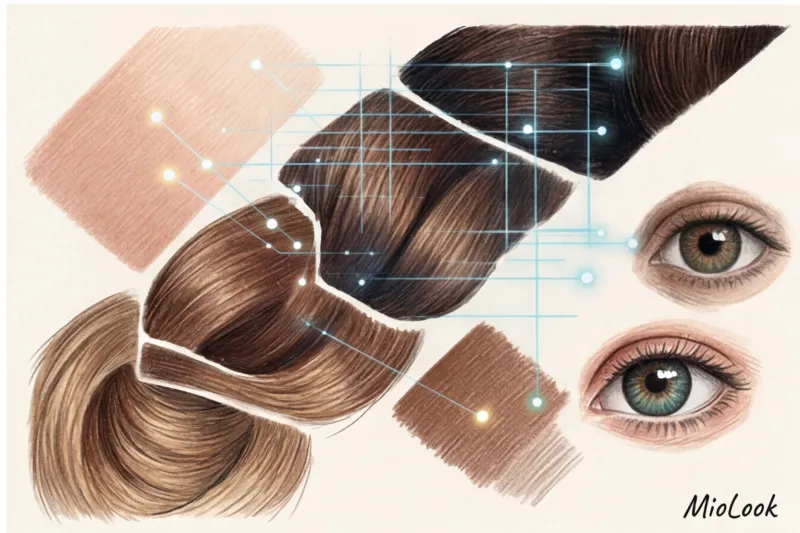
When you upload a photo to the app, the algorithm doesn't think in terms of "light" or "dark." It scans your face, identifying over 400 control points. The natural colors are then converted into precise HEX codes and placed into the CIELAB color space (often abbreviated as L*a*b*). In this model, the parameter L means Lightness - brightness, which is measured strictly from 0 (absolutely black) to 100 (absolutely white).
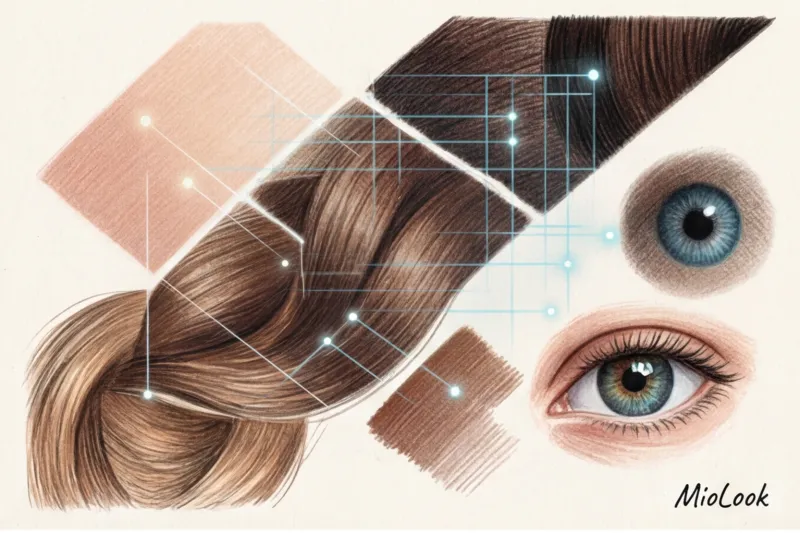
AI takes the value L your hair, skin, iris, and whites of the eye, and then calculates the mathematical coefficient of their difference (Delta E). As a result, you get not a vague advice, but a precise figure—for example, 68% contrast. This knowledge is yours The key to perfect capsule wardrobe colors.
How to determine appearance contrast online: a neural network in action
To get an accurate mathematical calculation, you can use analysis function in MioLook The process takes a few seconds, but the result depends 90% on the source—your photo. Computer vision is objective, but it analyzes only the pixels you give it.
Checklist for perfect digital analysis:
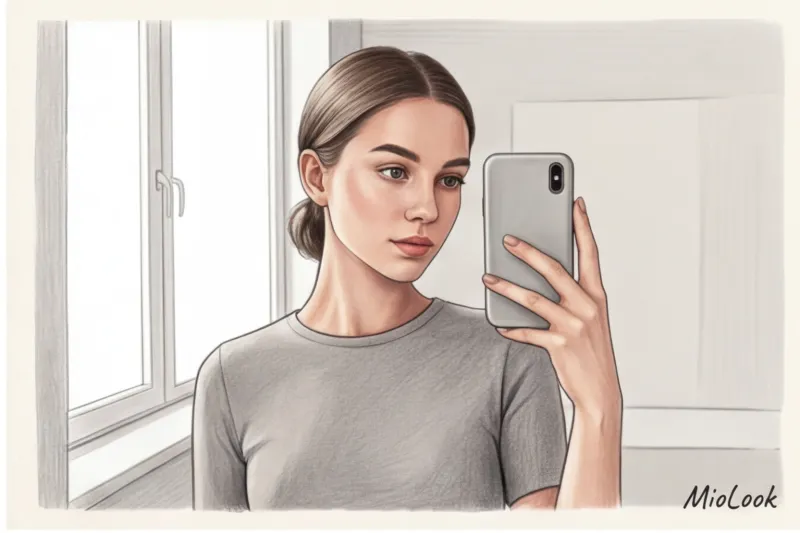
- Light: Only diffused daylight. Stand facing a window (ideally facing north), turning off all artificial light in the room.
- Face: Strictly no makeup. Even a light layer of BB cream or mascara will artificially alter your brightness.
- Background and clothing: Wear a gray or white T-shirt and pull your hair back. Make sure there are no harsh shadows from window frames on your face.
Fair warning: This won't work if you take a selfie in the bathroom under yellow 3000K lamps. Warm artificial light will instantly reduce the pixel contrast, and the algorithm will give you a distorted result. The math is precise, but it requires clean input data.
The Black-and-White Photo Myth: Why a Popular Life Hack Is Misleading You
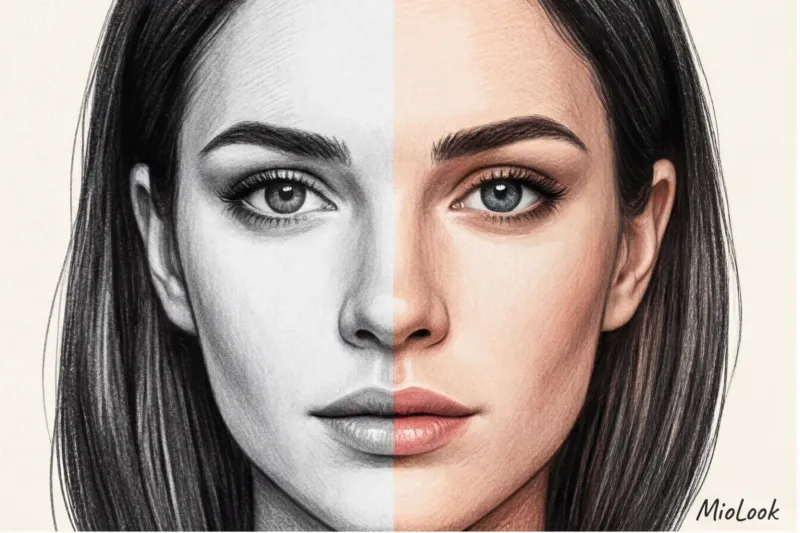
If you've ever searched for articles on this topic, you've likely seen the widely circulated advice: "Take a selfie and convert it to a black-and-white filter on your phone. If the difference between your hair and skin is stark, you have a high contrast." I officially declare: in the age of modern smartphones, this method is dead.
Why doesn't this work anymore? Cameras in modern iPhones and Android flagships use computational photography (technologies like Smart HDR and Deep Fusion). Camera algorithms automatically extract detail from shadows, artificially boost microcontrast and sharpness to make photos appear more "professional."
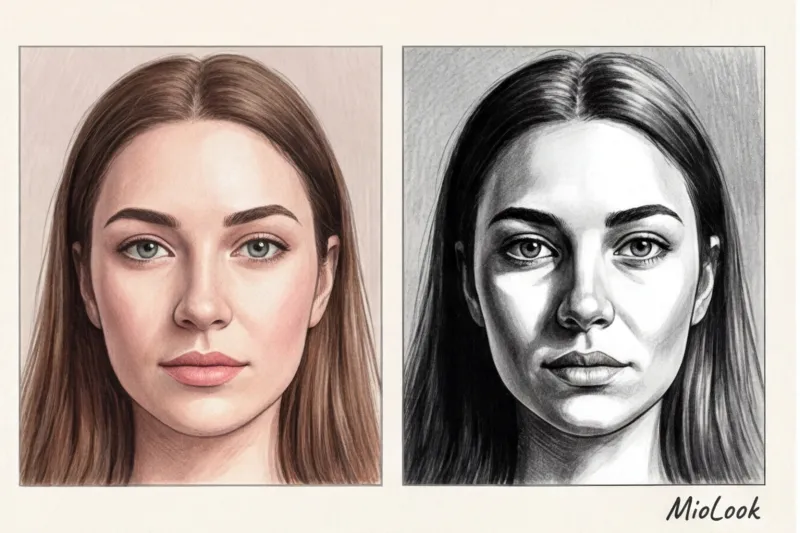
When you apply a basic black-and-white filter to such a photo, the phone exaggerates the shadows even more. As a result, a woman with a soft, nuanced appearance on a smartphone screen looks like a dramatic diva from the silent film era. Based on this false test, she goes to the store, buys a graphic dress for €120, and then wonders why the dress is wearing her and not the other way around. Today, either raw, unprocessed images or specialized AI tools can provide a more accurate picture.
Your perfect look starts here
Join thousands of users who look flawless every day with MioLook.
Get access — €0.99 onceThree Levels of Contrast: Translating AI Numbers into Wardrobe Rules
So, the algorithm has given you a percentage result. What should you do with it before opening the cabinet? In professional circles, we divide these numbers into three main groups, each with its own rules. color correction of the silhouette and combinations of shades.
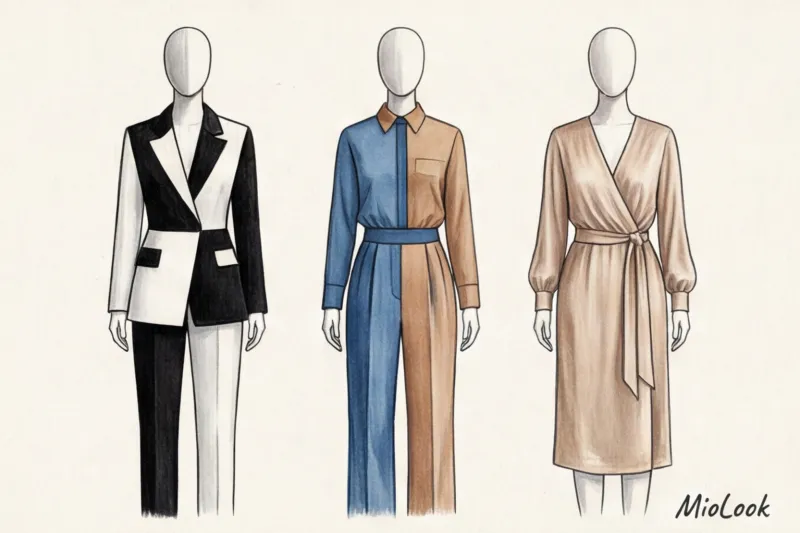
High Contrast (75–100%)
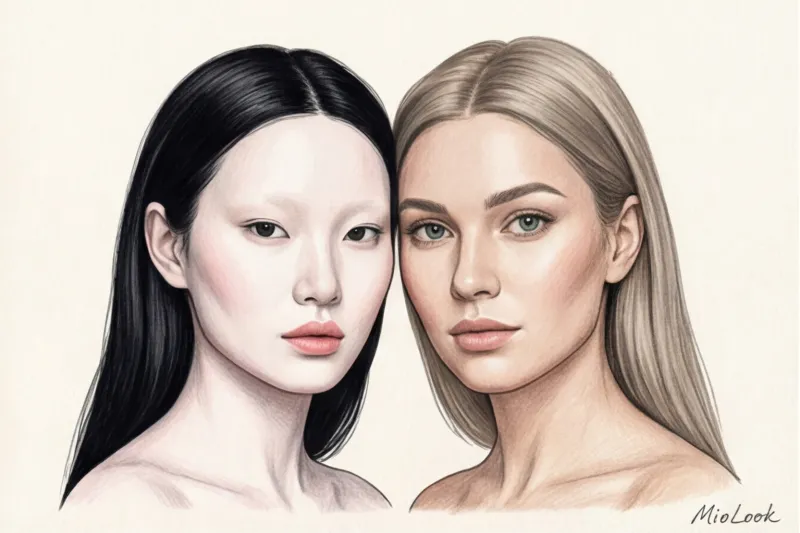
A classic example is porcelain skin and raven-black hair (think Dita Von Teese). The difference in lightness is colossal.
How to dress: Your appearance demands the same dramatic sartorial flourishes. You're one of those rare women who can pull off pure color blocking: a crisp white shirt with a jet-black suit, emerald green with fuchsia. Graphic prints like large houndstooth or zebra are your best bet.
Error: Monochromatic looks in dusty pastel tones will make your face look washed out and tired.
Medium Contrast (40–75%)
The most common type in European latitudes. The transitions between skin, eye, and hair tones are noticeable but not abrupt.
How to dress: Your golden rule is "one dark plus one medium" or "one light plus one medium." For example, a navy blue jacket with a camel sweater. Subtle prints and balanced color combinations.
Balance: Avoid a 50/50 black and white combination right next to your face. If you're wearing a black turtleneck, layer a beige or dusty pink trench coat over it to soften the contrast.
Low Contrast (0–40%)
The lightness of the hair, skin, and eyes is almost identical. This is often seen in blondes with fair skin and clear eyes, or in dark-skinned girls with dark brown hair.
How to dress: You are made for the aesthetics of "quiet luxury." Monochrome total looks, gradient transitions, shades of old money style The difference between colors in an outfit should be nuanced (for example, a milky sweater and beige trousers).
Risk: Black, burgundy, or dark blue items near your face will steal the show. Your conversation partner will see your dress, but they won't notice you.
Prints, Textures, and Accessories: A Contrast Management Checklist
What should you do if the AI shows low contrast, but the dress code requires a formal black jacket? In my practice, I often encounter cases where a client doesn't want to give up her favorite pieces. This is where stylistic illusions come to the rescue.
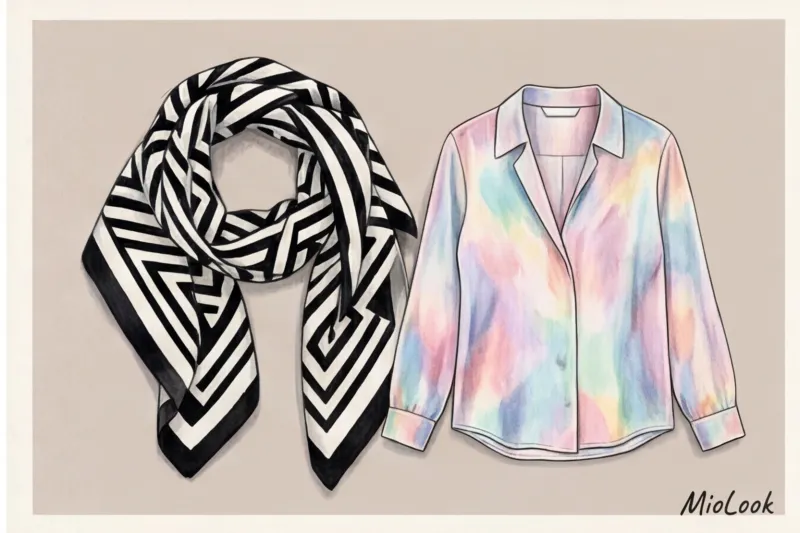
1. Playing with textures. You can create the desired contrast without changing the color at all. Smooth, shiny silk next to matte, porous wool of the same shade is visually perceived as a difference in brightness. If you have low contrast, choose fabrics with similar textures (cashmere and suede).
2. Size and sharpness of the print. If your contrast is medium (around 50%), avoid very small variegated patterns and very large contrasting blocks. Watercolor blends, Prince of Wales checks, or classic medium-width stripes are your options.
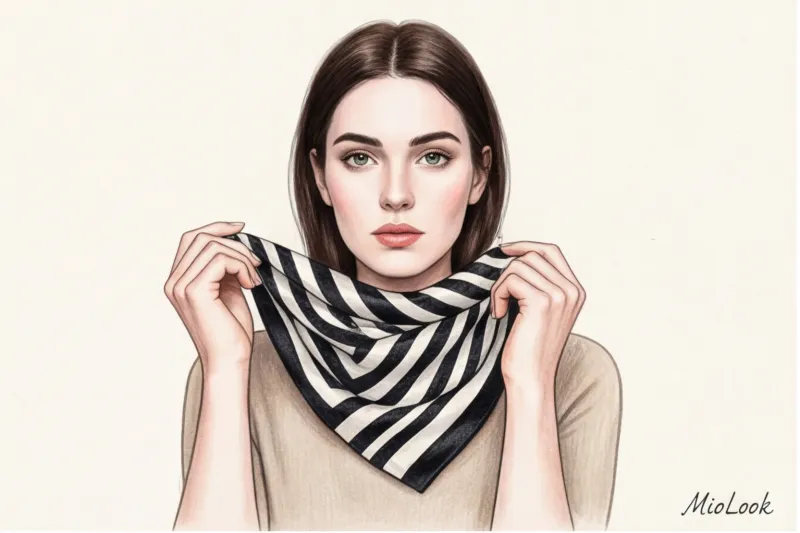
3. Artificial buffers. If a piece is too contrasting for you (for example, a dark sweater on a fair complexion), move the color away from your face. Wear a white T-shirt underneath so the collar is visible, add a silk scarf in your natural shade, or use bright accessories as a transition bridge.
4. Glasses as a tool. Did you know that you can artificially increase your contrast with the help of optics? How to choose the color of glasses frames We wrote about this separately, but the basic rule is this: dark, thick frames add a graphic look to the face, allowing you to wear bolder prints in clothing.
Ready to get started?
Try the MioLook free plan—no commitments, full access to basic appearance analysis.
Get access — €0.99 onceSummary: Why Your Digital Color Passport Changes Everything
Buying clothes at random in 2024 is too expensive. When you walk into a typical mass-market store or a premium boutique, you see perfect merchandise that sells you a mood. But a beautiful emerald sweater for €180 can be a waste of money if its deep saturation overwhelms your soft, low-contrast appearance.
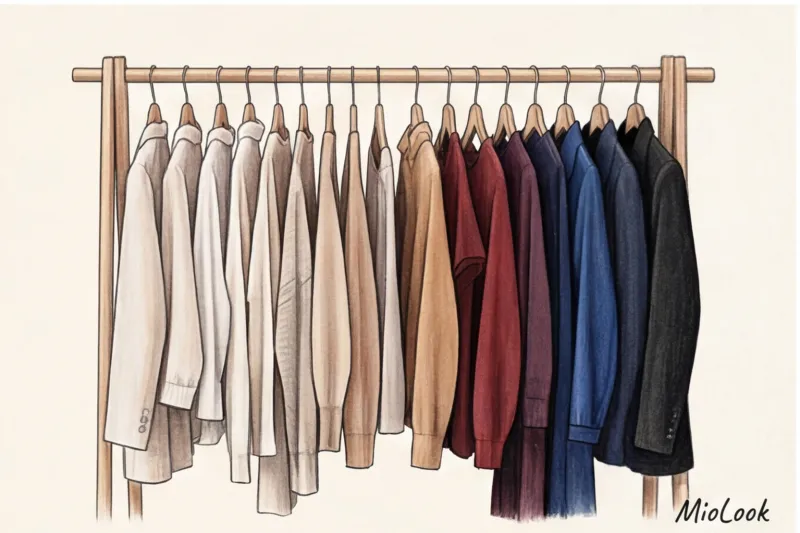
Digitalizing your appearance with neural networks shifts wardrobe selection from the realm of emotion to controlled mathematics. Knowing your precise contrast ratio eliminates guesswork in the fitting room. You know exactly whether you need monochrome or color blocking, matte cotton or shiny viscose.
Style is certainly an art. But the most reliable art is always built on a flawless mathematical foundation. Leave the calculations to technology, and reserve for yourself the pleasure of perfect reflections in the mirror.