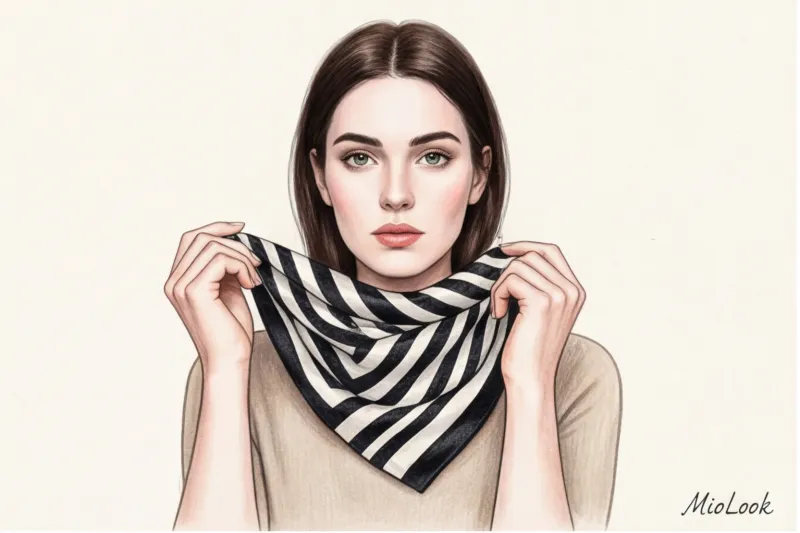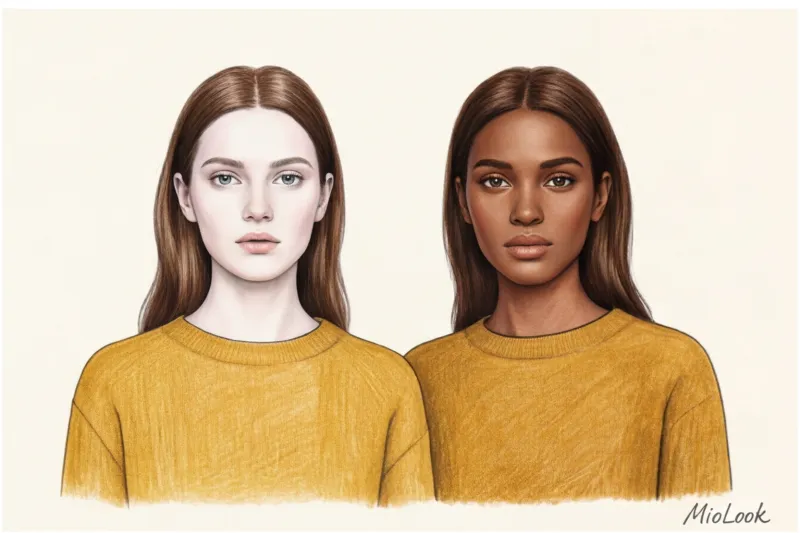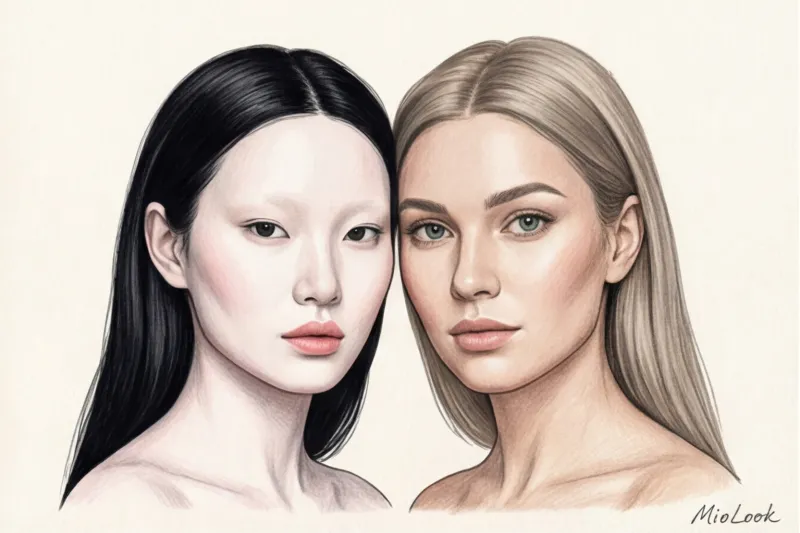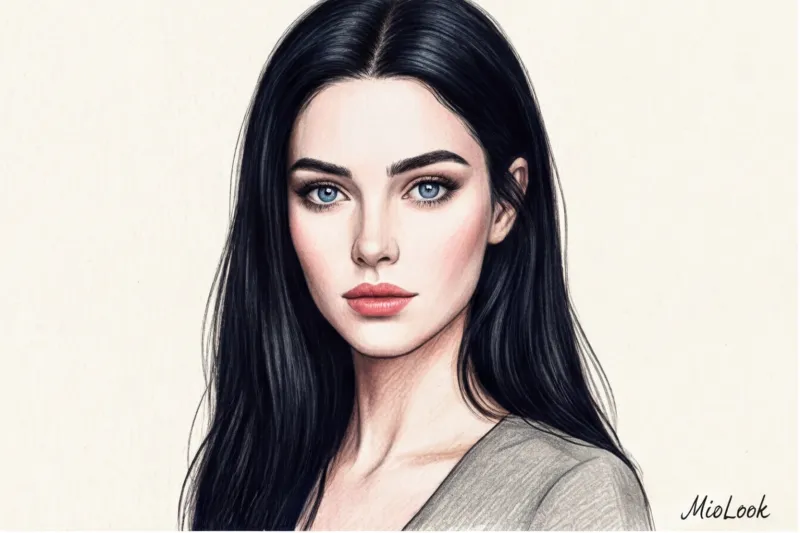
A couple of years ago, one of my clients bought a luxurious monochrome beige three-piece suit from Massimo Dutti. It cost about €250, fit perfectly, the fabric flowed, but in the mirror we both saw a tired woman who looked like she hadn't slept in a week. The suit literally "ate" her face. Everything changed in a second when I pulled a bright fuchsia silk scarf from my bag and tied it around her neck. Her eyes sparkled, her face contoured, her look was complete. At that moment, high contrast in appearance — a physical property that cannot be ignored.
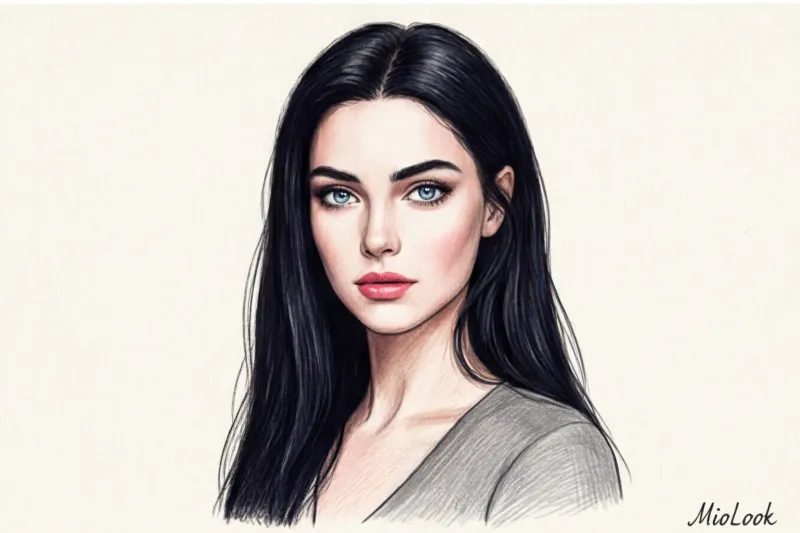
Most articles online reduce this topic to the banal "Winter" color type and recommend wearing only black and white. We've covered the classic approach in more detail in our The complete guide to contrast and color selection , but today I want to dig deeper. I'll show you how to harness your natural vibrancy through print scale, fabric physics, and the "20% near the face" rule, so every item in your closet truly lives up to its price tag.
What is high contrast in appearance (and how to check yours in 10 seconds)
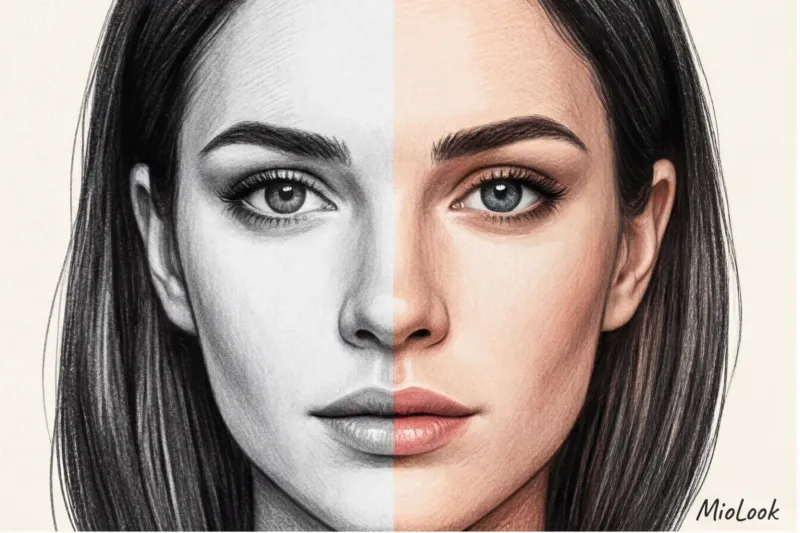
Forget about the division into "Autumn" and "Spring" for a moment. It's far more important to understand the physics of color. According to Johannes Itten's color theory (which is still taught in design institutes), the contrast between light and dark is the basis of human perception. High contrast in appearance is when the difference between the lightest area (skin, whites of the eyes) and the darkest (hair, eyebrows, irises) is maximal.
In color science, there's a value scale from 0 (absolute black) to 10 (pristine white). With high contrast, your hair is typically at a value of 1-2, and your skin is at a value of 8-9. The difference is 6-9 steps. It's this difference that requires your clothing to be equally expressive.
My favorite trick for shopping and wardrobe review: take a makeup-free selfie in daylight. Use your smartphone's default filter to convert the photo to black and white. If you see sharp, defined lines of your eyebrows and hair against a light complexion, you have high contrast. If everything blends into a smooth gray gradient, you have low contrast.
Don't try to squeeze yourself into the confines of one season. Explore 12 Color Types of Appearance: A Guide to Choosing a Palette to understand your undertone, but it is the level of contrast that dictates, How combine these colors with each other.
Your perfect look starts here
Join thousands of users who look flawless every day with MioLook. The smart AI stylist will analyze your contrast and select the perfect combinations.
Get access — €0.99 onceThe biggest mistake of flamboyant girls: the myth of a black-and-white wardrobe
The most common and most damaging misconception is that if you're a striking brunette with fair skin, you only need to wear black bottoms and a white top. Yes, that's classic. But it's the laziest and often most aging way to accentuate your appearance.
Over 12 years of practice, I've noticed a pattern: a total black-and-white look makes the face look harsh. A harsh black color on a face without heavy studio makeup casts micro-shadows on the skin, emphasizing nasolabial folds and signs of fatigue. If you're interested in this mechanics, I recommend reading up on it. What colors make you look younger after 50? — this effect is analyzed in detail there.
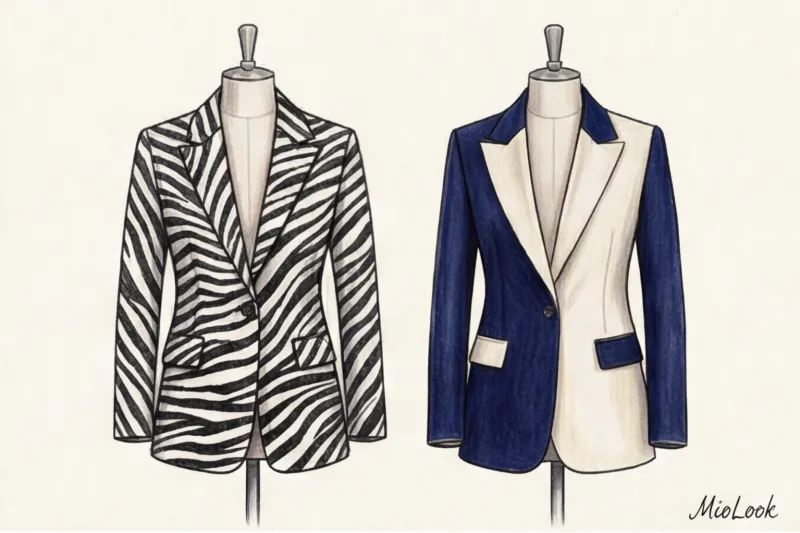
Moreover, the so-called "floating head syndrome" occurs. This occurs when clothing steals all the attention. You walk into a room, and people see your dress first, and only then you. Our goal is to use complementary color contrast, not just binary value contrast.
3 Pairing Formulas That Will Make High Contrast Work for You
To avoid the uniform effect, I use three proven strategies. They don't require in-depth knowledge of color, but they instantly elevate your look from "just clothes" to "thoughtful style."
Formula 1: Deep Dark + Icy Pastel
Save pure black and crisp white for tuxedos. For everyday wear (like an IT interview or a casual Friday at the office), consider a different shade. Choose a deep bottle green (emerald) or navy and pair it with an icy blue or cool mint shade.
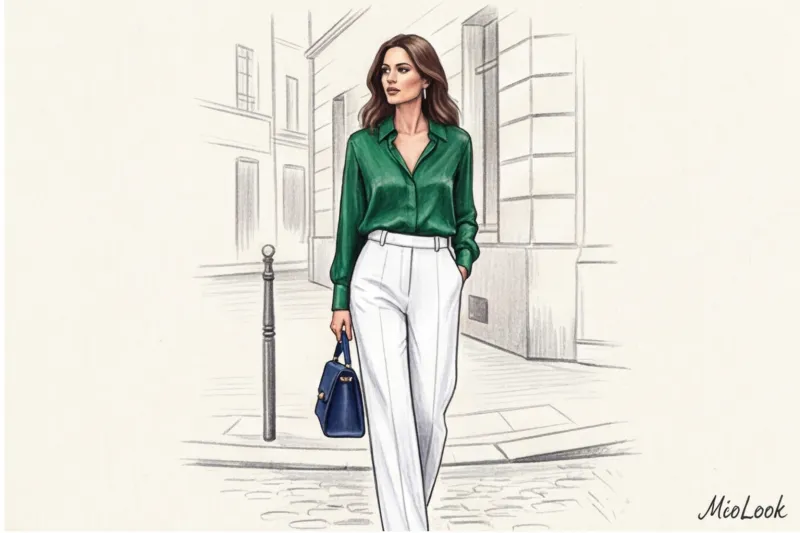
The difference in lightness (that same contrast) is preserved, but color appears. This formula is the basis of the old money aesthetic, which we mentioned in the article. Noble colors in clothing: how to create an expensive look These shades look sophisticated and prestigious.
Formula 2: Color-blocking with pure shades
If you want to make a statement (a great choice for a party or public appearance), use two pure colors of equal saturation. For example, cobalt blue and fuchsia. This is a classic color combinations in clothes , which can only be supported by a high contrast appearance - a girl with a soft light brown complexion will simply be overwhelmed by such colors.
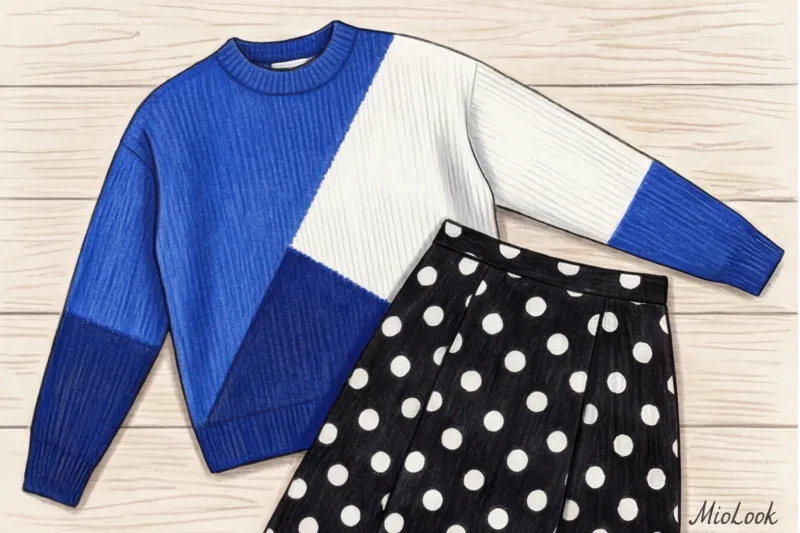
The main rule of proportions: Never divide your figure 50/50. This breaks up the height and makes the silhouette look boxy. Use a 70/30 or 80/20 ratio. Fuchsia palazzo pants and a cobalt top tucked in are the perfect solution.
Formula 3: Rule “20% in the face”
But what if you love calm, basic pieces? Can you wear beige, gray melange, or dusty rose? Yes, you can. To maintain the natural vibrancy, just 20% of the high-contrast color in the portrait area is enough.
Wear your favorite cozy camel sweater, but let the sharp corners of a crisp white shirt hang over the neckline. Or add chunky earrings with dark enamel. This micro-contrast will elongate your face. More ideas on this topic can be found in the article about How to wear contrasting colors in clothing.
Ready to get started?
Try the free plan—no commitments required. Upload your items to MioLook, and the algorithm will automatically create looks with the perfect color balance for you.
Get access — €0.99 oncePrints and scale: how to avoid becoming a ripple
One of the most common mistakes my clients make is buying romantic dresses with small floral prints (millefleurs). The brand &Other Stories, for example, releases dozens of such styles each season in the €70–€120 price range. But on a woman with high contrast, such a small, fragmented print turns into a visual "ripple."
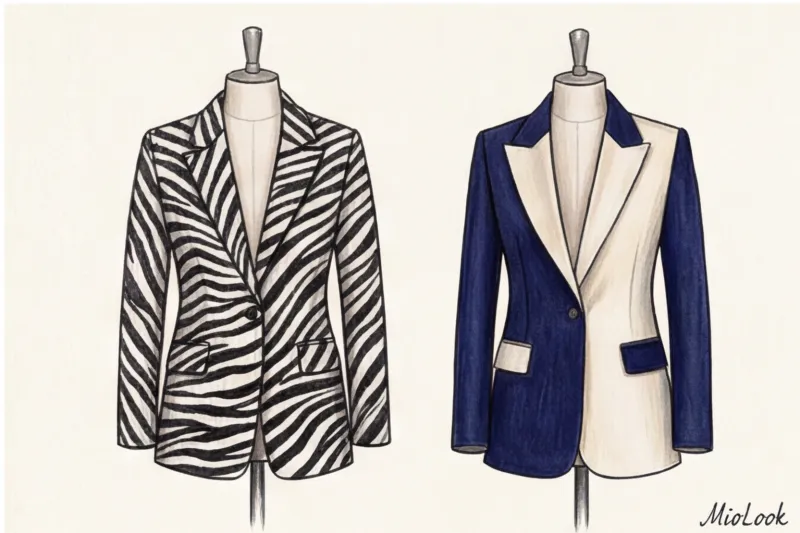
Your look needs scale. A small floral will overwhelm you, making your look seem provincial. High-contrast prints with large rapports (pattern repetitions) are best friends.
- Large geometry and abstraction. The crisp lines echo the contrast of your features.
- Wide stripe (block stripe). Width from 3 centimeters and more.
- The white space rule. There should be space between print elements (such as large flowers or polka dots), creating a background. If the polka dots are stuck on top of each other, they blur together.
If you have a dress with a small print that you don't want to part with, tone it down with a solid structured jacket on top.
Stylists' secret: the texture of the fabric also has a contrast
And now for an insight rarely mentioned by fashion bloggers, but well known to textile materials scientists: Contrast is created not only by pigment, but also by how the fabric reflects light.
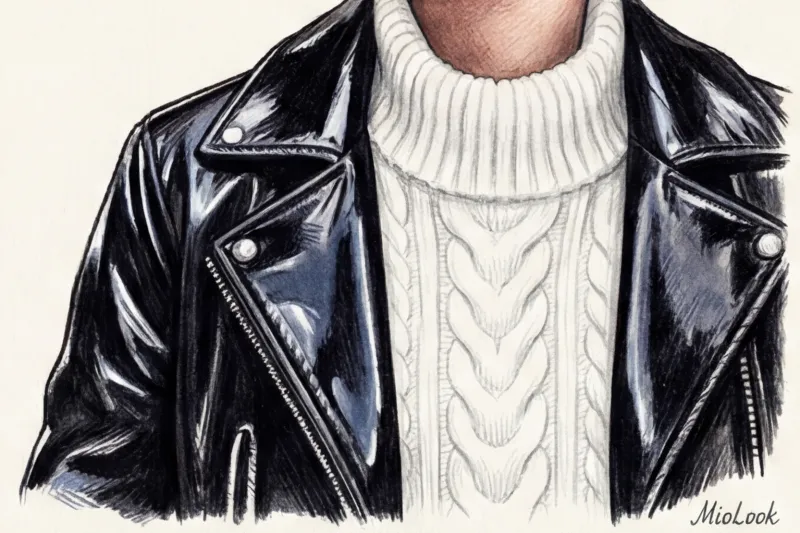
Smooth, glossy surfaces (silk, satin, patent leather, mercerized cotton) maximally reflect light. They create a pure, vibrant color, enhancing contrast. Loose, matte surfaces (bouclé, chunky knits, dense linens) absorb light in the micro-shadows between the threads, muting the color.
A white silk blouse will create a much higher contrast against the face than a white linen top of the same shade.
Use a combination of different textures in a single color (for example, a matte black cashmere sweater and a glossy black leather skirt). This will create a luxurious optical effect without adding new colors. This is a great technique for those looking for ways to What colors make you look slimmer? , while maintaining the expressiveness of the image.
An example of a smart capsule for high contrast
Theory is great, but let's take a look at a real closet. How can you create a wardrobe that coordinates everything without slipping into dull grayness? I recommend taking a closer look at our The Complete Guide to Creating a Capsule Wardrobe , and here I will give a specific calculation.
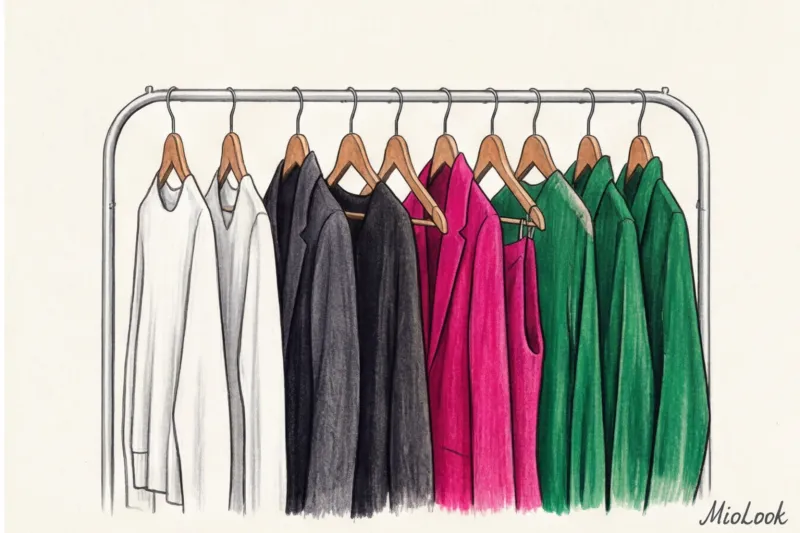
In the European mass market of the Premium segment (for example, H&M Premium Quality or the Massimo Dutti lines), you can put together an excellent base, where items cost in the range of 50–150 €.
Base: Dark blue (navy), charcoal gray (graphite), pure white. No dusty gray or gray-beige (grey).
Accents (Color): Emerald, fuchsia, pure lemon yellow.
Formula 3x5x2:
- 3 bottoms (graphite wide-leg trousers, dark blue smooth midi skirt, white thick jeans).
- 5 tops (white structured shirt, emerald silk top, fuchsia jumper, navy long sleeve top, lemon cardigan).
- 2 top layers (navy blue jacket, graphite coat).
Even this minimal set of 10 items will give you over 30 combinations, and each of them will highlight your high contrast without any extra effort.
Access to MioLook for €0.99 — one-time payment
A smart AI stylist will create the perfect look from your items. Upload a photo of your clothes, and we'll show you how to put together a capsule wardrobe.
Get access — €0.99 onceChecklist: How to Wear "Forbidden" Pale Colors
I always tell my clients: there are no strict prohibitions in fashion, only questions of compensation. Every rule has exceptions. For example, my advice on high contrast stops working if you decide to drastically bleach your hair platinum blonde (your contrast will be artificially reduced). But if you're in tune with your natural coloring and really want to wear a trendy, but completely un-youthful, pale dusty rose shade, follow this checklist:
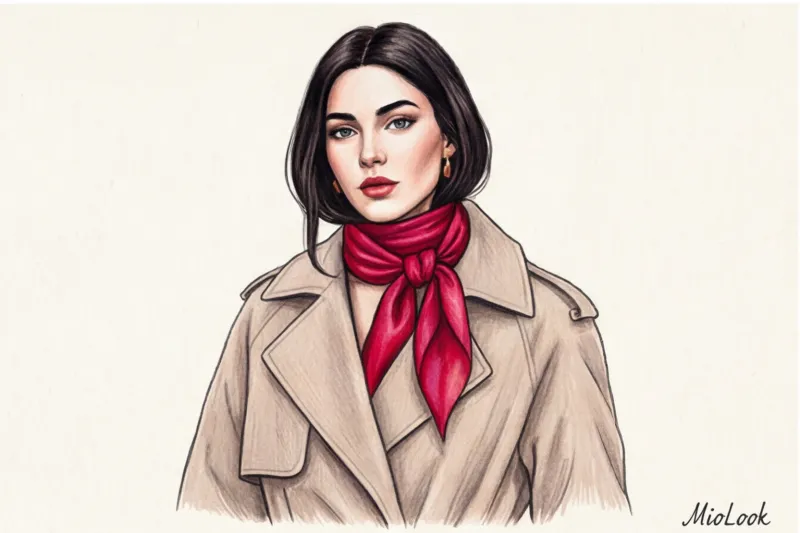
- Move the color away from your face. Let the shoes, bag or trousers be dusty pink, and leave the face with a contrasting deep color.
- Enhance your makeup. If you're wearing a pale top, restore contrast to your face with bold eyeliner or a bright lipstick. Red lipstick instantly restores balance.
- Use layering. Wear a pale jumper, but let the sharp collar of a contrasting shirt show through underneath, creating a sharp line around your face.
- Cover with texture. A pale color in matte cotton will dull the vibrancy. The same pale color in glossy silk or sequins will restore some of the lost contrast through highlights.
Your high-contrast appearance is a powerful tool. Don't hide it behind boring gray sweaters or overload it with heavy, mournful black. Manage color, scale, and texture consciously, and your wardrobe will begin to work 100% for you.