

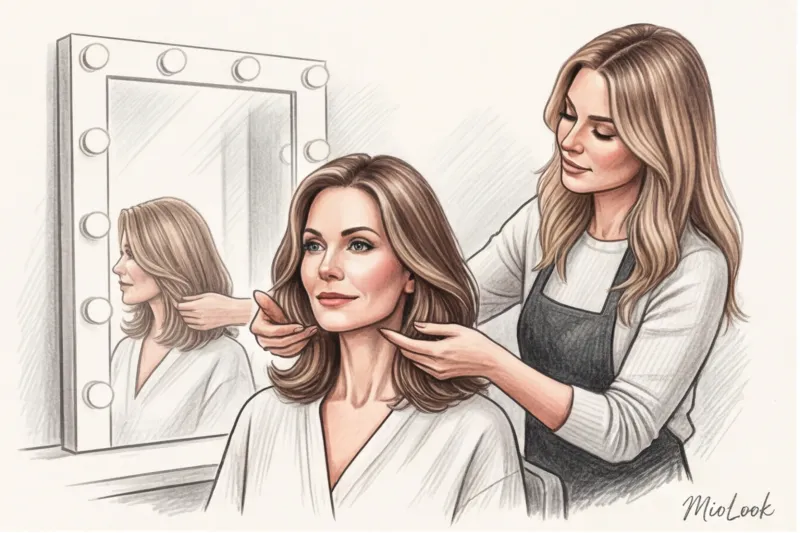
Why the Old Rules Don't Work Anymore: The Anatomy of a Rejuvenating Haircut
"Sofia, make your face look fresher, but not that awful cascade from the 2000s"—that's the phrase that begins roughly every third consultation in my practice. Women come in asking for a change because, at some point, they realize that the haircut they've had for the last ten years, which always worked flawlessly, has suddenly started making their face look tired. And it's not that you've changed dramatically overnight. It's that the geometry of your face has changed, while the architecture of your hairstyle has remained the same.
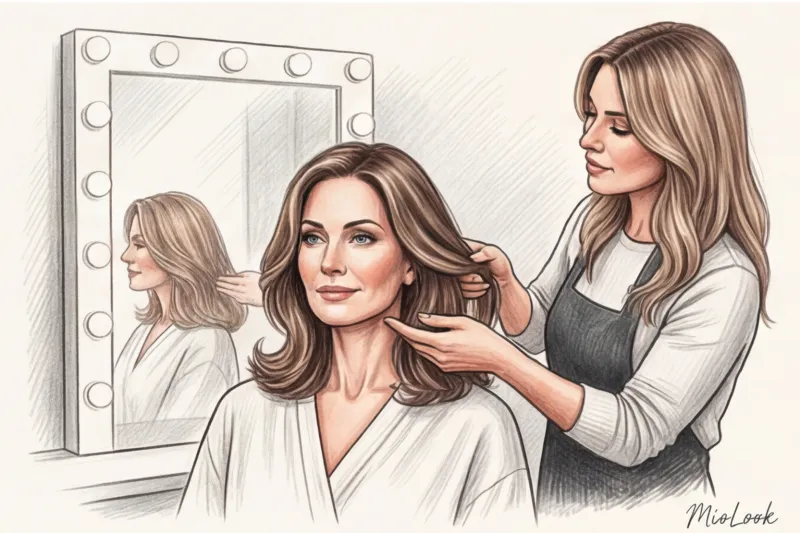
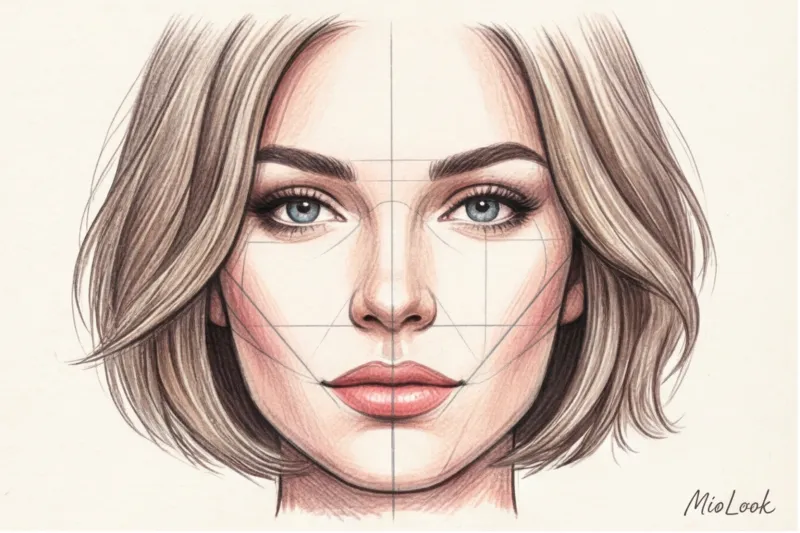
When we discuss what really works anti-aging haircuts , you need to start not with glossy magazine trends, but with basic anatomy. Around age 35, gravitational ptosis comes into play. The famous "triangle of youth" (where the base of the triangle runs along the high cheekbones and the apex reaches the chin) begins to invert. Facial tissues lose their collagen framework, volume shifts downward, nasolabial folds deepen, and the jawline loses its youthful definition.
What happens if you're wearing straight, volume-free hair of the same length at this point? It creates harsh vertical lines across your face, acting like neon lights, highlighting all the downward curves. When someone looks at you, their gaze reflexively drifts downward—toward your jowls and the shadows around your mouth.
This is where the concept of "visual lifting" comes into play. The main goal of a good haircut is to change the direction of the gaze, creating upward diagonal lines. The stylist creates layers that direct the focus upward and sideways—to the cheekbones, the outer corners of the eyes, and the temples. It's a pure optical illusion, but it erases 5-7 years from the face without a single injection.
"It's not the length of your hair that gives away your age. It's the lack of dynamism, the dated silhouette, and the dull, thinning texture of your hair."
This is where another critical mistake I often see lies. Many people try to maintain density by using tight, even, "blind" cuts. But let's turn to science. According to extensive data published in International Journal of Trichology (2022), after age 30, women's hair density decreases by approximately 10-15% per decade, and the hair shaft itself thins and loses moisture. The dense cut on such hair no longer lies in a springy wave like heavy silk. It hangs statically, turning the hairstyle into a rigid helmet.
That's why heavy cuts are no longer effective for anti-aging. A modern haircut needs to breathe. Hair needs air, texture, and ease of movement when turning the head. Before deciding on a drastic change in shape at the salon, I always advise my clients to upload a current photo to the app. MioLook and visualize how adding dynamic layers around the face instantly changes its proportions.
The main myth: "The older you are, the shorter it is."
If we were to rank the most harmful beauty tips, the stereotype that "you must have a short haircut after forty" would take the absolute top spot. This is a painful legacy of the Soviet and post-Soviet school of hairdressing, where a short, boyish haircut was considered the only solution to hair thinned by poor-quality dye and a simple desire to save time on styling.
Let's be honest: an ultra-short haircut isn't a universal anti-aging pill. Who does it really suit? Women with a perfect oval face, chiseled, pronounced cheekbones, a long, fragile neck, and no hint of puffiness or a double chin (think Charlize Theron or Robin Wright). In this case, a pixie cut truly accentuates the facial architecture and looks aristocratic, especially if this shape is integrated into Hairstyles for business ladies: styling for status and success.
Now, let's face it: if you have soft features, are prone to morning puffiness, and your jawline has lost its former definition, a short, "comfortable" haircut will act like a merciless magnifying glass. It completely reveals the lower third of your face—the very area that suffers most from gravitational ptosis. By depriving your face of the frame of hair, you instantly add about 10 years to your age.
A shape that reveals the back of the head and ears requires impeccable jaw geometry. Otherwise, the back of the head appears flat, and the face visually widens and "slides" downward. Comfort shouldn't compromise the freshness of your look. Finding the balance between easy maintenance and an anti-aging effect is possible only with a mid-length cut with the right volume distribution.
Top 5 Anti-Aging Haircuts for Women: A Stylist's Choice
According to global trend agency WGSN (2023), the era of "high-maintenance hair"—hair requiring complex and time-consuming care—is officially over. Today, the foundation of any rejuvenating haircut rests on three pillars: air, texture and thoughtful casualness Monolithic, static forms that don't move when you turn your head visually transform into a "helmet" that mercilessly accentuates every wrinkle and shadow on the face.
The basic principle of a modern anti-aging haircut is that it should be easy to style with your fingers. If you need stiff boar bristle brushes, 40 minutes, and a thick cloud of strong-hold hairspray to create the look, this hairstyle is guaranteed to add a decade to your age. Hair should flow, fall apart, and spring back to its original shape with a simple finger-stroke.
However, shape is only half the battle. Over 12 years of practice, I've developed a strict rule: a rejuvenating haircut won't work if it's chosen without taking into account the natural texture of the hair. What looks great on thick Asian hair will become a pitiful sight on thin Slavic hair. The selection criteria are always dictated by texture:
- For fine hair: A dense edging (perimeter) line combined with invisible inner layers is essential. No aggressive thinning—just a blunt cut that creates the illusion of thickness and volume at the ends.
- For thick and heavy hair: The main goal is to remove excess weight to avoid a "tent" effect on the head. A slicing technique (sliding cut) is used here, which sets the direction of the strands and allows them to flow dynamically without weighing down the facial features.
- For porous and curly hair: Clear, graphic outer shapes are required to control frizz. Layers and cascades on this type of hair should be done with great care to avoid creating unmanageable shoulder-length volume.
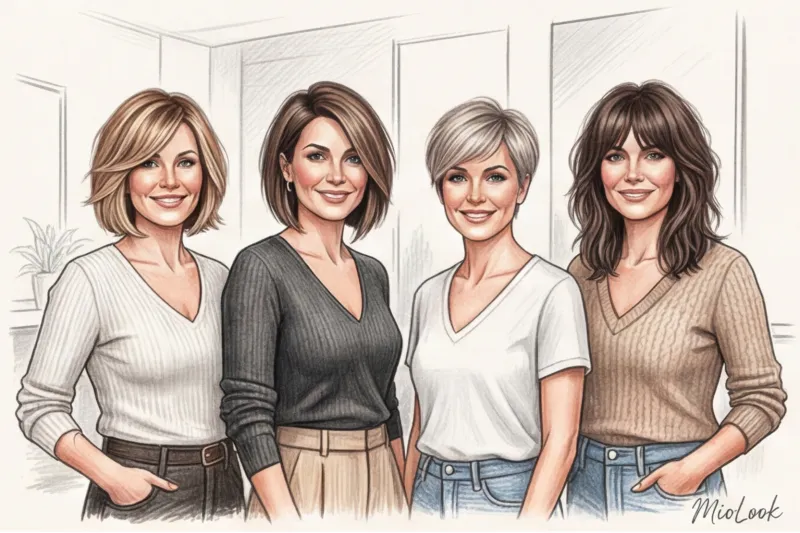
Layered textured bob
This is an absolute classic that has undergone a remarkable evolution. The ideal length for a rejuvenating effect varies within a strict range: from the earlobe to the middle of the neck. This area is considered strategically important—it allows you to open up the jawline without drawing attention to potential age-related changes in the lower third of the face.
The key to the modern bob is the proper distribution of volume. We create volume at the nape with graduated layers, but we categorically avoid the old-fashioned "cap-on-a-stem" effect that was so common among hairstylists in the early 2000s. The transition from short to long strands should be completely seamless.
Who is this cut best for? A layered bob is the perfect solution for those with oval and elongated faces. The side-swept volume visually widens the cheekbones, restoring the face's natural, youthful proportions. To style, simply rub a pea-sized amount of texturizing paste between your palms (high-quality options in the €20-€35 range are lightweight) and work through the strands with squeezing motions.
Long bob (Lob) with slight asymmetry
A lob (long bob) is a lifeline for those who aren't ready for short haircuts but understand that a length below the shoulder blades is no longer flattering. Why should those over 35 avoid a perfectly straight bob cut, especially if it runs right along the jawline? Any harsh horizontal line in this area acts as a marker, highlighting gravitational ptosis (sagging tissue) and emerging jowls. A straight cut literally pulls the lower part of the face downward.
The solution lies in geometry. Adding a slight angle—when the strands near the face are 1.5-2 centimeters longer than the back ones—changes everything. A diagonal line appears, visually elongating the neck and making the profile more toned. An elongated asymmetrical bob is incredibly versatile: it looks stately on glass-straight hair and acquires a subtle Parisian charm on wavy textures.
Pixie Bob: Boldness Without Losing Femininity
Let's get this straight: the modern bixie (pixie bob) has nothing in common with the ultra-short crew cut. It's a hybrid shape that takes the texture of the pixie and the softness of the bob. Its key difference from the classic version is the presence of longer, often asymmetrical bangs and the obligatory softened, elongated sides.
What is the rejuvenating mechanism? An open neck. A graceful, open nape and neckline is a subconscious trigger, associated with youth, fragility, and lightness. Covering the neck with a dense mass of hair often makes us appear heavier.
When my clients and I analyze their image changes and test new forms in the app MioLook The pixie bob is always a hit when paired with a modern business wardrobe. Imagine: a voluminous menswear-inspired jacket, a silk top, and a textured short haircut. It looks expensive. Moreover, this length creates the perfect backdrop for statement accessories—large gold sphere earrings or minimalist chokers become a full-fledged part of the look, rather than getting lost in the hair.
Not sure if the new length will suit you?
Upload your photo to MioLook and try out modern, rejuvenating haircuts with the help of an AI stylist before your salon visit.
Shaggy and medium length cascadeWe're witnessing a global return of '70s aesthetics, but with a completely new, modern interpretation. While the cascade once implied harsh, chopped steps that thinned out the ends, today's shaggy cut is a smoothness created by razor blades or skillful slicing.
This haircut has a remarkable "visual filter" effect. Choppy, light strands frame the face, falling neatly on the outer corners of the eyes and cheekbones. They create a soft shadow that masterfully conceals expression lines (those aforementioned "crow's feet") and draws attention away from skin imperfections.
The shaggy style is the ultimate solution for fine hair that begins to lose its natural volume and density with age. Thanks to its many short inner layers, the cut maintains its shape without the need for backcombing. A spritz of sea salt spray and a couple of minutes of blow-drying without an attachment are all you need.
French Bob at lip level
Rounding out our top five is a haircut that epitomizes European chic. A true French bob ends right at the lip line or just below the nose, and is almost always complemented by soft, textured bangs.
The rejuvenating focus here lies in the anatomical accents. By creating a clear horizontal line at the lip level, the cut draws the eye exclusively to the center of your face—your eyes, cheekbones, and lips. The jawline and neck are completely overlooked. If you have slightly curly or porous hair, a French bob styled with a subtle "I just woke up" effect instantly erases fatigue and adds a playful touch.
Age-Stealing Details: Bangs, Partings, and Cuts
You can spend $150 on a perfect haircut from a top stylist, but in the morning, after styling your hair with your usual gesture, you're surprised to find a tired look in the mirror. Why does this happen? The answer lies in geometry. There are micro-details that can ruin even the most flawless, rejuvenating haircut, turning it into an age marker. And the main culprits here are static, harsh lines.
Let's start with the least obvious: your parting. According to statistics from hairdressing associations, approximately 70% of women wear the same parting for decades. With age, this becomes a critical mistake. The problem with a center parting is that it requires perfect facial symmetry. However, after age 35, gravitational drooping comes into play: one eyebrow may droop slightly lower, and the nasolabial fold on one side becomes more pronounced. A center parting acts as a ruthless vertical axis, instantly highlighting the slightest loss of symmetry.
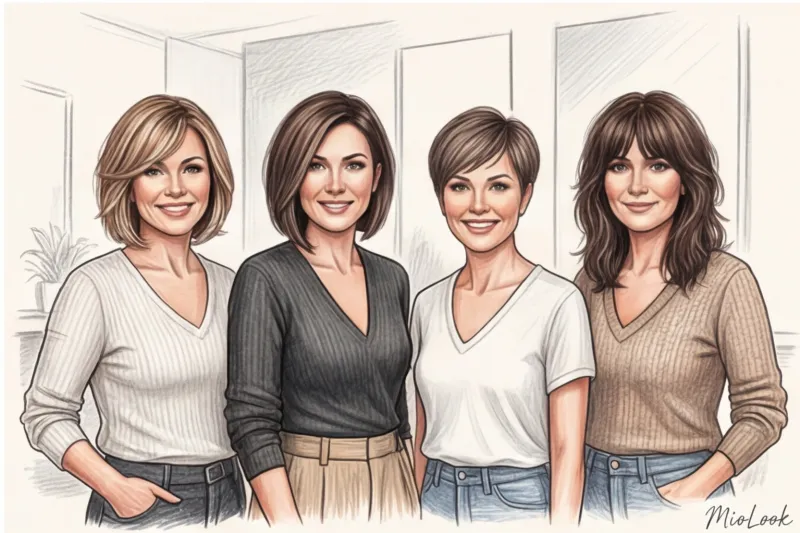
During my personal consultations, I love to conduct a quick experiment. I ask the client to sit in front of a mirror with her hair parted in the center, then, using the tip of a comb, simply move the parting 2 centimeters to the side. The reaction is always the same—a slight shock. This simple shift instantly refreshes the face: the focus shifts from the central age lines to the cheekbones and eyes, erasing the appearance of fatigue.
That's the magic of asymmetrical and zigzag partings. A subtle diagonal or casual zigzag (created by finger-picking strands, not with a sharp comb like in the '90s) not only breaks the rigid symmetry but also automatically adds volume at the roots. Hair that's been used to lying in one direction for years naturally lifts when tossed to the other side, creating that much-needed "air" in the hairstyle's silhouette. If you're unsure which side is your "working side," take a couple of selfies with different options and upload them to MioLook The app's artificial intelligence will help you objectively evaluate which strand angle will provide the best lifting effect for your proportions.
The Right Bangs vs. Bangs That Make You Look Older
While a parting is a detail that can be easily changed in a second, the cut at the face requires careful consideration. As a textile expert, I often compare hair to fabric. Imagine a heavy, dense drape draped over thin, flowing silk—it completely suppresses the texture and weighs down the silhouette. A thick, sleek fringe from the very crown works in the same way.
This is perhaps the most dangerous vestige of hairstyling fashion of the past. A straight horizontal cut creates a "helmet" or heavy visor effect on the face. But the worst thing is how this line interacts with age-related changes: a dense line of hair above the eyebrows visually "flattens" the face and acts like a massive arrow pointing downward. All the emphasis is placed on the lower third of the face, maximally emphasizing the nasolabial folds, jowls, and the loss of definition of the oval.
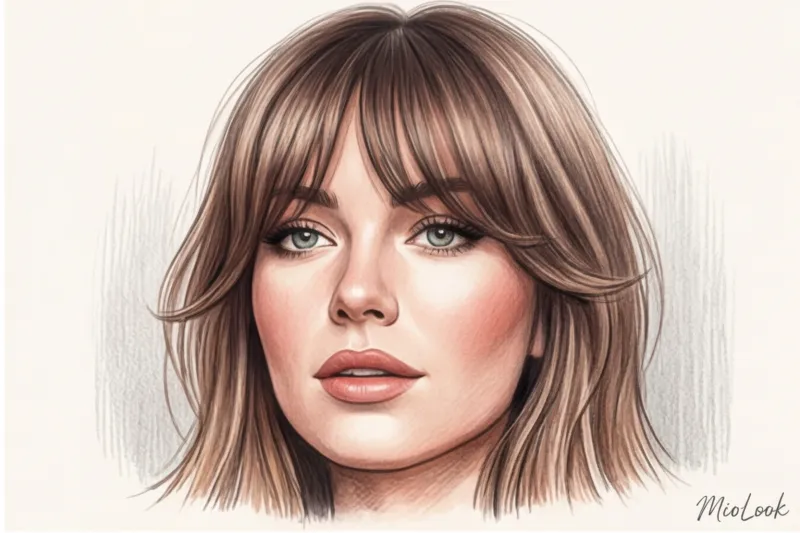
The absolute antithesis of this heavy-handed approach is curtain bangs—a recognized and, arguably, the most important anti-aging tool of modern stylists. Its secret lies in the correct distribution of volume and guiding lines. Shortened in the center (at the bridge of the nose) and lengthening toward the cheekbones, they flare out on both sides of the face to form a soft arch. These diverging diagonal lines literally draw the other person's gaze upward, toward your eyes, creating a powerful visual lifting effect.
If you're not yet ready for a pronounced "curtain," a perfect compromise is a longer, side-swept fringe that blends seamlessly into the rest of your hair. Its edge should end at the cheekbone or just below the jawline. This detail subtly contours the face, elegantly conceals crow's feet, and adds that dynamic look so prized in modern haircuts. Moreover, unlike straight bangs, side-swept bangs grow out beautifully, eliminating the need for urgent touch-ups at the salon every three weeks.
Color and Texture: How Hair Quality Affects Anti-Aging Haircuts
Have you ever noticed how the same geometric cut looks luxurious in a magazine photo but completely flat in real life? According to statistics from colorists at London academies, over 60% of women over 35 wear a hair color that visually adds three to five years to their age. A quality haircut is just the foundation. A true anti-aging effect only occurs when the correct distribution of highlights, shadows, and healthy texture come into play.
Let's examine the mechanics of the most common blunder: a dull, monochromatic dark coloring (especially when done with household dyes). From a coloristics and color type theory perspective, the freshness of a complexion is directly related to the level of contrast in your appearance. As we age, our skin gradually loses some of its natural pigment, becoming thinner and more translucent, reducing the natural contrast of the face. If we frame it with a dense, jet-black or rich chestnut color without a single highlight, we create a hard-edged effect. This harsh contrast acts like a magnifying glass: it instantly emphasizes the nasolabial folds, deepens the shadows under the eyes, and accentuates even the slightest unevenness in the skin. Furthermore, a matte dark color absorbs light, making the hair texture appear dry and lifeless.
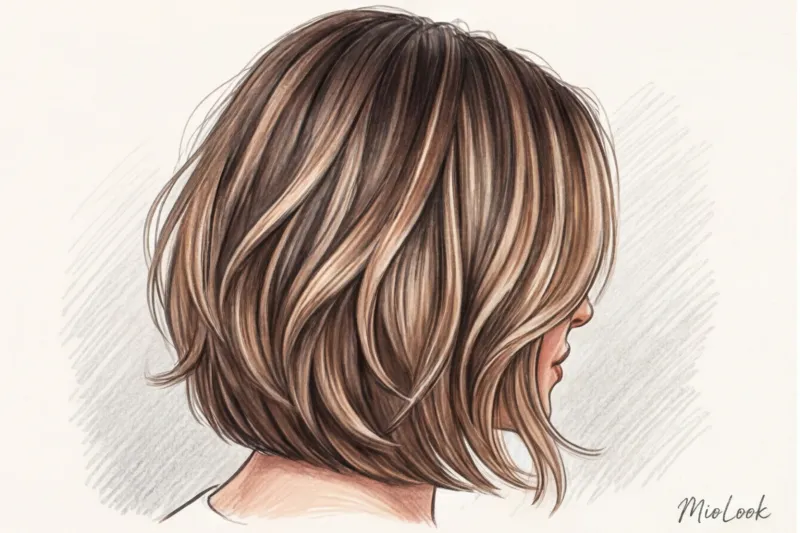
The solution lies in techniques that create dynamics and optical illusions. This is where hair contouring (hair contouring) is a delicate work with light and dark nuances, which works on the principle of sculpting powder and highlighter.
- Face highlighting: By adding soft, diffused highlights (using balayage or micro-highlighting) around the face, we create the effect of a professional photo reflector. The light strands illuminate the skin, soften the appearance of age-related angularity, and visually lift the cheekbones.
- Multidimensional volume: Fine, thinning hair appears twice as thick with the blending of two or three related shades. The roots remain deep, and the lengths shimmer in the light.
Access to MioLook for €0.99 — one-time payment
Start creating your perfect looks with AI and find hair colors that truly highlight your face and complement your wardrobe.
Get access — €0.99 onceComplex coloring techniques, in addition to providing a visual lift, brilliantly address the problem of early gray hairs, blending them into the overall lighter shade. But what if the gray hair is already over 50%? The premium hair care industry is finally moving away from the "to touch up roots every two weeks at any cost" paradigm. The constant, harsh effects of ammonia weaken the hair cuticle, making it porous and brittle.
Today's trend, which I, as a supporter of sustainable fashion, strongly support, is smart gray hair integration (Grey Blending Technique). Instead of fighting nature, we create a smooth transition to a refined silvery blonde or use cool toning. A high-quality transition from dark pigment to pure gray using complex salon washes and highlights can cost €250–€400, but it's a strategic investment. The stylist creates cool ash, steel, or pearl strands that blend seamlessly with your natural base.
"Rejuvenating color is always about air, light refraction, and movement. If your hair color looks static, like a tight helmet, it's time to let in highlights and allow the texture to breathe."
The result is stunning, vibrant color that doesn't require drastic monthly touch-ups, looks incredibly classy, and, most importantly, restores your hair's natural elasticity.
Haircut and Wardrobe: How Hairstyle Interacts with Clothing
Backstage at minimalist brands like The Row or Jil Sander, hairstylists never pick up a hairdryer until they've thoroughly studied the textures of the new collection's fabrics. In my textile work, I always rely on the same principle: we physically cannot consider a hairstyle without considering what you're wearing. This is the fundamental basis of the Total Look concept, where your hair is as much a style element and an extension of your wardrobe as a quality $500 leather bag or perfectly tailored cashmere pants.
An outdated or overly harsh haircut can ruin the most expensive outfit in a second. I often see the same scenario: a woman spends thousands of euros updating her wardrobe, buying trendy pieces, but leaves behind a complex, rigidly styled or completely slicked-back hairstyle. In today's smart casual, this serves as an unmistakable marker of cheapness. Today's aesthetic is built on ease. Relaxed clothing shapes, deconstructed menswear jackets, and loose Oxford shirts call for air in the hair. Perfectly sleek, hair-on-hair styles or complex pin designs create a harsh visual dissonance with the soft lines of modern tailoring. Your clothes project freedom, while your hairstyle projects tension.
As a materials specialist, I always remind people: hair is a fiber, too. And it obeys the same laws of light reflection as the fabrics in your closet. My favorite stylistic technique is the deliberate synchronization of textures.
- Smooth fabrics: If your capsule hairstyle is built around flowing mulberry silk blouses or smooth viscose satin, your haircut should exude a healthy, glossy shine. Matte, porous ends against the backdrop of expensive, shimmering silk will instantly cheapen the entire look.
- Embossed fabrics: Imagine a thick Scottish tweed, bouclé, or a voluminous chunky knit sweater. A perfectly elongated, "flat" style against these will make your head appear disproportionately small. The casual texture of a shag haircut works phenomenally here. The choppy, dynamic strands perfectly support the rough architecture of the dense fabrics, creating a harmonious, multidimensional silhouette.
The easiest way to analyze such subtle nuances is visually. When my clients collect seasonal capsules through MioLook We always compare new outerwear silhouettes with our current haircuts. It often turns out that the problem isn't that the new trench coat doesn't fit, but that the hairstyle simply clashes with its lapels.
Necklines, collars and hair lengths
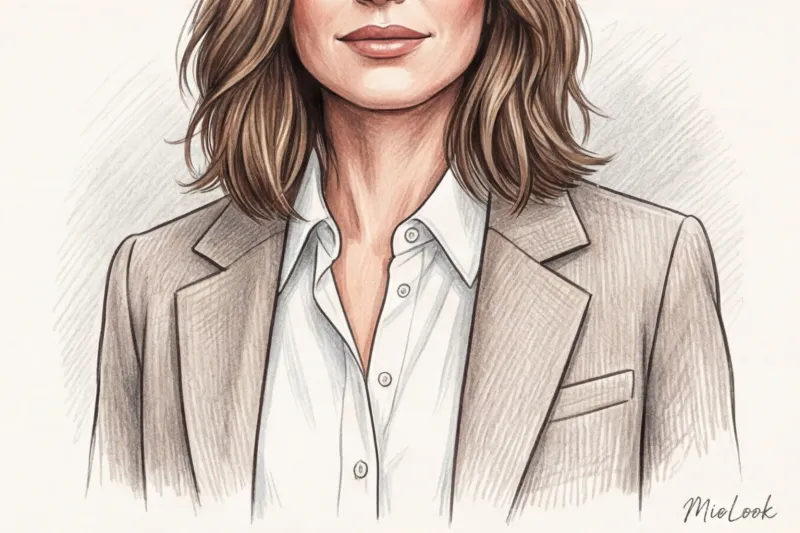
The geometry of your collar directly dictates the geometry of your hair. When choosing a haircut length, it's crucial to consider the outerwear and jackets you wear in everyday life. There's a concept called the "danger zone"—that tricky hair length just below the chin and down to the middle of the neck, which physically clashes with the classic English collar.
If your hair constantly breaks against the thick collar of your office jacket or fall coat, turning outward in untidy feathers, it visually shortens your neck and adds unnecessary bulk to your shoulders. The rule of a clean cut is: the ends of your hair should either end just above the collar (exposing your neck) or fall confidently above it (length from the collarbone and below). No in-between options, as they create an untidy fold.
Turtlenecks and high collars are a whole other story. Cashmere turtlenecks are a great way to create an elegant wardrobe staple, but only if they don't completely "eat up" your neck. Medium-length hair worn loose over a voluminous high collar creates a heavy, overhanging effect, detracting from the silhouette's elegance. This is why short haircuts (short bobs, pixies) or casually swept-up hairstyles work phenomenally well with turtlenecks. By revealing the jawline, you elongate the silhouette vertically and achieve the powerful visual lift we all seek after age 35.
Micro tip: Never judge a new haircut length while sitting in the salon chair wearing a thin protective cape. Ideally, come to the salon wearing the jacket or top with the neckline you wear most often so the stylist can tailor the cut to your real-life style.
Anti-aging hairstyles: Rules for "smart carelessness"
Do you know what instantly adds ten years to even the most fashionable and expensive bob? Absolute, immobile perfection. The "varnished helmet" effect, where every hair lies flat, creates a rigid, static frame around the face. And any static effect acts as a merciless magnifying glass for age-related changes: it highlights loss of volume, wrinkles, and skin fatigue. According to a study on the visual perception of age, published in Journal of Cosmetic Science (2021), hair in motion diffuses light, creating a natural blur effect on the face, while monolithic styling accentuates the shadows and nasolabial folds.
To achieve the life-saving effect of "smart casualness," we need to completely rethink the contents of our makeup bag. Grandma's strong-hold hairsprays, which glue strands together to the point of crunchy concrete, must be a thing of the past. When hair is glued together with hairspray, it reflects the light in a single, dense highlight, visually weighing down the look. Today, modern styling products with flexible hold are king.
Instead of aerosols, use sea salt sprays—they thicken the hair structure with minerals without weighing it down. Mineral volumizing powders are ideal for the root zone: they lift the root with silicon dioxide microparticles and absorb sebum. For the finishing touch, use lightweight, matte, water-based pastes. A high-quality professional powder will cost around $25–30, but it will replace a whole arsenal of outdated mousses, lasting for more than six months.
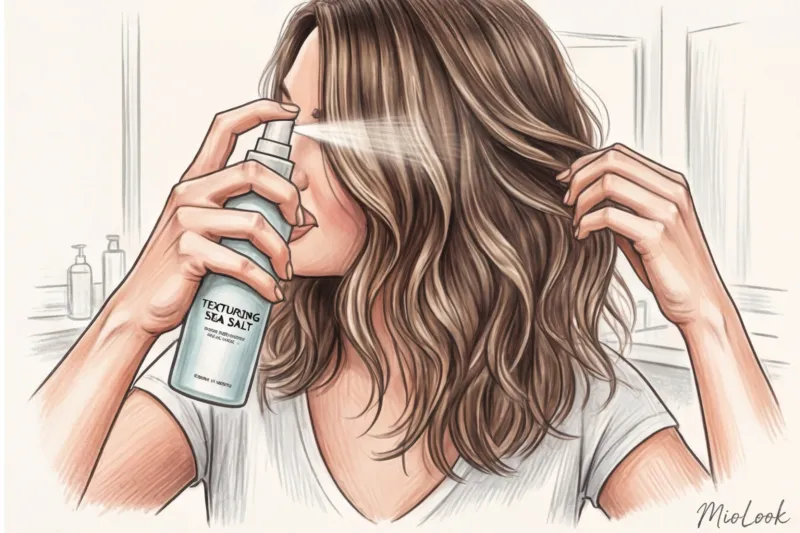
Backcombing is a stylist's biggest pain. It's a surefire way to damage the cuticle and create a look straight out of the '90s. Modern volume is created without the hassle of tormenting the hair, using the "air brushing" technique. The secret lies not in backcombing the strands, but in using the right temperature settings on a hairdryer. The laws of physics work in our favor here: hot air alters the hydrogen bonds in the hair, allowing it to be shaped, while cold air instantly sets them.
To ensure even the simplest anti-aging haircut looks salon-quality every day, here's my step-by-step DIY styling guide, easy to recreate at home in 10 minutes:
- Preparing the base (2 minutes): Blow-dry your hair without a brush until it's about 80% dry. Spray a lightweight volumizing spray on the roots and a high-quality heat protectant on the lengths.
- Air brushing (5 minutes): Take a medium-diameter round ceramic brush. Pull the strand of hair straight at the root (at a 90-degree angle to the scalp). Warm the root area with hot air for 3-4 seconds, and then—this is the key—press the "Cold Shot" button on the hair dryer for another 3 seconds without removing the strand from the brush. The volume will be locked in place without a single drop of hairspray.
- Creating a texture (3 minutes): Rub a pea-sized amount of lightweight styling paste between your palms until translucent. Lightly comb the ends of your hair upward using pulsating motions to create that perfect tousled look. Important: Do not brush your hair after this step!
This approach restores dynamism and airiness to the hairstyle – the main markers of youth and healthy energy.
Your perfect look starts here
Join thousands of users who look flawless every day and easily manage their style with MioLook.
Get access — €0.99 onceChecklist: How to Prepare for a Salon Makeover
According to a 2023 study by the International Hairdressing Council, over 60% of women experience so-called "post-salon regret" within the first 48 hours of a drastic hair change. This isn't due to poor technique, but to initial expectations being dashed by the biological reality of hair. To ensure that getting a new look is an investment in your confidence rather than a cause for tears, the process requires methodical preparation.
The most damaging mistake at the planning stage is bringing a photo of a supposed Rosie Huntington-Whiteley to the stylist, even though you have thin, straight, glassy locks. When we look for references to choose anti-aging haircuts , you need to look not at the perfect cheekbones of Hollywood stars, but at the architecture of the model’s hair.
Look for photos of women with your hair density, hairline, and face shape. If you have porous, frizzy locks, use curly references. If the back of your head is flat, look for examples showing side views of similar texture. To minimize risks, I always recommend visualizing the result before cutting. See the app. MioLook You can upload your current selfie and try out different styles—from a graphic bob to a textured shaggy cut. This allows you to objectively evaluate how a new length interacts with the proportions of your face.
When you sit down, the conversation shouldn't be limited to the standard phrase "make it a little shorter and fuller." Take the initiative and ask the artist three filter questions:
- How will this shape grow out in 8-10 weeks? A quality haircut should maintain its basic structure for up to three months. If you're told you need a touch-up every three weeks, you've chosen the wrong shape.
- Will thinning be required? For hair thinning after age 35, aggressive thinning is dangerous. It deprives the ends of the necessary density, creating a "rat tail" effect. Ask to use the point-cut technique instead of thinning scissors.
- How will this length work with collars? Remind your stylist that you'll be wearing jackets and trench coats this fall. Your hair shouldn't break on a stiff collar.
Finally, take an honest audit of your morning time. In clothing styling, there's the concept of "Cost per Wear," and for hair, I use the metric "Time per Style." You might leave the salon with a luxurious $150-$200 salon treatment, but are you willing to invest 25 minutes a day in brushing, salt sprays, and root powder?
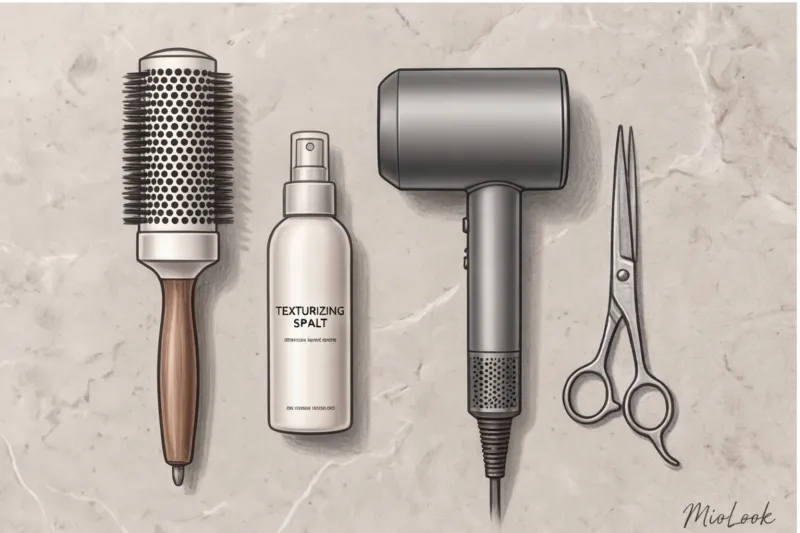
If your limit is 5 minutes and blow-drying upside down, be upfront with your stylist. In this scenario, instead of a layered pixie bob that requires styling, a sleek, tight, collarbone-length bob will suit you. It's forgiving of a little carelessness and looks expensive even when air-dried.
Find your perfect haircut with MioLook
Not sure if a bold bob or a soft cascade is right for you? Upload your photo to the MioLook app and try out dozens of modern, age-defying haircuts powered by artificial intelligence before your salon visit.
Guide Chapters
Haircuts for gray hair: how to wear gray hair after 35
Gray hair isn't a sign of aging, but a change in your natural color type. Learn how to choose the right hairstyle and care for your flawless look.
Anti-aging haircuts for curly hair after 35
Natural curls and waves are your personal secret to a visually lifted face. Learn how to choose a haircut that will gracefully conceal the signs of aging.
How to style your hair to look younger: tips
Many women fall back on styling habits from their youth that make them look older. Let's explore the basics of lifting styling for a fresh look.
Anti-aging haircuts for round faces after 35
Forget the old myths about long, straight hair. We'll show you how to create a lifting effect and visually elongate a round face with the right haircut.
Hairstyles that make you look older: 7 mistakes after 35
Your favorite haircut can add a decade to your age. A stylist breaks down the 7 biggest styling mistakes people make after 35 and explains how to fix them.
Long Hair After 35: How to Look Younger
A short haircut is no longer necessary as you age. Let's explore how to wear long hair correctly to make you look a few years younger.
Bangs that make you look younger: secrets for choosing the right shape
Straight, thick bangs won't hide wrinkles, but will only make you look older. Learn the basic principles of choosing bangs to visually lift your face.
Find a haircut from a photo: MioLook neural network for women
Mirrors often conceal the true signs of aging. Learn how artificial intelligence helps women find the perfect, age-defying haircut without distortion.
Anti-aging bob: who it suits and how to style it stylishly
Cutting your hair short doesn't mean you'll look younger. Find out how the right bob can provide a visual lift without injections and refresh your look.
Short, rejuvenating haircuts for 35+: pixie and bob
Afraid of short haircuts after 35? Find out how the right pixie, garcon, and micro bob can restore a fresh, defined look to your face better than injections.
What hair color makes you look younger after 35: advice from a colorist
Almost 80% of women over 35 continue to use youthful hair coloring, adding years to their appearance. We'll explain how hair color can act as a visual lift.
Anti-aging haircuts for medium-length hair for ages 35-45
80% of women wear the same hairstyle for years, ignoring the effects of aging. Find out how the right haircut can visually rejuvenate your look without the need for beauty injections.
Haircuts that don't require styling after 35: wake up and go
Tired of wasting time with a hair dryer and a brush? Discover the secret of smart wash-and-go cutting and find the perfect, rejuvenating haircut that stays put.
Anti-aging haircuts for fine hair: secrets to volume
Fine hair isn't a problem, but it's a material that requires clever styling. Learn how to add visual volume and thickness without hairspray or backcombing.
Frequently Asked Questions
What is your color type?
Find out your seasonal color type and choose clothes that highlight your natural beauty.
About the author
Unlock MioLook
for €0.99
Start creating perfect outfits with artificial intelligence
Get access — €0.99 onceRelated Articles
The best haircuts for women over 50 that make them look younger
The right hairstyle can completely transform your look. We explore stylish, reju...
Haircuts that make you look younger after 40: stylist tips
Forget the stereotype that you have to cut your hair short as you age. We'll tel...
Haircuts that make you look younger after 40: choosing based on your face shape
Short hair doesn't always make you look younger by default. We'll explore how ha...
Anti-aging bob: who it suits and how to style it stylishly
Cutting your hair short doesn't mean you'll look younger. Find out how the right...